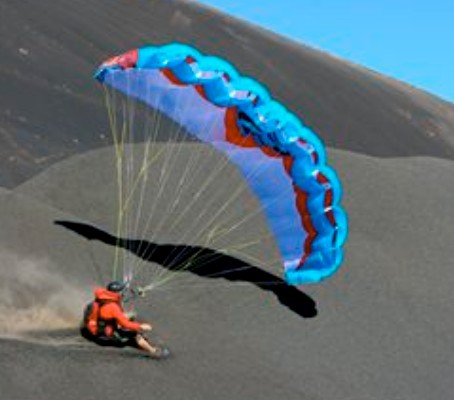
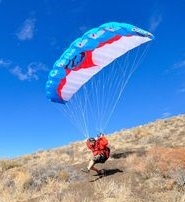
The Ozone Bullet speedwing has easy launch and great progressive brake feel. A lighter, more packable material makes gathering the wing up after a flight much easier. Braided unsheathed lines are resistant to damage, easier to inspect, and less prone to tangles / knots. Line arrangement has resulted in a more balanced sail tension, with far better roll behaviour, and a new profile is more stable, and gives a more carving, lift-free feel, which makes it easier to stay near the terrain.
The easy launch is imperative for new speed-flyers, and the sometimes difficult launching conditions that can be experienced in the mountains (tailwind, crosswind, etc). Relatively slow speed take-off as the profile is high lift, allowing early take-off and excellent slower speed performance. The line configuration and sail tension help reduce in-flight glider flexing and accordion movements seen in other wings to a minimum.
The high lift profile and moderate sail tension allow the wing to be slowed down easily for soft, slow speed landings.
OzTech 30g/sm.m cloth has been tested from the Polar ice-caps to the Sahara desert and is the best material possible for Speed-Flying. Cousin Dyneema lines are water tolerant braided lines and are highly resistant to cutting by ski edges and can withstand heavy use in wet environments.
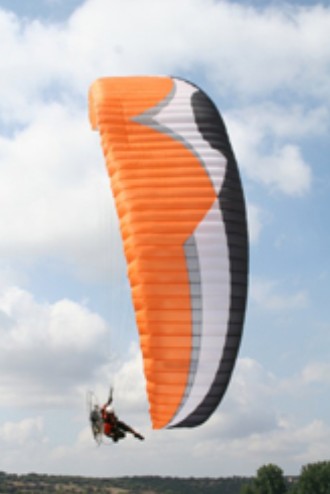
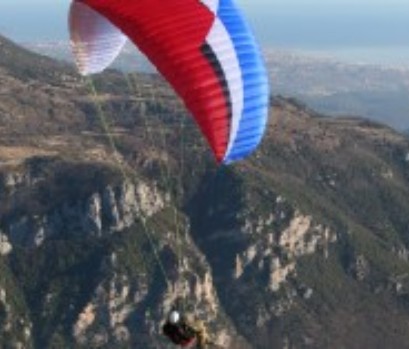
The Viper is a paramotor wing for expert pilots who fly in high level competitions and make advanced XC flights. This wing is an advanced competition glider designed for highly experienced pilots only. The Viper is a paramotor specific wing that has stability at high speed and the high maneuverability and handling of a normal paraglider. Developed in cooperation with Mathieu Rouanet, World Champion 2005, the high top speed, low sink rate and high efficiency of the Viper gives lower fuel consumption and longer, faster flights. The handling is direct and precise, with clear feedback. Launching is simple due to the benign inflation characteristics.
This Viper is an Open Class wing, and load tested to 1607kg on average, which means 11.5G for the 27 and 14G for the 24.
The Ozone Roadster and Viper both feature a customized Ozone Reflex Profile (OZRP) that has been tuned specifically for powered flight. The OZRP is what gives the Roadster and Viper their stability at high speed and collapse resistance in turbulent air.
This special airfoil design provides constant lift in a wider range of angles of attack. When you apply speed-bar or fly with the glider accelerated at a lower angle of attack, the RP takes effect and provides continuous lift and heightened stability.
Through carefully moderating the shape and amount of curve in the OZRP, a balance that provides increased lift at extreme angles of attack, while still retaining excellent launch characteristics and stall resistance has been achieved.
The Viper is constructed with Porcher Marine Skytex Evolution 45, and comes standard with the Ozone Paramotor Risers which feature double hang points and a reinforced trimming system.
Viper 24 Cells: 59 Flat Area: 24.5 sq.m Projected Area: 21.0 sq.m Flat Span: 12.24 m Projected Span: 9.78 m Flat Aspect Ratio: 6.11 Projected Aspect Ratio: 4.54 Root chord: 2.50 m Glider weight: 11.9lb In flight weight range: 80-115 kg Recommended weight: 95-105 kg Load test: Yes
Viper 27 Cells: 59 Flat Area: 27.5 sq.m Projected Area: 23.6 sq.m Flat Span: 12.97 m Projected Span: 10.36 m Flat Aspect Ratio: 6.11 Projected Aspect Ratio: 4.54 Root chord: 2.65 m Glider weight: 13lb In flight weight range: 100-140 kg Recommended weight: 115-125 kg Load test: Yes
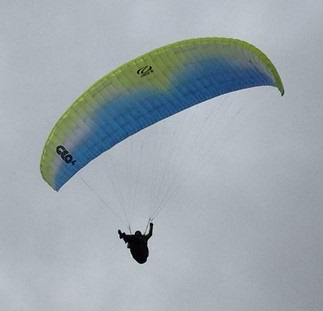
The Rush Power was created circa 2005 for the performance pilot who needs DHV 1-2 security in their DULV certified wing. With a higher aspect ratio and more cells than the Mojo Power, the Rush Power is closer to a DHV2 in performance while remaining well within the boundaries of the DHV 1-2 class. It features sportier, more dynamic handling, along with a higher speed range.
The Rush Power’s launch characteristics are benign for a wing with such performance and dynamic character, and pilots will find that the inflation is simple to control in all conditions. In light wind or no wind, the Rush Power comes up easily overhead, with no tendencies to hang back or slip to one side.
In flight, the handling is direct and well coordinated, and ideal for maneuvering close to the ground or for thermalling with the engine off. Feedback is transmitted to the pilot and it is feedback that the pilot can understand and use, not just turbulence or noise.
The Rush Power is a well proven and ideal intermediate paramotor wing that also flies just as well unpowered. We think that pilots searching for an intermediate wing that is equally capable of powered and unpowered flight need look no further.
The Rush Power is constructed with Porcher Marine Skytex Evolution cloth, and comes standard with Ozone Paramotor Risers which feature double hang points, reinforced trimming system, and trimmer lock-off for free flight.
Otto Aviation Group was secretly working on a project for about ten years in southern California.
In May 2019 the plane had been spotted at Victorville, California’s Southern California Logistics Airport on several occasions over the past year, and it recently was seen flying, according.
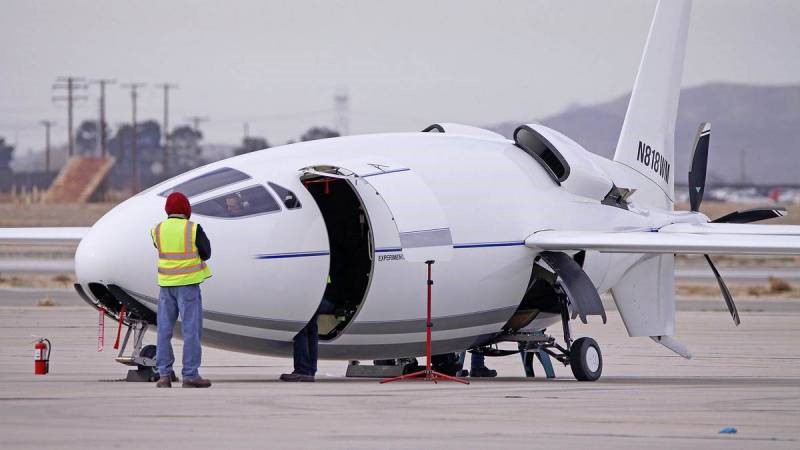
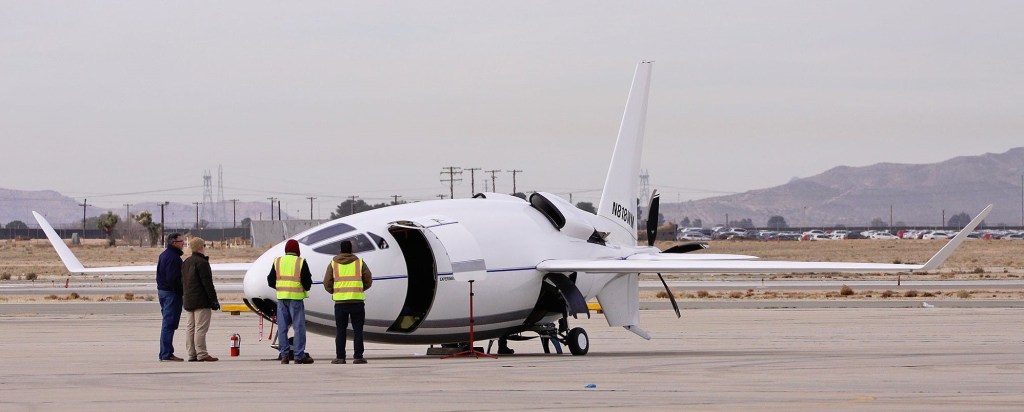
The plane features two pusher engines and a whisper-thin wing mated to a svelte blimp shaped fuselage. Claims include a ceiling of 65,000 feet with a top cruise speed of around 500 mph with a total fuel flow of between 30 and 40 gallons per hour.
In January 2019, new pictures of the pusher-propeller Celera 500L, which carries the U.S. civil registration code N818WM, emerged showing it in a markedly more mature state than in the past. The plane now has winglets at the tips of both wings. The aircraft also had a black propeller in place of the earlier white one and an aerodynamic spinner over the propeller hub. There’s also a much better view of the trapeze-like landing gear assemblies, which are of the general style found in patent documents that Otto Aviation had submitted relating to a number of the aircraft’s features.
In addition, as compared to earlier, the aircraft has conformal cowlings fitted in place over its rear-mounted engine compartment. Each one features a single large air intake and an exhaust port.
The power plant drives a single propeller. It is not clear whether a new one or two engines A03 V12. This model is in demand on the Russian Yak-52 and Yak-152.
The company appears to be affiliated with Applied Physicist William M. Otto, who was also a key player at a firm called Otto Labs. Mr. Otto was previously the chief scientist for the B-1’s avionics system development program, and held many other positions at North American-Rockwell.
Otto retired from active participation in Otto Laboratories Inc., and assumed the presidency of Otto Aviation, managing the design and production of extremely low-drag aircraft.
The Vice President of Otto Labs, Ed Cababa, is also affiliated with Otto Aviation Group LLC. Cababa has a background working with Honda in vehicle handling and testing. A tax certificate lists both Otto and Cababa as owners of Otto Aviation Group LLC and that they “manufacture composite parts for a prototype aircraft.
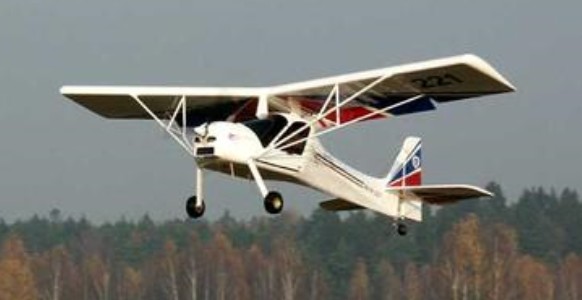
MAI-223 is a single-engine two seater semicantilever monoplane-parasol with non-retractable landing gear. Perfect controllability in all channels and an excellent pilot view from the cockpit make the plane extremely safe and pleasant for piloting. High thrust-to-weight ratio, high-lift device and landing gear with tail wheel allow to use airplane from short, unprepared runways. Floats and ski landing gear are enabled. Due to the folding wing airplane is very convenient for storage and transportation. 2009 Price: 27150 EURO
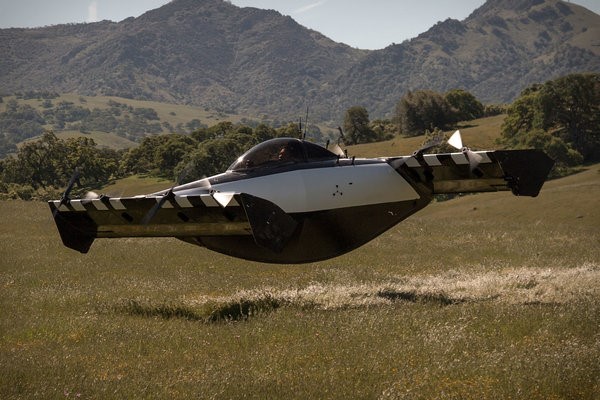
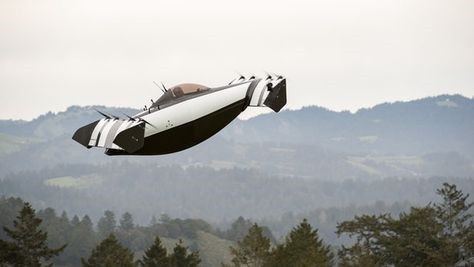
The Opener BlackFly is an American electric-powered VTOL personal air vehicle designed by Canadian Marcus Leng and under development by his company, Opener, Inc of Palo Alto, California. It was publicly introduced on 12 July 2018, after nine years of development.
The first proof-of-concept version was flown on 5 October 2011, in Warkworth, Ontario, Canada, by Leng. He flew the next model, named the BlackFly, in August 2014 and then relocated the company to Palo Alto, California in September 2014. In February 2016, the second BlackFly prototype was first flown. By September 2017, the prototype had flown 10,000 mi (16,093 km) in a series of flights of at least 30 mi (48 km) each. The first pre-production aircraft was flown in October 2017.
The design is intended for the FAR 103 Ultralight Vehicles category in the US and the Basic Ultralight Aeroplane category in Canada. The US version and international versions were to have different ranges, speeds and weights to comply with national regulations. The aircraft is intended to be supplied complete and ready-to-fly.
The aircraft is made from carbon-fiber reinforced epoxy with all-electric battery-powered propulsion. It has two 13.6 ft (4.15 m) cantilevered tandem wings, on the front and rear of a short fuselage. The fuselage has a single-seat cockpit under a bubble canopy. The forward wing is low, and the rear wing high, giving the cockpit good forward visibility. Each wing has four tractor configuration contrarotating propellers powered by electric motors. The tractor configuration prevents the flexible propellers from contacting the airframe. Each wingtip has winglets to improve lateral stability and reduce vortex drag. The aircraft weighs 313 lb (142 kg) empty and can carry a pilot and baggage totaling 250 lb (113 kg). It can accommodate a pilot of up to 6.5 ft (1.98 m) in height. A ballistic parachute is optional.
The aircraft is not a tiltwing, tiltrotor or ducted-fan design. Instead, the entire aircraft changes pitch. When the aircraft is parked, both wings and their motors are canted up at about 45 degrees. To ascend vertically, the aircraft pitches up 45 degrees, so that the propellers pull vertically. The wing-mounted tractor propellers move air over the wings, reducing stall speeds. So, at pitch angles near zero degrees, the aircraft can fly slowly with high angles of attack. For efficient horizontal flight, the aircraft pitches down 45 degrees, canting the wings and propellors to an optimal angle of attack. The forward wing has a slightly lower angle of attack to aid stall recovery. At low speeds the forward wing will stall first, causing the nose to fall, increasing air speed and exiting a stall.
The take-off and landing distances are 36 inches. The landing gear consists of a rub-strip on the bottom of an amphibious hull and a small rubber bumper on the rear of the fuselage. The lower edge of the winglets are skids that limit the vehicle’s roll when parked. The vehicle is designed to fly from a grass surface, but can also be flown from fresh water, asphalt, snow and ice.
Pilot controls are a joystick with a thumb control for altitude. Flight controls are triple-redundant fly-by-wire controlling the motors and dual elevons on the outer edge of both wings. Differential motor speeds provide control authority in pitch, roll and yaw. Elevons also permit control in an efficient unpowered glide mode. The elevons are in the prop-wash of the outer propellers, enhancing their roll and pitch authority at low speeds. Flight stability is software-controlled, with modes for cruise-control, “return-home,” auto-land and geo-fencing.
Most flight testing was unmanned, operated by software with a test weight in place of a pilot. Each motor weighs 4 lb (2 kg) and produces 130 lb (59 kg) of thrust. There are two batteries per motor, located in the wing, behind each motor. Adjacent batteries can be cross-connected for redundancy. The batteries are software-monitored. Avionic include Full authority autopilot, Remote controls, and VHF airband radio.
The manufacturer claims that the design is the world’s first ultralight fixed-wing, all-electric, vertical take-off and landing aircraft. Investors in the company include Google co-founder Larry Page.
The craft was still under development in 2018.
Opener has donated a first-generation BlackFly personal ultralight aircraft to the EAA Aviation Museum in Oshkosh, Wisconsin. According to Opener, BlackFly vehicles have flown over 2,300 flights, including 900 made on preproduction models since the aircraft appeared at Oshkosh in 2018.
Opener was displaying the production version of BlackFly at the AirVenture Innovation Showcase from July 22 to July 28, 2019.
Powerplant: 8 × 112 lb thrust/engine electric motors, 42.0 hp (31.3 kW) each Propellers: 2-bladed, 3 ft (0.91 m) diameter Wingspan: 13 ft 7 in (4.14 m) Length: 13 ft 5 in (4.09 m) Height: 5 ft (1.5 m) Empty weight: 313 lb (142 kg) Gross weight: 563 lb (255 kg) Fuel capacity: 12KWh Cruise speed: 80 mph (130 km/h, 70 kn) Range: 40 mi (64 km, 35 nmi) plus reserves Rate of climb: 1,000 ft/min (5.1 m/s) Rate of sink: 1,000 ft/min (5.1 m/s) Crew: one
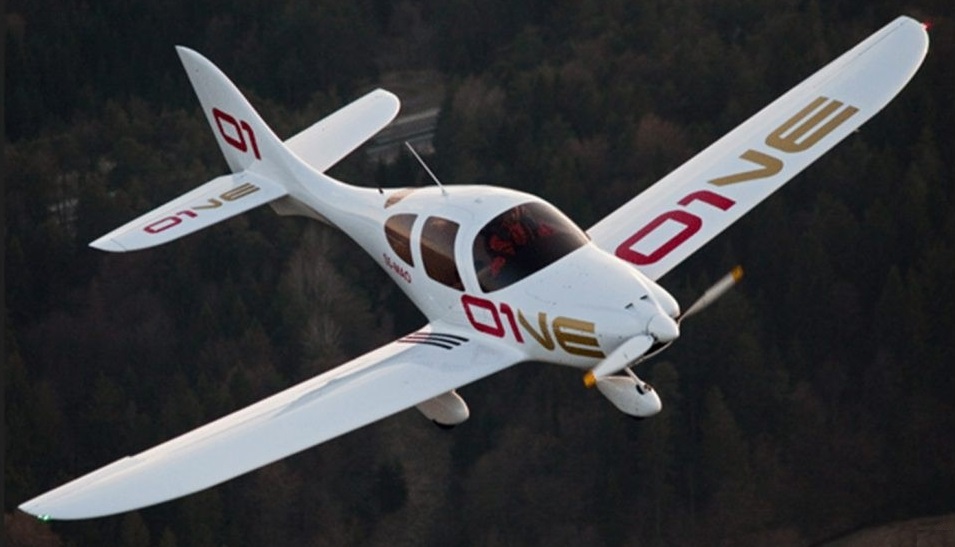
The One Aircraft is a 2 + 1 light sporting aircraft produced in Slovenia, the company One Aircraft being set up in 2014.
The aircraft was designed as a joint venture in Slovakia by two companies C2P DOO and KPS Pro DOO, the former carrying out design and the latter supplying metal parts.
Construction is all composite, with a Kevlar roll cage. The aircraft is said to have an endurance of up to nine hours and is fitted with adjustable rudder pedals and adjustable seats. The rear seat can be used as baggage space or for a small person or child up to 90 kg (198 lb).
Production of the aircraft takes place in the town of Grosuplje in central Slovenia, the Company having the ability to produce up to 40 aircraft per year. The Company has also announced that its engineers were in 2015 working on a hybrid variant, this model having an electric engine between the Rotax engine flange and the propeller flange to add an additional 35 kw of power for take-off and climb. The electric engine would be used in the event of an engine failure, providing up to 12 minutes endurance. The batteries are fitted in the wing and under the seats, a regulator being installed on the firewall.
Production was scheduled to commence in 2017.
Engine: Rotax 912ULS2, 75 kw (100 hp) Wingspan: 9.65 m (31 ft 6 in) Length: 6.97 m (18 ft 7 in) Height: 2.2 m (6 ft 8 in) Never exceed speed: 256 km/h (159 mph) Max speed: 239 km/h (149 mph) Cruising speed: 222 km/h (138 mph) Range: 1,600 km (994 miles) Take-off run: 125 m (410 ft) Landing run: 350 m (1,148 ft) Service ceiling: 4,500 m (14,760 ft) Rate of climb: 305 m/min (1,000 ft/min) Fuel capacity: 135 litres (30 Imp gals) Empty weight: 340 kg (750 lb) Useful load: 260 kg (573 lb ) Loaded: weight 600 kg (1,322 lb)
One Aircraft was set up in Slovenia, in 2014, to “design the ultimate, safe, affordable, attractive and top performance sport-family aircraft with 2 + 1 seating configuration that would fit in existing LSA and CS LSA (2-seat configuration) category as well as future ELA1 and other emerging categories.” The driving force behind the Company and the design of the aircraft was Iztok Salamon.

 All Aero