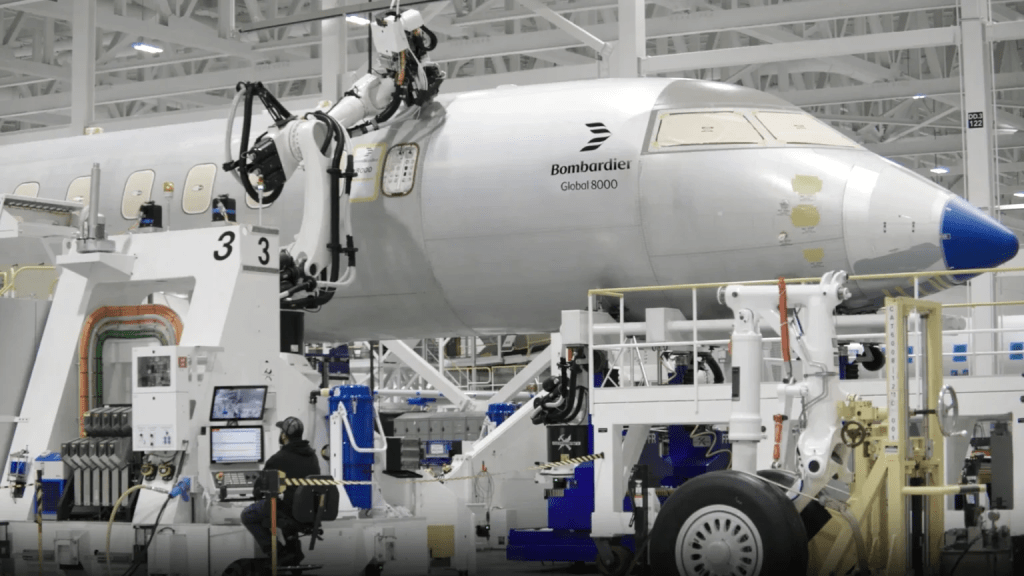
Canadian Aerospace company Bombardier has achieved a major milestone as the first production Global 8000 business jet completed its inaugural flight from Toronto Pearson International Airport (YYZ).
The flight, which took place on May 16, 2025, tested key systems as part of Bombardier’s production flight test protocol. The aircraft took off under the command of pilot Sandro Novelli, with co-pilot Charlie Honey and flight engineer Bhargav Bhavsar. The Global 8000, the fastest business jet in the world.
The Global 8000 represents Bombardier’s next-generation advancement, evolving from the proven performance of the Global 7500. With a top speed of Mach 0.94, it is the fastest civil aircraft since the Concorde. Designed for a range of up to 8,000 nautical miles nonstop.
The Global 8000 is not only fast—it is smooth. Bombardier’s patented Smooth Flex Wing technology reduces turbulence impact.
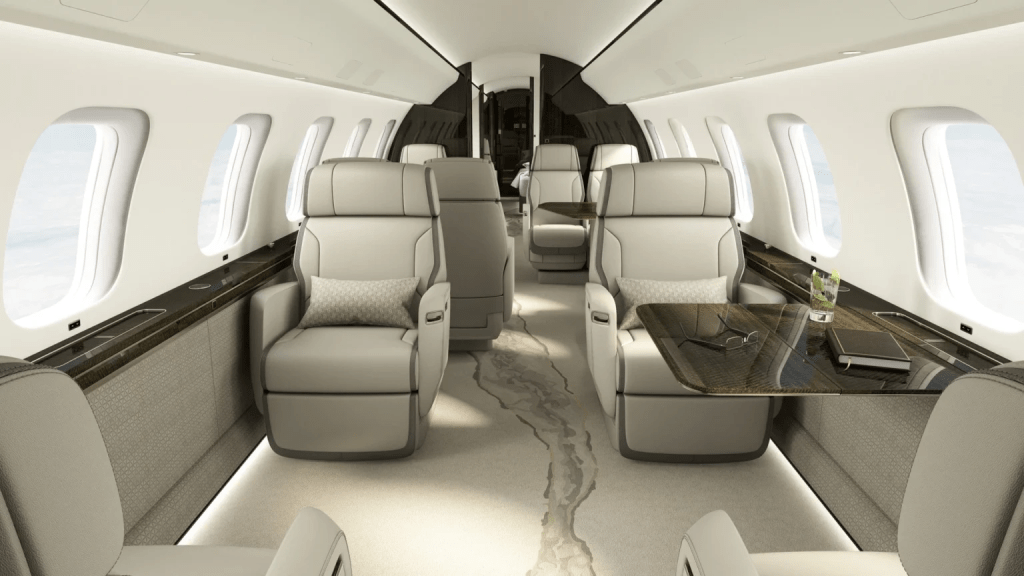
The cabin design of the Global 8000 includes four true living zones, a private crew rest area, and the longest seated length in its class.
Cabin altitude is held at 2,900 feet while cruising at 41,000 feet—ensuring less fatigue and greater well-being for passengers.
Lancair Certified was renamed Columbia Aircraft Manufacturing Corporation in 2005 to focus on the new design. Neibauer sold the kit-build portion of the company, Lancair International, to Joseph Bartels in March 2003.
The 300 was the fastest fixed-gear aircraft in the world when it was released, but held this title only for a short period until the turbocharged Columbia 400 (Model LC41-550FG) flew in June 2000. The 400 also featured a new glass cockpit developed under the AGATE program, which Columbia refers to as the “Highway in the Sky” (HITS). The 400 was certified on March 30, 2003.
The upgrades used in the Columbia 400 were then incorporated in the original 300 design to create the Model LC42-550FG, marketed as the Columbia 350. It appeared in April 2002 and was certified on April 8, 2004.
In January 2003, Composite Technology Research Malaysia (CTRM) bought a controlling interest in Columbia for over $50 million. CTRM is owned by the Malaysian government and was incorporated in November 1990 by Minister of Finance Malaysia Inc. CTRM’s CEO is Retired Col. Rosdi Mahmud. CTRM became interested in selling its share of the company in 2006.
All of the Columbia aircraft competed heavily with similar designs from Cirrus Design, which was also developed under AGATE and included many of the same features. First to market, the SR22 outsold the Columbia models by a wide margin.
On September 24, 2007 Columbia Aircraft announced that Textron would purchase the company, which would be merged with its Cessna division, including its line of high-performance single-engined aircraft. As part of the sale agreement Columbia Aircraft was to enter Chapter 11 bankruptcy protection. The arrangement would be subject to approval of the bankruptcy court and also to a final agreement with Cessna.
The fate of Columbia Aircraft was complicated on October 14, 2007 when three additional companies entered the bidding for Columbia Aircraft. These were Columbia’s competitor, Cirrus Design as well as Versa Capital Management and Park Electrochemical Corp. The two latter companies filed motions with the bankruptcy court stating that Cessna has been “getting preferential treatment in the process”. On 20 November 2007 Cirrus Design announced that they would not pursue purchasing Columbia, citing Columbia’s problems as being too serious and that resolving them would require excessive resources.
On November 27, 2007, Cessna’s parent company Textron announced that Cessna Aircraft was the successful bidder for Columbia Aircraft, that the Columbia 350 and 400 are renamed the Cessna 350 and Cessna 400 and that all existing Columbia aircraft will be supported by Cessna. Cessna paid USD$26.4M for the company and committed to investing in the current company location on the southeast corner of Bend Municipal Airport in Bend, Oregon.
On April 29, 2009, Cessna announced that it would close the former Columbia plant in Bend, Oregon facility where the Cessna 350 and 400 were built and move production to Kansas. The company laid-off all the remaining 150 employees at the Bend plant.
Cessna had announced its intentions to study the feasibility of developing and producing an LSA on 6 June 2006. The concept design was unveiled on 24 July 2006 at EAA AirVenture Oshkosh as the Cessna LSA (also referred to as the Cessna Sport), via a marketing study of the feasibility of producing an aircraft compliant with the U.S. Federal Aviation Administration’s new Light-Sport Aircraft category.
Registered N158CS, the aircraft is an all metal design with stick controls, powered by a 100hp75kW Rotax 912 engine. The cabin width is 121cm/48in.
On 13 October 2006, nine months after launching the program, the concept prototype aircraft, registered N158CS, first flew, departing McConnell Air Force Base for Wichita’s Mid-Continent Airport and reaching a speed of 110 knots (200 km/h). Cessna formally launched the Skycatcher program 10 July 2007
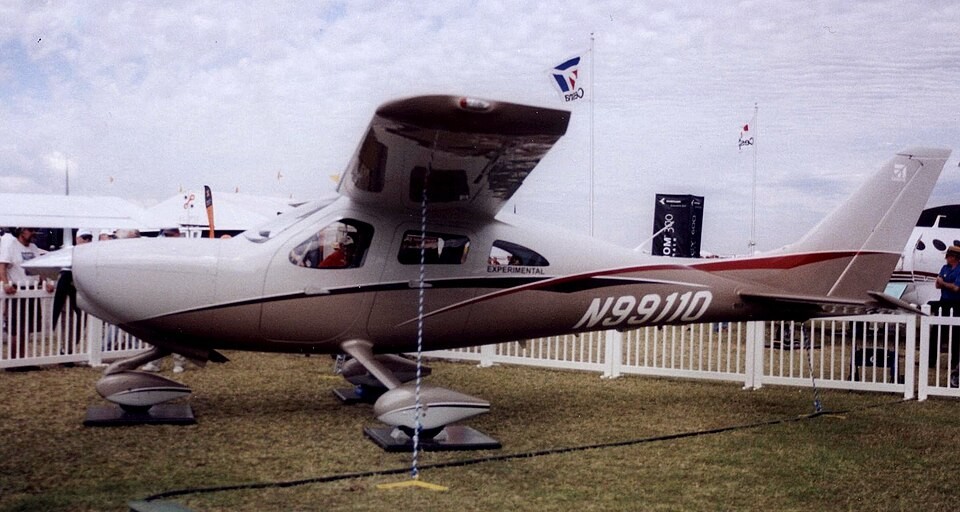
Cessna NGP prototype on display at Lakeland, Florida, in April 2007
The Cessna Next Generation Propeller Aircraft (NGP) was a proof-of-concept design for a future family of single engine, fixed-gear, high cantilever wing, light aircraft intended for personal, flight training and commercial use.
The single flying prototype, registered N99110, was flight tested by Cessna, and first seen publicly in flight on 24 July 2006 at EAA AirVenture Oshkosh.
The aircraft was originally introduced as the “Next Generation Piston”, but starting in April 2008 Cessna began referring to it as the “Next Generation Propeller” aircraft instead. After absorbing the recently purchased Columbia Aircraft line, now known as the Cessna 350 and Cessna 400, Cessna indicated that it was re-positioning the NGP to fit logically into its current aircraft fleet. “Our team is working on finalizing the configuration,” said Van Abel, Cessna’s project engineer for the NGP in April 2008. “We continue to evaluate features and materials that will produce a new, unique aircraft family with a potential for multiple powerplants.” This indicates that the aircraft may become turbine or diesel powered so as not to conflict with sales of the 350 and 400.
Very little information was made public about the aircraft since development began sometime in early 2005. Cessna confirmed that the NGP was designed specifically to compete with other, newer aircraft. Due to its intended role as competition for the Cirrus SR22, it was frequently referred to in the aviation press as the “Cirrus Killer”.
The NGP mock-up displayed at AOPA Air Expo 2006, in Palm Springs, California, had five seats. The aircraft was, at that time, intended be powered by a Lycoming IO-580 FADEC 320 hp (240 kW) engine controlled by a single power lever. The design mock-up had four doors with a separate baggage door on the left side, tricycle landing gear with a castering nose wheel and a forward-swept high-mounted wing of relatively small area.
Reportedly the prototype accumulated more than 20 hours of flying time between its first flight on 23 June 2006 and the fly-by at Oshkosh on 24 July 2006. During its appearance at AirVenture it was fully painted in a factory-style paint scheme and sported wheel pants. The structure was made from composite materials and aluminum, optimizing the available technology.
Cessna President and CEO Jack Pelton confirmed at AirVenture 2006 that the NGP was intended at that time to be the first of a new family of Cessna singles that would, in the long term, replace the Cessna 172 and 182 in production. Pelton also confirmed that while the prototype flew with a Lycoming powerplant, Cessna was examining alternative new technology engines as well. The prototype was exhibited at the April 2007 Sun ‘n Fun general aviation event held at Lakeland, Florida.
On 27 November 2007, Cessna purchased Columbia Aircraft from bankruptcy for US$26.4M including its Columbia 350 and 400 line, which are in the same size and performance class as the NGP. These were introduced into the Cessna line as the Cessna 350 and Cessna 400 and initially built at former Columbia factory in Bend, Oregon. In 2009, Cessna closed the Bend plant and moved production to Wichita. The introduction of the similar Columbia designs caused media speculation that this would spell the end of the NGP project, but on September 26, 2007, Cessna Vice President for Sales, Roger Whyte confirmed that development of the Cessna NGP project was continuing, regardless of the purchase of Columbia.
In January 2009, Cessna CEO Jack Pelton gave an update on current Cessna projects under development and mentioned the 162 SkyCatcher, Cessna Citation Columbus and the Citation CJ4. No mention of the NGP project was made and the project’s webpage was deleted.
On 30 March 2011, at Sun ‘n Fun Cessna President Jack Pelton was interviewed by Paul Bertorelli of AvWeb about the NGP project and he indicated that it was “inactive but not mothballed” at that time, awaiting the right engine and avionics combination.
By August 2011, the prototype was no longer on the Federal Aviation Administration registry.
Powered by a Lycoming engine and driven by a constant-speed, two-blade MT propellor, the Integral R will have a cruising speed of 150kts and a range of 530nm. In 2023, Aura Aero indicated that EASA and FAA certification was expected from 2024.
However, since the Integral R made its maiden flight in 2020, the campaign has been marred by tragedy – with a fatal crash in April 2022 claiming the lives of both pilots and destroying the prototype. 19 months later, in November 2023, the R variant resumed its flight test campaign.
French aircraft manufacturer Aura Aero has completed the final test flight in the CS-23 certification campaign of its Integral R.
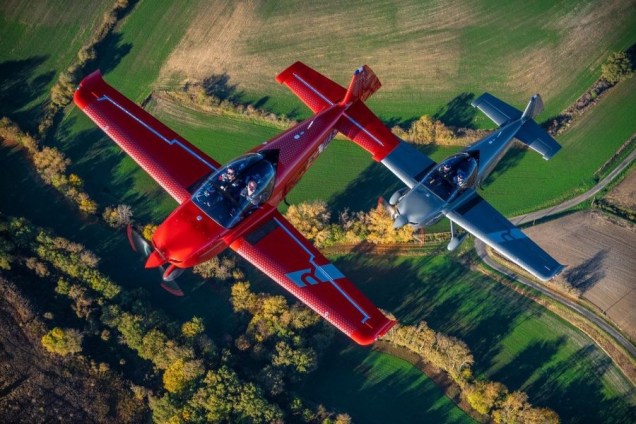
The taildragger Integral R is one of three aerobatically-capable, two-seat light aircraft variants currently under development by the Toulouse-based company and the first model to apply for type certification. (Other versions include the tricycle landing gear-configured Integral S and the all-electric Integral E).
Founded in 2018, Aura Aero has already made notable steps forward towards certification and commercialisation of its light aircraft family – becoming a certified aircraft manufacturer in October 2023 following receipt of EASA Part 21J approval.
In 2025 Czech aircraft manufacturer TL-Ultralight gained UK Type Approval for its tandem Stream light sport microlight aircraft. This accomplishment follows over two years of development in collaboration with the UK Civil Aviation Authority (CAA), the British Microlight Aircraft Association (BMAA), and TL’s UK agents, TL-Sting UK Limited.
The United Kingdom is the first country outside the Czech Republic to grant approval for the Stream, following a UK BCAR Section S standard certification.
In 2025 American manufacturer CubCrafters commenced production of the first microlight version of its popular Carbon Cub, named the Carbon Cub UL. The 160hp two-seater is powered by a Rotax 916iS and will be available in the US as a factory-built Light Sport Aircraft (LSA) and as a ‘factory builder assist’ Experimental Amateur Built (EAB) aircraft.
By using carbon-fibre in its construction, CubCrafters has reduced the empty weight to 390kg which, meeting the LSA maximum all-up weight of 600kg, provides a useful load of 210kg. The company stated that the UL is specifically designed to comply with the new Modernization of Special Airworthiness Certification (MOSAIC) rules, expected to be introduced by the FAA later this year. It also fits into the UK’s 600kg Light Sport Microlight category.
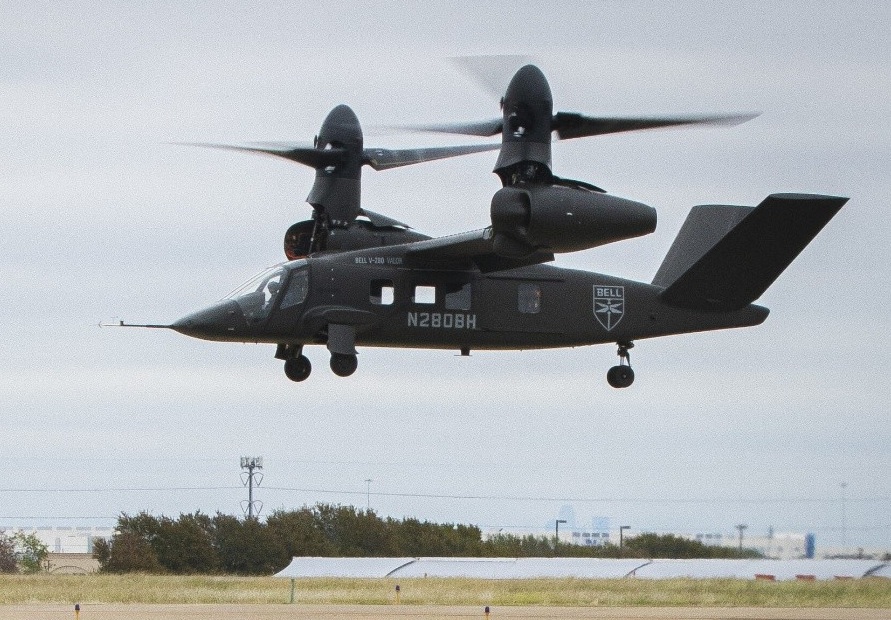
The V-280 Valor first took to the sky in 2017, and logged over 200 hours of flight time before the prototype was grounded in 2021. Bell has claimed that the aircraft is capable of top speeds of up to 280 knots with a range of up to 800 nautical miles, double the top speed and operational range of the Black Hawk. The Valor can also reportedly carry 23% more troops and 25% more cargo than the Black Hawk.
The biggest difference between the Black Hawk and the Valor is, of course, the tiltrotors. While it looks similar to the V-22 Osprey, the Valor works somewhat differently. The engines remain in place in nacelles, streamlined containers, on the wing — it’s the rotors themselves that tilt up and down. They’re also what give the aircraft its high speed, which is more than 100 miles per hour faster than the Black Hawk’s top speed of 222 miles per hour.
With a crew of four, along with up to 14 passengers, the Valor would replace the Black Hawk in its myriad of missions, from carrying supplies to air assault missions to medical evacuation. The more than three years of flight testing, which included Army test pilots, with the Valor prototype demonstrated its flight capabilities, survivability, and sling loading ability, according to Bell.
The Valor has a wider footprint than the Black Hawk, but is 20% shorter, which Bell said gives it greater flexibility in landing.
U.S. Special Operations Command said that the V-280 was changed in development to allow it to carry more weight, with the intention of making it more easily convertible for use by special operations units. The Army’s 160th Special Operations Aviation Regiment currently uses MH-60M variants of Black Hawks, which require extensive modifications to be mission ready.
Bell’s V-280 Valor, was selected in 2022 as the winner of the Army’s Future Long-Range Assault Aircraft competition. The vertical take off and landing craft has two engines and is designed for both assault and transport purposes. The newly designated MV-75 is meant to eventually replace the Army’s H-60 Black Hawk helicopters, including in special operations missions.
The initial contract, for $232 million, is to continue development of the aircraft, but then expands to $1.2 billion and then perhaps as much as $7 billion to begin building the new fleet of Valor aircraft that will begin replacing the Black Hawk in the mid-2030s. The Army operates roughly 2,000 Black Hawk helicopters, which have been in use since the 1970s. The Army previously said it expects to field the MV-75 by 2030. The MV-75 designation is an homage to the year 1775, the birth year of the U.S. Army.
The initial testing by the 101st Airborne Division will be used to shape MV-75 tactics and doctrine.
If the Indian armed forces assess the need for a dedicated manned counter-drone fighter capability, Hindustan Aeronautics Limited’s (HAL) HTT-40 could be cost-effectively upgraded to fulfil the role within a reasonable timeframe.
On March 7, 2023, the Indian Ministry of Defence (MoD) signed a contract with HAL to procure 70 HTT-40 basic trainer aircraft. Earlier, in July 2022, HAL had signed a $100 million contract with U.S. engine-maker Honeywell for 88 engines to power the HTT-40 fleet.
The 70 aircraft on order will be delivered over six years from the date of contract signing.
The HTT-40 is a tandem-seat turboprop trainer that is fully aerobatic and offers excellent low-speed handling characteristics. It features an air-conditioned cockpit, modern avionics, hot refueling capability, running changeover, and zero-zero ejection seats.
The HTT-40 procurement aims to address the Indian Air Force’s (IAF) shortage of basic trainer aircraft and includes associated equipment, training aids, and simulators.
HAL first pitched the HTT-40 as an indigenous trainer for the IAF at Aero India 2013, showcasing a mockup of the aircraft.
However, on May 10, 2012, the Cabinet Committee on Security (CCS) had already approved the procurement of 75 Pilatus PC-7 MkII aircraft for the IAF, Indian Navy, and Coast Guard. The Pilatus had been selected through global bidding to replace the aging HPT-32 fleet.
Ironically, in response to HAL’s display of the HTT-40 mockup at Aero India 2013, then IAF Chief of Air Staff Air Chief Marshal NAK Browne had remarked, “There is no need for [the HTT-40 trainer]. We have the Pilatus PC-7. It’s a proven aircraft. The HAL project is starting from scratch. Our indications are that the cost will be too high. There is no need for all this.”








 All Aero