Peak Aerospace / Bek Treppenbau

1998:
Bek Treppenbau
Fȁrberweg 73
D-88444 Riedlingen
Germany

The Peak Aerospace GmbH builds airplanes, delivery parts and special developments in GRP components materials in Mecklenburg-Western Pomerania. In particular they build the Messerschmitt BF 109 as single-seat ultralight aircraft. They manufacture all components in house.

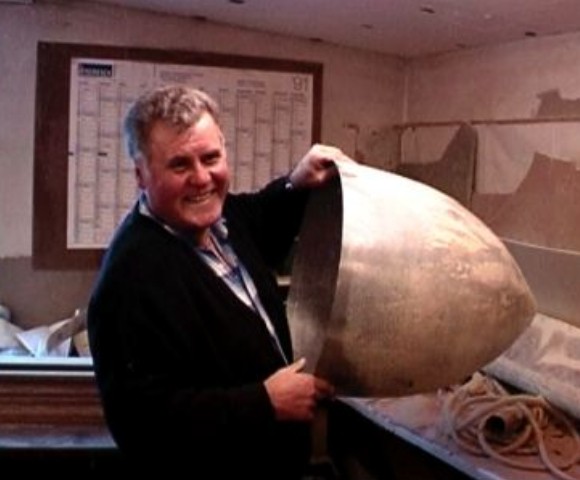
Mr. Bek had much to do with his stair building firm and the 109 had always remained a hobby. In co-operation with Mr. Bek the co-workers were trained and the first static model, factory serial number developed during 2000 to 2004.

Tassilo Bek

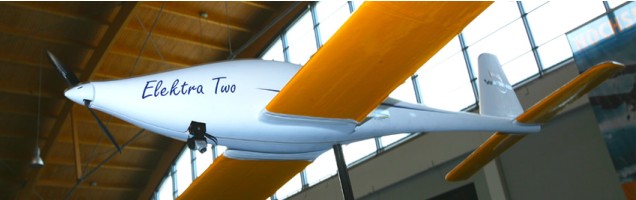
PC-Aero Elektra Two

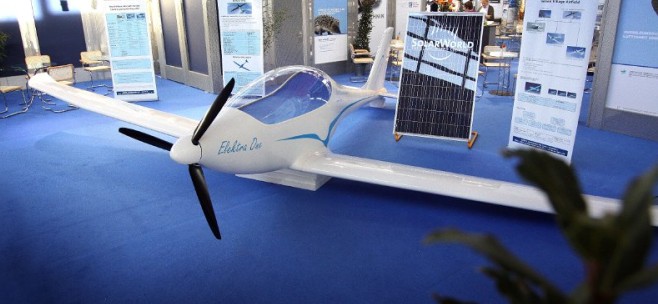
The Elektra Two aircraft are scaled versions of the Elektra One Solar. Two versions are:

Version 1: Elektra Two Standard, with two different wing span: 17 meters and 14 meters
Version 2: Elektra Two Record. Only one unit for a range over 2000 km was to be built.

The outer shape of the Elektra Two Standard is the same as the Elektra Two Record. Two versions will be provided: the long span version (17 meters) and the short span version (14 meters).

Elektra Two Standard (long & short version) are for cruise, flying clubs and training

Construction is carbon / glass and solar cells on the wing surface provide the energy to fly. The solar cells will be laminated in the wing skin structure.

Specifications

Elektra Two Standard
Max. engine power: 40 kW
Wing span: 14 m / 17 m
Wing surface: 15 sq.m / 19 sq.m
MTOW: 350 kg
Empty weight: 200 kg
Battery weight: up to 100 kg
Payload: 180 kg
Max. range:
14 m wing span: 500 km
17 m wing span: 700 km
Max. endurance:
14 m wing span: 5 hours
17 m wing span: 8 hours
Cruise:
14 m wing span: 140 km/h
17 m wing span: 120 km/h
Aspect ratio:
14 m wing span: 13
17 m wing span: 15
Best glide ratio:
14 m wing span: 28
17 m wing span: 34
Certification: LTF-UL germany

Elektra Two Record
Max. engine power: 16 kW
Wing span: 17 m
Wing surface: 19 sq.m
MTOW: 350 kg
Empty weight: 140 kg
Battery weight: 80 kg
Payload: 150 kg
Max. range: more than 2,000 km
Max. endurance: over 20 hours
Cruise: 80 km/h
Aspect ratio: 15
Best glide ratio: 34
Certification: LTF-UL Germany

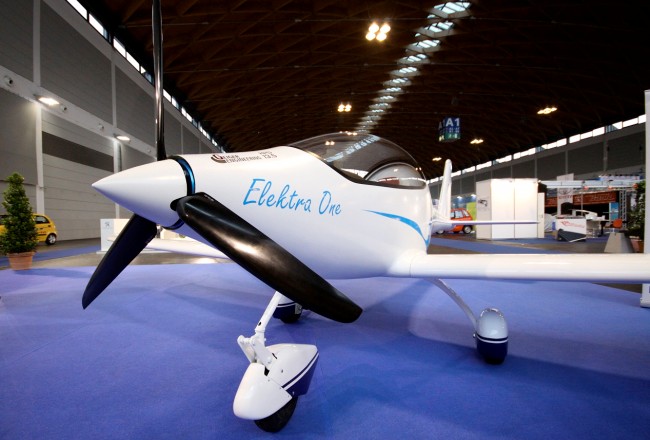
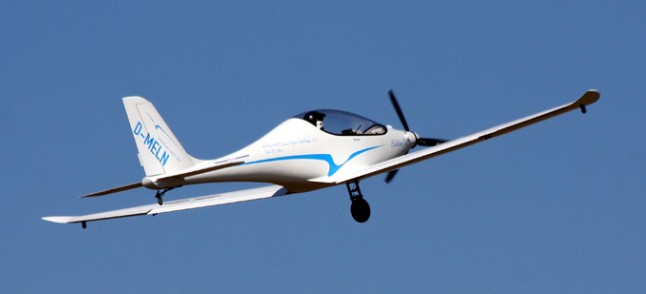
PC-Aero Elecktra One / Elektra One Solar

The Elektra 1, designed by Calin Gologan and built by a group of Romanians including Sorin Mares, received an award for innovation in aviation, the Lindbergh Electric Aircraft Prize.

The one-seater plane is made of light carbon composite materials, utilising an electric motor, the batterys are charged while hangered, through solar panels. Elektra One Solar has six square meter solar cells on its wings to provide over 1 kilowatt (kW) of power for flying. Since the aircraft requires at least 2.5kW power for horizontal flight, this is slightly less than half the energy required for the plane to fly. The Elektra One Solar is not completely powered by the solar panels on its wings. To enable full flight, the plane has a series of high energy density rechargeable Li-Ion batteries on board. These can be recharged using the solar panels when the plane is parked outside. If the plane is parked inside, a specially outfitted solar hangar can take over the recharging duties.

PC-Aero developed the Elektra One Solar with the support from Solar Hangar and Solar World. The business idea behind it is that the solar panel equipped hangars will provide energy for the plane while the excess energy would be fed back into the grid. This predecessor of the Elektra One Solar, the Elektra One, has a range of 500 kilometers and an endurance of 3 hours. Its wingspan is also smaller at just 8.6 meters compared to 11 meters in the Elektra One Solar.

The Elektra One is in the German Ultralight LTF-UL-class powered by a 13.5 kW brushless electric engine. Germany’s Geiger Engineering developed the electric drive unit which includes the HPD 13.5 (16 kW maximum power) electric motor, controller, battery management system and propeller.

As the Elektra One was designed for minimum energy requirements at 160 km/h, once airborne, it is remarkably frugal with its use of energy. It can remain airborne for three hours and its claimed range has now increased to 500 kilometers. PC-Aero claims that the system offers operational costs per hour of less than EUR 35 or EUR 0.2 per km, which is a lot less than a roadgoing car.

Though the driving force and design of the Elektra One emanated from PC-Aero’s founder Calin Gologan, the team included team leader Einar Enevoldson, a 30 year veteran NASA-test pilot, engineer and test pilot.

Elektra One first flew on 19 March 2011, piloted by Jon Karkow, from Augsburg Airport in Germany. Three flights were performed, showing a climb rate of 400 fpm. Karkow checked flight performance and characteristics and briefed the German test pilot Norbert Lorenzen for the next flight on March 21.

A new 30 minute flight was performed on 23 March 2011. Only about 3kW from the total on board of 6kW energy was used and this was before the new variable pitch propeller and retractable landing gear were installed.

Endurance is estimated to be up to three hours and a cruising speed of 160 kph. The single seat Elektra One weighs 200 kg complete with battery and cost US$145,000 in 2012.

One of the Elektra One’s greatest advantages is its very low level of noise. The propeller speed is optimized for low noise too (under 50 dB). Cruising at 160 km/h, the propeller is rotating at just 1400 RPM. At this speed, PC-Aero claims it makes one fifth of the noise of a classic light aircraft and half the noise of an ultralight. Operating costs are below 35 €/hour and 0,2 €/km (2012).

Gallery

Elektra One
Engine power: 16 kW
Wingspan: 8.6 m (28 ft 3 in)
Wing area: 6.4 sq.m (69 sq ft)
Aspect ratio: 11.65
Empty weight: 100 kg (220 lb)
Gross weight: 300 kg (661 lb)
Battery weight: 100 kg
Payload: 100 kg
Best glide ratio; 25
Range: 500 km (311 mi; 270 nmi)
Endurance: 3 hours
Crew: one

Elektra One Solar
Wingspan: 11 m
Range: 1000 km
Endurance: 8 hours
Crew: one
PC-Aero GmbH

The PC-Aero GmbH is a design & certification company. It is specialized in Structure Design, Development and Certification. The experience covers all classes of aircrafts: light, transport and military. The service ranges (2012) from the design and certification of single components (STC’s) to a complete aircraft certification package.

PC-Aero’s expertise in design and development, certification and the experience with certification authorities enables this company to complete a structure certification process of a light aircraft in less than one year. By means of integrating the main structure design, tasks (aerodynamic/CFD, loads, structure calculation/FEM and structure tests) PC-Aero cut down the design/certification costs and time. It can finish the whole structure certification process in less than one year for an aircraft in the four-seater class

The PC-Aero Elektra One is such a modern single-seat Ultralight Electric Aircraft in composite construction. With the Elektra One and the existing technology it is possible to fly electric without CO2-emission and without noise for over three hours. In addition, in comparison to a classic aircraft, the operating costs are much lower”, says Calin Gologan, developer of the Elektra One

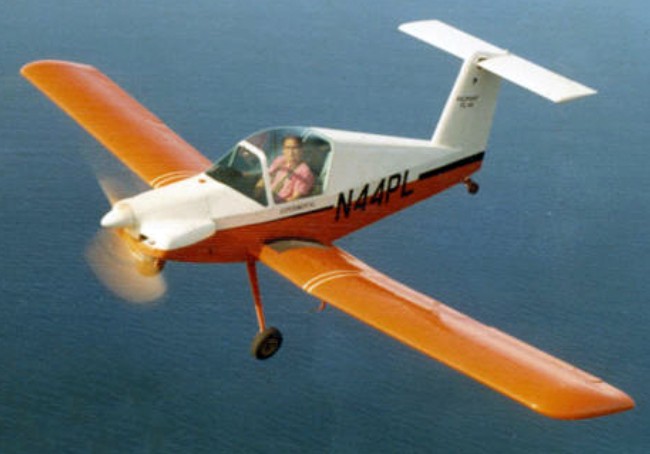
Pazmany PL-4A

When designer Ladislao Pazmany was encouraged to come up with an easy-to-build, simple, safe, inexpensive, metal plane that could carry a Volkswagen 1600-cc or Continental A-65 engine in the early l970’s, he came up with the PL-4A. The fuselage is made up from formed sheet metal channels and standard extruded aluminium angles for the longerons with sheet metal skins. The wing consists of a centre section and two outer panels which can be folded back along the fuselage. Each panel incorporates a metal spar, a Zed section rear spar, pressed metal ribs and metal skins. Pop rivets are used extensively. Plain ailerons, but no flaps or trim tabs are fitted to the wing. The empennage is of “T” tail configuration with an all moving tailplane at the top of the fin with a large anti-servo tab. The tailwheel undercarriage consists of spring steel main legs with 3.50 x 6” tyres and brakes and a steerable tailwheel. A 9.5 Imperial gallon moulded fibreglass fuel tank is fitted behind the firewall. Engines from 50 to 75 hp may be installed.

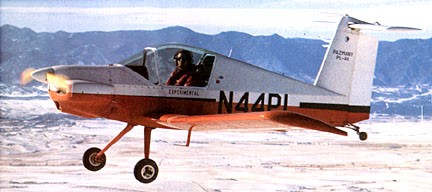
Pazmany PL-4A N44PL

The prototype was flown on July 9, 1972 and plans were made available. The plane is roadable (folding wings), and Pazmany did supply the fiberglass pieces, plexiglass windscreen and canopy, landing gear, welded engine mount, and control stick.

The PL-4A has been built by air cadets in Argentina and Canada.

Gallery

PL-4A
Engine Used: VW 1600 c.c.
Power Range: 50-90 hp
Top Speed: 120 mph
Cruise: 97 mph
Stall: 46 mph
Range: 280 mi
Rate of Climb: 650 fpm
Take-Off Distance: 560 ft
Landing Distance: 440 ft
Service ceiling: 13,000 ft
Fuel Capacity: 12 USgal
Empty Weight: 578 lb
Gross Weight: 850 lb
Height: 5.7 ft
Length: 16.5 ft
Wing Span: 26.7 ft
Wing Area: 89 sq. ft
Seats: 1
Landing Gear: Tailwheel
Information Package (PDF) 2009: $9
Information Package (printed) 2009: $12
Plans 2009: $375

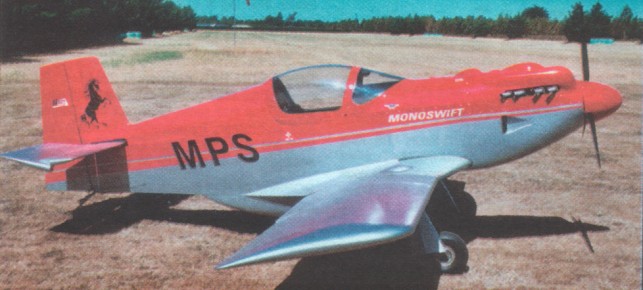
Paton Monoswift

For Maurice Paton of Canterbury, New Zealand, his re¬quirements were to design an aircraft that was bigger than a Corby Starlet and about the same size as a Thorp T18, but to be a single seater and meet the micro¬light rules.

With all of these ideas in mind Maurice sat down at his computer and with the help of the C.A.D system he designed his Monoswift over a period of six months. The next step was to build a 3D surface model to prove the concept. Then followed the printing of detailed drawings of all the components at full size. This made the building easier and very accurate because each piece was built directly on top of the drawing.

Western Hemlock is the main type of ma¬terial used in the construction, with fibre¬glass being used for the wing tips and the belly fairings.

The engine option was the water-cooled 3.9-litre Rover V8 using a single, two-inch SU carburettor (instead of fuel injection) and a radiator belly scoop, which direct drives a ground adjustable, 68-inch, three-blade Warp drive propeller via a custom made adapter to the flywheel end of the crankshaft. Fuselage construction is basically a wood and ply box section, with formers for the shape and fibreglass for the non-structural cowlings, wing tips, etc.

The undercarriage is a tailwheel configuration with the main wheels attached to the main spar and folding into the lower fuselage. Engine cooling is via a radiator housed beneath the fuselage. The starting point for the drawings was a Thorp three-view, with a radiator belly scoop and a larger rudder, the undercarriage moved to the wings, a raised rear turtle deck and a reshaped engine cowl. The wing is a single piece and based on the Sirocco (that is, a box spar with no dihedral but given one degree of washout at the tips).

From start to finish the Monoswift took Maurice three years and two months to build.

The aircraft, sn MPS001, was first registered, to M J Paton, Rangiora, New Zealand, on 24 September 2003.

The aircraft was flown by Maurice from his home strip “Barraca” to the Rangiora airfield on 26-10-2003.
Maurice reports it just flies like any other plane with no real surprises. After eight hours he found it to cruise at 130 kts, stalls at 38 kts and uses 25 litres/hr. The manually operated system for the retractable undercarriage works well al¬though there is noticeable drag on the air¬craft when the wheels are going down. He approaches at 55 60 kts over the fence with good forward visibility and finds the air¬craft easy to control on the ground.
The empty weight has come out at 9001bs which allows for 300 Ibs. for fuel and pilot etc. Maurice is using a 3 blade, direct drive, ground adjustable propeller but has found that he is running out of pitch adjustment in flight. So he has purchased a new warp drive in flight adjustable propel¬ler which should see the cruise speed in¬crease to 145 150 kts. The only other mod he is considering is to add a trim tab on the elevator to unload the stick forces when the flaps are fully extended for approach and landing.

Engine: 1 x 3.9-litre Rover V8

Partenavia Costruzioni Aeronautiche Spa

In the postwar period, Luigi “Gino” Pascale and his brother Giovanni “Nino” Pascale of Naples, Italy, having been enthusiastic flying model aircraft makers, decided to work on full-scale aircraft. The first, built while the brothers were college students, was the “P.48 Astore (Goshawk)” — a two-seat aircraft, with the seats in tandem, featuring a high strut-braced wing, fixed taildragger landing gear, and a Continental O-170 / A65 flat-four air-cooled engine with 48 kW (65 HP).

One Astore was built, performing its initial flight in 1952 — by which time Luigi Pascale had become an instructor in mechanical engineering at Naples University, where he would become a full professor and help establish a department of aeronautical engineering. The Astore was followed by other one-off designs:
P.52 Tigrotto (Tiger Cub)
P.53 Aeroscooter
P.55 Tornado
P.57 Fachiro
The Fachiro I was followed by three “Fachiro II” and then 33 “Fachiro III”.

Partenavia Costruzioni Aeronautiche Spa, a Naples company formed in 1949 to build series of light aircraft. First to enter production was the P-57 Fachiro of 1957, a four-seat high-wing monoplane with Lycoming engine. This was followed by various developments including the P.64 Oscar (first flown April 1965), also produced in South Africa under license as the RSA.200 by AFIC (Pty) Ltd, and the P.66 Charlie. Partenavia’s first twin was the P.68 six-seat light transport, first flown in May 1970. It was subsequently placed into production in several forms, including the Observer 2 for observation and patrol. AP.68 TP-600 Viator 11 seat transport followed in March 1985. New projects in the early 1990s included PD.93 Idea four-seat trainer and utility monoplane, but in March 1998 Partenavia ceased work and its P.68 series was bought via auction by VulcanAir SpA.

After financial difficulties the company reappeared, in 1986, as Costruzioni Aeronautiche Tecnam (see Tecnam).

In 2008, Partenavia, an Aeritalia division, announced a decision to transfer manufacturing of single engined aircraft, including the mosquito, to fellow Aeritalia subsidiary Aviolight, which was floated at the end of February 2008.

Paratoys II

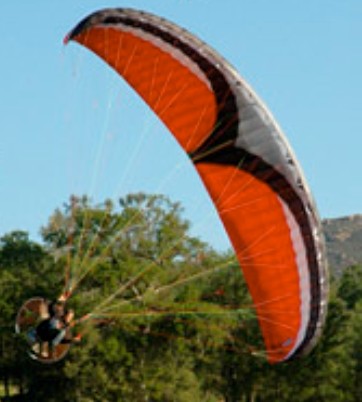
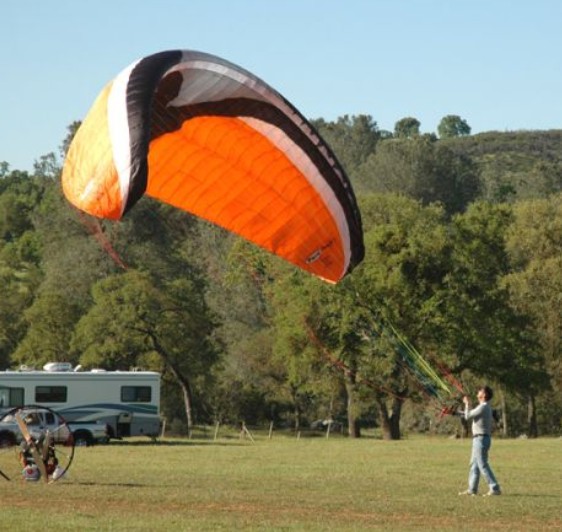
The paratoys glider is claimed to be the easiest launching glider ever made for powered paragliding. This glider’s handlinghas the safety of a DHV1 designed glider, and will suit the true beginner and the advanced pilot.

The Paratoys paraglider is fully certified in the Afnor Standard category (beginner/intermediate rated/certified in size 28). Features include single A’s for easy riser handling both in forwards and reverses, sewn in super strong rare earth magnets for no collection of debris and positive brake hook up, heavy lines for paramotoring, clearly marked A and D risers, and swivels on brake lines to prevent tangling.

Price per Unit 2009: $2,495.00

ParaToys II 25m
Hook in weight: 70-90 kg

ParaToys II 28m
Hook in weight: 86-110 kg

ParaToys II 30m
Hook in weight: 100-131kg

ParaToys II 33m
Hook in weight: 115-145kg

ParaToys II 36m
Hook in weight: 130-215kg

ParaToysII 42m
Hook in weight: 145-225kg