PIK Pik-27

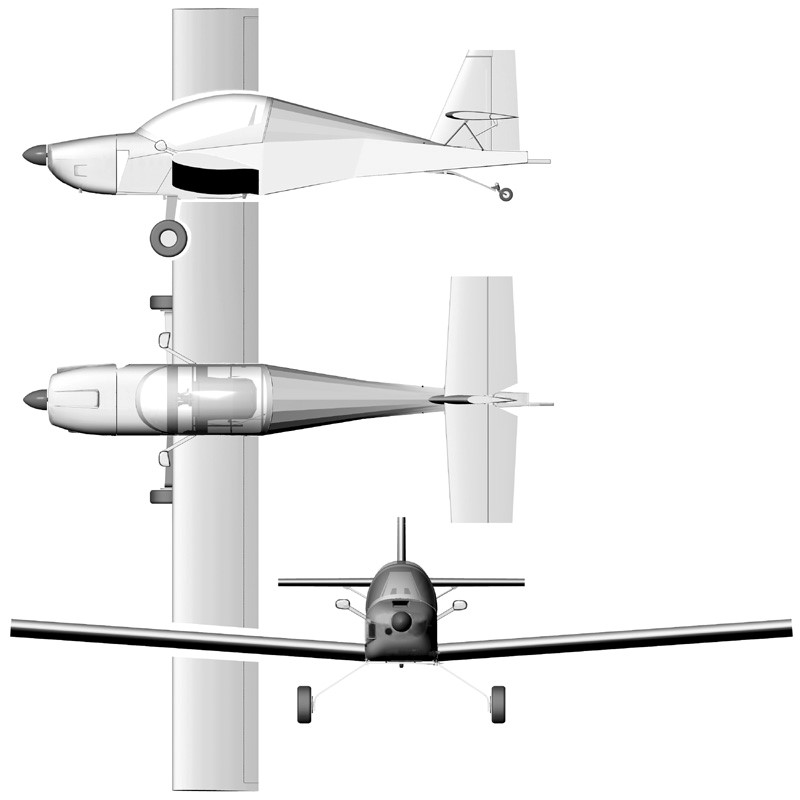
The Pik-27 design was begun by DI Aki Suokas with the objective of operating costs at a reasonable level, but not at the expense of safety. The design was to require minimal maintenance and only the necessary systems were included.
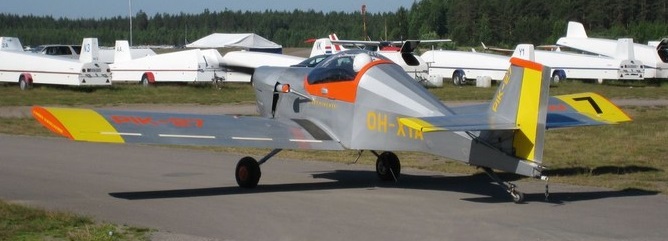
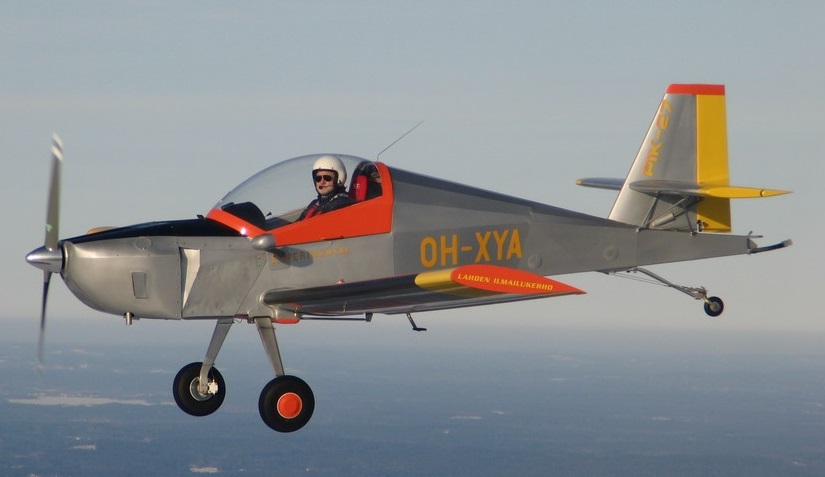
The prototype OH-XYA bears the excess weight of a prototype and it was anticipated the next would be at least 30-40 pounds lighter. The prototype weight includes a 70 m tow rope with a built-in reel.

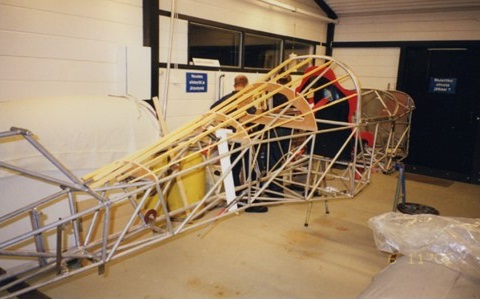
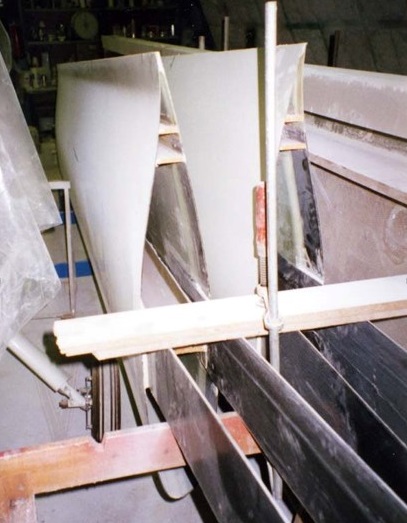
The PIK-27 low-wing monoplane has GRP wing construction and a fabric-covered SAF2205 steel-tube fuselage. The material has a very high elongation at break (25%), which improves the chances of settlement in the event of an accident. Another plan was for a 4130 fuselage.
The wings were traditional glider technology of glass reinforced PVC foam laminate surfaces, with fuel tanks in the wing.
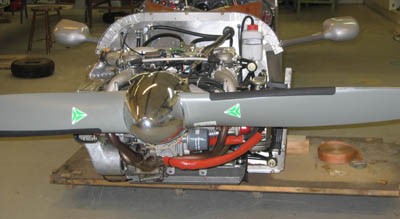
The Windcraft Oy built prototype (OH-XYA) was first flown December 2006, powered by a 115 hp Rotax 914. The Rotax 914 is a supercharged engine, meaning it does not lose power as density increases. The Rotax 914 maintains full power for flight level 150.
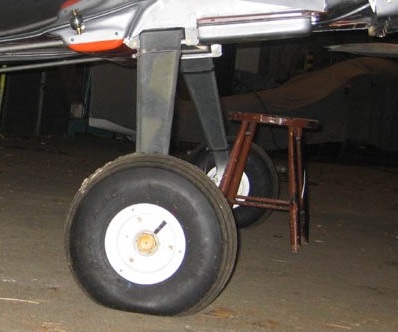
The undercarriage and brakes are the same style as the Cessna 172. The landing gear is quite high for a large propeller optimized for low speeds. The propeller has a diameter of 1.95 meters.
The Pik-27 was offered as kit and fits the US LSA definition (FAR CR 1.1). The wings and tail have to be molded. Wings can be joined by the builder if the transportation of a 9 m long package is difficult. The frame could not be deliver welded.
Gallery

Pik-27 prototype
Engine: Rotax 914
Span: 9.1 m / 29.8 ft
Wing area: 9.0 m² / 96.9 sqft
Wing profile: LS (1) -0417 mod
Length: 6,125 m / 20.1 ft
Height: 2.92 m / 9.6 ft
Empty weight: 410 kg / 904 lbs
Maximum take-off weight: 595 kg / 1312 lbs
Fuel capacity: 90 liters / 24 USg
Stabilizer area: 2.24 m² / 24.1 sqft
VNE: 270 kph / 146 kts
VA: 198 kph / 107 kts
VS: 81 kph / 44 kts
Loading: +4.7 g / -2 g
Maximum sailplane tow: 850 kg / 1874 lbs
Piel CP.1320 Saphire

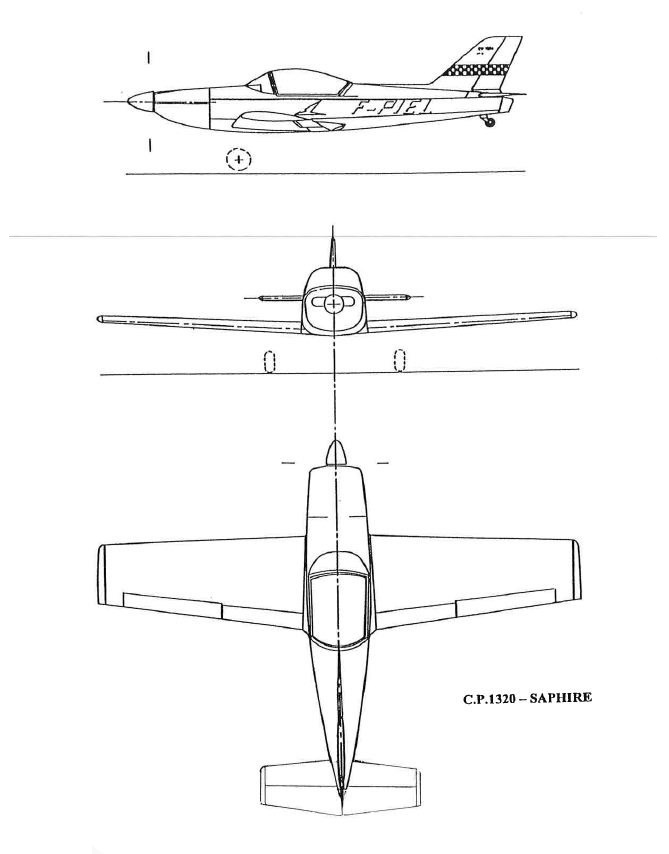
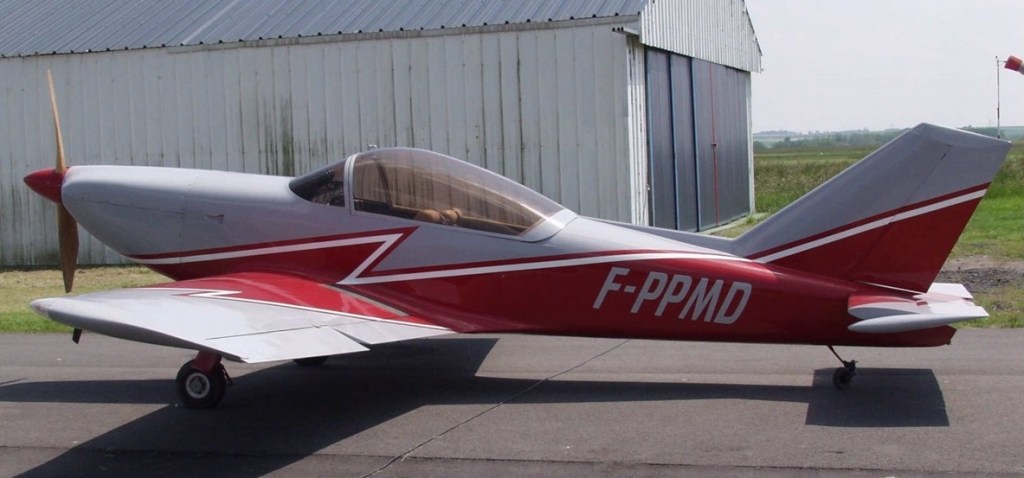
The C.P. 1320 Saphire is a two seat plus a rear bench can be added to accommodate an adult (max. 170 lb) or 2 children, low wing aircraft designed by Claude Piel. Construction materials are wood & fabric. The landing gear may be built as a rectractable or fixed tailwheel.

The plans detail construction of both types of gear. Designed with ribs and frames cut out of plywood, it is normally a 2 seat side-by-side, but may be equipped with a rear seat carrying a passengers not exceeding 340 lbs. A fuel tank of 18 gallons (US) is located behind the firewall + 2 additional wing tanks of 18 gallons each may be installed during construction.

Gallery

Span: 26 ft
Length: 22 ft
Area: 119 sq ft
Empty Weight (N) (U): 1190 lbs
Empty Weight (A): 1100 lbs
Crew & Passenger (N) (U): 485 lbs
Crew & Passenger (A): 355 lbs
Fuel (N): 220 – 250 lbs
Fuel (U): 195 lbs
Fuel (A): 88 lbs
Baggage (N): 65 lbs
Baggage (U): 44 lbs
Baggage (A): None
Dihedral: 3°
Incidence: 2°
Max Takeoff Weight (N): 2075 lbs
Max Takeoff Weight (A): 1545 lbs
Limit G (N) at 2075 lb: +3.8 / -1.9
Limit G (U) at 1920 lb: +4.4 / -2.2
Limit G (A) at 1545 lb: +6.0 / -3.0
For ultimate loads multiply limit loads by 1.5
Max Speed: 200 mph
Cruise 75% 5,000 ft: 167 mph
Cruise 65% 5,000 ft: 152 mph
Rate Of Climb: 1900 ft/min
T/O distance: 650 ft
Landing Distance: 980 ft
Vne: 211 mph
Approach Speed Flaps Down: 81 mph
Manoeuvering Speed Va: 158 mph
Stall Flaps Up: 62 mph
Stall Flaps Down: 53 mph
Max Speed Flaps Down: 90 mph
Range: 680 miles
Complete set of plans 2009: US$275

Piel CP.150 Onyx / CP.152

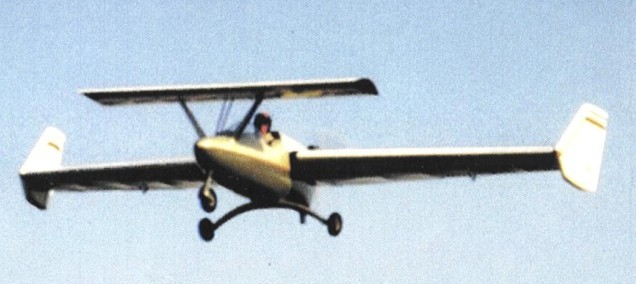
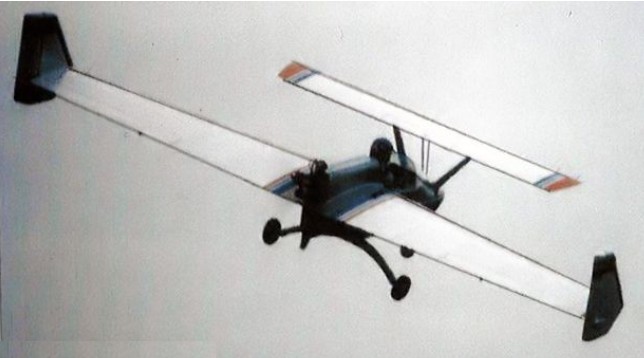
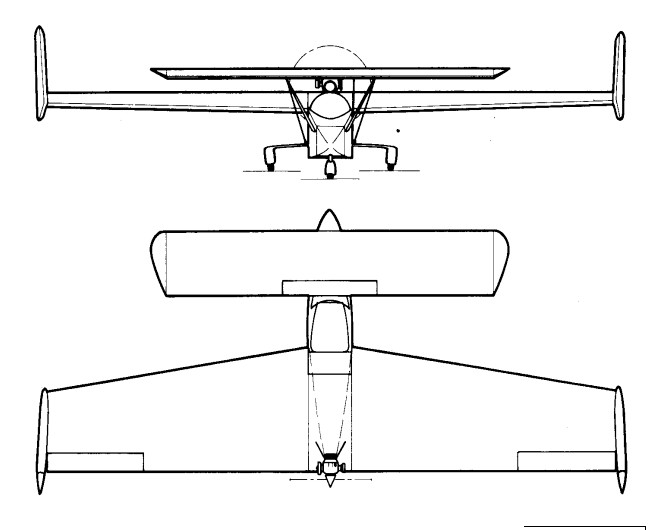
At the end of 1981 Piel completed plans of his CP 150 Onyx microlight it should have flown during 1982 but was held back by the demise of its designer. Single seat single engined double monoplane in tandem with conventional three axis con¬trol. Two fin tail. Pitch control by fully flying wing; yaw control by fin mounted rudders; roll control by ailerons; control inputs through stick for pitch/roll and pedals for yaw. Under¬carriage has three wheels in tricycle formation with additional tailskid; suspension on all wheels. Push right go right nose¬wheel steering connected to yaw control. No brakes.

Wood/fabric fuselage, partially enclosed. Engine mounted above main wing driving pusher propeller. The CP 150 is a double tandem monoplane whose front wing has a NACA 23012 profile and is adjustable for incidence. It thus acts as the elevator and is stabilised by an anti servo tab. It is much smaller than the rear wing which has a NACA 23015 profile and a swept back leading edge but an unswept trailing edge. Both wings are cantilevered, the front mounted on two faired supports on which it is articulated, with incidence control via pushrods. The rear wing is fitted with ailerons and has large fins at the wing tips on which the rudders are hinged. The fuselage is largely made from wood as are the wing, wing spars and vertical tail surfaces. Of rectangular section, the fuselage is covered with plywood, the two wings use a covering of Tergal and are de mountable, so that the Onyx is trailer transportable.

Designed for low power engines, the Onyx was tested at the beginning of 1982 with a Solo 12 hp engine.

The 2nd version had a longer wingspan with a fiberglass body. It was developed by R. Francois, an enthusiast for the design. This was the only version with a steerable nose wheel.

The third version, the one that is available as plans, is the wood fuselage with the longer wingspan of the fiberglass body.

The 4th version was the 2 seat produced by Veritas, probably developed by R. Francois.

Madame Piel distributes plans for aircraft.

CP-152
CP.152

Gallery

Engine (prototype): Solo, 12 hp
Propeller: 35″ dia. x 14″ pitch
Length: 11.6 ft
Total Area: 137.7 sq ft, 12.8 sq.m
Height overall 5.4 ft, 1.61 m
Rear wing span 23.9 ft, 7.30 m
Rear wing chord at root 5.3 ft, 1.60 m
Rear¬wing chord at tip 3.3ft, 1.00 m
Front wing span 14.6 ft, 4.46 m
Front wing constant chord 2.9ft, 0.84m
Empty Weight: 265 lbs
Max Takeoff Weight: 475 lbs
Fuel: 5 USG
Power per unit area 0.09 hp/sq.ft, 0.9 hp/sq.m
Front wing dihedral 0 deg
Front wing sweepback 0 deg
Fin height 3.5 ft, 1. 05 m
Rear wing area 98 sq.ft, 9.1 sq.m
Front ¬wing area 40 sq.ft, 3.7 sq.m
Total aileron area 6.8 sq.ft, 0.60 sq.m
Fin area 8.9 sq.ft, 0.83 sq.m
Rudder area 6.8 sq.ft, 0.63 sq.m
Rear wing aspect ratio 5.9/1
Front wing aspect ratio 5.4/1
Max Speed: 62 mph, 100 kph
Minimum Speed: 28 mph
Cruise Speed: 50 mph, 80kph
Economic cruising speed 37mph, 60kph
Vne: 85 mph
Stall Speed: 22 mph, 35kph
Take off distance 100ft, 30m
Landing distance 200 ft, 60 m
Rate Of Climb: 300 fpm
Complete set of plans 2009: US$90
Wheel track 4.9ft, 1.50m
Wheelbase 5.5ft, 1.68m
Nosewheel diameter overall 8 inch, 20 cm
Main wheels diameter overall 10 inch, 25 cm
Load factors; +4.0, 2.0G

Engine: Solo, 15 hp
HP range: 15-20
Length: 11.6 ft
Wing span: 24 ft
Wing area: 137.7 sq.ft
Empty weight: 265 lb
Gross weight: 595 lb
Fuel capacity: 5 USG
Top speed: 62 mph
Cruise: 50 mph
Stall: 22 mph
Range: 200 nm
Rate of climb: 300 fpm
Takeoff dist: 200 ft
Landing dist: 100 ft
Service ceiling: 5000 ft
Seats: 1
Landing gear: nosewheel

Engine: 18 hp
Propeller: 35″ dia. x 14″ pitch
Span: 24.0 ft
Length: 11.6 ft
Total Area: 137.7 sq ft
Empty Weight: 265 lbs
Max Takeoff Weight: 475 lbs
Fuel: 5 USG
Max Speed: 70 mph
Minimum Speed: 30 mph
Cruise Speed: 60 mph
Vne: 85 mph
Stall Speed: 25 mph
Takeoff Distance: 150 ft
Landing Distance: 100 ft
Rate Of Climb: 450 fpm
Complete set of plans 2009: US$90

Piaggio

SA Piaggio & Co, an engineering and shipbuilding company, produced some Caproni aircraft and parts during the First World War at a Finale Ligure factory, but subsequently abandoned aircraft manufacture until it took over Pegna & Bonmartini in 1923. First product was the Piaggio-Pegna pursuit monoplane with Hispano-Suiza engine. Later was associated with Societa di Costruzioni Meccaniche Aeronautiche in license-construction of Domier Wal flying-boats. Built P.32 twin-engined heavy bomber at end of 1930s and several four-engined P.108 heavy bombers during Second World War.

Resumed aeronautical work in late 1946 with conversion of Dakotas for airline service. Built P.136 five-seat twin-engined amphibian, prototype flying in 1948, followed by a series of trainers for the Italian Air Force; the P.149 was also license-built by Focke-Wulf in Germany. Produced the P.166 executive transport in 1957, with two Lycoming engines and pusher propellers, as with the P.136; P.166-DL3 turboprop variant later developed and produced, with final P.166-DL3-SEM Maritime variant for search and surveillance, coastal patrol and other roles still available in 1998, but only to special order. Signed agreement with U.S. Douglas company in 1961 for joint development of light utility aircraft, first flown in 1964. Designated PD.808 and powered by two Bristol Siddeley Viper turbojets, only a small number was built.

The present Rinaldo Piaggio company was formed in February 1964 as a separate concern, but in 1994 was put under insolvency protection; 51 percent shareholding in the company was purchased by Tushav, a Turkish holding company, in mid-1998, and protection was thereafter lifted. P.180 Avanti twin-pusher turboprop business aircraft flown September 1986, but only 43 production aircraft ordered; turbofan derivative may be developed. Has manufactured components for Aeritalia/Alenia, AMX International, Dassault and Panavia.
In 1998 three Italian industrial families bought the debt-free assets from the Government and formed Piaggio Aero Industries SpA.

In 2024 Italy approved the sale of Piaggio Aerospace to the Turkish unmanned combat aerial vehicle (UCAV) producer Baykar. In 2023, Baykar ranked among the top 10 exporters in Türkiye across all sectors, racking up $1.8 billion in exports. Türkiye dominates 65% of the global unmanned aerial vehicle (UAV) export market, with Baykar alone holding nearly 60% of the market – three times the size of its closest US competitor. In recent years, Baykar has generated more than 90% of its revenues from exports, delivering Bayraktar TB2 UCAVs and Bayraktar AKINCI UCAVs to 35 countries.

Phoenix Air Phoenix Motorglider

Phoenix Air’s honcho Jim Lee counts 14 more aircraft on his backordered list—a major LSA success story. The 49-foot span, Rotax 912ULS-powered low-wing taildragger won Sun ‘n Fun’s Best Commercial LSA award in 2012 and received three more sales. Base price 2012: $149,000.
Phoenix Air was rolling out a new Phoenix S-LSA motorglider every 18 days. They registered 10 aircraft in the US in 2012.

Under development in 2012 was the all-electric ePhoenix, using an in-house built motor and electronic flight controller. So far, flights have yielded one-hour durations, this is a two-seat LSA.

Petrolje Macchi M-5

Jason Petroelje’s first project, an Emeraude RG, was a 1979 Oshkosh award winner and a feature in the May 1980 EAA Sport Aviation magazine. Other airplane projects included two World War I reproductions for a museum.

“I was building a SPAD replica for them, and they mentioned the Macchi,” Petroelje said. “I didn’t know anything about the type, but when I looked into it I decided I really liked it.”

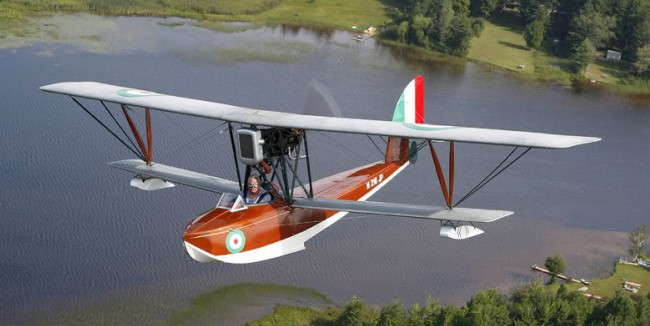
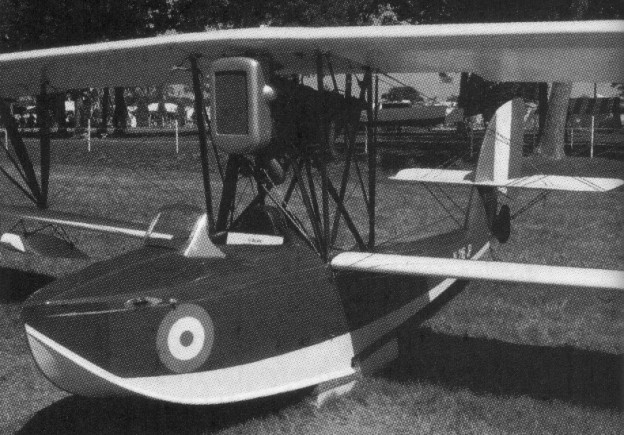
Jason Petroelje built his beautiful Macchi M.5 flying boat using only his left hand – the one hand he had to use after a stroke 10 years earlier. “I built this thing after I had the stroke,” Petroelje said about his three-quarter scale Macchi M.5 flying boat. He added, “I built it with my left hand.” It didn’t stop him, however, worked about 5,000 hours, day and night, in the cramped workshop next to his home on Hazel Avenue, turning out everything from the wing struts to the tiniest of fittings.

Petroelje’s Macchi, a type used as a fighter by the Italian forces in World War I, has the appearance of a fine, classic watercraft with a natural Honduran mahogany skin and a solid Brazilian rosewood instrument panel. The woods are both adorned with a deep, high gloss marine finish.

The control stick has a hand-carved Madagascan ebony handle, and thrust comes from a hand-laminated, hand carved cherry-and-birch propeller.

His little flying boat is three-quarter scale for a good reason. The reason for building the airplane in 7/8 scale is unique to seaplanes. Hangers next to the water with easy access are very rare. Jason had a friend who used to have a Volmer Sportsman. He had sold the airplane, but the hanger remained. Jason had to scale down the airplane to fit in this existing hanger.

No original drawings of the Macchi existed, so Petroelje had to create his own designs from a set of dimensions and from photographs. “I just went more by the dimensions,” Petroelje said of the plans, which he secured years ago for $40 from “WWI Aero” magazine.

A variation drawn from experience was a decision to scale the tail to 80 percent instead of 75 percent. Petroelje said the 75-percent version was just too small.

The hull of the seaplane varies from the original as well. Petroelje layered the bottom first with plywood, then foam, and finished it off with fiberglass. The modern bottom is more durable than the likely single-plywood layer of the original and should better tolerate the rigors of normal water operations. As for the mahogany finish, no color photos exist of the type, so that choice may well be artistic license on Petroelje’s part.

The wings of the plane fold back, a feature certainly not part of the original. But at three-quarter scale, the collapsed craft is only 8 feet wide, well within legal trailering limits. This has a more modern airfoil, a 4412 like on a Luscombe.

A modern air-cooled Lycoming powerplant provides the motive force. The radiator on Petroelje’s plane, necessary for the liquid-cooled powerplant on the original, is purely decorative.

The Macchi M.5 Italian fighter is mostly authentic, except for not sporting machine guns like those used during the plane’s heyday.

Registered as N216JP, to Jason Petroelje of Michigan, Eric Presten did the first three flights on the Macchi M-5.

The airplane performed well, but due to limited aileron travel, Presten was only able to do flights down the lake in ground effect on the first day. It has since been flown to altitude. It gets out of the water easily on only 125 hp. The missing outer struts are now installed. The landing gear shown is only a beaching gear, as the airplane is a true seaplane. Cruise speed for the craft is around 75 miles per hour.

The replica appeared at Oshkosh 2009.

Gallery

Engine: Lycoming 125-horsepower
Fuselage length: 24 feet
Wing span: 31 feet
Weight: 940 pounds
Cruising speed: Up to 70 mph
Fuel capacity: 12 gallons
Hours to build: About 5,000
Size of workshop: 18 by 24 feet

Pereira GP-5

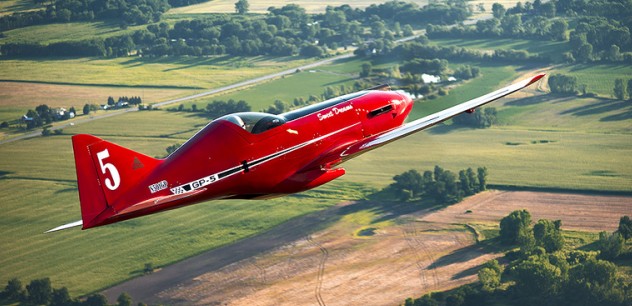
On 12 April 2014 Lee Behel set out from Mojave Airport to break two records, the 3,000m climb and the 3k speed run. Flying his V-8 powered George Pereira designed GP-5, he managed to reach 3,000 meters (or 9,842 feet), in exactly two minutes along with achieving a top speed of 372mph on a flat 3k run to take the records.

Penkala 1910 Biplane / Leptir / Cvjetkovic CA-10 Penkala

Slavoljub Penkala was interested in flight and decided to buld his own airplane, pretty much making it up as he went along. He patented it in late 1909 and the plane was ready for its first flight by June 1910. The funding came from Penkala’s own income from his pen and pencil factory, and a lot of the work and ideas also came from Dragutin Novak, who joined Penkala earlier the same year.

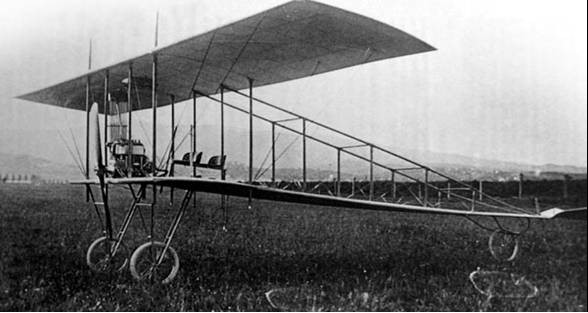
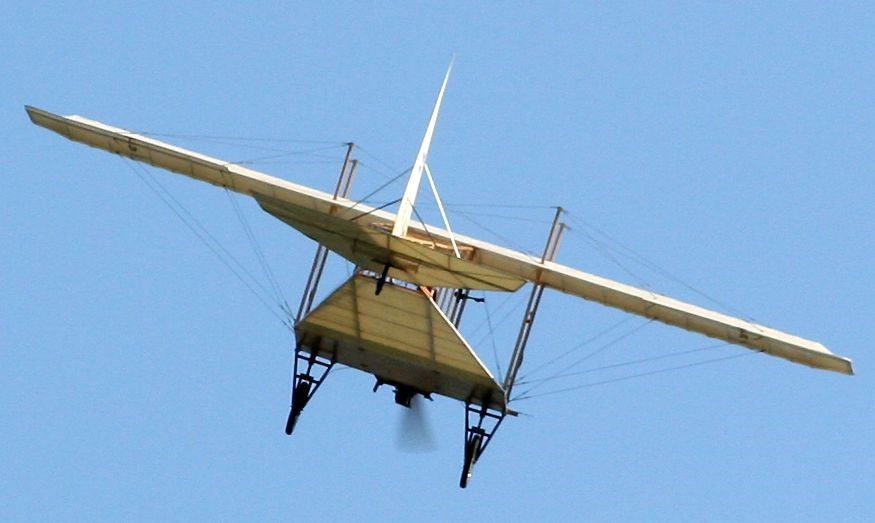
The Leptir (English: Butterfly)was a single engine, sesquiplane aircraft with conventional landing gear. The open girder fuselage provides an unusually long distance to the tail surfaces, compared to modern aircraft. The flat bottom surface of the fuselage was covered, forming a long thin triangular surface intended to provide lift, which was not functional in level flight. The aircraft was tail heavy with a center of gravity at 70 percent of wing chord.

The first flight occurred on 22 June 1910 with pilot Dragutin Novak. The 1910 Leptir II featured modifications to include skids. The aircraft was crashed several months later.

The CA-10 replica was built in 2010 and known as the Cvjetkovic CA-10 Penkala, bearing the registration of 9A-XCA. It was powered by an 80 hp (60 kW) Rotax 912 with the center of gravity moved forward for safety.

Cvjetkovic CA-10 Penkala

Penkala Biplane
Propeller: 2-blade
Wingspan: 11 m (36 ft 1 in)
Length: 11 m (36 ft 1 in)
Empty weight: 330 kg (728 lb)
Crew: 1

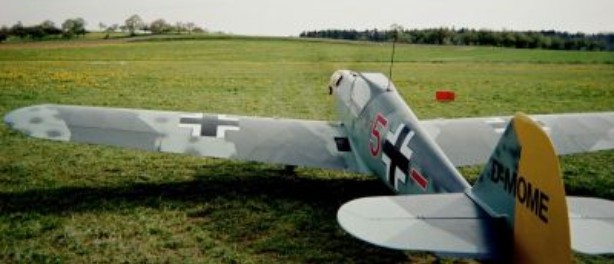
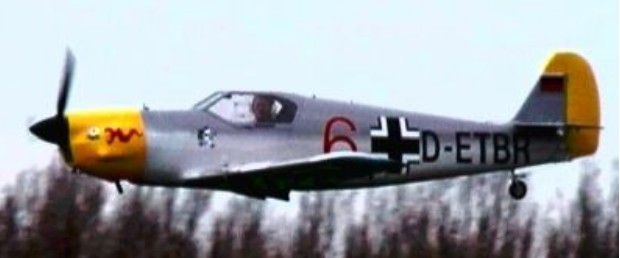
Peak Me 109 UL / Mecklenburger Ultraleicht Flugzeugbau Christian Engelen Me 109 / Classic Planes GmbH Me 109

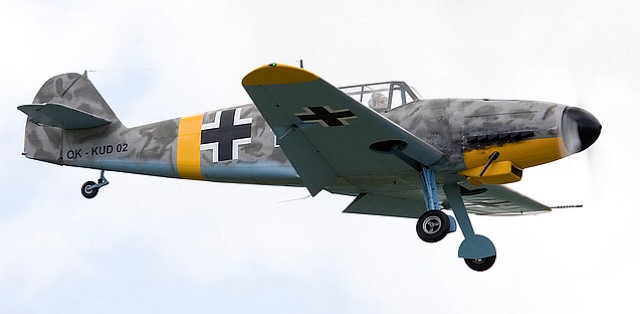
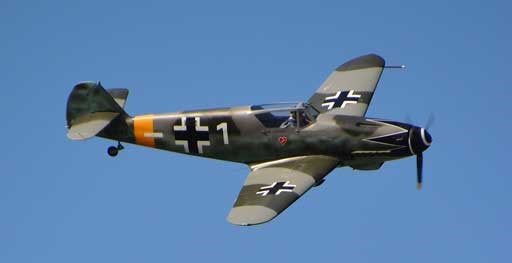
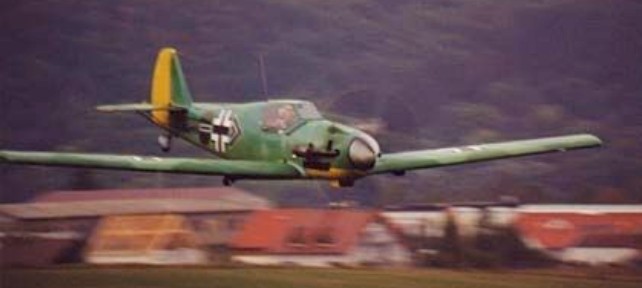
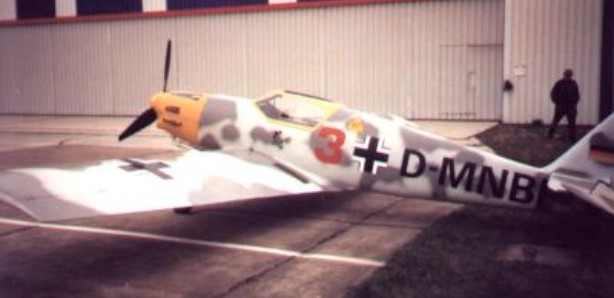
The first 109 flew well, but was not particularly agile. Thus Bek began to build the first form for a plastic 109. Soon finished the first 109 from that form first flew in 1991. The second aircraft, registered D-MYBB, first flew in 1992, but was lost in an accident that same year. Bek’s third prototype, D-MNBP, was flown in about 1994 and resulted in some kits being sold.

The Messerschmitt BF 109 is certified as an ultralight aircraft, after the BfU 84 – LTA UL 2003. From the 1992 form, the new series had its first flight on 17 November 2006, after extensive revision.

The Peak Me 109 microlight Messerschmitt is now available either as a microlight or an experimental kit.

The BF 109 UL is a single-seat GRP low-wing aircraft with one piece wing, and tail wheel landing gear. The retractable main landing gear has a steerable tail wheel. Parachute: BRS 5 UL 1050 Softpack.

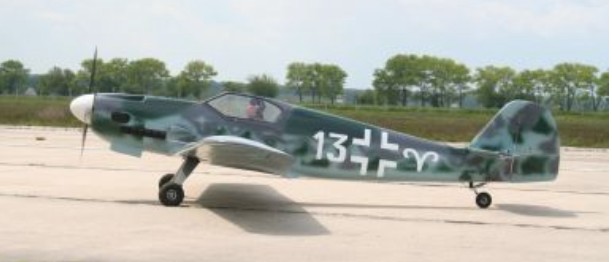
The Peak Aerospace Me 109R was originally produced by Peak Aerospace, Mecklenburger Ultraleicht Flugzeugbau Christian Engelen and then by Classic Planes GmbH of Pasewalk.

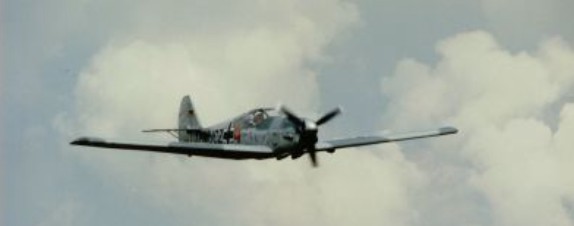
Bek flew a homebuilt category version of the Me 109 in 1996, powered by a Hirth F30 and later a Subaru automotive conversion, which became the prototype of the Me 109R kit aircraft. Bek then sold the company and the new owner ceased development of the Me 109. In 2003 Christian Engelen purchased the project and continued work on the aircraft, officially re-launching it in 2004. Since then production has continued on a demand basis.

The production version, the Me 109R is made from composites. Standard engines available include the 64 hp (48 kW) Rotax 582 two-stroke, the 70 hp (52 kW) Weber Motor MPE 750 and the 80 hp (60 kW) D-Motor LF26 four-stroke powerplants. The unit cost, assembled, was €40,990 in 2015.

Engine options:
Rotax 582 DCDI 65PS/48KW reduction 1:2,62
Sauer M800UL 70PS/50KW reduction 1:2,66
Jabiru 2200 80PS/54KW direct drive

Propeller:
Helix H50v 3 Blade 1,60m Diameter
Warp Drive 3 Blade 1,65m Diameter

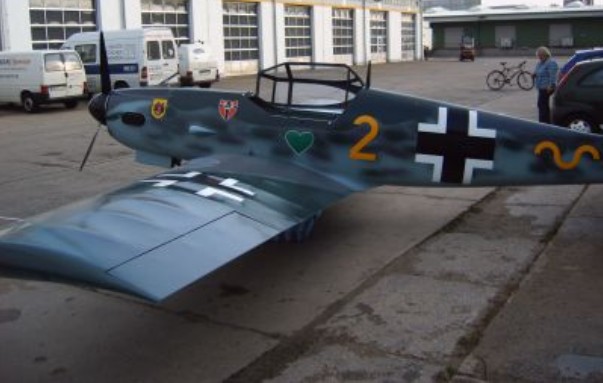
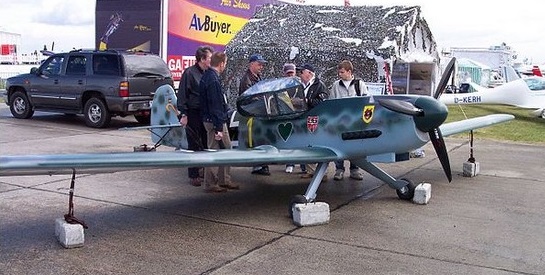
Gallery

Wingspan: 8,20 m
Length: 6,30 m
Height: 1,45 m
Wing area: 10,10 qm
Empty weight: 200-220 kg
MTOW: 322.5 kg (proven to 340kg)
Fuel capacity: 55 lt / 52 usable
Stall speed Vs: < 65 km/h
Va: 120 km/h
Cruising speed Vr: 160 km/h
Maximum speed Vne: 210 km/hr
Range: 600 km (3,5 hr Std. + Res.)
Average consumption: 12-14 lt/hr at 160/170 km/h IAS
Seats: 1

Mecklenburger Bf 109 UL
Stall: 32 kt / 37 mph / 59 kmh
Cruise: 97 kt / 112 mph / 180 kmh
VNE: 113 kt / 130 mph / 210 kmh
Empty Weight: 190 kg / 419 lbs
MTOW Weight: 300 kg / 661 lbs
Climb Ratio: 1100 ft/min / 5.5 m/s

Me 109R
Engine: 1 × Rotax 582, 48 kW (64 hp)
Propeller: 3-bladed Helix-Carbon composite
Wingspan: 8.10 m (26 ft 7 in)
Wing area: 10.53 m2 (113.3 sq ft)
Length: 6.3 m (20 ft 8 in)
Height: 1.5 m (4 ft 11 in)
Empty weight: 190 kg (419 lb)
Gross weight: 322 kg (710 lb)
Fuel capacity: 52 litres (11 imp gal; 14 US gal)
Wing loading: 30.6 kg/m2 (6.3 lb/sq ft)
Maximum speed: 190 km/h (120 mph, 100 kn)
Cruise speed: 175 km/h (109 mph, 94 kn)
Stall speed: 59 km/h (37 mph, 32 kn)
Never exceed speed: 190 km/h (120 mph, 100 kn)
Rate of climb: 6 m/s (1,200 ft/min)
Crew: one
Capacity: one passenger
Aerobatic

Me 109R
Engine: 1 × Rotax 912UL, 80 hp (60 kW)
Gross weight: 500 kg / 1,100 lb
Loading: +6/-4g
Aerobatic

Me 109R
Engine: 1 × MPE 750, 70 to 120 hp (52 to 89 kW)
Gross weight: 500 kg / 1,100 lb
Loading: +6/-4g
Aerobatic

Me 109R
Engine: 1 × D-Motor LF26, 80 hp (60 kW)
Gross weight: 500 kg / 1,100 lb
Loading: +6/-4g
Aerobatic

Peak Me 109 v

V.2

To make the aircraft more agile and reduce the building expenditure, in 1992 Tassilo Bek developed new wings with a majority of GRP structure, and using the Hirth F30 in order to bring the machine to or over the 200 km/h mark. The new wing withstood in the load test, up to a maximum take-off weight of 340 kg. The following machine WNr. 1992 flew. D-MYBB was lost in the same year through accident.

Powered with a Hirth 2704 of 40 hp, the machine reached 190 km/h maximum speed. The simple and reliable retractable landing gear of the 109 was incorporated at that time.

It still flies in close proximity to Jena. The machine is reliable and the wings are of timber construction method with foam material ribs.

V.3

The experiences from the flight behaviour, the structure and the examinations taken place following the accident of D-MYBB flowed immediately into the building of the next machine and the following.

Due to becoming largely popular inquires from prospective customers appeared. With that, Mr. Bek built several kits. First became the factory serial number 3, D-MNBP. This flew for the first time around 1993.
It was sold around Berlin. The construction units and/or kits sold, from which, among other things, the factory serial number 4, D-MCUZ was developed.

Serial number 4 had a Hirth F30 and flew from 1994 to 2003. In the meantime, the French certified the type.

The factory serial number 5 was equipped with a Rotax 582, this engine was intended from the beginning for the re-equipment of other machines like the factory serial number 3 and 4.

Mr. Bek on a strenghtened version, which became certified as experimental, in order would do aerobatics. This machine flew for the first time in 1996 equipped with the F30, shortly after changed to a Subaru autoengine.

The factory serial number 7 received a Rotax 912 and it emigrated in 2005, together with its new owner, to Paraguay.