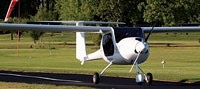
Pipistrel’s S-LSA Alpha Trainer debuted 2012 and has sold well. Price: US$90,900 (fully equipped Alpha Trainer w/ballistic chute).
At the end of 2017 the Pipistrel Alpha Electro trainer was officially released to customers with significant success. This aircraft has an endurance of 1 hr plus a 30 min reserve, short take-off distance, and 1000+ fpm climb. The Alpha Electro is also designed to recover 13% of the energy upon each approach.
Pipistrel’s Alpha Electro (UL/LSA in Australia) electric airplane has obtained certification.
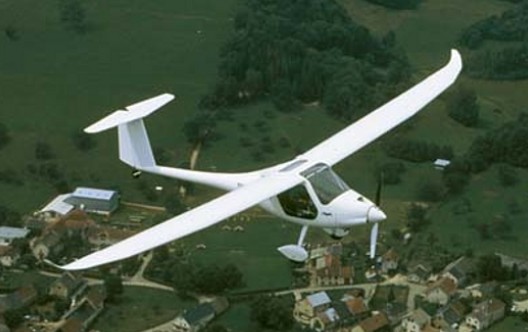
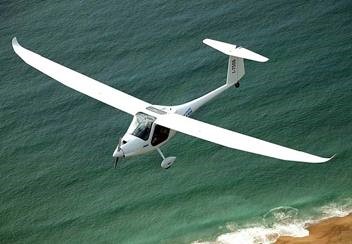
In 1995, Pipistrel d.o.o. Ajdovščina presented a two-seat ultralight aircraft with a wing-span of 15 meters, aimed also at glider pilots. The aircraft was the Sinus.
The Sinus team aimed at a two-seat composite-built aircraft with 15 meters of wingspan, which requires 100 meters of runway to take-off and reaches 200 km/h in horizontal flight, all on a 50 HP engine. The aircraft was is constructed according to EASA CS-22 rules (classic gliders), although it fits into the microlight category, with seats in side-by-side configuration.
The L/D ratio of the aircraft was be close to 1:30, which makes it a decent glider and provides extra safety in case of engine failure, since the engines for microlights are not certified, and must present Short Take-off and Landing (STOL) characteristicts. The aircraft is equipped with airbrakes, which enable the pilot do descent rapidly and use a high angle of approach onto typical ultralight airfields. The empty weight of the whole aircraft was not to exceed 285 kgs.
The small Pipistrel team developed their own airfoil and wing shape as well as a propeller with feathering capability, all drastically decreasing the drag and providing for a satisfactory glide ratio.
When the Sinus flew for the first time she was a subject of aviation magazines around the World and glider pilots began placing orders. They were willing to trade the imperfect glide ratio for the low cost of flying, freedom and independence from glider tow.
Sinus took the World Champion 2001 title, triggered a wave of imitators. Fully composite construction with a 15-meter wing span, which provide for a glide ratio touching 1:30, the Sinus is equipped with high-tech features such as flaperons, airbrakes and variable-pitch propeller, and can be had in both tricycle or tail dragger undercarriage configuration. Sinus comes in two variants, the 503 and 912 with corresponding Rotax two- and four- stroke engines. Fast cross country flights to destinations 1000 km and further away doing more than 200 km/h (110 kts) are a reality with Sinus, even while burning around 10 liters of automotive fuel (mogas) or avgas per hour.
The Pipistrel Sinus is a ULM certified composite two seater motorglider. The vario propeller with in flight adjustable pitch and possibility to set it in the feather position transform the Pipistrel Sinus in a real low resistance glider. All options are included in the basic 2009 price: 46900 EURO.
Electric starter, recycling fuel pump to fill the wing tanks, warning lights for fuel minimum level, cockpit hot air heating system, main wheel fairings, all engine and flight instruments, etc. The cabin is properly insulated from noise and very comfortable. The seats are ergonomic with an adjustable head rest. The pedals have wheel brake levers on them, are adjustable in flight and made in stainless steel. All controls are easy to use and reach from both seats, and both seats have pedals and sticks.
Sinus was the absolute winner of the World Championship in 2001 and came runner-up in 2005. In 2004 Sinus was the first light aircraft to fly around the World. Since then, our owners have performed remarkable long-range flights including a non-stop flight from Pisa to Lisbon, Athens – Nordkapp flight and the first ever light aircraft Australia – New Zealand crossing!
The Sinus entire cabin area is encased with energy absorbing structures made from Kevlar fibre. The Sinus can also be equipped with the ballistic parachute rescue system. Including honeycomb techniques, Titanium and Magnesium are used on parts of the aircraft.
The wing tanks have the fuel cap on top, as well as a visual check for the fuel level. The main landing gear is profiled, made of composite. The main wheels have strong hydraulic disk brakes. Back wheel is controlled by pedals. The airbrakes allow landing the Sinus in very short distances over high obstacles. Disassembling and assembling is very simple like on normal gliders, all wing control connections are automatically locked on annexation of the wings.
Pipistrel has delivered more than 1,000 aircraft worldwide. All Sinus models can be had as 51% EAB (Amateur-Built Experimental) kits (400 hours est.) too. Price 2014 US$97,450.
Sinus 503 Engine: Rotex 503 UL DCDI 2V 50hp at 6000 rpm Wing span: 14.97 m Wing area: 12.26 sq.m Aspect ratio: 18.3 Airfoil: IMD 029-b, (Orlando, Venuti) Empty Weight: 265 kg / 584 lb MTOW Weight: 472 kg / 1041 lb Stall: 34 kt / 39 mph / 63 kmh Cruise: 92 kt / 106 mph / 170 kmh VNE: 121 kt / 140 mph / 225 kmh Climb Ratie: 600 ft/min / 3.2 m/s Glide Ratio: 1:28 Take-off distance (50ft obstacle): 710 ft / 215 m Landing distance (50ft obstacle): 660 ft / 200 m Cockpit width: 44 in Seats: 2
Sinus 912 Engine: Rotax 912 UL2, 80 hp at 5800 rpm Propeller: Pipistrel VARIO Wing span: 14,97 m Length: 6,6 m Height: 1,70 m Wing area: 12,26 sq.m Airfoil: IMD 029-b, (Orlando, Venuti) Rudder area: 1,1 sq.m Tail area: 1,63 sq.m Aspect ratio: 18,3 Positive flaps: 9 deg, 18 deg Negative flaps: 5 deg Center of gravity: 20% – 39% Empty weight: 285 kg Empty weight light version: 275 kg Max take off weight (MTOW): 450 kg / 472.5 kg / 544kg Fuel tanks capacity: 2 x 30 l / 2 x 50 l Useful fuel: 2 x 27 l / 2 x 45 l Stall with flaps: 34 kt / 39 mph / 63 km/h Stall without flaps: 66 km/h Cruising speed (75% power): 108 kt / 124 mph / 200 km/h Max. Horizontal speed : 220 km/h Vne: 121 kt / 140 mph / 225 km/h Max speed with airbrakes out: 160 km/h Max speed with flaps down: 130 km/h Manoeuvring speed: 141 km/h Best climb speed: 120 km/h Max climb rate (450 kg): 6,5 m/sec Climb rate at 140 km/h: 1300 ft/min / 6,3 m/sec Min.sink speed: 90 km/h Min.sink (prop. 90 deg.): 1,03 m/sec Max. Sink with airbrakes: 5,5 m/sec Best glide ratio speed: 95 km/h Best glide (prop. 90 deg.): 1:27 Glide at 150 km/h (prop 90 deg): 1:18 Take off run ( 450 kg): 88 m Take off over 15 m obstacle (450 kg): 148 m Service ceiling ( 450 kg): 8800 m 45° – 45° roll time: 4,2 sec Fuel consum. At cruis. Speed: 9,2 l/hour Endurance (std tanks): 5,8 hours Range distance: 1200 km Max load factor permitted ( x 1,8): +4 g – 2 g Max load factor tested: + 7,2 g – 7,2 g Cockpit width: 44 in Seats: 2 2009 Price: 57900 EURO
After the success of the Sinus it was quite realistic to expect there is also a market niche for a real microlight two-seat glider, as well as it’s version with an auxiliary, fully retractable engine. Hard-core glider pilots were not convinced by the glide ratio of 1:30 that Sinus has to offer. The ‘real’ quality gliding goes together with glide ratios of 1:40 and more.
This time, the main idea of construction was different from the Sinus, but the aims were a side-by-side microlight motorglider, with a self-lauchable version with an auxiliary, yet fully retractable engine and glide ratio of at least 1:40. by providing two main wheels in parallel configuration complete independence could be achieved dispensing with a helper holding the wing tip during take-off.
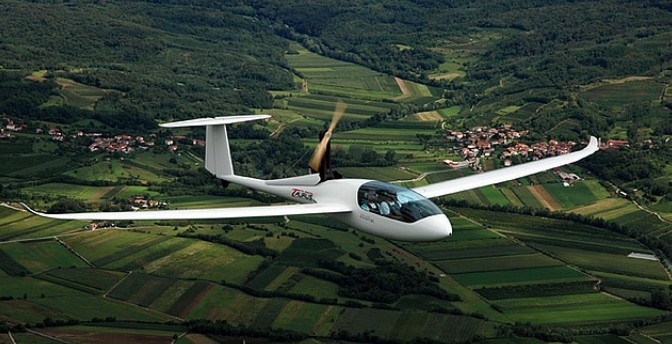
The fuselage of Taurus uses a lifting body shape concept and features enough room for an auxiliary, yet fully retractable engine. Taurus is also intended for training, therefore all controls must be within reach of both pilots. Both pilots have individual control sticks and rudder pedals. The landing gear operation lever, flaps, airbrakes, tow rope release and trim levers are there for common for both pilots and are found in the middle, between both seats. For added comfort pilots enjoy adjustable headrests, in-flight adjustable rudder pedals, separate vent window and a central ventilation system for efficient de-fogging of glass surfaces. There are side pockets for each pilot and a baggage compartment behind the seats with space for an oxygen system as well.
The version of Taurus with an auxiliary retractable engine comes with a ROTAX 503 which is modified and redesigned by Pipistrel. The engine is twin carbureted engine and drives Pipistrel’s own developed propeller. The system for extending and retracting the engine and propeller is fully automated. The pilot takes advantage of a dedicated interface on the instrument column and all they have to do is to flick the switch to ‘engine IN’ or ‘engine OUT’ position – everything else is done completely automatically. When retracting, the propeller is first positioned vertically, the engine then gets retracted and the engine bay covers close. To restart the engine on ground or in-flight the pilot selects the ‘engine OUT’ option and the engine extends and is ready for start-up in only 12 seconds. The entire engine retraction system is incredibly light and reliable, all switches and sensor used to monitor the operations are electromagnetic-induction type and as such not sensitive to vibration, mechanical damage and/or dirt. This system has also been developed in-house by the Pipistrel team. Built-in safety will prevent inadvertent start-up or retractions of the engine.
The same goes for the undercarriage retracting system, which is fully mechanic but needs very light force on the cockpit lever during operation. There are two main wheels in parallel configuration. The tail wheel is not retractable but fully stearable. The airbrakes, flaps and the elevator trim are all mechanical pushrod type. A tow-rope release mechanism can be fitted as well. Gliding has a 1:41 glide ratio coupled with 5 flaperon settings.
The LSA Taurus has a 15-meter wing-span which can be removed. Taurus has automatic control connections and one wing weighs 40 kg (90 lbs). From take-off to 500 m (1650 ft) needs only 3 minutes, 6 minutes to 1000 m (3300 ft) and 10 minutes to 1500 m (5000 ft).
Taurus entire cabin area is encased with energy absorbing structures made from Kevlar fibre. The Taurus can also be equipped with the ballistic parachute rescue system. Taurus is made in highest technology composites (epoxy resin, glass fibre, carbon fibre, kevlar fibre and honeycomb structures). The airfoil used on wings is ORL 170, (F. Orlando).
2009 Price: 70000 EURO
First announced in December 2007, the Taurus Electro matches the performance of the petrol powered Taurus 503 and, it weighs the same and sells for the exact same price. Taurus Electro has a tailor-developed 30 kW electric motor.
The electric-motor propulsion has been tested successfully on four light aircraft before the Taurus Electro – as an auxiliary engine on self launching gliders Apis, Antares and Silent and on the MCR light aircraft where a full-cell based propulsion was used.
Pipistrel’s Taurus is a two-seat glider with higher approved take-off weight than the single seat gliders where the electric-motor propulsion has been tested so far. Therefore the Taurus requires a more powerful electric motor.
The goals when designing the Taurus Electro were mainly to:
develop a system, that will enable the aircraft to climb to altitudes in excess of 2000 meters on a single battery charge;
keep the current market price of the aircraft;
keep the current take-off distance;
keep the empty weight of the aircraft within the values of the internal combustion engine powered Taurus 503 with fuel;
keep the current climb profile of the aircraft.
This required modify the existing system for extension / retraction of the engine, developing a purpose-built propeller to maximize the efficiency at given constant torque, useing high-performance Lithium-polymer batteries with specific capacity touching 200Wh/Kg, and developing a system to charge the batteries in flight.
Developmental costs of the Taurus Electro project were over 1 Million Euro, partially funded by the EU for the sum of 354,824.89 EUR.
TAURUS 503 Engine: Rotax 503 UL DCDI 2V, 53 hp at 6600 rpm Propeller: 2 blade Pipistrel 1600 mm diam Wing span: 14.97 m Length: 7.27 m Height: 1.41 m Wing area: 12.33 sq.m Rudder area: 0.9 sq.m Horizontal tail area: 1.36 sq.m Aspect ratio: 18.6 Positive flaps: 5 deg, 9 deg, 18 deg Negative flaps: -5 deg Center of gravity: 23% – 41% Empty weight: 285 kg Minimum pilot weight: 60 kg Maximum total pilots weight: 220 kg Max take off weight (MTOW): 450 kg / 472.5 kg Fuel tank capacity in the wing: 30 lt Useful fuel: 27 lt Stall with flaps: 63 km/h Stall without flaps: 71 km/h Manoeuvring speed: 163 km/h Max. Speed with flaps extended: 130 km/h Max. Speed with airbrakes extended: 225 km/h (extend at or below 160 km/h) Max. Speed with powerplant extended: 160 km/h Vne: 121 kt / 140 mph / 225 km/h Min.sink: 0.70 m/sec Min.sink speed: 94 km/h Max. Sink with airbrakes: 6.0 m/sec @ 100 km/h Best glide: 1: 41 Best glide ratio speed: 107 km/h Best glide at 150 km/h: 1: 33 Best glide at 180 km/h: 1: 23 Max towing speed: 150 km/h 45°-45° roll time: 3.9 sec Take off run MTOW: 180 m Take off over 15 m MTOW: 265 m Cruising speed with 75% power: 120 km/h Best climb speed: 100 km/h Max climb rate (MOW): 2.9 m/sec Service ceiling MTOW: 3,900 m Max load factor permitted (x1,8): +5.3g -2.65g Max load factor tested: + 7.2g – 7.2g Fuel consum. At full power:: 18 lph Seat: 2 Cockpit width: 50 in
Taurus Electro Empty weight (incl. Batteries): 320 kg Top-of-climb: 2000 m / 6500 ft AGL Take-off distance at MTOW (472.5 kg): 170 m / 560 ft Climb rate at MTOW (472.5 kg): 2.8 m/sec / 560 fpm Electric motor type: permament magnet synchronus three-phaes brushless Electric motor dimensions (excl. propeller flange): diam. 250 mm x 150 mm Electric motor mass (excl. propeller flange): 14 kg Max. continous shaft power: 30 kW at 1800 RPM Efficienty at max. continous power: 95% Max. continous torque: 160 Nm Peak torque: 200 Nm (0 – 1500 RPM) Max. motor RPM: 1800 RPM Nominal voltage: 140 V Propeller diameter: 2040 mm Batteries: Lithium-polymere: 42 cells, 3.7 V each Storage capacity: 6 kWh Battery weight: 46 kg Charger / battery voltage balancer: Built into aircraft Power / RPM controller: SAC 40 modified for aviation use
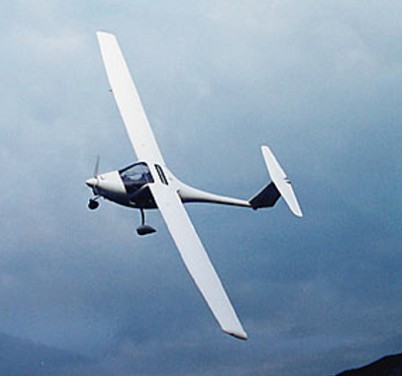
The LSA Virus 912 is a cruise aircraft suited for cross-country flying and aero-clubs and training flights. Full composite construction, 12.4-meter wing span and a glide ratio of 1:24 put Virus alongside motorgliders, with features such as 4-stage flaperons, airbrakes, and a variable pitch propeller with feathering capability. Undercarriage can be tricycle (nose wheel) of tail-dragger type. The engine is the four-stroke Rotax 912.
Virus won the 2007 Personal Air Vehicle Challenge and the 2008 General Aviation Technology Challenge, both events sponsored by NASA.
The Virus equipped with a 12- or 10-meter wingpan. The 12-meter version is a touring motorglider, enabling you to switch off the engine and glide alongside ridges, while the 10-meter fits in every hangar and is faster and more maneouvrable.
The entire cabin area is encased with energy absorbing structures made from Kevlar fibre, and the Virus can also be equipped with the ballistic parachute rescue system.
The Virus meets even the strictest of the noise regulations. Technologies, including honeycomb techniques, are used to build the composites and metal alloys, including Titanium and Magnesium, which are used on parts of the aircraft. The Virus can be disassembled in 15 minutes with all the controls self-fitting.
The ventilated side-by-side cockpit has optional leather interior and adjustable rudder pedals. The choice of either a small or large instrument panel can make the cockpit feel like a glider or fully equipped long-range cruising aircraft.
2009 Price: 57900 EURO
Pipistrel has delivered more than 1,000 aircraft worldwide and registered 7 Virus SW (Short Wing) aircraft in the US in 2012. All Virus models can be had as 51% EAB (Amateur-Built Experimental) kits (400 hours est.). 2014 Price: US$97,450
VIRUS 912 Engine: Rotax 912 UL, 80 hp at 5800 rpm Propeller: Pipistrel VARIO Wing span: 12,46 m Length: 6,5 m Height: 1,85 m Wing area: 11,0 sq.m Rudder area: 1,1 sq.m Tail area: 1,63 sq.m Aspect ratio: 13,1 Positive flaps: 9 deg, 18 deg Negative flaps: 5 deg Center of gravity: 20% – 38% Empty weight: 284 kg Max take off weight: 450kg / 472.5kg / 544kg Fuel tanks capacity: 2 x 30 l / 2 x 50 l Useful fuel: 2 x 27 l / 2 x 45 l Stall with flaps: 62 km/h Stall without flaps: 72 km/h Cruising speed (75% power): 225 km/h Max. Horizontal speed: 240 km/h Vne: 249 km/h Max speed with airbrakes out: 160 km/h Max speed with flaps down: 130 km/h turbulence penetration speed Vb: 141 km/h Best climb speed: 130 km/h Max climb rate (450 kg): 6,2 m/sec Best glide ratio speed: 110 km/h Best glide: 1:24 Take off run (450 kg): 90 m Service ceiling (450 kg): 8100 m 45° – 45° roll time: 3,1 sec Fuel burn at cruise: 9,5 l/hour Endurance: 5,7 hours Range: 1280 km Max load factor permitted: +4 g – 2 g Design safety factors & tested: minumum 1.875 Seats: 2 Cockpit width: 44 in
VIRUS 912 SW 80 Engine: Rotax 912 UL, 80 hp at 5800 rpm Propeller: Pipistrel VARIO Wing span: 10,71 m Length: 6,5 m Height: 1,85 m Wing area: 9,51 sq.m Rudder area: 1,1 sq.m Tail area: 1,08 sq.m Aspect ratio: 11,3 Positive flaps: 9 deg, 19 deg Negative flaps: 5 deg Center of gravity: 25% – 37% Empty weight: 287 kg Max take off weight: 472.5 kg / 544 kg Fuel tanks capacity: 2 x 50 l Useful fuel: 2 x 47 l Stall with flaps: 64 km/h Stall without flaps: 79 km/h Cruising speed (75% power): 246 km/h Max. Horizontal speed: 264 km/h Vne: 302 km/h Max speed with airbrakes out: 205 km/h Max speed with flaps down: 130 km/h turbulence penetration speed Vb: 250 km/h Best climb speed: 140 km/h Max climb rate (450 kg): 6,1 m/sec Best glide ratio speed: 118 km/h Best glide: 1:17 Take off run (450 kg): 140 m Take off over 15 m obstacle: 225 m Service ceiling (450 kg): 6200 m 45° – 45° roll time: 1,6 sec Fuel burn at cruise: 13,6 l/hour Endurance: 6,9 hours Range: 1650 km Max load factor permitted: +4g -2g Design safety factors & tested: minimum 1.875 Seats: 2 Cockpit width: 44 in
VIRUS 912 SW 100 Engine: Rotax 912 ULS, 100 hp at 5800 rpm Propeller: Variable pitch Wing span: 10,71 m Length: 6,5 m Height: 1,85 m Wing area: 9,51 sq.m Rudder area: 1,1 sq.m Tail area: 1,08 sq.m Aspect ratio: 11,3 Positive flaps: 9 deg, 19 deg Negative flaps: 5 deg Center of gravity: 25% – 37% Empty weight: 289 kg Max take off weight: 472.5 kg / 544 kg Fuel tanks capacity: 2 x 50 l Useful fuel: 2 x 47 l Stall with flaps: 64 km/h Stall without flaps: 79 km/h Cruising speed (75% power): 273 km/h Max. Horizontal speed: 283 km/h Vne: 302 km/h Max speed with airbrakes out: 205 km/h Max speed with flaps down: 130 km/h turbulence penetration speed Vb: 250 km/h Best climb speed: 140 km/h Max climb rate (450 kg): 8,4 m/sec Best glide ratio speed: 118 km/h Best glide: 1:15 Take off run (450 kg): 95 m Take off over 15 m obstacle: 175 m Service ceiling (450 kg): 6800 m 45° – 45° roll time: 1,6 sec Fuel burn at cruise: 17,8 l/hour Endurance: 5,3 hours Range: 1450 km Max load factor permitted: +4g -2g Design safety factors & tested: minimum 1.875 Seats: 2 Cockpit width: 44 in
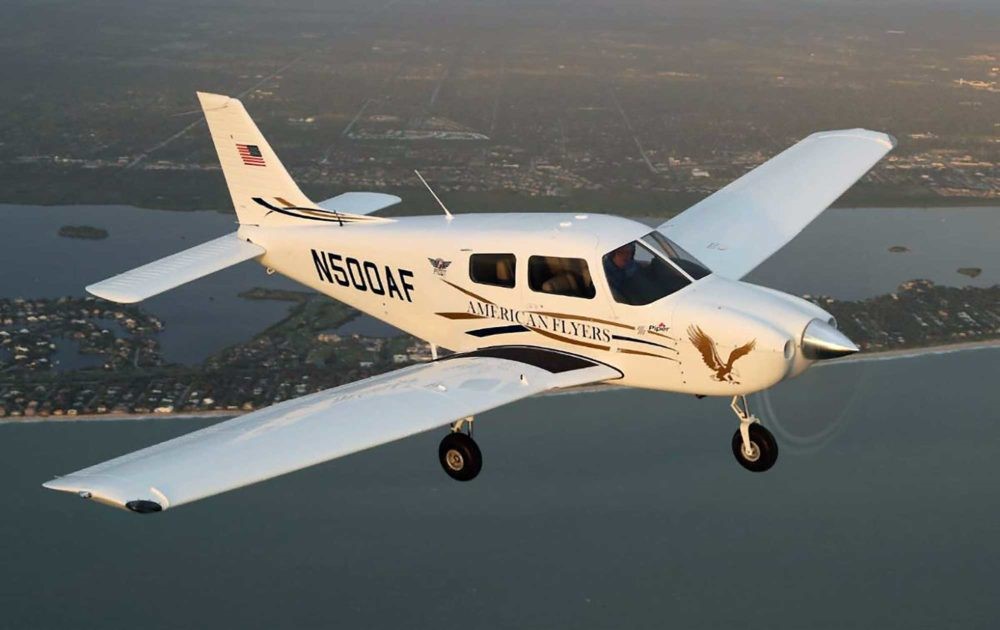
Immediately following certification in 2020, Piper began deliveries to its launch customer, American Flyers, who were to be taking delivery of eight Pilot 100i aircraft by the end of December 2020.
The new Piper Pilot 100i rounds off Piper’s five aircraft portfolio of training aircraft: Pilot 100i, Archer TX, Archer DX (diesel), Arrow (retractable), and twin-engine Seminole. The Piper 100i is priced under $300,000 and IFR equipped with digital autopilot.
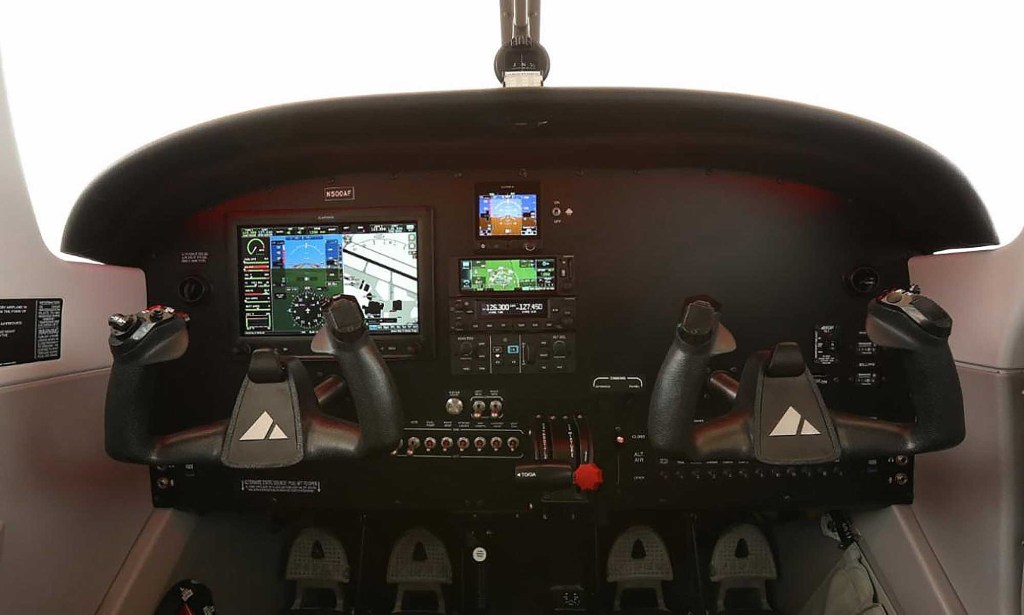
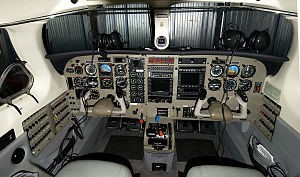
Panel of the Piper Pilot 100i with Garmin G3X Touch primary flight display.
The Piper Pilot 100i G3X avionics suite is a glass platform that allows for toggling between round dial and tape displays in a touchscreen format. This outperformed the G1000 suite on many levels.
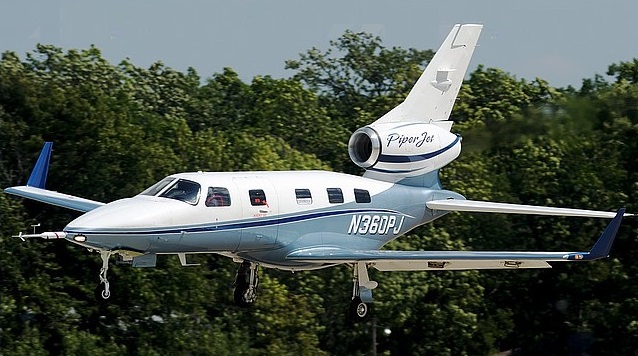
Piper Aircraft announced single-engined VLJ the PiperJet in October 2006, as a competitor to the twin-engined Eclipse 500 and Cessna Citation Mustang very light jets. The aircraft’s fuselage was the same cross section as the propeller-driven Piper PA-46 series, with a four-foot increase in length. It was to be capable of carrying up to 7 passengers and cruise at 360 knots (666.7 km/h), at a maximum altitude of 35,000 feet (10,668.0 m). Maximum range was expected to be 1,300 nautical miles (2,407.6 km), with a full-fuel payload of 800 pounds. Piper selected Williams International to supply its FJ44-3AP turbofan engine for the PiperJet.
Due to the engine being mounted above the center of gravity, power was highly stabilizing (addition of power would push the nose down), which could have been disconcerting to pilots. Initially, Piper designers incorporated an automatic pitch trim system to coordinate horizontal stabilizer angle of incidence with power setting. This system was later replaced by a vectored thrust nozzle, developed by Williams International, which resulted in reduced weight and simplified manufacturing processes.
A design feature of the aircraft was the use of a straight duct air intake design for the vertical stabilizer (tail) mounted engine, rather than an s-duct arrangement.
The prototype first flew on 30 July 2008.
A selling price of US$2.199 million in 2006 dollars was initially set and as of February 19, 2007, Piper announced that it had received 180 pre-orders. An entry-into-service date of early 2010 was initially anticipated, later changed to 2011-12. In October 2009 the company indicated that it had delayed the delivery of the first customer aircraft to mid-2013 and had informed depositors.
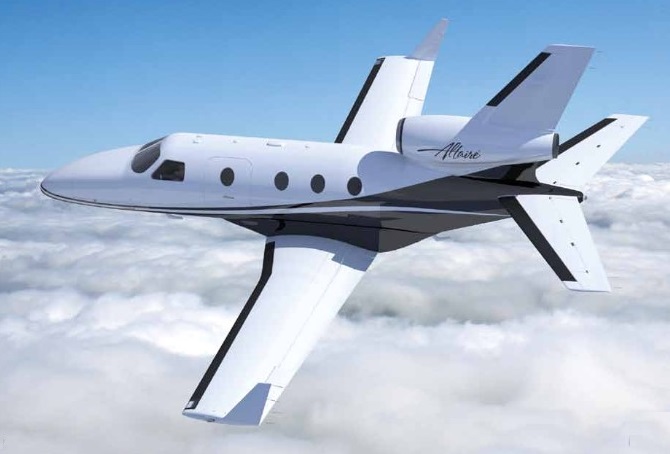
The PiperJet did not enter production and in October 2010 Piper announced it would instead develop an aircraft with a larger circular-section fuselage known as the Piper PiperJet Altaire. The 160 customers who had placed orders for the PiperJet retained their delivery positions with the new aircraft and at the same $2.2 million price.
Based on the PA-47 PiperJet prototype, the Altaire featured a slightly larger fuselage with a rounded cross-section, and included a conventional control yoke for flight control, as opposed to the original PiperJet’s side-stick controller. Piper had been tooling up its facilities in Vero Beach, Florida (USA) to build four Altaire prototypes to be used for FAA (safety & performance) certification of the aircraft through 2013. First delivery of aircraft to customers was scheduled for 2014. The first flight was expected in 2012.
The fuselage of the original Piperjet was designed using the Piper Meridian single-engine turboprop as a template. The new owners of Piper, Imprimis, found fault with this design prompting a revision without direct reference to the Meridian. According to Piper CEO Geoffrey Berger, “We wanted to give our jet customers an even roomier light jet that incorporates a scalable design, paving the way for a future family of competitive business jets,”. The new fuselage design provided an additional 4 inches of headroom and nine more inches of elbow room and does away with a hump in the cabin floor that accommodated the wing spar in the old design.
PiperJet Altaire
The Altaire had been designed for single-pilot operation allowing one passenger to occupy the co-pilot’s seat. Combined with 4 passenger seats in the cabin behind the flight deck, the jet would typically have seated 5 passengers. The cabin would have been specially configured to add an additional seat such that a total of 6 passengers can be accommodated in addition to the pilot. There was 20 cubic feet (570 L) of baggage space behind the passenger seats and another 20 cu ft (570 L). of heated but unpressurized space in the nose of the aircraft. The Altaire would have been powered by the Williams International FJ44-3AP. This model of engine employs a “passive vectored thrust” design that helps compensate for nose-down pitch of the aircraft when power is increased as a result of mounting the engine relatively high up in the tail. Piper estimated that this engine would get the Altaire up to a 35,000 feet (11,000 m) maximum cruise altitude and a 320 knot cruise speed. Maximum cruise speed was projected to be 360 knots. The aircraft was expected to have a 1,200-to-1,300-nautical-mile (2,200 to 2,400 km) non-stop range.
The aircraft was expected to retail for around US$2.6 million, ‘standard’ equipped. Piper estimates variable operating cost at about US$730 per hour. This compares with about US$870 for the comparable model Cessna Mustang.
On 17 October 2011 the company announced that the PiperJet Altaire program was “under review”. Piper’s new interim CEO, appointed that same day, Simon Caldecott said, “This is being undertaken to ensure the company is properly aligning business goals and light-jet market forecasts with investment strategies and economic forecasts.” The next day, on 18 October 2011, AVweb editor-in-chief Russ Niles called for the project to be ended, calling it “unrealistic” to pursue the design in the face of Federal Aviation Administration opposition to certifying a single engined jet to 35,000 ft (10,668 m) and the lack of economic reasoning as the aircraft would cost the same as most twin-engined jets. Niles called on Piper saying, “the sooner it ends its “review” of the project and puts a bullet in it the better.”
On 24 October 2011, despite the Altaire’s development being “on schedule and on budget”, the program was indefinitely suspended by Piper due to economic issues, with the company laying off a number of workers who had been assigned to the project. It was stated the company would entertain offers for the PiperJet/Altaire project.
In 2012, the prototype was located at the Florida Air Museum.
original PA-47 PiperJet Powerplant: 1 × Williams FJ44-3AP turbofan, 2,820 lbf (12.5 kN) thrust Hot Section Inspection: 2,000 hours TBO: 4,000 hours Length: 35 ft 8 in (10.87 m) Wingspan: 44 ft 3 in (13.49 m) Height: 15 ft 8 in (4.78 m) Full fuel payload: intended to be 800 lbs (363 kg) +/-5% Usable Fuel: 457 USgal (1,730 liters) Cruise speed: 360 kn (414 mph; 667 km/h) (intended maximum cruise speed +5% -2.5%) Range: 1,300 nmi (1,496 mi; 2,408 km) (intended maximum range +/-5%) Service ceiling: 35,000 ft (11,000 m) Maximum Cabin Height: 55.0 in (1.4 m) Cabin Length: 17.8 ft (5.4 m) Cabin Width: 55.0 in (1.4 m) Main Entry Door Width: 36.0 in (0.9 m) Total Pressurized Cabin Volume: 260 cu ft (7.3 cu m) Nose Baggage Compartment (unpressurized): 20 cu ft (0.57 cu m) / 200 lbs (90.9 kg) Maximum Cabin Differential: 7.6 psid Crew: 2 Capacity: 6-7 passengers
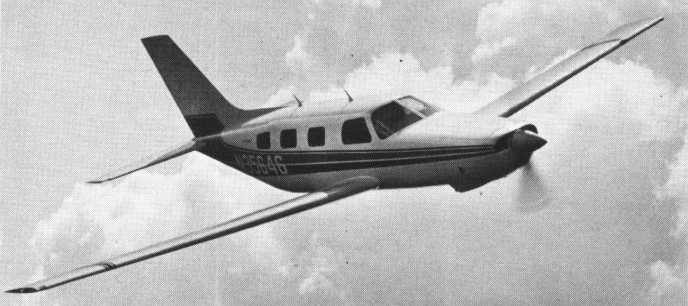
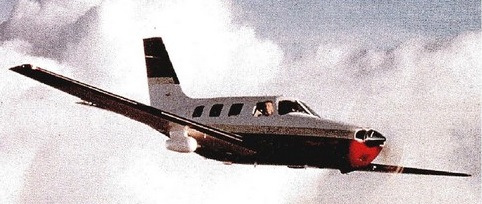
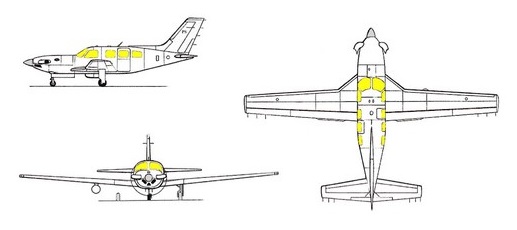
Initially flown for the first time on 30 November 1979, designated PA-46-300T, as an unpressurised development aircraft, the first real prototype flew on 21 August 1982. This was a pressurised, all-metal aircraft seating six, with retractable undercarriage.
Piper announced in late 1982 the intention to introduce in late 1983 a new aircraft which it claimed to be the world’s first cabin-class pressurised aircraft with a single piston engine.
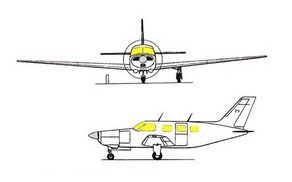
Designated Piper PA-46-310P Malibu, the aircraft is of cantilever low-wing monoplane configuration with retractable tricycle landing gear and powered by a Teledyne Continental TSIO-520-BE turbocharged engine, the pressurised cabin providing seating a pilot and five passengers.
PA-46-350P Cockpit
The initial PA-46-310P Malibu production version received FAA certification on 27 September 1983 and deliveries into service began during November 1983. Fitted with a high aspect ratio wing, IFR avionics was standard and an airstair style door at the rear of the aircraft. Production was discontinued during 1988 after 344 had been built.
PA-46-310P Malibu
Certification (FAA A25SO) of the original PA-46-310P was achieved in September 1983 and deliveries commenced the following November and 402 were produced. Certification covered 46-8408001 to 46-8608067, and 4608007 to 4608007
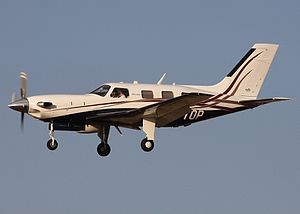
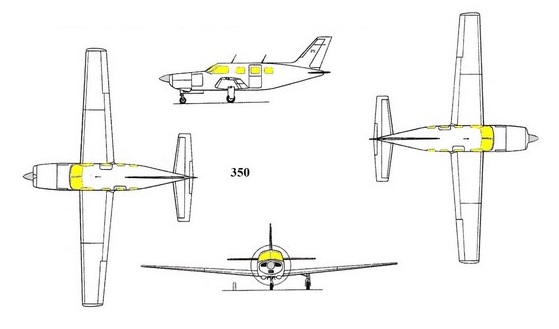
The turbocharged PA-46-350P Malibu Mirage was introduced in October 1988 replacing the -310, with deliveries beginning two months later at $679,900 as standard. This differed in having a 350 hp (261 kW) Textron Lycoming TIO-540-AE2A engine in place of the earlier 310 hp (231 kW) Teledyne Continental TSIO-520-BE. FAA certification was received on 30 August 1988.
PA-46 Malibu Mirage
Fitted with a new wing, revised interior and electrical system, and standard Bendix / King avionics packages, around 250 were produced. Other features include a redesigned flight deck, two-piece glareshield and a 40-lb (18-kg) increase in useful load.
By spring 1991 Piper had orders for over 100 of the PA-46-350P Malibu Mirage but, after several aircraft broke up in adverse weather conditions, the FAA revoked its IMC certification and began a Special Certification Review. Piper worked hard to clear the design’s reputation and by February 1992 the Malibu was returned to full operations.
The first Meridian, a non conforming example, flew summer 1988/89. On 21 June 2001 the first Malibu Meridian was certified by the UK CAA.
PA-46-500TP Malibu Meridian
Plans to build a turbine powered Malibu was announced during 1987 and a prototype, N35646, was built which first flew on 26 September 1988. The prototype was powered by a 400 shp Pratt & Whitney Canada PT6A-11 turboprop and a revised type, the TP-600, was manufactured with a 600 shp PT6A-11 engine. New Piper were also producing the type, from 1994, with improvements to the autopilot, braking system and air-conditioning.
Rocket Engineering of Spokane, Washington produced turboprop conversions of Piper Malibu. Certificated during August 1998, around 90 320 and 350 types were converted to JetPROP models with Pratt & Whitney PT6A-34/35 engines. During 2003 the JetPROP DL conversions with Pratt & Whitney PT6A-21 engines were started, and by 2003 233 aircraft had been converted.
PA-46 Matrix
The PA-46R-350T is an unpressurised version of the Mirage, announced during October 2007 with deliveries Avidyne TAS610 dual antenna traffic advisory system and speed brakes. During 2010 a Garmin G1000 avionics system was available. Piper Aircraft received FAA certification of the G1000 NXi next generation integrated flight deck on both the M500 single engine turboprop and M350 pressurized, single-engine piston. Piper was set to offer it as a retrofit option (via STC) for fielded G1000 equipped Matrix, Mirage (M350), and Meridian (M500) aircraft.
PA-46-310 Max speed: 270 mph Cruise speed: 226 mph Max Cruise speed: 249 mph Stall: 67 mph ROC: 1143 ft/min Service ceiling: 25,000 ft Takeoff run: 1440 ft Takeoff to 50 ft: 2025 ft Ldg from 50 ft: 1520 ft Ldg run: 640 ft Range norm: 1531 mi Range max: 1790 mi Wing span: 43 ft 0 in Fuel capacity: 101.6 imp.gal / 122 USG Length: 28 ft 4.75 in Empty weight: 2275 lb Weight equipped: 2350 lb Loaded weight: 3850 lb Payload: 100 lb
PA-46-310P Malibu Engine: Teledyne Continental TSIO-520-BE, 310 hp Prop: Hartzell, 2 blade CS 6 ft 8 in Cabin length: 12 ft 4 in Cabin width: 49.5 in Cabin height: 47 in Rear pax door: 46 x 24 in Baggage door left side nose: 23 x 19 in Nose compartment capacity: 13 cu.ft / 100 lb unpressurised Rear baggage compartment: 20 cu.ft / 100 lb pressured
PA-46-350 Max speed: 273 mph Cruise long range: 193 mph Cruise Econ: 229 mph Cruise speed norm: 247 mph Cruise speed max: 259 mph Stall: 69 mph ROC: 1220 ft/min Service ceiling: 25,000 ft Takeoff run: 1530 ft Takeoff to 50 ft: 2375 ft Ldg from 50 ft: 1960 ft Ldg run: 1010 ft Range norm: 1172 mi Range econ: 1248 mi Range max: 1450 mi Wing span: 43 ft 0 in Fuel capacity: 101.6 imp.gal / 122 USG Length: 28 ft 11 in Empty weight: 3080 lb Weight equipped: 3121 lb Loaded weight: 4340 lb Payload: 100 lb
Piper 1998 PA-46-350P Malibu Mirage Engine make/model:Lyc. TIO-540AE2A, 350 hp TBO: 2000 hr Propeller: Const. spd. Landing gear: Tri/Retr. Gross weight: 4300 lb Empty weight, std: 3048 lb Useful load, std: 1252 lb Fuel: 120 USG Wingspan: 43 ft Overall length: 28 ft. 7 in Height: 11 ft. 6 in Wing area: 175 sq. ft Seating capacity: 5 Cabin width: 50 in Cabin height: 47 in Baggage capacity: 200 lb Cruise speed 75% power: 225 kt Cruise speed 65% power: 215 kt Max range (w/ res) 75% power: 990 nm Max range (w/ res) 65% power: 1056 nm Fuel consumption 75% power: 20 USgph Fuel consumption 65% power: 18 USgph Stall speed (gear, flaps down): 60 kt Best rate of climb: 1218 fpm Service ceiling: 25,000 ft Takeoff ground roll: 1530 ft Landing ground roll: 1018 ft
2001 New Piper Malibu Mirage Engine: Lycoming TIO-540-AE2A, 350 hp / 261kW @SL to 17,000 ft TBO: 2000 hr Fuel type: 100 Propeller: Hartzell CS Landing gear: Tri/Retr. Gross weight: 4340 lb Max landing weight: 4100 lb Empty weight, std: 3157 lb Useful load, std: 1183 lb Payload, full std. fuel: 463 lb Usable fuel, std: 120 USG Oil capacity: 12 qt Wingspan: 43 ft Overall length: 28 ft. 8 in Height: 11 ft. 6 in Wing area: 175 sq. ft Wing loading: 23.6 lbs./sq. ft Power loading: 12.3 lbs./hp Wheel base: 8 ft Wheel track: 12 ft. 3 in. Wheel size: 6.00 x 6 Seating capacity: 6 Cabin doors: 1 Cabin width: 50 in Cabin height: 47 in Baggage capacity: 200 lb Cruise speed @ 25,000 ft 75% power: 213 kt Cruise speed @ 25,000 ft 65% power: 203 kt Max range (w/ res) 75% power: 1065 nm Stall speed (gear, flaps down): 58 kt Best rate of climb (SL): 1218 fpm Service ceiling: 25,000 ft Takeoff ground roll: 1090 ft Takeoff over 50-ft. obstacle: 2090 ft Landing ground roll: 1020 ft Landing over 50-ft. obstacle: 1960 ft
2005 New Piper Mirage Base price: $970,000 Engine: Lycoming TIO-540-AE2A, 350 hp to 17,000 TBO: 2000 hr Fuel type: 100/100LL Propeller: Hartzell three blade 80 in Landing gear: Tri./Retr. Max ramp weight: 4340 lb Gross weight: 4340 lb Landing weight: 4100 lb Empty weight, std: 3100 lb Useful load, std: 1240 lb Payload, full std. fuel: 520 lb Usable fuel, std: 120 USG Oil capacity: 12 qt Wingspan: 43 ft Overall length: 28 ft. 6 in Height: 11 ft. 5 in Wing area: 175 sq. ft Wing loading: 24.8 lbs./sq. ft Power loading: 12.4 lbs./hp Wheel size: 6.00 x 6 Seating capacity: 6 Cabin doors: 1 Cabin width: 49 in Cabin height: 47 in Cruise speed 75% power: 213 kt Cruise speed 65% power: 199 kt Cruise speed 55% power: 166 kt Fuel consumption 75% power: 20.0 USgph Fuel consumption 65% power: 18.0 USgph Fuel consumption 55% power: 15.0 USgph Range, 55% power: 1055 nm Best rate of climb (SL): 1225 fpm Max operating altitude: 25,000 ft Vso: 58 kt Takeoff ground roll: 1090 ft Takeoff over 50-ft. obstacle: 2090 ft Landing ground roll: 1020 ft Landing over 50-ft. obstacle: 1960 ft
2006 Piper Mirage PA46 Engine: Lycoming TIO-540-AE2A, 350 ho @SL to 18,000 ft TBO: 2000 hr Fuel type: 100/100LL Propeller: Hartzell three-blade CS Landing gear: Tri./Retr. Max ramp weight: 4358 lb Gross weight: 4340 lb Landing weight: 4123 lb Empty weight, std: 3121 lb Useful load, std: 1237 lb Payload, full std. fuel: 517 lb Useful fuel: 120 USG Oil capacity: 12 qt Wingspan: 43 ft Overall length: 28 ft. 10 in Height: 11 ft. 4 in Wing area: 175 sq. ft Wing loading: 24.8 lbs./sq. ft Power loading: 12.4 lbs./hp Wheel size: 6.00 x 6 Seating capacity: 6 Cabin doors: 1 Cabin width: 50 im Cabin height: 45 in Cruise speed 75% power: 213 kt Fuel consumption 75% power: 20 USgph Fuel consumption 65% power: 18 USgph Vso: 58 kt Max operating altitude: 25,000 ft Best rate of climb (SL): 1220 fpm Takeoff ground roll: 1090 ft Takeoff over 50-ft. obstacle: 2090 ft Landing ground roll: 1065 ft Landing over 50-ft. obstacle: 1965 ft
PA-46R-350T Engine: TIO-540-AE2A, 350 hp Wingspan: 43 ft 0 in Length: 28 ft 11 in Height: 11 ft 4 in Empty weight: 2937 lb Loaded weight: 4340 lb Payload: 1421 lb Fuel capacity: 120 USG Service ceiling: 25,000 ft Takeoff to 50 ft: 2090 ft Landing from 50 ft: 1968 lb
2008 Piper Malibu PA46-350 Matrix Base price: $757,000 Engine: Lycoming O-TIO-540-AE2A. 350 hp TBO: 2000 hr Fuel type: 100/100LL Propeller: 3-blade Hartzell Landing gear: Tri./Retr. Max ramp weight: 4358 lb Gross weight: 4340 lb Landing weight: 4123 lb Empty weight, std: 2937 lb Useful load, std: 1421 lb Usable fuel:120 USG /720 lb Payload, full std. fuel: 701 lb Wingspan: 43 ft Overall length: 28 ft. 11 in Height: 11 ft. 4 in Wing area: 175 sq. ft Wing loading: 24.8 lbs./sq. ft Power loading: 12.4 lbs./hp Seating capacity: 6 Cabin doors: 1 Cabin width: 49.5 in Cabin height: 47 in Cruise speed 75% power @ 25,000 ft: 215 kt Cruise speed 75% power @ 10,000 ft: 190 kt Fuel consumption 75% power: 20 USgph Fuel consumption 65% power: 18 USgph Fuel consumption 55% power: 15 USgph Vso: 58 kt Best rate of climb (SL): 1150 fpm Service ceiling: 25,000 ft Takeoff ground roll: 1087 ft Takeoff over 50 ft. obstacle: 2090 ft Landing ground roll: 1020 ft Landing over 50 ft. obstacle: 1968 ft
PA-46 Malibu Meridian Engine: Pratt & Whitney PT6A-42A, 1090 shp Wingspan: 43 ft Wing Area: 183 sq. ft Max Ramp Weight: 5134 lb Useful Load: 1698 lb / 679 kg Fuel Capacity, Useable: 170 USG Cruise: 262 kt. Endurance: 4.8 hr. Vso: 69 kt Rate Of Climb: 1556 fpm Max Certified Altitude: 30,000 ft Max Cruise Speed: 260 kt Takeoff Distance: 1650 ft Takeoff Over 50 Ft. Obstacle: 2438 ft Landing Distance: 1020 ft Landing Over 50 Ft. Obstacle: 2110 ft
2005 New Piper PA46-500T Meridian Engine: Pratt & Whitney PT6A-42A, 500 shp @ FL200 TBO: 3500 hr Fuel type: Jet A Propeller: Hartzell CS Landing gear: Tri./Retr. Max ramp weight: 5134 lb Max takeoff weight: 5092 lb Empty weight, std: 3404 lb Useful fuel: 170 USG Payload, full std. fuel: 591 lb Wingspan: 43 ft Overall length: 29.6 ft Height: 11.3 ft Wing area: 183 sq. ft Wing loading: 10.8 lbs./sq. ft Power loading: 27.3 lbs./hp Wheel size: 6.00 x 6 Seating capacity: 6 Cabin doors: 1 Cabin width: 49 in Cabin height: 47 in Max cruise speed: 260 kt Fuel consumption: 37 USgph Range: 1000+ nm Best rate of climb (SL): 1556 fpm Max operating altitude: 30,000 ft Vso: 61 kt Takeoff ground roll: 1650 ft Takeoff over 50-ft. obstacle: 2438 ft Landing ground roll: 1020 ft Landing over 50-ft. obstacle: 2110 ft
The PC-24 twin-engine business jet is equipped with a cargo door.
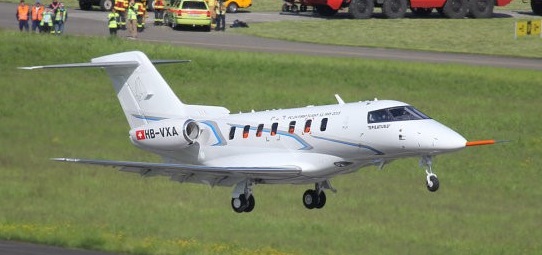
The first ever PC-24 took off on its maiden flight on 11 May 2014 at 10:00 local time from Buochs Airport. Prototype P01, callsign HB-VXA, flew across central Switzerland for a total of 55 minutes. The flight went exactly as planned with no problems. The aircraft took off from runway 07 in just under 600 meters and climbed to 10,000 feet (approx 3000 m ) in around three minutes. Test pilot Paul Mulcahy flew the PC-24 as Pilot in Command, with second test pilot, Reto Aeschlimann. The maiden flight followed a route across Central Switzerland – from Altdorf to Brünig via Engelberg. Twelve Flight Test engineers watched the flight from the ground on a stream of real-time flight data received from the PC-24.
A total of three PC 24 prototypes were to be built and used to complete a test programs of some 2,300 hours over the next two years.
Pilatus sold 84 PC-24’s in the space of just 36 hours at last year’s European Business Aviation Conference & Exhibition (EBACE) in May 2014. Certification and initial deliveries of the first aircraft were to come off the production line are planned from 2017.
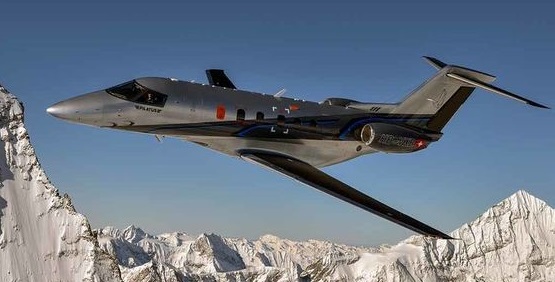
The Pilatus PC-24, the “super versatile jet” from the Swiss manufacturer that is designed to bring many of the PC-12 turboprop’s unique capabilities to the bizjet market.
PC-24 production has started at Pilatus Aircraft’s headquarters in Stans, Switzerland, as the manufacturer readies to deliver the first customer airplane following certification.
In January 2017, fractional-ownership company PlaneSense was revealed as the launch customer for the jet, which features a large aft cargo door and the ability to operate from unimproved airstrips, both hallmarks of the PC-12 NG.
Flight testing to date has confirmed that the PC-24 will beat original projections and that the current flight test schedule is tracking on time, allowing for the handover of the first customer airplane two short weeks after certification is in hand.
Pilatus opened and closed the order book for the PC-24 at the EBACE show in Geneva in 2014, notching 84 sales, or three years’ worth of production. A long line of potential customers is said to be showing interest in the $9 million jet. Pilatus says it will reopen the order book after completing certification.
The PC-24 will boast a speed of 425 knots, a range of nearly 2,000 nm, a max operating altitude of 45,000 feet and a max payload figure of 2,500 pounds. The jet will be capable of carrying up to 10 passengers.
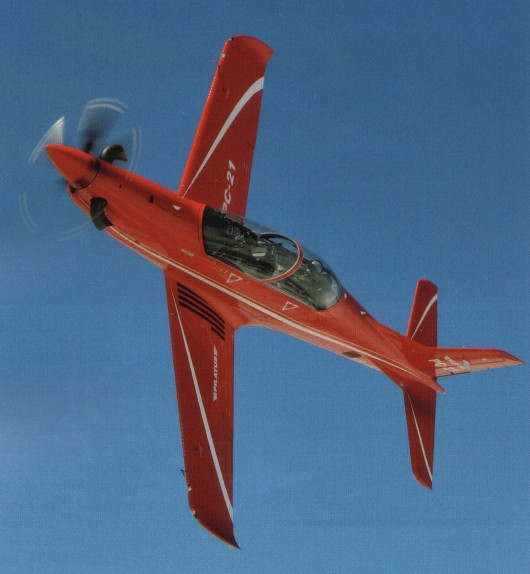
In January 1999 Pilatus launched the development of a completely new training system, the PC-21. The objective was to meet the expectations of modern air forces over the next 30 years both in terms of capability and life-cycle cost.
With this in mind, the PC-21 development specification focused on three core objectives: A superior aerodynamic performance when compared with any other turboprop trainer on the market, a more powerful, flexible and cost effective integrated training system than any other jet or turboprop trainer in the world, and a life-cycle support cost not to exceed current turboprop benchmarks.
The wingspan is 1.1m shorter than the PC-9 wing. The fowler are big enough to allow a stall speed of 81 kts when configured. The small ailerons are hydraulically boosted and are suppoorted by spoilers which begin to deploy at greater than 5 degrees of aileron deflection. The load limit is +8 to –4 G.
The aircraft has been designed to be fast for a turboprop with a maximum speed of 370 kts. The canopy is birdstrike resistant. The wing leading edge is designed to prevent a birdstrike from penetrating deeply into the wing structure by dissipating the energy span-wise. The zero-zero ejection seats are Martin Baker Mk 16s with selectable command ejection options. Oxygen is supplied from an onboard oxygen generation system. The air conditioning system is automatic.
The Pratt & Whitney Canada PT6A-68B 1600 shp / 1195 kW engine power is limited to 900 shp / 670 kW on the ground or below 90 kts. Above 90 kts the power is increased until the full 1600 shp / 1195 kW is reached at 200 kts and above. This is controlled automatically by the power management system.
PC-21 Engine: Pratt & Whitney Canada PT6A-68B 1600 shp / 1195 kW Wing span: 9.11 m Length: 11.23 m Height: 3.91 m Wing area: 15.2 sq.m Basic empty weight: 2280 kg Max take off weight (Aero): 3100 kg Max take off weight (Utility): 4250 kg Max external load: 1150 kg Max loading: +8 / -4 G Max operating speed: 370 KEAS Max operating Mach: 0.72 Max level speed (FL 100 ISA): 337 kt Useable cruise speed: 300 kt Stall: 81 kts
Formed as Pilatus Flugzeugwerke AG in 1939, as a subsidiary of the Oerlikon armaments company. First aircraft was SB-2 Pelican six-seat light transport of 1944, but prototype only built. Followed by P-2 advanced trainer, produced in quantity for the Swiss Air Force in late 1940s, and the P-3 advanced trainer from 1953. Series production of the P-3 followed for the Swiss Air Force, and six went to the Brazilian Navy. In May 1959 Pilatus flew the first PC-6 Porter STOL monoplane with a Lycoming piston engine; this type has been in continuous production ever since, later developments using Astazou, Garrett, and most recently Pratt & Whitney Canada PT6A turboprop engine as the PC-6/B2-H4 Turbo Porter. Pilatus also signed a license agreement for production of Turbo Porters by Fairchild-Hiller in U.S.A. Also undertook Mirage production and maintenance work for the Swiss Air Force.
Became known as Pilatus Aircraft Ltd, based at Stans, Switzerland,.the product range encompassing the PC-7 Turbo Trainer (first flown August 1978 in production form), PC-7 Mk II (M) Turbo Trainer (first flown September 1992), the PC-9 (M) Advanced Turbo Trainer (first flown May 1984) with the highest engine power of the range and also selected in 1995 for U.S. military service as the Raytheon/Beech T-6A Texan II, and the PC-12 utility and business turboprop transport (first flown May 1991 and also available in military form). Also, in 1979 Pilatus took control of the LJ.K.’s Britten-Norman Ltd company, becoming Pilatus Britten-Norman, but sold this company in July 1998.
Pilatus Aircraft Ltd., the Swiss aircraft manufacturer, has sold all manufacturing and marketing rights to the B 4 all metal, aerobatic glider to Nippi, Japan Aircraft Manufacturing Company. The glider license was sold because of a lack of space in the Pilatus factory, where much room is devot¬ed to production of the PC 7 Turbo Trainer. Seventy eight B 4s were sold in 1977, and 320 were in operation. The first Japanese airplanes were expected in April 1979.
The take-over of the assets of Britten-Norman by Pilatus Aircraft was finalised on 34 January 1979 when the necessary documents were signed. To conclude the deal, Pilatus – itself a member of the Oerlilon-Buehrje Group – set up a British subsidiary, Pilatus Britten-Norman Ltd, and this company has acquired the B-N assets which include the Bembridge factory, the complete Islander / Trilander production hardware (plus stock materials) located at the Fairey SA factory in Gosselies, Belgium and the exclusive production and marketing rights for all Britten-Norman products.
In July 1998 Pilatus sold Britten-Norman to private investment company Litchfield Continental Ltd.




 All Aero