USA
Developed the composites-constructed Glass Goose two-seat amphibious biplane (introduced in kit form in 1992) from the former Aero Composites Sea Hawker of 1982 first flight.
1995-2009: 9002 Summer Glen No.B, Dallas, TX 75243, USA.
USA
Developed the composites-constructed Glass Goose two-seat amphibious biplane (introduced in kit form in 1992) from the former Aero Composites Sea Hawker of 1982 first flight.
1995-2009: 9002 Summer Glen No.B, Dallas, TX 75243, USA.
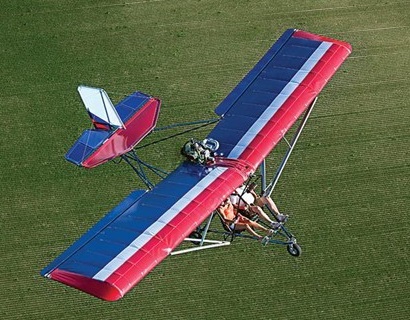
One of the most successful wide-open-airplane manufacturers is Temecula, California-based Quicksilver. Until now, Quicksilver has offered its products only as ultralights, which are restricted to one seat, or with Experimental airworthiness certificates, which means you would have to build one, trust someone else to build one properly or join a flying club to fly one. The Experimental category also makes it difficult to obtain training.
Around 2011, Escutia, a Mexican national who shares his time between his home in Guadalahara, Mexico, and Temecula, took over the operation. Escutia felt that the amateur-built category was a barrier to sales, so he embarked on a journey to bring the 2S to LSA certification. About 18 months later, he had the first light-sport airworthiness certificate for the S2SE in hand.
In 2014 Quicksilver achieved the special category light-sport aircraft (S-LSA) certification from the FAA for its Sport 2SE, the slightly modified, factory-made version of the experimental Sport 2S.
The Quicksilver Sport 2SE is a two-seat open cockpit airplane constructed of aluminum tubes and double-side sailcloth. The airframe has been tested to load factors of plus-6 and minus-3 G, though not under FAA as part of any certification program. The S2SE is powered by a 65-horsepower Rotax 582 engine and Warp Drive three-blade carbon fiber 72-inch propeller — a prop that had previously not achieved an LSA sign-off. Fuel burn is 5.6 gph at 75 percent power.and cruise around 45 mph. The S2SE was approved for production in May 2014 and the retail price was set at $39,999.
The parts for the S2SE are organized into vacuum wrapped packages, just like those of amateur-built kits, making the assembly process streamlined. The initial assembly of the S-LSA happens in a small space at the back of the factory where the fuselage parts are put together. The final assembly is completed at the French Valley Airport. Once the structure is complete, the large double-side wing covers are pulled over the wing framework like a jacket. The whole process takes about seven weeks, including the flight testing.
The Sport 2SE has tricycle gear and the pilot and passenger sit in a side-by-side arrangement. The airplane has dual throttles and dual rudder pedals, and there is an airspeed indicator and altimeter located between the two sets of pedals. Engine instruments are in a digital box on a crossbar above the seats.
The S2SE flies mostly like any other airplane. Push forward on the throttle and you get more power. Pull back on the stick and you climb or slow down. Push forward and you descend or pick up speed. The airplane moves in the direction of the rudder pedal you step on or the direction you move the stick.
The offices and main production plant are in an industrial mall in Temecula, where most of the ¬airplanes’ components are cut, shaped and welded, and the sailcloth for the wings is cut and sown by hand. The factory assembled two-seat LSA was ready to be delivered to customers through three facilities in Temecula, California, Reserve, Louisiana, and Rochester, Minnesota, most notably to a Chinese university for which the Chinese government ordered 77 units.
Successor to Eipper, and has offered kits to construct a range of trike microlights in the MX Sprint and Sport series, plus the single-seat GT 400 pod-and-boom microlight and two-seat GT 500, the latter having become the first homebuilt to be certificated under new FAA regulations in the U.S.A.
1997: Quicksilver Aircraft, 27495 Diaz Rd, Temecula, CA 92590, USA.
2010: Quicksilver Mfg, 42214 Sarah Way, Temecula, CA 92590, USA.
Around 2011, Escutia, a Mexican national who shares his time between his home in Guadalahara, Mexico, and Temecula, took over the operation. Escutia felt that the amateur-built category was a barrier to sales, so he embarked on a journey to bring the 2S to LSA certification. About 18 months later, he had the first light-sport airworthiness certificate for the S2SE in hand.
The company was officially launched in May 2001, and by that summer employed a staff of 14. On October 16, 2002, the 27,000 square foot new Quest facility was officially dedicated and the team moved the production work to its current home at the Sandpoint (ID) Municipal Airport. Work began on the prototype aircraft.
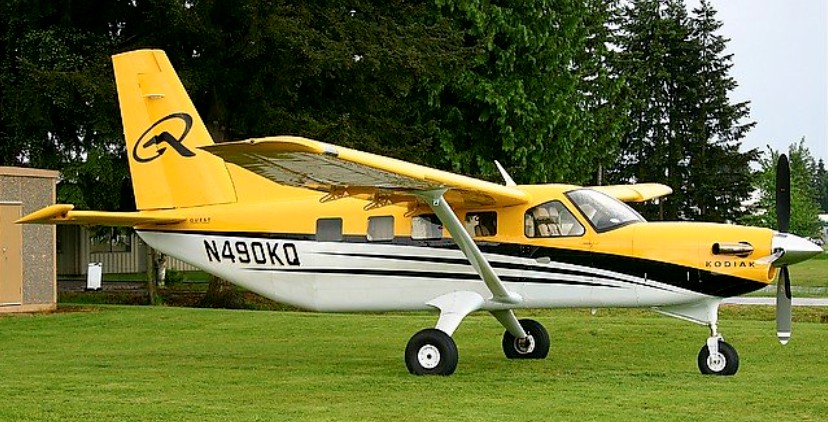
In 2004, two years later to the day, the first flight of the Kodiak (N490KQ) took place. Within three months, the Kodiak had completed its 50th flight. In March 2007 s/n 001, the first fully conforming production aircraft, made its initial flight and joined the Kodiak prototype in the flight test program.
The Kodiak received FAA Type Certification on May 30 2007, and began customer deliveries in December of that year.
The 10 place Kodiak turboprop can take off in under 1,000 feet at full gross weight and climb at over 1,300 feet per minute. The landing gear and 19 inch propeller clearance allow the Kodiak to handle unimproved airstrips. The discontinuous leading edge technology brings control at slow speeds. At touchdown, the Kodiak only needs 705 feet to bring the full gross weight of 7,305 pounds to a stop–even on rough, bumpy strips.
Powered is by a Pratt and Whitney PT6-34 of 750shp with a 4,000TBO.
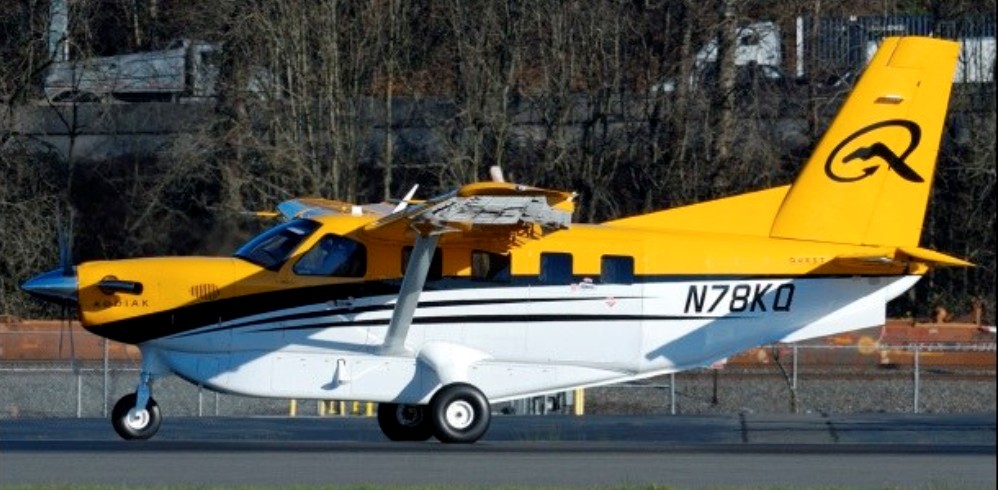
A wide range of options are available such as the external cargo compartment, TKS ice protection, Stormscope, Weather Radar, TCAS, and a jump package.
Kodiak is certified under Part 23 of the Federal Aviation Regulations in the Normal Category for day, night, VFR, and IFR flight operations, and certified for flight into known icing when equipped with the optional TKS Ice Protection System.
Kodiaks are in service with charter operators, corporate operators, personal owners, skydiving operations, governments, and humanitarian organizations.
Daher took over Quest Aircraft and the Kodiak in 2019.
Engine: P&W PT6A-34, 750 hp Takeoff @ 2200 RPM
Max. Continuous Power: 700 hp
Propeller: 96 in constant speed, feathering, reversible
Tip Clearance: 19 in
Cabin Width: 4’6″
Cabin Height: 4’9″
Cabin Length: 15’10″
Cargo Volume (exc. cockpit): 248 cu ft
Overall Length: 34’2″
Seats: 1-10
Doors: 3
Door Sill Height: 38 in
Cargo Door (LH side): 49.25 x 49.25 in
Cockpit Doors (both sides): 31 x 51 in
Wing Area: 240 sq ft
Span: 45′
Dihedral: 3°
Flap Type: Fowler, single-slotted
Flap Horizontal Span: 20′
Overall Height: 15’3″
Max. Ramp Weight: 7,305 lbs
Max. Takeoff Weight: 7,255 lbs
Base Aircraft Empty Weight: 3,770 lbs
Base Aircraft Useful Load: 3,535 lbs
Fuel Capacity: 320 USgal
Max. Wing Loading: 30.1 lbs/ sq ft
Max. Power Loading: 9.67 lbs/hp
Stall Speed Vs1 (flaps up): 77 kcas
Stall Speed Vs0 (flaps down): 60 kcas
Rate of Climb (max. cont. at SL): 1,371 ft/min
Rate of Climb (10,000 ft): 874 ft/min
Takeoff Ground Roll: 934 ft
Braked Roll (w/o reverse): 705 ft
Certified Ceiling: 25,000 ft
Cruise Performance: 183 ktas / 339 kph
Landing Gear: Fixed, faired leg, no pants
Main Gear: 8.5 x 10 Cleveland, spring steel
Nose Gear: 6.5 x 8 Cleveland, air-oleo, steel
Range w/ 45 min. reserve: (without Cargo Pod):
Max Cruise, at 174 ktas, 12,000 ft, fuel consumption 48 USgph – 1,005 nm / 5.8 hr
Max Range Cruise, at 135 ktas, 12,000 ft, fuel consumption 33 USgph – 1,132 nm / 8.4 hr
The origins of Quest Aircraft Company began in 1998 with the start of Idaho Air Group — the product of co-visionaries Tom Hamilton and David Voetmann. Both men recognized the need for a modern backcountry aircraft designed to meet the demands of humanitarian aviation. Along with an early group of visionaries, they put the Kodiak on paper and went out in search of funding.
Hamilton, a well-known aviation entrepreneur, had extensive aircraft design experience, and Voetmann had more than 40 years of flying experience with humanitarian and relief organizations, as well as raising funds to support these efforts. After years of dreaming and planning, the two launched the Idaho Air Group in 1998, and the origins of Quest Aircraft Company began.
Along with an early group of supporters, they put the Kodiak on paper and went out in search of funding. In May 2001, the company was official launched and a Board of Directors was chosen. Bruce Kennedy, retired CEO of Alaska Airlines, was Quest’s Founding Chairman.
The company was officially launched in May 2001, and by that summer employed a staff of 14. On October 16, 2002, the 27,000 square foot new Quest facility was officially dedicated and the team moved the production work to its current home at the Sandpoint (ID) Municipal Airport. Work began on the prototype aircraft.
Quest Aircraft Company, headquartered in Sandpoint, Idaho, manufactures the Kodiak 10-seat single engine turboprop airplane. The next-generation Kodiak combines aluminum construction, STOL performance and high useful load.
The Quest facility has since expanded to over 84,000 square feet. In 2011, Quest expanded its worldwide sales network and added strategically-located Authorized Service Centers to better support the growing fleet of Kodiaks in the field.
Daher took over Quest Aircraft in 2019.
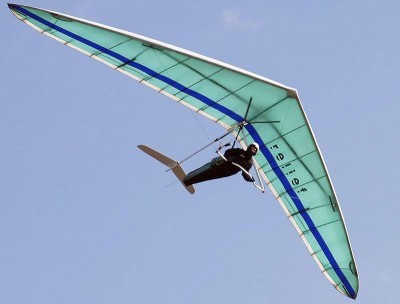
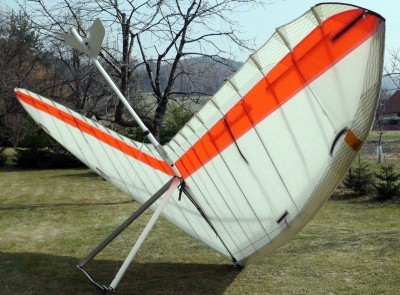
The 2007 Relief R2C is for advanced pilots.
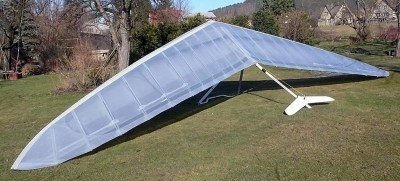
The 2008 model Relief, the Relief Pro 2008, is for advanced pilots.
Relief 14
Wing area: 13.6 m²
Wing span: 10.3 m
Aspect ratio: 7.8
Minimum pilot weight: 60 kg
Maximum pilot weight: 100 kg
Nose angle: 127°
Relief 15
Wing area: 14.8 m²
Wing span: 10.5 m
Aspect ratio: 7.4
Minimum pilot weight: 75 kg
Maximum pilot weight: 110 kg
Nose angle: 127°
Relief R2C S13
Wing area: 13 m²
Wing span: 10.4 m
Aspect ratio: 8.3
Minimum pilot weight: 55 kg
Maximum pilot weight: 80 kg
Nose angle: 132°
Relief R2C S14
Wing area: 14 m²
Wing span: 10.6 m
Aspect ratio: 8.0
Minimum pilot weight: 70 kg
Maximum pilot weight: 90 kg
Nose angle: 132°
Relief R2C S15
Wing area: 15 m²
Wing span: 10.6 m
Aspect ratio: 7.5
Minimum pilot weight: 80 kg
Maximum pilot weight: 110 kg
Nose angle: 132°
Relief RX 13
Wing area: 13 m²
Wing span: 10.2 m
Aspect ratio: 8
Minimum pilot weight: 55 kg
Maximum pilot weight: 90 kg
Nose angle: 127°
Relief RX 14
Wing area: 14.2 m²
Wing span: 10.5 m
Aspect ratio: 7.8
Minimum pilot weight: 75 kg
Maximum pilot weight: 110 kg
Nose angle: 127°
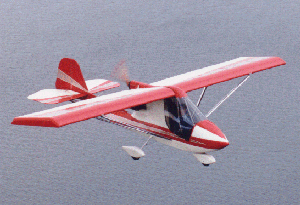
The Challenger Special is a single seat, clipped wing version, for a quicker roll rate. It qualifies as a 51% kit for Experimental – Amateur-Built, can be flown with a Sport Pilot Permit. And qualifies as a Light Sport Aircraft.
In 2010 quick-build kits were from US$10,215 to US$12,965 ex engine, and engine options include the Rotax 447, 503, 582 and HKS 700E.
The all have a 30 mph cross-wind capability and 200 ft take-off roll.
Engine: Rotax 447, 42 hp
HP range: 42-50
Height: 6 ft
Length: 18 ft
Wing span: 26 ft
Wing area: 117 sq.ft
Weight empty: 270 lb
Gross: 550 lb
Fuel cap: 5 USG
Speed max: 100 mph
Cruise: 85 mph
Range: 160 sm
Stall: 32 mph
ROC: 1000 fpm
Take-off dist: 200 ft
Landing dist: 200 ft
Service ceiling: 14,400 ft
Seats: 1
Landing gear: nose wheel
Cockpit width: 24 in
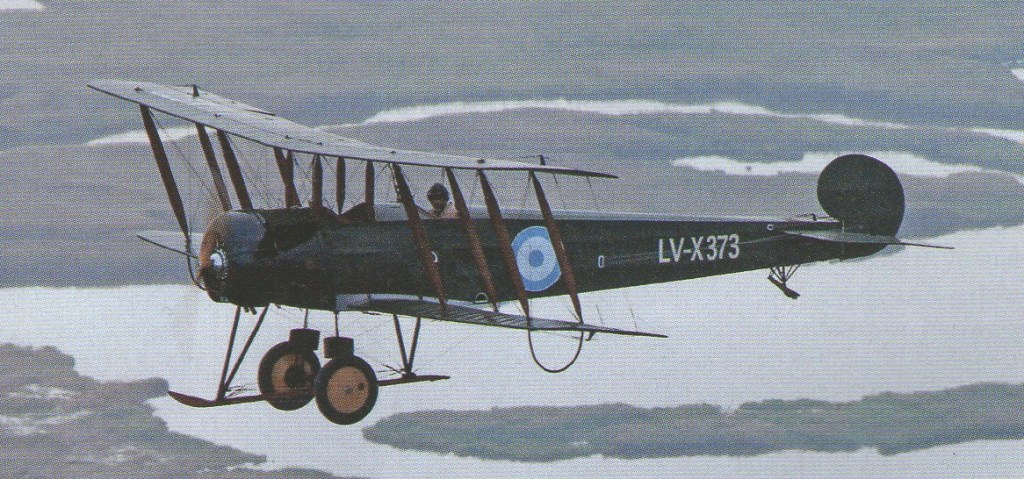
Built over a three year period in Argentina, the Avro was flying in 2010 powered by a Rotec 3600 nine cylinder radial.
The Prudden-San Diego Airplane Company was founded in 1927 by George Prudden and seven San Diego area businessmen. Due to differences in management philosophy between Prudden and his investors, Prudden left the company in November 1928.
1929:
1212 Juniper Ave,
San Diego CA,.
USA
Became the Solar Aircraft Company in March 1929.
Later, Prudden developed the Prudden-Whitehead monoplane with the Atlanta Aircraft Corporation. While in Atlanta, Prudden helped develop Candler Field, Atlanta.
The Solar MS-1 was a prototype all-metal sesquiplane airliner built in 1930 at Lindbergh Field, San Diego, California. Due to the Great Depression in 1929, the company was unable to market the aircraft and made only three airplanes. Solar would never build another aircraft after the MS-1, turning to saucepans to survive the depression, and later stainless-steel exhaust shrouds.
During this period, they won a number of contracts to produce jet engine components. Convinced that the gas turbine was the prime mover of the future, the company invested heavily in the development of small turbines.
The company was reincorporated in 1937 as the Solar Aircraft Company, dropping the “Ltd” from its name. By 1939, Solar Aircraft Company had a work force of 229. Military orders during World War II led to rapid expansion and by the end of the war the company had a workforce of 5,000, largely part of a massive effort to build more than 300,000 exhaust manifolds for U.S. airplanes.
Business dropped considerably after World War II and the management developed a plan to diversify into producing other stainless steel products including caskets, frying pans, bulk milk containers and even redwood furniture; immediately after World War II, the company also produced the Solar Midget race car. Solar’s expertise in hard-to-manufacture parts able to withstand high-temperatures led to contracts to produce jet engine components. Solar Aircraft began to design and manufacture completed turbine engines for the United States military for applications such as auxiliary power units, fuselages, and rocket engine components of guided missiles.
Solar Aircraft Company’s expertise in high-temperature metallurgy led to work producing components for some of the first US jet engines, including the General Electric I-40 and a contract from the US Navy to build an afterburner for the Westinghouse J34. Solar Aircraft Company also won contracts for the Allison J33, Allison J35, Avro Canada Orenda, and Bristol Olympus. It was during this time that one of its engineers, Wendell Reed, developed the pneumatic engine microjet controller, for which he won the Wright Brothers Medal in 1955 and which became widely used for gas turbines, afterburners, and ramjets.
Solar Aircraft Company’s work in the jet engine field convinced the company’s president, Edmund Price, that the turbine would be the main prime mover in the future. Solar Aircraft Company assembled a team under the direction of Paul Pitt in 1946 and started developing a small 80 horsepower (60 kW) axial-flow turbine as an auxiliary power unit for the US Army Air Force’s Convair B-36 strategic bomber. The Army eventually cancelled this contract, but Solar Aircraft Company soon won a contract from the US Navy in 1947 for a 250 kW system to provide emergency power on ships. First running in 1949, the T-400 would go on to provide power on minesweepers and landing craft.
In 1947, Leon Wosika and Eric Balje set up a second design line and developed a centrifugal-flow system that was much more compact than Solar’s previous designs. Originally known as the MPM-45, the unit was delivered as the 45 horsepower (34 kW) “Mars”. The Navy purchased the Mars to power portable fire-fighting pumps on ships and gave it the designation T41. In 1956, the Navy turned to Solar to provide a slightly larger design to power a small helicopter, the Gyrodyne XRON-1. Solar Aircraft Company responded by developing a slightly larger version of the Mars, the 55 horsepower (41 kW) “Titan”, which the Navy designated the T62. When the Navy abandoned development of Gyrodyne’s XRON helicopter, Solar Aircraft Company adapted the Titan for service as an auxiliary power unit. Deliveries of this auxiliary power unit started in 1962.
Solar did win the contract to provide the APU for the first 632 KC-135A tankers for the Strategic Air Command.
In the late 1950s, the Navy once again turned to Solar, this time for a larger 750-kilowatt (1,010 hp) unit that would be used as an engine in a high-speed boat. The result was the axial-flow “Saturn” engine, which entered production in 1960. Solar started marketing the Saturn to industrial users needing a 1,000-horsepower (750 kW) unit for any role, and it went on to become the world’s most widely used industrial gas turbine with some 4800 units in 80 countries.
During the next decade, the Solar Division introduced a number of new designs, both larger and smaller than the Saturn. The Centaur, which first entered service in 1968, supplied 2,700 horsepower (2,000 kW), while the modern versions supply 4,700 horsepower (3,500 kW). In 1973, Solar exited the aviation industry to concentrate its resources on industrial gas turbines.
The turbine never came to be the main prime mover, but Solar’s expertise in small turbines found a number of niche roles. The company was purchased by International Harvester Company in early 1960, becoming the Solar Division of International Harvester in 1963. In 1973, the Solar Division exited the aerospace industry to focus solely on industrial turbines. In 1975, the development and manufacture of the Solar Division’s radial engines was moved into a newly formed Radial Engines Group, renamed the Turbomach Division in 1980.
In 1977, the Solar Division introduced a larger version of the Centaur, the 10,600 horsepower (7,900 kW) Mars, re-using the name from the earlier smaller engine.
Solar Turbines Incorporated became a wholly owned subsidiary of Caterpillar Tractor Co. after Caterpillar purchased the assets of the Solar Division and the Turbomach division from International Harvester on 31 May 1981. The newly acquired assets were organized as a wholly owned subsidiary of Caterpillar Tractor Co. named Solar Turbines Incorporated.
After the purchase, Caterpillar assigned development and manufacturing of the Caterpillar Model 5600 to Solar Turbines. The 5600 was originally developed by The Boeing Company as the Boeing 551/553 series, which Caterpillar had purchased when Boeing decided to exit the gas turbine business in 1966.
In 1985, Caterpillar sold the Turbomach Division to Sundstrand Corporation (now Collins Aerospace), exiting the Centrifugal gas turbine engine business.
Solar Turbines Incorporated continued to introduce new versions of their axial-flow industrial engines throughout the 1980s and 90s, often re-using older names instead of introducing new names.
In 2004 Caterpillar acquired Swiss company Turbomach S.A. which had long been a packager of industrial turbines from Solar, Rolls-Royce, and Trent.
Solar has sold more than 15,000 gas turbine systems, with a combined operating history of over 2 billion hours of use, equivalent to over 100,000 years.
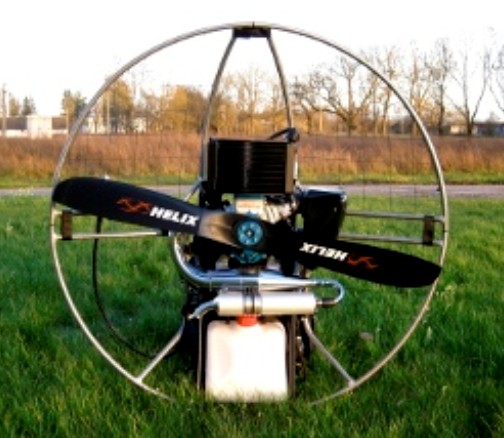
The SKY 100 has an enhanced cooling system and a larger radiator to improve output and stability even in hotter countries. Manufacturing technique employed, detailed finishing, performances, lightness resulting from the use of light alloys, use CNC machines. The line features the Walbro W8 carburator.
Paramotor frame and prop cage are made using an aluminium alloy D16T welded with argon gas. Its simplicity and level of construction still protect against impact.
Equip with APCO harness which has been specially designed for Propeller paramotors.
Harness include:
3 automatic metallic buckles, one ventral and two for the legs
Adjustable extension for the harness seatplate
High-quality pulleys for the foot accelerator
Connection points for rescue system
Large pocket below the seatplate
Automatic steel karabiners
Sky100 Light, more compact version with the Sky 100 engine. With lighter frame Sky100 Light is 2,5 kg lighter than its “big brother”. By default it includes 120 cm diam carbon-fiber propeller. Launching is easier due to lighter propcage, but at the same time it requires precise groundhandling because the propeller is “outside ” of the propcage
Sky 100
Engine: Sky 100 , 1 cyl, 2-stroke watercooled, 102 cc, 18 hp / 10200 rpm
Carburator: Walbro W8
Reduction: mechanical, lubrificated with centrifugal clutch
Reduction ratio: 1:4,0
Starter: Manual
Thrust: up to 60 kg
Fuel type: unleaded 98 + 2-3% synthetic oil
Fuel capacity: 14 l
Fuel consumption: ca 3,5 – 4 l/h
Frame: Aluminium alloy D16T
Propcage: 4-part
Propeller: 125 cm Helix Carbon 2-blade
Weight: 25 kg
Max pilot weight: 110 kg
Recommended pilot weight: 80 – 100 kg
Harness: APCO with automatic buckles
Sizes: 140 x 140 x 40 cm
Sky100 Light
Engine: Sky 100, 1 cyl, 102 cc, 18 hp/ 10200 rpm, 2-stroke watercooled
Carburator: Walbro W8
Reduction: mechanical, lubrificated with centrifugal clutch
Reduction ratio: 1:4,0
Starter: Manual
Thrust: up to 56 kg
Fuel type: unleaded 98 + 2-3% synthetic oil
Fuel capacity: 14 l
Fuel consumption: ca 3,5 – 4 l/h
Frame: Aluminium alloy D16T
Propcage: 4-part
Propeller: 120 cm Helix Carbon 2-blade (3-blade optional)
Weight: 22.5 kg
Max pilot weight: 100 kg
Recommended pilot weight: 75 – 95 kg
Harness: APCO with automatic buckles
Sizes: 128 x 128 x 40 cm
 All Aero