Rainbow Spirit

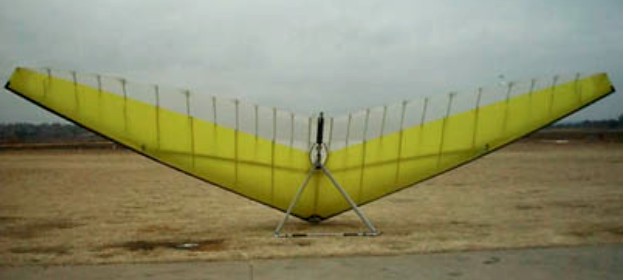
The Spirit 15 Wing marks Rainbow Aircraft’s return to trike wing development and manufacture. After 2 years in development under Jenya Zozulya, the Spirit 15 Wing went into production in mid-2002.

By late 2002 over 30 wings had been produced and the first Spirit 15 Wings began arriving in the US in November 2002. Rainbow Aircraft, Inc. (through Trike-Wings.com) was the exclusive US importer of the Spirit 15 Wing.

The wing is light-handling in both pitch and roll and yet stable in both axis.

The Spirit 15 Wing incorporates:
Streamlined Downtubes and Kingpost
Batten tips are springloaded resulting in a ‘clean’ trailing edge
The main section of the upper wing sail is clear trilam.

After assembly, each wing is test flown and tuned if necessary before being shipped. All tubing is aluminum 6082-T8 aircraft tube, anodized to 25 microns. All cables are multi-strand stainless steel.

The sail is put together with precision and the finest polyester fabrics available in the world. Top front surface is 6.3 oz Dacron. Top main surface is heavy duty 3 oz trilam (clear) with a 200 kg (440 lb) Dynema cord sewn in. Bottom surface is 4 oz Dacron. Leading edge is 5 oz trilam.

The Spirit 15 wing was static tested to 450 kg (990 lbs) at 6 g’s positive for a total static tested load of 2,450 kg (5,400 lbs). Test was conducted by Spirit Wing Design Engineer Zenya Zozulya, according to the same method used by the German certification authority (DULV).

A full flight test program was also conducted in order to win CAA approval. The Spirit 15 wing is certified by the South African Civil Aviation Authority (CAA).

Wing area: 15.3 sq.m / 164 sq.ft
Wing Weight: 52 kg / 114 lbs
Wingspan: 10.2 m / 33.5′
Dual Surface: 75%
Nose Angel (degrees): 130 deg
Aspect Ratio: 6.9
Folded Length: 6.1 m / 20′
Short Folded Length: 4.6 m / 15.1′
Wing Loading at 450 kg / 992 lbs: +6g -3g
Stall Speed: 42 km/h / 26 MPH
Minimum Flying Speed: 50 km/h / 31 MPH
Cruise Speed Range: 80-110km/h / 50-69 MPH
Maximum Level Speed: 136 km/h / 85 MPH
VNE Never Exceed Speed: 144 km/h / 90 MPH
Sink Rate: 2 m/s / 390 fpm
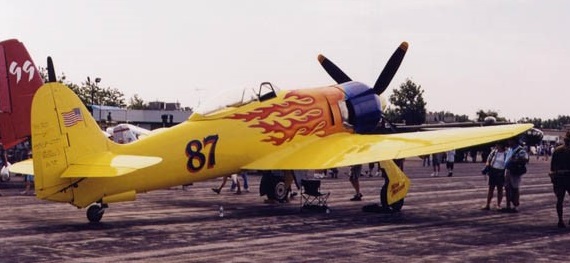
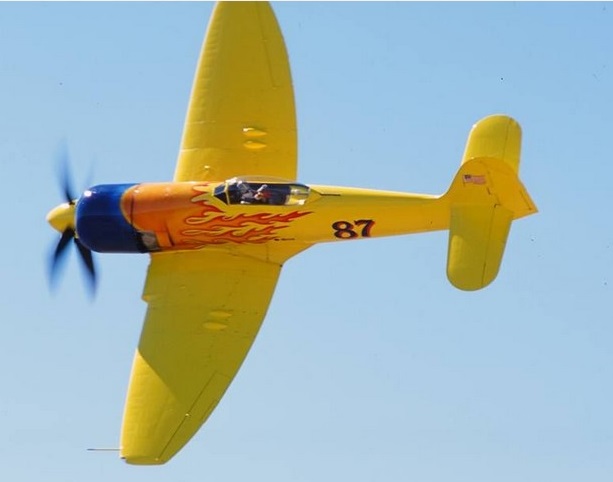
Miss Merced / Signal Sea Fury / Super Chief

Miss Merced was delivered to RCN as WG567 and brought on charge on August 28, 1951.

Ending service on February 8, 1957, it was owned by Robert P. Vanderveken, Pierrefords, Quebec, from September 1961-1965 and registered as CF-VAN.

Owned by Michael D. Carroll, Long Beach, CA, 1965-1969, it was registered as N878M and modifed as racer. Military equipment removed, airframe lightened. Outer wing panels clipped (removing 6.5 ft. total). Small bubble canopy installed.

The first race appearance was at Reno 1966. It was flown as race #87/”Signal Sea Fury” by Lyle Shelton.

Owned by Sherman Cooper, Merced, CA, 1969-1972, it flew as Race #87/Miss Merced.

Reno – 1970 – Unlimited Class – Hawker Siddeley Sea Fury FB Mk.11 (#87) “Miss Merced” (N878M) William (Sherm) Cooper Finished 3rd (Gold) Speed 412.583 mph

Reno 1970

It nosed over during forced landing after engine failure near Mojave, CA, November 13, 1971.

Frank C. Sanders, Chino, CA, acquired the wreck in 1980-1981, who sold to James A. Mott, South Gate, CA, in 1984. It was rebuilt at Chino, 1984-1988 and flew as race #42/Super Chief.

Stephen Bolander and Jim Michaels/J&S Aviation, Oconomowoc, WI, owned N878M March 24, 1999-2002, trucking it from Chino to Ione, CA for restoration. Fitted with Wright R-3350 and additional racing mods. First flight, Ione, CA, March 2000, and flown as race #87/Miss Merced.

Owned by Eric Woelbing, Franksville, WI, July 21, 2003-2004. Flown as race #87/Miss Merced. Based at Kenosha Airport, WI.

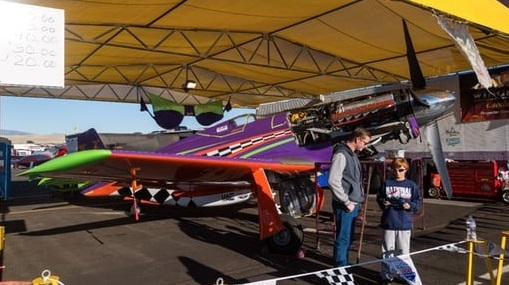
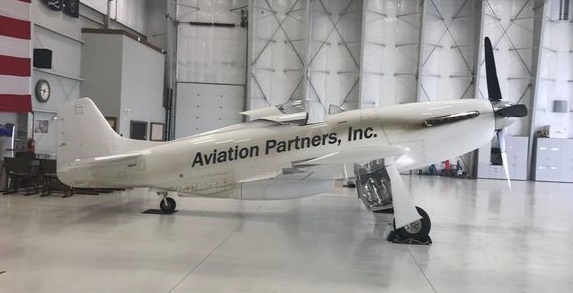
Voodoo

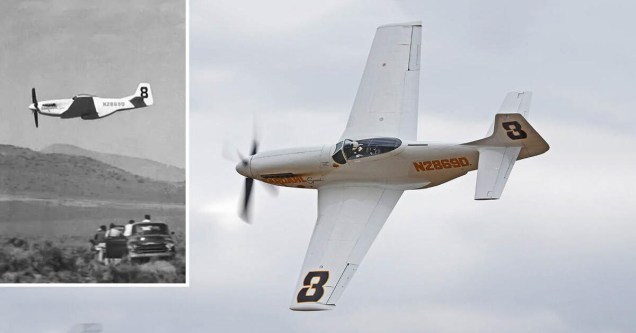
A modified P-51 Mustang, Voodoo was built from parts. It was built in the 90s and started racing right from the get go, in a stock configuration.It was slowly modified over the last 25 years into a full-blown racer. The wingspan is reduced by two and a half feet on each side. There’s a production break on the wing, so the outboard portion is removed. The canopy is much smaller. It has a smaller radiator scoop and hat to supplement the cooling with a spray bar system. The aircraft doesn’t have any automatic systems, it’s all manual. Three different wheels in the cockpit adjust water flows and methanol flows.

The biggest modification is the engine. The stock Rolls Royce Merlin put out around 1,700 horsepower, Voodoo has 34 to 3,600 horsepower. Ground speed on the course is about 540 miles per hour (869 km/h) compared to stock Mustangs are doing about 340 (547 km/h).

After five days of qualifying, heats, and semi-finals, the 2013 Reno Air Races came to a finish on Sunday with Steve Hinton, Jr., flying the modified P-51 Mustang known as “Voodoo,” winning the Unlimited Class Breitling Gold Race, with a time of 7:59.313 and an average speed of 482.074 MPH.

Hinton beat the second place finisher, Matt Jackson flying “Strega,” by more than seven seconds. Sherman Smoot, flying the Yak 11 “Czech Mate,” finished third.

Steve Hinton, pilot/Mechanic, won the Unlimited class Gold for 2016.

Steven Hinton, pilot, broke the speed record for an internal combustion engine-powered airplane, Class C-1e, on a 3 km closed course in September 2017. Hinton was flying the highly-modified P-51 Mustang named Voodoo.

Over four laps, Hinton took Voodoo to an average speed of 531 mph. The fastest lap was nearly 555 mph according to Pursuit Aviation, an aerial cinematography company that documented the flight. The previous record was set at 318 mph in 2012 by Will Whiteside Jr. in a Yak-3U named Steadfast.

The ultimate goal was to break the speed record over a 3 km closed course set in 1989 by Lyle Shelton in Rare Bear — a Grumman F8F-2 Bearcat. While Hinton’s speed was slightly quicker than Shelton’s, had the rules not changed the record would have to beat by 1 percent, translating to 533 mph.

Steven Hinton is the son of Steve Hinton, a pilot in his own right who held the 3 km speed record before Shelton, from 1979 to 1989. Hinton Sr. is the president of Planes of Fame Air Museum in Chino, California.

Dreadnought

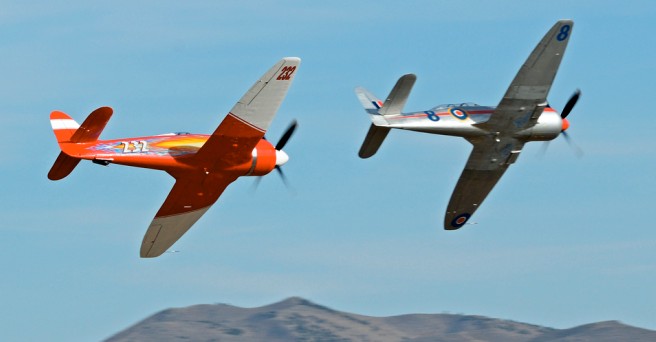
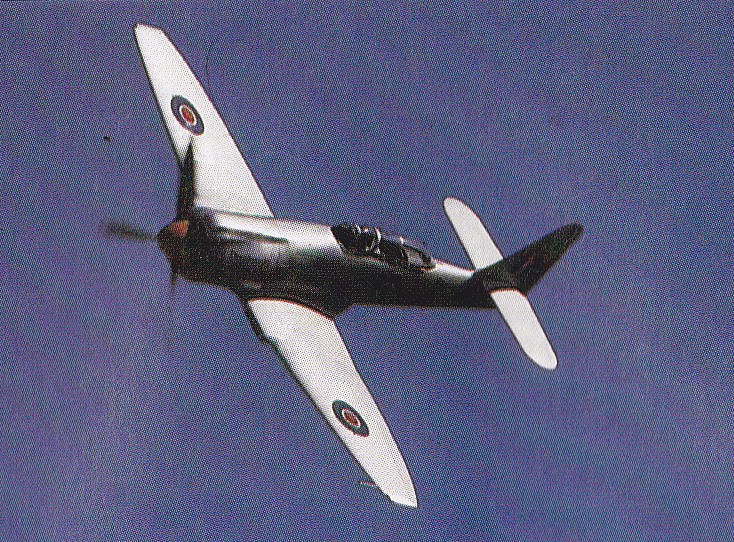
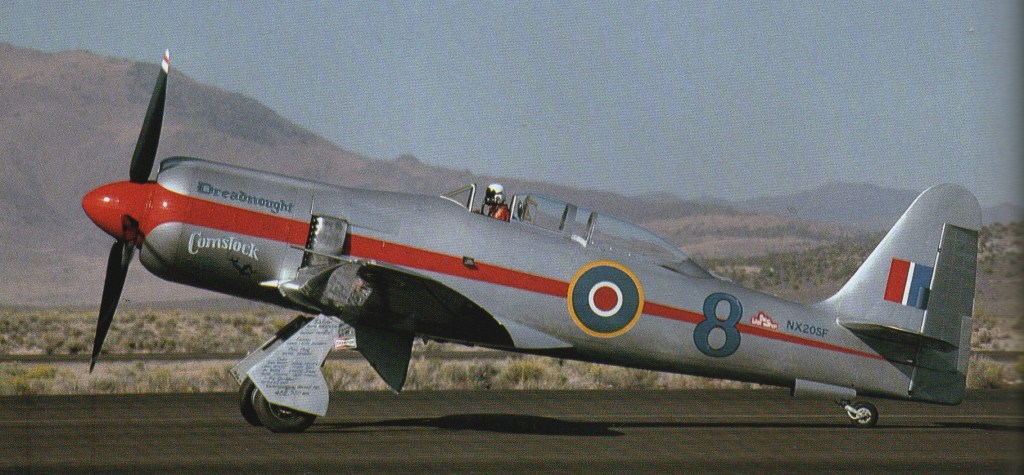
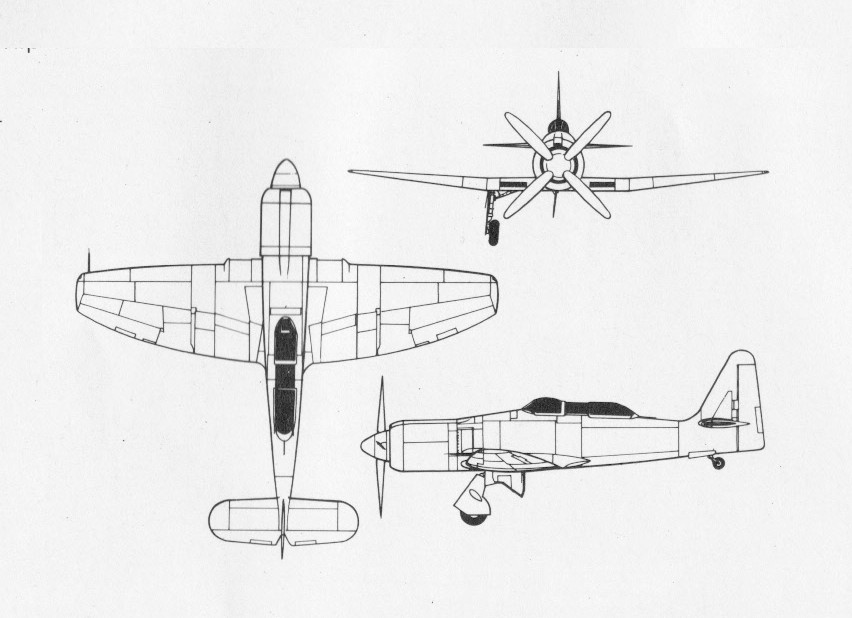
Frank Sanders Racing is responsible for this former Royal Navy Sea Fury T.Mk 20 racer. Dreadnought was prepared at Chino by Frank and his sons Dennis and Brian in 1982/3, and the two-seat aeroplane sported several modifications, the most obvious was the replacement of the original 1849-kW (2,480-hp) Bristol Centaurus with a Pratt & Whitney R-4360 radial. A four-blade propeller was fitted in place of the Sea Fury’s characteristic five-blade unit.

The pilot for the first outing was Neil Anderson. Neil completed the Reno course in Dreadnought at 446.39 mph, breaking the qualifying record and eventually taking first place in the Gold Championship to make this another first-time-out winner in 1983.

Dreadnought
Span: 11.7 m (38 ft 4.75 in)
Length: increased from 10.54 m (34 ft 7 in)
Powerplant: 1 x Pratt & Whitney R-4360-63A Wasp Major, 2833 kW (3,800 hp)
Max TO weight: about 3946 kg (8,700 lb)
Max speed: about 480 mph at low altitude

Mike Brown won the Unlimited Gold Race at Reno on September 17, 2006, at a speed of 453.61 mph in Hawker Sea Fury September Fury. Second was Matt Jackson in Sea Fury Dreadnought.

Gallery

Czech Mate

Mike Brown won the Unlimited Gold Race at Reno on September 17 2006 at a speed of 453.61 m.p.h. in Hawker Sea Fury September Fury. Second was Matt Jackson in Sea Fury Dreadnought, with Sherman Smoot third in Yak-11 Czech Mate. The other three finishers were all Sea Furies, the only two North American P-51 Ds in the race having retired.

After five days of qualifying, heats, and semi-finals, the 2013 Reno Air Races came to a finish on Sunday with Steve Hinton, Jr., flying the modified P-51 Mustang known as “Voodoo,” winning the Unlimited Class Breitling Gold Race, with a time of 7:59.313 and an average speed of 482.074 MPH.

Hinton beat the second place finisher, Matt Jackson flying “Strega,” by more than seven seconds. Sherman Smoot, flying the Yak 11 “Czech Mate,” finished third.

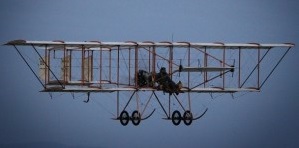
RAAF Museum Bristol Boxkite

The brainchild of Group Captain (retd) Ron Gretton and Wing Commander (retd) Geoff Matthews, the Boxkite replica was built at the RAAF Museum at Point Cook, Australia, and will eventually be a showcase display for the public.

With Air Vice-Marshal (retd) Mark Skidmore at the controls, the Boxkite flew successfully on Wednesday 11 September 2013 at RAAF Base Williams. The aircraft flew about 1000 metres and reached a speed of 42 mph.

“It was an exhilarating and humbling experience, I am honoured and proud to follow those aviators who pioneered military aviation in this country,” said AVM Skidmore, a former F-111 and ARDU test pilot.

“I now also have the honour of being the only RAAF pilot who has flown both the fastest and slowest aircraft in the Air Force. The Bristol Boxkite has a rich history in the evolution of military aviation in Australia, it was the first official military aircraft built in this country and used to train our first military pilots.”

The Boxkite has a rich history in the evolution of military aviation in Australia and was the first official military aircraft built in Australia that was used to train Australia’s military aviators.

A Bristol Boxkite was flown in Australia for the first time on 1 March 1914, when Lieutenant Eric Harrison took one into the air at Point Cook. The airfield was then the home of the Australian Flying Corps (AFC).

Harrison’s flight is recognised as the starting point of military flying in Australia. In recognition of this historical significance, RAAF Base Point Cook will play host to the Centenary of Military Aviation in Australia event on 1 to 2 March 2014 with the Bristol Boxkite replica as a major draw card.