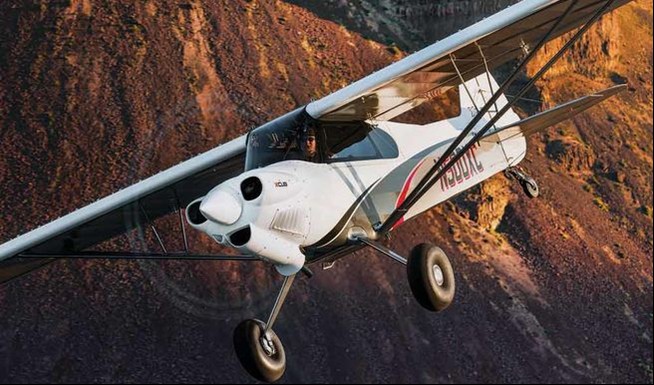
Developed in secret over a six-year period, the CubCrafters XCub emerged on the scene June 2017 as a fully certified product ready for delivery to buyer’s who sought the ideal backcountry machine. Though it’s a clone of the Piper Super Cub introduced to the market decades ago, the XCub is a thoroughly modern aircraft, featuring Lycoming’s 180 hp O-360 engine spinning a composite Hartzel Trailblazer constant speed prop, a combination that allows the the XCub to cruise at 145 mph at 75 percent power and offer up a useful load of 1,084 pounds while almost levitating like a helicopter on the extremely short takeoff run.
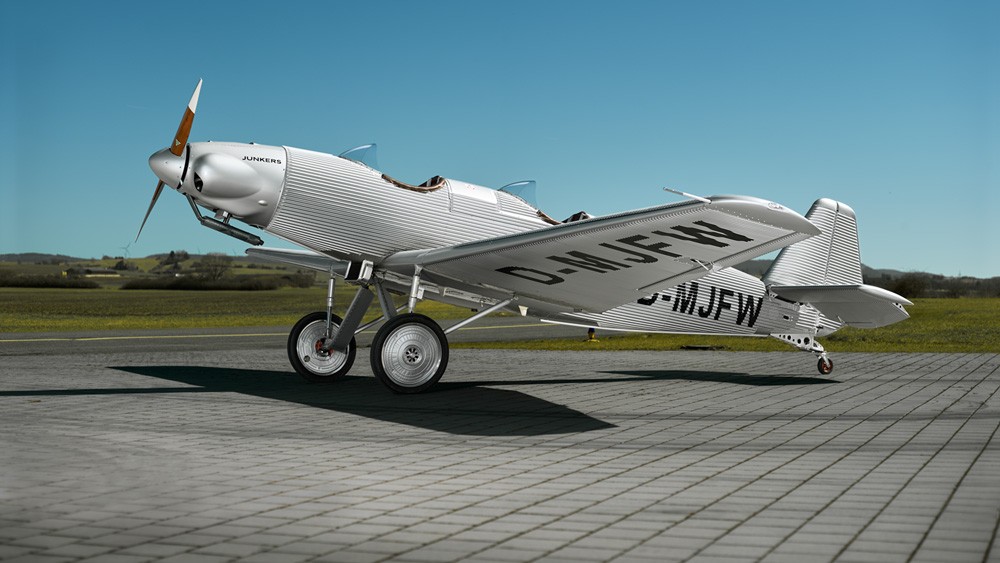
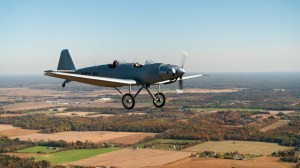
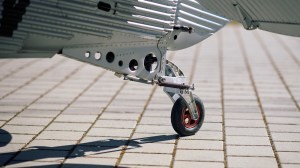
The Junkers Aircraft A50 Junior is a sleek, light sport two-seater that merges the pioneering spirit and flair of the 1930s with the very latest aviation technology and safety. Inspired by the A50 Junior that first took flight back in 1929, this reborn, reimagined successor features the signature corrugated, lightweight aluminum skin, oval fuselage cross-section, twin-blade wooden propeller, and even the spoked wheels of the iconic original. It’s a brand-new, fully certified model, handcrafted by Junkers Aircraft GmbH in Oberndorf, Germany.
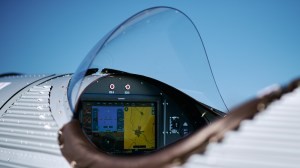
Powering the A50 Junior is the proven and ultra-dependable, Rotax 912iS fuel-injected, 4-cylinder engine producing 100 hp. It gives the lightweight, 1,323-pound (827 pounds empty) A50 a top speed of 112 knots and relaxed cruising at 84, coupled with an impressive fuel economy. With its 27-gallon (US) tank full, the A50 has a range of over 770 miles, sipping fuel at the rate of just four gallons an hour. Built-in safety comes from the stiffness and rigidity of the fuselage, the integrated Galaxy ballistic parachute rescue system, Beringer brakes, and the latest Garmin G3X avionics with a 10.6-inch pilot touchscreen for advanced navigation.
It takes over 2,500 hours it takes to build one, to the more than 1,000 hand-built components—98 percent of which are crafted in-house—to the over 10,000 hand-applied rivets used in construction.
Like the 1929 original, the A50 Junior is defined by its streamlined, corrugated aluminum skin, designed to provide strength and rigidity while giving the aircraft a truly unique look.
The twin cockpit layout puts the pilot in the rear and the co-pilot up front, with rounded, frameless windshields for protection. Each cockpit features hand-stitched leather trim for comfort and style, while to personalize each A50 Junior, there’s a choice of six distinctive, art deco–style exterior colors. Everything from white aluminum, to carrara white, to bold saffron yellow and papaya metallic, to cool frozen blue and black metallic. Flying goggles and a leather helmet are custom to the pilot.
For true authenticity, JUNKERS also offers an A50 Heritage model, powered by a 124 hp Verner Scarlett 7U radial engine with old-school analog gauges. It comes standard as a single seater, with the option of a second seat up front. Since the launch of this new A50 Junior in 2022, production has been centered on JUNKERS’ main facility in the heart of Germany’s Black Forest. But that was about to change with the opening of the company’s new manufacturing space in Battle Creek, Michigan.
Junker’s parent, DIMOR Group, headed up by passionate aviator and chairman Dieter Morszeck, was investing $12 million to add over 45,000 square feet of space to its existing Waco Aircraft Corporation campus, bringing the total to over 150,000 square feet, to manufacture Junkers Aircraft A50 Junior.
Alef Aeronautics offers its own eVTOL A flying car, a concept flying car that would have a driving range of 200 miles and a flight range of 110 miles.
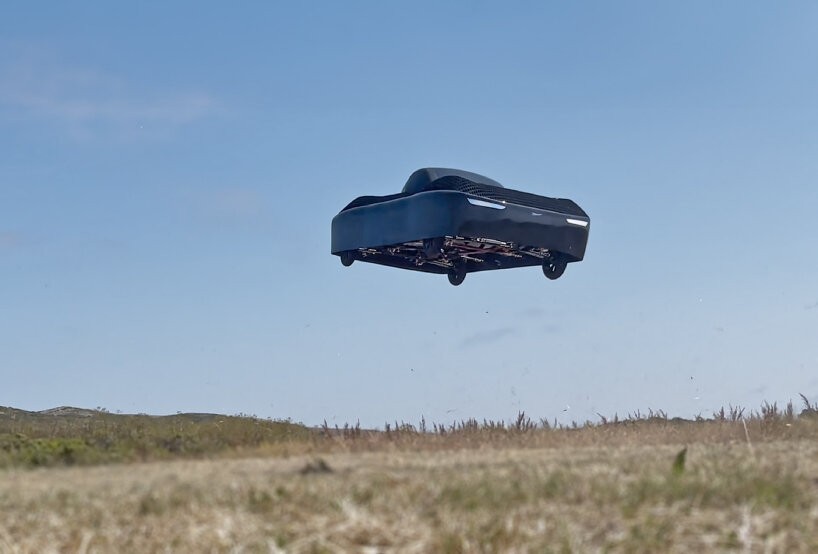
The design has a car-like exterior, and does not have any exposed propellers for added safety and to drown the loud whirring sounds and also save space. The Alef flying car is all-electric and anchor key components such as Distributed Electric Propulsion (DEP) – which helps the airflow be evenly distributed – triple to octuple redundancy of all key components, real-time and pre-flight diagnostics to always keep the drivers informed of their drive or flight, glide landing, and even a full-vehicle parachute in case of emergencies.
Alef Aeronautics shares in the release that the 300,000 USD (2025) Alef flying car would be developed using the latest hardware and software technology and end up being lightweight packs with long-lasting components, software simulators and analysis, and rigorous flight testing. The team is planning to begin production and deliver the first batch in 2025.
Alef Aeronautics’ drivable flying car takes its maiden flight in a city field. On February 19th, 2025, its test model takes off, even flying over another vehicle. In a LinkedIn post, Alef Aeronautics CEO Jim Dukhovny writes that the video showcasing the flight is ‘the first documented, verifiable flight of a flying car (an actual car, with vertical takeoff, non-tethered).’
Maiden flight on February 19th, 2025
The vehicle comes with a gimbaled cabin design to keep it stable as it moves through the air as well as an elevon system to control the vertical and horizontal movement of the Alef Aeronautics flying car and its tilting.
Presently, the Alef Aeronautics flying car is the first vehicle with vertical takeoff to receive FAA permission to fly in the US (FAA Special Airworthiness Certificate).
While the Alef Model A is the commercial version, the test model is the Alef Model Zero. It is solely used for research and development in the hopes of becoming the actual Alef Model A.
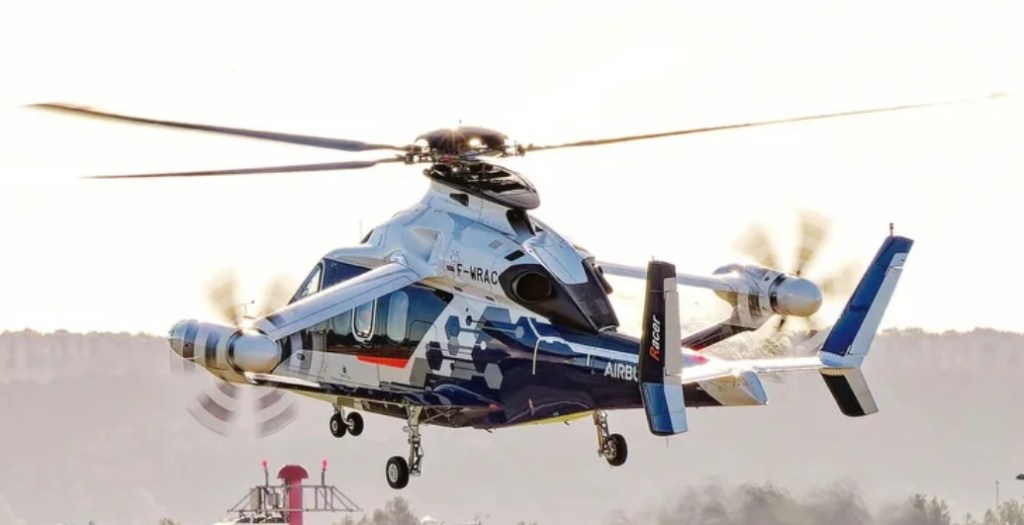
Airbus uses the Racer as a testbed for technology, one of its main focuses is developing an aerodynamic airframe. Aside from a sleek design, it features a pair of box-wing outriggers equipped with additional rotors and a twin-boom tail that forgoes the typical rear rotor setup.
The Airbus team set a goal of reaching a fast cruise speed of 253 mph, which it achieved within two months of the Racer’s first flight. Test pilot Hervé Jammayrac later pushed it up to 260 mph. It achieved its speed in part due to a design that produces a drag coefficient in the same range as Airbus’s smallest models despite its larger size.
A pair of Safran Aneto-1X engines each make 2,500 shp.
The company’s Midnight flagship air taxi broke cover in November 2022, sporting 12 rotors mounted along its wings – six dual-blade types at the rear locked in upward configuration plus six five-blade versions to the front capable of tilting for forward flight. Archer was aiming for top speeds of 150 mph (241 km/h) and a per-charge range of 100 miles (161 km).
By early 2023, a Midnight prototype was built and ready start test flights, which began in October. Its first transition from vertical hover to forward flight followed in July of last year, but May 2025 the pilot seat has been empty.
Archer’s five-seat Midnight air taxi rose vertically from the tarmac in the latter half of 2023, following years of testing and tweaking of prototypes like the two-seat Maker demonstrator.
In May 2025 Archer was testing the piloted conventional take-off and landing (CTOL) capabilities of its Midnight aircraft. Archer has released video footage of the first flight of its Midnight eVTOL with a pilot at the controls, though the aircraft rolled down a runway to take off rather than using its rotors to lift it vertically.
With chief test pilot Jeff Greenwood in the cockpit taking the aircraft prototype down a runway and up into the air to “demonstrate the robustness of Midnight’s landing gear” during conventional take-off and landing operations.
Chief Test Pilot Jeff Greenwood at the controls of the Midnight aircraft
The pilot managed to get the eVTOL in CTOL testing mode up to 125 mph (over 200 km/h) and reached a maximum altitude of more than 1,500 ft (~460 m) above ground level.
Archer was founded in 2018 by Adam Goldstein and Brett Adcock, and reportedly began flight testing of its electric vertical take-off and landing (eVTOL) aircraft systems from 2019 – though was in stealth mode until 2020. Its full-scale two-seat Maker technology demonstrator was unveiled at California’s Hawthorne Airport the following year and made its maiden flight towards the end of 2021.
Chief Test Pilot Jeff Greenwood joined Archer in 2021 after working for Bell Textron and serving in the US Marine Corps for 13 years prior to that.
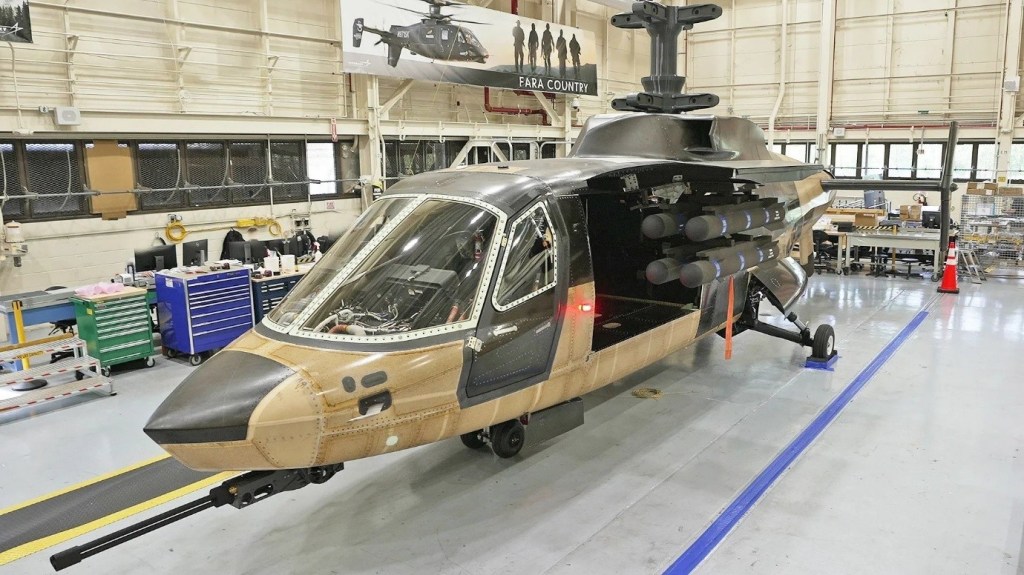
The first RaiderX competitive prototype in a hangar at Sikorsky’s West Palm Beach, Florida, facility.
The S-97, in turn, paved the way for the promising RaiderX, which was widely seen as being a potential frontrunner for the Future Attack Reconnaissance Aircraft (FARA) program, which aimed to supply the Army with a high-speed new-generation scout and attack helicopter. FARA was cancelled early 2024.





 All Aero