Rolladen-Schneider

Walter Schneider and Wolf Lemke commenced glider production in 1968 with the LS1 in the standard class; with the LS3 in 1977 the entrance into the racing class followed.

In 1980 evolved in co-operation of Lemke and Hans Jörg Streifeneder in the LS4 as a successor of the LS1.

1984 the racing class glider LS6, which replaced the LS3, was introduced.

By adding winglets and removing flaps 10 Years later the LS8 developed and first places at the European Championships 1994 and the World Championships 1995 soon proved the successful concept of the LS8.

In 2003 Rolladen-Schneider Flugzeugbau GmbH was taken over by DG Flugzeugbau GmbH (formerly Glaser-Dirks). Rolladen-Schneider had gone into receivership, and DG Flugzeugbau did not take over the liabilities but only the rights to build the gliders and use the brand name.

Rockwell

Rockwell-Standard Corp
North American Rockwell Corp
Rockwell International Corp

In 1919, Colonel W.R. Rockwell reorganised a bankrupt axle company in Oshkosh, Wisconsin. Following the Colonel’s development of the first double reduction axles for heavy-duty vehicles, Timken-Detroit Axle company acquired his axle company in 1928.

In 1953, Timken-Detroit merged with Standard Steel Spring Company to form Rockwell Spring and Axle Company. In 1958, the name of the company was changed to Rockwell-Standard Corporation. Rockwell-Standard embarked on a plan of diversification in the late 1950s and 60s and by 1967, it was a major independent producer of a wide-range of automotive components.

In 1965 Rockwell-Standard acquired Snow Aeronautical, continuing to produce agricultural aircraft at Olney as Snow Commanders (as division of Aero Commander), and acquired Intermountain Manufacturing Company (IMCO) 1966. Single-engined Model 112 delivered to customers from 1972. Low-wing twin-engined Rockwell Commander 700 produced jointly with Fuji in Japan. Thrush Commander was very notable specially-designed agricultural aircraft. The entire Thrush Commander range sold to Ayres Corp and then became known by the Ayres name. Shrike Commander 500S terminated 1980 but Commander Jetprops continued by Gulfstream American Corporation.

In 1967, Rockwell-Standard Corporation and North American Aviation merged to create the North American Rockwell Corporation.

Following company reorganization, the former Aero Commander division of Rockwell became part of NAR, and its Shrike, Commander 685 and Turbo Hawk Commander twin-engined business aircraft were marketed under the new company name, together with Quail, Sparrow, Snipe and Thrush Commander agricultural aircraft, and the Darter and Lark Commander single-engined lightplanes.

The Model 112 Commander lightplane and B-1 swing-wing supersonic bomber projects were started before the company name was changed to Rockwell International in 1973.

In 1973 North American Rockwell and Rockwell Manufacturing Company merged to become Rockwell International Corporation. Aircraft production after the 1967 merger included the Aero Commander line of single and twin-engine aircraft, the turboprop OV-10 Bronco armed reconnaissance aircraft, T-2 Buckeye jet trainer, B-1B Lancer supersonic swing-wing bomber, and the Sabreliner executive and light jet transport. Company’s aerospace and defence units purchased by the Boeing Company on December 6,1996, becoming Boeing North American. Similarly, Rockwell Australia became Boeing Australia Ltd.

In 1977 Rockwell International sold its agricultural airplane operation to the Ayres Corporation of Albany, Georgia. The new owners will continue to manufacture the Models 600 and 800 Thrush Commanders. Fred Ayres, who developed the Turbo Thrush PT6 retrofit, plans to begin producing that airplane at his new plant.

1984: Sabreliner Corporation, a new company formed to acquire the former Sabreliner Division of Rockwell International.

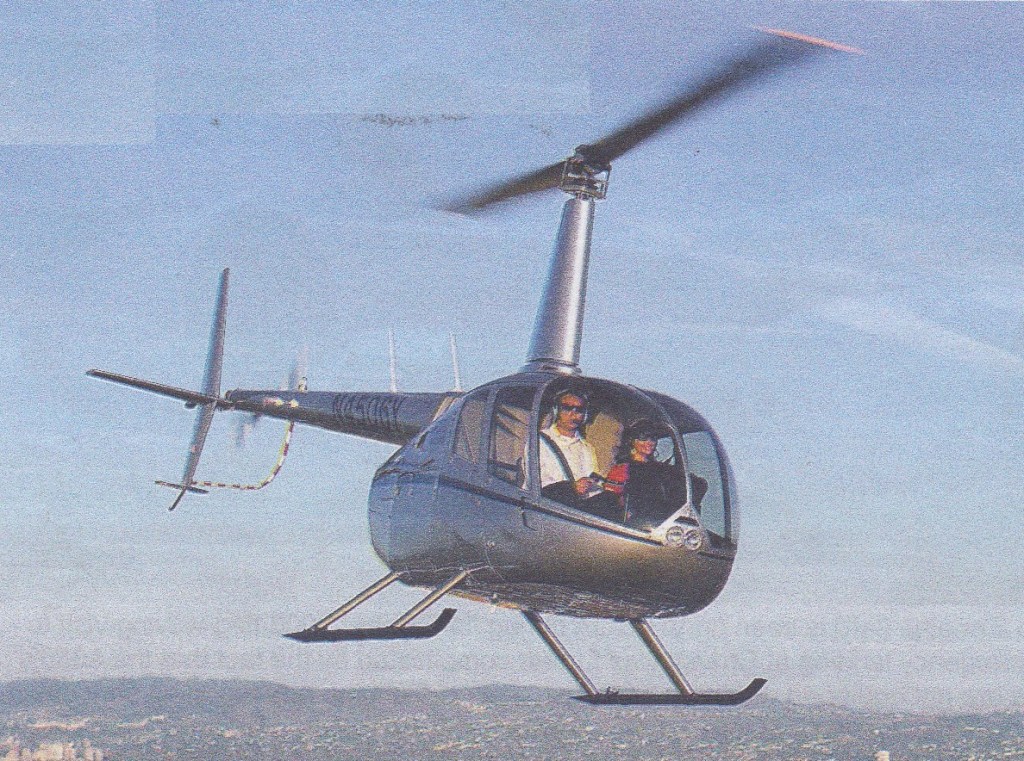
Robinson Helicopters R66

Robinson Helicopter Company achieved certification of the new turbine-powered R66 on 25 October 2010 during a ceremony held at the Robinson facility in Torrance, California, three years and eight months after the company had publicly announced plans to develop a five-place turbine helicopter.

The R66, the first Robinson with such power, has a single Rolls-Royce RR300 turboshaft engine. Like the piston-powered R44, the R66 has a two-blade rotor system and an open interior configuration but with increased reserve power and altitude performance.

The relationship between Rolls-Royce and Robinson Helicopter Company began in 2005 with the signing of a development agreement, and the two companies have worked closely since then to develop the RR300 engine, a development of the Allison C250.

Nigerian Air Force – Robinson R66 – NAF 577

Gallery

Robinson Helicopters

After working for Bell, Kaman, Cessna and then Hughes, Frank Robinson formed Robinson Helicopters in 1971 to design and build a low-cost, piston engined, two-seat lightweight helicopter as the R22, which first flew in August 1975. Deliveries started 1979 and over 2,700 since sold in several versions, including improved R22 Alpha and Beta, Mariner with floats, IFR Trainer for instrument training, Law Enforcement and Agricultural versions. A four-seat development first flown March 1990 as the R44 Astro, with deliveries from 1993. Variants include IFR Trainer, Newscopter for media operations, and Police Helicopter.

1995: 24747 Crenshaw Blvd, Torrance, CA 90505, USA.

Robin Aviation / Centre Est Aeronautique / CEA / Avions Pierre Robin

The history of the Robin aircraft can be traced to the 1950s when Pierre Robin, then a young flying instructor, wanted to build an aircraft capable of carrying his wife and son. He found an unused Jodel D.10 glider wing lying in a hangar at a nearby airfield and built a fuselage, based on a scale-up version of the Jodel D.11, around this wing; resulting in the DR 10. After many refine¬ments, the final production version an aircraft powered by a Continental C-90 and able to carry three people rolled out as the DR100. This was the beginning of a successful aircraft business.
Centre Est Aeronautique formed at Dijon October 1957 by Pierre Robin and Jean Delemontez (ex-Jodel) , at Darois Vil¬lage, near Dijon, Burgundy, as a privately owned company, and began production with the DR 100 Ambassadeur, a three-seat version of the Jodel D.11, designed by Robin and first flown July 1958; built also by Societe Aeronautique Normande. The basic design was constantly refined through a number of variants.
Delivered 500th aircraft in June 1967.

Subsequent products also mainly two- to four-seat private-owner models. Name of company subsequently altered to Avions Pierre Robin (Centre Est Aeronautique); the latter part later dropped from marketing name.

Aircraft from Avions Robin include the Robin 200 two-seat lightplane and trainer (first flown 1971); DR 400 (first flown May 1972) that was offered in two-seat and 112 hp DR 400/100 Cadet form during 1980s later in 118 hp DR 400/120 Dauphin 2+2 two-plus-two seating form, 160 hp DR 400/140 B Dauphin 4 four-seat form, 160 hp DR 400/160 Major four-seat form with extra fuel capacity and increased wing area, 180 hp DR 400/180 Regent four-seat form, 180 hp 400/180 R Remo 180 four-seat form for glider towing and with reduced fuel, 200 hp DR 400/200 R Remo 200 four seat form for glider towing, and latest 200 hp DR 400/200i President four/five-seat form with larger fuselage to offer increased cabin space; Robin 2160 two-seat aerobatic lightplane (certificated 1978).

1983: Avions Pierre Robin SA, aerodrome de Dijon¬Val Suzon, 21121 Fontaine les Dijon, France.

Robin 3000 four-seat lightplane with T-tail (first flown 1988 in 3000/160 form). Robin 1180 Aiglon had first flown in 1976 as metal four-seater.

By 1998, Mudry had been bought out by the group which owns Robin Aircraft and as a result the Barouder became available through Bul Aéro.

Since its foundation it has continuously created light aircraft, producing over 3,500 in ten different aircraft ranges, and in 2001 the company was building about 60 aircraft a year, a third of which are for export.

RMT Aviation Bateleur

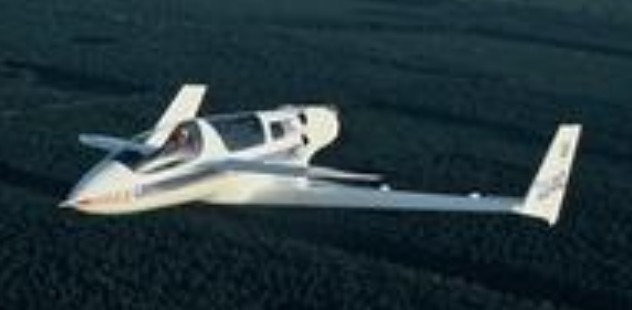
The configuration of the Bateleur brings numerous advantages compared to the conventional high or low winged aircraft. Its flight and handling characteristics remaining standard allows any pilot instant conversion.

The tandem seating for 2 people gives both pilot and passenger full view to both sides. The concept has proven to be stable in severe turbulence, comparable only to aircraft many times its weight making it very suitable as an aerial photographic or observation platform. The endurance and range in excess of 7 hours / 1000 km can be extended with auxiliary tanks by another 50%. As an Ultralight, the MTOW is 450 kg.

Bateleur 115 T
Stall: 35 kt / 40 mph / 65 kmh
Cruise: 149 kt / 171 mph / 276 kmh
VNE: 173 kt / 199 mph / 320 kmh
Empty Weight: 259 kg / 570 lbs
MTOW Weight: 599 kg / 1320 lbs
Climb Ratio: 1700 ft/min / 9 m/s
Glide Ratio: 18
Take-off distance (50ft obstacle): 500 ft / 152 m
Landing distance (50ft obstacle): 400 ft / 122 m
2009 Price: 92800 EURO

Bateleur 912 S
Stall: 35 kt / 40 mph / 65 kmh
Cruise: 140 kt / 162 mph / 260 kmh
VNE: 173 kt / 199 mph / 320 kmh
Empty Weight: 250 kg / 551 lbs
MTOW Weight: 600 kg / 1323 lbs
Climb Ratio: 1400 ft/min / 7.1 m/s
Glide Ratio: 18
Take-off distance (50ft obstacle): 720 ft / 220 m
Landing distance (50ft obstacle): 490 ft / 150 m
2009 Price: 78800 EURO

Renegade Light Sport Aircraft Carbon Pitts / Lil Rascal

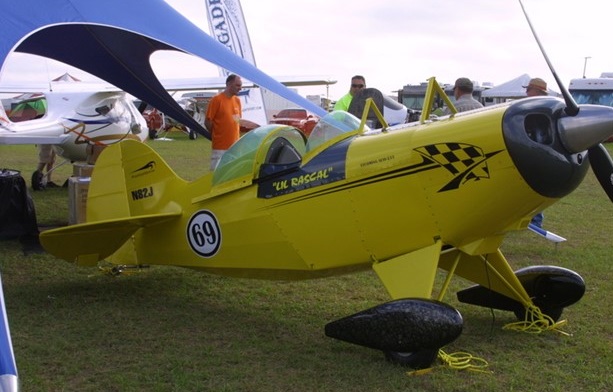
Renegade Light Sport LLC has put a carbon fiber spin on the aerobatic Pitts S1C from Steen Aero, and christened the plane the Renegade “Lil Rascal.” Previously known as the Carbon Pitts, Renegade was notified by Aviat that it held a trademark on the word “Pitts,” necessitating the name change. Renegade says this aircraft is right in line with Renegades’ business model of taking the best of the old dependable engines, airframes, and more, and putting the company’s modern, state-of-the art touch to the projects.

Renegade elected to drop the FK-12 Comet project and instead bring a proven airframe to the marketplace which conforms to the LSA, ASTM standards. Renegade says the Rascal has the best of the old S1C airframe however it’s is 4 inches wider, 6 inches longer in the cockpit, sporting a new all carbon fiber wing design, with full span ailerons, and complete carbon wing with no fabric what so ever. Both the top and bottom wings are all of a light-weight, extremely strong construction. Preliminary tests show the airplane is a 12 G machine, but Renegade restricts the G rating to 6 positive and 3 negative, the rating Lycoming puts on their new LSA specific inverted Christian Eagle oil system engine. The Rascal Sports comes standard with an all Glass Dynon 10″ Skyview digital G meter cockpit, and smooth leather interior.

The Lil Rascal series feature a 4130 welded chromoly steel fuselage, spring steel landing gear and are biplanes with 4 ailerons. The wings and many parts of the fuselage are going to be made from carbon to add strength and cut down on weight.

It has the Lycoming AEIO -233 engine, the first four of which made by Lycoming are in Renegades Hangar. The prop is the new ground adjustable Sensenich black on carbon.

The LSA-compliant Lil Rascal LS1 (single-seat) and LS2 (two-seat), are both models powered by the fuel-injected electronic-ignition Lycoming AE-IO-233 LSA engine. The all-U.S. built fully aerobatic birds will make weight to the LSA spec. Price: US$125,000. Both models will be certified as S-LSA.

LS1
Engine: Lycoming AE-IO-233
Empty weight: 650 lb
Cruises: 120 kt
Stall: 41 kt
Seats: 1

LS2
Engine: Lycoming AE-IO-233
Empty weight: 750 lb
Seats: 2