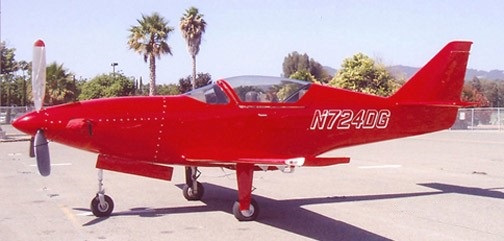
The Gray Special was built in 2002 as a turboprop version of the Legend.
Engine: Walter M601D, 657hp
Wingspan: 28’6″
Length: 25’9″
Max speed: 356 mph
Cruise speed: 334 mph
Stall: 120 mph
Range: 944 mi
Seats: 2
The Gray Special was built in 2002 as a turboprop version of the Legend.
Engine: Walter M601D, 657hp
Wingspan: 28’6″
Length: 25’9″
Max speed: 356 mph
Cruise speed: 334 mph
Stall: 120 mph
Range: 944 mi
Seats: 2
Carson City NV.
USA
Circa 2002 airplane builder
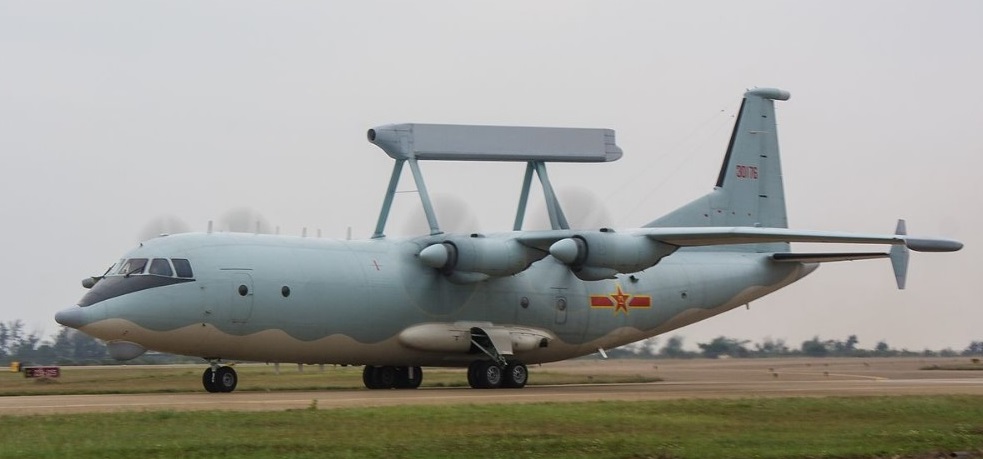
The KJ-200 (Chinese: 空警-200; pinyin: Kōngjǐng Liǎngbǎi; literally: “Airwarn-200”) NATO reporting name: Moth or Y-8 Balance Beam system, is an Airborne early warning and control (AEW&C) program developed by Shaanxi Aircraft Corporation. (KJ is from the first characters of the Pinyin spelling of 空警, (Kōng Jǐng), short for 空中预警 (Kōng Zhōng Yù Jǐng), which means Airborne Early Warning).
The key component of this aircraft is an AESA radar system, visually similar to the Saab Erieye system, mounted on struts above the rear fuselage, as well as ventral sensor domes. The platform of this aircraft is based on the Shaanxi Y-8F-600 and it has been reported that Pratt & Whitney Canada PW150B turboprops and Honeywell avionics have been incorporated.
The general designer of the KJ-200 is Ouyang Shaoxiu (欧阳绍修), the same general designer of the Y-8. According to Ouyang the KJ-200 has been significantly modified (around 80%) from the original Y-8. including the adoption of a glass cockpit.
The project experienced a major setback in 2006, when a KJ-200 crashed into a mountain in Guangde County while undergoing tests.
During the National Day of the People’s Republic of China military parade 1 October 2009, a KJ-200 took the role as a lead aircraft.
In February 2017 a US Navy Lockheed P-3 Orion and a KJ-200 inadvertently came close to each other over the South China Sea. The aircraft were within 1,000 feet (305 meters) of each other.
It is believed 11 have been built.
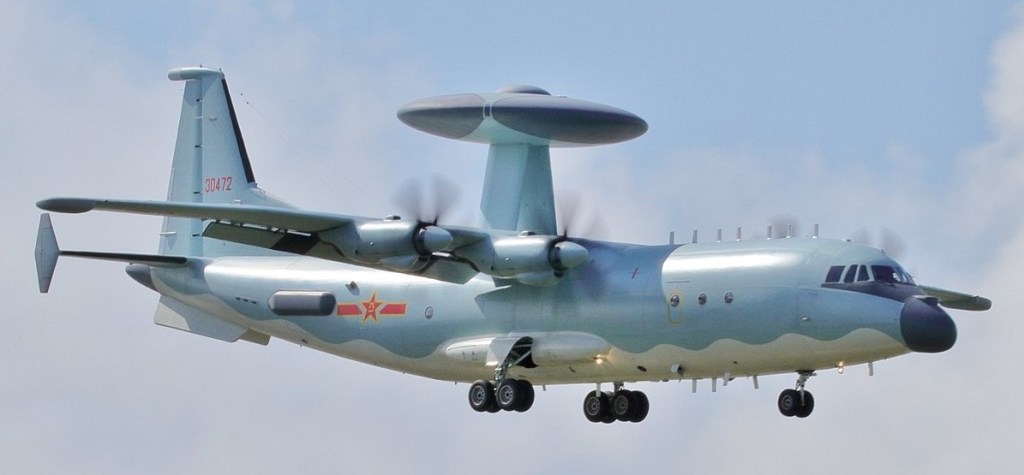
The Shaanxi KJ-500 (Chinese: 空警-500; pinyin: Kōngjǐng Wǔbǎi; literally: “Air Warning 500”) is a third-generation airborne early warning and control (AEW&C) aircraft used by the Chinese People’s Liberation Army Air Force. It was built by Shaanxi Aircraft Corporation, and is based on the Y-9 airframe.
China started the development of the KJ-500, its third AEW&C, in the late 2000s. The KJ-500 was required to have good detection capability, good identification ability, and quick responsiveness. The KJ-500 was also required to be the core force of the information combat system, its equipped technology has four major characteristics, which are networking, multi-functionality, high-integration, and lightweight.
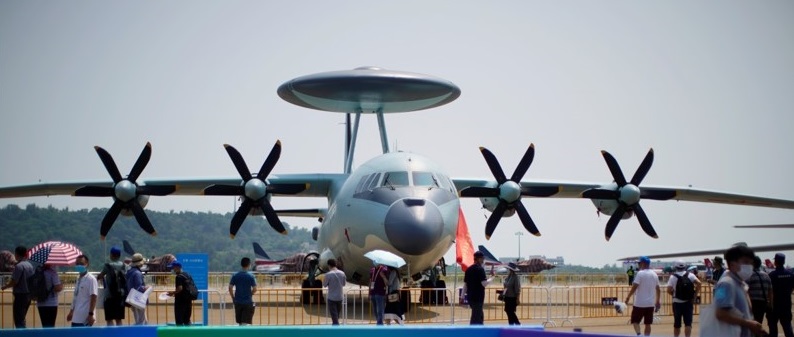
The aircraft carries a fixed dorsal radome containing three AESA radar arrays for 360-degree coverage, and is said to be more efficient than the two-planar ‘balance beam’ array design used on the earlier KJ-200. Production of older AEW&C types reportedly ceased production in 2018 in response to the KJ-500 reaching full operational capability.
The KJ-500 is the base variant with the KJ-500A improved variant with an aerial refuelling probe debuted at the Zhuhai Airshow 2022.
Max speed: 550 km/h
Max range: 5700 km
Max endurance: 12 h
Max takeoff weight: 77 tons
Range against fighter sized targets: 470 km
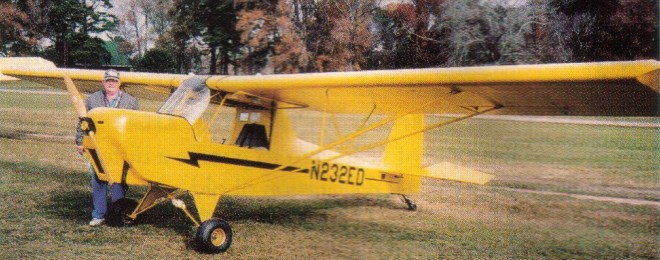
This is a scratch built J-3 Kitten, scaled up 10% to accept an EA-81 Subaru direct drive engine with a 60 inch ground adjustable Precision propeller.
The cowling and fuel tank are fibreglass, and the airframe is covered in Ceconite and finished with Randolf dope.
It took about 3000 hrs over two years to construct, finishing in 2001.
Empty weight: 500 lb
Wingspan: 32 ft
2001: 50 Sycamore St, Shepherd, TX 77371, USA.
UL builder
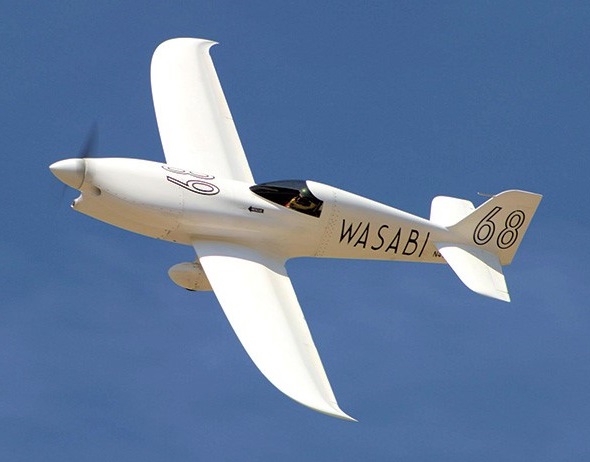
Looking to move into the gold, Elliot Seguin’s Siren Wasabi reflects the move toward high-aspect-ratio elliptical wings for more speed.
The Wasabi Special is a single place, low-wing, conventional landing gear-equipped racing aircraft.
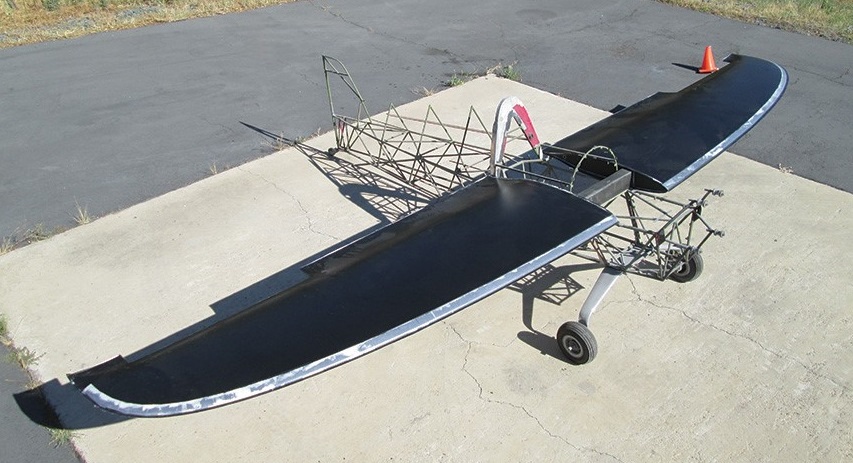
The airplane was designed and built at the Mojave Air and Spaceport by Elliot Seguin for racing and record setting.
At the Reno Air Races in 2013 the Wasabi Special achieved 229 mph.
At EAA Airventure Set C1, set a record for MHV to OSH flying non-stop with 5 other experimental aircraft from Mojave.
At Reno Air Races 2014 achieved 235 mph.
Powerplant: 1 × Continental O-200
Propeller: 2-bladed
Crew: 1
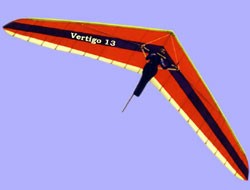
A 2002 hang glider for advanced pilots.
Vertigo 13
Wing area: 13 m²
Wing span: 10 m
Minimum pilot weight: 55 kg
Maximum pilot weight: 85 kg
Nose angle: 127°
Vertigo 15
Wing area: 14.6 m²
Wing span: 10.4 m
Minimum pilot weight: 75 kg
Maximum pilot weight: 110 kg
Nose angle: 127°
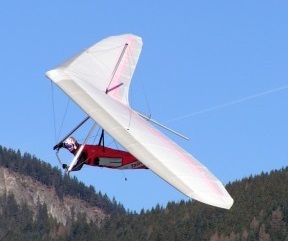
A 2004 hang glider for advanced pilots made with 7075 aluminum and sail made by Pause Segel.
Battens fitted are: 1 nose batten, 9 top battens with clip ends per side, 2 lower batten per side, and 2 sprogs per side – no luff lines. Mylar leading edge is fitted with an 88% double sail. The Spyder has a profiled A-frame and round speedbar.
They have easy to tension curved wing tips, a kingpost hang point, and effective VG system. The Spyder is fully DHV-certified.
Spyder 12.5
Wing area: 12.5 m²
Wing span: 9.8 m
Hang glider weight: 27 kg
Minimum pilot weight: 45 kg
Maximum pilot weight: 70 kg
Packed length: 4.90 m
Packed length short: 3.8 m
Nose angle: 110°
DHV test: 01-0410-05
DHV rating: DHV 2
Spyder 14
Wing area: 13.9 m²
Wing span: 10.25 m
Hang glider weight: 30 kg
Minimum pilot weight: 65 kg
Maximum pilot weight: 85 kg
Packed length: 5.15 m
Packed length short: 3.9 m
Nose angle: 110°
DHV test: 01-0398-04
DHV rating: DHV 2
Spyder 15
Wing area: 14.7 m²
Wing span: 10.40 m
Hang glider weight: 31 kg
Minimum pilot weight: 75 kg
Maximum pilot weight: 115 kg
Packed length: 5.25 m
Packed length short: 3.9 m
Nose angle: 110°
DHV test: 01-0399-04
DHV rating: DHV 2-3
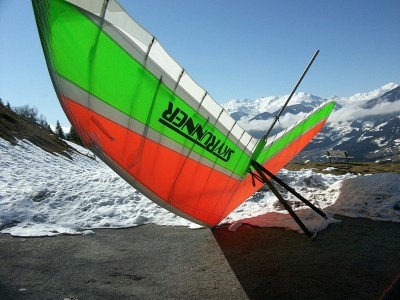
The 2012 Skyrunner is an efficient intermediate wing that succeeds the Spyder at Seedwings. Compared to the latter, it is both more efficient and more manageable. The sail has been reviewed, it is more pleasant to fly.
It has kept the ease of take-off and overdrive stretched and at full speed it is of great stability. Even tight to the maximum, the steering remains excellent while being very stable on trajectory and without tandency to make roll at the slightest turbulance as is often the case on most wings. On landing, the wing announces well the moment of the final push.
 All Aero