Lesní 25
CZ-695 01 Hodonín
Czech Republic
Europe
Built the SD-1 Minisport LSA circa 2000
Lesní 25
CZ-695 01 Hodonín
Czech Republic
Europe
Built the SD-1 Minisport LSA circa 2000
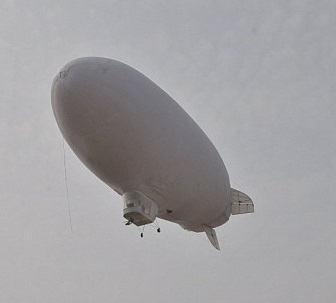
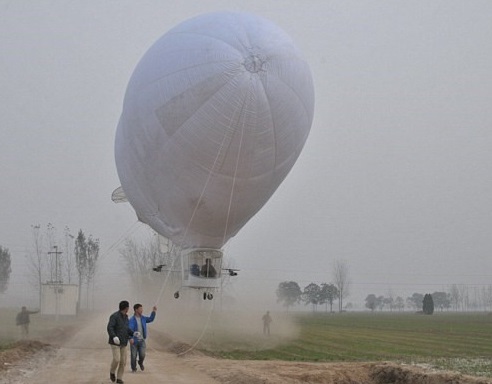
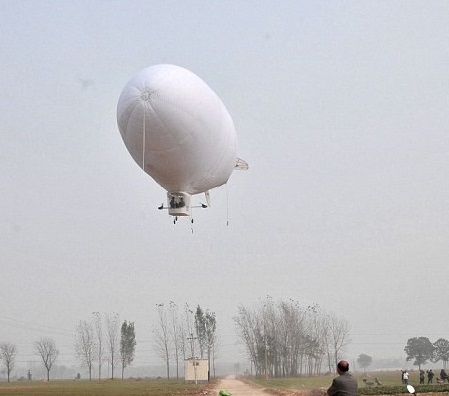
Shi Songbo from Ningling, central China, spent 300,000 Yuan (£30,000) on the Zeppelin, which successfully completed a two-hour test flight near his home in October 2015.
Although his family have been farmers for several generations, his brother attended the Aeronautical Engineering Institute in Xi’an, central China.
As a result of his studies, Shi’s brother always brought home aeronautical engineering magazines and reading material, which got Shi interested in the techniques involved in building an aircraft.
Eventually, Shi would go on to work for an aerial model company as a designer, which gave him greater understanding of the composition of a plane.
In June 2015, Shi was let go from his job, which prompted him to start building his ‘Songbo’ Zeppelin. Shi Songbo spent four months building a Zeppelin. The Zeppelin is about 33 feet tall and 75 feet long. The top portion is composed of a hydrogen-filled airbag while the bottom is made up of the seat and controls.
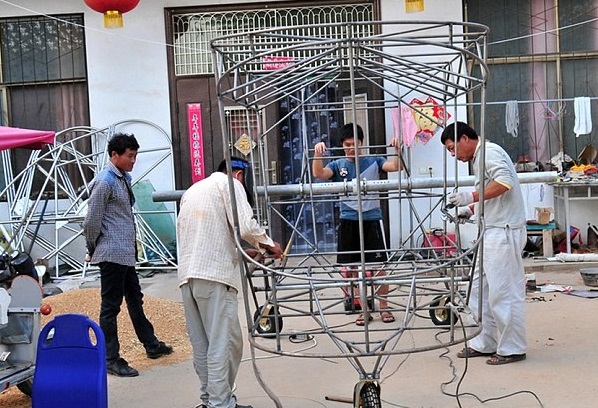
Shi spent around four months and 300,000 Yuan (£30,000) on the Zeppelin, with many of the components imported from Germany and the USA.
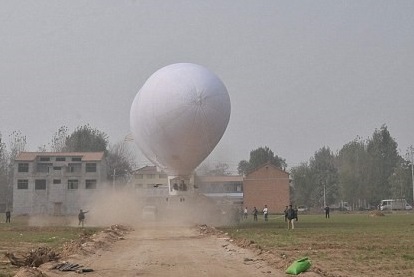
Shi Songbo conducted his first official flight on October 25 2015 in a field near his home under the direction of friend Shang Jianjun, who acted as a dispatcher.
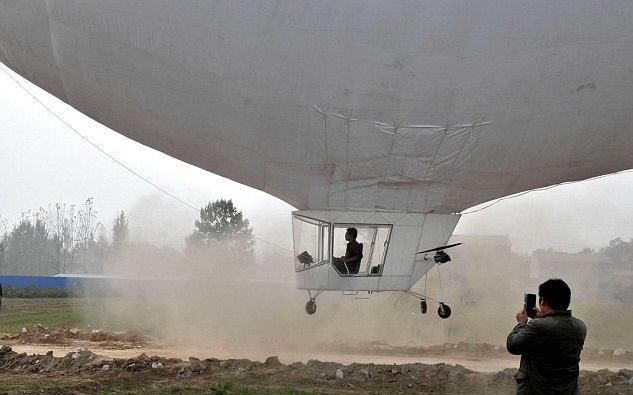
Along with his co-pilot Li Kai, the inventor made several different maneuvers and successfully took off and landed eight times over the space of two hours split between the morning and afternoon. Speaking of his first aerial experience, Shi said: ‘There were lots of low-hanging electricity cables.” ‘Because I was worried about bumping into the cables, everything had to be under the direction of the dispatcher.’ He added, ‘My co-pilot was my eyes and ears. He helped to monitor my surroundings.’
It is able to travel just over 30 miles per hour at 1,640 feet above the ground while carrying two people.
The Zeppelin prototype will need additional testing but Shi hoped that it could be used to distribute pesticide, aerial surveying or tourism in the future.
2009:
Sonex Aircraft, LLC
P.O. Box 2521
Oshkosh, WI 54903
LSA and glider builder
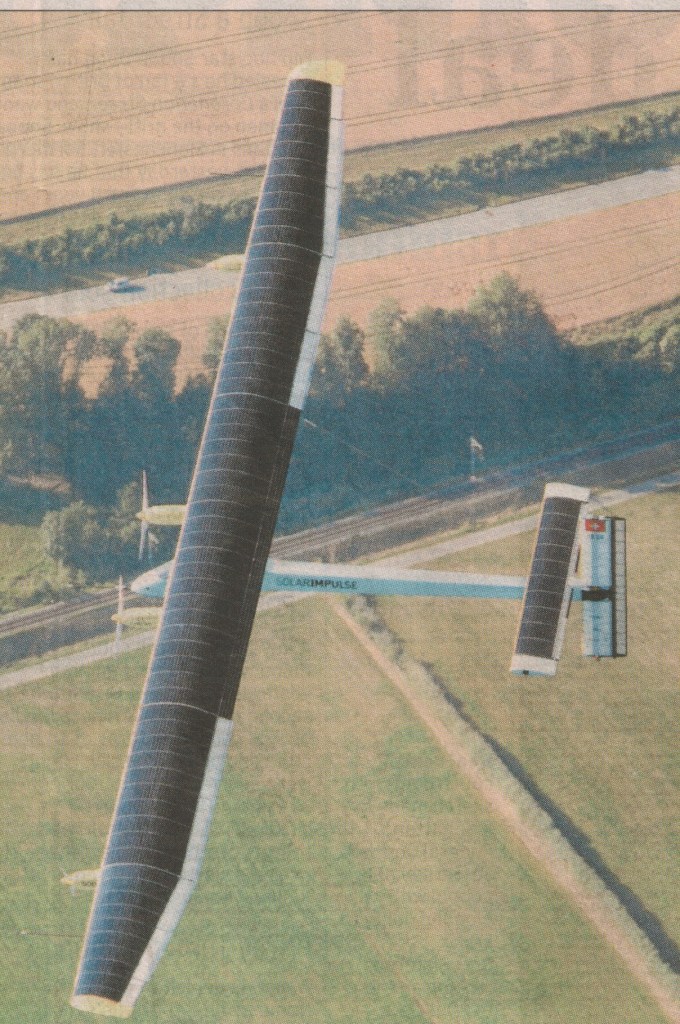
Solar Impulse is a Swiss long-range solar powered aircraft project developed at the École Polytechnique Fédérale de Lausanne. The project eventually hopes to achieve the first circumnavigation of the Earth by a piloted fixed-wing aircraft using only solar power. The project is led by Swiss psychiatrist and aeronaut Bertrand Piccard, who co-piloted the first balloon to circle the world non-stop, and Swiss businessman André Borschberg.
Piccard initiated the Solar Impulse project in 2003. By 2009, he had assembled a multi-disciplinary team of 50 specialists from six countries, assisted by about 100 outside advisers. The project is financed by a number of private companies. The four main partners are Deutsche Bank, Omega SA, Solvay, and Schindler. Other partners include Bayer MaterialScience, Altran, Swisscom and Swiss Re (Corporate Solutions). Other supporters include Clarins, Semper, Toyota, BKW and STG. The EPFL, the European Space Agency (ESA) and Dassault have provided additional technical expertise, while SunPower provided the aircraft’s photovoltaic cells.
The first aircraft, bearing the Swiss aircraft registration code of HB-SIA, is a single-seater monoplane, capable of taking off under its own power, and intended to remain airborne up to 36 hours. This aircraft conducted its first test flight in December 2009, and first flew an entire diurnal solar cycle, including nearly nine hours of night flying, in a 26-hour flight on 7–8 July 2010. Piccard and Borschberg completed successful solar-powered flights from Switzerland to Spain and Morocco in 2012, and conducted a multi-stage flight across the USA in 2013.
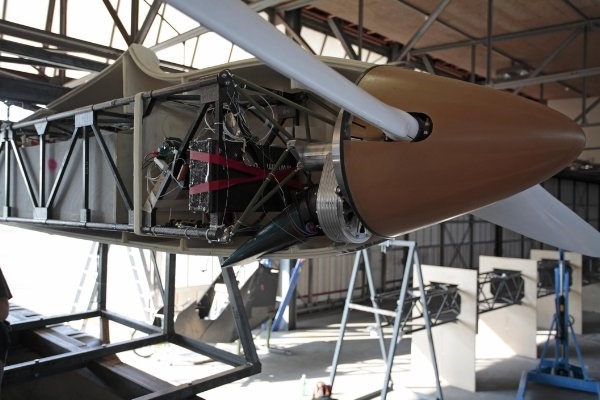
With a non-pressurized cockpit and a limited flight ceiling, the HB-SIA is primarily a demonstrator design. The plane has a similar wingspan to the Airbus A340 airliner. Under the wing are four nacelles, each with a set of lithium polymer batteries, a 10 hp (7.5 kW) motor and a twin-bladed propeller. To keep the wing as light as possible, a customised carbon fibre honeycomb sandwich structure is used.
Under the wing, 4 nacelles are fixed, each containing a 10-HP motor, a set of lithium polymer batteries and a management system that controls the maximum load and temperature limit. Thermal insulation is conceived to conserve the heat released by the batteries and thus allows them to function despite the -40 ° C encountered at 8500 meters. Each motor is provided with a reducer that limits the rotation of a propeller with two blades of 3.5 meters in diameter to 200-400 revolutions / minute.
11,628 photovoltaic cells on the upper wing surface and the horizontal stabilizer generate electricity during the day. 10,768 solar cells on the wing and 880 on the horizontal stabilizer. 200 cubic meters of photovoltaic cells and 12% of the total efficiency of the propulsion chain, the average power generated by the 4 engines of the plane, does not exceed 8 CV or 6 KW. These both propel the plane and charge its batteries to allow flight at night, theoretically enabling the single-seat plane to stay in the air indefinitely. The 11628 150 micron thick monocrystalline silicon cells have been selected for their quality of lightness, flexibility and efficiency. At 22%, its performance could have been even better, but its weight would then have been excessive, penalizing the aircraft during night flight. As this phase is the most critical, the main difficulty of the project is at the level of energy storage in polymer lithium batteries.

Reaching a 63.40 m wingspan for a fully equipped 1600 kg is a challenge never before experienced in aeronautics in terms of rigidity, lightness and flight control. Solar Impulse is built around a structure in composite materials made up of carbon fiber and honeycomb assembled in a sandwich. The upper surface of the wing is covered with a skin composed of encapsulated solar cells, and the underside of a high resistance flexible film. 120 carbon fiber ribs distributed all 50cm outline these two layers to give them their aerodynamic shape.
The aircraft’s major design constraint is the capacity of the lithium polymer batteries. Over an ideal 24-hour cycle, the motors will deliver a combined average of about 8 hp (6 kW), roughly the power used by the Wright brothers’ pioneering Flyer in 1903. As well as the charge stored in its batteries, the aircraft uses the potential energy of height gained during the day to power its night flights.
On 26 June 2009, the Solar Impulse was first presented to the public in Dübendorf, Switzerland. Following taxi testing, a short-hop test flight was made on 3 December 2009, piloted by Markus Scherdel. André Borschberg, co-leader of the project team, said of the flight:
"It was an unbelievable day. The airplane flew for about 350 metres (1,150 ft) and about 1 metre (3 ft 3 in) above the ground ... The aim was not to get high but to land on the same runway at a speed to test its controllability and get a first feeling of its flying characteristics ... the craft behaved just as the engineers had hoped. It is the end of the engineering phase and the start of the flight testing phase."

On 7 April 2010, the HB-SIA conducted an extended 87-minute test flight, piloted by Markus Scherdel. This flight reached an altitude of 1,200 m (3,937 ft). On 28 May 2010, the aircraft made its first flight powered entirely by solar energy, charging its batteries in flight.
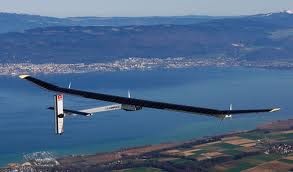
On 8 July 2010, the HB-SIA achieved the world’s first manned 26-hour solar-powered flight. The airplane was flown by André Borschberg, and took off at 6:51 a.m. Central European Summer Time (UTC+2) on 7 July from an airfield in Payerne, Switzerland. It returned for a landing the following morning at 9:00 a.m. local time. During the flight, the plane reached a maximum altitude of 8,700 m (28,500 ft). At the time, the flight was the longest and highest ever flown by a manned solar-powered aircraft; these records were officially recognized by the Fédération Aéronautique Internationale (FAI) in October 2010.
On 13 May 2011, at approximately 21:30 local time, HB-SIA landed at Brussels Airport, after completing a 13-hour flight from its home base in Switzerland. It was the first international flight by the Solar Impulse, which flew at an average altitude of 6,000 ft (1,829 m) for a distance of 630 km (391 mi), with an average speed of 50 km/h (31 mph). The aircraft’s slow cruising speed required operating at a mid-altitude, allowing much faster air traffic to be routed around it. The aircraft was piloted by Andre Borschberg. The project’s other co-founder, Bertrand Piccard, said in an interview after the landing: “Our goal is to create a revolution in the minds of people…to promote solar energies – not necessarily a revolution in aviation.”
A second international flight to the Paris Air Show was attempted on 12 June 2011, but the plane turned back half-way and landed back in Brussels, where it had taken off, due to adverse weather conditions. In a second attempt on 14 June, André Borschberg successfully landed the aircraft at Paris’ Le Bourget Airport at 9:15 pm after a 16-hour flight.
On 5 June 2012, the Solar Impulse successfully completed its first intercontinental flight, flying a 19-hour trip from Madrid, Spain, to Rabat, Morocco. During the first leg of the flight from Payerne, Switzerland, to Madrid, the aircraft broke several further records for solar flight, including the longest solar-powered flight between pre-declared waypoints (1,099.3 km (683 mi)) and along a course (1,116 km (693 mi)).
On 3 May 2013, the plane began its first cross-US flight with a journey from Moffett Field in Mountain View, California, to Phoenix Sky Harbor International Airport in Arizona. Successive legs of the flight took the Solar Impulse to Dallas-Fort Worth airport, Lambert–St. Louis International Airport and Washington Dulles International Airport; it finally concluded at New York’s John F. Kennedy International Airport on 6 July. Each flight leg took between 19 and 25 hours, with multi-day stops in each city between flights.
After the first leg to Phoenix, the aircraft completed the second leg of its trip on 23 May, landing at Dallas-Fort Worth International Airport. This flight, which covered 1,541 kilometres (958 mi), set several new world distance records in solar aviation. On 4 June, the plane landed in St. Louis, Missouri. It departed for Washington DC on 14 June, briefly stopping in Cincinnati, Ohio, to change pilots and avoid strong winds. On 16 June, the plane landed at Washington Dulles International Airport in Virginia. On 6 July 2013, following a lengthy layover in Washington, Solar Impulse completed its cross-country journey, landing successfully at New York City’s JFK International Airport at 11:09 p.m. EDT. The landing occurred three hours earlier than originally intended, because a planned flyby of the Statue of Liberty was cancelled due to severe damage to the aircraft’s left wing. The Solar Impulse was placed on public display at JFK after its landing.
Solar Impulse pilot André Borschberg completed the record-setting flight after flying more than 950 miles on solar power alone. Borschberg landed in Dallas with his batteries at about 60 percent, and used that juice to begin the third leg of his journey. As the headwind exceeded the speed of the airplane at times, Borschberg traveled backward relative to the ground. At one point, a little less than three hours before he actually landed, he was only 20 miles or so from Dallas/Fort Worth International Airport and found himself lined up with runway 13L, where he planned to touchdown. Landing on 13L required closing the runway, and there was simply too much commercial traffic. It was after midnight before air traffic control allowed him to land, so he spent the intervening hours in a holding pattern above the runway. As he descended, the windspeed increased and he encountered a 25- to 30-knot wind at 2,000 to 3,000 feet. This meant Borschberg had to be careful not to turn downwind, because he would be blown too far north and would have to make another approach to land, covering the ground at less than five miles per hour with the headwind. The sideways translation eventually brought him over the top of runway 13L, where he touched down 23 May 2013, at 1:08 a.m. local time, 18 hours and 21 minutes after departing Phoenix.
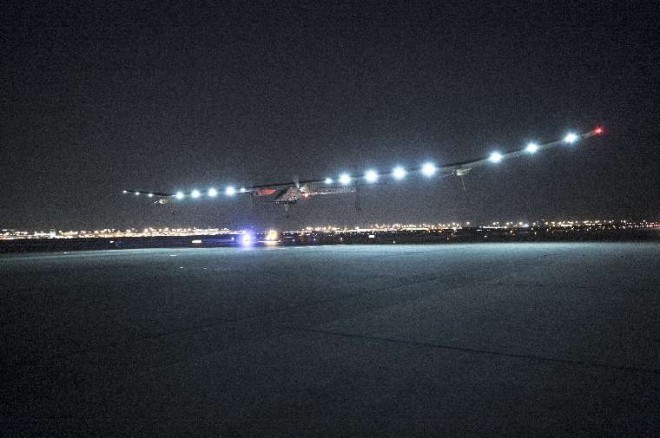
The flight to Dallas was fairly smooth, with just a few sections of turbulence. Flying 832 nautical miles (957 miles) broke the team’s own distance record for a solar powered airplane (and for any electric airplane). It also provided valuable experience and expand the Solar Impulse team’s flight techniques for future flights — including their planned circumnavigation of the world in a larger aircraft in 2015.
Construction of the second Solar Impulse aircraft, carrying the Swiss registration HB-SIB, started in 2011. The wingspan of HB-SIB will be 80.0 m (262.5 ft), slightly wider than an Airbus A380, the world’s largest passenger airliner, but unlike the 500-ton A380, the carbon-fibre Solar Impulse will weigh little more than an average automobile. It will feature a larger, pressurized cockpit and advanced avionics to allow for transcontinental and trans-oceanic flights. Supplemental oxygen and various other environmental support systems will allow the pilot to cruise at an altitude of 12,000 metres (39,000 ft).
Completion was initially planned for 2013, with a circumnavigation of the globe in 20–25 days in 2014. However, following a structural failure of the main spar during static tests in July 2012, a more likely date for the circumnavigation is 2015. The flight would circle the world in the northern hemisphere, near the equator. Five stops are planned to allow changes of pilots. Each leg of the flight will last three to four days, limited by the physiology of each pilot. Once improved battery efficiency makes it possible to reduce the aircraft’s weight, a two-seater is envisaged to make a non-stop circumnavigation.
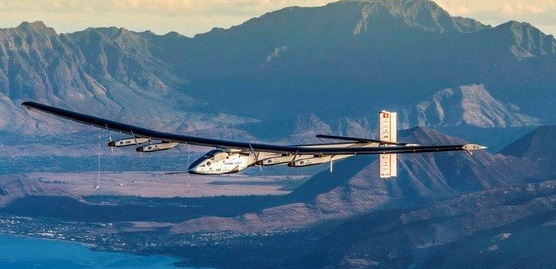
The Solar Impulse II landed in Hawaii on July 3, 2015, after breaking a five-day flight record and nights (117 hours and 52 minutes) in the air and about 8900 km from Japan. However, the long journey took its toll and the plane suffered damage to the battery due to overheating.
It remained grounded at the airport Kalaeloa during the northern hemisphere winter. Between February and mid-April, 13 test flights were conducted to ensure the proper functioning of the cooling system for the newly integrated battery.
Specifications – HB-SIA
Powerplant: 4 × electric motors, powered by 4 x 21 kWh lithium-ion batteries (450 kg), 7.5 kW (10 HP) each
Length: 21.85 m (71.7 ft)
Wingspan: 63.4 m (208 ft)
Height: 6.40 m (21.0 ft)
Wing area: 200 sq.m (2,200 sq ft)
Loaded weight: 1,600 kg (3,500 lb)
Max. takeoff weight: 2,000 kg (4,400 lb)
Take-off speed: 35 kilometres per hour (22 mph)
Cruise speed: 70 kilometres per hour (43 mph)
Stall: 35 km / h
Endurance: 36 hours (projected)
Service ceiling: 8,500 m (27,900 ft)
Maximum altitude of 12,000 metres (39,000 ft)
Crew: 1

A dedicated glider for “Freestyle” and aerobatics, the Hoops is aimed at pilots experienced in maneuvers who will know how to use its agility. The aspect ratio is 5,81; with 54 cells and an area of only 18,55 square meters.
The sail is made of Gelvenor cloth (49 g/sq.m), with profiles of Porcher Marine 9092, and Cousin dyneema lines. Other construction features include diagonal V-tabs to reduce lines and weight, Mylar/Carbon reinforcement, and a clean layout.
The result is a glider with high inner pressure, showing strong reactions in extreme maneuvers and offering direct and sensitive piloting. It has a short and precise brake “which allows little use of the brake during the flight”, say at Sol. The Hoops is a fast machine that can reach a top speed of 68 k/h, and a minimum speed of 30 k/h, according to the manufacturer.
Like all Sol gliders, the Hoops is covered by a 3-years/300-hours warranty. It is available in one size to suit pilots of 70 to 100 kg. Hoops is a non certified glider.

The new Prymus 2 (DHV1) was one of the gliders tested during the 2005 Northeast Expedition in Brazil, to obtain a model not only to be used by schools and beginners, but a glider that would allow the pilot to feel “the magic of flying” and stay for hours in the air, achieve distance flights and start free style flights.
The Prymus 2 has an elliptical planform with a lightly positive arrow shape, and 39 cells for an “extra straight side, exactness in the airfoil and a consolidated stability” according to the manufacturer. The Prymus 2 also features a higher projected aspect ratio; a new profile chosen for maximum stability, and a more refined construction for this class. Other characteristics include easy inflation and takeoff; long and tolerant brake length; precise handling; high internal pressure; stability even in high speed; light reactions during extreme maneuvers; good passive safety; and “great behavior” in thermals. The Prymus 2 is made in Gelvenor cloth with Cousin lines, it has a 3-years/300 hours warranty, and it was available in 4 sizes.
The SOL Prymus 4 EN-A Size L is described as a beginner wing, and an anywhere all rounder wing – from coastal ridge soaring to inland thermals. Very stable in all conditions.

Prymus 4 S
Zoom: 0.91
Cells: 39
Projected span: 8.65 m
Real wingspan: 10.99 m
Projected surface: 18.41 sq.m
Real surface: 23.41 sq.m
Projected AR: 4.06
Real AR: 5.16
Line diameter: 1, 1.5, 2.1
Height: 670 cm
Takeoff weight: 70-90 kg
Max Profil: 2.64 m
Min Profil: 0.87 m
Weight: 5 kg
Places: 1
Certification EN/LTF: A
Prymus 4 M
Zoom: 0.96
Cells: 39
Projected span: 9.12 m
Real wingspan: 11.6 m
Projected surface: 20.49 sq.m
Real surface: 26.05 sq.m
Projected AR: 4.06
Real AR: 5.16
Line diameter: 1, 1.5, 2.1
Height: 707 cm
Takeoff weight: 80-100 kg
Max Profil: 2.78 m
Min Profil: 0.92 m
Weight: 5.4 kg
Places: 1
Certification EN/LTF: A
Prymus 4 L
Zoom: 1
Cells: 39
Projected span: 9.5 m
Real wingspan: 12.08 m
Projected surface: 22.23 sq.m
Real surface: 28.27 sq.m
Projected AR: 4.06
Real AR: 5.16
Line diameter: 1, 1.5, 2.1
Height: 760 cm
Takeoff weight: 85-110 kg
Max Profil: 2.9 m
Min Profil: 0.96 m
Weight: 5.8 kg
Places: 1
Certification EN/LTF: A
Prymus 4 XL
Zoom: 1.04
Cells: 39
Projected span: 9.88 m
Real wingspan: 12.56 m
Projected surface: 24.05 sq.m
Real surface: 30.58 sq.m
Projected AR: 4.06
Real AR: 5.16
Line diameter: 1, 1.5, 2.1
Height: 790 cm
Takeoff weight: 100-125kg
Max Profil: 3.01 m
Min Profil: 1 m
Weight: 6.2 kg
Places: 1
Certification EN/LTF: A

The Snecma M88 is a French afterburning turbofan engine developed by Snecma for the Dassault Rafale fighter.
The M88 Pack CGP (for “total cost of ownership”) or M88-4E is based on a study contract, development and production reported in 2008 by the General Delegation for Armament and was to introduce technical improvements to reduce maintenance costs. The purpose of this release was to reduce cost of ownership of the M88 and longer inspection intervals of the main modules by increasing the lifetime of the hot and rotating parts. It was tested in flight for the first time March 22, 2010 at Istres, the Rafale’s M02 CEV.
Qualification of the M88-2 engine was completed during 1996 while the first production engine was delivered by the end of that year. It is of a modular design for ease of construction and maintenance, as well as to enable older engines to be retrofitted with improved subsections upon availability, such as existing M88-2s being upgraded to M88-4E standard. In May 2010, a Rafale flew for the first time with the M88-4E engine, an upgraded variant with greater thrust and lower maintenance requirements than the preceding M88-2.
M88
Type: Twin-shaft, turbofan engine
Length: 3538 mm (139.3 in)
Diameter: 696 mm (27.5 in) max
Dry weight: 897 kg (1,977 lb)
Compressor: 3 stage low pressure, 6 stage high pressure
Combustors: Annular
Turbine: single stage high pressure, single stage low pressure
Maximum thrust: 50 kN (11,250 lbf) dry, 75 kN (16,900 lbf) wet (afterburning)
Overall pressure ratio: 24.5:1
Bypass ratio: 0.3
Turbine inlet temperature: 1,850K (1,577 °C)
Fuel consumption: 0.80 kg/(daNh) (0.78 lbm/(lbfh)) (dry), 1.75 kg/(daNh) (1.72 lbm/(lbfhr)) (wet/afterburning)
Thrust-to-weight ratio: 5.7:1 (dry), 8.5:1 (wet/afterburning)
The French made contact with Herman Oestrich, the chief designer of the German BMW factory, and smuggled him out of the American occupation zone into the French zone and then into France itself, giving him every technical support in return for his skills. By 1948 Oestrich had produced his first jet engine; the Atar
The high share price that G&R commanded prevented it from being nationalized before the war. However, this did come to pass after the Liberation. SNECMA, la Société nationale d’étude et de construction de moteurs d’aviation, was thus created on May 29, 1945. The company was an amalgamation of diverse design bureaus and workshops; it inherited a work force of 10,000 mostly part-time employees. Along with G&R, Snecma was given some of the factories of the Société des moteurs et automobiles Lorraine, formerly Lorraine-Dietrich, which had been nationalized as la Société nationale des moteurs and had been relegated to making parts for tanks. Some of Snecma’s other facilities had been devoted to the production of German Junkers engines by the thousands during the Nazi occupation. G&R also owned a factory of the Aéroplanes Voisin firm, which had gone bankrupt in 1938.
Unfortunately, the British government preferred to grant licenses for the newly acquired jet engine technology to rival Hispano-Suiza in the immediate postwar period. Snecma immediately after World War II suffered many of the same disadvantages as G&R had immediately after WWI. It was not until 1950, writes Chadeau, that budgetary crisis forced a restructuring that closed unproductive plants and re-equipped modern ones to give the firm some hope of a future.
The French made contact with Herman Oestrich, the chief designer of the German BMW factory, and smuggled him out of the American occupation zone into the French zone and then into France itself, giving him every technical support in return for his skills. By 1948 Oestrich had produced his first jet engine; the Atar
Given their already apparent importance in the future of military aviation, jet engines were the prime focus of Snecma’s development in the 1950s. However, the company did not abandon propeller-driven aircraft. In 1951, the firm acquired a license from the Bristol firm to produce the 2,080 h.p. Hercules engine for use in Noratlas military transports; nearly 1,400 of these were produced by 1964.
The creation of jet engines in the World War II propelled planes allowed a huge leap in aircraft performance. However, in the period immediately after the war, the devastated nations of Europe were unable to match American and Soviet research into jet engine design until the middle of the 1950s. A group of 120 former BMW engineers were assembled in the French controlled sector of Germany in 1946 and integrated into the Snecma team in France in 1950. From their efforts sprang the ATAR series of military engines, the first of which was created in 1948. Their first test of an engine equipped with afterburner came in 1953. The SO-4050 Vautour was the first plane powered by these engines; other better-known fighters such as the Mystère and Super-Mystère, and Mirage III, IV, and V. Planes powered by these engines set several speed records and enjoyed a lively export trade.
Meanwhile, Hispano-Suiza had been producing jet engines under license from Rolls-Royce, including the famous Tay engine, which it began building in 1954. The next year, it introduced its own turbojet, known as the Verdon, which was installed in Mystère IV aircraft.
Another French firm, Turboméca, was making quite low-powered jet engines, though in 1960 it began producing the Adour engine for the Jaguar fighter in cooperation with Rolls-Royce. Turboméca also produced engines for turboprops and, most notably turbine-driven helicopters, which it supplied to a variety of French and foreign firms. Yet another firm, Microtubo, was launched in 1961 to produce small turbojets.
While Hispano-Suiza and Turboméca were signing deals with Rolls-Royce, in November 1959 Snecma entered a contract to produce Pratt & Whitney’s popular JT8-D engine in France. The JT8-D powered several American military jets as well as the DC-8 and Boeing 707 airliners. Snecma signed an agreement with Bristol Engines in November 1962 to develop the Olympus engines for the Concorde supersonic transport.
In 1968, Snecma took control over Hispano-Suiza, which included the mechanical engineering firm Bugatti, the landing gear manufacturer Messier, and the engine maker Berthiez. All of these were at the edge of ruin.
Even though only a few examples of the Concorde would be produced, Snecma gained considerable experience and prestige through its participation. In 1969, the firm had begun development of its M56 engine, which would first appear on the market in 1976. An even more far-reaching program was launched in 1971 with General Electric, which was eager to break Pratt & Whitney’s domination of the U.S. market.
In this agreement, Snecma was to produce 20 percent of GE-s type CF6 engines (CF meaning “commercial fan”), which were destined for use in several Boeing airliners. In addition, they would also be used in the first planes made by Airbus Industrie, the new European consortium created to challenge U.S. control of the industry. A second contract provided for the joint production of the CFM 56 engine. The CFM International joint venture was formally created in 1974.
Snecma expanded its role in the CFM program after the CF6 engine was chosen for both the Airbus A310 and Boeing 767. In late 1980 Snecma and GE began planning a new $30 million plant in France to accommodate its production.
The French government mandated the merger of the Société Européenne de Propulsion (SEP) with Snecma in 1984. SEP produces rocket engines used in the Ariane space program and was merged with Snecma due to concerns it could not meet increasing production demands. By 1985, Snecma was taking a half share of CFM contracts, including a $2.7 billion order for 137 engines to re-equip the U.S. Air Force’s aerial refueling fleet.
The unprecedented airline industry downturn recession in the early 1990s resulted in consolidation among suppliers. In early 1994, Snecma merged its Messier-Bugatti landing gear subsidiary with Dowty, owned by the United Kingdom’s TI Group. Messier-Bugatti was effectively privatized for the merger. However, the two cultures of the merged parties clashed; TI Group exited the Messier-Dowty joint venture by the end of 1997.
In the mid-1990s, Snecma’s engine business was encountering its first civil market downturn ever, according to CEO Gerard Renon. It lost $100 million on sales of $1.8 billion in 1993. Workforce cuts and other measures were taken to increase productivity and shorten production cycles. Employment was reduced from 14,000 in late 1990 to 11,500 in December 1996.
A unique four-way alliance between Snecma, GE, Pratt & Whitney, and MTU to develop a small jet engine fell apart in September 1994. Meanwhile, CFM’s market share of engines for larger jets approached 70 percent.
When Jean-Paul Bechat became Snecma’s new head in the summer of 1996, following the brief reign of Bernard Dufour, he stated the company was close to bankruptcy and full of conflict. However, within a year things were closer to normal–operating profit rose 70 percent, to Ffr 440 million in 1996.
After losing Ffr 280 million in 1996, Snecma posted a net profit of Ffr 750 million ($122 million) for 1997. Exports accounted for about 70 percent of turnover, with more than three-quarters of these coming from the civil sector.
As the lifespan of jet engines increased, scheduled maintenance became a more important source of business. A new division, Snecma Services, was created in January 1997, which offered support services for landing systems and engines. By 1999, it had sales of $400 million and 2,000 employees. The Snecma group as a whole reported revenues of $5.3 billion for 1999. That year, CFM International celebrated the delivery of its 10,000th engine; the joint venture was widely held to be the most successful Europe-U.S. collaboration ever.
Snecma was converted into a holding company in January 2000. Snecma Moteurs was created to consolidate its air and space propulsion operations. Later in the year, Snecma acquired Labinal group for $1.1 billion but sold off its automotive businesses. Part of Labinal’s holdings included Turbomeca, which produced nearly $1 billion worth of turbine engines for helicopters and fixed-wing military planes. Snecma also acquired the British engine nacelle/thrust reverser manufacturer Hurel-Dubois in 2000, which it soon consolidated with Hispano-Suiza to form Hurel-Hispano.
Between 1995 and 2000, sales rose 100 percent, reaching FFr 36.9 billion (EUR 5.65 billion), mostly on the strength of acquisitions. Exports accounted for most of the increase, while rapidly growing commercial sales accounted for 84 percent of the total.
Plans to privatize Snecma were developed throughout 2001. A merger of Snecma’s ballistic propulsion activities with those of rocket engine and munitions manufacturer SNPE, was also under consideration. The French government planned to sell off a quarter of Snecma in an Initial Public Offering if market conditions were favorable, hoping to garner EUR 1.5 billion from the sale. These plans were put on hold after the September 11 terrorist attacks against the United States produced a downturn in the markets. The EUR 500 million SNPE merger, dubbed the Herakles project, had begun to fall apart over the question of leadership.
During the year, Snecma entered a joint venture with Rolls-Royce to produce engines for the next generation of European military aircraft. It had also tapped low-cost, quality Russian engineering talent from NPO Saturn to develop a new engine for regional jets. A collaboration between Snecma and FiatAvio (Italy), ITP (Spain), MTU Aero Engines (Germany), Rolls-Royce, and Techspace Aero (Belgium) was developing a turboprop engine for the Airbus A400M military transport. Meanwhile, Snecma Services entered a maintenance, repair, and overhaul venture with Sabena Technics.
Snecma was renamed Safran Aircraft Engines in 2016 as the main subsidiary of Safran. The Safran Aircraft Engines is headquartered in Courcouronnes, France. It has 15,700 employees working at 35 production sites, offices, and MRO facilities worldwide. It files an average of nearly 500 patents each year.
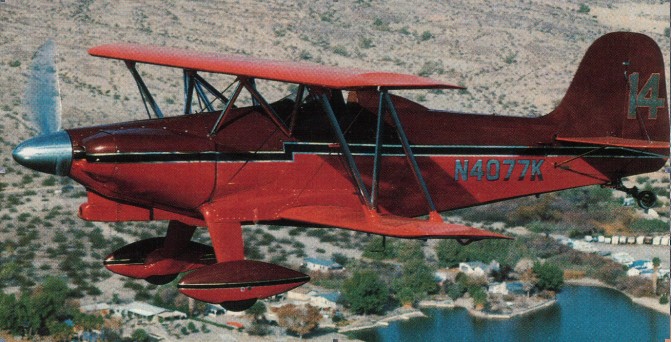
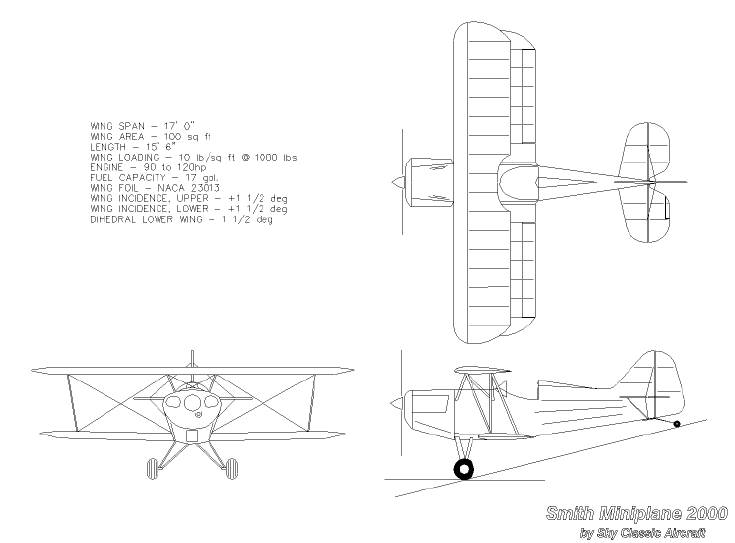
The primary appeal of the Smith Miniplane is its small-size construction simplicity and open-cockpit. The fuselage framework is a conventional truss structure of welded steel tubing, faired to shape with wood stringers. As on most similar designs, the vertical stabilizer is welded up as part of the rear fuselage structure. The wings are made from spruce spars and ribs. Several engines can provide the power, the Continental from 65 to 85 hp or the Lycoming from 100 to 125 hp.
The 1956 DSA-1 Miniplane model designation was for “Damn Small Aeroplane”. The prototype first flew on 29 October 1956.

There have been hundreds of the original Smith Miniplane Biplanes built and flying today. In 1996 plans cost US$140.
Sky Classic Aircraft introduced the 2000 version of the Smith Miniplane Biplane. Many of the parts and pieces on the aircraft were simplified to make it easier to build.
Changes include:
1) New wing fittings to simplify building.
2) Stretched the length of the fuselage by 5 inches to accommodate a larger person.
3) Stretched the width of the fuselage by 2 inches to accommodate a larger person.
4) Added a trim tab to the elevator.
5) Reshaped the rudder assembly to look more racy.
6) Added struts to the horizontal stabilizer to stop any cracking like the Pitts did.
7) Changed the wing foil to a NASA 23013. Good for aerobatics yet very stable with less drag.
8) Changed the wing angles of attack to fix an old problem on the old aircraft.
9) Reduced the rudder control speed to make it just a little easier to fly.
10) Aircraft plans on computer CAD so that they are easy to read.
11) Adding springs to the original type landing gear.

Engine: 65- 85-hp Continental, 100-125-hp Lycoming.
Gross Wt: 1000 lb
Empty Wt: 616 lb.
Fuel capacity: 17 USG
Wingspan: 17’.
Length: 15’3”
Wing area: 100 sq.ft.
Top speed: 130 mph
Cruise: 122 mph.
Stall: 56 mph
Climb rate: 1600 fpm.
Ceil¬ing: 13,000 ft
Takeoff run: 450 ft
Landing roll: 500 ft
Range: 275 sm
Seats: 1
Sky Classic Aircraft Smith Miniplane 2000
Engine: Lycoming O-235, 100 hp
HP range: 90-120
Length: 15.5 ft
Wing span: 17 ft
Wing area: 100 sq.ft
Empty weight: 650 lb
Gross weight: 1000 lb
Fuel capacity: 15 USG
Cruise: 125 mph
Stall: 60 mph
Range: 90 sm
Rate of climb: 1000 fpm
Takeoff dist: 400 ft
Landing dist: 400 ft
Seats: 1
Cockpit width: 23 in
Landing gear: tailwheel
Sky Classic Aircraft Smith Sport Miniplane
Engine: Continental O-200, 100 hp
HP range: 90-120
Height: 5.5 ft
Length: 15.5 ft
Wing span: 100 ft
Wing area: 100 sq.ft
Empty weight: 650 lb
Gross weight: 1000 lb
Fuel capacity: 17 USG
Top speed: 135 mph
Cruise: 125 mph
Takeoff dist: 400 ft
Landing dist: 400 ft
Seats: 1
Landing gear: tailwheel
 All Aero