Sukhoi

In 1924, Pavel O. Sukhoi joined the Central Aero and Hydrodynamic Institute, or TsAGI, eventually becoming a bureau design leader under Andrei N. Tupolev on ANT-25 long-range record-breaker.
During 1939, Sukhoi established his own design bureau, using previous Bureau Osovikh Konstruktsii offices, and began the redesign of the ANT 51 with an M 88B engine, a low wing and an increased offensive load, this emerging as the BB 1, entering series production in 1940, and being redesignated Su 2 in 1941.

In Second World War Sukhoi’s own name was especially associated with Su-2 light bomber and attack aircraft.

After January 1949, the bureau’s next design was the Aircraft R prototype for a planned Su-17 supersonic fighter. But in November 1949 the Sukhoi bureau was closed down by Stalin and the almost complete prototype was cancelled. Sukhoi and most of his team were transferred to the Tupolev bureau and continued work in the development of the aerodynamic and structural features required for supersonic fighters.

In 1953 Stalin died, and Sukhoi’s request for his own design bureau was then granted: this produced a new sequence of numerical designators that leads to considerable confusion in the identification of Sukhoi aircraft. The first result of the bureau’s re-established independence was a series of swept-wing and tailed delta prototypes in the S and T series.

He was responsible for twin jet Su-7 of 1947. The later and unrelated Su-7 of his second jet series became a swept-wing attack aircraft first seen 1956. Su-9, operational from 1959, and Su-11 were single-seat all-weather fighters with delta wings. The operational and large-size Su-15 twin-jet delta-wing allweather interceptor was also tested in prototype Flagon-B STOL form in July 1967. Su-17 first flew August 1966 as very much improved variable-geometry fighter developed from Su-7, and was followed by Su-20 and Su-22 for export. Su-24 is a variable-geometry attack type, seating two crew side-by-side and has been in service since February 1975. A nuclear strike bomber, reconnaissance and electronic warfare aircraft, Su-24 was designed to penetrate enemy defenses for five minutes at 1,400km/h and 200m altitude, as a supersonic replacement for the II-28 and Yak-28. In total, about 1,200 Su-24s were built during 1972-92, finally giving way on the production line to the Su-27IB.

Sukhoi died in September 1975, but subsequent Sukhoi designs continue to honor his name. These include Su-25/Su-28 and Su-39 related subsonic close-air support and tank-busting jets (first Su-25 flew February 1975 and became operational in 1981). The Su-27 Flanker long-range air-supriority fighter (first flown May 1977 and in production since 1982 for home use and export, latter including J-11s assembled in China), the tandem two-seat Su-30 multirole fighter and attack variant of Su-27 that carries further avionics to allow it to command a group of Su-27s (first flown December 1989 and users including India). The side-byside two-seat Su-32FN maritime strike aircraft and Su- 27IB or Su-34 tactical interdictor developed from Su-27, the Su-33, or Su-27K carrierborne fighter Su-27 derivative (first flown August 1987 and first deployed on board Admiral Kuznetsov’m 1995). Su-35 advanced air-superiority fighter (first flown June 1988) and Su-37 variant with thrust-vectoring nozzles, again Su-27 developments.

A fifth-generation tactical fighter, approximately equivalent to the U.S. F-22, is the S-37, first flown in September 1997 and featuring swept-forward wings and eventually to have thrust-vectoring engine nozzles. S-54 and S-55 are newly designed lightweight jets for multirole combat and training uses, T-60S is a projected strike bomber of very stealthy appearance and S-80 is a new transport with patrol and surveillance variants. A program in 1999 was the development of the KR-860, a super-large 860-seat airliner. General-aviation programs include Su-26, Su-29 and Su-31 single- and two-seat aerobatic competition aircraft (first flown 1984, 1991 and 1992 respectively) and Su-49 tandem two-seat primary trainer, while projects are for S-16 twin turboprop transport for 16 passengers or cargo, S-21 10-passenger supersonic business jet (with projected 68-passenger S-51), S-38 single-seat agricultural monoplane, and S- 96 twin-propfan 8-passenger executive transport.

In 2016 Sukhoi, major aircraft holding company, employed more than 26,000 people. 100% of stock of the Sukhoi belonged to the United Aircraft Corporation (JSC). The Company is Russia’s major manufacturer of export aircraft, placed third in the world in terms of the numbers of modern fighters produced.

Stratos Aircraft Stratos 714

The existence of the Stratos 714 project was announced on 16 July 2008 by Stratos Aircraft of Redmond, Oregon and a cabin mock-up was shown at AirVenture in July 2009. At that time the company predicted the jet would sell for about US$2M. The company was seeking US$12M to build two prototypes and a further US$100M to complete certification and commence production. In November 2016 the company indicated it had no firm schedule for certification.

The company was accepting refundable customer deposits of US$50,000 to be held in interest-bearing escrow in 2009. The first deposit was made by Cascade Air Charter, of Bend, Oregon in October 2009.

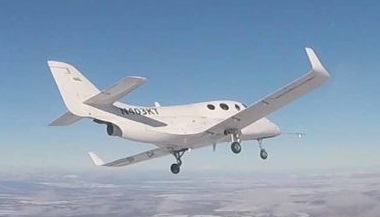
The aircraft features a cantilever low-wing with winglets, a cruciform tail, a four-seat cabin pressurized to 10.0 psi (69 kPa), retractable tricycle landing gear and a single Pratt & Whitney Canada JT15D-5 jet engine. The airframe is made predominately from carbon fiber reinforced polymer. Initial design goals included a 400 kn (741 km/h) cruise speed and 1,500 nmi (2,778 km) range, with NBAA IFR reserves.

First flight of a proof of concept aircraft, registered N403KT, was achieved on 21 November 2016. The initial flight of the 714 was limited to 128 knots and 3,700 feet agl with the gear extended and flaps at 24 degrees.

The company intended to make a public introduction of this aircraft at AirVenture in July 2017. The test pilots logged 52 hours on 33 flights. The aircraft topped out at 320 ktas and 17,000 feet, with a max test weight of 8,300 pounds.

In February 2017 prototype flight testing continued. The company did not have the funding to complete certification, and was no longer accepting deposits from customers. Stratos CEO Michael Lemaire indicated at that time, “we are privately funded for the prototype phase, during which we are planning to explore the full flight envelope and draw conclusions for the certification stage. We are not yet funded for the certification phase. At present, we have no plan to take deposits towards deliveries, which are still many years away.”

Gallery

Stratos 714
Engine: 1 × Pratt & Whitney Canada JT15D-5, 2,900 lbf (13 kN) thrust
Wingspan: 40.5 ft (12.3 m)
Length: 35.8 ft (10.9 m)
Height: 9.8 ft (3.0 m)
Empty weight: 4,367 lb (1,981 kg)
Gross weight: 7,213 lb (3,272 kg) maximum take-off weight
Fuel capacity: 2,605 lb (1,182 kg)
Maximum speed: Mach 0.7
Cruise speed: 415 kn (478 mph; 769 km/h)
Stall speed: 63 kn (72 mph; 117 km/h)
Range: 1,500 nmi (1,726 mi; 2,778 km) with NBAA IFR reserves
Service ceiling: 41,000 ft (12,000 m)
Time to altitude: 17 minutes to FL370
Crew: one
Capacity: three passengers

Storo Bristol Bulldog

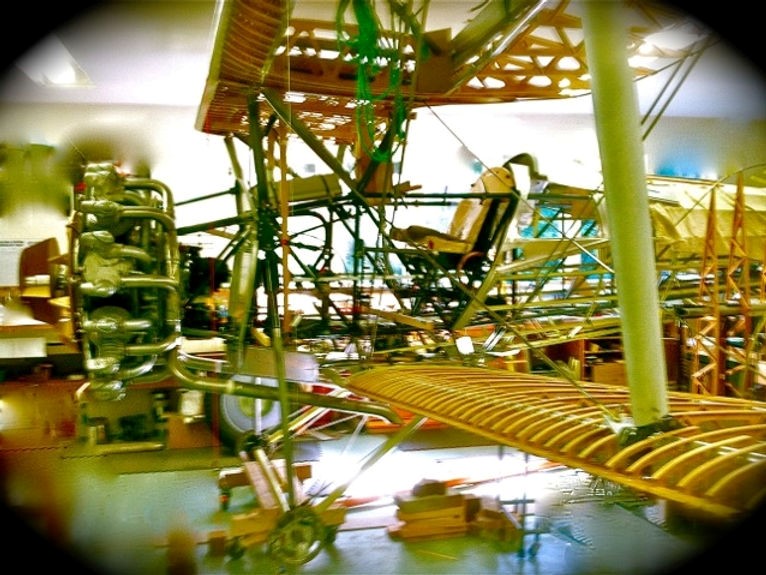
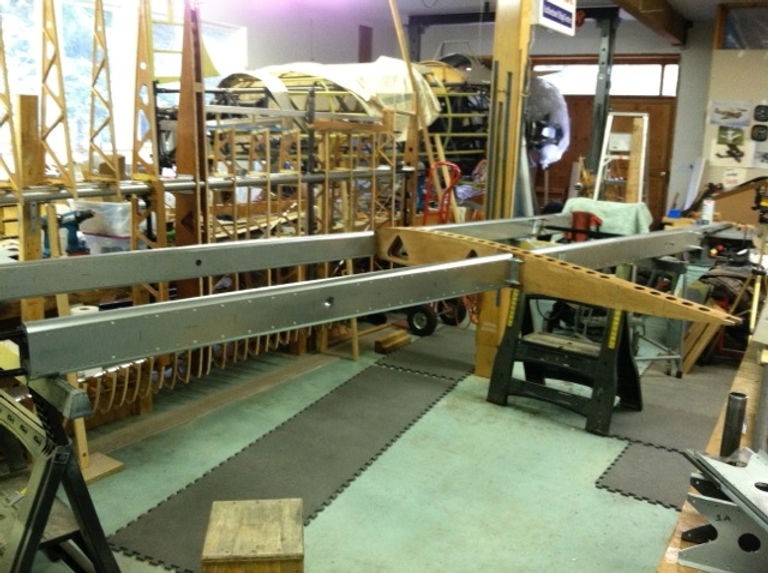
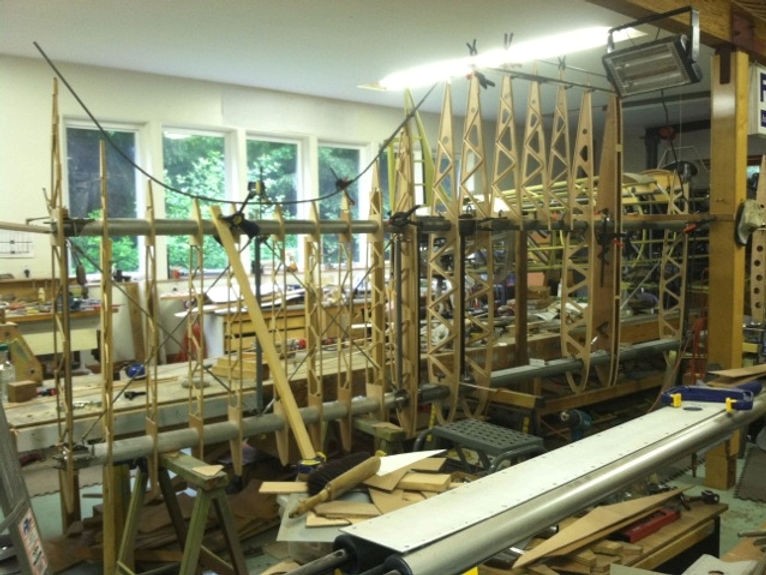
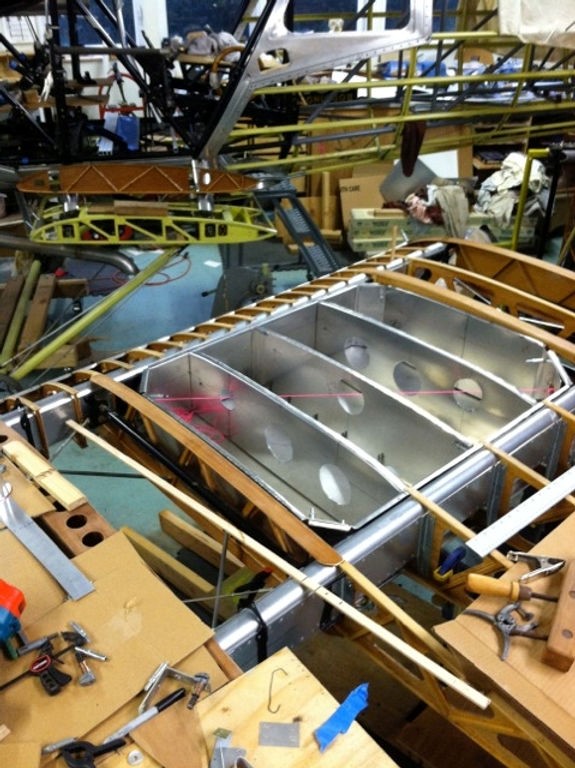
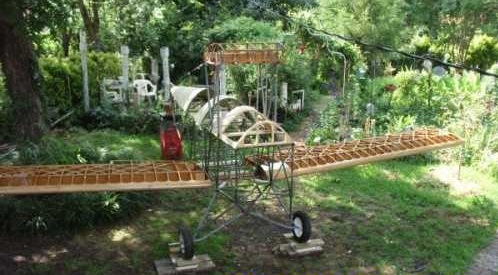
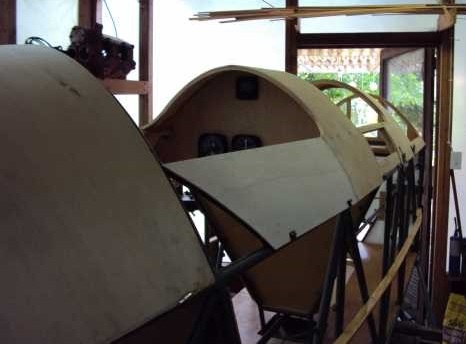
Ed Storo of Netarts Oregon, a member of EAA 292, was building what will be the only flying Bristol Bulldog in the world. He began in 2000, was expecting it to take ten years and he is nearing completion after seventeen years.

There are no plans for the Bulldog. Ed has had to create each part from photos and partial descriptions.

The original was powered by a Jupiter engine, but there are none of these in running condition. So Ed is using a P&W Wasp of the same vintage. It is a 9 cylinder 450-500 hp engine.

In early 2017 the surfaces were being covered.

Stoddard Hamilton

Tom Hamilton began flight testing the Glasair TD in 1979. Originally powered by a 115 h.p. Lycoming O-235 powerplant, the TD prototype featured conventional landing gear and a gross weight of 1,600 lbs.

Glasair debuted at the EAA Convention in Oshkosh 1980 with the first premolded composite kit aircraft ever offered. All the major airframe components pieces such as the fuselage, wing, cowling, and tail feathers were already fabricated in two halves. All the builder needed to do was install the ribs or bulkheads and seam the halves together. All the parts came direct from the factory with a mirror-smooth gel coated finish. Thus, the Glasair kit offered tremendous time savings compared to the scratch-built projects that were then available.

In addition, the production kits featured a 3″ higher canopy for improved cockpit comfort and visibility, as well as the more powerful 160 h.p. Lycoming O-320 engine. 150 builders in 1980 alone ordered the Glasair as their kitplane.

In 1981 the EAA awarded Tom Hamilton the prestigious Raspet Award for outstanding contribution to the design of light aircraft.

The retractable tricycle gear Glasair RG was introduced in 1983, and at the same time, kit completeness for both the RG and the TD was greatly improved. The introduction of prefabricated rudder pedal assemblies, aileron and elevator bellcranks, control stick yokes and various other metal parts completely eliminated the need for welding or complex metalworking skills on the part of the Glasair builder.

The fixed tricycle gear Glasair FT was developed in 1984. Making the new landing gear retrofittable to existing TDs, S-H converted the original production prototype, N89SH, to the new gear configuration. The new FT gave up only 2 m.p.h. of speed to the tail dragger.

With some 700 Glasair kits in the field in 1986, enter the Glasair II, which was simultaneously introduced in TD, FT and RG models. The main areas of improvement over the original Glasair I centered on cockpit ergonomics and labor savings. A complete retooling of most of the composite parts resulted in an additional 3″ of cabin width and 1-1/2″ of cabin height.

These changes also resulted in a larger baggage compartment. S-H’s labor-saving campaign resulted in, among other things, premolded mounting joggles for such components as the wingtip fairings, cowling, and so on; factory-made cutouts for the canopies and windshield; and premolded scribe lines in parts that required builder cutting. The end result was a more comfortable, more practical, better engineered aircraft that was more enjoyable to build as well as to fly.

1986 also marked the introduction of the Glasair III, two-place sportplane on the planet. Powered by its 300 h.p. Lycoming IO-540 to cruise speeds in excess of 265 m.p.h., the kit featured all the new labor-saving innovations of the Glasair II kits.

Also in 1986, S-H became an employee-owned company, Arlington, Washington.

1988: Stoddard-Hamilton Aircraft Inc
18701 58th Ave NE
Arlington
WA 98223
USA

In 1989 the Glasair II-S models were introduced — ‘S’ for stretched. The original II fuselage was lengthened by 14″, providing easier installation of the more powerful 180 and 200 h.p. engines builders were installing, as well as improving the appearance of the aircraft.

As before, tail dragger, fixed tricycle and retractable tricycle gear were all offered on the II-S. 1989 also marked the founding of Stoddard International, Inc., a sister company organized to produce composite parts for the Boeing Company.

SI has manufactured a variety of parts for the 737, 747, 757, 767 and the new 777. SI was one of the first companies in the nation to be approved under the new D1-9000 specification, a manufacturing quality control specification.

S-H introduced the Glasair III Turbo in 1990. A complete firewall-forward package, this option pushed the standard Glasair III airframe up into the Flight Levels at speeds of well over 300 m.p.h.

GlasFloats were developed in 1992. Available in straight and amphibious versions, these all-composite, leak-proof floats opened up new vistas of adventure for builders of light aircraft such as the Kitfox and Avid Flyer.

The Glasair III LP was displayed at the NASA exhibit in Oshkosh in 1993. The result of S-H’s participation in a NASA-funded Small Business Innovation Research (SBIR) grant, the LP was the first lightning-protected composite kit aircraft. Under the terms of the SBIR grant, the research results produced in the course of this project became part of the public domain, and future certified composite aircraft such as the Cirrus and the Kestrel utilize technology based on S-H’s findings. S-H continues to participate in several other SBIR grants and NASA advanced research programs on such topics as composite manufacturing techniques and aircraft crashworthiness.

The Glasair Super II was also introduced in 1993. The II-S fuselage was lengthened by 6″, the wing was moved aft 1-1/2″, and the horizontal tail surfaces were increased in size by 30%, producing an aircraft of peerless handling characteristics with a CG envelope wide enough to accommodate a wide variety of engine and equipment choices. Available in any of three gear configurations, the Super II offers an unbeatable combination of performance, utility and economy.

The new GlaStar was announced at the 1994 Sun n’ Fun airshow in Lakeland, Florida, and first displayed as an almost-finished prototype at Oshkosh. Featuring a foldable high wing, convertible landing gear options and a baggage compartment. More than 100 builders placed deposits on the new kit in advance of the prototype’s November first flight.

The Glasair III Prop Jet also debuted at Oshkosh ‘94. Built by Composite Turbine Tech, Inc., of Toledo, Washington, this aircraft mated a 450 s.h.p. Allison 250 B-17 turbine engine to a standard Glasair III airframe.

Behind its original 125 h.p. Continental IO-240 engine, the GlaStar prototype exceeded its design goals on every parameter in 1995. By the fall of 1995, complete GlaStar kits were being shipped, and the first customer-built GlaStar took flight after less than three-months of construction. 1995 also saw major enhancements to all models of the Glasair.

Kits for both the III and the Super II underwent upgrades, as previously optional equipment was incorporated into the standard kits. Ever-increasing degrees of factory prefabrication, part quality and kit completeness continue to be the hallmark of the Glasair line.

In 1996, the GlaStar prototype, having logged some 400 trouble-free hours in its first eighteen months, was equipped with a new 160 h.p. Lycoming O-320 engine installation. With a constant-speed propeller, this powerplant gave better cruise speed, climb performance and short-field wizardry. In 1997 the GlaStar was tested on floats — both Aerocet 2200 straight floats and Wipline 2100 amphibs. Designed from the outset as a floatplane, the GlaStar exceeded all expectations. In addition, the 180 h.p. Lycoming O-360 engine was installed in the GlaStar.

1997: 18701 58th Ave, N.E. Arlington, WA 98223, USA.

Following a sophisticated computational fluid dynamics analysis of its aerodynamic qualities at speeds in the Mach .6–.7 range, the Glasair III got an enlarged rudder, a new cowling and a mighty turbocharger to become the Glasair Super III in 1998. Designed to produce 350 h.p. at altitudes of up to 37,000 feet, the new powerplant testing on the prototype had been flown to 35,000 feet at airspeeds of greater than 320 knots. At 32,000 feet, the aircraft was still capable of climbing at over 2,000 feet per minute.

GlaStar builders got a tremendous boost in 1998 with the introduction of new “Jump-Start” accelerated-assembly options. Taken together, the Jump-Start Wing and Fuselage options shaved up to 50% off the typical build-time.

Original manufacturer of the Glasair and Glastar, Stoddard Hamilton closed its doors in 2000 after more than 20 years in business. Both aircraft types were split from the Stoddard Hamilton camp when the clo-sure occurred.

Thomas W. Wathen, former Chairman and CEO of Pinkerton’s, Inc., purchased the assets of Stoddard-Hamilton and AADI and formed Glasair Aviation, LLC in 2001 for the continued manufacturing and sale of both the Glasair and Glastar product lines.

New owner Thomas Walthem was committed to getting all three kits back into production. He initially purchased the Glasair side of the business but after find¬ing the overheads of the line were not self supporting approached Arlington Air¬craft Development Inc (AADI) to purchase the GlaStar line. As a single entity, the Glasair and Glastar kit aircraft under the banner of New Glasair/GlaStar.

Mr. Wathen, who sits on the President’s Counsel of the EAA and owns historic Flabob Airport in Riverside, California, selected Mikael Via to be President and Chief Operating Officer (COO) of the new companies. According to Mr. Wathen, Via is to be responsible for daily operations of Glasair Aviation and will help Wathen determine the long-term direction and growth of the company. Via, is a private pilot and builder/owner of a Glasair Super II RG.

More than 3,000 kits were in the field and some 1,700 aircraft flying in countries around the world by 2008.

In 2009 produces kits to construct the very popular Glasair two-seat low-wing monoplane in various models (first flown 1979 and thought to have been the first pre-molded composite kitplane), plus kits for the GlaStar two-seat high-wing cabin monoplane (first flown 1994 and many hundreds sold). Other aircraft have included the Turbine 250/III turboprop two-seater, and T-9 Stalker two-seat turboprop variant of Glasair III as trainer (first flown 1988).

Stephenson Tigershark

This project was started by Steve Stephenson in Dallas, TX, USA, as a Tiger Moth replica. It uses Fisher Flying Product wings and stabilizers. The fuselage and landing gear were designed by Steve Stephenson.

This project started in the spring of 2002. Due to traveling for work for some years and building space issues for other times, the progress has been slow.

Due to scaling issues and the modernization of certain components, and a non scale engine it was decided to rename the aircraft Tigershark.

Steel Breeze Mini Breeze

In 2005 ASAP introduced another member of the PPC family, the Steel Breeze and Mini Breeze conforming to the FAR 103 regulations.

The Standard 103 Mini Breeze airframe is a powder coated 1 ½ inch 4130 .049 chrome molly aircraft quality TIG welded frame cage, with a black anodized 6061T6 1 ¼ inch Aluminum Prop guard. The seat fuel cell holds 12 US gal, (limited to 5 gal for USA 103) with a deluxe black seat covers and 4 Point Safety harness for both seats.

Fitted with a GSC fixed pitch propeller (std prop is a 2 blade 64″), or a ground adjustable is optional.
Features are, 6” spun AL rim with CNC machined hub and high speed bearing (13” OD), Butterfly Steering wheel with u-joint controls, Dyno-focal motor mount, Stainless Steel cable and clamp with 4 point riser attach system, Mustang 380 Sq. Ft. high performance canopy with canopy bag and line socks included, Long handle Throttle Quadrant, Foot bars canopy steering system, and Unique bungee control shock dampening system. Used on many certified aircraft.

Width Standard wheels: 72 in
Overall width at prop guard: 72 in
Length: 101 in
Height top of prop guard Standard wheels: 85 in
Airframe weight, w/Parachute Wing: 140 – 145 lbs

Steel Breeze Powered Parachutes Steel Breeze

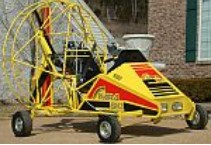
In 2005 ASAP introduced the two place Steel Breeze powered parachute and Mini Breeze conforming to the FAR 103 regulations.

The main fuselage of the Steel Breeze airframe is constructed of 1.5 inch diameter chromolly steel fabricated and aircraft welded. Tabs are welded onto the airframe to attach the anodized aluminum components used to complete the PPC structure.

The Steel Breeze has a roll bar frame, frontal bars, wide center of gravity attach points and true seat separation. The 4 point riser attach system gives this aircraft a solid platform and with directional input that stays solid in the turn with no twisting or bobbing. The higher than center thrust line lateral attach gives a comfortable rate of climb. This also provides smoother throttle transition during landing as the aircraft has less tendency to oscillate with throttle setting changes.

Rear Seat tank, comfortable and lots of leg room. Front Pilot seat is a full highback seat in a comfortable seating position. Both seats come standard with 4 point safety harness. Full roll cage protection and frontal bars are standard. Full action bungee suspension is simple, works well and is very easily maintained. A Dyno-focal motor mount keeps engine vibration to a minimum. Cable system risers and stainless steel attach points make the strength to handle in excess of 5 G’s in load testing.

The Steel Breeze Powered Parachute may be the first new PPC to enter the market with the SPORT PILOT Manufacturers standards already in place. Steel Breeze is in compliance with Sport Pilot LSA.

The Steel Breeze airframe allows a variety of engine options that will fit the airframe. The basic airframe was available less the engine and canopy. The Steel Breeze can come ready to fly or ready to assemble. Factory built Steel Breeze is ready to fly, just uncrate it, put the wheels on, put gas in and fly. Factory built Steel Breeze is completely set up and test flown before it is packaged. Freight cost is higher due to size of finished package.

The welded main frame makes the Steel Breeze Kit assembly simple and fool proof. Kit comes with everything you need to complete the aircraft.

Standard Steel Breeze Airframe consists of:
Main airframe (Powder coated 1 ½ inch chrome molly aircraft quality TIG welded frame cage), Black anodized 6061T6 1 ¼ inch Aluminum Prop guard.
Dual deluxe seating, rear seat fuel cell 14 US gal., deluxe black seat covers.
4 Point Safety harness for both seats.
64 inch GSC Tech 3 propeller ground adjustable
8” Azusa Aluminum Mag Wheels
Butterfly Steering wheel with u-joint controls.
Dyno-focal motor mount
Stainless Steel cable and clamp with 4 point riser attach system
Mustang 500 sq.ft canopy with canopy bag and line socks included.
Long handle Throttle Quadrant
Foot bars canopy steering system
Unique bungee control shock dampening system. Used on many certified aircraft.

Construction Materials:
Aircraft quality TIG welded frame 1 ½” 4130 .063 Chrome Molly
1 ¼” 6061 T6 Aluminum Aircraft Grade
Quality AN aircraft hardware.
Stainless Steel bracketing.

Width at main gear wheels Standard wheels: 70 inches
Width at main gear wheels Jumbo wheels: 74 inches
Overall width at prop guard : 76 inches
Length: 123 inches
Height top of prop guard Standard wheels: 83 inches
Height top of prop guard Jumbo wheels: 85 inches

Airframe only weight, including Parachute Wing and Propeller less engine: 227 lbs

Steel Breeze airframe with:
Rotax 503 DCDI, B-Box with Pull Start: 323 lbs
Rotax 503 DCDI, B-Box w/Electric Start & Mag End: 343 lbs
Rotax 503 DCDI, C-Box (dampener) w/ Pull Start: 331 lbs
Rotax 503 DCDI, E-Box w/ Electric Start: 347 lbs
Rotax 582 Liquid cooled B-Box w/Pull Start : 342 lbs
Rotax 582 Liquid cooled B-Box w/Electric Start and Mag End: 361 lbs
Rotax 582 Liquid cooled E-Box w/Electric Start: 363 lbs
Hirth 3503 Liquid cooled with gear box and Electric Start: 350 lbs
HKS 700E 4 stroke with Electric Start: 376 lbs

Maximum Gross Weights:
These posted weights are based on Parachute Wing size and type.
Mustang S-500 (Rectangular): 850 lbs
Mustang S-550 (Rectangular): 950 lbs
Thunderbolt E-340 (Elliptical): 900 lbs

Glide Ratio: Between 4 to 1 up to 6 to 1.
Rate of Climb: Between 400 to 800 feet per minute.
Take off Roll: 50 to 300 feet
Landing Roll: 50 to 100 feet.
Cruise Airspeed: 25 to 35 mph. (Elliptical wings 31-45 mph)