Team Tango Foxtrot

Foxtrot 4

The Tango 2 and Foxtrot 4 wing uses a constant chord, constant thickness airfoil which gives it gentle, textbook stall characteristics. Wing root first, ailerons last, with no built in twist required. The stall itself is simple with distinctive aerodynamic warning and little to no tendency to drop off. Differential ailerons counteract adverse yaw.
The wing spars are factory assembled. They are a one piece composite I-beam structure that goes from wing tip to wing tip. Both airplanes were designed to 6/-4 G’s and have been successfully tested to 1.5 design limits. Each wing and horizontal stabilizer spar is tested to 6 G’s before it leaves the factory.

All of the fuel is carried in the wings. There is no fuel storage anywhere in the fuselage or engine compartment. Capacitance type fuel probes run the entire length of the wing. This allows accurate fuel quantity readings from full right down to zero, a rarity in many airplanes. Total unusable fuel is less than a pint. The fuel selector is in plain view on the forward console and is easily accessible for switching from left to right. The large capacity tanks provide a reserve even after a four or five hour flight.

Team Tango uses only FAA approved foam core in the structures. It is more expensive, but compared to other popular foam cores it is the only one that does not create cyanide gas when exposed to flame, is self extinguishing and fuel -proof. The Tango and Foxtrot both feature a dual gull wing canopy system which incorporates a reinforced roll bar. Both can cruise at 200+ mph, have a range over 1400 s.m., carry over 100 pounds of baggage, and operate off a grass strip.

The fuselage sits level in cruise flight which is three degrees lower than the ground attitude. The molded fiberglass seats put the pilot and passenger in a semi-reclining position leaning back approximately 30 degrees. The Tango and Foxtrot are 44 and 46 inches wide. Various antennas are installed into the fuselage during the lay-up process, when it is easy. The instrument panel is divided into three sections. This allows easier installation and access for maintenance and upgrades.

The fuselages use quarter inch foam core that is reinforced at the horizontal stab attach points and up into the vertical stab. A build center is available to build your airplane at the factory, guided and instructed by the staff, and that expertise is included in the price of your aircraft. The seat installation is adjustable for leg room and height as well as recline. The airframe can be customized. The wing can be longer to reduce wing loading, reduce stall speed, climb better at lower airspeeds and have greater high altitude performance. We use ½” foam core in and around the doors ensure stiffness so they won’t pull away from the fuse in flight and cause air leaks or allow rain to enter the cabin. A vinyl ester resin in the composite is a safer and less toxic alternative that won’t induce an allergic reaction and is pleasant to work with.

Foxtrot 4
Engine: Lycoming IO-540, 300
Engine option: Lycoming IO-360
Horsepower range: 200-300
Height: 7.25 ft
Length: 24.8 ft
Wingspan: 32 ft
Wing area: 128 sq. ft
Fuel capacity: 100 gal US
Empty weight: 1,750 lb
Gross weight: 3,000 lb
Useful Load: 1,100 lb
Payload, full fuel: 650 lb
Baggage Capacity: 150 lb
Stall (IAS): 62 mph
Vne (IAS): 245 mph
Range: 1,800 sm
Rate of Climb: 1,600 ft/min
Takeoff: 350 ft
Landing: 800 ft
Baggage Area: 14 cu. ft
Cabin Width: 47 in
Cabin Height: 43 in
Wing Loading: 23.4 lbs./sq. ft
Aspect Ratio: 8:1
G-load (design): +6 / -4
Seats: 4
Landing gear: Fixed Tri-gear
Building materials: Composite
Kit cost 2009: US $ 45,995

Team Tango

The team is headed by General Operating Officer and Chief Test Pilot, Denny Funnemark. Denny is a retired U.S.A.F fighter pilot with 3000 hours of F-4 Phantom, F-5E and F-15 Eagle time. Denny purchased and built his own Tango in 2001 and liked it so much he bought part of the company. As it stands now half of the senior staff at Team Tango was ex U.S.A.F. Team Tango is owned by the men who work there. The aircraft are made in the United States.

Team Tango, Gainesville FL., USA

Team Rocket F.1 Rocket / Evo

F.1 EVO

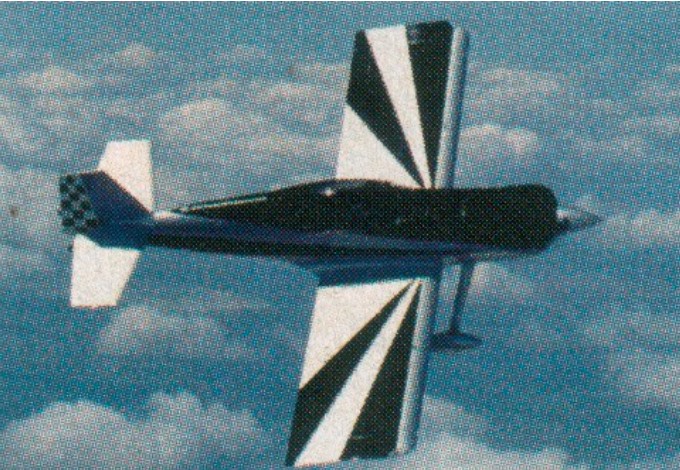
Offered as a Quick Build Kit, these airframes are built by HPA International, a manufacturing subdivision in the Czech Republic. Their group of highly skilled engineers and aircraft assembly specialists have assisted to completely engineer the F-1 QB, paying particular attention to craftsmanship and ease of assembly. Complying with the FAA 51% rule, the Quick Build Kit is offered as a complete airframe. The F-1 QB is powered by a fuel-injected Lycoming IO-540 engine, commonly used in Piper Aztecs. Horsepower may range from 250 to 300+ and either a 2- or 3-bladed prop can be used. The engine is not included in the kit.

F.1 Rocket

All wing ribs and internal wing parts are anodized for corrosion protection. All wing skins are primed with epoxy chromate. The F-1 QB wings are delivered with the spars completed, all ribs riveted in place and the top skins riveted on. The customer will need to install the wiring necessary for landing lights (if desired) and strobe and position lights. The pitot tube bracket and pitot lines must also be installed. Once this has been completed, the bottom skins can be riveted in place.

The fuselage is delivered with all bulkheads completed and all skins riveted in place. All bulkheads and internal parts are anodized for corrosion protection. All skins have been primed with epoxy chromate for corrosion resistance. The ELT and battery trays are preformed and ready for your final assembly and installation. All fuselage floor and baggage compartment panels are pre-cut and pre-drilled ready to install. The customer will install the torque tube and control sticks, rudder pedals and cables, seats and seatback support, and instrument panel.

The F-1 QB finish kit is the most complete and comprehensive finish kit that can be provided. Most parts that are considered upgrades by other manufacturers, are standard in our kit. Fiberglass wing root fairings, fiberglass gear leg and gear leg intersection fairings, Rocket-tip wingtips with strobe and position light bulkheads pre-molded into place with Lexan plexiglass covers are all included as standard. Our cowl is delivered in three pieces for ease of installation. The oil door is pre-molded for ease of construction. The F-1 QB canopy is a slider canopy. The gear legs are manufactured from titanium and are pre-drilled to the engine mount. The wheels, brakes, tires, tubes, brake lines, pitot lines, master cylinders, and fuel lines are all included in the finish kit.

The empennage kit is not included in the Quick Build Kit and is considered a starter kit. This is done for two reasons: 1) This gives first time builders an opportunity to discover mistakes on parts that are not expensive rather than on areas that are very expensive. 2) When we went through the FAA 51% certification process, it was determined that we could do considerably more of the difficult construction on the wings and fuselage by making the tail its own kit.

Prices at 1 September 2006
Evo kit (w/emp) ..Lycoming Config – $49720
Evo kit (w/o emp)..Lycoming Config – $47720
Evo kit (w/emp)..TCM.IO-550.Config – $50700
Evo kit (w/o emp)..TCM IO-550.Config – $48700
Emp Kit – $2150

Sports QB kit (w emp kit) – $44270
Sports QB kit (w/o emp kit) – $42720

F-1 Rocket
Engine: Lycoming IO-540, 250 hp
HP range: 250-300
Length: 21 ft
Wing span: 22.6 ft
Wing area: 106 sq.ft
Fuel capacity: 52 USG
Empty weight: 1200 lb
Gross weight: 2000 lb
Cruise: 230 mph
Stall: 56 mph
Range: 1150 sm
Rate of climb: 3000 fpm
Takeoff dist: 300 ft
Landing dist: 700 ft
Seats: 2 tandem
Cockpit width: 30 in
Landing gear: tailwheel

F-1 Evo
Engine Lycoming IO-540 / Continental 550
HP Range 235-350
Length 21 ft.
Wing Span 24’10”
Wing Area 102 sq. ft.
Top Speed 265 m.p.h.
Fuel Capacity 52 gal
Empty Weight 1300 lbs
Gross Weight 2100 lbs
Cruise Speed (75% power@ 8000′ MSL) 240 m.p.h
Stall Speed 50 m.p.h.
Range @55%pwr 1150 sm
Rate of climb sea level 3500 fpm
Take off Distance 300ft
Landing Distance 700ft
Seats 2
Cockpit width 30 in
Landing Gear tail wheel
Building Material Metal
G. Limit +6 -3 g

F1 Sport wing
Engine Lycoming IO-540
HP Range 250-300+
Length 21 ft.
Wing Span 21′ 10″
Wing Area 104 sq. ft.
Fuel Capacity 52 gal
Empty Weight 1200lbs
Gross Weight 2000 lbs
Top Speed 250 m.p.h.
Cruise Speed ( TAS @ 10,000MSL @ 60% power) 230 m.p.h
Stall Speed 54 m.p.h.
Range @55%pwr 1000 sm
Rate of climb sea level 3500 fpm
Take off Distance 300ft
Landing Distance 700ft
Seats 2
Landing Gear tail wheel
Building Material Metal
G. Limit +6 -3 g

TEAM Minimax / Eros / JDT 1500R

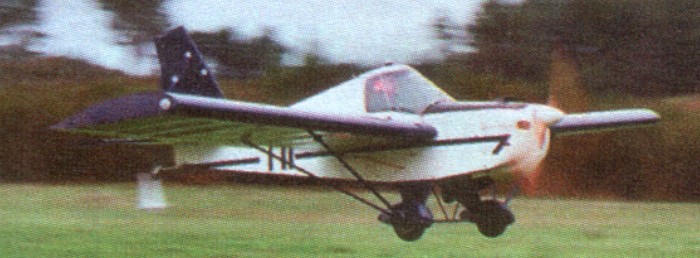
Mini-MAX 1100R

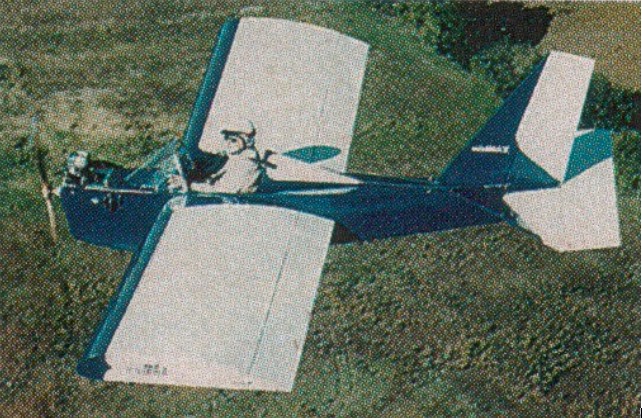
The Mini-MAX 1100R is a minimum cost aircraft, requiring a Minimum of building space, time or skill. A “Maximum” high of pure pleasure and performance.
Mini-MAX 1100R standard equipment:
Quick removable wings
Shoulder harness/seat belt
Full-span flaperons
Curved windshield
Strut-braced tail
5 gallon gas tank
2009 Price: 4795 US$

Tne Mini-MAX 1100R can be upgraded to models 1550R and 1260R.

Mini-MAX 1100R
1200Z

The 1200Z can be upgraded to the 1500R. First flown in 1984.

The TEAM 1300Z MiniMAX was first flown in 1991.

TEAM 1300Z

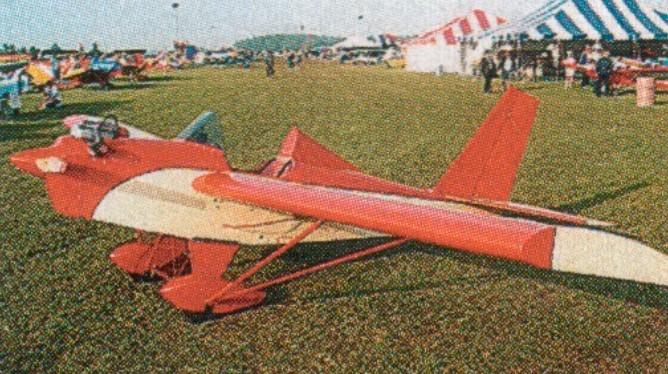
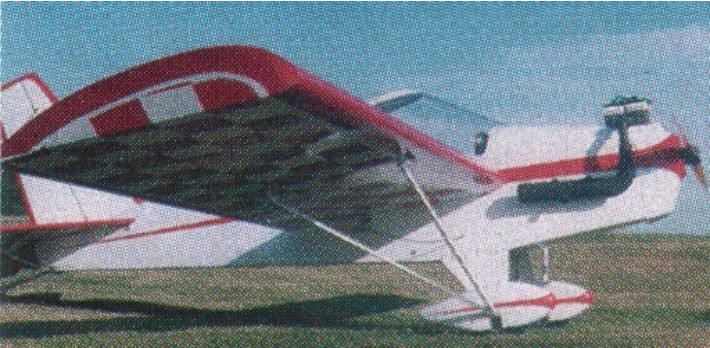
The 1500R was first flown in 1991. A Minimum-cost aircraft, requiring a Minimum of building space, time or skill. Wood was chosen as the basic building material. It is easy to work with, dependable in its strength characteristics, and is not bothered by the vibrations associated with 2-cycle engines.

1500R

1500R construction techniques are of the old-fashioned, tried and true wood truss and plywood gusset method. It is very simple, and builds quickly. If you have ever built a balsa-wood model airplane, you have the experience required to build this “full-scale” model. While construction time will vary from builder to builder, approximately 300 hours is the average.

March 1999

The 1500R was also marketed as the JDT 1500R.

1500R SPORT Standard equipment:
Fiberglass engine cowl
Prop spinner
Quick removable wings
Shoulder harness/seat belt
Curved windshield
Strut-braced tail
5 USgallon gas tank
2009 Price: 5290 US$

The TEAM1600R first flew in 1993.

TEAM1600R

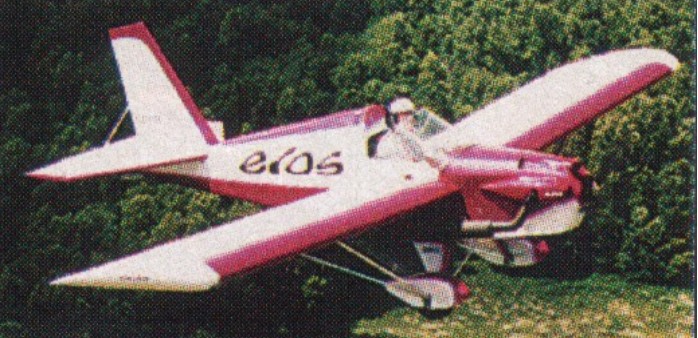
The 1650 Eros first flew in 1987.

1650 Eros

Gallery

1100F “Ultralight”
Engine: Hirth F-33
Flight controls: 3-Axis
Wingspan: 25′ 0″
Wing area: 112.5 sq. ft.
Wings: Removable
Length: 15′ 6″
Empty weight: 237 lbs.
Gross weight: 560 lbs.
Design load factors: +4.4 -1.8
Top speed: 70 mph
Cruise speed: 55 mph
Stall speed: 27-30 mph
Climb rate: 650 fpm
Vne: 90 mph
Take-off roll: 150 ft.
Landing roll: 180 ft

JDT Mini-Max 1100R
Engine: Rotax 447, 42 hp
Height: 5 ft
Length: 16 ft
Wing span: 25 ft
Wing area: 113 sq.ft
Fuel cap: 5 USG
Empty Weight: 121 kg / 267 lbs
MTOW Weight: 254 kg / 560 lbs
VNE: 87 kt / 100 mph / 161 kmh
Speed max: 86 mph
Cruise: 56 kt / 65 mph / 105 kmh
Range: 120 sm
Stall: 24 kt / 28 mph / 45 kmh
ROC: 1000 fpm / 5 m/s
Take-off distance (50ft obstacle): 100 ft / 30 m
Landing distance (50ft obstacle): 210 ft / 64 m
Service ceiling: 10,000 ft
Seats: 1
Landing gear: tail wheel
LSA: yes

Team 1100R miniMAX
Engine: Rotax 447, 42 hp
Wing span: 8 m
Wing area: 11 sq.m
MAUW: 220 kg
Empty weight: 130 kg
Fuel capacity: 20 lt
Max speed: 140 kph
Cruise speed: 120 kph
Minimum speed: 55 kph
Climb rate: 5 m/s
Certification: PFA
Seats: 1
Fuel consumption: 8 lt/hr
Plan price (1998): 1125 Fttc
Kit price (1998): $3825

1200Z
Engine: Zenoah G-50, 42 hp
HP range: 30-50
Height: 5 ft
Length: 16 ft
Wing span: 25 ft
Wing area: 112.5 sq.ft
Fuel cap: 15 USG
Weight empty: 278 lbs
Gross: 560 lbs
Speed max: 100 mph
Cruise: 65 mph
Range: 150 sm
Stall: 28 mph
ROC: 1200 fpm
Take-off dist: 100 ft
Landing dist: 210 ft
Service ceiling: 12,500 ft
Seats: 1
Landing gear: tail wheel

TEAM 1300Z
Engine: Zenoah G50C, 42 hp
HP range: 30-50
Height: 5 ft
Length: 16 ft
Wing span: 25 ft
Wing area: 113 sq.ft
Fuel cap: 5 USG
Weight empty: 300 lbs
Gross: 560 lbs
Speed max: 86 mph
Cruise: 75 mph
Range: 200 sm
Stall: 35 mph
ROC: 1000 fpm
Take-off dist: 150 ft
Landing dist: 200 ft
Service ceiling: 10,000 ft
Seats: 1
Landing gear: tail wheel

1500R
Engine: Zenoah G-50, 42 hp
HP range: 30-50
Height: 5 ft
Length: 16 ft
Wing span: 25 ft
Wing area: 112.5 sq.ft
Fuel cap: 5 USG
Weight empty: 269 lbs
Gross: 560 lbs
Speed max: 100 mph
Cruise: 65 mph
Range: 150 sm
Stall: 28 mph
ROC: 1200 fpm
Take-off dist: 100 ft
Landing dist: 210 ft
Service ceiling: 10,000 ft
Seats: 1
Landing gear: tail wheel

JDT Mini-Max 1500R Sport

JDT Mini-MAX 1500R Open cockpit
Engine: Rotax 447, 42 hp
HP range: 30-50
Length: 16 ft
Wing span: 25 ft
Wing area: 112.5 sq.ft
Fuel capacity: 10 USG
Empty Weight: 122 kg / 269 lbs
MTOW Weight: 254 kg / 560 lbs
VNE: 87 kt / 100 mph / 161 kmh
Stall: 24 kt / 28 mph / 45 kmh
Cruise: 56 kt / 65 mph / 105 kmh
Range: 170 sm
Rate of climb: 1000 ft/min / 5 m/s
Take-off distance (50ft obstacle): 100 ft / 30 m
Landing distance (50ft obstacle): 210 ft / 64 m
Landing dist: 210 ft
Seats: 1
Cockpit width: 24 in
Landing gear: tailwheel
LSA: yes

1600R
Engine: Rotax 447, 42 hp
HP range: 30-50
Speed max: 100 mph
Cruise: 72 mph
Range: 180 sm
Stall: 28 mph
ROC: 1200 fpm
Take-off dist: 100 ft
Landing dist: 200 ft
Service ceiling: 10,000 ft
Fuel cap: 5 USG
Weight empty: 301 lbs
Gross: 560 lbs
Height: 5 ft
Length: 16 ft
Wing span: 25 ft
Wing area: 112.5 sq.ft
Seats: 1
Landing gear: tail wheel

JDT Mini-Max 1600R
Engine: Rotax 447, 42 hp
HP range: 30-50
Cruise: 72 mph
Range: 210 sm
Stall: 28 mph
ROC: 1200 fpm
Take-off dist: 100 ft
Landing dist: 210 ft
Fuel cap: 10 USG
Weight empty: 301 lbs
Gross: 560 lbs
Length: 16 ft
Wing span: 25 ft
Wing area: 112.5 sq.ft
Seats: 1
Landing gear: tail wheel
Cockpit width: 24in

1650 Eros
Engine: Rotax 503, 52 hp
HP range: 40-52
Height: 5 ft
Length: 16 ft
Wing span: 26.5 ft
Wing area: 118 sq.ft
Fuel cap: 5 USG
Weight empty: 345 lbs
Gross: 640 lbs
Speed max: 110 mph
Cruise: 85 mph
Range: 125 sm
Stall: 35 mph
ROC: 1600 fpm
Take-off dist: 125 ft
Landing dist: 225 ft
Service ceiling: 12,000 ft
Seats: 1
Cockpit width: 24 in
Landing gear: tail wheel
LSA: yes

Taylorcraft Aviation Corporation / Taylorcraft / Taylor Brothers Aircraft Corp

Taylor Aircraft Company
Taylorcraft Aviation Company
Taylor-Young Airplane Company
Taylorcraft Aviation Corporation

C. Gilbert Taylor and his brother had first established the Taylor Brothers Aviation Corporation- slogan; “Buy Your Airplane Taylor Made” – in Rochester, New York, in 1926 to market the Taylor Chummy lightplane, a two-seat high-winged monoplane, priced at $4,000.

The Chummy failed to sell, and after Gordon died flying another Taylor design in 1928, Clarence moved to Bradford, Pennsylvania, where the townsfolk had offered him a new factory at the local airfield plus $50,000 to invest in the company. One of the investors was William Thomas Piper, who had made his money from oil wells.

More concerned about solvency than perpetuating his name, he re-organized the assets into the Taylor Aircraft Com¬pany, giving C. Gilbert Taylor half inter¬est in the new enterprise as an induce¬ment to stay on board. Piper handled the finances as the firm’s secretary and trea¬surer, while Taylor served as president and chief engineer.

After continuing with the Chummy for a time, Taylor abandoned the design and began work on a new inexpensive aircraft to compete with the heavier craft common at the time. A battle between engineer and businessman caused a rift between the two. Piper took advantage of Taylor’s absence during an illness, and instructed Taylor’s junior engineer Walter Jamouneau to modify the Cub, in Models E-2 and F-2, to be more attractive and marketable. Taylor returned from his illness and left the company in 1936; and Walter Jamouneau took over as chief engineer.

A disastrous factory fire brought production of the Cub J-2 to a halt. When the company ran into financial difficulties, manufacturing and marketing rights for the Taylor Cub, which had first flown in September 1930, were acquired by W. T. Piper in 1935 for $761, who in 1937, formed Piper Aircraft Corporation to continue production of this aircraft. It was placed back in production as the Piper J-3 Cub.

Taylor vowed to build a personal aircraft superior to the Cub. Taylor formed his own company in 1935 as Taylor Aircraft Company at Alliance, Ohio, renamed Taylor-Young Airplane Company, then Taylorcraft Aviation Corporation in 1940. In 1936 Taylor rented facilities at Pittsburgh-Butler Airport and first manufactured the “Taylorcraft” plane. Main pre-war lightplanes were Models B, C and D, of which C and D formed basis for formation of Taylorcraft Aeroplanes (England) Ltd. Taylor gave his airplane a closed cabin with doors and a control wheel instead of a stick. The fat, side by side T Craft was faster than a tandem Cub. It set speed, distance and altitude records for light airplanes. No Taylorcraft has a number below 25. They figured nobody would want an airplane from a company that had built only three or four.

During WWII, light aircraft were used for training, liaison, and observation purposes. Taylorcraft’s DCO-65 model was called the L-2 by the United States Army Air Forces and served alongside the military version of the Piper Cub in WW2. Built over 1,900 similar L-2 Grasshoppers for USAAF, TG-6 training gliders based on L-2, and components for Consolidated PBY, Curtiss C-46 and Douglas A-26.

In November 1938 the company established its Taylorcraft Aeroplanes (England) Ltd as its British subsidiary, based in Thurmaston, Leicestershire, England. British production was mainly of the Plus C and Plus D models, and in 1939 the Royal Air Force impressed 24 of the 32 aircraft for evaluation as observation and artillery spotter aircraft. The evaluation confirmed the soundness of the concept, and a derivative of the Plus D was ordered into production as the Auster Mk 1. This entered service in August 1942. The military chose the name “Auster”, which translates as a warm or gentle breeze, possibly from the south. Thus Taylorcraft Plus D built for the army became Auster Mk 1. After the war, Auster Aircraft Ltd was formed and commenced a series of variations on the basic theme until 1960 when it was absorbed into Beagle Aircraft Ltd.

Taylorcraft Aeroplanes Ltd developed the Taylorcraft Model ‘D’ and the Auster Mk. I through Mk. V, which became the backbone aircraft of the British AOP (Air Observation Post) and the three Canadian AOP squadrons, No. 664 Squadron RCAF, No. 665 Squadron RCAF, and No. 666 Squadron RCAF.

Built some 2,800 Model B-12Bs in 1945-1946, but in the fall of 1946 production was halted following a fire in the Taylorcraft factory at Alliance, Ohio and the company went into bankruptcy. Re-formed in 1947 as Taylorcraft Inc, producing models BC-12D, Ace, Traveler, Topper, Ranch, Wagon, Tourist, Sportsman and Special de Luxe.

In 1949 C.G. Taylor bought the assets from the former company, and started a new company Taylorcraft, Inc. at Conway, Pennsylvania. The company restarted production of the BC-12D Traveller and the BC-12-85D Sportsman. The company produced few aircraft and the type certificates were sold to Univair and production was halted.

The factory moved to Pittsburgh in 1954 but then ceased manufacture four years later. It was re-formed again in April 1968 as Taylorcraft Aviation Corporation, and from 1973 resumed production of an updated two-seat Sportsman 100.

In 1971 the Taylorcraft Aviation Corporation, owned by Charles Feris put the Model 19 back into production as the F-19 Sportsman and added the F-21 model. Feris died in 1976 and the production continued at a low rate until 1985. Charles Ruckle bought the company in 1985 and he moved the operation to Lock Haven, Pennsylvania, where the company produced 16 aircraft before it went bankrupt in 1986 and the company was offered for sale.

Company ceased trading 1986, and in 1989 was purchased by West Virginia based Aircraft Acquisition Corporation, developed a series of two/three-seat lightplanes under the F22 designation. From 1992 operated independently of AAC and took name of Taylorcraft Aircraft. The assets were sold to key investor East Kent Capitol.

1990: Taylorcraft Aircraft corporation, PO Drawer 3350, Morgantown, WV 26505, USA.

John Polychron, former CEO of Del Monte Foods purchased Taylorcraft and operated it for approximately one year until he sold it to Philadelphia Attorney Phillip O’Rielly. O’Rielly never reopened and the company became deeply in debt resulting in a Sheriff’s sale in 1996.

Taylorcraft was saved from extinction by Lee Booth, a former Marine and an engineer from Seaford Delaware. Booth renamed the Company Booth-Taylorcraft Aerospace, Inc. Booth-Taylorcraft Aerospace paid all creditors in full and relocated the entire company in 88 53 ft long truck trailers to Greensboro, North Carolina.

Booth, as Chairman and President, directed the Corporation through an extensive recertification of all type certificates, engineering, FAA audits up to the Aircraft Certification Office level, production procedures, complete re-tooling and certification of tooling and work processes. Booth enlisted the assistance of Darrell C. Romick, former Chief Engineer of Taylorcraft Airplane Company and of BF Goodrich. Romick was a close associate of Wernher von Braun and worked for Goodyear Aircraft in the 1950s.

Booth-Taylorcraft Aerospace, Inc became a contractor to numerous governments for military aircraft, weapons systems and firearms. Booth was the first Taylorcraft owner in the company’s history to keep the company debt free the entire time he operated it. In March 2000, Booth formed a strategic partnership by selling half of the Civil Aircraft Division to Harvey Patrick of Pats, Inc. Booth retained all military items, UAVs, several type certificates, designs and patents. The Small Aircraft Division was moved to Georgetown, Delaware at the Sussex County Airport. Booth and Patrick then formed Taylorcraft 2000, LLC and served as Co-chairmen. Booth eventually sold his half to Harvey Patrick and Taylorcraft 2000, LLC was owned by the Harvey and Vera Patrick Foundation. In 2003 The Harvey and Vera Patrick Foundation sold the company to Harry Ingram, with 100% financing.

Harry Ingram, moved the plant to La Grange, Texas in 2003 and on April 25, 2005 it was announced that the factory was moving again to Brownsville, Texas and outsourcing the labour.

On February 21, 2008 the company was repossessed by its former owner, Taylorcraft 2000 LLC. The previous owners had taken orders for new struts for existing aircraft to alleviate a repetitive inspection Airworthiness Directive and was delivering struts to customers. The design’s type certificates, drawings, jigs, templates and parts were put up for sale.
Swiss Aerolight ULM

The Swiss Aerolight ULM was a two-seater with a Rotax 503. Four sets of plans were sold.

In June 2012 the two occupants of the ULM, including builder Dominique Loup, perished after the crash of their aircraft in the town of Saint-Mathieu-de-Tréviers, about twenty kilometers north of Montpellier. The aircraft had taken off a little earlier from the aerodrome of Peak Saint-Loup.

The fatal accident stopped the development.

Swing Europe Spitfire

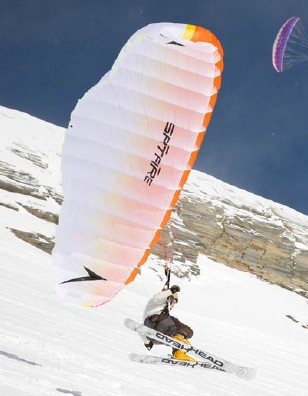
In late 2007, Swing created the Savage and the harness Brave, into speed riding, after which the core speed riding development team led by Manuel Croci and Daniel Kalberer introduced the Spitfire. The primary objective in this development was to achieve the maximum increase in the glide-dive range. The result is a wing which combines the good glide features and the low launch speed of a speed flyer with the speed riding characteristics and dive possibilities offered by a true speed rider.

Available from December 2009 in 4 sizes, 15 – 13 – 11 – 9, the Spitfire features 3 risers with very long trim, efficient back-riser control travel, an easily identifiable stall limit, and wide speed range with high V.max.

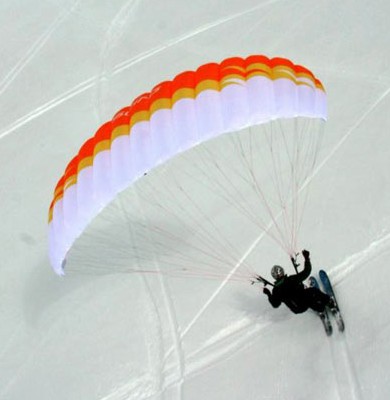
Spitfire II Speedwing

The Swing Spitfire is not suitable for foot-launch. It is recommended that it be used only in combination with skis.

Spitfire 8
No. of cells: 17
Area flat: 8,0 sq.m
Area projected: 7,23 sq.m
Span flat: 5,03 m
Span projected: 4,28 m
Aspect ratio: 3,16
Aspect ratio projected: 2,53
Glider weight: 1,6 kg

Spitfire 9
No. of cells: 17
Area flat: 9,0 sq.m
Area projected: 8,08 sq.m
Span flat: 5,33 m
Span projected: 4,52 m
Aspect ratio: 3,16
Aspect ratio projected: 2,53
Glider weight: 1,9 kg

Spitfire 11
No. of cells: 17
Area flat: 11,0 sq.m
Area projected: 9,86 sq.m
Span flat: 5,89 m
Span projected: 4,99 m
Aspect ratio: 3,16
Aspect ratio projected: 2,53
Glider weight: 2,2 kg

Spitfire 13
No. of cells: 17
Area flat: 13,0 sq.m
Area projected: 11,64 sq.m
Span flat: 6,42 m
Span projected: 5,43 m
Aspect ratio: 3,16
Aspect ratio projected: 2,53
Glider weight: 2,5 kg

Spitfire 15
No. of cells: 17
Area flat: 15,0 sq.m
Area projected: 13,43 sq.m
Span flat: 6,89 m
Span projected: 5,83 m
Aspect ratio: 3,16
Aspect ratio projected: 2,53
Glider weight: 2,8 kg

Swing Europe Savage

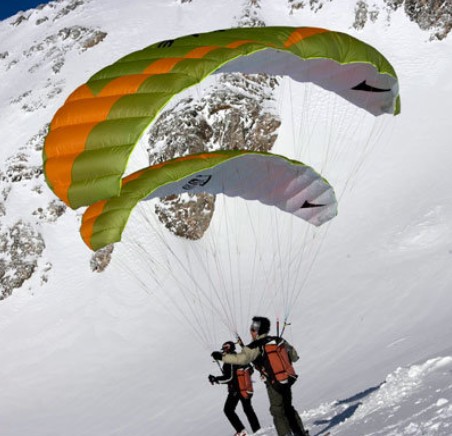
Swing has developed the Savage speed glider introduced in late 2007. The Savage has very good launch behaviour for all types of launch. There is no tendency for it to twist or hang back as it launches. The large range of glide ratio achievable and the increase in ‘dive’ and ‘speed’ (which can be altered using the trimmers and brakes to suit the pilot’s level of ability) guarantee fun with this glider.

The extremely stable and well-behaved canopy does not create any concertina movement due to internal pressure shifts even at high speed or when turning. It holds its path and there is no difficulty with the canopy rolling. Swing has used only high-quality materials for this unique concept. Sorting the lines is also very easy thanks to the excellent choice of materials. Accurate steering using the brakes even allows you to ‘dive’ using this glider. A true contour flight using the brakes is no problem.

Energy from speed is converted perfectly into lift, allowing pilots to climb almost vertically if confronted with obstacles or if dangerous situations arise. The Savage is unbelievably easy to flare and exhibits the best possible landing characteristics.

The Savage was available in three sizes: 13 = beginner, 12 = advanced, 10 = expert.

Swing Savage 10
Classification: expert
Color: grey
No. of cells: 17
Area flat: 10 sq.m
Area projected: 8,80 sq.m
Span flat: 5,62 m
Span projected: 4,65 m
Aspect ratio: 3,16
Aspect ratio projected: 2,45

Swing Savage 12
Classification: advanced
Color: blue
No. of cells: 17
Area flat: 11,5 sq.m
Area projected: 10,11 sq.m
Span flat: 6,02 m
Span projected: 4,95 m
Aspect ratio: 3,16
Aspect ratio projected: 2,45

Swing Savage 13
Classification: beginner
Color: green
No. of cells: 17
Area flat: 13 sq.m
Area projected: 11,42 sq.m
Span flat: 6,42 m
Span projected: 5,28 m
Aspect ratio: 3,16
Aspect ratio projected: 2,45