The 2025 second generation of the Wisp delivers the lightest double-surface tandem in existence at 4.15kg. Designed for Alpine adventures and travel, this all new wing is incredibly easy to use which suits it perfectly for improvised launches and tricky conditions. With performance in line with intermediate category wings, the EN-B Wisp 2 will take you and your partner to distances never flown by ultralight tandems.
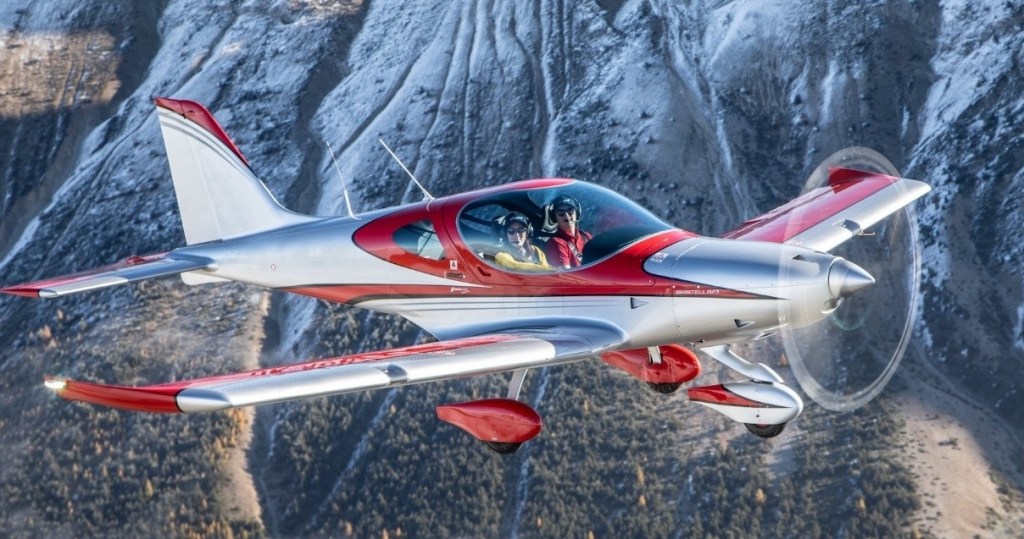
BRM AERO, the Czech-based manufacturer of Bristell Aircraft, announced September 2025 its two-seat Bristell B23 has received Type Certification from the Federal Aviation Administration under Part 23 regulations. The approval marks the company’s first FAA-certified B23 model and positions the B23 for entry into the U.S. training market. The aircraft, already certified under EASA CS-23 in Europe, has logged more than 1,100 deliveries worldwide since 2009. The company says there are nearly 100 other Bristell aircraft already operating in the U.S., used by both private owners and flight schools.
The manufacturer said it plans to grow its North American dealer network by 50 percent within 18 months, with certification efforts underway for additional B23 variations with Rotax 912iS, 915iS, 916iS, and IFR-ready versions.
Bristell B23
Equipped with a 100 HP Rotax 912S3 engine, the now-certified B23 features a 2,000-hour TBO and fuel burn of about 4.5 gallons per hour, with approval for both 100LL and unleaded automotive fuel.
Bristell says the B23 offers a 700-nautical-mile range, 1,654-pound MTOW, 662-pound useful load, and a 51-inch-wide cockpit. It also includes a BRS parachute system.
Deliveries of the FAA-certified B23-912 were scheduled to begin in the fourth quarter of 2025 through Bristell’s North American dealer network.
The 2025 Jester is perfect for soaring sessions on dunes, in strong (yet smooth) winds, dynamic descents near the terrain or proximity flights.
The risers let you adjust the angle of attack: by raising your hands, the wing accelerates and releases brake pressure simultaneously, pitching forward decisively. This turns piloting into a dynamic and fluid experience.
Whether you want to fly close to a slope, make a steep descent or indulge in coastal soaring in strong winds – the Jester offers full control.
Designed purely for fun, it turns any windy slope into your personal amusement park.
While it is designed more for descending than for gliding, in the neutral brake position it still offers some lift, making it easier to maintain control and glide.
With the Jester, we use the new Parakite System (PKS) for the risers, which connects the brakes to a pulley system that lets you adjust the angle of attack.
When you raise your hands, the wing accelerates pitchingforward and loses altitude. When you lower them, gradually slows it down by increasing the angle of attack, causing it to gain altitude. At the neutral point, the wing reaches its maximum glide performance.
Jester 14 Cells: 53 Aspect ratio flat: 5,50 Aspect ratio projected: 4,20 Area flat: 14sq.m Area projected: 11,91m Span flat: 8,78m Chord max: 1,97m Lines total: 184m Lines main: 3/3/3 Risers: A/B/C Max total flight weight: 115 kg Certification: EN 926-1
Jester 16 Cells: 53 Aspect ratio flat: 5,50 Aspect ratio projected: 4,20 Area flat: 16sq.m Area projected: 13,62sq.m Span flat: 9,38m Chord max: 2,11m Lines total: 198m Lines main: 3/3/3 Risers: A/B/C Max total flight weight: 115 kg Certification: EN 926-1
Jester 18 Cells: 53 Aspect ratio flat: 5,50 Aspect ratio projected: 4,20 Area flat: 18sq.m Area projected: 15,32sq.m Span flat: 9,95m Chord max: 2,24m Lines total: 211m Lines main: 3/3/3 Risers: A/B/C Glider weight: 3,95kg Max total flight weight: 115 kg Certification: EN 926-1
Jester 21 Cells: 53 Aspect ratio flat: 5,50 Aspect ratio projected: 4,20 Area flat: 21sq.m Area projected: 17,87sq.m Span flat: 10,75m Chord max: 2,42m Lines total: 228m Lines main: 3/3/3 Risers: A/B/C Max total flight weight: 115 kg Certification: EN 926-1
Jester 24 Cells: 53 Aspect ratio flat: 5,50 Aspect ratio projected: 4,20 Area flat: 24sq.m Area projected: 20,42sq.m Span flat: 11,49m Chord max: 2,59m Lines total: 245m Lines main: 3/3/3 Risers: A/B/C Max total flight weight: 115 kg Certification: EN 926-1
Designed for peaks. Perfect for mountaineers, trail runners and climbers who need a light, versatile wing to descend after demanding routes. Its tiny volume means it easily fits into even the smallest backpack.
The Skin 4 P is much more than an ultralight single-surface wing; it’s the ultimate evolution of hike and fly. Its design is completely new, created from scratch with a single goal: to be the lightest and most compact wing possible, without sacrificing safety or the pleasure of flying.
The Skin 4 P is an evolved version of the wing used on K2 by our pilots. Thanks to their feedback, we have improved its accessibility, in-flight behaviour, and reduced its weight, while maintaining exceptional control even at extreme altitudes.
Weighing under one kilo in the smallest size, the Skin 4 P is the lightest wing ever created by Niviuk. Every component has been redesigned to reduce weight to the absolute minimum.
Made from the new ultralight and durable N10 22 g fabric, his wing is much lighter and more compact than the previous model. The result is equipment that fits effortlessly into backpacks of less than 30 L.
During take off, the Skin 4 P inflates with surprising ease. It rises directly above the pilot without overshooting, even in light wind. It’s a formidable tool for safe launches, even in tight or technical areas.
During landing, the wing provides greater and more progressive speed retention, allowing for a more predictable, intuitive roundout and flare.
Combine your Skin 4 P with other P Series products and enjoy a complete flying kit under 1.90 kg. The ultralight Roamer 2 P harness, Expe 30 backpack, and Kase P front reserve container form a balanced, lightweight, and functional kit for your adventures.
Skin 3 P Aspect ratio: 5.5
Spot 4 P 14 Cells: 39 Aspect ratio flat: 4.90 Aspet ratio projected: 3.93 Area flat: 14sq.m Area projected: 11,84sq.m Span flat: 8,28m Chord max: 2,02m Lines total: 287m Lines main: 3/4/6 Risers: A/B/C Weight: 0,95kh Total flight weight: 50-75kg
Spot 4 P 16 Cells: 39 Aspect ratio flat: 4.90 Aspet ratio projected: 3.93 Area flat: 16sq.m Area projected: 13,53sq.m Span flat: 8,85m Chord max: 2,16m Lines total: 308m Lines main: 3/4/6 Risers: A/B/C Weight: 1,06kg Total flight weight: 60-85kg Certification: EN/LTF B
Spot 4 P 18 Cells: 39 Aspect ratio flat: 4.90 Aspet ratio projected: 3.93 Area flat: 18sq.m Area projected: 15,22sq.m Span flat: 9,39m Chord max: 2,30m Lines total: 328m Lines main: 3/4/6 Risers: A/B/C Weight: 1,15kg Total flight weight: 70-90kg Certification: EN/LTF B
Spot 4 P 20 Cells: 39 Aspect ratio flat: 4.90 Aspet ratio projected: 3.93 Area flat: 20sq.m Area projected: 16,91sq.m Span flat: 9,90m Chord max: 2,42m Lines total: 346m Lines main: 3/4/6 Risers: A/B/C Weight: 1,24kg Total flight weight: 85-110kg Certification: EN/LTF B
The Kode 2 P is a highly versatile wing, whose handling changes depending on size and wing loading. Sizes 22, 24, and 26 are easy, pleasant, and docile; whereas sizes 16, 18, and 20 have a more dynamic and responsive character, especially when flown near the upper end of their weight range. The smallest sizes (12 and 14), which are mini-wings, are more agile and playful, with greater sensitivity to pilot inputs and weight shift.
It is a very stable wing in any size, especially well controlled in roll, thanks to the optimised arc.
The Kode 2 P is a highly versatile wing, whose handling changes depending on size and wing loading. Sizes 22, 24, and 26 are easy, pleasant, and docile; whereas sizes 16, 18, and 20 have a more dynamic and responsive character, especially when flown near the upper end of their weight range. The smallest sizes (12 and 14), which are mini-wings, are more agile and playful, with greater sensitivity to pilot inputs and weight shift.
It is a very stable wing in any size, especially well controlled in roll, thanks to the optimised arc. The undersurface is made with the new ultralight and durable N10 22 g fabric, reducing the total weight of the wing and making it more compact.
Now, all sizes share the same risers – lighter yet just as easy to handle – which further reduces weight without compromising functionality.
Kode 2 P Size 12 Cells: 34 Aspect ratio flat: 4.60 Aspect ratio projected: 3.80 Area flat: 12.5sq.m Area projected: 11.22 sq.m Span flat: 7.58m Chord max: 2.01m Lines total: 190m Lines main: 2+1/3/2 Risers: A-A’/B/C
Kode 2 P Size 14 Cells: 34 Aspect ratio flat: 4.60 Aspect ratio projected: 3.80 Area flat: 14sq.m Area projected: 12,56sq.m Span flat: 8,02m Chord max: 2,13m Lines total: 202m Lines main: 2+1/3/2 Risers: A-A’/B/C
Kode 2 P Size 16 Cells: 34 Aspect ratio flat: 4.60 Aspect ratio projected: 3.80 Area flat: 14,36sq.m Area projected: Span flat: 8,58m Chord max: 2,27m Lines total: 216m Lines main: 2+1/3/2 Risers: A-A’/B/C Weight range EN/LTF A: 50-65kg
Kode 2 P Size 18 Cells: 34 Aspect ratio flat: 4.60 Aspect ratio projected: 3.80 Area flat: 18 Area projected: 16,02sq.m Span flat: 9,01m Chord max: 2,41m Lines total: 229m Lines main: 2+1/3/2 Risers: A-A’/B/C Weight range EN/LTF A: 50-75kg
Kode 2 P Size 20 Cells: 34 Aspect ratio flat: 4.60 Aspect ratio projected: 3.80 Area flat: 20sq.m Area projected: 17,68sq.m Span flat: 9,59m Chord max: 2,54m Lines total: 241m Lines main: 2+1/3/2 Risers: A-A’/B/C Glider weight: 2,13kg Weight range EN/LTF A: 60-85kg
Kode 2 P Size 22 Cells: 34 Aspect ratio flat: 4.60 Aspect ratio projected: 3.80 Area flat: 22sq.m Area projected: 19,45sq.m Span flat: 10,06m Chord max: 2,67m Lines total: 254m Lines main: 2+1/3/2 Risers: A-A’/B/C Weight range EN/LTF A: 65-90kg
Kode 2 P Size 24 Cells: 34 Aspect ratio flat: 4.60 Aspect ratio projected: 3.80 Area flat: 24sq.m Area projected: 21,22sq.m Span flat: 10,50m Chord max: 2,79m Lines total: 265m Lines main: 2+1/3/2 Risers: A-A’/B/C Weight range EN/LTF A: 70-100kg
Kode 2 P Size 26 Cells: 34 Aspect ratio flat: 4.60 Aspect ratio projected: 3.80 Area flat: 26,50m Area projected: 23,43 sq.m Span flat: 11,04m Chord max: 2,93m Lines total: 279m Lines main: 2+1/3/2 Risers: A-A’/B/C Weight range EN/LTF A: 90-119 kg
The 2003 AMV 211 VTOL experiment with ducted-fan propulsion. A 450hp turbocharged Mazda rotary driving a belly-mounted, 94″ five-blade prop. Wings were set at an angle to the fan, and the fuselage itself provided lift. Take-off was with the fan horizontal, blowing downward. As the ship tilted forward, wings would provide lift and the fan would then start blowing rearward through a system of louvers. For landing, the process was reversed.
The Aeroprakt A-32 is a Ukrainian two-seat, high-wing, tricycle gear ultralight aircraft that was designed by Yuri Yakovlev and is manufactured by Aeroprakt. In Australia the A-32 is referred to as the Vixxen.
The A-32 is a development of the A-22 Foxbat; however unlike the earlier aircraft, which can be purchased in kit form or fully assembled, the A-32 Vixxen is supplied only as a kit in the UK, or ready-to-fly factory-built aircraft in 31 other countries.
The A-32 was developed from A-22 Foxbat during three years of research and development. To increase cruise speed while employing the same 100 hp (75 kW) Rotax 912ULS engine as the A-22, the A-32 has a new flush wing-to-body fairing design and all flying horizontal stabilizer, as well as moulded baffling for improved engine airflow and cooling. Other changes include a wing that is 10 cm (3.9 in) shorter, shorter lift struts and better wing tank fairing. This results in a cruise speed that is 20 kn (37 km/h) faster than the A-22.
The prototype A-32 was completed in January 2014 and the first production aircraft was shown in April 2015. It was then transported to Australia, first flying at Moorabbin on 20 July 2015.
The Aeroprakt A-32L is an ultralight variant of the A-32 with a MTOW of 450 kg (or 472.5 kg with recovery parachute system) to comply with European regulations, although not UK legal. Central control Y-stick installed as default, twin control yokes offered as an option.
A-32 Vixxen Powerplant: 1 × Rotax 912ULS, 75 kW (100 hp) Propeller: 3-bladed KievProp 3-blade ground-adjustable prop with metal leading edges Wingspan: 9.45 m (31 ft 0 in) Length: 6.27 m (20 ft 7 in) Height: 2.22 m (7 ft 3 in) Empty weight: 320 kg (705 lb) Max takeoff weight: 600 kg (1,323 lb) Fuel capacity: 95 L (25 US gal; 21 imp gal) usable in two tanks Cruise speed: 213 km/h (132 mph, 115 kn) Stall speed: 50 km/h (31 mph, 27 kn) Never exceed speed: 232 km/h (144 mph, 125 kn) Endurance: 4.5 hours g limits: +4/-2 Crew: one Capacity: one passenger
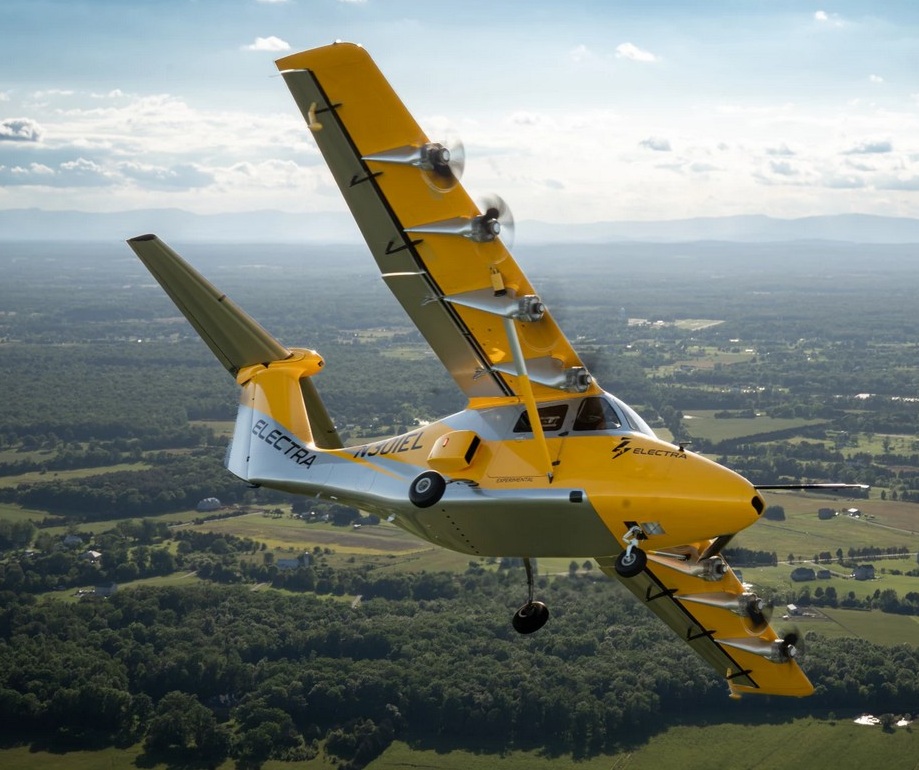
The Electra STOL (short take-off and landing) aircraft features eight electric props along the front edge of its wings. To help achieve the blown lift effect – which results in lift off at relatively low speeds of 35 mph (56 km/h) along a short runway – the aircraft sports large flaps at the rear edge of the wings.
The eight small-diameter, five-bladed propellers along its wing run on quiet electric motors, fed by a big enough lithium battery pack to allow fully-electric takeoff and landing, and quiet flight over populated areas. Electra promises just 75 decibels at a distance of 300 ft (91 m).
In August 2025 Electra demonstrated at Virginia Tech take off and land using an airfield that’s one-tenth the size of a standard runway demonstrating “blown lift” aero and hybrid-electric propulsion capabilities. Power for take-off is provided by onboard batteries, with the system switching to a small turbogenerator for cruising or topping up the batteries while in the air.
The company has been test flying the two-seat EL2 prototype since at least May 2024, but the flights at Virginia Tech – in partnership with Surf Air Mobility – represent the first series of public demonstrations.
Though the prototype did take-off and land utilizing a 300 x 75-ft (91 x 23-m) paved surface at the expansive Blacksburg campus, the EL2 showed off its flexibility by tackling other surfaces too. These included an access road in cooperation with Virginia’s Department of Transportation, and a grass field at the university’s Corporate Research Center.
The company has notched up more than 2,200 orders from over 60 operators around the globe, and is looking to start commercial flights of the EL9 Ultra Short nine-passenger aircraft by 2029.
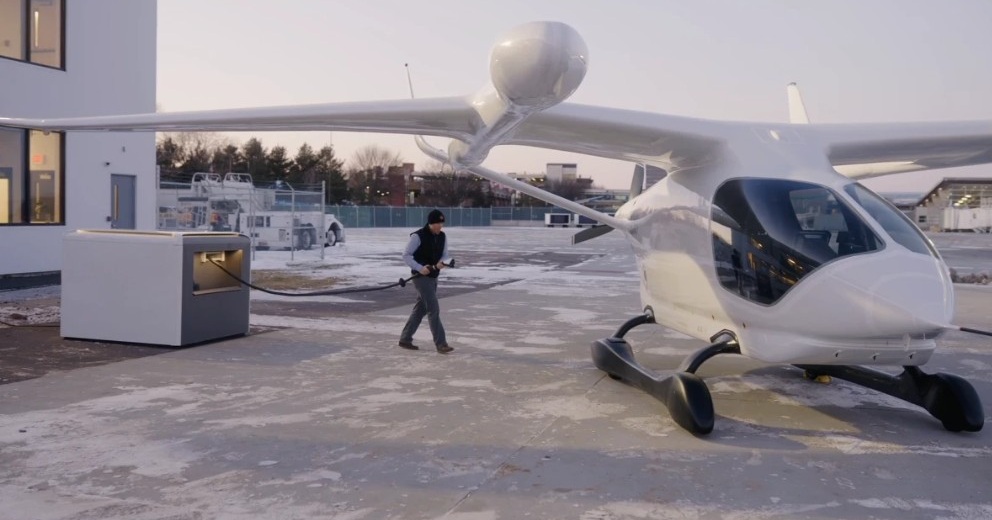
The Alia-250 was inspired by an Arctic tern and features a 50-foot (15-m) wingspan and an in-house-built electric propulsion system powered by high-density lithium batteries. Beta estimates a 250-mile (402-km) range and top speed of 138 mph (222 km/h).
In 2021 Beta Technologies received the very first military airworthiness approval for manned electric aircraft flight, meaning the Air Force was confident enough to put its own pilot in the seat and take flight. A few months ago, Beta delivered the Alia platform (in conventional takeoff and landing/CTOL form) to the US Air Force at Florida’s Eglin Air Force Base.
Beta completed a full transition from VTOL hover to wing-borne cruise, and then back to hovering for landing, becoming the first company ever to demonstrate that feat with a pilot on board. Beta test pilot Nate Moyer took the helm at New York’s Plattsburgh International Airport, guiding the Alia-250 straight upward off the ground via its four horizontal electric propellers in April 2024.
Once it was high enough, the rear propeller kicked in, and as the aircraft gained enough speed for the wing to take over, the wing-top propellers slowed to a stop for a short cruise flight. Shortly thereafter, it turned around, the four propellers flipped back on, and it glided down toward the airstrip before coming to a mid-air halt and gently dropping straight down for the landing.
Alia-250
This ALIA CX300 electric conventional take-off and landing aircraft has kicked off Norway’s Test Arena for Zero & Low Emission Aviation after completing a weeks-long tour of major European countries in 2025.
ALIA CX300
In 2025 BETA Technologies has delivered its ALIA CX300 electric CTOL to the company’s first customer. The short-hop passenger aircraft will now be used to evaluate use cases and possible routes for zero-emission operation in the Nordic region.
Unlike its electric vertical take-off and landing counterpart – the A250 – the ALIA CX300 gets in the air and lands using a runway. It’s designed to carry five passengers plus a pilot over short distances between airports, and features an electric motor driving a single five-blade prop to its rear. According to the spec sheet, its onboard batteries should be good for more than 300 nautical miles between one-hour top-ups.
ALIA CX300
The aircraft’s very first passenger pioneers were flown from Long Island to the John F. Kennedy International Airport, staying in the air for 45 minutes. Now the first ALIA CX300 has been delivered to Bristow Norway AS, a subsidiary of US helicopter operator, the Bristow Group.
The delivery to Stavanger Airport in Western Norway’s Rogaland county also marks the end of a weeks-long 6.976-km (4,335 mile) demonstration tour of seven EU countries by the aircraft, which began in Ireland and closed in Norway. It also signals the start of operations for Norway’s Test Arena for Zero & Low Emission Aviation.
The first test flight by a BETA-trained Bristow pilot was also undertaken at the launch event, following on-site instruction at BETA’s Vermont headquarters recently. Bristow pilots and aircraft maintenance personnel will now undertake further demonstration flights over the next six months, in cooperation with Avinor and the Civil Aviation Authority of Norway, as part of a “six-month regulatory sandbox evaluation project.”
BETA ALIA CX300
The battery-electric aircraft, manufactured by BETA, seats two crew and up to 5.6 cubic metres of cargo on missions for up to approximately 398km.
The ALIA CX300 first took off in New Zealand on 17 October 2025, flying in New Zealand from Tauranga to Hamilton after a sunrise blessing ceremony.







 All Aero