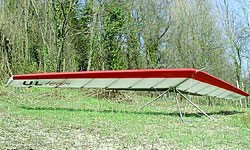
The Topulteam is basically like a Top Secret with the wing tips chopped off. Only one was built.
Wing area: 11.8 m²
Wing span: 10.8 m
Aspect ratio: 9.8
Minimum pilot weight: 50 kg
Maximum pilot weight: 80 kg
Nose angle: 127°
The Topulteam is basically like a Top Secret with the wing tips chopped off. Only one was built.
Wing area: 11.8 m²
Wing span: 10.8 m
Aspect ratio: 9.8
Minimum pilot weight: 50 kg
Maximum pilot weight: 80 kg
Nose angle: 127°
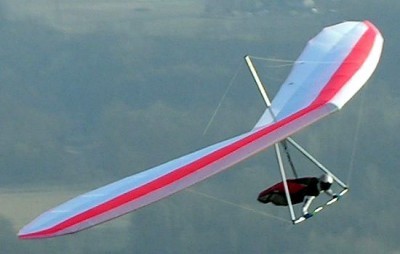
The Styl is a 2005 hang glider for advanced pilots. Xavier Verges designed the 2005 Laminar Orbiter (Intermediate wing) in collaboration with ULteam, as a derivative of the StyL. It is marketed by Icaro 2000 as the Orbiter, and by ULteam as the StyL+.
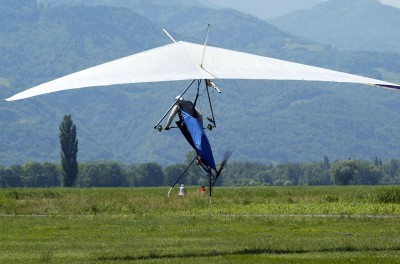
The Styl+ is also a 2005 hang glider for advanced pilots. The ULteam Styl+ has options and tuning which provide the Styl+ with a slight edge in performance over the Orbiter.
The Icaro 2000 Orbiter 2 for Intermediate pilots appeared in 2016.
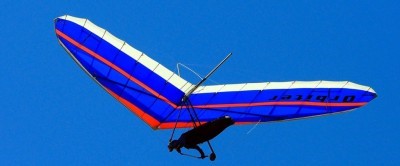

Styl+ 13
Wing area: 13.7 m²
Wing span: 9.7 m
Aspect ratio: 6.9
Hang glider weight: 27 kg
Minimum pilot weight: 60 kg
Maximum pilot weight: 85 kg
Packed length: 5 m
Packed length short: 4 m
Number of battens: 20
Nose angle: 128°
Styl+ 14
Wing area: 14.6 m²
Wing span: 10.2 m
Aspect ratio: 7.1
Hang glider weight: 30 kg
Minimum pilot weight: 80 kg
Maximum pilot weight: 95 kg
Packed length: 5.2 m
Packed length short: 4 m
Number of battens: 22
Nose angle: 128°
Styl+ 15
Wing area: 15.2 m²
Wing span: 10.4 m
Aspect ratio: 7.1
Hang glider weight: 31 kg
Minimum pilot weight: 85 kg
Maximum pilot weight: 110 kg
Packed length: 5.4 m
Packed length short: 4 m
Number of battens: 22
Nose angle: 126°
Styl+ 16
Laminar Orbiter 14
Wing area: 14.45 m²
Wing span: 10.35 m
Aspect ratio: 7.4
Hang glider weight: 30 kg
Minimum pilot weight: 70 kg
Maximum pilot weight: 100 kg
Minimum speed: 31 km/h
Maximum speed: 90 km/h
Packed length: 5.2 m
Packed length short: 4 m
Number of battens: 22
Nose angle: 128°
69, rue des Ebavous
38660 La Terrasse
France
Hang glider manufacturer circa 2005
ULPower Aero Engines is a Geluveld, Belgian engineering company which manufactures engines specifically designed for light aircraft/rotorcraft use.
For several years a Belgian group of enthusiastic private individuals financed and developed a new modern technology, light weight engine for aircraft application. After 3 years of development and testing of several prototypes the first UL260i 72 kW (97 hp) engine was installed in an aircraft (a Lambert Mission M106). First flight tests were performed in December 2005. After proving the engine reliability on the ground and in the air, the project was merged into an official company structure.
ULPower Aero Engines was officially formed in March 2006 to concentrate on the further design and manufacture of engines where lightweight, power and reliability are important to the client. Series production commenced by the end of that year.
Over the first years, the UL260i has equipped several popular light aircraft, e.g. Storch, Zenair Zodiac CH601, Escapade, Dynaero MCR01, Hannuman X-Air.
In 2009, ULPower launched some new engine types: the UL260iS 80 kW (107 hp), the UL260iSa 80 kW (107 hp) (with inverted oil system for aerobatics) and the UL350iS 93 kW (125 hp). For the French market specifically, two adapted versions are also available: the UL260iF 74 kW (100 hp) based on the UL260iS and the UL350iF 90 kW (120 hp) based on the UL350iS, specifically for gyrocopter application.
ULBI went out of business in 2014

The Kaan program, initiated in 2016 with an investment of $1.18 billion, was designed to replace Türkiye’s aging F-16 fleet. Developed with international collaboration from partners such as BAE Systems and Rolls-Royce, the program prioritizes local production and technology ownership. The aircraft incorporates advanced design features, including supercruise capability and reduced radar cross-section, alongside a suite of indigenous munitions such as the Gökdoğan and Bozdoğan air-to-air missiles. The program emphasizes network-enabled warfare capabilities and interoperability with UAVs and other air force assets.
The Kaan, developed by Turkish Aerospace Industries (TAI), is a fifth-generation twin-engine stealth fighter designed for air superiority and multirole operations. It is equipped with advanced AESA radar capable of detecting targets over 100 kilometers away, internal weapon bays to reduce radar visibility, and a payload capacity of more than 6,000 kilograms. Initial models are powered by General Electric F110 engines, with plans to integrate domestically developed engines in later versions. The Kaan is designed to operate with other platforms in the Turkish Air Force, including the F-35A.
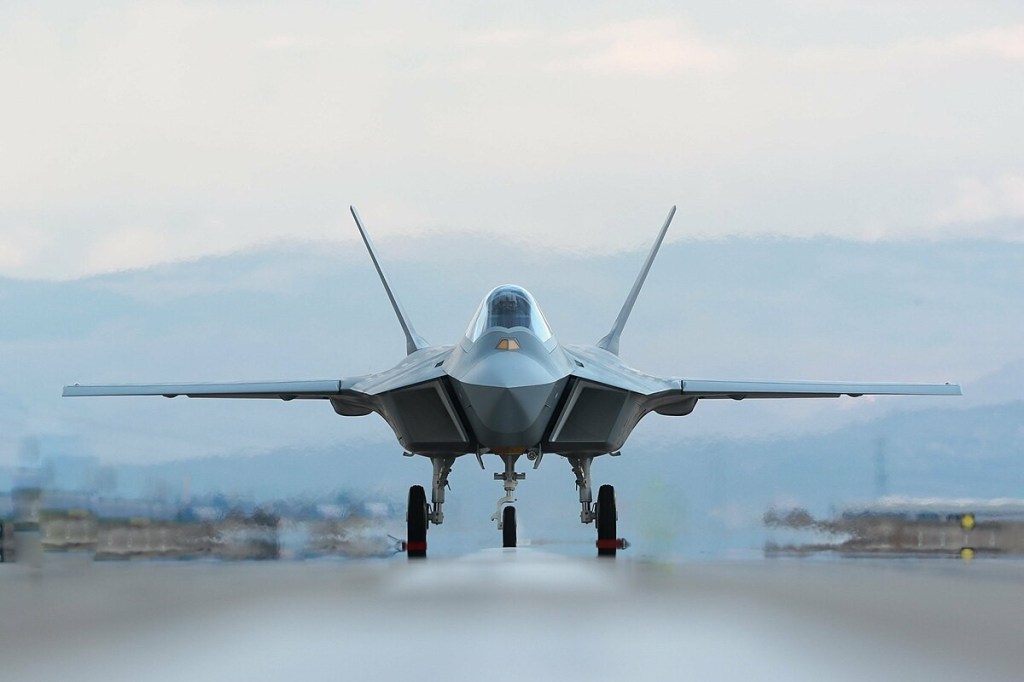
The TAI TF Kaan, a fifth-generation stealth fighter jet, achieved its maiden flight on February 21, 2024, with a second successful flight on May 6, 2024.
Engines: General Electric F110
Wingspan: 14 m
Length: 21 m
Height: 6 m
Speed: Mach 1.8
Operating altitude: 55,000 ft
Combat range: of approx 1,100 km
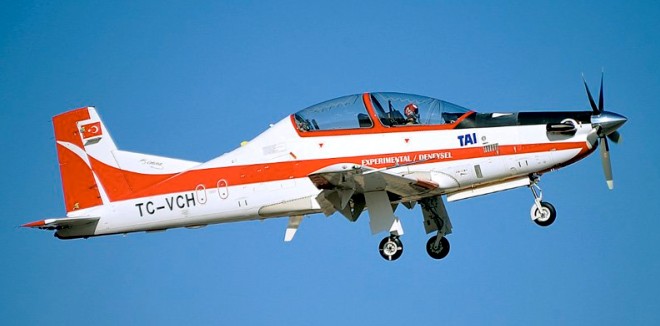
The TAI Hürkuş (Free Bird) is a tandem two-seat, low wing, single engine, turboprop aircraft developed by Turkish Aerospace Industries (TAI) as a new basic trainer and ground attack aircraft for the Turkish Armed Forces.
The aircraft is named after Vecihi Hürkuş, a Turkish aviation pioneer and the first Turkish airplane manufacturer.
The TAI Hürkuş Development Program started with an agreement signed between Turkish Undersecretariat for Defense Industries (Savunma Sanayii Müsteşarlığı (SSM)) and TAI in March 2006. Under the agreement the company was to design, manufacture and complete the civil certification the aircraft to European Aviation Safety Agency CS 23 standards.
HÜRKUŞ
Within the framework of the program; two aircraft configurations were to be developed.
HÜRKUŞ-A: Basic version which is to be certified with EASA according to CS-23 requirements.
HÜRKUŞ-B: Advanced version with integrated avionics (including HUD, MFDs, and Mission Computer).
By June 2012 the Hürkuş program had consumed one million man-hours with the work of 140 engineers. About a quarter of the Turkish engineers who have worked on Hürkuş are female, as well as two of the three project heads.
The Hürkuş was to be equipped for inverted, day and night flying as well as basic pilot training, instrument flying, navigation training, weapons and formation training. The aircraft has good visibility from both cockpits with a 50 degree down-view angle from the rear cockpit, cabin pressurization (nominal 4.16 psid), Martin-Baker Mk T-16 N 0/0 ejection seats, an on-board oxygen generation system (OBOGS), an Environmental Control System (Vapor Cycle Cooling), an anti-G system, high shock absorbing landing gear for training missions, and Hands On Throttle and Stick (HOTAS). Microtecnica of Turin, Italy was been selected to provide the aircraft’s environmental control system. The Hürkuş has been designed for a 35-year service life with a TAI designed wing airfoil.
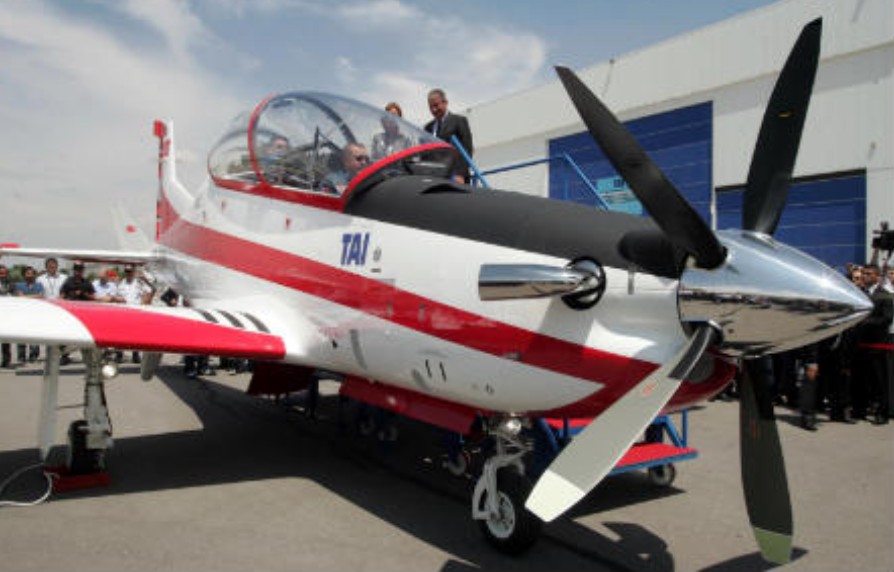
The Hürkuş development program has been subject to delays. In 2007 it was forecast that the first prototype would fly in late-2009 with first delivery, upon completion of the certification process, forecast for 2011. On 27 June 2012, the Hürkuş was officially rolled out at a ceremony held at TAI’s Kazan premises. The forecast date for the first flight was then delayed until later in 2012 and actually occurred on 29 August 2013 when the aircraft flew from the Ankara Akıncı Air Base on a 33-minute flight. The first flight was performed with landing gear down and to a height of 9500 ft.
Stability and control checks in different flight configurations have been conducted in the following flight tests. Landing gear up-down tests, cockpit pressurized tests and system functions pre-checks have been performed. The aircraft has reached 12.500 ft height and 158 knots speed currently.
At an SSIK’s meeting, held on Sept. 26, 2013, in order to meet the 15 new-generation trainer aircraft requirement of TurAF, contract negotiations regarding the serial production of HÜRKUŞ was started with TAI. The negotiations regarding HÜRKUŞ-B contract was on the signing.
Two prototypes were built. Entering service in 2015, 15 were built.
Hürkuş
Engine: 1 × Pratt & Whitney Canada PT6A-68T turboprop, 1,200 kW (1,600 shp)
Propellers: 5-bladed Hartzell Propeller HC-B5MA-3
Wingspan: 9.96 m (32 ft 8 in)
Length: 11.17 m (36 ft 8 in)
Height: 3.70 m (12 ft 2 in)
Maximum speed: 574 km/h (357 mph; 310 kn)
Cruising speed: 463 km/h (288 mph; 250 kn)
Stall speed: 143 km/h (89 mph; 77 kn)
Range: 1,478 km (918 mi; 798 nmi) at 15000 ft (4572 m)
Endurance: 4.25 hours at 15000 ft (4572 m)
Service ceiling: 10,577 m (34,701 ft)
Rate of climb: 22 m/s (4,300 ft/min)
Total Take-Off Distance (@ sea level): 1605 ft (489 m)
Total Landing Distance (@ sea level): 1945 ft (593 m)
g limits: +7/-3.5
Hardpoints: 4
Seats: 2
Born in 1888, Andrei N Tupolev was an early pupil, at the Moscow Technical High School, of the internationally famous aerodynamicist, Professor N E Zhukovski. His studies and early gliding experiments were, however, interrupted in 1911 when he was arrested for revolutionary activities. During part of the first World War, Tupolev worked in the Duks aircraft factory in Moscow, then the largest in Russia.
After the Bolshevik Revolution, Tupolev became one of Zhukovski’s leading assistants in setting up the Central Aero and Hydro dynamics Institute (TsAGI). This brought together pre war Russian research establishments with other, newly created bodies, and in 1920 Tupolev became head of its design department (AGO) and president of commission to design and build all-metal aircraft 1922.
Initially followed Junkers formula, using corrugated metal skins; first to appear were ANT-1 and ANT-2 (A. N. Tupolev) cantilever monoplanes. Became head of AGOS department of the Moscow TsAGI in 1922; during 1920- 1936 most designs bore ANT designations although some emanated from his design team leaders, chief deputy A. A. Archangelskii, W. M. Petlyakov and P. O Sukhoi (e.g. Sukhoi designed ANT-25 and 37).
Tupolev’s first major design was ANT-4 (TB-1) heavy bomber of 1925, forerunner of several very large machines including ANT-6 (TB-3) bomber; ANT-9 commercial passenger transport and huge ANT-20 Maxim Gorkii propaganda aircraft of 1934. Also designed ANT-40 (SB-2) twin-engined medium bomber.
The enormous creativity of the Tu¬polev group stemmed in part from this designer’s ability to train and direct others, such as Sukhoi and Petlyakov. Petlyakov, for example, was responsible for the PE 8, a four en¬gine bomber that was larger and more powerful than the B 17.
In 1936 Tupolev was arrested during Stalin’s purges and condemned to death, but sentence commuted and after some five years’ imprisonment was released and restored to favour (ostensibly in recognition of Tu-2 medium bomber, designed while in prison) and given his own design bureau. After Second World War continued to place emphasis on large aircraft; Tu-4 copy of Boeing B-29 Superfortress helped win him a Stalin Prize in 1948.
Main early post-war products included Tu-14 twin-jet naval medium bomber; Tu-16 intermediate-range twinjet bomber (first flown April 1952; also produced in China as the Xi’an H-6); and a quartet of four-turboprop swept-wing giants: the Tu-95 long-range strategic bomber (first flown November 1952 and built up to 1992), Tu-142 naval variant for long-range antisubmarine warfare and communications relay (first flown June 1968), Tu-114 200-passenger transport based on Tu-95 (first flown November 1957) and Tu-126 AWACS aircraft (first flown 1962).
Later military types included the twinjet Tu-22, the first Soviet supersonic bomber that first flew in 1959, and the Tu-128 very large all-weather interceptor (first flown March 1961), the variable-geometry wing Tu-22M Backfire intermediate- range Mach 1.8 bomber and missile launcher (first flown August 1969 and 514 built during 1971-90) and the variable-geometry wing Tu-160 Blackjack heavy missile bomber with a speed of Mach 2.05 and range of over 12,215km without in-flight refueling (first flown December 1981 and entered Soviet service from 1987), while projects include the Tu-204P maritime patrol derivative of the Tu-204 airliner, Tu-2000 hypersonic bomber, and a subsonic strealth bomber.
Early turbojet and turbofan powered transport aircraft included twin-jet Tu-104 (based on Tu-16 and first flown June 1955); Tu-124 (first flown March 1960); Tu-134 (first flown July 1963) and tri-jet Tu-154 (first flown October 1968). Tu-144 became, in December 1968, the first supersonic airliner in the world to fly. It exceeded Mach 2 for the first time in May 1970 and was the first of its type to enter regular service when, in December 1975, it began freighting for Aeroflot prior to initial passenger services in 1977. However, Tu-144 was not a success and services were terminated in June 1978; in November 1996 a converted Tu-144D flew again as the Tu-144LL, used thereafter for an international High-Speed Civil Transport research program to assist in the development of a nextgeneration supersonic transport.
Most recent Tupolev commercial transports, programs and projects include the convertible cargo/passenger Tu-130 (to fly on standard and liquid natural gas in the 21st century), Tu-136 projected light passenger/cargo transport with twin Pratt & Whitney turboprop engines, Tu- 155/Tu-156 conversions of Tu-154 to use cryogenic fuel engines (Tu-155 for research flew 1988), Tu-204 medium-range airliner for typically 214 passengers (first flown January 1989) and its projected Tu-206 cryogenic fuel derivative, Tu-214 and Tu-224 airliners based on Tu-204 but featuring increased take-off weights and longer range (first flight of Tu-214 March 1996), Tu-230 projected light/medium freighter, 166-passenger Tu-234 airliner as a short-length variant of Tu-204, Tu-244 projected supersonic airliner, Tu-304 and Tu-306 (cryogenic fuel variant) projected long-range airliners for up to 392 passengers, projected Tu-324 regional and business transport, Tu-330 and liquid-gas Tu-338 freighters, Tu- 334 medium-range airliner for typically 102 passengers (first flown February 1999) and its Tu-336 cryogenic fuel derivative, Tu-404 projected giant 850-seat airliner, and Tu-414 projected 70-passenger regional jet.
Tupolev general-aviation projects include Tu-34 pressurized five/seven-seat STOL transport with twin turboprop engines and pusher propellers, Tu-54 single-seat agricultural monoplane, Tu-400 eight/ten-seat business jet with regional airliner potential, and Tu 4X4 four/seven seat business jet as smallest aircraft in the Tu- 324/400/414 range.
High Tech Composites / HTC
High Tech Composites (HTC) in Oxnard, California, USA, owned by Rich Trickle, produced composite structures for other aircraft manufactures before Rich designed the two-seat KIS TR-1 (KIS stands for “Keep It Simple”). Constructed with the assistance of Vance Jaqua and Martin Hollmann, the aircraft was first presented at the EAA event at Oskosh, Wisconsin, in July 1991.
Subsequently HTC was renamed Tri-R Technologies and the composite kit plane was marketed to the homebuilt constructor.
1995-7: 1114 E. 5th St., Oxnard, CA 93030, USA.
In 2001 the Pulsar Aircraft Company (formed in 1999) acquired the design and production rights of Tri-R, while the latter still produced the composite parts. The two-seat KIS TR-1 was re-designated Pulsar 150, while the KIS Tr-4 Cruiser became the Pulsar Super Cruiser. In 2005 all aircraft production was transferred to Ilopango, El Salvador.
Pulsar Aircraft Corp improved the design and offered an new, larger version called the Super Pulsar 100. They also keep the original legacy Pulsar design alive under the name of Pulsar XP.
Markets kits to build the KIS (Keep It Simple) side-by-side two-seat composites monoplane (first flown 1991), plus the four-seat TR-4 Cruiser (first flown 1994).
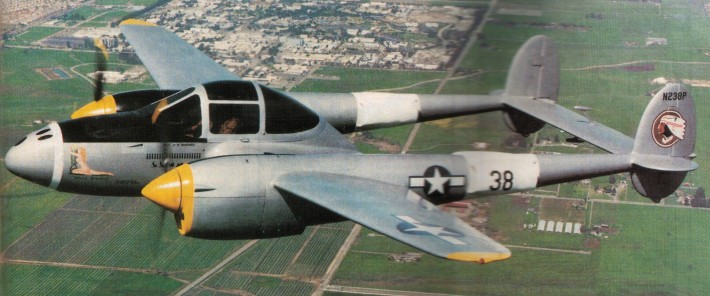
Walter Treadwell decided to design and build his own P-38 as a 55% scale replica. Treadwells is a P-38J.
Cooling the engines are four custon built copper radiators installed in the tail booms, made to form fit within the contours. Designed by Treadwell, the cores were fabricated by a Livermore radiator shop, and a friend, Norm Daniel braied the copper. Small, bullet shaped intakes provide airflow, where the supercharger air intake was on the original.
Contra-rotating was not feasible and each engine uses a 2.37-1 cogbelt PSRU reduction gearbox designed by Reductions Inc, and turns a 3 blade 66 in Warp Drive ground adjustable prop. Exhaust is through a single stack that exits below each engine nacelle.
Each part of the undercarriage was independently machined from solid stock. That included oleos, linkages and wheel forks, attachment fittings and retraction mechanism.
Although the replica is mostly composite construction, plywood was used to establish the cross sections, then stripped with foam that was then sanded into shape. Over this, fibreglass was laid, and when finished, the plywood formers removed, then replaced with bulkheads of honeycomb/glass that were glassed into the shell.
The twin booms are built the same way, but they are connected to wood stringers, then formed with foam, then wrapped with fibreglass.
The main spar is a box type built of Douglas fir in three sections. A centre section that connects the fuselage pod to each boom and the outer panels. All are covered, cap-stripped with carbon fibre, wrapped with fibreglass, then vacuum bagged. Ribs are traced from a CAD program onto full size templates, then each is individually cut from Bluefoam using hot wire. Each is then finished with ply cap strips. The aerofoil begins as an NACA 23015 at the root, then tapers into an NACA with washout at the tip of the entire wing, then covered with 1/16 inch plywood over which fibreglass cavering is applied. The control surfaces are statically balanced.
Primary controls are operated through a complex system of cables, pushrods and fittings that run from the fuselage and wings through the booms to move the ailerons, flaps, elevators, rudders and trimtabs. All this requires 34 sheaves out to the booms to accomplish this. The ailerons are controlled buy a series of bell cranks activated by cables and pushrods, and the same for the elevator. The rudders are cable controlled.
The landing gear is hydraulically operated.
The result is an airplane stressed to 9.9G. The landing gear has been drop tested for a 2000 lb landing weight.
The canopy frame is identical to the original P-38, complete with a flat forward panel, while the sides are molded. The canopy slides fore and aft to facilitate entry into the cockpit for two, and the top panel swings up and rearward.
Unlike the real P-38, Treadwell’s has a stick (topped off with an F-4 Phantom grip) to simplify linkages.
A major problem has been the engine/propeller combination with only 70% of the engine output being achived. Treadwell made the decision to ground the P-38 and replace the Suzuki engines with a pair of Walter Loms.
Engines: 2 x Suzuki 1.3 lt 4-cyl, 100 hp at 6400 rpm
Wingspan: 30.6 ft
Length: 21.9 ft
Wing area: 110 sq.ft
Empty weight: 1500 lb
Gross weight: 2000 lb
Cruise: 150 mph TAS
Top speed: 200 mph TAS
Service ceiling: 12,000 ft
Range: 525 sm
 All Aero