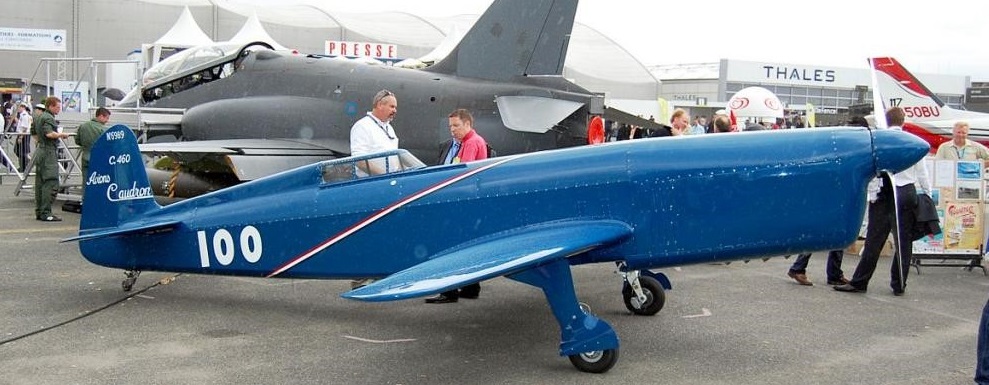
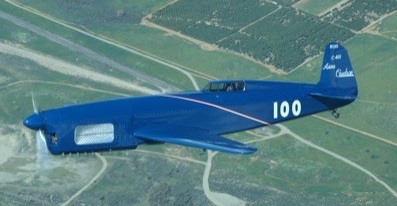
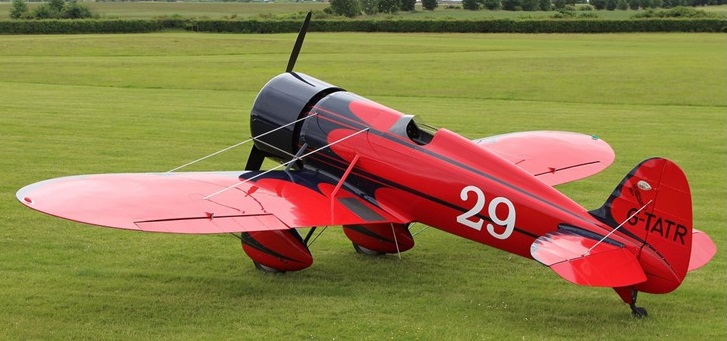
This Caudron C.460 replica was constructed by the crew of AeroCraftsman, for Tom Wathen who also has flying replicas of several other golden age racers.
The airplane measures 23 feet from spinner to tail. Wing span is about 22 feet.
Mark Lightsey, who piloted the Caudron from California to Wisconsin and led its construction at AeroCraftsman, Inc., a restoration and replica construction shop at Flabob Airport.
The challenge began with creating plans for the airplane because it was essentially a one-off, and no plans existed for it. They were able to construct this one from some drawings found in the aviation museum in Lebouget, France.
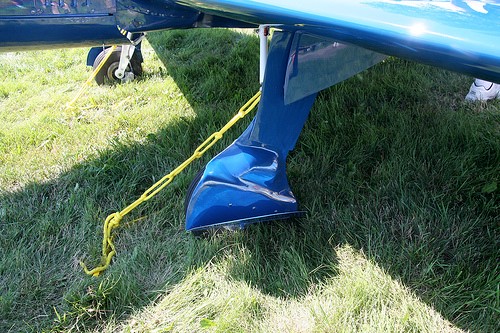
The airplane is entirely made of wood except for the landing gear. The landing gear is retractable and hydraulically actuated. The wheel pants have a sort of lip on them, so it doesn’t look like they could fit into the wheel wells.
The landing gear not only folds up into the belly, it twists to do so.
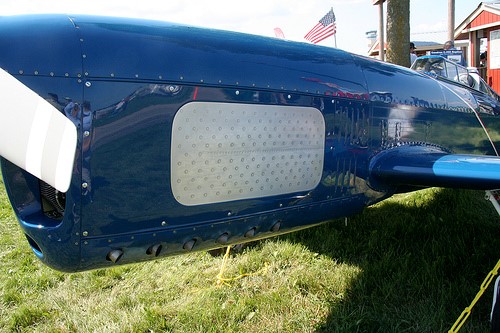
The silver patch on the left side of the nose is a skin-type of oil cooler. Because it was flush in the skin, there is no drag from the oil cooler.
The original airplane sported a 370-hp Renault engine that was capable of reaching speeds up to 272 mph. The original airplane sported a 370-hp Renault engine that was capable of reaching speeds up to 272 mph. The biggest engine that was available was a Czech 260-hp LOM.
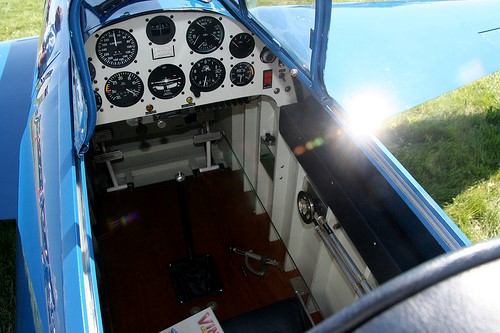
The cockpit is tiny — it’s too narrow to even wear a headset. It was designed strictly for racing. The door opens and the canopy slides forward so there is room to get in, but when you close everything in it is claustrophobic.
The Caudron was successfully test flown for the first time on January 28, 2009. After a brief but successful test program, the airplane was disassembled and shipped to France. Upon arrival it was reassembled with some reinforcing modifications recommended by the French DGAC. After receiving the permit to fly, it was test flown several times before making it’s public debut at the 100th anniversary of the Paris Airshow at Le Bourget.
Typical cruising speeds are about 205-210 mph at 25 inches of manifold pressure and 2,300 rpm. The fastest it’s been flown was 280 mph indicated at 6,000 feet MSL.
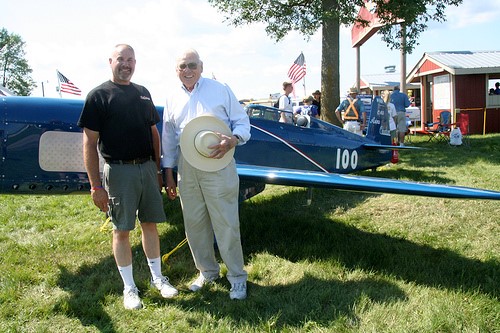
Tom Wathen’s full-scale replica Avions Caudron C.460 on display in front of Vintage Aircraft headquarters at the 2010 AirVenture. It had flown all the way from the West Coast to Oshkosh.
Pilot Mark Lightsey and owner Tom Wathen at 2010 Oshkosh.
The trip from California to Oshkosh took about three days, 11 hours of flying, nine fuel stops, lots of weather, lots of wind, a broken exhaust stack, but no major trouble. “It burns 100LL, about 10 gallons an hour in cruise. It carries a total of 43 gallons, of which 40 is usable.
The longest leg of the flight was two hours and 40 minutes, because the airplane is so fatiguing to fly. It flies very unstable, very sensitive and light on the controls. It’s also very blind and has a high approach to landing speed.
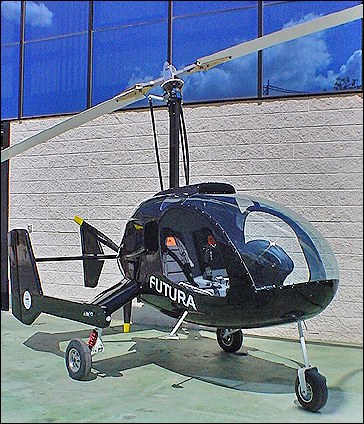
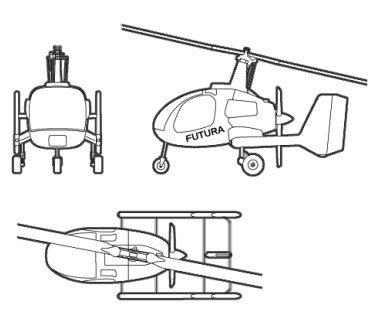
Design began in 1998 with two prototypes flown in 2002 and AeroCopter (Spain) showed the first production Futura two-seat ultralight autogyro at the Aero 2003 exhibition at Friedrichshafen, Germany, in April 2003. It was due to fly immediately after this debut. Of twin-tailboom configuration with enclosed cabin, the Futura has a frame built in chrome-molibdene tube, specifically designed to meet or exceed all certification ultralight requirements, and fibreglass with epoxy resins canopy and glazing for low weight and the strongest combination. The rotorblades were manufactured by Sport Copter in the USA, with pre rotation by Bowden cable. Normally powered by one 74.6kW fuel-injected BMW R 1100 S flat-four driving a Woodcomp Kremen three-blade, flight-adjustable (electric), wooden pusher propeller via a reduction drive including a centrifugal clutch, engine options include a ROTAX 912 100 hp engine or a ROTAX 914 115 hp engine, both with a specific reduction drive, fuel injection and reliability. The tailbooms and main landing gear are mounted on anhedral aerofoil-shape fairings. Twin rudders, plus an all-moving central fin, actuated by Bowden cables provide control. Equipped with a fixed tricycle type undercarriage, the main wheels are 400×100 and nose wheel 4.00-6. Hydraulic disc brakes are fitted on the mainwheels and the steerable nosewheel is directly linked to rudder. No equipment is extra or optional as everything is included as standard. Price 2003-9: 55000 EURO
AeroCopter Futura Engine: BMW R 1100 S, 74.6kW Propeller: Woodcomp Kremen 3-blade, flight-adjustable (electric), wooden pusher Rotor diameter: 8.5 m Width overall: 2.1 m Length overall: 4.0 m Height overall: 3.1 m MTOW: 450kg / 992 lb Empty weight: 270 kg / 595 lb VNE: 103 kt / 118 mph / 190 kmh Normal cruise speed: 86 kt / 99 mph / 160 kmh Endurance: 4 hr Seats: 2 Take-off distance (50ft obstacle): 330 ft / 100 m Landing distance (50ft obstacle): 20 ft / 5 m
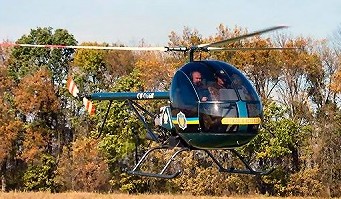
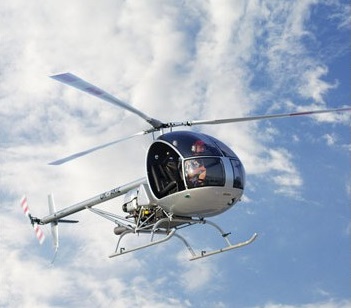
The Ukraine State Border Committee sought a light helicopter for border patrol from a Ukrainian-based company and selected Aerokopter. Founded on 14 December 1999 by I.V.Polituchy, A.N.Zapishny and A.I.Polituchy, the Politava-based Aerokopter design team began with Aviampex of Kiev to co-develop and manufacture the AK1-3. This coopertion ended within months and as of 3 May 2000 Aerokopter worked independently. One month later the chief designer, Zapishniy Alexander Nikolayevich was killed in a motor hang glider accident and the team carried on under Slava Sherbak. Much of the experimental research was done in co-operation with the Kharkov National Aeronautical University. The whole helicopter was designed using CAD.
Two-stage development of ZA-6: initially involving one of the latter (registered GL-0478, shown at Manufacturing & Security Exhibition, Kiev, September 2002), designated AK-1-5 (five-blade main rotor). At the same event, the uncompleted AK-1-3 prototype was shown with the definitive three blade rotor, starboard side tail rotor and twin vertical fins mounted on horizontal tail surfaces.
The first AK1-5 Sanka helicopter was flown on October 12, 2001. This helicopter was used for many ground and factory tests so that constructional elements could be improved and engineering processes for units and parts could be worked through. Production of this model was stopped. This had a five blade rotor and was tested with different Subaru engines including the 3.0 lt flat six, the 2.0 lt turbo and 2.5 lt had normally aspirated power plants.
The second AK1-3 was flown in July 2003. Aerokopter AK1-3 is a light helicopter, which can be used for a range of practical purposes. The design makes it comply with the FAR 27 Regulations, and with the requirements of JAR 27 and international noise abatement requirements.
The AK1-3 helicopter conforms to international airworthiness regulations (FAR, Pt.27) for normal category rotorcraft and international noise abatement regulations. The AK1-3 is certified under the State Administration of Ukraine for Aviation Safety Oversight and bears the Type Certificate Number TII 0008.
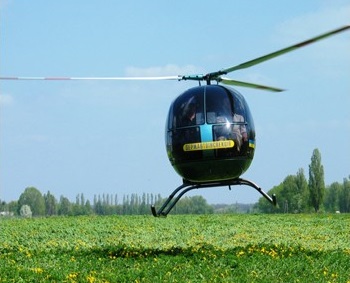
A conventional, two seat pod-and-boom helicopter, with five-blade main rotor and two-blade tail rotor mounted on the left side. The structure is of metal and composites and all flying flying controls are manual. The landing gear is of Twin skids.
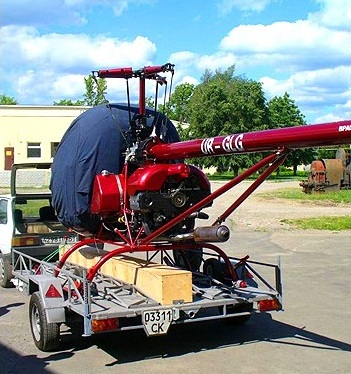
The AK1-3 is designed with a skid landing gear, a tubular chassis, composite cabin, and empty weighs 390kg, making it possible to transport it on a small car trailer. The two seat cabin has a shoulder height width of 1200mm (Elbow height – 1353mm). Instrumentation is for daytime VFR only.
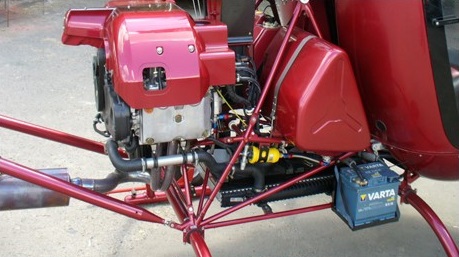
The three rotor blades are made of composite material with non-linear construction. Powered by a Subaru EJ-25, with belt drive reduction, the minimum fuel is 95 octane. The composite floor with its lower triangulated aluminium sub-frame are the main structural elements. The floor is made of a 16mm plywood with machined out pockets filled with foam inserts, with a skin of composites on both sides. The lower Duralumin frame is riveted together CNC machined elements which are atached to the rest of the airframe.
The seat frames are made from titanium tubing, have a riveted aluminium sheet base, with leather covered cushion. Each seat has a four point harness. The upper body of the cabin is made of coposite material with four separate tinted polycarbonate windscreens bonded into place.
The lower composite belly-panel is screwed in to allow access to control linkages, wiring loom, and “Red-Top” racing battery. The doors can be removed, limiting the Vne to 150 kph / 80 kt at sea level. The single electronic ignition system is totally waterproof.
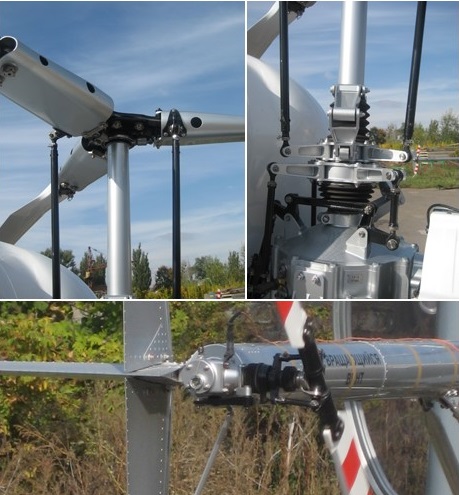
In the AK1-3 with the rotors turning at 595 rpm (105.5% – top of the green band), the engine turns at 5600 rpm so full power is available for takeoff and landing. Bottom of green ban equals 5000 rpm and sea level flight cruise with governor set to middle of green (100%) equates to 5300 rpm. The engine redline is 6200 rpm. Engine power transmission uses primary engine speed reduction via pulleys and V-belts, driving a secondary main rotor gearbox on one side and shaft drive to the tail rotor gearbox on the other. To disengage the rotors for startup, the six untensioned V-belts are used as a clutch. The rotor head uses a laminated torsion bar system with sixteen Y-shaped steel plates. The three main blades operate from 465-600 rpm.
The composite main rotor blades have a non-linear -9.5 degree twist and a variable profile NACA 63012 / 63015. Each finished blade weighs approximately 7.5 kg. The tail rotor blades are also made of composite material and Rohacell foam with a leading edge wear strip. Both the main and tail rotor blades have no time life and are only replaced “on condition”.
The collective and cyclic control inputs are transmitted to the rotor system via duralumin tube control rods and levers.
The designed MAUW is 650 kg.
The tail boom is made up of four rolled aluminium sheet sections.
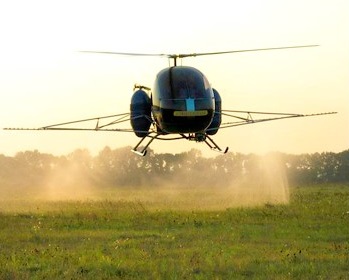
The AK1-3CX helicopter is a further development of the basic model and is designed for aerial spraying of crops with chemicals using 1-40 liters per hectare. The helicopter’s general dimensions and construction are similar to those of the basic model. The helicopter is equipped with a unit of quick-detachable equipment for spraying liquid chemicals, including the ULV technique. The unit of equipment consists of two tanks (140 liters each), which are mounted on either side of the cockpit, spray booms with struts, a rotary pump, connection hoses, and a control unit. The whole unit weighs 34kg.
ZA-6 Main rotor diameter: 6.0m Tail rotor diameter: 1.24m Max take-off weight: 750kg Empty weight: 400kg Max level speed: 190km/h Max cruising speed: 140km/h Econ cruising speed: 90km/h Service ceiling: 2100m Range with max fuel: 500km
AK1-3 Engine: Subaru EJ22, 119kW Main rotor diameter: 6.84m Length with rotor: 8.09m Height: 2.22m Max take-off weight: 650kg Empty weight: 380kg Max speed: 186km/h Cruising speed SL: 160km/h Static ceiling OGE: 1800m Dynamic ceiling: 3000m Normal range: 450km Climb Rate: 2000 ft/min / 10 m/s Fuel capacity: 80 lt Price 2009: US$150000
Aerokopter was established on 14 December 1999 by I.V. Polituchy, A.N. Zapishny, and A.I. Polituchy, associated with Aviaimpex, to develop light rotorcraft. After conducting marketing research, it was decided to create a light two-seat helicopter with a piston engine and an airborne weight of 650-700kg. On 3 May 2000, Aerokopter became the separate Aviaimpex design bureau, also active in Ukraine.
Engine: Rotax 912S Wing span: 10m Wing chord: 1.23m Wing area: 12.23 sq.m Length: 6.3m Cabin height: 1.13m Cabin width: 1.16m Landing gear: nose Landing gear width: 2m Seat: 2 side by side Fuel capacity: 2 x 12 USG Max take off weight: 640 kg Empty weight: 290 kg Useful load: 350 kg Load factor: +6/-3 G Vne: 156 mph / 251 kph Top speed: 124 mph / 200 kph Cruise speed: 118 mph / 190 kph Stall (flaps): 35 mph / 56 kph Stall (no flaps): 40 mph / 64 kph ROC: 1102 fpm / 5.6 m/s Range: 1050 miles / 650 km Endurance: 5 hr 30 min Service ceiling: 12,000+ ft / 3658+ m Take off roll: 115 ft / 35 m Landing roll: 197 ft / 60 m
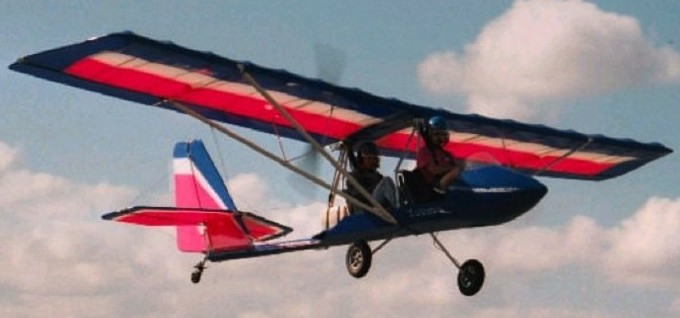
The Toucan is Aero Adventure’s two seat Ultralight trainer. With tandem seating for two, the Toucan is a legal Ultralight trainer that is also a simple light two place aircraft. The Toucan kit starts at $15,995 (2009).
Aero Adventure Toucan Engine: Rotax 582, 65 hp Cruise: 62 mph Range: 170 sm Stall: 28 mph ROC: 800 fpm Take-off dist: 150 ft Landing dist: 150 ft Fuel cap: 10 USG Weight empty: 460 lb Gross: 1050 lb Length: 22.6 ft Wing span: 29.8 ft Wing area: 158 sq.ft Cockpit width: 30 in Seats: 2 tandem Landing gear: tail wheel


 All Aero