Vashon Ranger

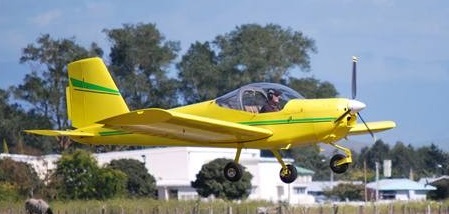
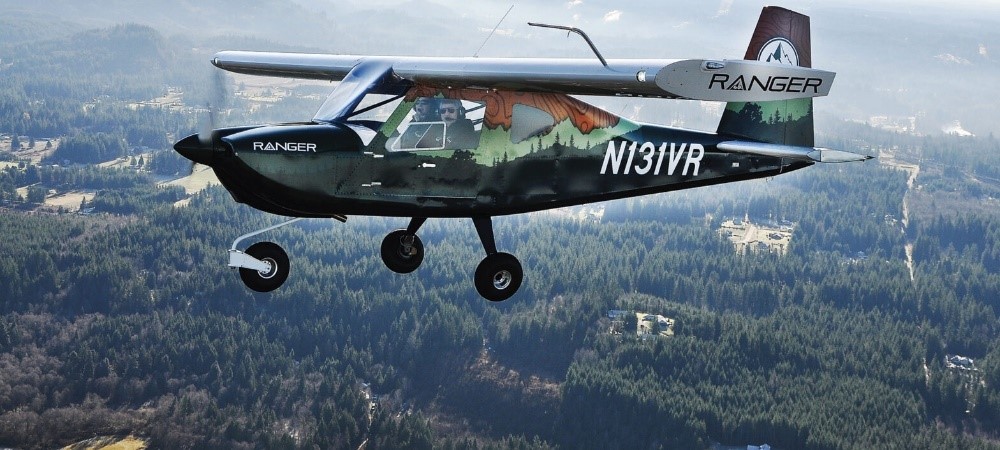
Vashon Aircraft’s first airplane, the Ranger, is a high-wing LSA category aircraft. Ken Krueger, who spent many years designing airplanes for Van’s Aircraft, is Vashon’s design engineer.

At the Woodinville factory, co-located with Dynon in an industrial park, Vashon produces structural components and puts fuselages and wings together. The parts are then transported to a hangar at the Paine Field Airport (KPAE) in Everett, where final assembly takes place down the street from Boeing’s massive facility.
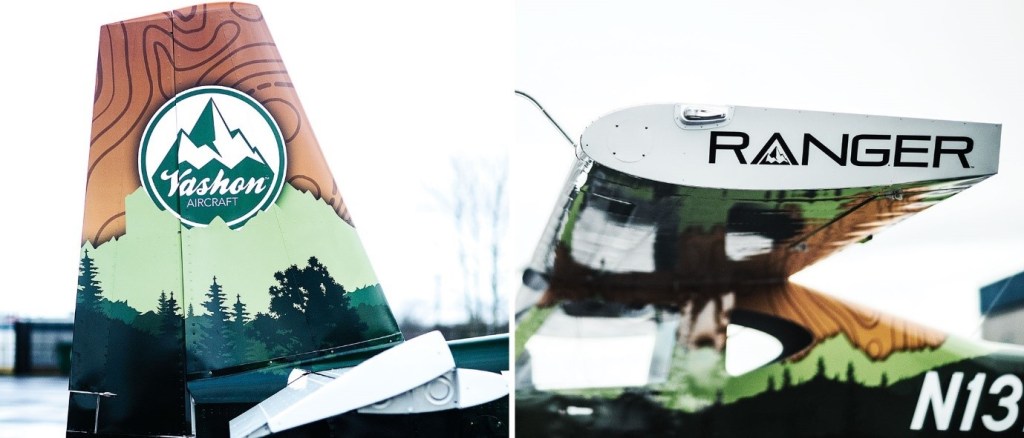
Vashon turned to a local vinyl-wrap supplier, Wicked Wraps. In addition to being lighter, the wrap allows for cool designs to be applied to the fuselage that would be cost prohibitive if done in paint.

The Ranger has a beefy landing gear, strong enough for the rigors of the training environment, with 6.00-6-size wheels and tires.
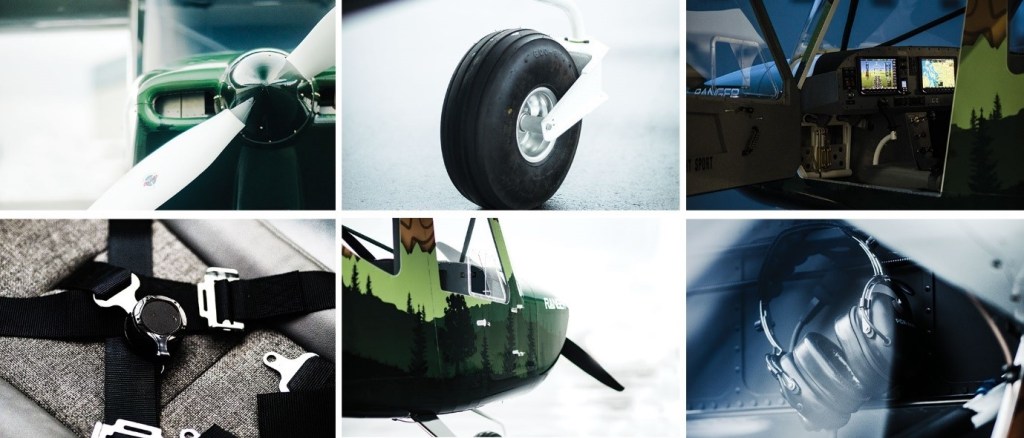
With a base price tag just below $100,000 (2021), the Continental O-200 powered Ranger R7 LSA features glass-panel technology, optional autopilot and second SkyView screen.

Climbing into the Ranger is slightly challenging. The right leg has to find its way to the other side of the stick, which curves its way from the floor to just above the seat. The rudders adjust, but must be locked with a pin. It would be impossible to adjust once in the seat. Vashon chose a five-point seat-belt system.

The width of the cockpit is nearly 47 inches, about 7 inches wider than the Cessna 172 Skyhawk’s. There is plenty of elbow and shoulder room, and headroom to spare. Additionally, there is massive space behind the seats, which can hold up to 100 pounds as long as you stay below the total weight limit and within the center-of-gravity envelope.

The seats fold nearly flat, providing plenty of space. The oversize windows provide excellent visibility, with a large section on each side that opens up for fresh air or a camera lens. There is no speed limit for keeping the windows open.

Taxiing the Ranger is easy because the castering nosewheel allows for tight turns. Pushrods connect the ailerons and elevator to the stick, and cables control the rudder.

The stick has an electric trim button on top and a trigger on the back for the push-to-talk. Two additional buttons on the grip help switch the standby frequency to the active position on the separate comm unit and ident the ADS-B Out-capable transponder, both of which are Dynon products.
SkyView includes full engine instrumentation, including CHT and EGT gauges for each cylinder, fuel flow, remaining fuel in time and distance, carburetor temperature and more. The system will even warn you if there is potential for carb ice based on the current temperature and dew-point spread. Angle of attack is included along with the standard flight parameters on the PFD.

Flaps are electrically actuated with a button — one push for 20 degrees, then another for 40 degrees. The fuel tanks are contained in removable sections in the wings for easy, quick replacements.

Despite being a clean-sheet design from a brand-new company, the Ranger comes with a three-year warranty.

Vashon is creating its own supply chain by producing the majority of the parts in house, the exception of which are parts such as brake pads, engines and propellers.

The fully loaded Ranger I, with autopilot and two SkyView screens, rolls out of the factory for $114,500. The base model was $99,500 in 2021.

Vashon Ranger R7
Engine: Continental O-200-D, 100 hp
Engine TBO: 2000 hrs
Prop: Catto fixed pitch 2-blade
Wingspan: 29 ft 6 in
Wing area: 135.6 sq.ft
Length: 21 ft 9 in
Height: 8 ft 4 in
MTOW: 1320 lb
Empty weight: 875 lb
Payload: 279.4 lb
Useful load: 445 lb
Max usable fuel: 27.5 USG / 144 lb
Wing loading: 9.7 lb/sq.ft
Power loading: 13.2 lb/hp
Max operating altitude: 12,000 ft
Max ROC: 1035 fpm
Max speed: 120 kt
High cruise: 117 kt
Max range: 430 nm
Stall flaps up: 50 kt
Stall full flap: 46 kt
TO to 50 ft: 1150 ft
Ldg from 50 ft: 1060 ft
Interior width: 46.65 in
Seats: 2
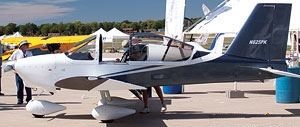
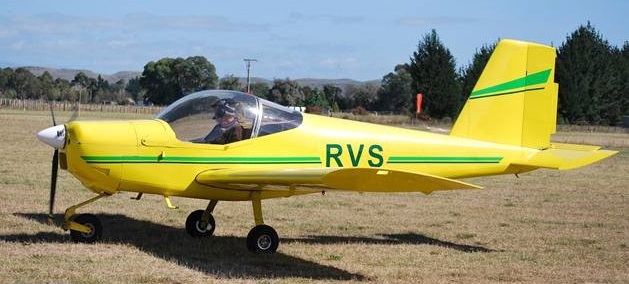
Vashon Aircraft

Vashon Aircraft is a company named after a small island in the Puget Sound region of Washington state, off the coast of Seattle’s metropolis. The company’s first airplane is the Ranger,

At the Woodinville factory, co-located with Dynon in an industrial park, Vashon produces structural components and puts fuselages and wings together. The parts are then transported to a hangar at the Paine Field Airport (KPAE) in Everett, where final assembly takes place down the street from Boeing’s massive facility.

Vans RV-12

The RV-12 is a two-seat all-metal side-by-side airplane with a large cabin that seats the occupants ahead of the wing spar for maximum room and superb visibility. The RV-12 meets the certification standards of the Light Sport Aircraft category.

The wings are quickly and easily removable. Two people can have the wings off an RV-12 in less than five minutes, making the airplane easy to transport on a trailer and keep off-airport. Pull a pair of pins behind the seats and the wings come off in a few seconds. All control and wiring connections are automatic and an ignition interlock prevents the engine from starting if the wings are not properly installed.

It is powered by a Rotax 912ULS 100 hp engine, equipped with a Sensenich wood/composite propeller. The empty weight allows a useful load of two 210 lb people, 20 gallons of fuel and 50 lbs of baggage.

Vans Aircraft produced the RV-12 as an E-LSA kit and later as an S-LSA. The first 12 Signature Edition versions sold well with 60 more buyers lined up at US$115,000.

Gallery

Engine: Rotax 912ULS
Propeller: Sensenich f/p
Span: 26’ 9”
Length: 19’ 11”
Height: 8′ 4″
Wing Area: 127 sq. ft.
Empty Weight: 740 lbs
Gross Weight: 1320 lbs
Wing Loading: 10.4 lbs/sq. ft.
Power Loading: 13.2 lbs/hp
Fuel Capacity: 20 US gallons
Cabin Width: 43”
Baggage: 50 lbs
Top Speed: 135 mph
Cruise 7500’ @ 5500 rpm: 131 mph
Cruise 7500’ @ 5000 rpm: 114 mph
Stall Speed: 47 mph
Takeoff Distance: 600 ft.
Landing Distance: 420 ft.
Rate of Climb: 906 fpm
Ceiling: 13,000 ft.
Range 7500’ @ 5500 rpm: 555 miles
Range 7500’ @ 5000 rpm: 620 miles

Vans RV-10

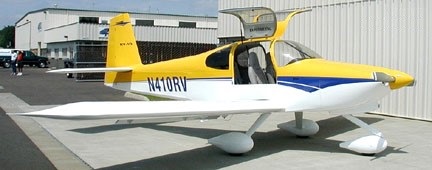
The RV-10 will carry four FAA standard people, full fuel and sixty pounds of baggage. The cabin accommodates four full-sized adults. Both front and back seats will hold people 6’4″ tall and provide them with truly comfortable leg and headroom. Composite gull-wing doors let occupants board from both sides.

The RV-10 is designed to fly well on various versions of the six-cylinder Lycoming O-540 engine, developing between 235 and 260 hp. The prototype was powered by a fuel injected 260 hp Lycoming IO-540. The RV-10 will cruise just under 200 mph.

Cruise speeds at 50-55% power are 175 mph. Even at gross weight, the RV-10 can operate out of very short runways and climb well at high density altitudes. The generous wing area, big slotted flaps and steel rod landing gear allow the RV-10 to land at virtually any small airport — grass, gravel or pavement. The composite cabin top provides roll-over protection. The cabin interior is designed around Oregon Aero seats and seat cushions, (provided in the kit) which provide the best available impact mitigation and comfort.

The baggage compartment will accept 100 lbs of “stuff” loaded through the baggage door on the left side. If fewer than four people are traveling, the rear seat backs may be removed in a couple of minutes for extra baggage space.

Van’s RV-10 N410RV

The RV-10 was first flow in May 2003, piloted by VanGrunsven.

RV-10
Engine: 210 hp
Span: 31 ft 9in.
Length: 24 ft 5 in.
Height: 8 ft 8 in
Wing Area: 148 sq ft
Wing Loading: 18.6 lb/sq ft
Power Loading: 13.5 – 10.4 lb/hp
Engine: 210-260 hp
Propeller: Hartzell C/S
Fuel Capacity: 60 US gal
Baggage: 100 lbs
Gross Weight: 2700 lbs
Empty Weight: 1,520 lbs
Top Speed: 197 mph
Cruise 75% @ 8000 ft: 186 mph
Cruise 55% @ 8000 ft: 166 mph
Stall Speed: 63 mph
Takeoff Distance: 686 ft
Landing Distance: 650 ft
Rate of Climb: 1150 fpm
Range 75% @ 8000 ft: 951 sm
Range 55% @ 8000 ft: 1,153 sm

RV-10
Engine: 260 hp
Span: 31 ft 9in.
Length: 24 ft 5 in.
Height: 8 ft 8 in
Wing Area: 148 sq ft
Wing Loading: 18.6 lb/sq ft
Power Loading: 13.5 – 10.4 lb/hp
Engine: 210-260 hp
Propeller: Hartzell C/S
Fuel Capacity: 60 US gal
Baggage: 100 lbs
Gross Weight: 2700 lbs
Empty Weight: 1,600 lbs
Top Speed: 208 mph
Cruise 75% @ 8000 ft: 197 mph
Cruise 55% @ 8000 ft: 176 mph
Stall Speed: 63 mph
Takeoff Distance: 500 ft
Landing Distance: 650 ft
Rate of Climb: 1,450 fpm
Range 75% @ 8000 ft: 825 sm
Range 55% @ 8000 ft: 1000 sm

RV-10
Engine: Lycoming O-540, 260 hp
Span: 31 ft 9in
Length: 24 ft 5 in.
Useful load: 1100 lb
Max speed: 208 mph
Cruise: 197mph
Stall: 63 mph
Ceiling: 27,000 ft
Land/take-off dist: 650 ft
Seats: 4

Vans

Richard (Van) Van Grunsven’s Van’s Aircraft, Inc. began in 1973 with partial kits for the RV-3. These were manufactured by Van himself, working in a small shop behind his house in Reedville, Oregon. Later the company moved to North Plains, Oregon, a small town about 25 miles west of Portland. After twenty years and several expansions, Van’s had exhausted the available opportunities in North Plains, so in 2000 the company moved to a new 60,000 square foot facility on the Aurora, Oregon airport. The company employed 70 people (and hundreds more in sub-contract roles) and keeps them busy producing several hundred complete aircraft kits a year and shipping them all over the world.
The RV-3’s performance gained an enthusiastic following, and naturally, many pilots wanted to share the experience with a friend. Van resisted for a while, reasoning that a bigger, heavier airplane just couldn’t perform as well as a light single-seater, but eventually he recognized the depth of the demand and began developing a two-place airplane. Tandem seating was chosen for the RV-4 because of the lower drag, superior centerline visibility, lighter weight, and overall fighter-like sportiness. It was a combination well suited to the market it entered in 1981. With performance nearly that of the RV-3 and an extra seat as well, the RV-4 became an immediate favorite and soon surpassed the RV-3 in popularity.
In the early to mid 1980s, the homebuilt market began to shift toward efficient touring, rather than pure sport airplanes. In response, Van’s developed the side-by-side RV-6. Careful design and attention to aerodynamic details resulted in a new airplane that retained the delightful handling and short field qualities of the RV-4, and despite the wider fuselage, had a top speed only 3 mph less. The trigear RV-6A was developed from the RV-6 to better fill the needs of the modern pilot. The addition of the nosewheel reduces the top speed only 2 mph.
In 1995, Van’s revisited the tandem concept and came up with the RV-8, a new design incorporating improvements learned from years of experience with the RV-4 and RV-6/6A. With a wider cockpit than the RV-4, two baggage compartments and increased instrument panel space, the RV-8 offers greater cross-country comfort without compromising the fighter-like sportiness of centerline seating. The RV-8 was designed to handle engines of 150-200 hp, and with the 200 hp IO-360 Lycoming, it sustains cruise speeds of 212 mph. Top speed is 222 mph. The RV-8A made its first flight in April 1998 and kits were available soon after.

1996-7: PO Box 160, North Plains, OR 97133, USA.

The RV-9A, a side-by-side tricycle-gear design, was first flown in December 1997. A completely new wing with a higher aspect ratio and new airfoil gave excellent low speed flying qualities and very efficient cruise. Similar in size and weight to the RV-6, it cruises at about the same speeds, but stalls several miles per hour slower. This wing permits the use of lower-powered engines, providing an alternative for those who don’t feel the need for a “bigger, faster, more powerful” airplane. Somewhat later, the RV-9 tailwheel version was developed.
In the spring of 2001 the 2-seat side by side RV-7/7A was introduced, replacing the RV-6/6A. The RV-7/7A has slightly more leg and headroom than the RV-6/6A, carries more fuel, and has a higher allowable gross weight. It will accept all 4-cylinder Lycoming engines from the 150 hp O-320 to the 200 hp IO-360. The kit incorporates all of the advanced technology that Van’s learned designing and producing the RV-8/8A and the RV-9/9A.
In 2003, Van’s ventured into a whole new world and offered the RV-10, our first four-place airplane. Designed as a true four-person airplane (the ability to carry four people is different than having four seats) the RV-10 will carry four full-sized adults, sixty gallons of fuel and baggage. Speeds and performance are comparable to the two seat RVs, and better than most four-place production airplanes.
In 2005, about 4,000 RV kits (an average of almost 130 per year for the history of the company) have been completed and flown, and thousands more are under construction. Completion rates have exceeded one per day for the last few years. RVs are flying in at least 26 different countries and are under construction in more than fifty.

The RV-2 was a wooden flying-wing sailplane. Van started construction in the early 70s but the airplane was never finished or flown. Parts of it still hang on his hangar wall. The RV-5 was a very small metal single-seater, designed by Van and built by a group of friends from a local EAA chapter. Although it flew quite successfully with a small two-stroke engine, only one was ever built. It is still in Van’s hangar and one of Van’s engineers recently surveyed it with an eye toward restoration…it may fly again.

Valley Engineering Back Yard Flyer

Back Yard Flyer Prototype

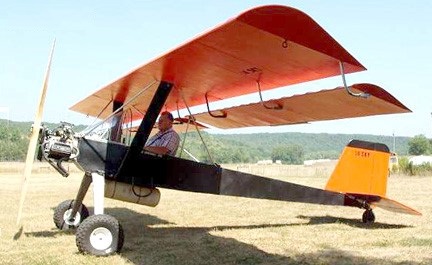
A Back Yard Flyer UL prototype was built by Valley Engineering in 2005 as a STOL ultralight. Featuring a constant-chord wing with trailing full-length “flaperons.” Demonstrated take-off in about three seconds over 70 feet. With simple disassembly for trailering it was priced around.$25,000.

Planned production was for a two place, open cockpit low wing monoplane, side-by-side SP version for the FAA Part 103 Sport Pliot market, includes ballistic parachute system.

Engine: Valley-VW
Cruise speed: 90 mph
Stall: 30 mph
Seats: 1

UTVA

UTVA, Fabrica Aviona

Jugoslavia / Serbia

Utva Aircraft Industry (commonly known as UTVA) is a manufacturer of general aviation aircraft, located in Pančevo, Serbia. Utva in Serbian is the Ruddy Shelduck.

Utva was founded on 5 June 1937 in Zemun (a small town in former Austrohungarian empire), and produced simple gliders. In 1939 Utva began manufacturing light piston engine aircraft.

Four out of five Yugoslav aircraft plants were in close proximity to each other, built in and around Belgrade: Ikarus, Rogožarski, Zmaj and Utva. The fifth one was DFA (Državna Fabrika Aviona – State Aircraft Factory) which was located in Kraljevo. The plant was relocated to Pančevo (a town a few kilometers away from Belgrade, in Vojvodina autonomous province) in 1940. Until the April war, it mainly produced light gliders but it also produced 148 Bucker Jungmann Bu-131D-2 training planes and one acrobatic Bucker Jungmaister Bu-133. The plant escaped the devastation of the other aircraft plants (Ikarus, Rogožarski and Zmaj) and began producing it’s prewar gliders Čavka (Daw) and Ždral (Crane – the bird) and school airplanes Trojka (Three) and Aero 3. Utva also built a lot of Ikarus designs, notably the 212 and 213 models.

Utva produced light utility aircraft, including the Utva 56 four-seater, first flown in 1956, and thereafter developed through a number of U60 air-taxi/tourer/freight/agricultural/ ambulance and floatplane versions. The Utva 65 was originally an agricultural aircraft, developed as the U66 to serve various utility roles and including the armed U66V version. The Utva 75 two-seat trainer/glider-tug/agricultural aircraft entered production in late 1970s. Lasta 1 tandem two-seat piston-engined trainer first flew September 1985 but was superseded before production by the design of the refined Lasta 2. Development started of Utva 95 agricultural aircraft, probably based on Utva 75. Formerly fabricated components for the IAR-93/J-22 Orao and Super Galeb programmes, and produced items for various Boeing airliners.

During the NATO bombing of Yugoslavia in 1999, the factory was bombed several times and severely damaged.

The factory was heavily bombarded in 1999 and certain parts of it were still off limits due to the unexploded ordnance in 2012. All five original lasta 95 prototypes were destroyed in the factory and the only existing Supergaleb G4MD prototype was lightly damaged. 2012 was back to the basics for Utva. The plant produced Lasta 95 basic trainer and was developing Kobac (sparrow hawk) light COIN aircraft (first flight is expected in 2013).

In 2011, Utva Pančevo was a public company with the headquaters in Pančevo, Serbia, serving 301 employees.