Of all metal construction, and priced (Ex-work Sofia, Bulgaria), complete DAR-23 with HKS 700 E in 2009, 17500 EUR and DAR-23 kit without engine, prop and instruments, 10500 EUR.
Stall: 24 kt / 28 mph / 45 kmh Cruise: 49 kt / 56 mph / 90 kmh VNE: 65 kt / 75 mph / 120 kmh Empty Weight: 195 kg / 430 lbs MTOW: 380 kg / 838 lb Climb Rate: 800 ft/min / 4 m/s Glide Ratio: 6 Take-off distance (50ft obstacle): 330 ft / 100 m Landing distance (50ft obstacle): 330 ft / 100 m
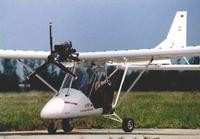
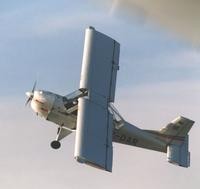
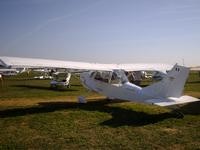
The DAR-21 is a two-seat aircraft using a wide range of engines from the two stroke Rotax 582 series of 65 hp to the 4 cylinder 4 stroke Jabiru 2200 of 80 hp. Aluminium alloys 1050, 2024, 3105 and 6061 are the basic building materials of the DAR-21 airplane. DAR-21 S is based on 2024 and 6061 aluminum alloys.
DAR-21S
DAR21 Tropic is based on using the soft 1050 and 3105 aluminum alloys. These materials are softer, but with better anti-corrosion quality. The welded metal parts are made of lowcarbonic structure steel 4130, while turnery and milling parts are made of structure steel 4340. The cabin is fully closed, with tandem seating. There is only one door on the right side giving access both to seats and cargo sector. All necessary navigation and engine control instruments are set in one panel. The controls are dual and allow piloting from front or rear seats. The DAR-21S is a little bit bigger than DAR-21. 2009 Pricing Ex-work: Complete airplanes: DAR-21 with Rorax 912 – 31500 EUR DAR-21 with Jabiru 2200 – 31450 EUR DAR-21 kit without engine, prop and instruments – 20700 EUR Complete DAR-21 S with Rotax 582, 30840 EUR HT & 36885 EUR TTC DAR-21 S with ROTAX 912, 38225 EUR HT & 45717 EUR TTC
DAR-21 Stall: 32 kt / 37 mph / 60 kmh Cruise: 86 kt / 99 mph / 160 kmh VNE: 113 kt / 130 mph / 210 kmh Empty Weight: 230 kg / 507 lb MTOW Weight: 450 kg / 992 lb Climb Ratio: 800 fpm / 4 m/s Glide Ratio: 10 Take-off distance (50ft obstacle): 660 ft / 200 m Landing distance (50ft obstacle): 490 ft / 150 m
DAR-21 S Stall: 35 kt / 40 mph / 65 kmh Cruise: 81 kt / 93 mph / 150 kmh VNE: 108 kt / 124 mph / 200 kmh Empty Weight: 280 kg / 617 lbs MTOW: 500 kg / 1102 lb Climb Rate: 1000 fpm / 5 m/s Glide Ratio: 10 Take-off distance (50ft obstacle): 490 ft / 150 m Landing distance (50ft obstacle): 490 ft / 150 m
The Aeropilot Legend 540 is a Czech ultralight aircraft, designed and produced by Aeropilot.
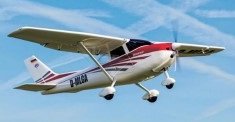
The Legend 540 is a scale two-seat version of the Cessna 182, rendered in composites, instead of sheet metal. The aircraft was designed to comply with the Fédération Aéronautique Internationale microlight rules. It features a strut-braced high-wing, a two-seats-in-side-by-side configuration enclosed cockpit, tricycle landing gear and a single engine in tractor configuration.
The aircraft is made from carbon fibre. Its 9.06 m (29.7 ft) span wing employs flaps. Standard engines available are the 100 hp (75 kW) Rotax 912ULS and the 85 hp (63 kW) Jabiru 2200 four-stroke powerplants.
Introduced at the Aero show held in Friedrichshafen in 2011, the aircraft was supplied complete and ready-to-fly-aircraft with a 2015 unit cost of €63,000.
Legend 540 Engine: 1 × Rotax 912ULS, 75 kW (100 hp) Wingspan: 9.06 m (29 ft 9 in) Wing area: 10.54 sq.m (113.5 sq ft) Airfoil: MS313 Length: 7 m (23 ft 0 in) Height: 2.6 m (8 ft 6 in) Empty weight: 289 kg (637 lb) Gross weight: 472.5 kg (1,042 lb) Fuel capacity: 100 litres (22 imp gal; 26 US gal) Maximum speed: 225 km/h (140 mph, 121 kn) Cruise speed 75% power: 210 km/h (130 mph, 110 kn) Stall speed: 62 km/h (39 mph, 33 kn) Never exceed speed: 255 km/h (158 mph, 138 kn) Range: 1,300 km (810 mi, 700 nmi) Endurance: 7 hours Rate of climb: 7 m/s (1,400 ft/min) Crew: one Capacity: one passenger
Aerophile SAS is a Public limited company founded in 1993 by Jérôme Giacomoni and Matthieu Gobbi, engineers from the École Polytechnique, for the development and operation of tethered helium balloons.
Headquartered in Paris, France, the tethered gas balloons operate as tourist attractions around the world. The company has sold more than 60 balloons in 30 countries.
In 1994, they installed their first large tethered balloon in Chantilly, France) and in 1998, Aerophile celebrated its first flight to an altitude of 300 metres (980 ft). In 1999, the company launched the large Paris Balloon and improved it in 2008 by adding a lighting system.
In 2000, the company created a mobile tethered balloon approved to carry two people to a height of 90 metres (300 ft): the Aero2.
In 2002 they operated the first modern tethered gas balloon on a water-based platform at Neuchâtel.
In 2005 the company installed a large PanoraMagique balloon, operated by a subsidiary Aerotourism, at Disneyland Paris, it was the first 8-point Aero30NG balloon.
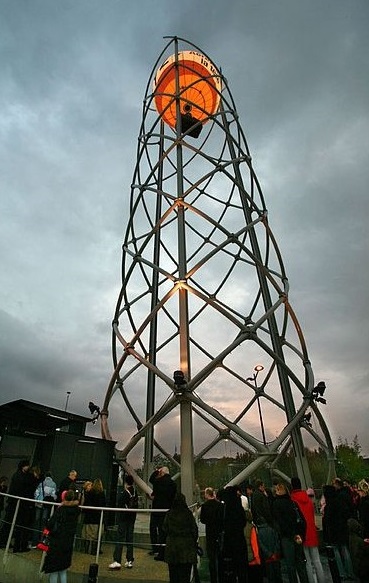
In 2007, they set up and opened the first Aerophare in Evry 2 (France), an attraction with an air-filled captive balloon within a 54 metres (177 ft) tower. Aerophare is a novel adaptation of a tethered balloon operating in an enclosed tower.
Aerophare, Evry2, France
An Aerophile balloon holds the record for carrying 30 passengers in a gas balloon.
Ballon Generali taking off
The company runs six Aero30NG: Paris Balloon, one at Disneyland Paris, one in Walt Disney World Resort, one in the Orange County Great Park, one in the San Diego Zoo Safari Park, and one Aerobar, the latest creation, at Futuroscope.
Balloons:
The Aero30NG This tethered balloon 22,5 meters in diameter can receive up to 30 people at a time in its nacelle and can rise up to 300 metres (980 ft). Its winch system ensures a climb speed of 0.8 m / s and its patented platform optimizes landings. This balloon has been installed over the 5 continents : France :Château de Cheverny, Château de Chantilly, Bordeaux, Beaune, Parc de Samara, Paris Balloon and Disneyland Paris, Belgium, Germany, Austria, Switzerland, Italy, Spain, Portugal, United Kingdom, Canada, United States, Tunisia, Turkey, Iraq, Lebanon, Dubai, Japan, South Korea, China, Vietnam, Cambodia (Angkor Wat), Thailand, Singapore and Australia. Ocean Park Hong Kong, Walt Disney World Resort in Orlando, This model has also been adapted to allow parachute jumps as part of military training in Yemen.
Aero2 This is a charged helium balloon of 9 meters in diameter which offers a view to two passengers to around 90m above ground. The moored balloon can be seen at 10 kilomètres around. This balloon has been used as a marketing tool for Danao Tour in 2002 but also by Fortis and throughout France.
Aerophare The Aerophare is a balloon operating within a 54 metres (177 ft) tower structure. The structure allows it to operate worse weather than a conventional tethered balloon.
Aerobar The first aerial bar of the world. This new concept allows 15 persons to rise up to 120 feet in the sky while enjoying their favorite drink. Visitors are experiencing a triple emotion: the chills of seeing the ground away from their feet, great view while discovering the scenery and the canopy of heaven meeting the earth on 360° and the conviviality with the other passengers that share a drink aboard this aerial bar. The first Aerobar is installed in Futuroscope, second largest theme park in France.
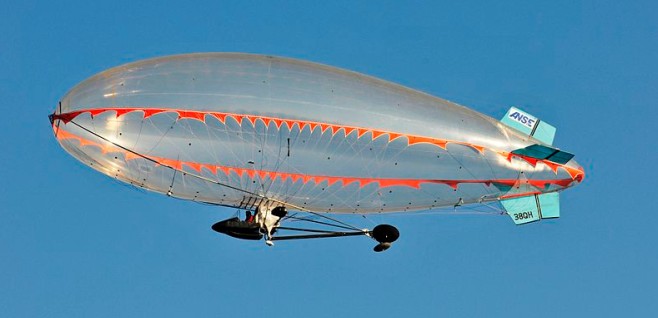
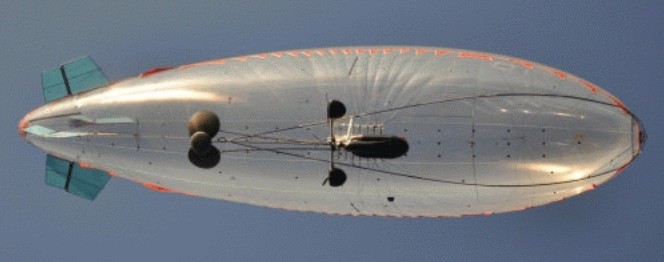
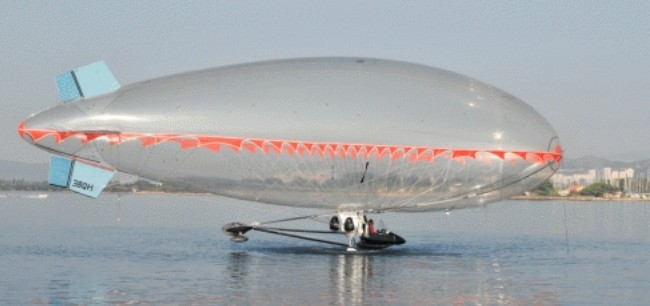
The French company Aero-Nautic Services & Engineering (A-NSE) tested in 2013 a demonstrator of an airship designed for marine surveillance missions. During the campaign carried out in Hyères, the data gathered by the airship was live-transmitted to the ground via a data link provided by Thales Communications Security.
The aircraft is raised by helium, the engine only being used to propel it, which makes it much more economical and gives it greater endurance than an aeroplane. Airships are very stable and manoeuvrable, and can hover if required. In technical terms airships have evolved considerably, with the use of new materials and the emergence of new technology making them cost-efficient and effective for civilian and military applications,” explains Baptiste Regas, Managing Director of A-NSE.
According to the young French company based in Montrouge near Paris, whose Angoulême site has produced the AN 400, the airship can complement the airborne resources currently in service. “Airships are much more economical and can be used as guards, thereby saving the potential of aeroplanes on certain missions. So, they could carry out marine surveillance up to one hundred nautical miles from the coast, extending the detection range of the network of signal stations on the coastline. In such cases, aeroplanes could be reserved for remote missions or operations requiring great speed, such as marine search and rescue. The idea is not to replace the aeroplane – it is a truly complementary resource to current capacities.”
Although certain countries, such as the United States and Germany, are showing a renewed interest in airships for the purposes of marine surveillance, the models currently being used are based on a traditional implementation design. As in the good old days, aircraft are launched from land and brought back to earth by means of ropes with 15 people involved in the landing procedure. This manual technique is potentially dangerous, but also costly in terms of personnel. Which is why A-NSE has developed and patented a new design, by means of which its airship can land on the sea. During the approach over the sea or a lake, a system of ballast located at the rear is deployed on each side of the aircraft and draws in water to add weight to and stabilise the airship. Then, once the machine is on the surface, it anchors to a mooring buoy. “This tested technique substantially reduces operating costs by eliminating the need for ground personnel.”
Engine: 2 x 18 hp Envelope volume: 400 cu.m Max. diameter: 5,5 m Length: 25 m Max. weight at take-off: 400 kg Empty weight: 240 kg Payload: 160 kg Min. speed: 0 km/h Cruise speed: 65 km/h Max. speed: 85 km/h Climb rate: 5 m/s Endurance at 0 km/h : 10 h Endurance at max. speed : 6 h Action range: 390 km Max. wind at take-off: 45 km/h Altitude: 100 to 3000 ft AIS A & B (range): 210 km Radar (range): 100 km EO/IR (range): 30 km Communication system: 50 km
Algeria’s Oran based Aeronautical Manufacturing Enterprise’s (AME) Safir 43 made its first international trade show appearance in September 2000 at Aerospace and Defence 2000 at Waterkloof airbase in South Africa.
Algeria’s Aeronautical Manufacturing Enterprise started manufacturing the Safir 43 in 1993, although they initiated the project in 1987. They are built under licence from the Czech Republic, but are manufactured completely in Algeria.
Around 50 examples of the four seater had been built since it entered service in 1994.
The aircraft were designed by the Zlin company and are marketed by the Aeronautical Manufacturing Enterprise throughout the whole of Africa.
AMC was also building the two-seat Firnas 142 aerobatic trainer, based on the Zlin 143.
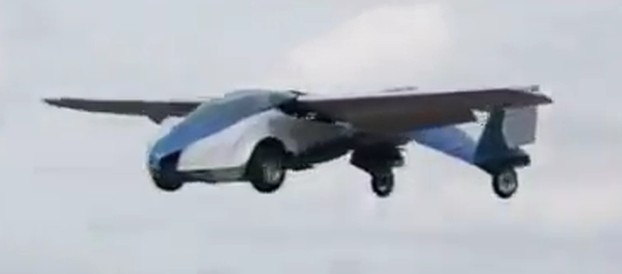
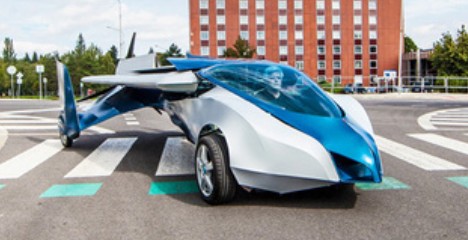
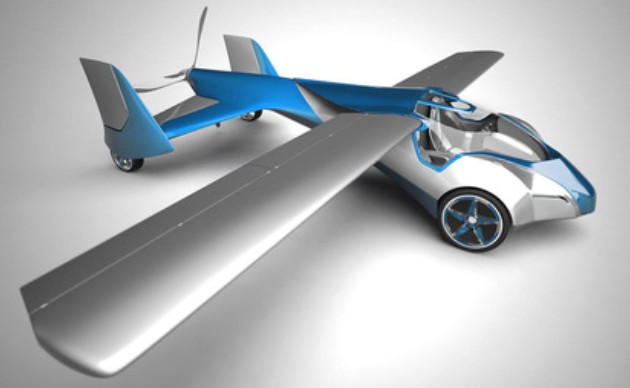
A flying car, the Aeromobil 2.5 made its first test flight in October 2013, a culmination of more than two decades of development. Aeromobil co-founder and chief designer Štefan Klein started with the 1.0 in 1990, and hoped to begin selling the 3.0 production model.
Aeromobil 3.0
The Aeromobil wings fold behind the cabin, along a boom that houses the propellor shaft.
The rear-mounted propeller is driven by a Rotax 912 aircraft engine. In the air, the Aeromobil will reach a top speed of 124 mph. That top speed drops to around 100 mph when the wheels are on the ground.
The chassis / fuselage is composed of a steel frame with carbon fiber bodywork. Aeromobil says its creation weighs 992 pounds empty.
Maximum flying range is 430 miles, or 310 miles in driving mode.
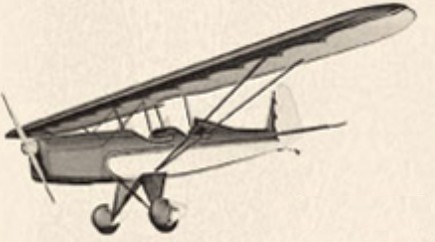
A two seat, high wing, single engine tractor configuration, the wing structure features a classical twin aluminum spar; the spars, the molded wing ribs and flap/aileron components are made from sheets of Al 6082-T6 or 6061-T6. All aluminum parts are CNC machined and protected by Alodine; a further layer of wash primer is applied where the fabric is glued to the structure. LH and RH wings are mated to the fuselage through a center cabane and extruded aluminum lift struts. All the wing, flaps and ailerons are covered by fabric, riveted to the ribs. The fuselage structure features a TIG welded chromium molybdenum steel truss with integral wing fittings, vertical stabilizer, plywood frames and fabric covering. All the steel tubes are internally protected by a MIL-SPEC anti-corrosion treatment that leaves a waxy protective layer over the surface. The untwisted, cantilever main wing features a rectangular planform with rounded tips, 1 degree dihedral from fuselage centerline and classical NACA4416 wing section at full span. The empennage features flat horizontal and vertical tail surfaces. Push-pull rods for ailerons and elevator, 3/32in steel cables for rudder control. The aircraft is trimmed by the electrically actuated stabilizer. The wing flaps are electrically actuated as well. Tail-wheel tricycle type; fixed main gear on steel struts with rubber shock absorber, hydraulic disc brakes and 6.00×6 wheels. The swiveling tail-wheel is connected to the rudder; it can be disconnected on the ground by removing a quick disconnect pin. Tandem configuration with individual open cockpits (pilot in the rear seat); central stick controls, rudder pedals and throttles for both seats. Two luggage compartments, both with 44 lbs (20 kg.) capacity, one in the front and one in the rear. The 14 VDC electrical system is powered by one engine driven alternator/generator and provides power for the flaps, trim, fuel pump and radio rack. The fuel is kept in two internally fitted aluminum tanks (one in each wing root), total capacity 31,6 US gallons (120 liters). The airframe can be equipped with different engines; firewall forward kits for the following engines were available: radial ROTEC R2800 (rated power 110 HP) and the MIKRON MIIIC (rated power 80 HP). Under development was the LOM M132A (rated power 120 HP). The engine drives a 2 blade wooden propeller. The kit comes complete from firewall to tail, including the fuselage, tail, and landing gear steel structure completely finished and TIG welded; no additional welding necessary; the spar caps completely riveted ready for assembly; pre drilled aluminum wing ribs; 6.00 x 6 wheels and hydraulic brakes; covering material (Dacron) and finishing tapes; steel firewall; aluminum fuel tanks with fuel level indicator; pre-cut steel/aluminum tangs, brackets; machined parts ready for assembly; polycarbonate windscreen; ready to install hand made Italian leather finishing; fiberglass head rest; complete AN hardware; electric flap/trim actuator; 2 seats with 4 point harness. The firewall forward kit (less engine) includes: engine mount, TIG welded, cowling; wooden propeller; complete fuel system, including gascolator and electric fuel pump; oil system; oil tank; complete hardware kit; and was available for the Rotec R2800 or Mikron IIIC engine. Options include full epoxy coating to steel structures; wheel fairing; classic style engine instruments set (5 pcs); passenger seat instrument panel with electronic tachometer and passenger brake system. All parts are CAD designed and produced by CNC/laser cutting equipment to exacting tolerances and perfect finish. The LoCamp and HiCamp models are readly available as standard 49% kit.
Engine: ROTEC R2800, 110 hp Wing span: 29 ft 10 in / 9.10 m Wing gross area: 145.3 sq.ft / 13.5 sq.m Wheel track: 5 ft 6 in / 1,68 m Propeller dia: 72 in / 1,829 m Empty weight: 771 lb / 350 kg Useful load: 496 lb / 225 kg Max T-O weight: 1267 lb / 575 kg VNE: 132 mph / 115 kts / 213 km/h T-O distance @ S/L: 820 ft / 250 m Landing distance @ S/L: 656 ft /200 m Max range (w/res): 455 sm / 395 nm Max level speed @ S/L: 121 mph / 105 kts / 195 km/h g limits: 4.0/-2.0 Maneuvering speed (VA): 90 mph / 78 kts / 145 km/h Max cruising speed @ S/L (75%): 106 mph / 92 kts / 171 km/h Stalling speed clean @ S/L (Vs1): 45 mph / 39 kts / 72 km/h Stalling speed full flaps @ S/L (Vs0): 41 mph / 36 kts / 67 km/h Max rate of climb @ S/L, MTOP: 800 ft/min / 4 m/s

 All Aero