Sud-Aviation SA321 Super Frelon / Sud-Aviation SE.3200 / Sud-Aviation SA.3210 Frelon / Changhe Z-8

SA321F

SA 321 Super Frelon development stemmed from the prototype – but not accepted for production – SA 3200 Frelon built to a French military specification. In a joint effort between Sud Aviation and Sikorsky, the base SA 3200 Frelon was developed into the “Super Frelon” (with Frelon translating into “Hornet”). The result was a rather large troop transport version that would go onto to be produced into three different variants.

At the end of the fifties, the French armed forces issued a specification for a heavy helicopter for troop transport and Sud-Aviation initiated the SA.3200 Frelon project. Sud-Aviation was formed on 1 March 1957 from the Sud-Ouest and Sud-Est Aviation companies. One of its first major projects was the Frelon, a large helicopter of conventional layout powered by three Turbomeca Turmo III turboshaft engines mounted above its cabin. Two are side-by-side in front of the rotor shaft and, the third behind the rotor shaft. Each engine supplied independent drive to the rotor head, thus ensuring twin-engined capability if one unit should fail. The first SE.3200 prototype flew on 10 June 1959. All fuel is carried externally in two tanks mounted to each side of the cabin.
Both the main and tail rotors are four-bladed and there is a variable-incidence tail control surface on each side of the rear fuselage. Standard equipment includes dual controls, radio and full night-flying equipment, with provision for an automatic pilot.
The Frelon cabin is ventilated and sound-proofed and measures 7m in length, with a width of 1.90m, and head-room of 1.83m. The entire tail assembly swings to the right to permit direct loading into the cabin. Normal entry is via large sliding doors on each side of the fuselage. Trials of the SA.3200 were suspended in 1963 in favour of the SA.3210 Super Frelon programme.

SA321 Super Frelon Article

Sud-Aviation SE.3200

The planned production version was the SA.3210 powered by three 932kW Turmo IIIC engines. Development of the Frelon lapsed in favour of the SA.3210 (now SA.321) Super Frelon.

The SA321 was designed as an improved version of the SA 3200 Frelon (hornet) with the suport of Sikorsky, who were largely responsible for the rotor system.

Fiat, in Italy, were responsible for producing the main gearbox and transmission. Prototypes were produced as land-based troop trans­port accommodating up to 30 troops, and as naval anti-submarine type forming the basis of the SA 321G initial production model.

The basic structure of the Super Frelon was no different from the original model but for the US-built rotor system with six blades folded back automatically with the extreme rear of the tailboom, the watertight boat-type hull with a rear-loading ramp, and the three turbines were located side-by-side above the fuselage and the landing gear was of the fixed tricycle type. The two prototypes were followed by two pre-production models with Turmo III turbines and other variants with civil registrations.

The first prototype of the Super Frelon (originally designated SA 3210-01 (F-ZWWE) flew on 7 December 1962, powered by three 985kW Turmo IIIG-2 engines, represented the troop transport version and (with a modified fuselage and retractable landing gear) in July 1963 set up three speed records: 341.23km/h over 3km; 350.47km/h over 15/25km (unbeaten until 1967); 334.28km/h over 100km. The second prototype, flown on 28 May 1963, was representative of the naval version, with stabilising floats on the main landing gear supports incorporating search radar, dipping sonar and other anti-submarine equipment.

The cabin of the Super Frelon in the military transport version is 7m long and can take two jeeps or two DCA 20mm cannon. For casualty evacuation it can take 15 stretcher cases with two medical attendants. The rear loading ramp is hydraulically operated and can remain open even in flight. In 1962 the tri-turbine SA 3210 Super Frelon set three international records: 211.12 mph over 3 km; 217.53 mph on 15 to 25 km dash; and 197.41 mph for 100 km.
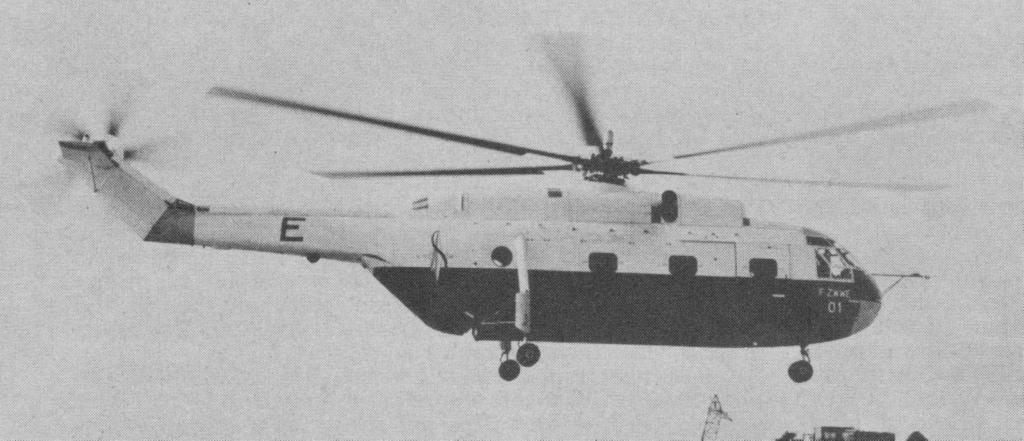
1963 record setter

Four pre-production aircraft followed, and the French Government ordered an initial production series of 17, designated SA (AS) 321G, in October 1965, which entered service in 1966. The first flight of the first production machine was on 30 November 1965. By mid-1967, twenty-five were in service. These are a mixture of SA.321G’s, which can carry four homing torpedoes or other antisubmarine stores, or gear for mine-sweeping, minelaying or ship towing and were equipped with two Sylphe radars, all-weather navigation systems, an automatic stabilization system; and pure-transport versions capable of airlifting up to 30 troops, 18 casualty litters or 4000kg of cargo over 200km stage lengths. Five SA.321 transports have also been supplied to the Heil Avir le Israel, and delivery of sixteen Super Frelons to the South African Air Force began in July 1967.
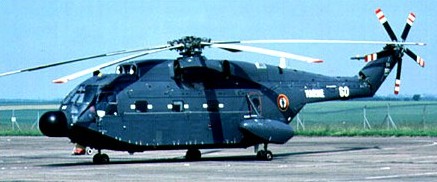
SA321G

Carrying weapons in addition to search radar and sonar, the SA 321Gs were used to patrol the seaward approaches to the French navy’s nuclear submarine base at Brest. Some were later modified with nose-mounted radar and Exocet missiles for anti-ship attack, and the SA 321Ga was delivered for utility transport duties. In French naval service the Frelon equiped three units: 33F and 20S at St Mandrier and 32F based at Lanveoc.

The French Navy utilized the SA 321G, which was fitted in a maritime configuration with a dunking sonar system, torpedoes and other anti-submarine warfare equipment. These specialized versions would later be relegated to search and rescue roles in the navy capacity.

Only 24 SA 321Gs were built, but the production total was boosted by small-scale production of other variants, including the SA 321K assault transport for Israel (12 helicopters) and the SA 321J/ L/M transport exported to China, South Africa, and Libya. Israel re-engined eight of its Super Frelons and sold them to Argentina.

Iraq used Super Frelons, equipped with Omera radar and AM39 Exocet missiles, in anti-shipping strikes against Iran.

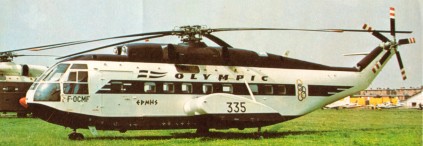
A commercial ‘air utility’ version, the SA.321J, was in production, eighteen were completed up to the end of September 1967. This can be used as a 27-seat passenger transport, as a freighter with a 2500kg payload, or for firefighting, flying crane or other duties; at least one is acting as a supply transport to offshore oil drilling operations. Certificated on 20 October 1967, the SA.321J is powered by Turmo IIIC5 engines. On 7 April 1967, the prototype SA.321F (F-WMHC) made its first flight. This is an enlarged passenger version with a 19.4m fuselage seating up to 37 occupants, a gross weight of 12,000kg, and large sponson-type fairings amidships which act as baggage holds. The one-off SA.321F commercial transport version, test-flown in 1968, is powered by three 1400shp Turmo IIIC3 shaft turbines. It had an air-conditioned, soundproofed cabin, a sliding door on the starboard side and a rotor head fairing. The two stub wings at the sides of the fuselage were used as baggage holds, and airline-style seating provided for 34-37 passengers.

The SA 321 has six-blade main rotor and five-blade anti-torque tail rotor, with rearward folding of all six main rotor blades of SA 321G accomplished automatically by hydraulic jacks, simultaneously with automatic folding of the tail rotor pylon. The rotor can be stopped within 40 seconds by a boosted disc-type rotor brake fitted to this shaft.

The main rotor blades of all-metal construction, with D-section main spar forming leading-edge. The tail rotor is of similar construction to main rotor. The boat-hull fuselage is of conventional metal semi-monocoque construction, with watertight compartments inside planing bottom. On the SA 321G, there is a small stabilising float attached to the rear landing gear support structure on each side. The tail section of the SA 321G folds for stowage. Small fixed stabilisers on starboard side of tail rotor pylon on all versions. The SA 321F has large external fairings on each side of the centre-fuselage which serve a similar purpose to stabilising floats and also act as baggage containers.

The landing gear is of non-retractable tricycle type, by Messier-Hispano-Bugatti, with twin magnesium alloy wheels on each unit. Hydraulic disc brakes are on the mainwheels and the nosewheel unit is steerable and self-centring. Fuel is in flexible tanks under the floor of the centre-fuselage, with a total standard capacity of 3,975 litres in SA 321G/H and 3,900 litres in SA 321Ja. Optional auxiliary fuel tankage comprises two 500 litre external tanks on all models, two 500 litre internal tanks in the SA 321G, and three 666 litre tanks in the 321H/Ja.

The military version has a crew of two on the flight deck, with dual controls and advanced all-weather equipment. The SA 321G carries three other flight crew, and has provision for 27 passengers. SA 321H transport accommodates 27-30 troops, 5,000kg of internal or external cargo, or 15 stretchers and two medical attendants.

The SA 321F has airliner seats for up to 37 passengers (34 if toilets are installed) in three-abreast rows with centre aisle, while the SA 321Ja has seating for up to 27 passengers in the personnel transport role. As a cargo transport, external loads of up to 5,000kg can be suspended from the cargo sling. Loading of internal cargo (up to 5,000kg) is via rear ramp doors, with the assistance of a Tirefor hand winch.

The ASW SA 321G operates normally in tactical formations of three or four aircraft, each helicopter carrying the full range of detection, tracking and attack equipment, including a self-contained navigation system associated with a Doppler radar, a 360° radar with transponder and display console, and dipping sonar. Four homing torpedoes can be carried in pairs on each side of the main cabin. Both the SA 321G and H can be fitted with an anti-surface vessel weapon system, consisting of two Exocet missiles and launch installation associated with an Omera-Segid Heracles ORB 31D or ORB 32 radar for target designation. Other equipment is provided for secondary duties such as towing and minesweeping. Rescue hoist of 275kg capacity standard.

Argentina received several SA 321 from Israel. Argentine versions were Israeli-owned and refitted with the General Electric GE T58 powerplants. South African versions were noted for not being the full amphibious versions of the Super Frelon type.

The triple-turbine-powered Changhe Z-8  (Zhishengji-8 / Vertical take-off aircraft 8) design work began in 1976, but was suspended from 1979 to mid-1984. Chinese equivalent of Aerospatiale Super Frelon, of which 16 supplied to PLA Navy in 1977-78. The Z-8 features a six-blade main rotor and five-blade tail rotor: boat-hull fuselage with watertight compartments inside planing bottom; stabilising float at rear each side, attached to small stub-wing; small, strut-braced fixed horizontal stabiliser on starboard side of tail rotor pylon. Search radar in nose ‘thimble’ on SAR version.

Pitch control fitting at root of each main rotor blade; drag and flapping hinges for each blade mounted on rotor head starplates; each main blade also has a hydraulic drag damper. Fully redundant flight control system, with Dong Fang KJ-8 autopilot.

Stressed skin metal fuselage, with riveted watertight compartments; gearboxes manufactured by Zhungnaii Transmission Machinery Factory.

A non-retractable tricycle undercarriage, with twin wheels and low-pressure oleo-pneumatic shock-absorber on each unit. Small tripod tailskid under rear of tailboom. Boat hull and side floats permit emergency water landings and take-offs.

Power is from three Changzhou (CLXMW) WZ6 turboshafts, each with maximum emergency rating of 1,156kW and 20% power reserve at S/L, ISA. Two engines side by side in front of main rotor shaft and one aft of shaft. Transmission rated at 3,072kW.

Standard internal fuel capacity 3,900 litres, in flexible tanks under floor of centre-fuselage. Auxiliary fuel tanks can be carried inside cabin for extended-range or self-ferry missions, increasing total capacity to 5,800 litres.

Crew of two or three on flight deck. Accommodation in main cabin for up to 27 fully armed troops, or 39 without equipment; up to 15 stretchers and a medical attendant in ambulance configuration; a BJ-212 Jeep-type vehicle and its crew; or other configurations according to mission. Entire accommodation heated, ventilated, soundproofed and vibration-proofed. Forward-opening crew door on each side of flight deck. Rearward-sliding door at front of cabin on starboard side. Hydraulically actuated rear-loading ramp/door.

First flown on 11 December 1985, a second prototype flew in October 1987. Domestic type approval was awarded on 8 April 1989 and the first Z-8 was handed over to FLA Naval Air Force for service trials on 5 August 1989. Initial production was approved and the final design approval granted on 12 November 1994.
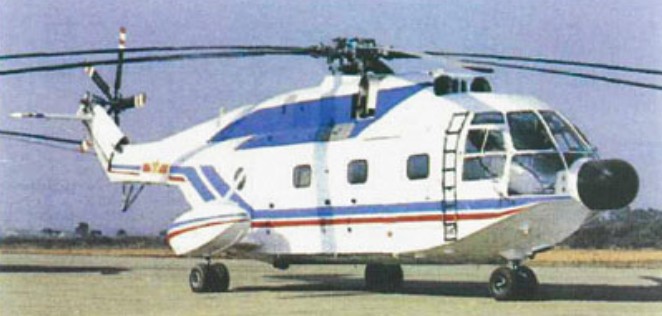
Up to 20 were delivered to PLA Navy by the end of 1999. There was no firm evidence of production status since then, but the type was still being promoted by CATIC in 2002. The sole operating naval unit was Shipborne Helicopter Group within East Sea Fleet at Dachang (Shanghai).
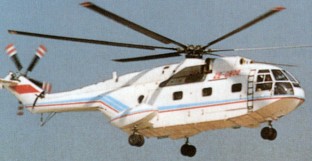
Z-8

Gallery

Principal versions:

SE.3210 / SA.321 Super Frelon
Larger development of SA.320 with boat hull and outrigger floats, rear loading doors, boom tail, six-blade main rotor driven by three 1320shp Turbomeca Turmo IIIC turboshafts. Prot. F-ZWWE FF 7 Dec. 1962.

SA 321B
Standard French Air Force/Army Super Frelon.

SA 321D
Standard French Navy Super Frelon.

SA 321F
Commercial airliner with streamlined external sponsons, designed to carry 34-37 passengers. The prototype was designed in accordance with US FAR Pt 29 regulations and flew for the first time on 7 April 1967. Type certification was granted by the SGAC on 27 June 1968 and by the FAA on 29 August 1968.

SA 321G
Anti-submarine helicopter able to carry 27 passen¬gers or freight in its alternative transport role. First version to enter production. The first SA 321G flew on 30 November 1965 and deliveries began in early 1966. Twenty-four built.

SA 321H
Simplified military version for air force and army service, without stabilising floats or external fairings on each side of lower fuselage. Turmo IIIE_6 engines instead of Turmo IIIC_6 in other versions. No de-icing equipment fitted.

SA 321Ja
Utility and public transport version, intended to fulfil the main roles of personnel and cargo transport. Designed to carry a maximum of 27 passengers or 11,023 lb/5,000 kg of freight. External loads of up to 5,000kg can be suspended from the cargo sling. The SA 321Ja prototype flew for the first time on 6 July 1967. A French certificate of airworthiness was granted in December 1971.

SA 321K
Israeli assault transport, later re-engined with Gen¬eral Electric T58 turboshafts

SA 321L
Develop¬ment of the SA 321K for other export markets

SA 321M
Libyan version of the SA 321L

Changhe Z-8
Standard Chinese development

Changhe Z-8A
Reported designation of upgraded version, with Turbomeca Makila 2A engines matched to Turmo gearbox. Pratt & Whitney Canada also a candidate for any re-engining programme. Two Z-8As reportedly delivered to PLA Army Aviation for evaluation in 2001, camouflaged; lack nose radome and side-mounted floats.

Changhe Z-8F
Improved and more powerful version, for which the 1,380kW P&WC PT6B-67A turhoshaft was selected in November 2002. Additional 671kW of power expected to enhance ‘hot-and-high’ performance, including increase in service ceiling to 4,700m at MTOW and increased payload capacity. Other improvements said to include new (composites) main rotor blades, with anti-icing; new avionics and mission equipment. Duties envisaged are search and rescue, general utility missions and logistics support.

Specifications

S.E.3200 Frelon
Engines: 3 x Turmo IIIB turboshaft, 750/800shp
Main rotor diameter: 15.0 m
Length, blades folded: 14.9 m
Width, blades folded: 5.2 m
Height: 4.7 m
Weight empty: 4500 kg
Max useful load: 3500 kg
Normal loaded weight: 7500 kg
Max loaded weight: 8000 kg
Max ferrying range: 1300 km

SA 321 Super Frelon
Engine: 3 x Turboméca Turmo III C 6, 1529 shp / 1156kW
Length: 63.648 ft / 19.4 m
Length with rotors: 23.03 m
Height: 21.85 ft / 6.66 m
Width: 5.2 m
Rotor diameter: 62.008 ft / 18.9 m
Max takeoff weight: 27562.5 lb / 12500.0 kg
Weight empty: 14420.7 lb / 6540.0 kg
Max. speed: 130 kt / 240 km/h
Cruising speed: 124 kt / 230 km/h
Service ceiling: 11647 ft / 3550 m
Maximum range: 583 nm / 1080 km
Range (max. weight): 351 nm / 650 km
Rate of climb: 12.0 m/s
Hovering ceiling: 2170 m
Crew: 2
Payload: 30 Pax / 4500kg
Fuel: 3975 kg

SA321G Super Frelon
Engines: 3 x Turbomeca Turmo 111C6 turboshafts, l,570-shp / 1,171-kW
Maximum speed: 154 mph (248 kph) at SL
Initial climb rate: 984 fpm (300 m/min)
Service ceiling: 10,170 ft (3,100 m)
Cruising speed: 248 km/h (154 mph)
Endurance in ASW role: 4 hr
MTOW: 28,660 lb (13,000 kg)
Empty weight: 15,130 lb (6,863 kg)
Height: 22 ft 2 in (6.76 m)
Main rotor diameter: 62 ft (18.9 m)
Main rotor disc area: 3,019.94 sq ft (280.55 sq.m)
Length overall, rotors turning: 75 ft 6.75 in (23.03 m)
Range 3500 kg (7,716 ¬lb) load: 1020 km (633 miles)
Armament: up to four homing anti¬submarine torpedoes or two AS.39 Ex¬ocet anti ship missiles.

SA321H
Engines: 3 x Turbomeca Turmo IIIE-6 turboshaft

Changhe Z-8
Engine: 3 x Changzhou WZ6, 1,156kW
Instant pwr: 1156 kW
Main rotor diameter: 18.90m
Tail rotor diameter: 4.00m
Length overall, rotors turning: 23.035m
Height overall, rotors turning: 6.66m
Width over main gear sponsons: 5.20m
Empty weight equipped: 7550kg
Max take-off weight, standard fuel: 10592kg
Max take-off weight, with auxiliary fuel: 13000kg
Max cargo payload (internal): 4000kg
Max cargo payload (external sling): 5000kg
Never-exceed speed: 315km/h
Max cruising speed: 266km/h
Econ cruising speed: 255km/h
Rate of climb: 690m/min
HIGE: 18,045 ft / 5500m
HOGE: 14,435 ft / 4400m
Service ceiling: 19,685 ft / 6000m
Max range: 880 km
Range max fuel / TOW 9000kg: 430km
Endurance max fuel: 2 h 31 min
Crew: 2
Pax: 27
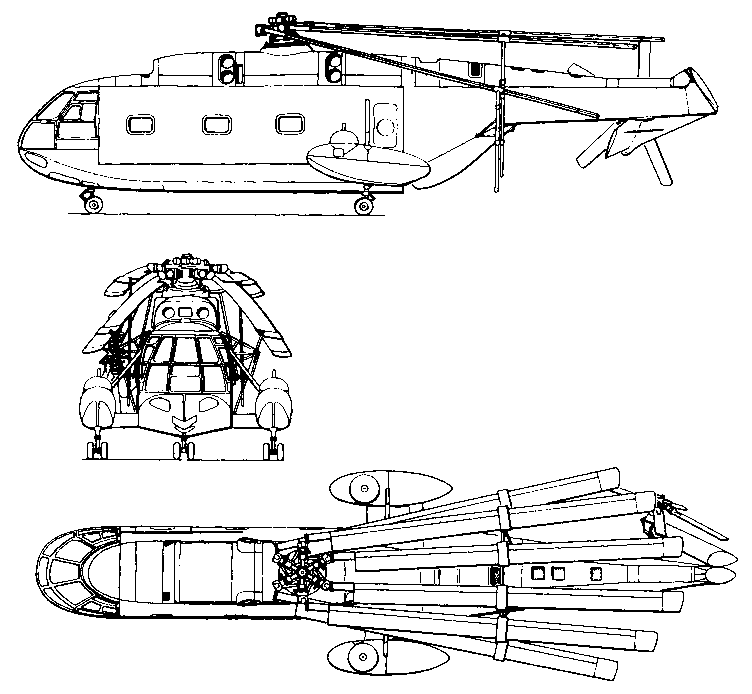
Aerospatiale

Societe Nationale Industries Aerospatiale (SNIA) was formed January 1, 1970 by French government decision, as a result of merger of Sud-Aviation, Nord-Aviation, and SEREB, becoming the biggest aerospace company in Common Market on European Continent. Concorde supersonic transport developed in cooperation with British Aircraft Corporation Ltd.; Airbus A300 in cooperaton with international partners (see European Airbus and Airbus Industrie); and Transall turboprop-powered transport with MBB and VFW-Fokker. Aerospatiale products included N262 and Fregate high-wing light transports, and Corvette turbofan-powered light transport. Light piston-engined aircraft produced through their subsidiary, Socata. Helicopter activities covered design and production of several types, with types including 5/6-seat Ecureuil, 10-seat Dauphin and Super Frelon (up to 37 seats). Agreements with Westland in UK covered joint development and production of Puma and Gazelle helicopters and Westland-designed Lynx. The main Aerospatiale organization then divided among Aircraft, Helicopter, Tactical Missiles, and Space and Ballistic Systems Divisions. Eurocopter formed 1992, with Aerospatiale and Daimler-Benz Aerospace of Germany having 60% and 40% respectively of Eurocopter Holding SA, which in turn owned 75% of Eurocopter SA. Aerospatiale owns 37.9% of Airbus Industrie, and partners with Alenia of Italy in ATR. The company was reorganized under Aerospatiale Group in 1998, with Aircraft and Space & Defense subsidiaries. Aircraft subsidiary includes Socata, Aerostructures, Aerospatiale Airbus and Aerospatiale ATR.

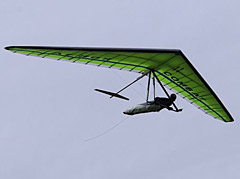
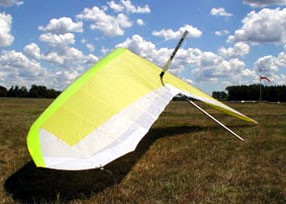
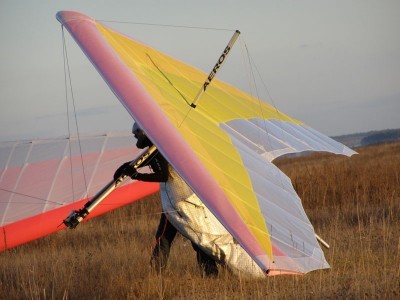
Aeros Fox

A 2010 hang glider for Intermediate pilots.

Wing area: 16.2 m²
Wing span: 9.6 m
Aspect ratio: 5.7
Hang glider weight: 25 kg
Minimum pilot weight: 60 kg
Maximum pilot weight: 114 kg
Minimum speed: 25 km/h
Maximum speed: 80 km/h
Max glide ratio (L/H): 9
Packed length: 5.7 m
Packed length short: 2.5 m
Number of battens: 15
Nose angle: 120°

Aeros Fuego

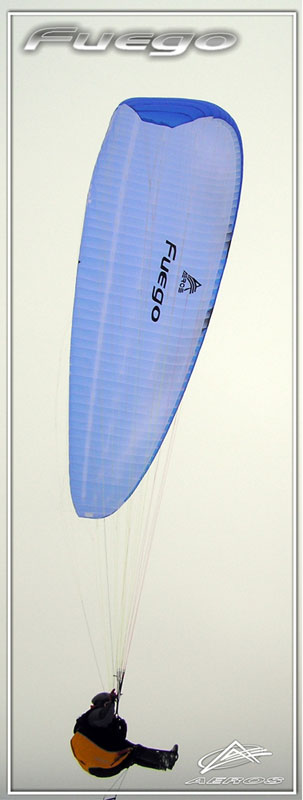
Aeros Fuego was a cross country paraglider built in 2007 as a compromise between reasonable safety and high flying characteristics, class EN “C”, and available in 27 and 29 sizes, to replace the Aeros Select – the previous wing for thermal flying.
Aeros Fuego successfully passed flight and load tests in the European Certification EN.
Aeros Fuego 27 and Aeros Fuego 29 obtained class EN “C” according to EN 926-2:

  • Aeros Fuego 27 min weight – 19A /1B /3C, max weight – 18A /2B /3C;
  • Aeros Fuego 29 min weight – 21A /1B /1C, max weight – 18A /3B /2C.
    Fuego also passed structural (static) and shock load tests by EN 926-1.
    The base of plan and form of the Fuego was the Concept and Amigo. The flat aspect ratio was essentially increased compared to the Select and width of panels was optimied to span, with a light, and easy to recognise silhouette. Valves are placed on the wingtips for cleaning the canopy from snow and sand within.
    The Fuego comes with a canopy, comfortable big (volume 230l), roomy rucksack, light packing safety sack, user manual and set of documents, sack-case for V-Line, compression tape, and repair set.
    All models have lines of Cousin Trestec, top dia. 1.2 Technora 118 daN, bottom dia 1.5 Technora 163 daN, bottom dia 1.9 Technora 321 daN, Break top dia. 1.1 Dyanema 128 daN, and Break bottom dia. 2.0 Polyester 85 daN. The sail cloth is Porcher Sport and ribs reinforcement Trilam 180 g/sq.m.

Fuego 27
Cells: 57
Area: 27.25 sq.m
Span: 12.36 m
Aspect ratio: 5.6
Area projected: 24.67 sq.m
Span projected: 10.49 m
Aspect ratio projected: 4.46
Chord root: 2.74 m
Chord tip: 0.39 m
Total height: 8.25 m
Take off weight: 75-110 kg
Certification: EN C
Flight speed min: 21 km/h
Flight speed trim: 36-38 km/h
Flight speed max: 48+ km/h
Min.sink m/s (opt. wt): < 1.1 m/s

Fuego 29
Cells: 57
Area: 29.25 sq.m
Span: 12.8 m
Aspect ratio: 5.6
Area projected: 26.48 sq.m
Span projected: 10.86 m
Aspect ratio projected: 4.46
Chord root: 2.84 m
Chord tip: 0.4 m
Total height: 8.55 m
Take off weight: 95-130 kg
Certification: EN C
Flight speed min: 21 km/h
Flight speed trim: 36-38 km/h
Flight speed max: 48+ km/h
Min.sink m/s (opt. wt): < 1.1 m/s

Aeros Cross-Country Trike

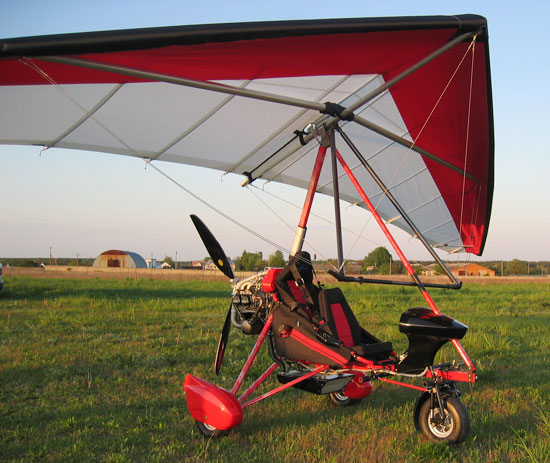
Designed and produced by Aeros of Kiev as a more basic model than the Aeros-2 for off-airport use, the Ukrainian ultralight trike Cross Country features a cable-braced hang glider-style high-wing, weight-shift controls, a two-seats-in-tandem open cockpit, tricycle landing gear and a single engine in pusher configuration.

The aircraft is made from tubing, with its wing covered in Dacron sailcloth. Its 10.3 m (33.8 ft) span wing is supported by a single tube-type kingpost and uses an “A” frame control bar. Unlike the Aeros-2 the Cross Country does not have a cockpit fairing and sports heavy duty main wheel suspension for rough fields.

Engines available include the twin cylinder, two-stroke, air-cooled 50 hp (37 kW) Rotax 503, the liquid-cooled 64 hp (48 kW) Rotax 582, the four cylinder four-stroke 80 hp (60 kW) Rotax 912UL and 100 hp (75 kW) 912ULS or the certified 912A or S. The BMW K-1100 ULS powerplant is also optional. Available wings to be mated to the carriage are the Aeros Profi, Aeros Stranger, Aeros Stream and Aeros Still.

The Aeros Cross Country, sometimes called the Aeros Cross-Country, was supplied as a complete ready-to-fly aircraft or as kit for amateur construction.

An aerial application kit to allow crop spraying was available as an option.

Engine: Rotax 582, 64 hp
Max weight: 472.5 kg
Empty weight: 201 kg
Payload (fuel inc): 313 kg
Std fuel tank: 53 lt
Wing area: 14.5 sq.m
Take off roll dist: 80 m
Landing roll dist: 80 m
Gliding ratio (90 km/h): 5
Cruise speed: 90 km/h
Vne: 130 km/h
Stall speed: 52 km/h
Rate of climb (450 kg): 4 m/sec
Fuel consumption 80%: 14 lt
Service ceiling: 3500 m
Load factors: 4g/-2g

Engine: Rotax 912, 80 hp
Max weight: 472.5 kg
Empty weight: 222 kg
Payload (fuel inc): 250.5 kg
Std fuel tank: 53 lt
Wing area: 14.5 sq.m
Take off roll dist: 70 m
Landing roll dist: 70 m
Gliding ratio (90 km/h): 5
Cruise speed: 90 km/h
Vne: 130 km/h
Stall speed: 52 km/h
Rate of climb (450 kg): 5 m/sec
Fuel consumption 80%: 12 lt
Service ceiling: 3500 m
Load factors: 4g/-2g

Engine: Rotax 912S, 100 hp
Max weight: 472.5 kg
Empty weight: 227 kg
Payload (fuel inc): 294 kg
Std fuel tank: 53 lt
Wing area: 14.5 sq.m
Take off roll dist: 60 m
Landing roll dist: 70 m
Gliding ratio (90 km/h): 5
Cruise speed: 90 km/h
Vne: 130 km/h
Stall speed: 52 km/h
Rate of climb (450 kg): 6 m/sec
Fuel consumption 80%: 12 lt
Service ceiling: 3500 m
Load factors: 4g/-2g

Aeros Aeros-1 / Aeros-2 Trike / Venture

Aeros-2

Aeros produced the Aeros as a wing for other manufacturers and also as a complete trike for the German market, where it was marketed by Ful.

Aeros

When the Aeros-1 couldn’t satisfy the requirements of overseas markets, a decision was made to refine the existing trike, changing its exterior design and using all the achievements and benefits of the load-carrying structure.
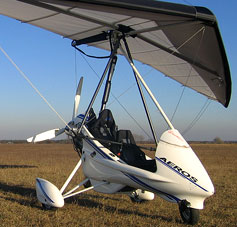
The Aero-2 export version of the trike and enter the world UL market and manufacture started in 1999. Attention was given to ergonomics issues, trying to provide comfort in flight both for the pilot as well the passenger. This has been achieved by the widened seats frame, as well as room inside the fairing for the passenger’s feet. A small windshield partially protects the pilot from wind without affecting forward line-of-sight. The instrument panel of the “Aeros 2” is recessed into the fairing and painted with special antiglare paint.
A special beam running longitudinally along the interior of the entire fairing not only makes room for the passenger’s feet, but also increases the rigidity of the fairing, which is important for this type of fairing since the surface area is so large. All fiberglass edges facing the pilot and the passenger are not just covered with rubber, but are shaped, rolled and folded inside. This profile increases rigidity of the design, as well as providing additional safety for the operators.
The folding pylon makes it possible for one person to hang the wing on the trike, and with the idea to increase reliability and safety of the design, there is a safety cable inside the pylon.
The main landing gear of pyramidal shape combined with automobile shock absorbers.
The load-carrying frame of the trike is made of rectangular tubes of aircraft alloy D16T 60 x 40 x 2 reinforced by a rectangular tube 54 x 34 x 2; the seat frame is made of the tube D16T 32 x 2. All load-carrying fittings are made according to aircraft technologies of tubes and plates of 30 HGSA steel. This work is done in close cooperation with the Antonov factory and Aviant Kiev plant.
Engine mounts are available for various engines, including the Rotax 503, Rotax 582, Rotax 912, BMW, and Subaru. The “Aeros 2” trike is available as a kit or the ready-to-fly trike.
The “Aeros 2” can be equipped with various engines, wings and instruments, floats or skis, rescue system, etc. The “Aeros 2” trike with Rotax 503 and Rotax 582 is known at the US market as the Venture 500 and the Venture 600.

Gallery

Aeros
Empty weight: 160 kg
Wing span: 10.2 m
Wing area: 14.8 sq.m
Engine: Rotax 582, 64 hp
MAUW: 400 kg
Seats: 2
Max speed: 120 kph
Cruise speed: 85 kph
Minimum speed: 50 kph
Climb rate: 5 m/s
Fuel consumption: 7.5 lt/hr

AEROS-2
Engine: Rotax 582, 64 hp
Max weight: 472.5 kg
Empty weight: 210.5 kg
Payload (fuel inc): 262 kg
Standart fuel tank: 53 lt
Wing area: 14.5 sq.m
Take off roll dist: 80 m
Landing roll dist: 80 m
Glide ratio (90 km/h): 6
Cruise speed: 90 km/h
Vne: 130 km/h
Stall speed: 52 km/h
Rate of climb (450 kg): 4 m/sec
Fuel consumption 80%: 14 lt
Service ceiling: 3500 m
Load factors: 4g/-2g

Engine: Rotax 912, 80 hp
Max weight: 472.5 kg
Empty weight: 229.5 kg
Payload (fuel inc): 243 kg
Standart fuel tank: 53 lt
Wing area: 14.5 sq.m
Take off roll dist: 70 m
Landing roll dist: 70 m
Glide ratio (90 km/h): 6
Cruise speed: 90 km/h
Vne: 130 km/h
Stall speed: 52 km/h
Rate of climb (450 kg): 5 4 m/sec
Fuel consumption 80%: 12 lt
Service ceiling: 3500 m
Load factors: 4g/-2g

Engine: Rotax 912S, 100 hp
Max weight: 472.5 kg
Empty weight: 234.5 kg
Payload (fuel inc): 238 kg
Standart fuel tank: 53 lt
Wing area: 14.5 sq.m
Take off roll dist: 60 m
Landing roll dist: 70 m
Glide ratio (90 km/h): 6
Cruise speed: 90 km/h
Vne: 130 km/h
Stall speed: 52 km/h
Rate of climb (450 kg): 64 m/sec
Fuel consumption 80%: 12 lt
Service ceiling: 3500 m
Load factors: 4g/-2g

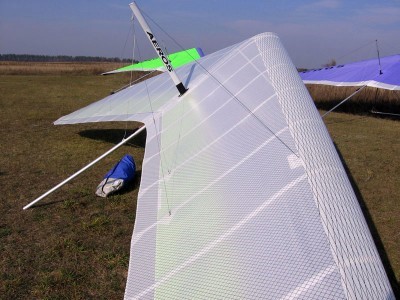
Aeros Combat

The first prototype of a high-performance Combat competition hang glider was designed and flew in 2000. The Combat glider is updated, and Aeros presented the new Combat 2 in 2001.

During 2003, the Combat L, which was lighter and better than its predecessor Combat 2, was designed. After extensive testing, Aeros releases the Combat L in 2006, and for lightweight pilots, the Combat L 12 with reduced wing area was designed.

Aeros continued improvement of the Combat in 2007 gave the Combat L 07 with a newly designed oval crossbeam, stiffer sprogs and an advanced design of the sail, which has many refinements and is made with new durable semi-transparent sailcloth. The top performance Combat L 07 was certified by DHV in 2008 in three sizes: 12, 13 and 14.

The full range of glider sizes (12, 13, 14, or 15) were available.

Aeros Combat l 14

Different from the Combat 2, the Combat L is significantly lighter, depending on glider size and option it is 1.5 – 2 kilograms lighter. Basically it is a new glider with a wide variety of options. The sail design has not changed much. The main difference is leading edges, made of 7075 alloy and of completely different design. The leading edges are in three parts which allow a pilot to inspect and change them easily when needed. Having about the same stiffness they are significantly lighter. The Aeros Combat L is supplied standard with WW Slipstream profile uprights and reinforced Aeros Airfoil carbon speedbar with Aeros Airfoil knuckles. The aluminium Airfoil speedbar with Airfoil knuckles can be set optionally. Options are: carbon fiber battens, additional aluminum round bacebar, aluminum airfoiled speed bar, competition wires, additional carbon fiber inserts, light weight glider bag and light weight pads.

The competition options include light carbon 10mm battens for best performance, profiled carbon leading edge inserts, and XC light bag.

Changing the battens stiffness changed not only handling and climb, but performance as well. The sail was available in two options of the upper surface materials: PX10T or Grille Polyester 180G. The new sail is an advanced design with many refinements and stronger PX Mylar – PX Mylar leading edge cloth. The durable NCV semi-transparent sailcloth keeps the upper surface very clean and tight, providing soft handling and good coordination. The undersurface is Dacron and can be cut out in two separate colour layout designs.

It is possible to use more VG than on the Combat 2 on when thermaling which improves a climb rate. The Combat L glides slightly better than Combat 2.

The glider has stronger crossbar, the pull-back wire is changed from 2.5 mm to 3 mm diameter.

Believing they could excede the characteristics of Combat L 07 Aeros launched the serial production of new competition hang glider, the Combat 13 09. The most popular being 13 (13.7 sq.m).

There has been added a new glider size of the 09 series – Combat 09 13.2, of 13.2 sq.m. which is between the Combat 12 and Combat 13.7. The performance of the new glider is slightly better than Combat 09 13 (13.7sq.m), with better climb rate. Measurements where done with the tail. Combat 09 13.2 seams to feel in the air and perform with the tail even better than without. The new glider has aspect ratio 8.05 maintaining the same wing span. Theoretically this means that the glider with more aspect ratio should have better low speed glide ratio.

Compared to the Combat L 07, the Combat 09 has new sail and frame design. Totally new sail cut, new batten profiles, stiffer leading edge, stiffer and lighter keel. Test flights in Ukraine and Switzerland determined that the Combat 09 has better performance and climbing abilities in comparison with Combat L 13 07. Although the Combat 09 has stiffer frame, the glider keeps soft Combat L 07 handling and good coordination. The landing characteristics are the same or slightly better than Combat L 07.

The Combat L12 was designed by Sergey Drobyshev, is 12.8 sq.m and was built for people 50-75 kg. The optimum is 65-75kg clip-in pilot weight. About twenty Combat L12 were sold by November 2006.
The sail cut is designed with a thin low drag airfoil profile, has 24 top battens, 62-50mm 7075 aluminium leading edges, and light firm dive struts. The nose cover blends smoothly into the sail. The modified pulley system with bearings allows you pull VG with 2 fingers. The glider weight is about 33.5 kg.

Options are a carbon reinforced speedbar or an aluminium profiled basebar together with all streamline fittings. The uprights are 50 mm shorter than on bigger Combats along with a 40 mm shorter speed bar. Options are two wire sets: standard version and second version that keeps the control bar 5 cm back. Optionally the small Combat is provided with all high performance items like light profiled carbon leading edge inserts, 10mm carbon battens and a thin 5.6 m bag.

Gallery

Combat L 12
Sail area: 12.8 sq.m (138 sq.ft)
Wing span: 10 m (32.8 ft)
Aspect ratio: 7.8
Nose angle: 129-131 degs
Pilot clip weight optim.: 75 kg (165 lb)
Weight (without bags): 33.5 kg (74 lb)
No. upper sail battens: 24
No. bottom sail battens: 6
Breakdown length: 3.8/5.6 m (12.4/18.4 ft)
Tested load: +6/-3 G
Wind speed max: 12 m/sec (27 mph)
Min. speed optimal wt: 29-31 km/h (18-19 mph)
Max. speed optimal wt: 110+ km/h (69 mph)
Min. pilot weight: 60 kg (132 lb)
Maximum pilot weight: 90 kg (198 lb)
Certificate: DHV # 01 0430 08

Combat L 13
Sail area: 13.7 sq.m (145 sq.ft)
Wing span: 10.35 m (33.93 ft)
Aspect ratio: 7.9
Nose angle: 129-131 degs
Pilot clip weight optim: 85 kg (187 lb)
Weight (without bags): 34.5 kg (77 lb)
No. upper sail battens: 24
No. bottom sail battens: 6
Breakdown length: 3.9/5.8 m (12.8/19 ft)
Tested load: +6/-3 G
Wind speed max: 12 m/sec (27 mph)
Min. speed optimal wt: 29-31 km/h (18-19 mph)
Max. speed optimal wt: 110+ km/h (69 mph)
Min. pilot weight: 75 kg (165 lb)
Maximum pilot weight: 110 kg (243 lb)
Max glide ratio speed: 16 km/h
Certificate: DHV # 01 0431 08

Combat L 14
Sail area: 14.2 sq.m (153 sq.ft)
Wing span: 10.7 m (35.1 ft)
Aspect ratio: 8.06
Nose angle: 129-131 degs
Pilot clip weight optim: 95 kg (209 lb)
Weight (without bags): 35.9 kg (79 lb)
No. upper sail battens: 24
No. bottom sail battens: 6
Breakdown length: 4.1/5.9 m (13.4/19.3 ft)
Tested load: +6/-3 G
Wind speed max: 12 m/sec (27 mph)
Min. speed optimal wt: 29-31 km/h (18-19 mph)
Max. speed optimal wt: 110+ km/h (69 mph)
Min. pilot weight: 85 kg (187 lb)
Maximum pilot weight: 115 kg (254 lb)
Certificate: DHV # 01 0432 08
Max glide ratio speed: 16 km/h
Number of battens: 30

Combat L 15
Sail area: 14.7 sq.m (158 sq.ft)
Wing span: 10.7 m (35.1 ft)
Aspect ratio: 7.8
Nose angle: 129-131 degs
Pilot clip weight optim.: 100 kg (220 lb)
Weight (without bags): 36 kg (80 lb)
No. upper sail battens: 24
No. bottom sail battens: 6
Breakdown length: 4.1/5.9 m (13.4/19.3 ft)
Min. speed optimal wt: 29-31 km/h (18-19 mph)
Tested load: +6/-3 G
Max. speed optimal wt: 110+ km/h (69 mph)
Wind speed max: 12 m/sec (27 mph)
Min. pilot weight: 90 kg (198 lb)
Maximum pilot weight: 120 kg (265 lb)
Max glide ratio speed: 16 km/h
Number of battens: 30

Combat 09 14.9
Sail area: 14.9 sq.m (160 sq.ft)
Wing span: 10.7 m (35.1 ft)
Aspect ratio: 7.7
Nose angle: 129-131 degs
Pilot clip weight optim: 100 kg (220 lb)
Weight (without bags): 35.8 kg (79 lb)
No. upper sail battens: 24
No. bottom sail battens: 6
Tested load: +6/-3 G
Breakdown length: 4.15/5.9 m (13.4/19.3 ft)
Min. speed / optim. wt: 29-31 km/h (18-19 mph)
Wind speed max: 12 m/sec (27 mph)
Max. speed / optim. wt: 110+ km/h (69 mph)
Min. pilot weight: 90 kg (198 lb)
Max. pilot weight: 120 kg (265 lb)

Combat 09 14.5
Wing area: 14.5 m²
Wing span: 10.7 m
Aspect ratio: 7.7
Hang glider weight: 36 kg

Combat 09 14.2
Sail area: 14.2 sq.m (153 sq.ft)
Wing span: 10.7 m (35.1 ft)
Aspect ratio: 8.06
Nose angle: 129-131 degs
Pilot clip weight optim: 95 kg (209 lb)
Weight (without bags): 35.0 kg (78 lb)
No. upper sail battens: 24
No. bottom sail battens: 6
Breakdown length: 4.15/5.9 m (13.4/19.3 ft)
Tested load: +6/-3 G
Wind speed max: 12 m/sec (27 mph)
Min. speed / optim. wt: 29-31 km/h (18-19 mph)
Max. speed / optim. wt: 110+ km/h (69 mph)
Min. pilot weight: 85 kg (187 lb)
Max. pilot weight: 115 kg (254 lb)

Combat 09 13.7
Sail area: 13.7 sq.m (145 sq.ft)
Wing span: 10.35 m (33.93 ft)
Aspect ratio: 7.9
Nose angle: 129-131 degs
Pilot clip weight optim: 85 kg (187 lb)
Weight (without bags): 34.5 kg (77 lb)
No. of upper sail battens: 24
No. bottom sail battens: 6
Breakdown length: 4.1/5.8 m (12.8/19 ft)
Tested load: +6/-3 G
Wind speed max: 12 m/sec (27 mph)
Min. speed / optim. wt: 29-31 km/h (18-19 mph)
Max. speed / optim. wt: 110+ km/h (69 mph)
Min. pilot weight: 75 kg (165 lb)
Max. pilot weight: 110 kg (243 lb)

Combat 09 13.2
Sail area: 13.2 sq.m (142 sq.ft)
Wing span: 10.35 m (33.93 ft)
Aspect ratio: 8.05
Nose angle: 129-131 degs
Pilot clip weight optim: 80 kg (176 lb)
Weight (without bags): 34.0 kg (75 lb)
No. of upper sail battens: 24
No. bottom sail battens: 6
Breakdown length: 4.1/5.8 m (12.8/19 ft)
Tested load: +6/-3 G
Wind speed max: 12 m/sec (27 mph)
Min. speed / optim. wt: 29-31 km/h (18-19 mph)
Max. speed / optim. wt: 110+ km/h (69 mph)
Min. pilot weight: 70 kg (154 lb)
Max. pilot weight: 110 kg (243 lb)

Combat 09 12.8
Sail area: 12.8 sq.m (138 sq.ft)
Wing span: 10 m (32.81 ft)
Aspect ratio: 7.8
Nose angle: 129-131 degs
Pilot clip weight optim: 75 kg (165 lb)
Weight (without bags): 33 kg (73 lb)
No. of upper sail battens: 24
No. bottom sail battens: 6
Breakdown length: 4.0/5.6 m (13/18.4 ft)
Tested load: +6/-3 G
Wind speed max: 12 m/sec (27 mph)
Min. speed / optim. wt: 29-31 km/h (18-19 mph)
Max. speed / optim. wt: 110+ km/h (69 mph)
Min. pilot weight: 60 kg (132 lb)
Max. pilot weight: 90 kg (198 lb)

Combat 09 GT 12.8
Wing area: 12.8 m²
Wing span: 10 m
Aspect ratio: 7.8
Hang glider weight: 33 kg

Combat 09 GT 13.2
Wing area: 13.2 m²
Wing span: 10.35 m
Aspect ratio: 8.05
Hang glider weight: 34 kg

Combat 09 GT 13.5
Wing area: 13.5 m²
Wing span: 10.7 m
Aspect ratio: 8.5
Hang glider weight: 35 kg

Combat 09 GT 13.7
Wing area: 13.7 m²
Wing span: 10.35 m
Aspect ratio: 7.9
Hang glider weight: 35 kg

Combat 09 GT 14.2
Wing area: 14.2 m²
Wing span: 10.7 m
Aspect ratio: 8.06
Hang glider weight: 35 kg

Combat 09 GT 14.5
Wing area: 14.5 m²
Wing span: 10.7 m
Aspect ratio: 7.7
Hang glider weight: 36 kg

Combat 14
Wing area: 14.2 m²
Wing span: 10.7 m
Aspect ratio: 8.06
Hang glider weight: 36 kg
Minimum pilot weight: 75 kg
Maximum pilot weight: 100 kg
Minimum speed: 30 km/h
Maximum speed: 110 km/h
Max glide ratio (L/H): 15
Packed length: 5.9 m
Packed length short: 4.1 m
Number of battens: 26
Nose angle: 127°

Combat 15
Wing area: 14.6 m²
Wing span: 10.7 m
Aspect ratio: 7.84
Hang glider weight: 36 kg
Minimum pilot weight: 85 kg
Maximum pilot weight: 115 kg
Minimum speed: 30 km/h
Maximum speed: 110 km/h
Max glide ratio (L/H): 15
Packed length: 5.9 m
Packed length short: 4.1 m
Number of battens: 26
Nose angle: 127°

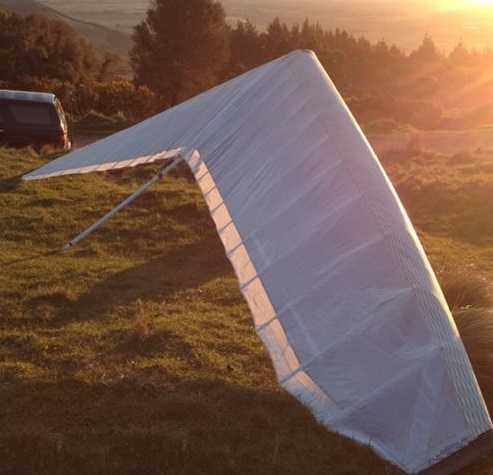
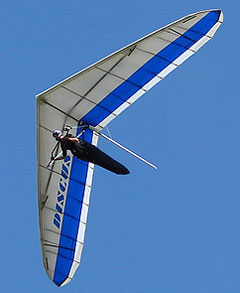
Aeros Discus

Aeros has been working on an intermediate design for about 3 years, but had not made it the priority that was warranted. The first prototype was flying in the spring of 2002 and U.S. Aeros received the first prototype during the summer for testing. After receiving this glider, U.S. Aeros’ VP, Sunny Venesky worked with the designers at the Aeros factory to fine tune the glider to get it ready for the market.
The criteria for this glider was, very stable on tow (without a fin), very stable in roll – mindlessly predictable handling, very easy to land, and vg operation that actually does something
The result is a glider that is the easiest to land than Aeros has ever produced before.

It combines high performance with simple piloting and maintaining, that makes it a perfect wing for those who do not take part in competitions, but wish to experience soaring.

Since 2006, the Discus glider has been available in all sizes, including Discus 12 and Discus 13. The Discus C becomes available for those pilots who are keen on high performance, light weight and easy handling all in one.

Discus C

The Discus’ design has curved tips, is very stable on tow, and the variable geometry mechanism allows control of the sail tension in the air, optimizing the glider’s configuration according to flight condition. Featured are curved tips, wire braced washout tube – allowing for reduction in reflex bridles, standard with Finsterwalder aerofoil hardware and speedbar, and is available in an optional 2.4 m (7 ft.) breakdown length.

Discus

The glider is available in two modifications: A and B.

  • Discus A breakdown length is 4 meters;
  • Discus B breakdown length is 2.4 meters.

The 2007 Discus C for Intermediate pilots, in addition to the aero king post and control frame, there are a range of fabric choices (including Dacron or Matrix); wire lengths also differ from the standard Discus.

A Discus M version is also offered. This modification has a different keel tube design that allows use of a number of motorised harnesses such as Mosquito, Doodlebug and the like.
A Discus 15T wing is a choice for a nanolight single-seater trike. This wing utilizes reinforced frame, trike attachment bracket and the control bar shifted backwards.
From the 2006 flying season a Discus version with aluminum airfoil speedbar and basetubes with reduced aerodynamical resistance was available. This was available as a modified Discus, or a separate option (a speedbar, basetubes, lower wires and a keel tube) to upgrade an existing glider.
The Aeros Discus C is an ideal choice for the pilot looking for a high performance glider, whilst maintaining light weight and easy handling.
The standard Aeros Discus has a very respectable performance but the Aeros Discus C is unbeatable for performance in its class.
The Discus C has retained all of the features of the standard Discus. It is a simple machine, stable on tow and very easy to land. The handling is set up for relatively experienced pilots as well as pitch pressure, so flying fast will be comfortable and bar pressure will remain acceptable.
The pulley system is modified for easier use.
The Wills Wing litestream downtube airfoil sections are not as wide as on the Combat, but are convenient and comfortable to hold in the arms.
Available in two Sizes: Discus C14 (13.7 sq.m) and Discus C15 (14.7 sq.m)
The Discus C features Matrix (Bainbridge) sail, Wills Wing Litestream down tubes, Wills Wing aluminium Airfoil basebar with all the streamline fittings, and Wills Wing Slipstream kingpost.

Discus 12
Wing area: 11.6 m²
Wing span: 9.2 m
Aspect ratio: 7.3
Hang glider weight: 25 kg
Minimum pilot weight: 50 kg
Maximum pilot weight: 80 kg
Minimum speed: 30 km/h
Maximum speed: 80 km/h
Packed length: 4.7 m
Packed length short: 3.8 m
Number of battens: 22
Nose angle: 125°

Discus 13
Sail area: 12.8 sq.m (138 sq.ft)
Wing span: 9.6 m (31.5 ft)
Aspect ratio: 7.2
Nose angle: 125-128 degs
Pilot clip weight optim.: 75 kg (165 lb)
Weight (without bags): 28.3 kg (62.3 lb)
No of upper sail battens: 20
No of bottom sail battens: 4
Breakdown length: 4.9/3.94 m (16.1/12.9 ft)
Tested load: +6 / -3 G
Wind speed max: 12 m/sec (27 mph)
Min. airspeed: 29-30 km/h (18-19 mph)
Max. airspeed: 80 km/h (50 mph)
Min. clip-in weight: 65 kg (143 lb)
Max. clip-in weight: 100 kg (220.5 lb)

Discus 14
Sail area: 13.7 sq.m (147.5 sq.ft)
Wing span: 10 m (32.8 ft)
Aspect ratio: 7.3
Nose angle: 125-128 degs
Pilot clip weight optim.: 85 kg (187 lb)
Weight (without bags): 31 kg (68 lb)
No of upper sail battens: 20
No of bottom sail battens: 4
Breakdown length: 5.1/4.1 m (16.7/13.4 ft)
Tested load: +6 / -3 G
Wind speed max: 12 m/sec (27 mph)
Min. airspeed: 29-30 km/h (18-19 mph)
Max. airspeed: 80 km/h (50 mph)
Min. clip-in weight: 75 kg (165 lb)
Max. clip-in weight: 115 kg (254 lb)

Discus 15
Sail area: 14.7 sq.m (158 sq.ft)
Wing span: 10.3 m (33.8 ft)
Aspect ratio: 7.2
Nose angle: 125-128 degs
Pilot clip weight optim.: 95 kg (209 lb)
Weight (without bags): 33 kg (73 lb)
No of upper sail battens: 20
No of bottom sail battens: 4
Breakdown length: 5.2/4.2 m (17/13.8 ft)
Tested load: +6 / -3 G
Wind speed max: 12 m/sec (27 mph)
Min. airspeed: 29-30 km/h (18-19 mph)
Max. airspeed: 80 km/h (50 mph)
Min. clip-in weight: 85 kg (187 lb)
Max. clip-in weight: 125 kg (276 lb)

Discus C14
Sail area: 13.7 sq.m

Discus C15
Sail area: 14.7 sq.m

Aeros AC-21      

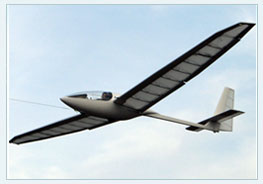
The AC-21 powered sailplane is an evolution of AL-12 design that was developed in Ukraine during 2000 – 2005 as a joint project by Aeros and Aerola. In 2006 it was decided to make a next step in the development of the sailplane, splitting the project and leaving production of AL-12 (now Alatus) in Aerola. AC-21 joins unique features of AL-12 incorporated in the new design.
The AC-21 is all about maximum enjoyment of free flight. Sweet handling, slow flight capabilities and low sink rate allows exploring “microlift” conditions, when most other gliders are unable to stay in the air. AC-21 can turn really tight.
AC-21 structural capacity has been increased keeping an aim to meet actual sailplane standards (+5.3 -2.65 G load factors). It gives us a chance of wider margin over current DULV and DAeC requirements for ultra light aircraft (+4/-2 G).
Specifically the wing leading edge D-spar had to get stronger by 25%; the ribs structural capacity and rigidity was greatly increased and the ribs are now made of carbon.
Powered by a Hirth F33 BS delivering 28 hp, it has a factory recommended TBO of 1000 hours at 75 % power.
A newly designed fuselage insures laminar flow over its front, makes room for the engine and allows full enclosure of the propeller when in glider mode. There has also been an increase in the transparent part of the canopy, improving forward visibility.

AC-21
Engine: Hirth F33 BS, 28 hp
Empty weight: 135 kg
Мах. takeoff weight: 264 kg
Wing span: 13.3 m
Sail area: 13.5 sq.m
Pilot weight: 60-110 kg
Stall speed: 52-56 km/h
Vne: 140 km/h
Best glide ratio: 27 at 70 km/h
Min. sink rate: 0.6 m/s at 67 km/h
Climb w. Engine: 2.5 m/s