Alisport Srl is comprised of three aviation divisions (sailplanes, STOL aircraft, and propellers/accessories) that operate in shared facilities.
Although Alisport’s origins are in the Silent line of light sailplanes, sport and recreation aviation is the common foundation binding the three divisions.
Alisport Srl is based in Cremella (Lecco) located in northern Italy near Milan.
1998: Vial Confalonieri 22, I-23894 Cremella LC, ITALY
2008:
Alisport Srl
Via Confalonieri, 22
Cremella (Lecco),
Italy
2000->
Alfa HB207 Alfa
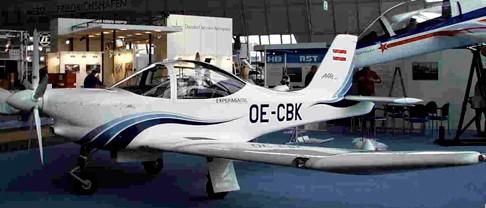
The Alfa is a European kit built aircraft designed by Heino Breditschka. An all-metal low-wing, tri-cycle gear airplane with side-by-side seating, the aircraft is 19.35 t in length and has a wing span of 29.5 ft. Suggested engine for the plane is a 110 HP Volkswagen Porsche G 2 2.400 air cooled boxer engine. The HB207 cruises at 140 kts with an fuel burn of 3.5 US Gal/hr and stalls (flaps down) at 40 kts. It features a 5 blade constant speed prop, retractable landing gear, and detachable wings.
Alfa Service Team GmbH
2009:
Alfa Service Team GmbH:
M hlgarten 22, D-99094 Erfurt M bisburg Germany
UL builder
Alenia C-27J Spartan
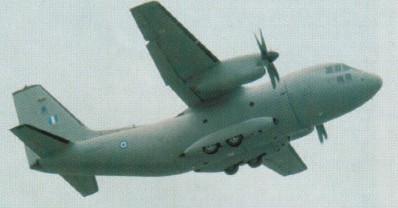
The C 27 J is a joint-venture of Alenia and Lockheed Martin based on the FIAT G222 transport, but with engines and avionics redesigned and made common with the Lockheed C-130J Hercules.
The maiden flight of the prototype (I-CERX) took place from Turin, Italy, on September 25, 1999, and lasted 1 hr 32 min. Crewed by Alenia test pilots the prototype reached 15,000 ft.
The first and second C-27 were converted G.222 aircraft, the third was the first new build.
MC-27J is a multimission transport aircraft jointly produced and marketed by Alenia Aermacchi and ATK. It is an armed, roll on/roll off (RO/RO) aircraft based on the C-27J Spartan. Alenia unveiled a new version of the C-27J Spartan battlefield air-lifter, the MC-27J, at the Farnborough International Air Show in July 2012.
The C-27J base platform is slightly modified, while the airlift capabilities of C-27J are retained. The new aircraft is incorporated with pallet-based systems for additional mission-specific capabilities.
The MC-27J can be configured to conduct troop / cargo transport, paratroops / material air-drop, medical evacuation (MEDVAC) and VIP / passenger transport. The gun barrel on the aircraft can be removed to allow reconfigurations for other missions. The aircraft also integrates a fire protection system and an ice protection system.
The two-pilot glass cockpit of the MC-27J is equipped with off-the-shelf avionics and is fully compatible with night vision imaging systems. The avionics suite integrates colour multipurpose displays, multifunction control and display units, optional head-up display units, digital auto-pilot, GPS/INS, identification friend or foe (IFF) transponder, recording systems, terrain awareness warning system (TAWS) and traffic alert and collision avoidance system (TCAS).
The onboard PaWS (palletized weapon system) provides combat capabilities for the MC-27J aircraft. The PaWS is specifically designed for the ATK GAU-23 30mm cannon and other precision guided light munitions. The system minimises collateral damages. The palletised system can be loaded / unloaded through the rear ramp of aircraft. It can be installed in the aircraft within four hours.
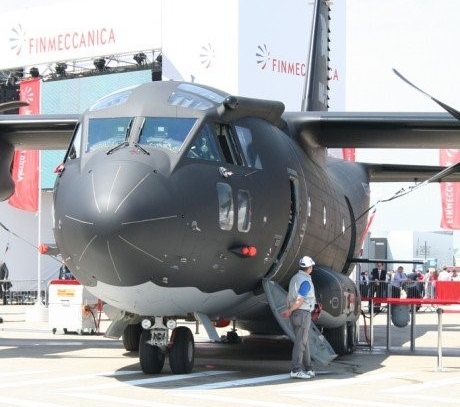
The GAU-23 Bushmaster 30mm cannon mounted on the PaWS RO/RO pallet is a chain gun that incorporates features of the M242 and Mk44 25mm cannons. The gun can fire 30mm x 173mm, PGU-13, PGU-15, and PGU-46 ammunition at a rate of 200 rounds a minute. The ammunition is fed into the gun through a dual feed system.
The palletised system also accommodates a reconfigurable mission suite incorporating sensors, communications and mission management system. The aircraft is equipped with electro-optical / infrared targeting sensors, and command, control and communications equipment.
The MC-27J serves as an independent command and control centre interfaced with the ground command network. The aircraft is also equipped to provide signal intelligence (SIGINT) intelligence surveillance and reconnaissance (ISR) capabilities. The target identification systems and weapons systems aboard the aircraft support ground missions.
The MC-27J is powered by two Rolls-Royce AE2100D2A turboprop engines. Each engine, generating 4,637shp power, drives two Dowty six-blade, all-composite propellers. Two full authority digital electronic control units control the engines and propellers.
The onboard electricity is supplied by three generators. The auxiliary power unit (APU) allows the engines to be restarted in flight during emergency conditions.
The fuel system includes four wing tanks and two dedicated fuel feed systems. The aircraft can be optionally fitted with an air-to-air refuelling probe for performing aerial refuelling.
Prototype
Engine : 2 x Allison AE 2100 D2, 4142 shp
Props: Dowty 6 blade
Alenia C 27 J Spartan
Engine : 2 x Allison AE 2100 D3, 4142 shp
Length : 74.475 ft / 22.7 m
Height : 32.152 ft / 9.8 m
Wingspan : 94.16 ft / 28.7 m
Wing area : 882.648 sq.ft / 82.0 sq.m
Max take off weight : 66150.0 lb / 30000.0 kg
Weight empty : 36382.5 lb / 16500.0 kg
Max. speed : 305 kt / 565 km/h
Cruising speed : 270 kt / 500 km/h
Initial climb rate : 1968.5 ft/min / 10.0 m/s
Service ceiling : 26247 ft / 8000 m
Cruising altitude : 19685 ft / 6000 m
Wing load : 75.03 lb/sq.ft / 366.0 kg/sq.m
Maximum range : 2484 nm / 4600 km
Range : 1350 nm / 2500 km
Range (max. weight) : 540 nm / 1000 km
Crew : 2
Payload : 53 pax (max 10.000kg)
MC-27J
Engines: 2 x Rolls-Royce AE2100D2A turboprop, 4,637shp
Propellers: Dowty six-blade, all-composite
Length: 22.7m
Wing span: 28.7m
Height: 9.6m
Maximum take-off weight: 30,500kg
Maximum altitude: 30,000ft
Cruising speed: 583km/h
Maximum speed: 602km/h
Maximum range: 1,852km
Ferry range: 5,926km
Akaflieg Stuttgart
2008:
Pfaffenwaldring 35
70569 Stuttgart
Vaihinfen
Germany
Akaflieg Munchen Mü-30 Schlacro
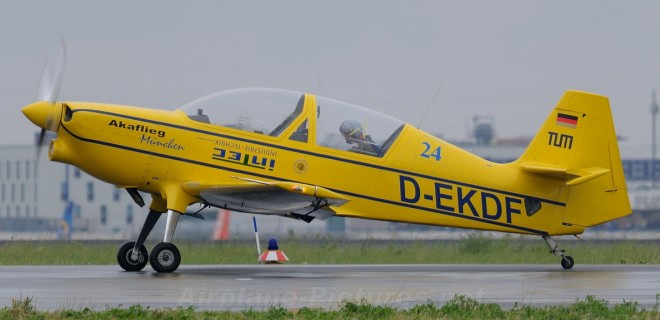
Students at Akaflieg München recognized that the requirements of an aerobatic aircraft and glider tug coincided, both needing a high power-to-weight ratio, high rate of climb at relatively low speed, and high control authority. To meet these requirements design and construction of the Mü30 Schlacro (SCHLepp-ACRObatic) began in 1985 led by Dieter Thomas. Initially it was intended to fit a Porsche PFM 3200, obtained from Porsche at no cost. Use of the PFM 3200 promised to cut operating costs and environmental impact dramatically, with the engine certified to use MOGAS in place of the very expensive AVGAS, but Porsche abandoned development of the PFM3200 in 1992, leaving the Mü30 without an engine.
During development the ailerons were optimized for maximum roll rate, the wings revised with carbonfibre structure and the center of gravity adjusted by moving the wings 150mm (6ins) forward, compensating for a heavier Lycoming engine and ensuring reserve for possible future re-design.
Work on the prototype continued and an alternative engine installation was designed for the 223 kW (300 hp) Lycoming AEIO-540 driving a four-bladed propeller. First flight with the Lycoming engine was carried out in 2000 with flight testing continuing till 2003. Problems with cooling the Lycoming engine necessitated the complete re-design of the cooling air intake, exhaust system and cowling.
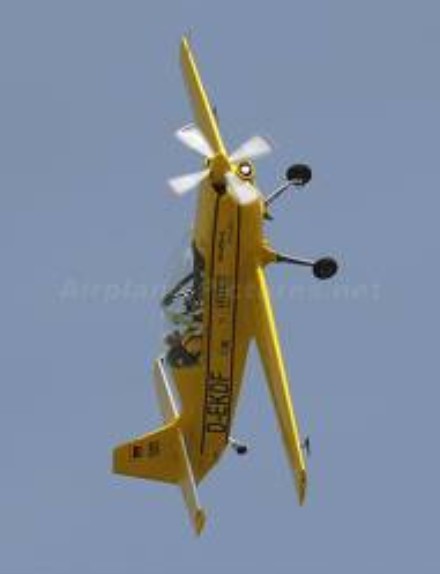
Flying re-commenced on 16 February 2007, resuming flight tests which proved to be satisfactory and certification is well advanced. Initial problems with lateral stability have been overcome by altering the control geometry and flight tests by Uli Schell have revealed the aircraft to have adequate stability and be easy to control. Flight testing was completed by New Year’s Eve 2007, with the exception of Vd (Maximum Design Dive Speed – 1.2x Vne) which had earlier highlighted problems with the elevator trim. After thickening the trailing edge of the elevators the trim problems were alleviated and the Vd test was carried out successfully.
Mü30
Engine: Lycoming AEIO-540, 223 kW (300 hp)
Length: 7.5 m
Wingspan: 9 m
Empty weight: 748 kg
Maximum speed: 400 km/h (216 mph)
Akaflieg Munchen Mü-23 Saurier
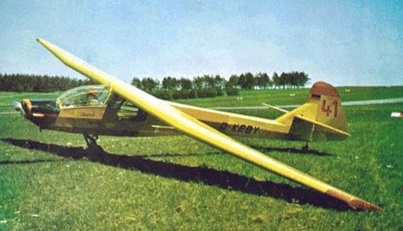
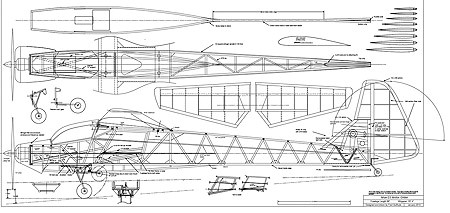
In 1957 the students at Akaflieg München began the design and construction of the Mü23 Saurier two-seat motor-glider. Using the classic ‘Munich School’ construction technique, the Mü23 was built using fabric covered welded steel tube for the fuselage and wooden wings and tail covered with plywood and fabric. The pilot sitting directly behind the engine under a built-up transparent canopy and the passenger sitting in a compartment under the centre section of the wing, similar to the seating arrangement of the Akaflieg München Mü10 Milan.
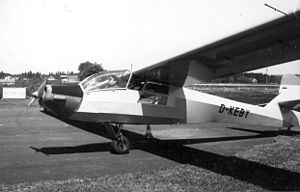
Using the Mü Scheibe aerofoil section imbued the Mü23 with excellent low speed characteristics and short landings and takeoffs, but development was slowed by problems with the chosen engines, initially a Volkswagen VW1200, later a Braendle ZB700 and finally a Volkswagen VW1500N which gave satisfactory performance.
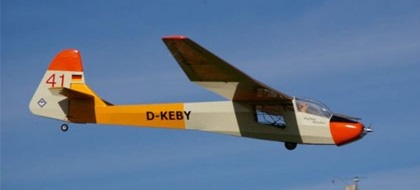
Once the performance of the aircraft could be guaranteed with the VW1500N engine, the Mü23 took part in sailplane and motor glider competitions with some success. In 2010 the Mü23 is undergoing restoration.
Mü23 Saurier
Engine: 1 × Volkswagen VW1500N, 33.5 kW (45 hp)
Wingspan: 20 m (65 ft 7 in)
Wing area: 24 m2 (258 ft2)
Aspect ratio: 16.7
Wing profile: Mü Scheibe
Empty weight: 477 kg (1,052 lb)
Gross weight: 700 kg (1,543 lb)
Crew: 1
Capacity: 1
Akaflieg Berlin
2008:
Straffe des 17. Juni 135
Berlin 10623
Germany
Airwave Gliders Sportster
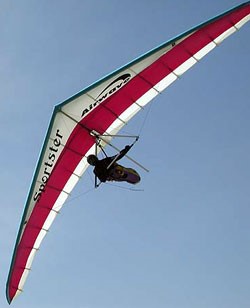
The Airwave Sportster is a 2002 hang glider for intermediate pilots.
Sportster S
Wing area: 12.4 m²
Wing span: 9.9 m
Aspect ratio: 7.9
Hang glider weight: 28 kg
Minimum pilot weight: 75 kg
Maximum pilot weight: 130 kg
Packed length: 4.9 m
Packed length short: 3.7 m
Sportster M
Wing area: 13.9 m²
Wing span: 10 m
Aspect ratio: 7.19
Hang glider weight: 30 kg
Minimum pilot weight: 80 kg
Maximum pilot weight: 138 kg
Packed length: 5.2 m
Packed length short: 3.85 m
Sportster L
Wing area: 14.8 m²
Wing span: 10.35 m
Aspect ratio: 7.24
Hang glider weight: 31 kg
Minimum pilot weight: 88 kg
Maximum pilot weight: 140 kg
Packed length: 5.25 m
Packed length short: 3.9 m
Airwave Gliders Mustang

Airwave’s first production glider with the Hybrid sail was the Mustang in spring 2005. Much of the design of the Mustang has been directly handed down from Airwave’s Magic FR competition glider.
The internal structure is very similar, using the tri-cell diagonal system. The spanwise tension is also controlled with horizontal bands on the trailing edge on the bottom surface as well as internal bands on the unsupported cells close to the top surface to help reduce unwanted wobbliness or movement within the wing.
The Mustang is constructed from 586 separate pieces of ripstop nylon66 high tenacity cloth, each piece being a different shape designed using Airwave’s CAD system. This number of panels excludes all the reinforcing patches.
Optimisation of the sail cut, wind tunnel tests, the aerodynamic profile, an aspect ratio of 5.8, and minimal line length are all performance refinements that have led to the glide performance of the Mustang. The Mustang, with a trim speed glide performance close to 9:1, has a surprisingly flat polar for a wing of this class.
The concept of mixing cloths on the top surface, putting Gelvenor on the first stripe of the leading edge and 39 gm/m, Porcher 9017 E38A on the rest of the top surface, has the objective to make a glider that lasts just as long as a 100% Gelvenor wing, but with the lighter overall. The result is the Hybrid top surface.
The Mustang has a progressive system where the tip is fully closed as usual and then as you move towards the centre of the wing there are progressively more and more open cells until you reach the fully open section in the centre. This gives just the right amount of air circulation, excellent inflation and enhanced performance.
The wing reacts well to weightshift, barley needing brakes to swing into a coordinated turn, making the Mustang great for aerobatics.
The Mustang has a tendency to self-centre in the thermal, and it is simple to adjust your bank angle to match exactly the size of your thermal.
The Mustang 2 kept the same basic profile and shape but was re-tuned with an increase ofy 1sq.m without taking away any of the original Mustang’s agility. This slightly larger sail gave a better sink rate at all speeds and has dramatically decreased the stall speed from the Mustang 1’s 23 km/h, to 20 km/h.
At the top end of the speed range the new profile technology has given the Mustang 2 greater stability when accelerated giving the glider a large and very usable speed range
A development in line layout has given the Mustang 2 a longer more progressive brake range that its predecessor whilst keeping the same level of agility and making the wing even more responsive to small precise brake movements. The line layout has been simplified resulting in less line, less drag and hence a better glide at speed and the accelerator redesigned to be more like competition wings.
Price in 2008 EUR 2730
Mustang XS
Linear scaling factor: 0,92
Projected area: 18,35 sq.m
Flat area: 20,93 sq.m
Weight excl bag: 4,7 kg
Total line length: 359 m
Height: 7,50 m
Number of main lines: 3/4/3/2
Cells: 94/57
Flat aspect ratio: 5,72
Projected aspect ratio: 4,33
Root cord: 2,41 m
Flat span: 10,94 m
Projected span: 8,92 m
Weight range: 50-70 kg
Trim speed: 37 Km/h
Top speed: 55 Km/h
Min sink: 1,1 m/sec
Best glide: 9
Certification: Load Test
Mustang S
Linear scaling factor: 0,96
Projected area: 19,98 sq.m
Flat area: 22,79 sq.m
Weight excl bag: 5,2 kg
Total line length: 376 m
Height: 7,82 m
Number of main lines: 3/4/3/2
Cells: 94/57
Flat aspect ratio: 5,72
Projected aspect ratio: 4,33
Root cord: 2,51 m
Flat span: 11,42 m
Projected span: 9,30 m
Weight range: 65-85 kg
Trim speed: 37 Km/h
Top speed: 55 Km/h
Min sink: 1,1 m/sec
Best glide: 9
Certification: DHV 2
Mustang M
Linear scaling factor: 1
Projected area: 21,68 sq.m
Flat area: 24,73 sq.m
Weight excl bag: 5,6 kg
Total line length: 390 m
Height: 8,20 m
Number of main lines: 3/4/3/2
Cells: 94/57
Flat aspect ratio: 5,72
Projected aspect ratio: 4,33
Root cord: 2,62 m
Flat span: 11,98 m
Projected span: 9,75 m
Weight range: 80-100 kg
Trim speed: 37 Km/h
Top speed: 55 Km/h
Min sink: 1,1 m/sec
Best glide: 9
Certification: DHV 2
Mustang L
Linear scaling factor: 1,04
Projected area: 23,45 sq.m
Flat area: 26,75 sq.m
Weight excl bag: 6,1 kg
Total line length: 413 m
Height: 8,47 m
Number of main lines: 3/4/3/2
Cells: 94/57
Flat aspect ratio: 5,72
Projected aspect ratio: 4,33
Root cord: 2,72 m
Flat span: 12,37 m
Projected span: 10,08 m
Weight range: 95-120 kg
Trim speed: 37 Km/h
Top speed: 55 Km/h
Min sink: 1,1 m/sec
Best glide: 9
Certification: DHV 2
Mustang XL
Linear scaling factor: 1,08
Projected area: 25,29 sq.m
Flat area: 28,85 sq.m
Weight excl bag: 6,5 kg
Total line length: 432 m
Height: 9,15 m
Number of main lines: 3/4/3/2
Cells: 94/57
Flat aspect ratio: 5,72
Projected aspect ratio: 4,33
Root cord: 2,83 m
Flat span: 13,36 m
Projected span: 10,89 m
Weight range: 115-140 kg
Trim speed: 37 Km/h
Top speed: 55 Km/h
Min sink: 1,1 m/sec
Best glide: 9
Certification: Load Test
MUSTANG 2 S
Projected area: 20.64 sq.m
Flat area: 23.57 sq.m
Weight excl bag: 5.5 kg
Total line length: 376 m
Height: 7.5 m
Number of main lines: 3/4/3/2
Cells: 57
Flat aspect ratio: 5.7
Root cord: 2.56 m
Weight range: 65-85 kg
Trim speed: 37 Km/h
Top speed: 55 Km/h
Min sink: 1.1 m/sec
Best glide: 9
Certification: DHV 2
MUSTANG 2 M
Projected area: 22.40 sq.m
Flat area: 25.58 sq.m
Weight excl bag: 6.0 kg
Total line length: 385 m
Height: 7.63 m
Number of main lines: 3/4/3/2
Cells: 57
Flat aspect ratio: 5.7
Root cord: 2.67 m
Weight range: 83-103 kg
Trim speed: 37 Km/h
Top speed: 55 Km/h
Min sink: 1.1 m/sec
Best glide: 9
Certification: DHV 2
MUSTANG 2 L
Projected area: 24.23 sq.m
Flat area: 27.67 sq.m
Weight excl bag: 6.5 kg
Total line length: 413 m
Height: 8.25 m
Number of main lines: 3/4/3/2
Cells: 57
Flat aspect ratio: 5.7
Root cord: 2.77 m
Weight range: 100-120 kg
Trim speed: 37 Km/h
Top speed: 55 Km/h
Min sink: 1.1 m/sec
Best glide: 9
Certification: DHV 2
MUSTANG 2 XL
Projected area: 26.61 sq.m
Flat area: 30.39 sq.m
Weight excl bag: 7.1 kg
Total line length: 432 m
Height: 9.07 m
Number of main lines: 3/4/3/2
Cells: 57
Flat aspect ratio: 5.7
Root cord: 2.91 m
Weight range: 115-140 kg
Trim speed: 37 Km/h
Top speed: 55 Km/h
Min sink: 1.1 m/sec
Best glide: 9
Certification: DHV 2
MUSTANG 2 XXL
Projected area: 28.38 sq.m
Flat area: 33.13 sq.m
Weight excl bag: 7.5 kg
Total line length: 434 m
Height: 9.32 m
Number of main lines: 3/4/3/2
Cells: 57
Flat aspect ratio: 5.7
Root cord: 2.97 m
Weight range: 135-160 kg
Trim speed: 37 Km/h
Top speed: 55 Km/h
Min sink: 1.1 m/sec
Best glide: 9
Certification: Load Test
 All Aero