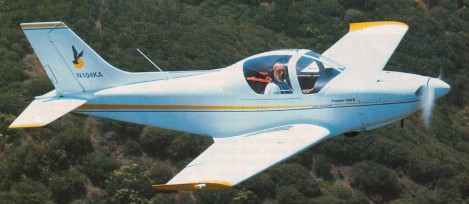
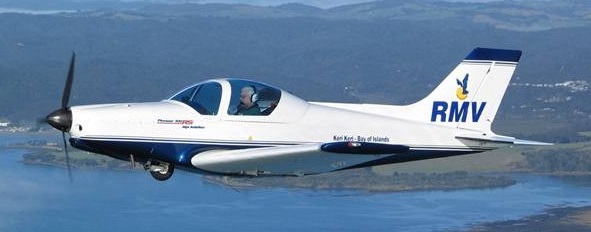
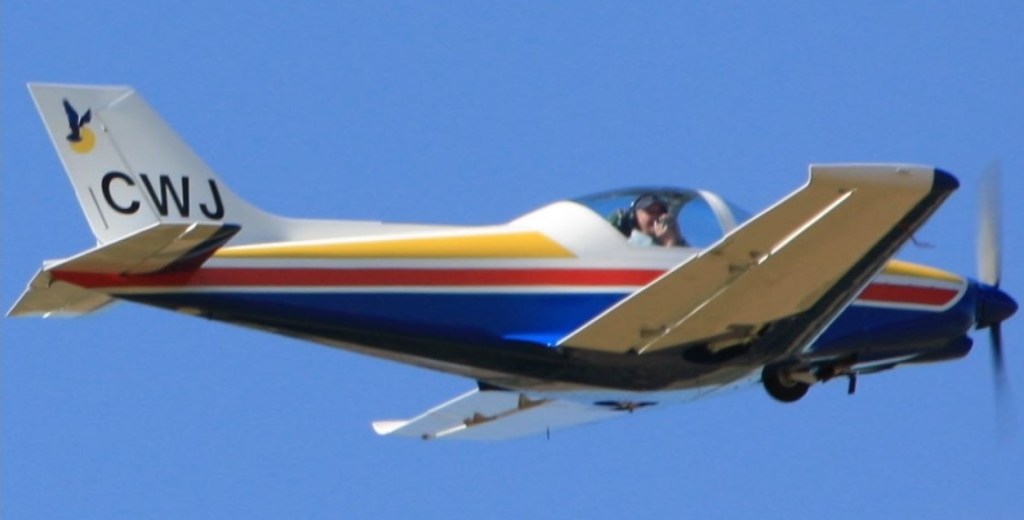
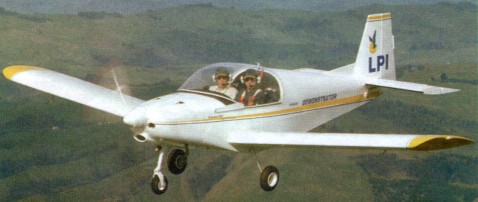
Alpi Aviation Pioneer 400

Pioneer 400 V.L.A
Engine: Rotax, 100hp
Propeller: Variable Pitch
Wing Span: 8,8 m
Wing Area: 11.2 sq.m
Length: 7 m
Cabin Width: 1.10 m
Empty Weight: 360 Kg
Max Takeoff Weight: 750 Kg
Load Factor: +3,8/1,92 G
Load Factor @ 560 Kg: +4 / -2 G
Fuel Capacity: 80 Lt
Payload: 390 Kg
Baggage Volume: 315 Lt
Max Baggage Load: 30 Kg
Maximum Level Speed: 135 kts
Cruise Speed (@ 75% Power): 120 kts
Stall Speed: 43 kts
Best Angle Of Climb Speed (Vx): 80 kts
Best Rate Of Climb Speed (Vy): 65 kts
Best Climb Rate: 800 ft/min
Roll Rate: 90°/sec
Glide Ratio: 13:1
Range (@ 75% Power): 900 km
Fuel Consumption (@ 75% Power): 18.5 l/h
Service Ceiling: 5000 m
Take Off Distance: 280 m
Landing Distance: 200 m

Pioneer 400 U.L.M.
Engine: Rotax, 100hp
Propeller: Variable Pitch
Wing Span: 8,8 m
Wing Area: 11.2 sq.m
Length: 7 m
Cabin Width: 1.10 m
Empty Weight: 290 Kg
Max Takeoff Weight: 450 Kg
Load Factor: +3,8/1,92 G
Load Factor @ 560 Kg: +4 / -2 G
Fuel Capacity: 80 Lt
Payload: 160 Kg
Baggage Volume: 315 Lt
Max Baggage Load: 30 Kg
Maximum Level Speed: 135 kts
Cruise Speed (@ 75% Power): 120 kts
Stall Speed: 35 kts
Best Angle Of Climb Speed (Vx): 80 kts
Best Rate Of Climb Speed (Vy): 65 kts
Best Climb Rate: 1500 ft/min
Roll Rate: 90°/sec
Glide Ratio: 13:1
Range (@ 75% Power): 900 km
Fuel Consumption (@ 75% Power): 18.5 l/h
Service Ceiling: 6000 m
Take Off Distance: 120 m
Landing Distance: 120 m

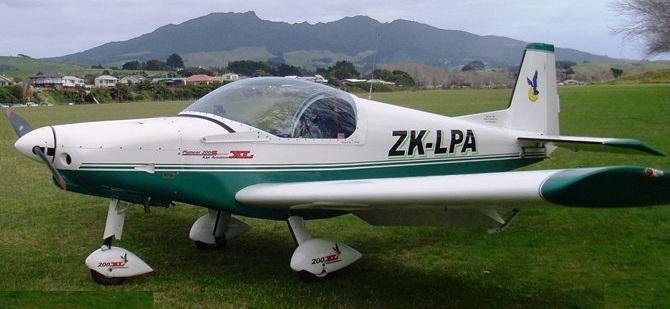
Alpi Aviation Pioneer 330 Acro

Developed in 2004, the Pioneer 330 Acro basic level aircraft trainer is designed to be equipped with the inverted flight engine kit for the Rotax 912S and a smoke system.
Based on the P300 structure, the P330 has been strengthened to reach from +9 g up to -4.5 g, giving +6 to –3 usable.
The wing has a pass through main spar and fully plywood skin covering, and a three axis trim system.

Engine: Rotax 912S
Propeller: Variable Pitch
Wing Span: 7.55 m
Wing Area: 10 sq.m
Fuselage Length: 6.25 m
Cabin Width: 1.05 m
Cabin Height: 1.05 m
Empty Operative Weight: 295 Kg
Maximum Takeoff Weight (Ulm): 450 Kg
Maximum Design Takeoff Weight: 530 Kg
Load Factors : +6 / -3 G
Tank Capacity: 80 lt (2 x 40 lt)
Auxiliary Tank Capacity: 22 lt
Payload Limit (Ulm): 165 Kg
Design Payload Limit: 245 Kg
Baggage Volume: 226 lt
Maximum Baggage Amount: 20 Kg
Maximum Level Speed: 270 Km/H
Cruise Speed (@ 75% Power): 240 Km/H
Stall Speed: 65 Km/H
Best ROC Speed : 120 Km/H
Best Angle Climb Speed: 100 Km/H
Best Rate Of Climb: 460 M/Min (1500 Ft/Min)
Roll Rate: 180°/Sec
Range @ 75% Power: 12.5:1
Range @ 75% Power With Auxiliary Tank: 1260 Km
Operative Ceiling Altitude: 6000 m
Take Off & Landing Ground Run: 120 m

Alpi Aviation Pioneer 300

The Asso V Champion was built by Alpi Aviation with composite skin panels as the Pioneer 300.

The Pioneer 300 STD has an S version with a shorter wing span, retractable landing gear and is produced in Italy. Both the 200 and 300 are fitted with the AVTEK in flight adjustable prop. The Pioneer 300 has a 300 kph VNE, while remaining within the ultralight aircraft rules, and the first engines installed were Mid-West, obtaining the BFU (German Certification). The aircraft is a compromise between performances, fuel consumption and flight quality.

The tricycle retractable landing gear has electrical landing gear retraction with manual emergency actuation and a stearable nose landing gear. The 2 place, side by side arrangements has double control stick and detachable wing.

Engine options include the Rotax 912 80 hp, Rotax 912S 100 hp, Jabiru 3300 120 hp, Jabiru 2200 80 hp, and Midwest wankel 110 hp.
The Pioneer 300 Turbo is a turbocharged version.

The Pioneer 300 Hawk is derived from the Pioneer 300 standard, maintains the P300 flight qualities and is equipped with a good quality & luxury interiors.
The detachable wing has a skin fully made of plywood and the retractable landing gear is equipped with a gas-oil damper system. The aircraft is equipped with the higher and more aerodynamic canopy. The instrument panel is made of composite materials and has a three dimensional shape.
The electrical landing gear retraction has a manual emergency actuation and stearable nose gear.

Powered by a Rotax 912 ULS with an Idrovario C/S prop, the Alpi Pioneer JayHawk cruises at 130 kts.

Alpi Pioneer JayHawk

Gallery

Variation: Keli SkySpark

Engine: Rotax 912 UL, 80 hp
Wing Span: 7.55 m
Wing Area: 10 sq.m
Fuselage Length: 6.25 m
Cabin Width: 1.05 m
Cabin Height: 1.05 m
Empty Operative Weight: 290 Kg
Maximum Take Off Weight (Ulm): 450 Kg
Maximum Design take Off Weight: 530 Kg
Load Factors: +4 / -2 G
Tank Capacity: 80 lt (2 x 40 lt)
Auxiliary Tank Capacity: 32 lt
Pay Load Limit (Ulm): 160 Kg
Design Pay Load Limit: 240 Kg
Baggage Volume: 226 lt
Maximum Baggage Amount: 20 Kg
Aspect ratio: 13-1

Pioneer 300 STD
Engine: Rotax 912, 100 hp.
Prop: AVTEK.
Stall: 32 kt / 37 mph / 60 kmh
Cruise: 135 kt / 155 mph / 250 kmh
VNE: 154 kt / 177 mph / 285 kmh
Empty Weight: 285 kg / 628 lbs
MTOW Weight: 472 kg / 1041 lbs
Climb Ratio: 1400 ft/min / 7,5 m/s
Glide Ratio: 1:14
Take-off distance (50ft obstacle): 490 ft / 150 m
Landing distance (50ft obstacle): 490 ft / 150 m

Pioneer 300 S
Engine: Rotax 912S, 100 hp
Propeller: Fixed Pitch
Wing Span: 7.55 m
Wing Area: 10 sq.m
Fuselage Length: 6.25 m
Cabin Width: 1.05 m
Cabin Height: 1.05 m
Empty Operative Weight: 285 Kg
Maximum Takeoff Weight (Ulm): 450 Kg
Maximum Takeoff Weight (Jar-Vla): 530 Kg
Load Factors: +4 / -2 G
Tank Capacity: 80 lt
Auxiliary Tank Capacity: 32 lt
Overall Payload Limit (Ulm): 165 Kg
Overall Payload Limit (Jar-Vla): 245 Kg
Baggage Volume: 226 lt
Maximum Baggage Amount: 20 Kg
Maximum Levelled Speed: 285 Km/H)
Cruise Speed (@ 75% Power): 255 Km/H
Stall Speed: 65 Km/H
Best ROC Speed: 120 Km/H
Best Climb Angle Speed: 100 Km/H
Best Rate Of Climb: 460 M/Min (1500 Ft/Min)
Roll Speed: 120°/Sec
Range @ 75% Power: 1000 Km
Range @ 75% Power With Auxiliary Tank: 1450 Km
Operative Ceiling Altitude: 6000 m
Takeoff & Landing Ground Run: 120m

Pioneer 300 N
Engine: Rotax 912S, 100 hp
Propeller: Fixed Pitch
Wing Span: 7.55 m
Wing Area: 11 sq.m
Fuselage Length: 6.25 m
Cabin Width: 1.05 m
Cabin Height: 1.05 m
Empty Operative Weight: 285 Kg
Maximum Takeoff Weight (Ulm): 450 Kg
Maximum Takeoff Weight (Jar-Vla): 530 Kg
Load Factors: +4 / -2 G
Tank Capacity: 80 lt
Auxiliary Tank Capacity: 32 lt
Overall Payload Limit (Ulm): 165 Kg
Overall Payload Limit (Jar-Vla): 245 Kg
Baggage Volume: 226 lt
Maximum Baggage Amount: 20 Kg
Maximum Levelled Speed: 270 Km/H
Cruise Speed (@ 75% Power): 240 Km/H
Stall Speed: 62 Km/H
Best ROC Speed: 120 Km/H
Best Climb Angle Speed: 100 Km/H
Best Rate Of Climb: 460 M/Min (1500 Ft/Min)
Roll Speed: 120°/Sec
Range @ 75% Power: 1000 Km
Range @ 75% Power With Auxiliary Tank: 1450 Km
Operative Ceiling Altitude: 6000 m
Takeoff & Landing Ground Run: 120m

Pioneer 300 Hawk
Engine: Rotax 912S
Propeller: Variable Pitch
Wing Span: 7.55 m
Wing Area: 10 sq.m
Fuselage Length: 6.25 m
Cabin Width: 1.05 m
Cabin Height: 1.05 m
Empty Operative Weight: 290 Kg
Maximum Takeoff Weight (Ulm): 450 Kg
Maximum Takeoff Weight ((Jar-Vla): 530 Kg
Load Factors: +4 / -2 G
Tank Capacity: 80 lt (2 x 40 lt)
Auxiliary Tank Capacity: 32 lt
Overall Payload Limit (Ulm): 160 Kg
Overall Payload Limit (Jar-Vla): 240 Kg
Baggage Volume: 226 lt
Maximum Baggage Amount: 20 Kg
Maximum Levelled Speed: 285 Km/H
Cruise Speed (@ 75% Power): 255 Km/H
Stall Speed: 65 Km/H
Best ROC Cimb Speed: 120 Km/H
Best Climb Angle Speed: 100 Km/H
Best Rate Of Climb: 460 M/Min (1500 Ft/Min)
Roll Speed: 120°/Sec
Range @ 75% Power: 1000 Km
Range @ 75% Power With Auxiliary Tank: 1450 Km
Operative Ceiling Altitude: 6000 m
Takeoff & Landing Ground Run: 120 m

Alpi Pioneer JayHawk
Rotax 912 ULS with an, the
Prop: Idrovario C/S
Cruises: 130 kt
All up weight: 544 kg
Useful load: 204 kg
Fuel capacity: 80 lt
Undercarriage: retractable

Alpi Aviation Pioneer 200

Pioneer LP200

Alpi Aviation ws started by a group of amateur builders desiring and ultralight shaped like a general aviation aircraft. This led to the design of the Pioneer with retractable undercarriage, electric flaps, tapered wings, a carbon-covered fuselage, wing tanks, and a wooden structure.
The Pioneer 200 STD is wooden construction, simple and without frills, and the fuselage wood truss structure is common with the Pioneer 300. The aircraft has also the same instrument panel, central consol and the composite materials engine cowling.
The aircraft has a fixed landing gear and a rectangular wing with a main spar made of Spruce wood and ten ribs per wing. The torsion resistance is maintained by a plywood ‘D’ shaped box.
A rear spar supports the hinges and aileron controls aluminium push-pull tubes, and the overall aircraft structure is covered by a Dacron fabric. Some mechanical parts are common with the Pioneer 300 such as: control stick, rudder and elevator hinges, braking system, and wheels. The front hinged canopy is made of a one piece, transparent polycarbonate.
The aluminium fuel tank has a standard capacity of 54 litres and is positioned inside the fuselage. Powerplants can be from 60 to 80 hp.
Produced in Italy. Both the 200 and 300 are fitted with the AVTEK in flight adjustable prop.
In 2004 Alpi developed the aerobatic Pioneer 330 and a cheaper Pioneer 200 version equipped with the Sauer engine. Alpi also received the UK, JAR-VLA standards certification, a strongly and severe certification standard, really pursued and finally obtained as a relevant objective.
The Pioneer 200 Sauer is the cheaper version equipped with the Sauer engine, a Volkswagen derived engine. The low engine price together with the basic aircraft configuration permits a mix between cost and performances.
The Pioneer 200 Sauer features a 65 hp Sauer engine, tricycle fixed landing gear, with a stearable nose wheel, 2 place, side by side seating with double control stick, a fully fabric covered wood structure, and detachable wing.
The kit includs everything except the engine, propeller and instruments.
The Pioneer 200 Sparrow, similar to the P300 Hawk, has a composite, three dimensional shape to improve the instrument visual and the interiors look.instrument panel. The aircraft has good quality & luxury interior that give the P200 Sparrow a general aviation look, strobe lights and landing lights, and cabin heat. Sparrow features a Rotax 912 100 hp, landing gear fairings, the horizontal and vertical tail with composite tips, detachable wing, well finished and comfortable interiors, with car quality ergonomic seats, and blue polycarbonate transparent canopy.

ALPI Pioneer 200S

The Pioneer P200 Beluga is derived from the standard P200, has the rear fuselage turtle modified to be opened and transformed into a long baggage vane. The Beluga model has all the P200 performances.

Pioneer 200
Engine: Rotax 912, 80 hp
Propeller: fixed pitch
Wing Span: 7.55 m
Wing Area: 10.5 sq.m
Fuselage Length: 6.15 m
Cabin Width: 1.05 m
Cabin Height: 1.00 m
Empty Operative Weight: 275 Kg
Maxium Take Off Weight (Ulm): 450 Kg
Maximum Take Of Weight (Vla): 520 Kg
Load Factors: +4 / -2 G
Fuel Capacity: 54 lt
Auxiliary Tank Capacity: 17 lt
Payload (Ulm): 175 Kg
Payload (Vla): 245 Kg
Baggage Volume: 226 lt
Maximum Baggage: 20 Kg
Maximum levelled speed: 215 km/h
VNE: 130 kt / 149 mph / 240 kmh
Cruise speed 75% pwr: 100 kt / 115 mph / 185 km/h
Stall speed: 65 km/h
Max rate climb speed: 110 km/h
Max angle climb speed: 90 km/h
Best rate of climb: 300 m/min (980 ft/min)
Roll rate: 90°/sec
Range 75% pwr: 650 km
Range 75% pwr aux fuel: 830 km
Operative ceiling: 5000 m
Take off & landing ground run: 100 m
Take-off distance (50ft obstacle): 590 ft / 180 m
Landing distance (50ft obstacle): 390 ft / 120 m

Pioneer 200 Sauer
Engine: Sauer 65 hp
Stall: 35 kt / 40 mph / 65 kmh
Cruise: 89 kt / 103 mph / 165 kmh
VNE: 103 kt / 118 mph / 190 kmh
Wing Span: 7.55 Mm
Wing Area: 10.5 sq.m
Fuselage Length: 6.15 Mm
Cabin Width: 1.05 m
Cabin Height: 1.00 m
Empty Operative Weight: 270 kg
Maxium Takeoff Weight (Ulm): 450 kg
Maximum Design Take Off Weight: 520 kg
Climb Ratio: 500 ft/min / 3 m/s
Glide Ratio: 11:1
Take-off distance (50ft obstacle): 790 ft / 240 m
Landing distance (50ft obstacle): 390 ft / 120 m
Load Factors: +4 / -2 G
Fuel Capacity: 54 lt
Auxiliary Fuel Capacity: 17 lt
Payload (Ulm): 185 kg
Design Payload Limit: 250 kg
Baggage Volume: 226 lt
Maximum Baggage: 20 kg

Pioneer 200 Sparrow
Engine: Rotax 912, 100 hp
Propeller: Fixed Pitch
Max Level Speed: 225 Km/h
Cruise Speed 75% pwr: 210 Km/h
Stall Speed: 65 Km/h
Best ROC speed: 110 Km/h
Best angle speed: 90 Km/H
Best Rate of Climb: 425 m/min (1400 fpm)
Roll Rate: 90°/Sec
Range 75% Pwr: 600 Km
Range 75% Pwr Aux fuel: 800 Km
Operating Ceiling: 6000 m
Take Off & Landing Ground Run: 80 m
Wing Span: 7.55m
Wing Area: 10.5 sq.m
Fuselage Length: 6.15 m
Cabin Width: 1.05 m
Cabin Height: 1.00 m
Empty Operative Weight: 282 Kg
Maxium Take Off Weight (Ulm): 450 Kg
Maximum Take Off Weight (Vla): 520 Kg
Load Factors: +4 / -2 G
Fuel Capacity: 54 lt
Auxiliary Fuel Capacity: 17 lt
Overall Payload Limit (Ulm): 168 Kg
Overall Payload Limit (Vla): 238 Kg
Baggage Volume: 226 lt
Maximum Baggage: 20 Kg

Pioneer 200 Beluga
Engine: Rotax 912, 80 hp
Propeller: Fixed Pitch
Wing Span: 7.55 m
Wing Area: 10.5 sq.m
Fuselage Length: 6.15 m
Cabin Width: 1.05 m
Cabin Height: 1.00 m
Empty Operative Weight: 275 Kg
Maxium Takeoff Weight (Ulm): 450 Kg
Maximum Design Takeoff Weight: 520 Kg
Load Factor: +4 / -2 G
Tank Capacity: 54 lt
Auxiliary Tank Capacity: 17lt
Pay Load Limit (Ulm): 180 Kg
Design Payload Limit: 245 Kg
Baggage Volume: 500 lt
Maximum Baggage Amount: 60 Kg
Maximum Levelled Speed: 215 Km/H
Cruise Speed (@ 75% Power): 185 Km/H
Stall Speed: 65 Km/H
Best ROC Speed: 110 Km/H
Steep Climb Speed: 90 Km/H
Best Rate Of Climb: 300 M/Min (980 Ft/Min)
Roll Speed: 90°/Sec
Range @ 75% Power: 650 Km
Range @ 75% Power With Auxiliary Tank: 830 Km
Operative Ceiling Altitude: 5000 M
Takeoff & Landing Ground Run: 100 M

Alpi Aviation

Alpi Aviation was started by a group of amateur builders desiring and ultralight shaped like a general aviation aircraft. This led to the design of the Pioneer with retractable undercarriage, electric flaps, tapered wings, a carbon-covered fuselage, wing tanks, and a wooden structure.
In 2004 the Croatian Alpi factory has been renewed and enlarged with a completely new shed that permits a higher production rate for the wood structure that involves the higher man hours amount during the manufacturing process.

Allison T406 / AE 1107C-Liberty / Rolls-Royce T406

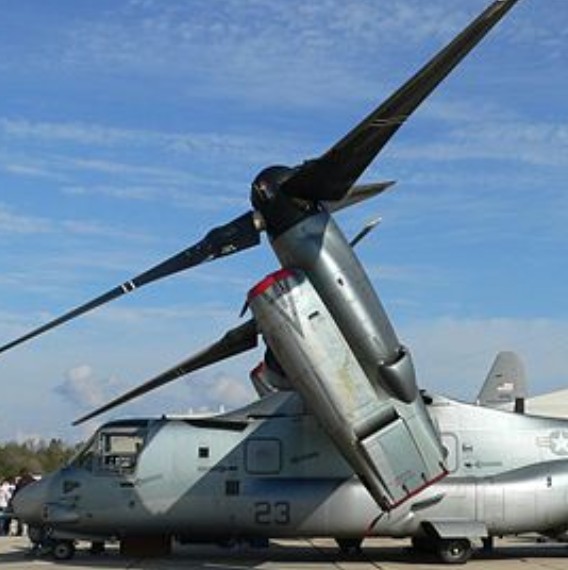
A T406 engine Nacelle on a V-22

The Rolls-Royce T406 (company designation AE 1107C-Liberty) is a turboshaft engine which powers the Bell-Boeing V-22 Osprey tiltrotor. The engine delivers 6,000 shp (4,470 kW) and shares a common core with the AE 3007 and AE 2100 series of engines.

The V-22’s T406 powerplants are housed in wing-tip tilting nacelles, allowing the distinctive flight characteristics of the V-22. For take off and landing the nacelles are directed vertically (90° to fuselage), while for forward flight they are rotated parallel to fuselage.

In April 2012, the DoD ordered 70 AE 1107C engines for the Osprey, with options for up to 268 engines.

Applications
V-22 Osprey

Specifications:
T406
Type: Turboshaft
Length: 78.1 in (1,980 mm)
Diameter: 34.2 in (890 mm)
Dry weight: 971 lb (440 kg)
Compressor: 14-stage high pressure axial compressor
Turbine: 2-stage high pressure and 2-stage power turbine
Maximum power output: 6,150 shp (4,586 kW)
Overall pressure ratio: 16.7:1
Power-to-weight ratio: 6.33 shp/lb (10.4 kW/kg)

Allison Engine Company

The Allison Engine Company has its roots in September 1904, when the Concentrated Acetylene Company was founded by James Allison, Percy C. ‘Fred’ Avery and Carl G. Fisher. Avery was the holder of the patent for the product. This company was the predecessor of the Prest-O-Lite Company, a manufacturer of acetylene headlights. An explosion at the acetylene gas works in downtown Indianapolis caused the company to relocate out of town, near the race track in Speedway, Indiana. Allison and Fisher raced automobiles at that track, each owning a race car team. This hobby resulted in Allison building a shop at the track in Speedway where he maintained his fleet of race cars. This shop became the site for Allison Plant #1. Fisher and Allison sold their interest in Prest-O-Lite to Union Carbide for $9,000,000.

Allison started as an engine and car “hot rodding” company servicing the Indianapolis Motor Speedway in Indianapolis. James Allison was the owner of the Indianapolis Speedway Team Company, a race car business in Indianapolis, Indiana. While it was originally known as the Indianapolis Speedway Team Company, its name changed numerous times, first to the Allison Speedway Team Company, then the Allison Experimental Company and last as the Allison Engineering Company before becoming a division of General Motors.

The company’s only regular production item was a patented steel-backed lead bearing which was used in various high performance engines. It also built various drive shafts, extensions and gear chains for high power engines, on demand. Later its main business was the conversion of older Liberty engines to more powerful models, both for aircraft and marine use.

Allison needed a place where his race car engines could be modified and repaired. On January 1, 1917 Allison moved into a building at what in later years was to become the Indianapolis Motor Speedway. Along with the move, Allison hired engineer Norman H. Gillman, from a competing race team as his Chief Engineer.

Allison moved to Florida to invest in real estate after the war, leaving Gillman in charge. Allison did not want the company to wither, so he asked Gillman to build a V-12 marine engine worthy of the Allison name. Gillman then proceeded to build an engine that relied on what was learned from building and modifying the Liberty engine.

Allison’s company was sold to Captain Eddie Rickenbacker in 1927 for $700,000 after Allison moved to Florida. In 1929, shortly after the death of James Allison, the company was purchased by the Fisher brothers, who instructed it to use the cylinder design for a six-cylinder engine for a “family aircraft”. Before work on this design had progressed very far, Fisher sold the company to General Motors, who owned it for most of its history, which ended development due to financial pressures of the Great Depression. Nevertheless Gilman pressed ahead with the cylinder design, building a “paper project” V-12 engine. The Army was once again uninterested, but instead suggested Allison try selling it to the United States Navy. The Navy agreed to fund development of A and B models to a very limited degree for its airships, until the crash of the USS Macon in 1935, when the Navy’s need for a 1,000 hp (750 kW) engine disappeared.

The very first V-1710 was purchased by the US Navy as their GV-1710-2, and appears to have had an Allison serial of number 1, suggesting that they restarted numbering for the V-1710. The first V-1710 engine purchased by the USAAC was AAC 33-42, Allison SN 2, the XV-1710-1, while SN’s 3, 4, 5 were V-1710-4 engines for USN airships, followed by a batch of 11 Air Corps engines purchased with FY-1934 funds (34-4 through 34-14) that covered Allison serials 6 through 16. After these the production totaled over 70,000 V-1710s.

By this point the Army had become more interested in the design, and asked Allison to continue with a new “C” model. They had few funds of their own to invest, and Allison supported much of the development out of their own pocket. The V-1710-C first flew on 14 December 1936 in the Consolidated A-11A testbed. The V-1710-C6 successfully completed the Army 150 hour Type Test on 23 April 1937, at 1,000 hp (750 kW), the first engine of any type to do so. By this point all of the other Army engine projects had been cancelled or withdrawn, leaving the V-1710 as the only modern design available. It was soon found as the primary powerplant of the new generation of United States Army Air Corps (USAAC) fighters, the P-38 Lightning, P-39 Airacobra and P-40 Warhawk.

The Army had been leaning heavily towards exhaust-driven turbochargers instead of the more common mechanically driven superchargers, feeling that their added performance more than made up for the added complexity. Thus little effort was invested in equipping the V-1710 with a reasonable supercharger, and when placed in aircraft designs like the P-39 or P-40 which lacked the room for a turbo the engine suffered tremendously at higher altitudes. It was for this reason in particular that the V-1710 was later removed from the P-51 Mustang and replaced with the Rolls-Royce Merlin.

With the need for the V-1710 winding down at the end of the war, Allison found itself with a massive production infrastructure that was no longer needed. For this reason, in 1947, the Army decided to take General Electric’s versions of Frank Whittle’s jet engines and give them to Allison to produce instead. The main production model was GE’s 4,000 lbf (18 kN) I-40, produced as the Allison J33. By the time production ended in 1955, Allison had produced over 7,000 J33s.

Allison also took over GE’s axial flow engine design, becoming the Allison J35. The J35 was the primary powerplant for the F-84 Thunderjet and F-89 Scorpion, as well as appearing on numerous prototype designs. The J35 also finished production in 1955, by which point over 14,000 had been delivered.

Allison also started the development of a series of turboprop engines for the U.S. Navy, starting with the T38 and a “twinned” version as the T40. The Navy was interested only in the T40, but the complexities of the driveshaft arrangement doomed the engine and the project was eventually cancelled. Allison tried again with the T56, basically an enlarged T38 with the power of the T40, and was eventually rewarded when this engine was selected to power the C-130 Hercules.

Over the years a family of engines, based on the T56 basic configuration has been developed, culminating in the T406/Allison AE1107 turboshaft for the V-22 Osprey, the Allison AE2100 turboprop, used on newer models of the C-130 and the Allison/Rolls-Royce AE 3007 turbofan which propels many commuter aircraft, such as the Embraer ERJ 135 family.

One of Allison’s most successful projects is the Model 250 turboshaft/turboprop engine family, which was started by the company in the early 60s, when helicopters started to be powered by turbine, rather than reciprocating, engines.

In the mid-1970s the Allison Division of General Motors Corporation in Detroit designed ceramic components into the Allison GT 404-4 truck engine. Allison continued to work with General Motors on development of ceramic-turbine powered engines until the early 1990s. During their work they were able to engineer fairly stable automobile engines that were capable of burning a variety of fuels including (but not limited to) gasoline, diesel, kerosene, alcohol, vegetable oil, and coal powder.

In the 1980s Allison collaborated with Pratt & Whitney on demonstrating the 578-DX propfan. Unlike the competing General Electric GE-36 UDF, the 578-DX was fairly conventional, having a reduction gearbox between the LP turbine and the propfan blades. Noise considerations, plus a significant reduction in the real cost of aviation fuel, brought the NASA funded program to a halt.

LHTEC (Light Helicopter Turbine Engine Company) is a joint venture between Rolls-Royce and Honeywell founded in 1985. The company was originally a partnership between the Allison Engine Company and AlliedSignal Aerospace. In 1995 Rolls-Royce acquired Allison, and AlliedSignal merged with Honeywell in 1999, and adopted its name.

In 1995, Allison tested a prototype lift fan for the Joint Strike Fighter Program and a LiftFan nozzle was tested in 1997 at NASA’s Lewis facility. By 1997, a complete prototype had been demonstratedby the Rolls-Royce owned but American controlled Allison Advanced Development Company.

In 1992 GM tried to sell Allison to concentrate on repairing automobile market share. Rolls-Royce attempted to buy the company in 1993, but GM opted for a management buyout instead for $370 million.

In 1995 authorities approved (with restrictions on JSF) the purchase of Allison by Rolls-Royce to become a subsidiary. The price was $525 million. In the year 2000, some of these restrictions were alleviated, and in 2001 the US government chose the F-35 with Allison/RR technology.

AlliedSignal

The Allied Chemical & Dye Corporation originated with the 1920 merger of five chemical companies: Barrett Chemical Company (est. 1858), General Chemical Company (est. 1899), National Aniline & Chemical Company (est. 1917), Semet-Solvay Company (est. 1895), and the Solvay Process Company (est. 1881), with the backing of chemist William Nichols, who became concerned about dependence on the German chemical industry during World War I, and financier Eugene Meyer. The company renamed itself the Allied Chemical Corporation in 1958, then simply the Allied Corporation in 1981. Allied merged with the Bendix Corporation in 1983, beginning the company’s involvement in aerospace.

The merger of Allied and Signal made aerospace the new company’s largest business sector. The combined company adopted the name Allied-Signal on September 19, 1985. It dropped the hyphen to become AlliedSignal in 1993 to reinforce a one-company image and signify the full integration of all of its businesses. On December 1, 1999, AlliedSignal acquired Honeywell and took its more-recognizable name.

LHTEC (Light Helicopter Turbine Engine Company) is a joint venture between Rolls-Royce and Honeywell founded in 1985. The company was originally a partnership between the Allison Engine Company and AlliedSignal Aerospace. In 1995 Rolls-Royce acquired Allison, and AlliedSignal merged with Honeywell in 1999, and adopted its name.

By 1999, the headquaters were in Morristown, New Jersey, the net income was US$ 1.3 billion, revenue US$ 15.1 billion, from 70400 employees.

AlliedSignal was a member of the Dow Jones Industrial Average for all of its existence until February 19, 2008.

Alliant Destiny

Alliant Destiny Fusion

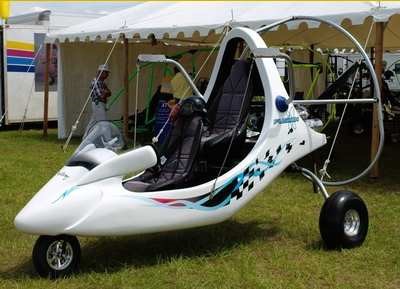
The Alliant Destiny Fusion is a two-seat powered parachute, designed and produced by Alliant Aviation based at Richland, Michigan. USA. The aircraft was designed to comply with the FAI Microlight rules. It features a parachute-style high-wing and two-seats in tandem in a semi-stressed fibreglass cockpit, tricycle landing gear and a single 52 hp (39 kW) Rotax 503 engine in pusher configuration. Versions were also available with a Rotax 582 or Hirth 3701 engine. The Rotax 503 version cost US$18,750 in 2004.

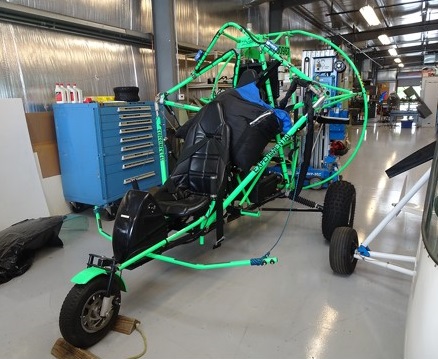
The Alliant Destiny XLT two-seat powered parachute was designed to comply with the FAI Microlight rules. It features a parachute-style high-wing and two-seats in tandem in an open frame, tricycle landing gear and a single 64 hp (48 kW) Rotax 582 engine in pusher configuration. Versions were also available with a Rotax 503 or Hirth 3701 engine. The Destiny XLT cost US$16,050 in 2004 with a Rotax 582 engine.

2005 Alliant Aviation Destiny XLT 2000

Destiny Fusion
Powerplant: 1 × Rotax 503, 52 hp (39 kW)
Propeller: 3-bladed
Wing area: 540 sq ft (50 sq.m)
Empty weight: 340 lb (154 kg)
Gross weight: 849 lb (385 kg)
Cruise speed: 29 mph; 25 kn (47 km/h)
Rate of climb: 1,080 ft/min (5.5 m/s)
Crew: two

ST
Single-seat variant

LT
Two-seat lightweight variant

XLT
Heavier two-seat variant
Powerplant: 1 × Rotax 582, 64 hp (48 kW)
Propeller: 3-bladed
Empty weight: 386 lb (175 kg)
Gross weight: 992 lb (450 kg)
Maximum speed: 34 mph; 30 kn (55 km/h)
Cruise speed: 32 mph; 28 kn (52 km/h)
Crew: two

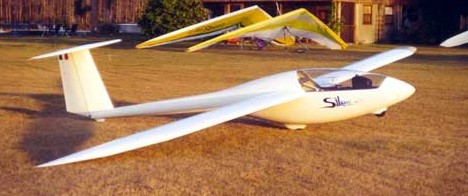
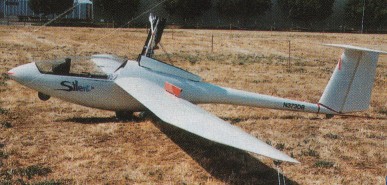
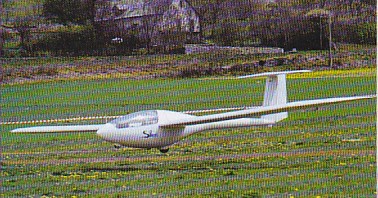
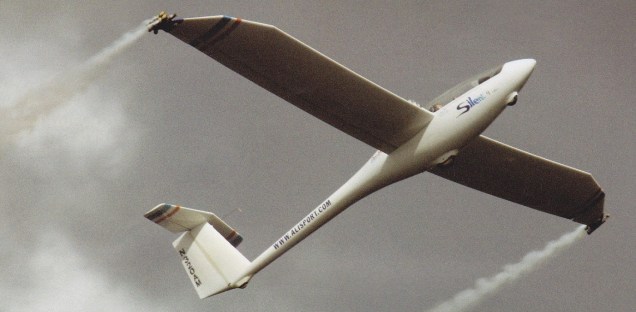
Alisport Silent

Silent Club

The Silent Club is a light sailplane with 12-meter fiberglass wings for recreational flying. It has a blend of agility/control responsiveness, climb performance, safety, and fun. The two-position flaps have a reflex position to maintain good glide performance at higher airspeeds. The pure sailplane and fuel-injected self-launcher versions were available as quick-build kits. Assembly is simple, both due to all controls having fully automatic connections and due to the light weight of the wings. The airframe is built entirely of composite materials, with use of carbon fiber in the aft portions of the fuselage pod, the tail boom, and various critical locations of the structure. The cockpit is completely built of glass fibre. The Silent Club’s low sink rate and its stability while thermalling allow it to fly with hang-gliders and to be practically unbeatable in climb when compared with Standard class or 15m class sailplanes. It is easy to both launch and to land, and is particularly suitable for new pilots performing their first single-seat flights. The Silent Club has very efficient conventional air brakes and can be landed in less than 70 m (230 ft). Due to its span of only 12 m (39 ft) it can be stored in a small space. A fully enclosed “clam-shell” trailer is available for road transportation.
The Silent 2 is a high-performance light sailplane with 13-meter wings for recreational and sport flying.
The carbon-fiber wings have an elliptical planform, removable winglets, and five flap settings to cover the entire speed range. The pure sailplane and fuel-injected self-launcher versions were available as quick-build kits. Several World records have been set with the Silent 2 in the FAI Class-DU. A basic airframe combined with reasonable pilot weight will generally result in a take-off weight under the 220kg (485 lbs) maximum allowable required for the FAI’s DU Class. The Silent 2’s airframe is built entirely of composite materials, with use of carbon fiber in the aft portions of the fuselage pod, the tail boom, and various critical locations of the structure. The oven-cured wing structure includes extensive use of carbon-fiber. The sandwich skins use vacuum-bagged carbon fabric for the interior layer and glass fabric for the exterior layer while the wing spar uses pultruded carbon rods for the spar caps. It tows well behind trikes, sport-aircraft, and regular towplanes, making it versatile for all types of glider operations.
The Silent 2 TARGA is a high-performance light sailplane for recreational and sport flying. It has retractable landing gear, vertical-design winglets, and horizontal stabilizer with automatic trim. The pure sailplane and fuel-injected self-launcher versions were available as quick-build kits.

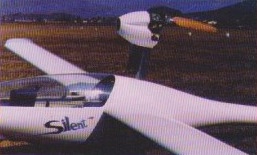
Powered by the proven Alisport A302efi engine producing 28hp at 6200rpm, this single-lever FADEC engine has electronic ignition, fuel-injection, electric start, and flywheel generator. The counterweighted monoblade carbon-fiber propeller has a swept diameter of 1.4m and electrically retracts into the fuselage along with the engine pylon. The wings have an elliptical planform, vertical design winglets, and a span of 13.3 meters. The wing structure includes extensive use of carbon fiber, both in the sandwich skins and in the tapered I-beam wing spar which uses pultruded carbon rods for the spar caps. The wing geometry is unique in that it varies non-linearly from the root to the tip, both in overall planform shape and in wing section profile. The flaperons stretch for 11.0 meters of the full wingspan and their range of motion varies from positive landing L, to +40 for thermalling, to 00, -40, and S reflex positions for cruising. The sailplane is trimmed in pitch via an innovative variable-position horizontal stabilizer. The stabilizer position is governed by the flaperon setting: the five settings of the flap control produce corresponding changes to the stabilizer incidence, thus defining the trim airspeed in relation to the flap requirements. The conventional elevator remains in trail, minimizing trim drag.

The Silent OP version has the engine mounted on a fixed pylon. Power is the Konig SD 570 or retractable Zanzoterra FZ 34 and single blade prop.

Silent OP
Silent-1N launching with two jet engines

Silent
Light sailplane circa 1998.
Weight: 130 kg
Wing span: 12 m
Wing area: 10.3 sq.m
Vne: 200 km
Stall: 54km
Vz min: 0.6 m/sec
Glide Ratio: 32 @ 90 kph

Silent Club
Length: 20.8 ft.
Wingspan: 12m / 39.3 ft.
Wing area: 10.3sq.m / 110.9 sq.ft.
Aspect ratio: 14-1
Seats: 1
Cockpit width: 22 in
Empty wt: 135kg / 300 lbs.
Mtow: 240kg / 530 lbs.
Payload: 105kg
Cruise: 60 mph.
Stall: 36 mph
L/D: 31-1@ 85 km/h
Min sink: 126 fpm / 0.64 m/s @ 65 kph.
Structure: all composite

Silent Club Self-Launch
Engine: A302 EFI, 28 hp.
Length: 20.8 ft.
Wingspan: 39.3 ft.
Wing area: 110.9 sq.ft.
Aspect ratio: 14-1.
Seats: 1.
Cockpit width: 22 inch.
Empty wt: 375 lbs.
Mtow: 639 lbs.
Fuel cap: 4.5 USG.
Cruise: 53 mph.
Stall: 38 mph.
L/D: 31-1.
Min sink: 138 fpm.

Silent 2
Length: 20.8 ft.
Wingspan: 13m / 42.6 ft.
Wing area: 8.8sq.m / 94.7 sq.ft.
Aspect ratio: 19.2-1.
Seats: 1.
Cockpit width: 22 in
Empty wt: 125kg / 275 lbs.
Mtow: 245kg / 540 lbs.
Payload: 105kg
Cruise: 50 mph.
Stall: 37 mph.
L/D: 39-1 at 81 kph.
Min sink: 106 fpm / 0.54 m/s at 77 kph.
Structure: All composite

Silent 2 Electric
Engine: Air Energy DC, 13 kw.
Length: 20.8 ft.
Wingspan: 42.6 ft.
Wing area: 94.7 sq.ft.
Aspect ratio: 19.2-1.
Seats: 1.
Cockpit width: 22 in
Empty wt: 385 lbs.
Mtow: 660 lbs.
Cruise: 56 mph.
Stall: 40 mph.
L/D: 39-1.
Min sink: 118 fpm.

Silent 2 Self-Launch
Engine: A302 EFI, 28 hp.
Length: 20.8 ft.
Wingspan: 42.6 ft.
Wing area: 94.7 sq.ft.
Aspect ratio: 19.2-1.
Seats: 1.
Cockpit width: 22 in
Empty wt: 385 lbs.
Mtow: 660 lbs.
Fuel cap: 4.5 USG.
Cruise: 56 mph.
Stall: 40 mph
L/D: 39-1.
Min sink: 118 fpm.

Silent 2 Targa Self-Launch
Engine: Alisport A302efi 28 Hp single-cylinder air-cooled
Wing span: 13.3 m / 43.6 ft
Length: 20.8 ft.
Wing area: 8.9sq.m /95.7 sq.ft.
Aspect ratio: 20
Empty Weight: 185kg / 385 lbs.
Payload: 105kg
MTOW: 300kg / 660 lbs
Fuel cap: 4.2 USG
L/DMax: 40 at 90 km/h
MinSink: 0.60 m/s / 118 fpm @ 85km/h
Cruise: 56 mph
Stall: 40 mph
No. of Seats: 1
Cockpit width: 22 in

Silent OP
Engine: Konig SD 570, 28 hp
Wing span: 12 m
Wing area: 10.30 sq.m
MAUW: 270 kg
Empty weight: 165 kg
Fuel capacity: 2 x 20 lt
Seats: 1
Max speed: 200 kph