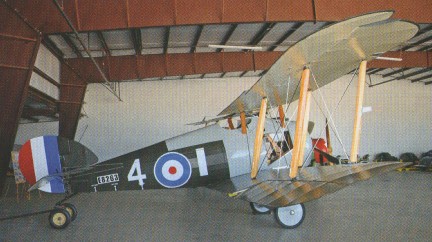
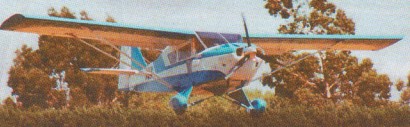
AMF S-14 Miranda          

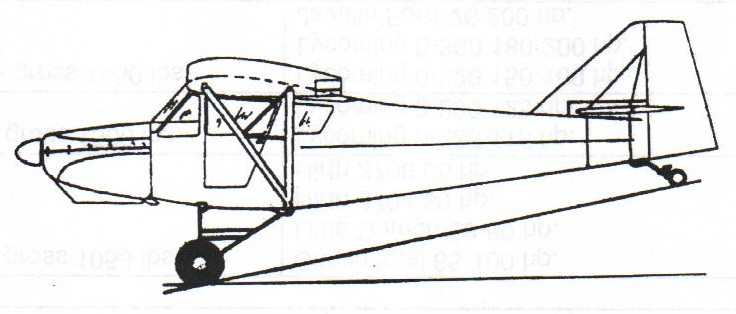
The AMF S-14 is a two-place taildragger modeled after the Adam RA-14. The S-14 was first flown in 1961. It is powered by 85- to 150 hp engines. Its fuselage is a conventional wooden box-girder structure, covered with plastic-coated fabric. The S-14’s wings are a braced high-wing design of all wood and fabric with STOL characteristics. Folding wings and Hoerner wingtips.
Lycoming and similar engines 100 to 200 hp are suitable.
The AMF-14H has a lighter structure for engines 50 to 115 hp to meet the Sport Aircraft category (LSA).
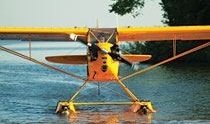
Options include flaps, floats, tricycle gear, extra wide cockpit, rodent proof tail, long range auxiliary tanks, extended wings, variety of engines including diesel.

On June 30, 2019, Falconar Avia Inc closed for business and assets dissolved. The Master Sets (Original Drawings, Plans, Info Kits, Documentation) were available for sale and full transfer of rights included the AMF – S14 “Maranda” S14 D and S14 H for $10,000 USD.

S-14
Engine: Lycoming O-320, 150 hp
HP range: 85-200
Wing span: 31.8 ft
Wing area: 158 sq.ft
Length: 22 ft
Height: 7.1 ft
Weight empty: 1100 lb
Gross: 1850 lb
Fuel cap: 18 USG
Speed max: 130 mph
Cruise: 115 mph
Range: 400 sm
Stall: 35 mph
ROC: 1300 fpm
Take-off dist: 100 ft
Landing dist: 150 ft
Service ceiling: 17,000 ft
Seats: 2-3
Landing gear: nose or tail wheel
Plans (2010): US$200

Super 14D
Engine: Lycoming O-320, 150 hp
HP range: 85-200
Wing span: 31.8 ft
Wing area: 158 sq.ft
Length: 22 ft
Height: 7.1 ft
Empty weight: 1100 lb
Gross weight: 1850 lb
Fuel capacity: 18 USG
Top speed: 150 mph
Cruise: 120 mph
Stall: 41 mph
Range: 480 sm
Rate of climb: 1000 fpm
Takeoff dist: 200 ft
Landing dist: 180 ft
Service ceiling: 17,000 ft
Seats: 2-3
Landing gear: nose or tail

AMF Super 14D Maranda
Cruise: 120 mph
Stall: 39 mph
Range: 340 sm
Rate of climb: 1000 fpm
Takeoff dist: 200 ft
Landing dist: 200 ft
Engine: Lycoming O-320, 150 hp
HP range: 85-200
Fuel capacity: 22 USG
Empty weight: 1100 lb
Gross weight: 1850 lb
Length: 22 ft
Wing span: 31.8 ft
Wing area: 158sq.ft
Cockpit width: 40-46 in
Landing gear: nose or tail

AMF-S14 DI Maranda
Vne: 150 mph
Cruise speed: 120 mph
Range: 480+ miles
Stall: 41 mph
Takeoff distance: 200 feet
Landing distance: 180 feet
Gross weight: 1850 lbs
Wing span: 31.8 feet
Wing area: 158 sq. feet
Plans (2010): US$170

Falconar Avia AMF-14H
Engine: Rotax 912S, 100 hp
HP range: 65-100
Wing span: 32 ft
Wing area: 158 sq.ft
Length: 22 ft
Gross weight: 1320 lb
Empty weight: 650 lb
Fuel capacity: 26 USG
Vne: 150 mph
Cruise: 92 mph
Stall: 36 mph
Range: 350 sm
Rate of climb: 700 fpm
Takeoff dist: 200 ft
Landing dist: 180 ft
Cockpit width: 46 in
Landing gear: nose or tail
Seats: 2
Plans 2010: US$200
American Sport Copter UltraSport 496 / Light’s American Sportscopter UltraSport 496

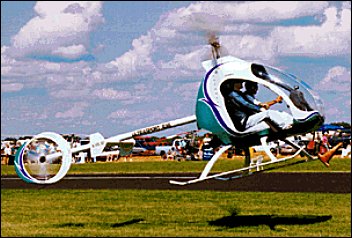
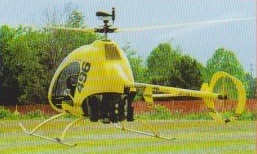
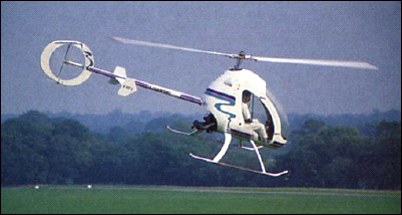
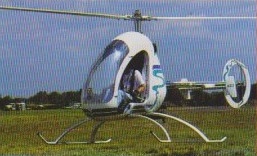
A two seat partially enclosed helicopter. Composite body, main rotor and shrouded tail rotor. Useable as a trainer, either experimental or ultralight. Includes full dual controls, doors, electric start. Infinite life composite rotor blades and fuselage. High inertia blades for excellent autorotation. An 8′ wide landing gear. Floor mounted cyclic now standard. Quick build kit. Meets 51% build rule. Dual controls standard. Plans or Kits delivered within 4-6 weeks of receiving order in 2009.
The Ultrasport 496 two-seater which commenced flight testing (N496AS) in July 1995, has a wider cabin than the 331 and uses a 95hp Hirth F.30 engine. The Ultrasport helicopter kits are manufactured in Taiwan. Deliveries began in April 1997.
The Ultrasport 496RT announced in 2002 uses a 84.6kW Rotax 914 turbocharged engine with electric start and quadruple carburettors.
Prices in 2003 were: 496 US$62,900; 496RT US$77,900.
An unmanned surveillance prototype named Vigilante 496 (first flight February 1998) was developed by Science Applications International Corporation. The Vigilante 496 prototype (N496UV) evaluated as optionally piloted vehicle (OPV) by US Navy during first and second quarters of 1998.

Engine: Hirth F 30, 115 hp
Rotor span: 7.00 m
Blade area: 0.170 sq.m
MAUW: 514 kg
Empty weight: 245 kg
Fuel capacity: 60 lt
Max speed: 167 kph
Cruise speed: 112 kph
Minimum speed: 0 kph
Climb rate: 4 m/s
Seats: 2
Fuel consumption: 25 lt/hr

Engine: One 85.8kW Hirth F30 quad-carburettor / electric start
Main rotor diameter: 7.01m
Tail rotor diameter: 0.76m
Length rotor blades folded: 6.02m
Height: 2.49m
Take-off weight: 512kg
Empty weight: 256kg
Never-exceed speed: 167km/h
Max cruising speed: 113km/h
Max rate of climb: 305m/min
Hovering ceiling, IGE: 3290m
Hovering ceiling, OGE: 2135m
Range: 240km
Endurance: 3h
Fuel capacity: 61 lt

Engine: 105 hp Hirth H-30, Quad carb, Dual CDI
Transmission 11:1 helical spur (2 stage)
Rotor blades diameter: Composite 23 ft
Roror blade chord: 7 in composite
Tail rotor diameter: 30in
Cruise: 69 mph
Top Speed: 104 mph
Empty Weight: 575 lbs
Useful Load: 605 lbs
Gross Weight: 1,180 lbs
Width: 6 ft 6 in
Height 8 ft 2 in
Length (w/blades folded): 19 ft 9 in

Engine: Hirth Gober, 120 hp
Disk span: 23 ft
Seats: 2
Landing gear: skids
Endurance: 2.5 hr
Weight empty: 600 lbs
Gross: 1180 lbs
Speed max: 103 kts
Cruise: 93 kts

Engine: 75.0kW Hirth H3QE

American Sport Copter UltraSport 331 / Light’s American Sportcopter Ultrasport 331

The Ultrasport 331 is a larger version of the 254 falling within the American Experimental category (FAR Part 21.191g), with increased range and higher gross weight. Features include 10 gallon tank, doors, bigger instrument panel, electric starter. The performance as the 254, and the floor mounted cyclic is standard. Optional floats are available. Meeting the 51% rule, a quick build kit requires 80 hours assembly.
The two-blade composites construction main rotor has tip weights for momentum conservation and an 8 deg linear twist and infinite life. Equipped with a shielded two-blade tail rotor, and tailplane with tins at tip, the tail rotor drive is carried in narrow streamlined tailboom. A centrifugal sprag clutch for starting engages the rotors at 2,000 engine rpm and automatically disengages in the event of engine failure.
The flying controls are conventional collective, cyclic and yaw pedals. A floor-mounted cyclic option has been available since 1998; early models had a top-mounted stick.
The prototype 331 (N331UV) first flew December 1993.
The single seat 331 is powered by one 48.5kW Hirth 2706 dual-carburettor two-stroke engine with electric starter or Hirth H32 of same power in 331H; 12:1 planetary transmission. Fuel capacity 38 litres.
In late 2002, it was announced that Huzbou Taixing Aviation Technology of Huzhou, China was producing helicopters from kits, including examples of Ultrasports.
A single-seat ultralight helicopter, the Ultrasport 331H uses the 48.5kW Hirth H32 added to range in 2003.
The Ultrasport 331 was available for US$37,900 in 2003.

Engine: Hirth 2706, 65 hp
Rotor span: 6.40 m
Blade area: 0.170 sq.m
MAUW: 295 kg
Empty weight: 150 kg
Fuel capacity: 38 lt
Max speed: 167 kph
Cruise speed: 105 kph
Minimum speed: 0 kph
Climb rate: 4 m/s
Seats: 1
Fuel consumption: 14 lt/hr

Engine: Hirth 2703, 55 hp.
Disk span: 21 ft.
Length: 16.67 ft.
Height: 7.5 ft.
Weight empty: 330 lbs.
Gross: 680 lbs.
Fuel cap: 10 USG.
Speed max: 104 mph.
Cruise: 63 mph.
Range: 150 sm.
ROC: 1000 fpm.
Service ceiling: 12,000 ft.
Endurance: 2.5 hr.
Seats: 1.
Landing gear: skids.

Engine: 65hp Hirth 2706 Dual carb, Dual CDI.
Transmission 12:1 Planetary
Rotor Blades: Composite 21′ diameter, 7″ chord,
Tail rotor: composite 30′ diameter.
Empty Weight: 330 lbs
Useful Load 320 lbs
Gross Weight: 650 lbs
Fuel capacity: 10 USG
Width 6 ft 6 in
Height 8 ft 2 in
Length 19 ft 2 in (w/blades off)
Cruise: 65mph
Top Speed: 104 mph
Range: 150 sm
ROC: 1000 fpm
Service ceiling: 12,000 ft
Kit price: US$34,850 (2008)

Ultrasport 331
Main rotor diameter: 6.4m
Tail rotor diameter: 0.76m
Length with rotor blades folded: 5.84m
Height: 2.39m
Take-off weight: 294kg
Empty weight: 150kg
Max level speed: 167km/h
Cruising speed: 101km/h
Max rate of climb: 305m/min
Hovering ceiling, IGE: 3290m
Hovering ceiling, OGE: 2135m
Range with normal fuel at 100km/h: 241km

Ultrasport 331H
Engine: 48.5kW Hirth H32

American Legend Aircraft Legend Cub

Legend Cub AL3C-100

American Legend had 11 new registrations in the US during 2012. The Super Legend and new Legend Smart Cub (with a Garmin G3X system) were the most popular. Texas Star kit versions were also offered.

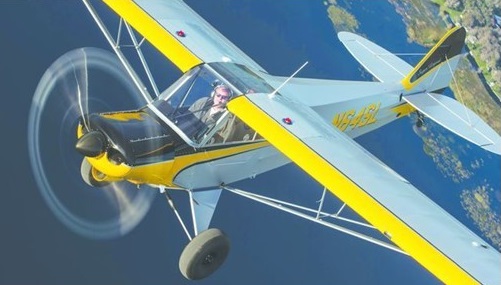
The Super Legend sports flaps, many carbon-fiber components and a 115 hp Lycoming IO-233-LSA multi-fuel engine. Continental O-200 (100 hp) and Jabiru 3300A (120 hp) versions were also offered. Price 2012: US$124,900 (open-cowl Legend Cub); US$128,900 (closed-cowl Cub); US$146,900 (Super Legend).

Gallery

Versions:
AL3C-100
Super Legend
Legend Smart Cub
Texas Star

Specifications:

Legend Cub AL3C-100
Piper J-3 replica
Engine: Continental O-200-D, 100 hp
Wingspan: 35’6″
Length: 22’5″
Empty Weight: 386 kg / 850 lbs
MTOW Weight: 600 kg / 1323 lbs
Stall: 30 kt / 34 mph / 55 kmh
Cruise: 83 kt / 95 mph / 153 kmh
VNE: 96 kt / 110 mph / 177 kmh
ROC: 500 ft/min / 3 m/s
Range: 315 mi
Ceiling: 15,000′
Take-off distance (50ft obstacle): 350 ft / 107 m
Landing distance (50ft obstacle): 350 ft / 107 m
Base price 2016: $136,900

Legend Cub AL3C
Piper J-3 replica
Engine: Jibaru 120hp

AL11C-100
2004 Piper PA-11 replica
Engine: 100hp Continental O-200

AL11J-120
2004 Piper PA-11 replica
Engine: 120hp Jabiru 3300A

American Autogyro Sparrowhawk

The American Autogyro Inc, formed in December 2002, as a division of Groen Brothers Aviation, with the objective to develop stability augmentation and other safety features for existing autogyros.
Following incremental development on several testbeds, American Autogyro launched at AirVenture, Oshkosh, July 2003, the Sparrowhawk two-seat autogyro/kitbuilt when proof-of-concept vehicle N974J (flown February 2003) was displayed. Kit deliveries then scheduled to begin in late 2003, although stability augmentation kits for gyrocopters already flying were available from April 2003.
A development aircraft was based on an RAF 2000 pod, but modified with a large all-moving rudder and fixed cruciform horizontal stabiliser with endplates. Rudder/stabiliser intersection is in line with propeller boss for optimum dynamic stability, assisted by rudder self-centring springs. Dual control sticks operate roll and cyclic rotor control; rudder pedals also used for ground steering, in conjunction with differential braking. The structure is aluminium frame with glass fibre pod and honeycomb composites empennage; aluminium keel and mast; tubular steel landing gear; bonded metal rotor blades.
The fixed landing gear is tricycle type with a safety tailwheel, and cable-operated brakes on the mainwheels (15 x 6.00).
The single 110kW Subaru EJ22 flat-four drives a two-blade, fixed-pitch, carbon fibrepusher propeller and rotor prerotate drive. Fuel capacity 95 litres of which 87 litres are usable.
Factory-complete aircraft were available, and a law enforcement/aerial patrol version (EJ22 engine) first flew in the third quarter of 2003. A total of 28 had been sold by August 2003. In 2003 the prices were: Experimental category kit US$27,390; Light Sport Aircraft quick-assembly kit US$40,700 or US$46.200 flyaway; law enforcement version US$62,384, assembled and equipped.
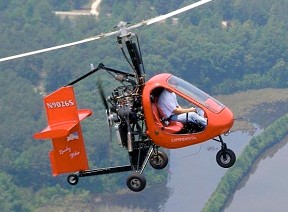
The Sparrowhawk has an aluminum frame and moulded fiberglass cabin, and the Quick Build Kit price: in 2009 was $45,500. The SparrowHawk III quick build kit significantly reduces the time and effort involved. Estimated build time for the SparrowHawk III is approximately 300 hours.
The SparrowHawk III is a 2 seat, aluminum frame, centerline thrust gyroplane with a 44 inch wide moulded fiberglass cabin. The SparrowHawk provides comfortable seating for individuals with up to 6’ 6” in height and 240 lbs in weight. The kit comes with everything you need to fly, daytime VFR, except for fuel, including dual controls.

Sparrowhawk
Rotor diameter: 9.14m
Fuselage length: 4.14m
Height overall: 2.97m
Max. take-off weight: 612kg
Empty weight: 386kg
Never-exceed speed: 185km/h
Max cruising speed: 130km/h
Max rate of climb at sea level: 152m/min
Service ceiling: 3,050m
Take-off run: 92-153m
Take-off to 15m: 305m
Landing from 15m: 92m
Range at 75% power: 453km

Sparrowhawk III
Engine: Subaru EJ25, 165 hp
Propeller: Warp Drive
Rotor Blades: Sportcopter 2 blade
Length: 12 ft 3 in
Width: 6 ft 1 in
Height: 10 ft
Dry Weight: 900 Ibs
Useful Load: 600 Ibs
Gross Weight: 1,500 Ibs
Fuel Capacity: 23 USgal
Fuel Consumption: 6.5 gph at cruise
Rotor Diameter: 30 ft
Minimum Take-off Ground Roll: 100 ft
Normal Take-off Ground Roll: 300-500 ft
Landing Roll: 0-30 ft
Rate of Climb: 650 ft./min
Speed – Maximum (Vne): 100 mph
Speed – Cruise: 75 mph
Service Ceiling: 10,000 ft
Endurance (with 1/2 hour reserve) at cruise: 3 hours
Seats: 2

American Autogyro

In February, 2003, Groen Brothers Aviation formed a subsidiary, American Autogyro, to produce gyroplanes for the “kit-built” market. American Autogyro’s two-place Sparrow Hawk Gyroplane is also offered as a complete, turn-key aircraft in an Airborne Patrol Vehicle (APV) model. The SparrowHawk APV is an excellent entry-level airborne surveillance vehicle for many law enforcement agencies. American Autogyro also sells a Stabilization Augmentation Kit, designed to dramatically improve in-flight stability and safety for what has been the most popular competing kit gyroplane in that market. More than 120 SparrowHawk Gyroplanes and Sparrow-Hawk/P modification kits have been sold.
2009: American Autogyro, 2640 California Avenue, Salt Lake City, UT 84014-4593, USA.

Altitude Formula GT

The Formula GT prototype aircraft, designed by Jeff Ackland, was completed and first flown in April, 2001.
The GT shares its wing and horizontal tail planform/design with the Radial Rocket and P85.

Although the prototype Formula GT was powered by a 260 HP Lycoming engine, the GT was actually designed from the outset to utilize a liquid cooled LS V8 engine. The GT offers a side by side seating, and tricycle gear.

Altair Predator

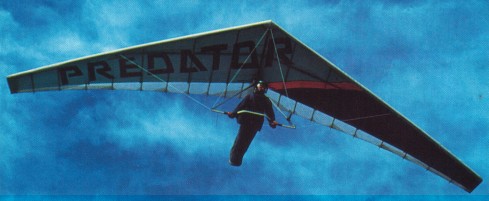
The Predator evolved from UP USA’s TRX model in 1995.

The leading edge, spar and keel are all in carbon fibre. The Predator is a fast hang glider, but hard to soar in light conditions. Also fast on take-off, I has a hard time to start in no wind conditions.

They were building them in California again in 2012.

Predator 142
Wing area: 13.1 sq.m
Wing span: 10.2 m
Nose angle: 127°
Aspect ratio: 8
Hang glider weight: 30 kg
Pilot weight: 64-100 kg
Certification: USHGA
Price (1998) US$4975

Predator 158
Wing area: 14.5 sq.m
Wing span: 10.6 m
Nose angle: 127°
Aspect ratio: 8
Hang glider weight: 31 kg
Pilot weight: 82-127 kg
Certification: USHGA
Price (1998) US$4995