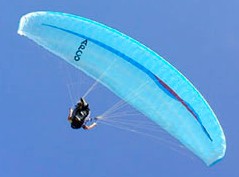
Apco Keara

Although released during the 2nd half of 2002, the KEARA was Apco’s new star for the year. Introduced as Simba’s daughter (a character from Disney’s story of the Lion King), it is said to be inheriting all Simba’s virtues and more: faster, more powerful and better performing.

The leading edge of the Keara features Flexon Nylon Battens which hold the profile shape at speed, and HIT Valves (High-Speed Intake Valves). “HIT Valves” increase the internal pressure of the wing both during accelerated flight and in extreme situations, improving safety and performance. The “HIT Valve”, placed above the leading edge openings, opens automatically when the stagnation point moves over the valves, pressurizing the wing. Only a few valves are necessary over the span of the leading edge to pressurize the entire wing at higher speeds.

The HIT is a sequence of meshed valves above the leading edge opening, which are closed during flight on trim speed (average angle of attack), but open once the angle of attack is reduced and speed is increased. Apco claims that this “ensures a rock-solid wing at highest possible speed”.
KEARA also introduces a semi rigid leading edge that helps keep the profile definition. Apco calls it FLEXON batten technology, and it reminds us of Gin’s Rigi-foil system introduced for the first time with the Boomerang, in 2001, which inspired other manufacturers to work on semi-rigid leading edges (e.g. Windtech’s Syncro also features a version on this subject). The Flexon battens support the top and bottom surface leading-edge fabric between the ribs, keeping the profile clean and the intakes open. This feature is supposed to improve the performance of the wing, especially at high speeds, and also improve inflation of the wing both during launch and re-inflation in flight, according to the manufacturer. Apco has also certified a competition version of KEARA with unsheathed thin lines.
Apco Keara: A question of Speed

Apco’s leader Anatoly Cohn is not happy. His newborn star for the intermediate-advanced pilot, the Keara, was measured a much lower top speed by the DHV than Apco’s promises. The company had claimed that the glider could reach a maximum speed of 59k/h, while the certification organ published a humble 51k/h, which they had to correct later saying that the measures were taken with trims closed. Now, the top speed published by the DHV for all the certified sizes is 54k/h, but Anatoly Cohn has expressed his nuisance in a letter sent to Apco’s dealers, stating that “DHV officials explained and admitted that their speed measurements do not reflect true, top speed capacity of the glider and they do not aim to record it as they certify Safety, not Performance”. And so he reassures that the model does reach 59k/h: “We stand firmly behind our measurements and support them as true, realistic figures. We conducted many comparative speed runs and are faster than many other DHV 2-3 or DHV 3 gliders for which DHV recorded top speeds of 56km/h, 57km/h or even faster”. He encourages pilots to test fly the Keara by themselves and conduct their own comparisons with other paragliders, paying special attention to speed. He seems to be completely sure that the Keara will win most races. Cohn believes that from now on DHV will avoid publishing top speed figures, “as they are not reliable or objective and should not be used in manufacturers marketing hype”.

X-Small
Cells: (32×3)+(2×2)+6
Area: 24.50 sq.m
Area (projected): 21.80 sq.m
Span (incl. Stabilizer): 11.90 m
Span (projected): 9.80 m
Aspect Ratio: 5.80
Aspect Ratio (projected): 4.40
Pilot Weight (all up): 64 – 80 kg
Weight of Canopy: 7.0 kg
Root Cord: 2.67 m
Tip Cord: 0.50 m
Length of Lines on B: 7.50 m
Total line used: 320 m
V-min: 21 km/h
V-trim: 36 – 38 km/h
V-max: 59+ km/h
Min Sink (opt wing loading): <0.9m/s
Certification: AFNOR / CEN Performance
Top (Low Drag Hook-Up) Lines Material: Dyneema
Upper C & D Lines Material: Super Aramid
Mid A, B, C & D Lines Material: Super Aramid
Lower Lines Material: Super Aramid
Central Lower A & B Lines Material: Super Aramid
Upper Brake Cascades Lines Material: Dyneema
Steering Line Material: Polyester
Top (Low Drag Hook-Up) Lines Diameter: 0.8mm
Upper C & D Lines Diameter: 1.1mm
Mid A, B, C & D Lines Diameter: 1.1mm
Lower Lines Diameter: 1.7mm
Central Lower A & B Lines Diameter: 2.2mm
Upper Brake Cascades Lines Diameter: 1.1mm
Steering Line Diameter: 2.2mm
Top (Low Drag Hook-Up) Lines Strength: 90kg
Upper C & D Lines Strength: 80kg
Mid A, B, C & D Lines Strength: 80kg
Lower Lines Strength: 150kg
Central Lower A & B Lines Strength: 220kg
Upper Brake Cascades Lines Strength: 90kg
Steering Line Strength: 90kg
Sail Cloth Fabric: 46gr/sq.m “Zero Porosity” Ripstop Nylon (Double Siliconized)
Rib Reinforcement Fabric: 80gr/sq.m Mylar (Trilam)
Warranty: 3 Years / 250 hours
Small
Cells: (33×3)+(2×2)+6
Area: 25.40 sq.m
Area (projected): 22.70 sq.m
Span (incl. Stabilizer): 12.20 m
Span (projected): 10.10 m
Aspect Ratio: 5.95
Aspect Ratio (projected): 4.50
Pilot Weight (all up): 79 – 99 kg
Weight of Canopy: 7.2 kg
Root Cord: 2.67 m
Tip Cord: 0.50 m
Length of Lines on B: 7.50 m
Total line used: 320 m
V-min: 21 km/h
V-trim: 36 – 38 km/h
V-max: 59+ km/h
Min Sink (opt wing loading): <0.9m/s
Certification: DHV Class 2 (Trim & Accelerated)
Top (Low Drag Hook-Up) Lines Material: Dyneema
Upper C & D Lines Material: Super Aramid
Mid A, B, C & D Lines Material: Super Aramid
Lower Lines Material: Super Aramid
Central Lower A & B Lines Material: Super Aramid
Upper Brake Cascades Lines Material: Dyneema
Steering Line Material: Polyester
Top (Low Drag Hook-Up) Lines Diameter: 0.8mm
Upper C & D Lines Diameter: 1.1mm
Mid A, B, C & D Lines Diameter: 1.1mm
Lower Lines Diameter: 1.7mm
Central Lower A & B Lines Diameter: 2.2mm
Upper Brake Cascades Lines Diameter: 1.1mm
Steering Line Diameter: 2.2mm
Top (Low Drag Hook-Up) Lines Strength: 90kg
Upper C & D Lines Strength: 80kg
Mid A, B, C & D Lines Strength: 80kg
Lower Lines Strength: 150kg
Central Lower A & B Lines Strength: 220kg
Upper Brake Cascades Lines Strength: 90kg
Steering Line Strength: 90kg
Sail Cloth Fabric: 46gr/sq.m “Zero Porosity” Ripstop Nylon (Double Siliconized)
Rib Reinforcement Fabric: 80gr/sq.m Mylar (Trilam)
Warranty: 3 Years / 250 hours
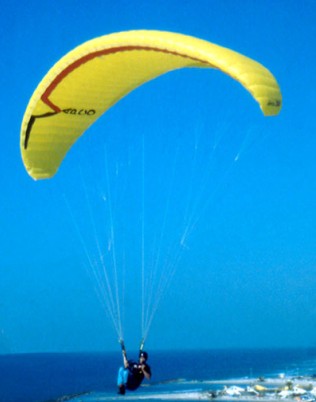
Small Comp
Cells: (33×3)+(2×2)+6
Area: 25.40 sq.m
Area (projected): 22.70 sq.m
Span (incl. Stabilizer): 12.20 m
Span (projected): 10.10 m
Aspect Ratio: 5.95
Aspect Ratio (projected): 4.50
Pilot Weight (all up): 79 – 99 kg
Weight of Canopy: 7.2 kg
Root Cord: 2.67 m
Tip Cord: 0.50 m
Length of Lines on B: 7.50 m
Total line used: 320 m
V-min: 21 km/h
V-trim: 36 – 38 km/h
V-max: 59+ km/h
Min Sink (opt wing loading): <0.9m/s
Certification: AFNOR / CEN Performance
Top (Low Drag Hook-Up) Lines Material: Dyneema
Upper C & D Lines Material: Super Aramid (Unsheathed)
Mid A, B, C & D Lines Material: Super Aramid (Unsheathed)
Lower Lines Material: Super Aramid (Unsheathed)
Central Lower A & B Lines Material: Super Aramid (Unsheathed)
Upper Brake Cascades Lines Material: Super Aramid (Unsheathed)
Steering Line Material: Dyneema
Top (Low Drag Hook-Up) Lines Diameter: 0.8mm
Upper C & D Lines Diameter: 0.6mm
Mid A, B, C & D Lines Diameter: 0.6mm
Lower Lines Diameter: 0.9mm
Central Lower A & B Lines Diameter: 1.6mm
Upper Brake Cascades Lines Diameter: 0.6mm
Steering Line Diameter: 0.9mm
Top (Low Drag Hook-Up) Lines Strength: 90kg
Upper C & D Lines Strength: 65kg
Mid A, B, C & D Lines Strength: 65kg
Lower Lines Strength: 120kg
Central Lower A & B Lines Strength: 200kg
Upper Brake Cascades Lines Strength: 65kg
Steering Line Strength: 180kg
Sail Cloth Fabric: 46gr/sq.m “Zero Porosity” Ripstop Nylon (Double Siliconized)
Rib Reinforcement Fabric: 80gr/sq.m Mylar (Trilam)
Warranty: 3 Years / 250 hours
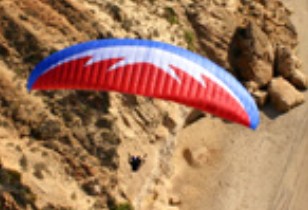
Medium
Cells: (35×3)+(2×2)+6
Area: 27.50 sq.m
Area (projected): 24.20 sq.m
Span (incl. Stabilizer): 12.90 m
Span (projected): 10.60 m
Aspect Ratio: 6.10
Aspect Ratio (projected): 4.70
Pilot Weight (all up): 95 – 115 kg
Weight of Canopy: 7.4 kg
Root Cord: 2.67 m
Tip Cord: 0.50 m
Length of Lines on B: 7.90 m
Total line used: 345 m
V-min: 21 km/h
V-trim: 36 – 38 km/h
V-max: 59+ km/h
Min Sink (opt wing loading): <0.9m/s
Certification: DHV Class 2 (Trim & Accelerated)
Top (Low Drag Hook-Up) Lines Material: Dyneema
Upper C & D Lines Material: Super Aramid
Mid A, B, C & D Lines Material: Super Aramid
Lower Lines Material: Super Aramid
Central Lower A & B Lines Material: Super Aramid
Upper Brake Cascades Lines Material: Dyneema
Steering Line Material: Polyester
Top (Low Drag Hook-Up) Lines Diameter: 0.8mm
Upper C & D Lines Diameter: 1.1mm
Mid A, B, C & D Lines Diameter: 1.1mm
Lower Lines Diameter: 1.7mm
Central Lower A & B Lines Diameter: 2.2mm
Upper Brake Cascades Lines Diameter: 1.1mm
Steering Line Diameter: 2.2mm
Top (Low Drag Hook-Up) Lines Strength: 90kg
Upper C & D Lines Strength: 80kg
Mid A, B, C & D Lines Strength: 80kg
Lower Lines Strength: 150kg
Central Lower A & B Lines Strength: 220kg
Upper Brake Cascades Lines Strength: 90kg
Steering Line Strength: 90kg
Sail Cloth Fabric: 46gr/sq.m “Zero Porosity” Ripstop Nylon (Double Siliconized)
Rib Reinforcement Fabric: 80gr/sq.m Mylar (Trilam)
Warranty: 3 Years / 250 hours
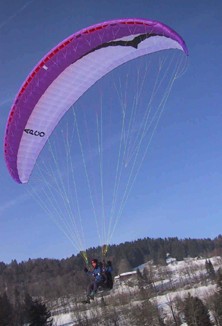
Medium Comp
Cells: (35×3)+(2×2)+6
Area: 27.50 sq.m
Area (projected): 24.20 sq.m
Span (incl. Stabilizer): 12.90 m
Span (projected): 10.60 m
Aspect Ratio: 6.10
Aspect Ratio (projected): 4.70
Pilot Weight (all up): 95 – 115 kg
Weight of Canopy: 7.4 kg
Root Cord: 2.67 m
Tip Cord: 0.50 m
Length of Lines on B: 7.90 m
Total line used: 345 m
V-min: 21 km/h
V-trim: 36 – 38 km/h
V-max: 59+ km/h
Min Sink (opt wing loading): <0.9m/s
Certification: AFNOR / CEN Performance
Top (Low Drag Hook-Up) Lines Material: Dyneema
Upper C & D Lines Material: Super Aramid (Unsheathed)
Mid A, B, C & D Lines Material: Super Aramid (Unsheathed)
Lower Lines Material: Super Aramid (Unsheathed)
Central Lower A & B Lines Material: Super Aramid (Unsheathed)
Upper Brake Cascades Lines Material: Super Aramid (Unsheathed)
Steering Line Material: Dyneema
Top (Low Drag Hook-Up) Lines Diameter: 0.8mm
Upper C & D Lines Diameter: 0.6mm
Mid A, B, C & D Lines Diameter: 0.6mm
Lower Lines Diameter: 0.9mm
Central Lower A & B Lines Diameter: 1.6mm
Upper Brake Cascades Lines Diameter: 0.6mm
Steering Line Diameter: 0.9mm
Top (Low Drag Hook-Up) Lines Strength: 90kg
Upper C & D Lines Strength: 65kg
Mid A, B, C & D Lines Strength: 65kg
Lower Lines Strength: 120kg
Central Lower A & B Lines Strength: 200kg
Upper Brake Cascades Lines Strength: 65kg
Steering Line Strength: 180kg
Sail Cloth Fabric: 46gr/sq.m “Zero Porosity” Ripstop Nylon (Double Siliconized)
Rib Reinforcement Fabric: 80gr/sq.m Mylar (Trilam)
Warranty: 3 Years / 250 hours
Large
Cells: (37×3)+(2×2)+6
Area: 29.20 sq.m
Area (projected): 25.80 sq.m
Span (incl. Stabilizer): 13.50 m
Span (projected): 11.20 m
Aspect Ratio: 6.40
Aspect Ratio (projected): 4.90
Pilot Weight (all up): 105 – 130 kg
Weight of Canopy: 7.6 kg
Root Cord: 2.67 m
Tip Cord: 0.50 m
Length of Lines on B: 8.30 m
Total line used: 355 m
V-min: 21 km/h
V-trim: 36 – 38 km/h
V-max: 59+ km/h
Min Sink (opt wing loading): <0.9m/s
Certification: DHV Class 2 (Trim & Accelerated)
Top (Low Drag Hook-Up) Lines Material: Dyneema
Upper C & D Lines Material: Super Aramid
Mid A, B, C & D Lines Material: Super Aramid
Lower Lines Material: Super Aramid
Central Lower A & B Lines Material: Super Aramid
Upper Brake Cascades Lines Material: Dyneema
Steering Line Material: Polyester
Top (Low Drag Hook-Up) Lines Diameter: 0.8mm
Upper C & D Lines Diameter: 1.1mm
Mid A, B, C & D Lines Diameter: 1.1mm
Lower Lines Diameter: 1.7mm
Central Lower A & B Lines Diameter: 2.2mm
Upper Brake Cascades Lines Diameter: 1.1mm
Steering Line Diameter: 2.2mm
Top (Low Drag Hook-Up) Lines Strength: 90kg
Upper C & D Lines Strength: 80kg
Mid A, B, C & D Lines Strength: 80kg
Lower Lines Strength: 150kg
Central Lower A & B Lines Strength: 220kg
Upper Brake Cascades Lines Strength: 90kg
Steering Line Strength: 90kg
Sail Cloth Fabric: 46gr/sq.m “Zero Porosity” Ripstop Nylon (Double Siliconized)
Rib Reinforcement Fabric: 80gr/sq.m Mylar (Trilam)
Warranty: 3 Years / 250 hours
Large Comp
Cells: (37×3)+(2×2)+6
Area: 29.20 sq.m
Area (projected): 25.80 sq.m
Span (incl. Stabilizer): 13.50 m
Span (projected): 11.20 m
Aspect Ratio: 6.40
Aspect Ratio (projected): 4.90
Pilot Weight (all up): 105 – 130 kg
Weight of Canopy: 7.6 kg
Root Cord: 2.67 m
Tip Cord: 0.50 m
Length of Lines on B: 8.30 m
Total line used: 355 m
V-min: 21 km/h
V-trim: 36 – 38 km/h
V-max: 59+ km/h
Min Sink (opt wing loading): <0.9m/s
Top (Low Drag Hook-Up) Lines Material: Dyneema
Upper C & D Lines Material: Super Aramid (Unsheathed)
Mid A, B, C & D Lines Material: Super Aramid (Unsheathed)
Lower Lines Material: Super Aramid (Unsheathed)
Central Lower A & B Lines Material: Super Aramid (Unsheathed)
Upper Brake Cascades Lines Material: Super Aramid (Unsheathed)
Steering Line Material: Dyneema
Top (Low Drag Hook-Up) Lines Diameter: 0.8mm
Upper C & D Lines Diameter: 0.6mm
Mid A, B, C & D Lines Diameter: 0.6mm
Lower Lines Diameter: 0.9mm
Central Lower A & B Lines Diameter: 1.6mm
Upper Brake Cascades Lines Diameter: 0.6mm
Steering Line Diameter: 0.9mm
Top (Low Drag Hook-Up) Lines Strength: 90kg
Upper C & D Lines Strength: 65kg
Mid A, B, C & D Lines Strength: 65kg
Lower Lines Strength: 120kg
Central Lower A & B Lines Strength: 200kg
Upper Brake Cascades Lines Strength: 65kg
Steering Line Strength: 180kg
Sail Cloth Fabric: 46gr/sq.m “Zero Porosity” Ripstop Nylon (Double Siliconized)
Rib Reinforcement Fabric: 80gr/sq.m Mylar (Trilam)
Warranty: 3 Years / 250 hours
Apco Air Extreme / AX

The Air XTreme design utilised CAD CAM and hundreds of flight test hours.
Simple and safe to fly and handle, but intended for experienced pilots, and requiring an understanding of the limitations of the wing.
Smooth level flight without cart leaning to the left and back, because of the lower RPM at straight and level Fight. The Air XTreme features reduced engine RPM by 1,200 – 1,500 for straight and level flight.
The Air XTreme 400 (released after the 500) differs from the 500 in that it has a higher speed, quicker response and generally a more sporty feel. It is intended for more experienced pilots. Even though it has a smaller area than the 500, the Maximum load rating remains the same.

Air XTreme 400
Cells: 34
Area: 400 sq.ft / 38.2 sq.m
Area (projected): 33.6 sq.m
Span (incl. Stabiliser): 13.30 m
Span (projected): 10.70 m
Aspect Ratio: 4.6
Aspect Ratio (projected): 3.4
Minimum gross weight: 280 Kg
Optimum gross weight: 350 Kg
Maximum gross weight: 400 Kg
Total Lift Capacity of Wing: 1100 Ibs
Load Tested: Max Load with no structural Damage: 5500 Ibs
Weight of Canopy: 8.5 kg
Root Cord: 3.80 m
Tip Cord: 0.70 m
V-Cruise: 53+ km/h
Min Sink (opt wing load): 1.4m/s
Top and Safety Lines Material: Dyneema
Top and Safety Lines Diameter: 2.3mm
Top and Safety Lines Strength: 200kg
Lower Lines Material: Super Aramid
Brake Cascades Lines Material: Super Aramid
Steering Lines Material: Polyester
Lower Lines Diameter: 2.2mm
Brake Cascades Lines Diameter: 1.7mm
Steering Lines Diameter: 5.0mm
Lower Lines Strength: 220kg
Brake Cascades Lines Strength: 155kg
Steering Lines Strength: 450kg
Sail Cloth Fabric: 46gr/sq.m “Zero Porosity” Ripstop Nylon
Rib Reinforcement Fabric: 180gr/sq.m Mylar (Trilam)
Warranty: 3 Years / 250 hours
Air XTreme 500
Cells: 37
Area: 500 sq.ft / 43.0 sq.m
Area (projected): 38.3 sq.m
Span (incl. Stabiliser): 14.50 m
Span (projected): 12.00 m
Aspect Ratio: 4.9
Aspect Ratio (projected): 3.8
Minimum gross weight: 325 Kg
Optimum gross weight: 400 Kg
Maximum gross weight: 450 Kg
Total Lift Capacity of Wing: 1200 Ibs
Load Tested: Max Load with no structural Damage: 5500 Ibs
Weight of Canopy: 10 kg
Root Cord: 3.80 m
Tip Cord: 0.70 m
V-Cruise: 50+ km/h
Min Sink (opt wing load): 1.3m/s
Top and Safety Lines Material: Dyneema
Lower Lines Material: Super Aramid
Brake Cascades Lines Material: Super Aramid
Steering Lines Material: Polyester
Top and Safety Lines Diameter: 2.3mm
Lower Lines Diameter: 3.0mm
Brake Cascades Lines Diameter: 1.7mm
Steering Lines Diameter: 5.0mm
Top and Safety Lines Strength: 200kg
Lower Lines Strength: 290kg
Brake Cascades Lines Strength: 155kg
Steering Lines Strength: 450kg
Sail Cloth Fabric: 46gr/sq.m “Zero Porosity” Ripstop Nylon
Rib Reinforcement Fabric: 180gr/sq.m Mylar (Trilam)
Warranty: 3 Years / 250 hours
Apco Power Wing / PW

The Powerwing MK IV, representing a third generation in rectangular wing design (from Apco). It is an evolution of the previous MK II design which was well accepted by PPC pilots. MK IV has even better handling and stability with a more coordinated turn and improved rigidity in the air, making flying more comfortable and reasuring. The wing still has the classic rectangular look and retains all the parameters and features of previous Apco powerwings.
Apco’s Powerwing was tested by ACPULS (AFNOR) in France, and passed both the shock and static strenght load tests.
The Hybrid Power Wing 500 & 550 devolpment came after extensive work by the Apco R&D team. It delivers lift greater than the 550 and the exact handling of the 400, while giving a higher performance in glide ratio.

PW 400
Product Code: 70820
Cells: 25
Area: 36.1 sq.m
Area (projected): 31.1 sq.m
Span: 10.50 m
Span (projected): 9.10 m
Aspect Ratio: 3.05
Aspect Ratio (projected): 2.64
Min. Gross Weight: 180 kg
Opt. Gross Weight: 208 kg
Max. Gross Weight: 230 kg
Total Lift Capacity: 750 lbs
Load Test: Max Load: 5500 lbs
Canopy Weight: 8 kg
Root Chord: 3.44 m
Sail Cloth Fabric: 46 g/sq.m “Zero Porosity” Ripstop Nylon
Rib Reinforcement Fabric: 180 g/sq.m Mylar (trilam)
Warranty: 3 years / 250 Hours
Top and Safety Line Material: Dyneema
Lower Line Material: Super Aramid
Brake Cascades Line Material: Super Aramid
Steering Line Material: Polyster
Top and Safety Line Diameter: 2.3 mm
Lower Line Diameter: 2.2 mm
Brake Cascades Line Diameter: 1.7 mm
Steering Line Diameter: 5.0 mm
Top and Safety Line Strength: 200 kg
Lower Line Strength: 220 kg
Brake Cascades Line Strength: 155 kg
Steering Line Strength: 450 kg

PW 500
Product Code: 70830
Cells: 26
Area: 43.1 sq.m
Area (projected): 36.6 sq.m
Span: 10.92 m
Span (projected): 9.26 m
Aspect Ratio: 2.79
Aspect Ratio (projected): 2.34
Min. Gross Weight: 250 kg
Opt. Gross Weight: 320 kg
Max. Gross Weight: 375 kg
Total Lift Capacity: 1000 lbs
Load Test: Max Load: 5500 lbs
Canopy Weight: 10 kg
Root Chord: 3.95 m
Sail Cloth Fabric: 46 g/sq.m “Zero Porosity” Ripstop Nylon
Rib Reinforcement Fabric: 180 g/sq.m Mylar (trilam)
Warranty: 3 years / 250 Hours
Top and Safety Line Material: Dyneema
Lower Line Material: Super Aramid
Brake Cascades Line Material: Super Aramid
Steering Line Material: Polyster
Top and Safety Line Diameter: 2.3 mm
Lower Line Diameter: 3.0 mm
Brake Cascades Line Diameter: 1.7 mm
Steering Line Diameter: 5.0 mm
Top and Safety Line Strength: 200 kg
Lower Line Strength: 290 kg
Brake Cascades Line Strength: 155 kg
Steering Line Strength: 450 kg

PW 550
Product Code: 70810
Cells: 28
Area: 46.5 sq.m
Area (projected): 39.9 sq.m
Span: 11.76 m
Span (projected): 10.10 m
Aspect Ratio: 2.79
Aspect Ratio (projected): 2.56
Min. Gross Weight: 275 kg
Opt. Gross Weight: 345 kg
Max. Gross Weight: 400 kg
Total Lift Capacity: 1100 lbs
Load Test: Max Load: 5500 lbs
Canopy Weight: 11 kg
Root Chord: 3.95 m
V-min: 27 km/h
Cruise: 50 km/h
Min Sink (Opt loading): 1.8 m/s
Sail Cloth Fabric: 46 g/sq.m “Zero Porosity” Ripstop Nylon
Rib Reinforcement Fabric: 180 g/sq.m Mylar (trilam)
Warranty: 3 years / 250 Hours
Top and Safety Line Material: Dyneema
Lower Line Material: Super Aramid
Brake Cascades Line Material: Super Aramid
Steering Line Material: Polyster
Top and Safety Line Diameter: 2.3 mm
Lower Line Diameter: 3.0 mm
Brake Cascades Line Diameter: 1.7 mm
Steering Line Diameter: 5.0 mm
Top and Safety Line Strength: 200 kg
Lower Line Strength: 290 kg
Brake Cascades Line Strength: 155 kg
Steering Line Strength: 450 kg

Apco Fiesta

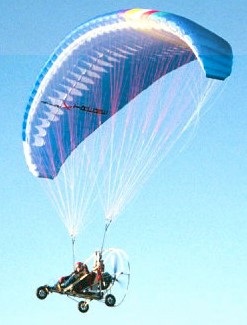
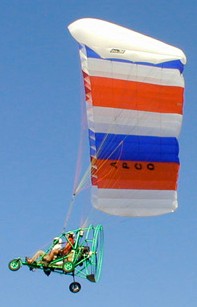
The Fiesta was designed to be a backbone of the range for 2000 and beyond, l and the Fiesta II was new in 2001.
The glider was availlable in 4 sizes: Extra Small, Small, Medium and Large, covering weight range from 60-120 kg (total take-off weight).
The 3 main sizes Small, Medium and Large are certified DHV 1 Trim and Accelarated and ACPULS certification in Standard Class was completed for all four sizes. There is no difference between the ACPUL and DHV version, glider and line measurements are the same.
The idea was to release a glider with performance and handling which would be better than any other glider on the market in its Class, fulfilling the expectations of the most ambitious intermediate pilot, but with great emphasis on safety and user-friendly behavior.
Fiesta replaced Santana and Santana production was ceased. Fiesta’s performance and handling exceeds that of Santana.
Fiesta Light – Mountain/Biouvac Version:
Available was a mountaineering/hiking version of the Fiesta in Small and Medium sizes. This is a very light, compact version of Fiesta, made from special cloth and lines to make it suitable for hiking, trekking and biouvacing. Manufacturing technique and materials are specially adapted to make it exceedingly light, but without sacrificing any of the good nature and excellent performance of the regular Fiesta.
Technical data and specs are basically the same, except that the cloth, lines and risers are of lighter materials, enabling the glider’s weight to be well below 5 kg. (4-4.5 kg for Small and Medium size).
Fiesta Paramotor Version:
All 4 sizes of Fiesta – XSmall, Small, Medium and Large is available in a specially adapted version of the Fiesta for use with paramotor.
Extensive testing of Fiesta in paramotor flying confirmed that it is a wing exceptionally well suited to paramotor flying. This is due to a super easy launch with no bad tendencies; even, smooth with no overshooting. Safety, handling and performance make it a natural choice for paramotor. It is also very tolerant to the engine’s P-factor, making the left-hand pull very light.

Size L and Tandem were available with DUVL Certification.
Fiesta Tandem:
The Fiesta Tandem was available with DHV and DUVL Certification. This glider is especially designed to meet the needs of the professional tandem pilot market. Any pilot looking for a wing which is safe, very easy to fly and can fulfill the requirements of professionals offering tandem rides with the need to make a quick turn around with their passengers.
Fiesta Tandem did not replace the Futura Tandem, which was still offered.
The Fiesta Tandem ABC is, with DUVL Certification, for two seater PPC frames.

X-Small
Cells: 36
Area: 26.20 sq.m
Area (projected): 23.4 sq.m
Span (incl. Stabiliser: 11.2 m
Span (projected): 9.20 m
Aspect Ratio: 4.80
Aspect Ratio (projected): 3.60
Pilot Weight (all up): 63 – 79 kg
Weight of Canopy: 6.4 kg
Root Cord: 3.0 m
Tip Cord: 0.56 m
Length of Lines on B: 6.78 m
Total length of line used: 407 m
V-min: 20 km/h
V-trim: 35 km/h
V-max: 45+ km/h
Min Sink (opt wing loading): 1.1m/s
Certification: AFNOR / CEN Standard
Top C & D Lines Material: Dyneema
Top A, B & Mid C & D Lines Material: Super Aramid
Lower Lines Material: Super Aramid
Central Lower Lines Material: Super Aramid
Brake Cascades Lines Material: Dyneema
Steering Line Material: Polyester
Top C & D Lines Diameter: 0.8mm
Top A, B & Mid C & D Lines Diameter: 1.1mm
Lower Lines Diameter: 1.7mm
Central Lower Lines Diameter: 2.2mm
Brake Cascades Lines Diameter: 1.1mm
Steering Line Diameter: 2.2mm
Top C & D Lines Strength: 90kg
Top A, B & Mid C & D Lines Strength: 80kg
Lower Lines Strength: 150kg
Central Lower Lines Strength: 220kg
Brake Cascades Lines Strength: 90kg
Steering Line Strength: 90kg
Sail Cloth Fabric: 46gr/sq.m “Zero Porosity” Ripstop Nylon
Rib Reinforcement Fabric: 180gr/sq.m Mylar (Trilam)
Warranty: 3 Years / 250 hours
Small
Cells: 37
Area: 27.21 sq.m
Area (projected): 24.22 sq.m
Span (incl. Stabiliser: 11.56 m
Span (projected): 9.59 m
Aspect Ratio: 4.91
Aspect Ratio (projected): 3.79
Pilot Weight (all up): 73 – 90 kg
Weight of Canopy: 6.6 kg
Root Cord: 3.0 m
Tip Cord: 0.56 m
Length of Lines on B: 6.78 m
Total length of line used: 407 m
V-min: 20 km/h
V-trim: 35 km/h
V-max: 45+ km/h
Min Sink (opt wing loading): 1.1m/s
Certification: AFNOR / CEN Standard / Class 1 (Trim & Accelerated)
Top C & D Lines Material: Dyneema
Top A, B & Mid C & D Lines Material: Super Aramid
Lower Lines Material: Super Aramid
Central Lower Lines Material: Super Aramid
Brake Cascades Lines Material: Dyneema
Steering Line Material: Polyester
Top C & D Lines Diameter: 0.8mm
Top A, B & Mid C & D Lines Diameter: 1.1mm
Lower Lines Diameter: 1.7mm
Central Lower Lines Diameter: 2.2mm
Brake Cascades Lines Diameter: 1.1mm
Steering Line Diameter: 2.2mm
Top C & D Lines Strength: 90kg
Top A, B & Mid C & D Lines Strength: 80kg
Lower Lines Strength: 150kg
Central Lower Lines Strength: 220kg
Brake Cascades Lines Strength: 90kg
Steering Line Strength: 90kg
Sail Cloth Fabric: 46gr/sq.m “Zero Porosity” Ripstop Nylon
Rib Reinforcement Fabric: 180gr/sq.m Mylar (Trilam)
Warranty: 3 Years / 250 hours
Medium
Cells: 39
Area: 29.20 sq.m
Area (projected): 25.81 sq.m
Span (incl. Stabiliser: 12.23 m
Span (projected): 10.07 m
Aspect Ratio: 5.12
Aspect Ratio (projected): 3.93
Pilot Weight (all up): 85 – 105 kg
Weight of Canopy: 6.9 kg
Root Cord: 3.0 m
Tip Cord: 0.56 m
Length of Lines on B: 1.17 m
Total length of line used: 425 m
V-min: 20 km/h
V-trim: 35 km/h
V-max: 45+ km/h
Min Sink (opt wing loading): 1.1m/s
Certification: AFNOR / CEN Standard / Class 1 (Trim & Accelerated)
Top C & D Lines Material: Dyneema
Top A, B & Mid C & D Lines Material: Super Aramid
Lower Lines Material: Super Aramid
Central Lower Lines Material: Super Aramid
Brake Cascades Lines Material: Dyneema
Steering Line Material: Polyester
Top C & D Lines Diameter: 0.8mm
Top A, B & Mid C & D Lines Diameter: 1.1mm
Lower Lines Diameter: 1.7mm
Central Lower Lines Diameter: 2.2mm
Brake Cascades Lines Diameter: 1.1mm
Steering Line Diameter: 2.2mm
Top C & D Lines Strength: 90kg
Top A, B & Mid C & D Lines Strength: 80kg
Lower Lines Strength: 150kg
Central Lower Lines Strength: 220kg
Brake Cascades Lines Strength: 90kg
Steering Line Strength: 90kg
Sail Cloth Fabric: 46gr/sq.m “Zero Porosity” Ripstop Nylon
Rib Reinforcement Fabric: 180gr/sq.m Mylar (Trilam)
Warranty: 3 Years / 250 hours
Large
Cells: 41
Area: 31.20 sq.m
Area (projected): 27.66 sq.m
Span (incl. Stabiliser: 12.90 m
Span (projected): 10.56 m
Aspect Ratio: 5.33
Aspect Ratio (projected): 4.10
Pilot Weight (all up): 100 – 120 kg
Weight of Canopy: 7.2 kg
Root Cord: 3.0 m
Tip Cord: 0.56 m
Length of Lines on B: 7.55 m
Total length of line used: 453 m
V-min: 20 km/h
V-trim: 35 km/h
V-max: 45+ km/h
Min Sink (opt wing loading): 1.1m/s
Certification: AFNOR / CEN Standard / Class 1 (Trim & Accelerated) / DUVL Solo Paramotor
Top C & D Lines Material: Dyneema
Top A, B & Mid C & D Lines Material: Super Aramid
Lower Lines Material: Super Aramid
Central Lower Lines Material: Super Aramid
Brake Cascades Lines Material: Dyneema
Steering Line Material: Polyester
Top C & D Lines Diameter: 0.8mm
Top A, B & Mid C & D Lines Diameter: 1.1mm
Lower Lines Diameter: 1.7mm
Central Lower Lines Diameter: 2.2mm
Brake Cascades Lines Diameter: 1.1mm
Steering Line Diameter: 2.2mm
Top C & D Lines Strength: 90kg
Top A, B & Mid C & D Lines Strength: 80kg
Lower Lines Strength: 150kg
Central Lower Lines Strength: 220kg
Brake Cascades Lines Strength: 90kg
Steering Line Strength: 90kg
Sail Cloth Fabric: 46gr/sq.m “Zero Porosity” Ripstop Nylon
Rib Reinforcement Fabric: 180gr/sq.m Mylar (Trilam)
Warranty: 3 Years / 250 hours
Small Light
Certification: AFNOR / CEN Standard / Class 1 (Trim & Accelerated)
Top C & D Lines Material: Dyneema
Top A, B & Mid C & D Lines Material: Super Aramid
Lower Lines Material: Super Aramid
Central Lower Lines Material: Super Aramid
Brake Cascades Lines Material: Dyneema
Steering Line Material: Polyester
Top C & D Lines Diameter: 0.8mm
Top A, B & Mid C & D Lines Diameter: 1.1mm
Lower Lines Diameter: 1.7mm
Central Lower Lines Diameter: 2.2mm
Brake Cascades Lines Diameter: 1.1mm
Steering Line Diameter: 2.2mm
Top C & D Lines Strength: 90kg
Top A, B & Mid C & D Lines Strength: 80kg
Lower Lines Strength: 150kg
Central Lower Lines Strength: 220kg
Brake Cascades Lines Strength: 90kg
Steering Line Strength: 90kg
Sail Cloth Fabric: 46gr/sq.m “Zero Porosity” Ripstop Nylon
Rib Reinforcement Fabric: 180gr/sq.m Mylar (Trilam)
Warranty: 3 Years / 250 hours
Medium Light
Certification: AFNOR / CEN Standard / Class 1 (Trim & Accelerated)
Top C & D Lines Material: Dyneema
Top A, B & Mid C & D Lines Material: Super Aramid
Lower Lines Material: Super Aramid
Central Lower Lines Material: Super Aramid
Brake Cascades Lines Material: Dyneema
Steering Line Material: Polyester
Top C & D Lines Diameter: 0.8mm
Top A, B & Mid C & D Lines Diameter: 1.1mm
Lower Lines Diameter: 1.7mm
Central Lower Lines Diameter: 2.2mm
Brake Cascades Lines Diameter: 1.1mm
Steering Line Diameter: 2.2mm
Top C & D Lines Strength: 90kg
Top A, B & Mid C & D Lines Strength: 80kg
Lower Lines Strength: 150kg
Central Lower Lines Strength: 220kg
Brake Cascades Lines Strength: 90kg
Steering Line Strength: 90kg
Sail Cloth Fabric: 46gr/sq.m “Zero Porosity” Ripstop Nylon
Rib Reinforcement Fabric: 180gr/sq.m Mylar (Trilam)
Warranty: 3 Years / 250 hours

Tandem 43
Cells: 37
Area: 43.0 sq.m
Area (projected): 38.2 sq.m
Span (incl. Stabiliser): 14.5 m
Span (projected): 12.1 m
Aspect Ratio: 4.91
Aspect Ratio (projected): 3.79
Pilot Weight (all up): 140 – 220 kg
Weight of Canopy: 9.1 kg
Root Cord: 3.77 m
Tip Cord: 0.70 m
Length of Lines on B: 8.5 m
Total length of line used: 570 m
V-min: 23 km/h
V-trim: 37 km/h
V-max: 42 km/h
Min Sink (opt wing loading): 1.1m/s
Certification: DHV Tandem ½ trim and accelerated / DUVL 2 Seat PPC
Top Lines Material: Super Aramid
Mid Lines Material: Super Aramid
Lower Lines Material: Super Aramid
Lower D Lines Material: Super Aramid
Brake Cascades Lines Material: Dyneema
Steering Line Material: Polyester
Top Lines Diameter: 1.1mm
Mid Lines Diameter: 1.7mm
Lower Lines Diameter: 2.2mm
Lower D Lines Diameter: 1.7mm
Brake Cascades Lines Diameter: 1.1mm
Steering Line Diameter: 2.2mm
Top Lines Strength: 80kg
Mid Lines Strength: 150kg
Lower Lines Strength: 220kg
Lower D Lines Strength: 150kg
Brake Cascades Lines Strength: 90kg
Steering Line Strength: 90kg
Sail Cloth Fabric: 46gr/sq.m “Zero Porosity” Ripstop Nylon
Rib Reinforcement Fabric: 180gr/sq.m Mylar (Trilam)
Warranty: 3 Years / 250 hours
Apco Salsa

Designed to be the backbone of the 2005 range of gliders, APCO launched the DHV 1-2 class Salsa glider. The glider weight has been sharply reduced and a A new planform and profile help for top performance in its’ class. Turn coordination is more precise and brake response is immediate and direct.
Salsa is equipped with HIT valves – standard on all latest APCO gliders. They give the widest speed range on accelerator, and safe excellent glide across the speed range. Sophisticated riser with split A is also a major contributor to Salsa’s glide at speed.
The Salsa features a diagonal rib structure, split A riser, and heavy duty Technora lines.
The glider is made from tear resistant Ripstop Nylon cloth, which is P.U. coated to zero porosity and then siliconized to give the fabric high resistance to the elements. Different cloth is used for the top, bottom and ribs due to their different functions. The lines are made of superaramid covered with a polyester sheath for protection against UV, wear and abrasion. The bottom section of the brake lines is made of polyester because of its better mechanical properties. The karabiners that attach the lines to the risers are made of stainless steel.

X-Small
Product Code: 12100
Cells: (32×3)+(2×2)+4
Area: 25.7 sq.m
Area (projected): 23.1 sq.m
Span: 11.65 m
Span (projected): 9.8 m
Aspect Ratio: 5.3
Aspect Ratio (projected): 4.2
Pilot Weight (all up): 60-75 kg
Canopy Weight: 6.4 kg
Root Chord: 2.9 m
Tip Chord: 0.23 m
Length of Lines on B: 7.19 m
Total Length of Lines: 387 m
Certification: CEN/AFNOR Standard Class
V-min: 21 km/h
V-trim: 35 km/h
V-max: 48 km/h
Min Sink: 1.0 m/s
Sail Cloth Fabric: 46 g/sq.m “Zero Porosity” Ripstop Nylon
Rib Reinforcement Fabric: 180 g/sq.m Mylar (trilam)
Warranty: 3 years / 250 Hours
Top Line Material: Dyneema
Mid & ST Line Material: Super Aramid
Bottom (A3,A5,B3,B5) Line Material: Super Aramid
Bottom (A1,B1,C1,C3,C5) Line Material: Super Aramid
Brake Cascades Line Material: Dyneema
Steering Line Material: Polyester
Top Line Diameter: 0.8 mm
Mid & ST Line Diameter: 1.2 mm
Bottom (A3,A5,B3,B5) Line Diameter: 1.8 mm
Bottom (A1,B1,C1,C3,C5) Line Diameter: 1.9 mm
Brake Cascades Line Diameter: 1.1 mm
Steering Line Diameter: 2 mm
Top Line Strength: 90 kg
Mid & ST Line Strength: 110 kg
Bottom (A3,A5,B3,B5) Line Strength: 220 kg
Bottom (A1,B1,C1,C3,C5) Line Strength: 320 kg
Brake Cascades Line Strength: 95 kg
Steering Line Strength: 85 kg

Small
Product Code: 12200
Cells: (33×3)+(2×2)+4
Area: 26.7 sq.m
Area (projected): 24.1 sq.m
Span: 11.98 m
Span (projected): 10 m
Aspect Ratio: 5.4
Aspect Ratio (projected): 4.2
Pilot Weight (all up): 70-90 kg
Canopy Weight: 6.7 kg
Root Chord: 2.9 m
Tip Chord: 0.23 m
Length of Lines on B: 7.19 m
Total Length of Lines: 388 m
Certification: DHV 1-2 Trim & Accel / CEN/AFNOR Standard Class
V-min: 21 km/h
V-trim: 35 km/h
V-max: 48 km/h
Min Sink: 1.0 m/s
Sail Cloth Fabric: 46 g/sq.m “Zero Porosity” Ripstop Nylon
Rib Reinforcement Fabric: 180 g/sq.m Mylar (trilam)
Warranty: 3 years / 250 Hours
Top Line Material: Dyneema
Mid & ST Line Material: Super Aramid
Bottom (A3,A5,B3,B5) Line Material: Super Aramid
Bottom (A1,B1,C1,C3,C5) Line Material: Super Aramid
Brake Cascades Line Material: Dyneema
Steering Line Material: Polyester
Top Line Diameter: 0.8 mm
Mid & ST Line Diameter: 1.2 mm
Bottom (A3,A5,B3,B5) Line Diameter: 1.8 mm
Bottom (A1,B1,C1,C3,C5) Line Diameter: 1.9 mm
Brake Cascades Line Diameter: 1.1 mm
Steering Line Diameter: 2 mm
Top Line Strength: 90 kg
Mid & ST Line Strength: 110 kg
Bottom (A3,A5,B3,B5) Line Strength: 220 kg
Bottom (A1,B1,C1,C3,C5) Line Strength: 320 kg
Brake Cascades Line Strength: 95 kg
Steering Line Strength: 85 kg

Medium
Product Code: 12300
Cells: (35×3)+(2×2)+4
Area: 28.6 sq.m
Area (projected): 25.4 sq.m
Span: 12.65 m
Span (projected): 10.5 m
Aspect Ratio: 5.6
Aspect Ratio (projected): 4.4
Pilot Weight (all up): 80-105 kg
Canopy Weight: 7.0 kg
Root Chord: 2.9 m
Tip Chord: 0.23 m
Length of Lines on B: 7.59 m
Total Length of Lines: 406 m
Certification: DHV 1-2 Trim & Accel / CEN/AFNOR Standard Class
V-min: 21 km/h
V-trim: 35 km/h
V-max: 48 km/h
Min Sink: 1.0 m/s
Sail Cloth Fabric: 46 g/sq.m “Zero Porosity” Ripstop Nylon
Rib Reinforcement Fabric: 180 g/sq.m Mylar (trilam)
Warranty: 3 years / 250 Hours
Top Line Material: Dyneema
Mid & ST Line Material: Super Aramid
Bottom (A3,A5,B3,B5) Line Material: Super Aramid
Bottom (A1,B1,C1,C3,C5) Line Material: Super Aramid
Brake Cascades Line Material: Dyneema
Steering Line Material: Polyester
Top Line Diameter: 0.8 mm
Mid & ST Line Diameter: 1.2 mm
Bottom (A3,A5,B3,B5) Line Diameter: 1.8 mm
Bottom (A1,B1,C1,C3,C5) Line Diameter: 1.9 mm
Brake Cascades Line Diameter: 1.1 mm
Steering Line Diameter: 2 mm
Top Line Strength: 90 kg
Mid & ST Line Strength: 110 kg
Bottom (A3,A5,B3,B5) Line Strength: 220 kg
Bottom (A1,B1,C1,C3,C5) Line Strength: 320 kg
Brake Cascades Line Strength: 95 kg
Steering Line Strength: 85 kg

Large
Product Code: 12400
Cells: (37×3)+(2×2)+4
Area: 30.5 sq.m
Area (projected): 27.1 sq.m
Span: 13.32 m
Span (projected): 11.0 m
Aspect Ratio: 6.8
Aspect Ratio (projected): 4.5
Pilot Weight (all up): 100-130 kg
Canopy Weight: 7.3 kg
Root Chord: 2.9 m
Tip Chord: 0.23 m
Length of Lines on B: 7.61 m
Total Length of Lines: 430 m
Certification: CEN/AFNOR Standard Class
V-min: 21 km/h
V-trim: 35 km/h
V-max: 48 km/h
Min Sink: 1.0 m/s
Sail Cloth Fabric: 46 g/sq.m “Zero Porosity” Ripstop Nylon
Rib Reinforcement Fabric: 180 g/sq.m Mylar (trilam)
Warranty: 3 years / 250 Hours
Top Line Material: Dyneema
Mid & ST Line Material: Super Aramid
Bottom (A3,A5,B3,B5) Line Material: Super Aramid
Bottom (A1,B1,C1,C3,C5) Line Material: Super Aramid
Brake Cascades Line Material: Dyneema
Steering Line Material: Polyester
Top Line Diameter: 0.8 mm
Mid & ST Line Diameter: 1.2 mm
Bottom (A3,A5,B3,B5) Line Diameter: 1.8 mm
Bottom (A1,B1,C1,C3,C5) Line Diameter: 1.9 mm
Brake Cascades Line Diameter: 1.1 mm
Steering Line Diameter: 2 mm
Top Line Strength: 90 kg
Mid & ST Line Strength: 110 kg
Bottom (A3,A5,B3,B5) Line Strength: 220 kg
Bottom (A1,B1,C1,C3,C5) Line Strength: 320 kg
Brake Cascades Line Strength: 95 kg
Steering Line Strength: 85 kg

Apco Presta

Circa 2005 the Presta was designed to fill the gap between Allegra and Bagheera. An effort was made to push performance of this new glider significantly further than Allegra, but without any compromise on safety, retaining DHV 1-2 Class and CEN Standard safety parameters.
Presta incorporates a Active Double Valve System on closed leading edge cells (ADVS – patent pending), solving for the first time the inherent launch problems common to new gliders featuring closed leading edge cells. ADVS allows cells to remain open for easy launch and quick inflation of the cells, but closes automatically in flight, reducing drag and increasing performance.
Presta is equipped with a new, more efficient riser system, evolved from the Simba competition riser. It also has split A for ease of performing Big Ears etc.

X-Small
Cells: (32×3)+4
Area: 26.10 sq.m
Area (projected): 23.30 sq.m
Span (incl. Stabiliser): 11.65 m
Span (projected): 9.65 m
Aspect Ratio: 5.30
Aspect Ratio (projected): 4.30
Pilot Weight (all up): 64 – 80 kg
Weight of Canopy: 6.7 kg
Root Cord: 2.9 m
Tip Cord: 0.50 m
Length of Lines on B: 7.19 m
Total length of line used: 330 m
V-min: 21 km/h
V-trim: 37 km/h
V-max: 50+ km/h
Min Sink (opt wing loading): 1.0m/s
Certification: AFNOR / CEN Standard
Top A & B Lines Material: Dyneema
Top C, D & Mid Lines Material: Super Aramid
Lower Lines Material: Super Aramid
Central Lower Lines Material: Super Aramid
Brake Cascades Lines Material: Dyneema
Steering Line Material: Polyester
Top A & B Lines Diameter: 0.8mm
Top C, D & Mid Lines Diameter: 1.2mm
Lower Lines Diameter: 1.7mm
Central Lower Lines Diameter: 2.2mm
Brake Cascades Lines Diameter: 1.1mm
Steering Line Diameter: 2.2mm
Top A & B Lines Strength: 90kg
Top C, D & Mid Lines Strength: 110kg
Lower Lines Strength: 150kg
Central Lower Lines Strength: 220kg
Brake Cascades Lines Strength: 95kg
Steering Line Strength: 85kg
Sail Cloth: 46gr/sq.m “Zero Porosity” Ripstop Nylon
Rib Reinforcement: 180gr/sq.m Mylar (Trilam)
Warranty: 3 Years / 250 hours
Small
Cells: (33×3)+4
Area: 27.10 sq.m
Area (projected): 24.30 sq.m
Span (incl. Stabiliser): 11.98 m
Span (projected): 10.30 m
Aspect Ratio: 5.40
Aspect Ratio (projected): 4.40
Pilot Weight (all up): 79 – 99 kg
Weight of Canopy: 7.0 kg
Root Cord: 2.9 m
Tip Cord: 0.50 m
Length of Lines on B: 7.19 m
Total length of line used: 330 m
V-min: 21 km/h
V-trim: 37 km/h
V-max: 50+ km/h
Min Sink (opt wing loading): 1.0m/s
Certification: AFNOR / CEN Standard / DHV Class 1-2 (Trim & Accelerated)
Top A & B Lines Material: Dyneema
Top C, D & Mid Lines Material: Super Aramid
Lower Lines Material: Super Aramid
Central Lower Lines Material: Super Aramid
Brake Cascades Lines Material: Dyneema
Steering Line Material: Polyester
Top A & B Lines Diameter: 0.8mm
Top C, D & Mid Lines Diameter: 1.2mm
Lower Lines Diameter: 1.7mm
Central Lower Lines Diameter: 2.2mm
Brake Cascades Lines Diameter: 1.1mm
Steering Line Diameter: 2.2mm
Top A & B Lines Strength: 90kg
Top C, D & Mid Lines Strength: 110kg
Lower Lines Strength: 150kg
Central Lower Lines Strength: 220kg
Brake Cascades Lines Strength: 95kg
Steering Line Strength: 85kg
Sail Cloth: 46gr/sq.m “Zero Porosity” Ripstop Nylon
Rib Reinforcement: 180gr/sq.m Mylar (Trilam)
Warranty: 3 Years / 250 hours
Medium
Cells: (35×3)+4
Area: 29.00 sq.m
Area (projected): 25.60 sq.m
Span (incl. Stabiliser): 12.65 m
Span (projected): 10.60 m
Aspect Ratio: 5.60
Aspect Ratio (projected): 4.50
Pilot Weight (all up): 95 – 115 kg
Weight of Canopy: 7.4 kg
Root Cord: 2.9 m
Tip Cord: 0.50 m
Length of Lines on B: 7.59 m
Total length of line used: 344 m
V-min: 21 km/h
V-trim: 37 km/h
V-max: 50+ km/h
Min Sink (opt wing loading): 1.0m/s
Certification: AFNOR / CEN Standard / DHV Class 1-2 (Trim & Accelerated)
Top A & B Lines Material: Dyneema
Top C, D & Mid Lines Material: Super Aramid
Lower Lines Material: Super Aramid
Central Lower Lines Material: Super Aramid
Brake Cascades Lines Material: Dyneema
Steering Line Material: Polyester
Top A & B Lines Diameter: 0.8mm
Top C, D & Mid Lines Diameter: 1.2mm
Lower Lines Diameter: 1.7mm
Central Lower Lines Diameter: 2.2mm
Brake Cascades Lines Diameter: 1.1mm
Steering Line Diameter: 2.2mm
Top A & B Lines Strength: 90kg
Top C, D & Mid Lines Strength: 110kg
Lower Lines Strength: 150kg
Central Lower Lines Strength: 220kg
Brake Cascades Lines Strength: 95kg
Steering Line Strength: 85kg
Sail Cloth: 46gr/sq.m “Zero Porosity” Ripstop Nylon
Rib Reinforcement: 180gr/sq.m Mylar (Trilam)
Warranty: 3 Years / 250 hours
Large
Cells: (37×3)+4
Area: 31.00 sq.m
Area (projected): 27.30 sq.m
Span (incl. Stabiliser): 13.32 m
Span (projected): 11.10 m
Aspect Ratio: 5.80
Aspect Ratio (projected): 4.60
Pilot Weight (all up): 105 – 130 kg
Weight of Canopy: 7.6 kg
Root Cord: 2.9 m
Tip Cord: 0.50 m
Length of Lines on B: 7.96 m
Total length of line used: 362 m
V-min: 21 km/h
V-trim: 37 km/h
V-max: 50+ km/h
Min Sink (opt wing loading): 1.0m/s
Certification: AFNOR / CEN Standard / DHV Class 1-2 (Trim & Accelerated)
Top A & B Lines Material: Dyneema
Top C, D & Mid Lines Material: Super Aramid
Lower Lines Material: Super Aramid
Central Lower Lines Material: Super Aramid
Brake Cascades Lines Material: Dyneema
Steering Line Material: Polyester
Top A & B Lines Diameter: 0.8mm
Top C, D & Mid Lines Diameter: 1.2mm
Lower Lines Diameter: 1.7mm
Central Lower Lines Diameter: 2.2mm
Brake Cascades Lines Diameter: 1.1mm
Steering Line Diameter: 2.2mm
Top A & B Lines Strength: 90kg
Top C, D & Mid Lines Strength: 110kg
Lower Lines Strength: 150kg
Central Lower Lines Strength: 220kg
Brake Cascades Lines Strength: 95kg
Steering Line Strength: 85kg
Sail Cloth: 46gr/sq.m “Zero Porosity” Ripstop Nylon
Rib Reinforcement: 180gr/sq.m Mylar (Trilam)
Warranty: 3 Years / 250 hours
Antonov T-2M Maverick

The T-2M was developed by the Antonov Design Bureau at the end of the Cold War when it became necessary to explore civil markets for aircraft, including microlights for club flying. Aside from production for recreational purposes, the T-2M was also designed for use by the Russian Special Forces for use on infiltration missions, and as such incorporated a sophisticated wing folding mechanism at their request.

The T-2M features a cable-braced hang glider-style high-wing, weight-shift controls, a two-seats-in-side-by-side configuration open cockpit, tricycle landing gear and a single engine in pusher configuration. The aircraft is made from tubing, with its wing covered in Dacron sailcloth. Its 163 sq ft (15.1 m2) area wing is supported by a single tube-type kingpost and uses an “A” frame control bar. The standard engine supplied was the 64 hp (48 kW) Rotax 582 twin-cylinder, two-stroke, liquid-cooled powerplant. The smaller 50 hp (37 kW) Rotax 503 and the four-stroke 80 hp (60 kW) Rotax 912 were also supplied.

The T-2M introduced two features not found on western trikes. It has side-by-side seating, which offers advantages in flight training and also has a large single piece leaf spring main landing gear, which is simple, light, low drag and eliminates many of the large number of parts that other designs use. The aircraft can be operated on wheels, skis and floats. An agricultural aircraft aerial application package is also available.

The T-2M was sold in North America and a dealer, UK-Air, was based in Mississauga, Ontario, Canada. It sold for US$18,500 in 2000.

T-2M
Engine: 1 × Rotax 582, 48 kW (64 hp)
Wing area: 15.1 m2 (163 sq ft)
Empty weight: 170 kg (374 lb)
Gross weight: 352 kg (775 lb)
Fuel capacity: 26 litres (5.7 imp gal; 6.9 US gal)
Cruise speed: 89 km/h (55 mph, 48 kn)
Stall speed: 45 km/h (28 mph, 24 kn)
Rate of climb: 5.1 m/s (1,000 ft/min)
Crew: one
Capacity: one passenger

Antonov An-225 Mriya (Dream)    

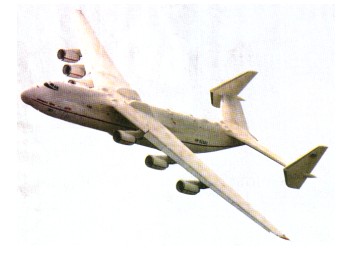
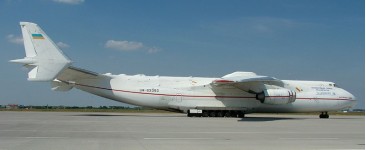
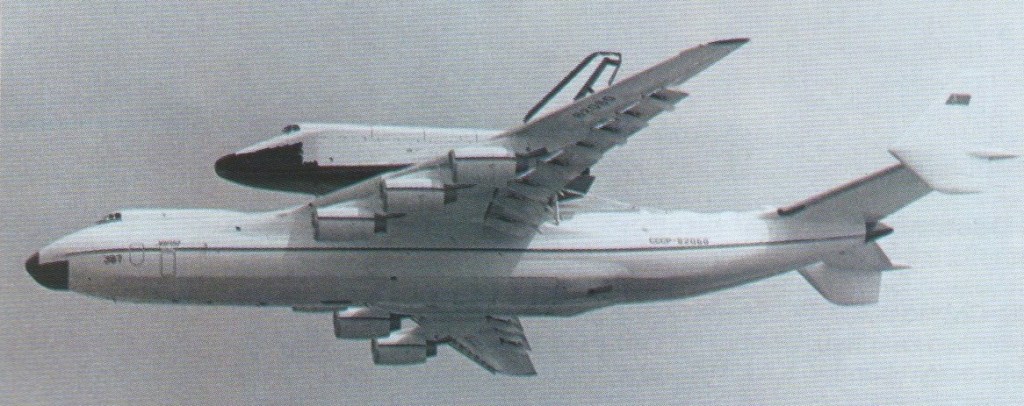
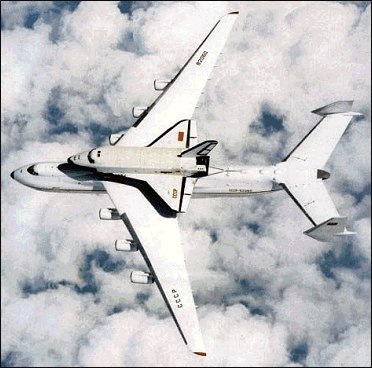
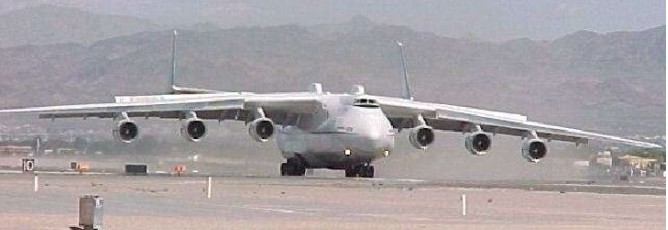
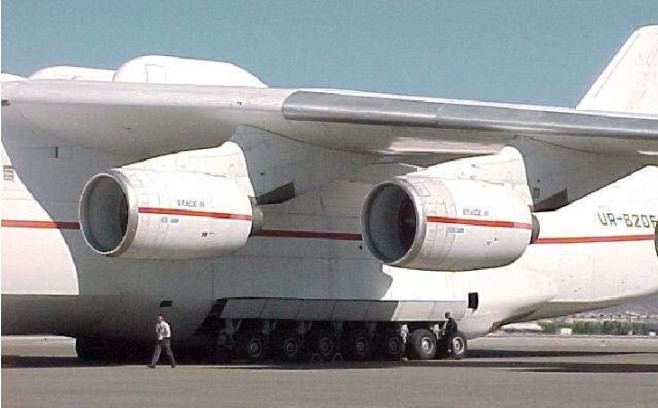
The An-225 Mriya (dream) stemmed from the need to transport large items for the Soviet space programme. In mid-1985 Antonov began the design and the An-124 provided the basis for the new aircraft, Antonov using many of the same components to keep cost and development effort down. Standard An-124, wings are grafted on to a new centre section, thereby increasing the span while keeping the engine installations the same. An additional pair of D-36T turbofans is fitted to the new centre section.

Antonov An-225 Mriya Article

The cabin retains the same cross-sectional dimensions but with increased length, and to save weight the rear loading ramp is removed, but the An-225 retains the nose visor.

To support the increased weight, seven pairs of wheels are fitted to each side as opposed to five in the An-124.
Outsize loads are carried ‘piggy-back’, the load supported on two main attachments above the centre section. These supports and other smaller ones along the fuselage top are faired over when not in use. To avoid buffeting from the ‘piggyback’ load, the An-225 has twin vertical fins mounted on the end of a large tailplane.

The prototype made its first flight on 21 December 1988 from Hostomel Airport outside Kiev, Ukraine, and the first flew with Buran on 13 May 1989 from Baikonur cosmodrome. This combination appeared at the Paris air show in 1989, car¬rying the 62.1 tonne (136,684 lb) Buran on its back.

On 22 March 1989, in the course of a single 3 hr 30 minute flight from Kiev, the An-225 set 105 world and class records. With a payload of 344,576 lb / 156,300 kg, the machine took off at a weight of 1,120,370 lb / 508,200 kg. It proceeded to fly a 1243 mile / 2000 km closed circuit at an average speed of 505.24 mph / 813.09 kph and to reach a maximum altitude of 40,485 ft / 12,340 m.

Typically, the An-225 carries two pilots, two flight engineers and two navigators, the flight system incorporating fly-by-wire controls. NATO name Cossack.

The Antonov An-225 has been extensively modified since 1988 with its six engines being updated and a strengthened fuselage being among the many changes.

The first commercial flight was performed by the An-225 in May, 1990. A T-800 tractor weighing more than 100 tons was delivered from Chelyabinsk to Yakutia.

After the collapse of the USSR the only plane stopped flying in 1994 and some parts were disassembled to be used on other planes. However by the 2000s it was restored by efforts of some Ukrainian companies. The airliner was amended a bit to meet the standards of civil aviation first flying aain on the 7th of May, 2001.

Antonov planned to finish building a second An-225 if they have financial support. 70% was ready; the centre wing-section, fuselage and a wing remained since the Soviet times. If they had a customer they would finish it, requiring $150 million.

Gallery

Antonov An-225 / Molniya Buran Gallery

An-225 Mriya (Cossack)
Engines: 6 x ZMKB Progress (Lotarev) D-18T turbofan, 225140 N / 22950 kp / 51,587lbs thrust
Length: 84.0 m / 275 ft 7 in
Height: 18.2 m / 59 ft 9 in
Wingspan: 290 ft / 88.4 m
Wing area: 905.0 sq.m / 9741.33 sq ft
Empty Weight: 385,809lbs (175,000kg)
Maximum Take-Off Weight: 1,322,774lbs (600,000kg)
Max. weight carried: 661500.0 lb / 300000.0 kg
Wing load: 128.74 lb/sq.ft / 628.0 kg/sq.m
Maximum Speed: 528mph (850kmh; 459kts)
Landing speed: 135 kts / 250 km/h
Cruising speed: 432 kts / 800 km/h
Range w/max.fuel: 15400 km / 9569 miles
Range w/max.payload: 4500 km / 2796 miles
Service Ceiling: 36,089ft (11,000m)
Internal cargo hold: 43m x 6.4m x 4.4m.
Crew: 4-6 +23

Antonov An-178

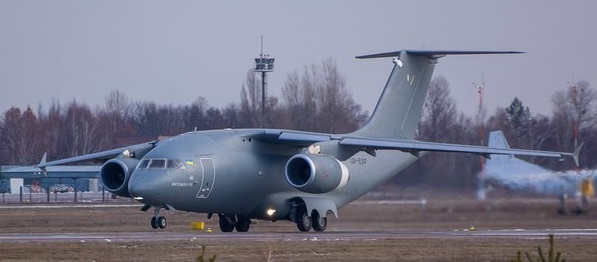
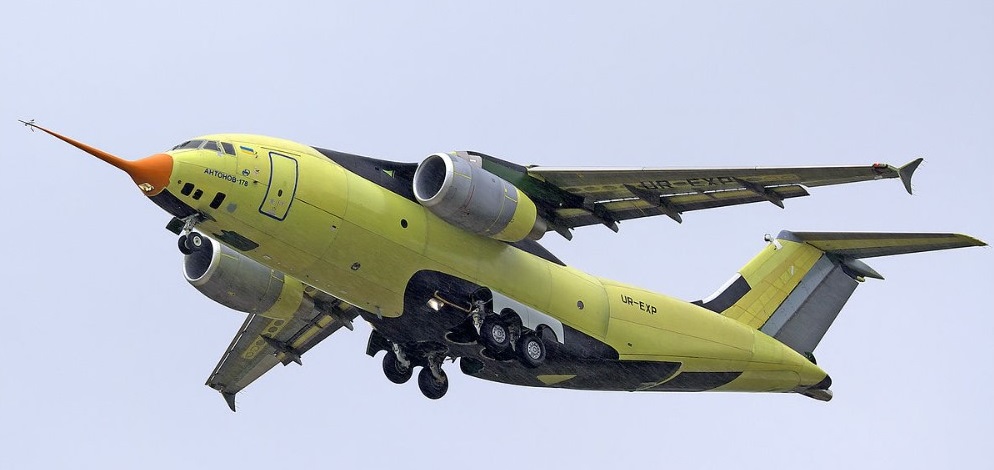
The Antonov An-178 (Ukrainian: Антонов Ан-178) is a short-range medium-airlift military transport aircraft designed by the Ukrainian Antonov company and based on the Antonov An-158 (An-148-200).

An-178 is a high-wing transport aircraft with moderately swept wing, winglets and a T-tail. The wing outer panels (including winglets), front fuselage with cockpit and nosewheel leg come from the An-158. The cargo hold is slightly enlarged, and there is an extra pair of main-wheels on each side. The airframe is made of aluminium alloys and composite materials. The fuselage is semi-monocoque with a circular cross-section. The retractable landing gear consists of two main wheel bogies and a dual nose wheel. The flight control system is dual duplex fly-by-wire system, consisting of two parts: FCS-A and FCS-B, each of which is responsible for two control channels. The flight control surfaces include ailerons near the wing tips, four control spoilers, six lift-dump/speed-brake spoilers, rudder and elevators, with an emergency mechanical cable back-up system. The powerplant consists of two Progress D-436-148FM turbofan engines, mounted on pylons under the wings and an auxiliary power unit. It can shift 18 tonnes over 1,000 km, or 10 tonnes over 4,000 km.

The aircraft was derived from the 99-seat An-158 regional airliner and was fitted with the commonized F1 fuselage nose section with the identical flight deck, wing panels, empennage and most of the onboard systems. The fuselage however was newly created with an enlarged diameter that had grown from 3.35 m to 3.9 m, which has resulted in an enlarged cargo hold – the cargo cabin cross section increased to 2.75 m by 2.75 m. Aside from the wing structure, outer panels (including winglets), front fuselage nose, cockpit and nose landing gear which come from the An-158, there is an extra pair of tandem main-wheels on each side.

The An-178 was previously known as the An-148T. The aircraft made its Western debut at the 2015 Paris Air Show.

It was announced on 5 February 2010, rolled out on 16 April 2015 and the maiden flight was on 7 May 2015.

There are reports that future production-standard aircraft will have a longer wingspan while retaining the organic wing panels of the An-158. Its maximal take-off weight would increase to an estimated 56 tons. Later production variants would need turbofan engines with a thrust of about 9,500 kgf to have the characteristics required. The planned engine may be the new-generation in-development Ivchenko-Progress AI-28 turbofan. The decision was made to fit the An-178 prototype with less powerful D-436-148FM engines in the interim. The D-436-148FM is a derivative of the production-standard D-436-148 with an upgraded fan, which boosted the takeoff thrust to 7,800 kgf and at emergency power rating to 8,580 kgf.

Powerplant: 2 × Progress D-436-148FM Turbofan, 73.55 kN (16,534 lbf)
Wingspan: 30.57 m (100 ft 4 in)
Length: 32.23 m (105 ft 9 in)
Height: 9.57 m (31 ft 5 in)
Max takeoff weight: 51,000 kg (112,436 lb)
Fuel capacity: 14,650 kg (32,298 lb)
Max landing weight: 47,000 kg (103,617 lb)
Maximum speed: 990 km/h (620 mph, 530 kn)
Cruise speed: 825 km/h (513 mph, 445 kn)
Range: 4,700 km (2,900 mi, 2,500 nmi)
Ferry range: 5,300 km (3,300 mi, 2,900 nmi)
Service ceiling: 12,000 m (39,000 ft)
Landing distance: 2,500 m (8,200 ft)
Crew: 2
Capacity: 90 soldiers, 70 paratroopers, 48 on stretchers +15 seated, 8 medical modules and 12, or 16 tons of cargo, overload variant 18 tons.

Antonov An-148 / An-158

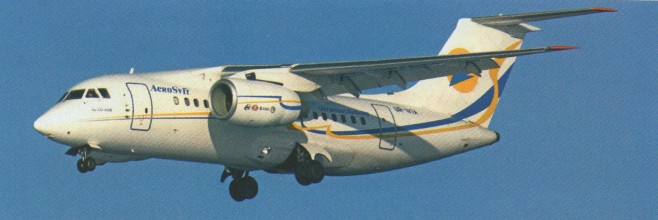
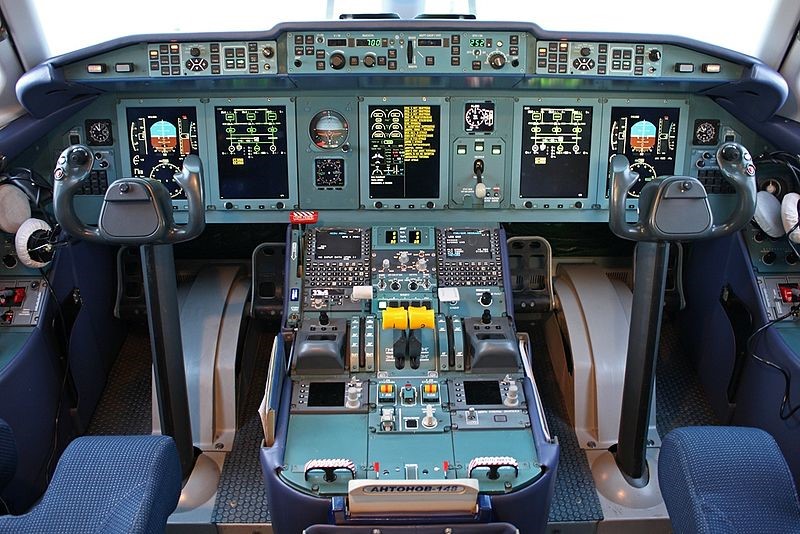
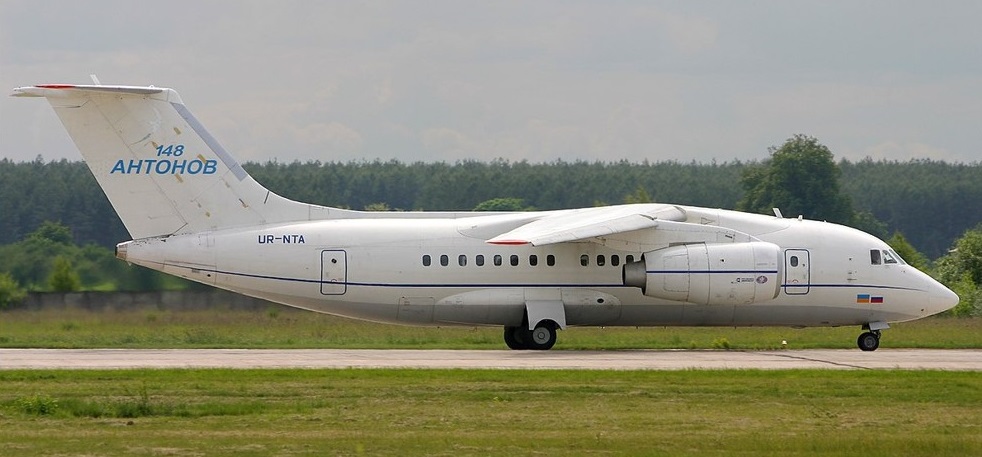
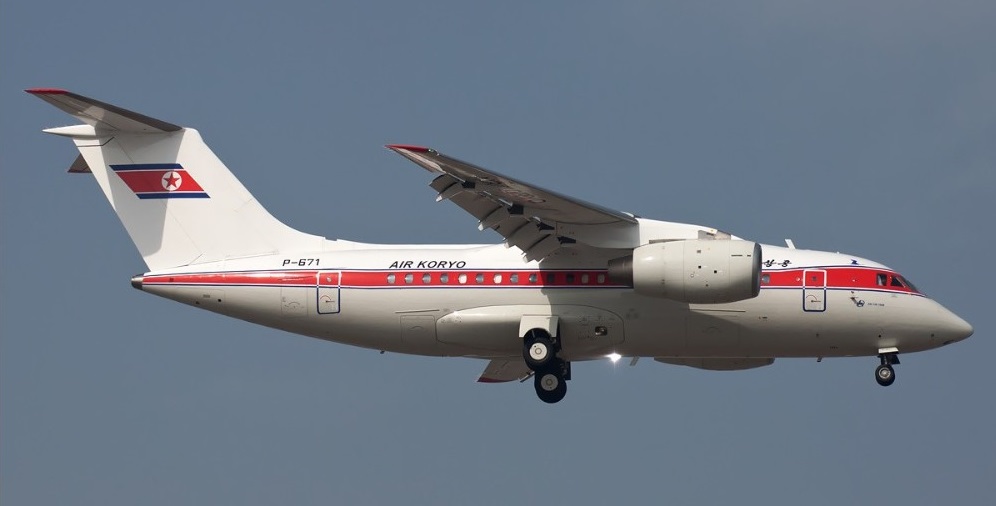
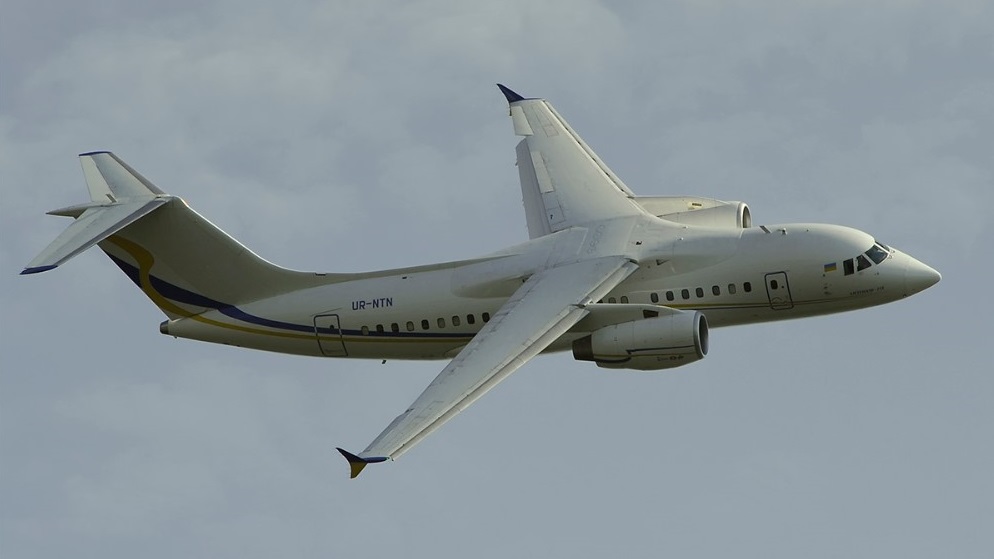
The Antonov An-148 (Ukrainian: Антонов Ан-148) is a regional jet designed and built by Antonov of Ukraine.

The beginning of the An-148 project dates to the early 1990s, when work on the Antonov An-74 passenger modification started, headed by Petro Balabuev. In 2001, the project was renamed An-148. The An-74 fuselage was extended and the new aircraft’s wing design was created from scratch. The developers initially used Motor Sich D-436-148 engines.

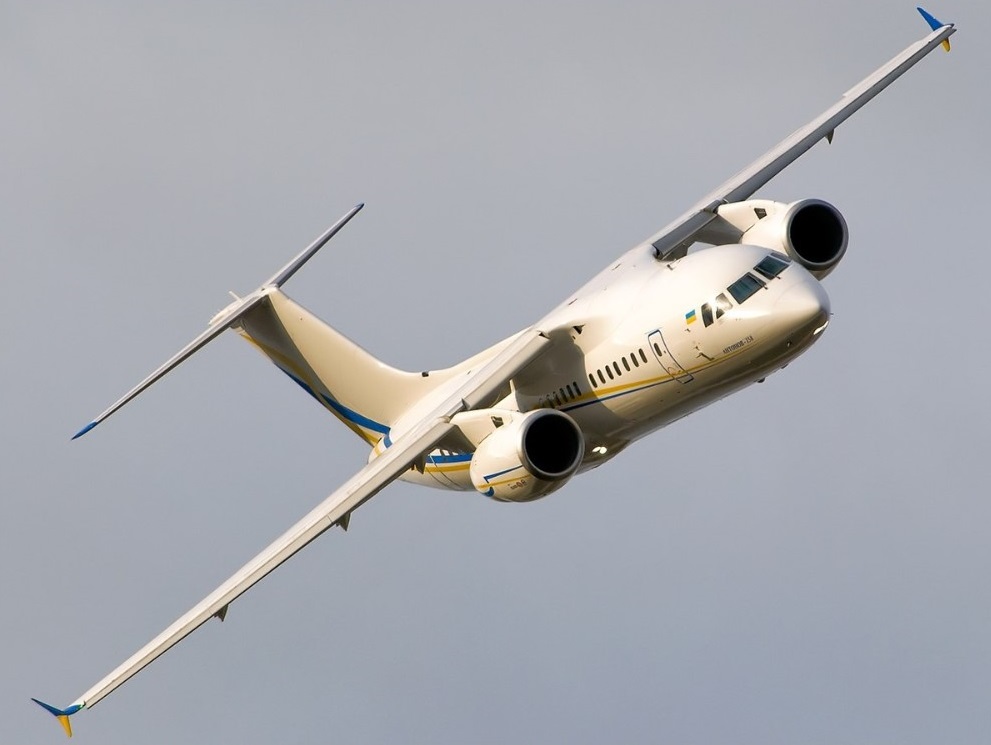
The An-148 aircraft is a high-wing monoplane with two turbofan jet engines mounted in pods under the wing. This arrangement protects the engines and wing structure against foreign object damage. A built-in autodiagnosis system, auxiliary power unit, and the wing configuration allow the An-148 to be used at poorly equipped airfields. Flight and navigation equipment features five 15 by 20 cm (5.9 by 7.9 in) liquid crystal display panels built by Russia’s Aviapribor and a fly-by-wire system.

The main landing gear rotates into the belly of the aircraft when in flight, with partial doors covering the legs, and the sides of the tires remaining exposed. Built-in entrance stairs enable boarding and disembarking the aircraft without extra ground equipment.

The An-148-100 regional aircraft is the main model of the An-148. It seats 70 passengers at 864 mm (34.0 in) or up to 80 passengers at 762 mm (30.0 in) pitch in a one-class 2+3 seating layout. The aircraft is also configurable in a multiple-class layout which can carry fewer passengers, typically with four abreast business class.

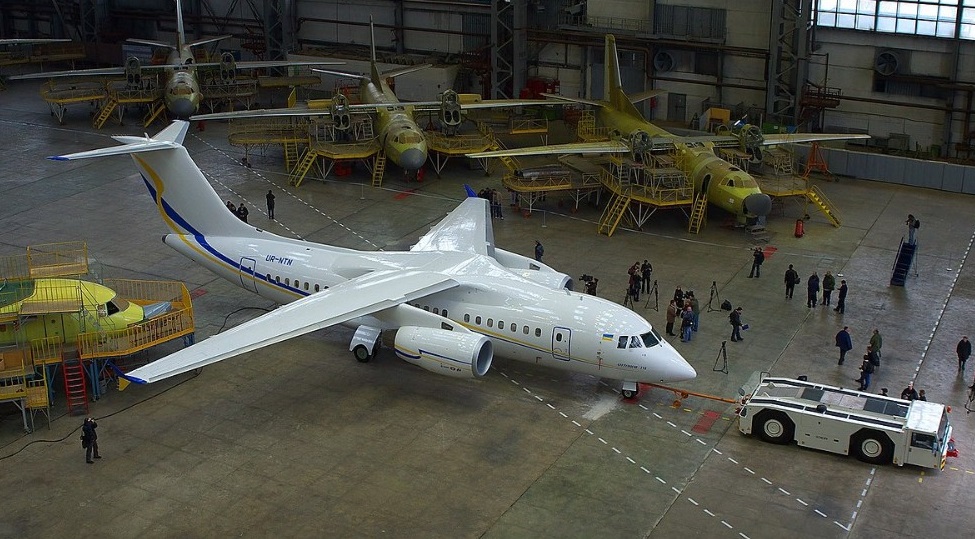
In 2002, production of the first three prototypes was begun at AVIANT. On 17 December 2004, the first prototype completed its maiden flight. The second prototype joined the testing programme in April 2005. During the certification programme, the two prototypes performed about 600 flights in total. On 26 February 2007, the aircraft, its D-436-148 engine and the AI-450-МS auxiliary power unit were certified by the Interstate Aviation Committee of Russia and the State Aviation Administration of Ukraine.

The first prototype. It made its maiden flight on 17 December 2004.

The aircraft completed its certification programme on 26 February 2007. The An-148 has a maximum range of 2,100–4,400 km (1,100–2,400 nmi; 1,300–2,700 mi) and is able to carry 68–85 passengers, depending on the configuration.

The An-148 was manufactured by the Ukrainian Kyiv AVIANT plant (now Antonov Serial Production Plant) and Russia’s Voronezh Aircraft Production Association (VASO). On 28 June 2009, the first serially produced An-148, manufactured at VASO in Voronezh, took to the skies. Although numerous companies are involved in the project, at least 70% of the aircraft’s hardware is made by Russian manufacturers. The An-148’s list price is about $24–30 million. The main problem with the project has been increasing the aircraft’s sluggish production rate. The then-independent AVIANT plant initially failed to satisfy to growing orders, leading to VASO’s growing involvement in the aircraft’s assembly. VASO announced in June 2017 that the two final Russian-assembled An-148s would be delivered, and the project would not see further development.

In April 2005, the Ilyushin Finance Leasing Company ordered the first series of An-148 for the Krasair airline. Lease agreement calls for ten aircraft with an option for five units valued at $270 million.

The Antonov An-158 is a stretched fuselage version of the aircraft, accommodating up to 100 passengers.

An-158

The An-158 is a 1.7m stretched fuselage version for 99 passengers in a one-class standard configuration. Other changes include the installation of wingtip fences. The airplane successfully completed its first flight on 28 April 2010, with flight certification tests were planned to be completed before the end of 2010; on 3 March 2011, it was given Russian certification.

After flight and land test in night lands airports of Ecuador (Latacunga / Cotopaxi International Airport, 2806 m AMSL) and Bolivia (La Paz / El Alto International Airport, 4061 m AMSL) in November 2013 prepare documentation for obtaining correspondent supplements to the type certificate of this airplane.

On 2 June 2009, the first An-148 entered commercial service with the Ukrainian carrier Aerosvit. The first passenger flight was from Kharkiv to Kyiv; the aircraft had the civilian registration UR-NTA. By November 2009, Aerosvit was operating the An-148 on the Kyiv–Odessa and Simferopol–Lviv routes, performing two flights a day with the average flight time of 4–5 hours.

On 21 December 2009, the An-148 was put into service in Russia with Rossiya airline. The first passenger flight was FV135 from Pulkovo Airport in Saint Petersburg to Sheremetyevo International Airport in Moscow. By 20 May 2010, Rossiya’s An-148 fleet had accumulated a total of 915 flight hours and performed 710 landings. Rossiya complained that the aircraft experienced some reliability problems. There were some technical problems with the aircraft, and pilot training could not be ramped up fast enough, leading to pilot shortages. However, by 2011 the situation had improved.

On 15 February 2010, the An-148 started international flights to the European Union (Poland) with the Aerosvit airline.

The first An-158 in April 2010

On 18 April 2013, the first serial An-158 version was delivered to the Cuban flagship airline Cubana de Aviación. According to Antonov, Cubana additionally ordered two more aircraft, while other sources report this order to be for ten aircraft. On 28 April 2013, Ukraine’s Antonov aircraft maker handed over a third An-158 passenger airliner to Cuba and signed a contract for the delivery of three more.

Following a crash in February 2018, all An-148 and An-158 in Russia were grounded by the Russian Ministry of Transport. In addition, Cubana grounded its An-158 fleet as of May 2018 due to several technical issues with the aircraft. Until late 2018, the Antonov An-148 aircraft was also being produced in Russia by Voronezh Aircraft Production Association; however, due to the souring political relationship between Ukraine and Russia, production in Russia was discontinued. The last Russian-built An-148 was completed in October 2018.

In April 2016, Indian company Reliance defense limited and Antonov entered into an agreement to construct an aircraft based on An 148/ An 158 for defense and commercial purposes.

In April 2017, Cubana de Aviación suspended its flights between Havana and Guantánamo due to “technical problems” with its An-158 fleet. The route from Havana to Holguín also had problems: of 116 planned flights in the first months of 2017, 38 were cancelled and 36 suffered significant delays. Yoanka Acosta, head of Cubana’s commercial division, explained that the planes were leased from Ukraine but spare parts were sourced from Russia, so the state of conflict between the two countries had affected the supply of parts, making maintenance difficult. In late April, however, representatives from Antonov and Cubana met and signed a service agreement that extended the aircraft’s navigation directives to 3,600 flights and guaranteed the supply of spare parts, although it did not specify a date for normalization.

In March 2018 Rostransnadzor suspended all flights of An-148 in Russia after crash on 11 February 2018.

In May 2018, Cubana de Aviación grounded its An-158 fleet after it received an order from the Cuban National Aviation Authority. The official reason given by the Cuban National Aviation Authority was “multiple and repeating failures have been found in complex systems, built by mechanical, hydraulic and electrical components, as well as computer performance algorithms”, in addition to “evidence of design and manufacturing flaws, serious issues in flight control system, cracks in the structure and engine temperature increase above normal parameters”.

On 5 March 2011, an Antonov An-148 (assembled by VASO) carrying test registration 61708 crashed during a test flight in Russia’s Belgorod Oblast after an inflight breakup, killing all six crew members on board. An investigation commission found that the crew permitted the aircraft to accelerate more than 60 knots above its “Never Exceed” speed in an emergency descent, which led to the inflight breakup. Witnesses on the ground reported a wing had separated from the aircraft in flight. The aircraft was due to be delivered to Myanmar.

On 11 February 2018, an Antonov An-148 operating as Saratov Airlines Flight 703, crashed shortly after takeoff near Ramenskoye, outside of Moscow. The aircraft was carrying 65 passengers and six crew members. There were no survivors. This is the first fatal commercial accident for this aircraft type.

At least 47 were built.

An-148-100B
An-158

Versions

An-148-100A
main version of the An-148. It has a passenger capacity of 85 in a one-class dense configuration or 68 in a two-class configuration, and a range of 2,100 km (1,100 nmi; 1,300 mi)

An-148-100B
extended-range version, up to 3,500 km (1,900 nmi; 2,200 mi)

An-148-100E
extended-range version, up to 4,400 km (2,400 nmi; 2,700 mi) and a maximum takeoff weight (MTOW) of 43.7 t (43,700 kg; 96,000 lb)

An-148-200
unified with An-158 by the rear part of the fuselage. Hence maximum seating capacity is increased to 89 passengers in dense configuration, comparing to 85 for An-148-100. Planned for production in Kyiv with An-158.

An-148-300
previously called An-168, business variant, seating 8-40 passengers, with a range up to 7,000 km (3,800 nmi; 4,300 mi)

Specifications:

148-100E
Engines: 2 x Progress D-436-148, 14,000 lbf; 63 kN
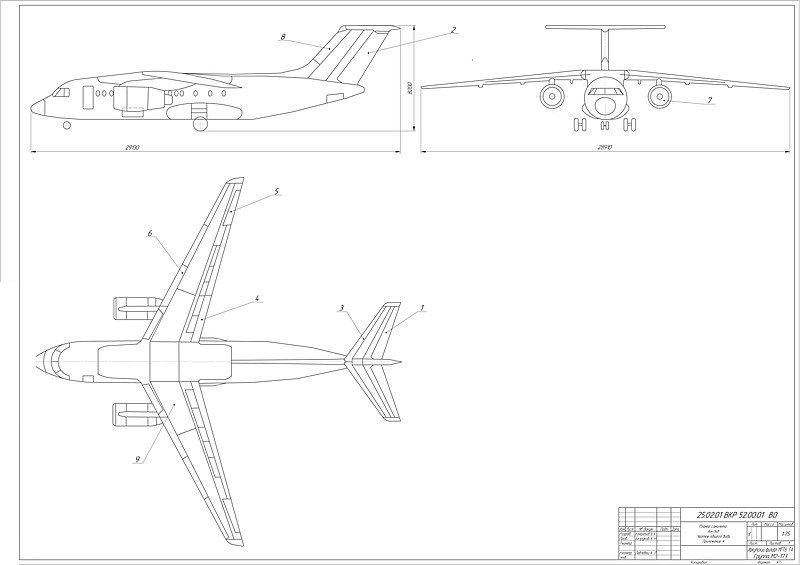
Wingspan: 28.91 m (94 ft 10 in)
Wing area: 87.32 m2 (939.9 sq ft)
Length: 29.13 m (95 ft 7 in)
Height: 8.19 m (26 ft 10 in)
MTOW: 43,700 kg (96,300 lb)
Max. payload: 9,000 kg (20,000 lb)
OEW: 22,000 kg (49,000 lb)
Max. fuel: 12,050 kg (26,570 lb)
Ceiling: 12,200 m (40,000 ft)
Cruise: 800 to 870 km/h (430 to 470 kn)
Range (75 pax/max): 4,400 km (2,400 nmi)
Fuel burn: 1,650 kg/h (3,600 lb/h)
Take off run (MTOW): 1,885 m (6,184 ft)
Seats: 68–85
Seat pitch: 30–35 in
Cargo: 14.60 m3 (516 cu ft)
Cabin: 3.15 m (10 ft 4 in) width × 2.00 m (6 ft 7 in) height
Cockpit crew: 2

An-158
Engines: 2 x Progress D-436, 15,100 lbf; 67.0 kN
Wingspan: 28.91 m (94 ft 10 in)
Wing area: 87.32 m2 (939.9 sq ft)
Length: 30.83 m (101 ft 2 in)
Height: 8.19 m (26 ft 10 in)
MTOW: 43,700 kg (96,300 lb)
Max. payload: 5,000 kg (11,000 lb)
OEW: 22,000 kg (49,000 lb)
Max. fuel: 12,050 kg (26,570 lb)
Ceiling: 12,200 m (40,000 ft)
Cruise: 800 to 870 km/h (430 to 470 kn)
Range (75 pax/max): 2,500 km (1,300 nmi)
Fuel burn: 1,800 kg/h (4,000 lb/h)
Take off run (MTOW): 1,900 m (6,200 ft)
Cockpit crew: 2
Seats: 86–99
Seat pitch: 30–34 in
Cabin: 3.15 m (10 ft 4 in) width × 2.00 m (6 ft 7 in) height