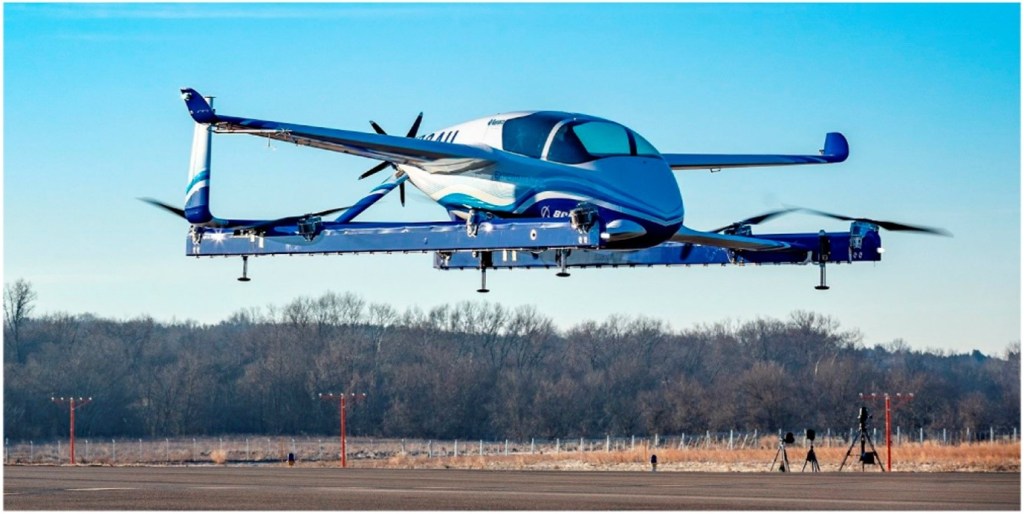
Aurora Flight Sciences Pegasus PAV / Boeing Pegasus PAV

Aurora Flight Sciences, an independent subsidiary of Boeing, hovered a full-size prototype of their Pegasus Passenger Air Vehicle (PAV) on 22 January 2019 at the Manassas Regional Airport in Manassas, Virginia.

Just a few months later on 4 June 2019, the Pegasus PAV crash-landed when the autoland function inadvertently entered ground mode and commanded the motors to shut down.

Atlas Aviation

Registered as a private company at Kempton Park, Transvaal, in 1964 to establish an aircraft industry in South Africa, jointly with the Industrial Development Corporation. Completed manufacture of Impala (M.B.326M) under Aermacchi license. Developed C4M Kudu utility STOL light transport, first flown February 1974. First flew in 1986 its Cheetah multirole fighter, fighter-bomber, and reconnaissance aircraft conversion of the Mirage III for the SAAF, allowing initial operational capability in 1987. ACE all-composite turboprop trainer first flew April 1991 but later canceled. Developed Rooivalk attack helicopter, Puma gunship, and Oryx. Company also held marketing rights for several foreign aircraft and undertook extensive maintenance and overhaul work for SAAF. Merged with Simera in April 1996 under new Denel Aviation name, having been a division of Denel (Pty) Ltd. within the latter’s Aerospace Group.
1995: A division of Denel (Pty) Ltd, PO Box 11, Atlas Rd, Kempton Park 1620, South Africa.
Earlier Denel (Pty.) Ltd. encompassed Atlas Aviation and Simera as divisions of its Aerospace Group. Took the Denel name in April 1996 after merging Atlas and Simera, with new subdivisions created as Tactical Aircraft Support, Transport Aircraft Support, Aircraft Manufacturing and Airmotive. Cooperating with DaimlerChrysler of Germany on AT-2000 Mako program. Cooperates with Aerospatiale of France on aircraft and missiles. Full range of maintenance, repair, and modification facilities, plus component manufacturing. Continuing programs of former Atlas include Cheetah C and D fighter conversion of Mirage III, development and production of AH-2A Rooivalk antiarmour/ attack helicopter (first flown February 1990 and for delivery from 1999), development of the Cirstel (Combined Infra-Red Suppression and Tail rotor Elimination system) tail-rotorless conversion of an Alouette helicopter as a technology demonstrator (first flown 1998), development and production of a variant of the SA 330 Puma helicopter as the Oryx, and development of a modular weapon suite for the Puma helicopter to convert it into a gunship.

ATEC Omsider / Nordic Omsider

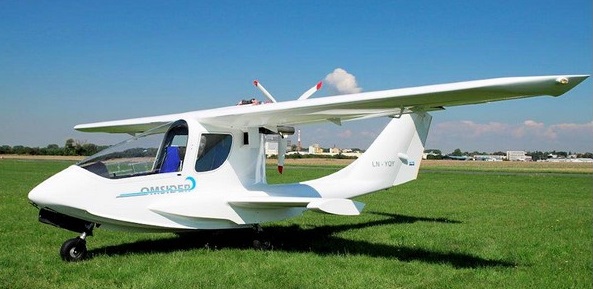
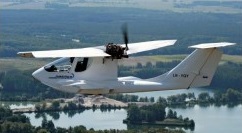
The Nordic Omsider (English: at last or finally) is a Norwegian amphibious flying boat, designed by Terje Sandvik and Jostein Eide and under development by Nordic Aircraft AS of Kinservik.

The Omsider was developed to provide an amphibious aircraft suited to Norwegian conditions. Conceived in the 1980s, development was started in 1999 and 20,000 person-hours and €600,000 have been invested in building the molds and the prototypes.

The design features a cantilever high-wing, with a stub lower wing/float, an enclosed cockpit, with two-seats-in-tandem under a forward-hinged bubble canopy, a T-tail, retractable tricycle landing gear and a single engine in pusher configuration.

The aircraft is made from composite material. Its 9.1 m (29.9 ft) span wing mounts flaps. Standard engines available are the 100 hp (75 kW) Rotax 912ULS and Rotax 912iS four-stroke powerplants.

The initial prototype was built in Norway and has logged over 500 flying hours. It features outrigger floats. The second prototype was built under contract by ATEC v.o.s. in the Czech Republic. The wings and part of the tail are from the ATEC 321 Faeta and the second prototype features stub wings/floats.

It was introduced at the AERO Friedrichshafen show in 2014. The program had cost €600,000 by 2014 and the unit cost was to be €90,000 assembled in 2015. Once in production the aircraft is intended to be supplied complete and ready-to-fly.

Omsider
Engine: 1 × Rotax 912ULS, 75 kW (101 hp)
Propeller: 3-bladed composite
Wingspan: 9.1 m (29 ft 10 in)
Length: 6.9 m (22 ft 8 in)
Empty weight: 320 kg (705 lb)
Gross weight: 495 kg (1,091 lb)
Fuel capacity: 80 litres (18 imp gal; 21 US gal)
Cruise speed: 210 km/h (130 mph, 110 kn)
Stall speed: 64 km/h (40 mph, 35 kn)
Never exceed speed: 254 km/h (158 mph, 137 kn)
Range: 900 km (560 mi, 490 nmi)
Crew: one
Capacity: one passenger

Arnold AR-6 Endeavour

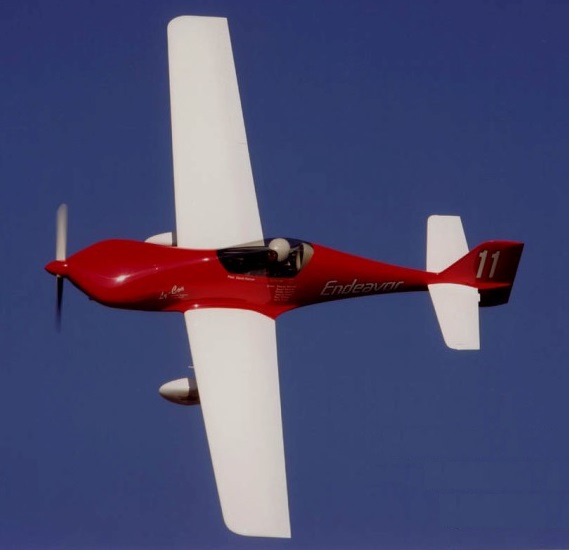
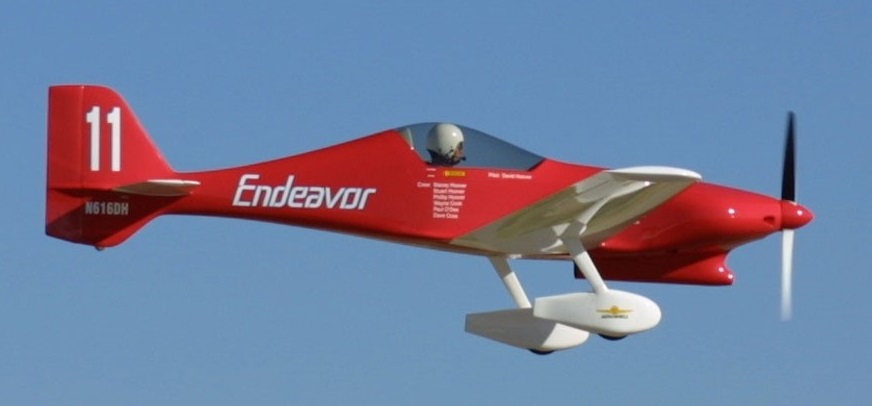
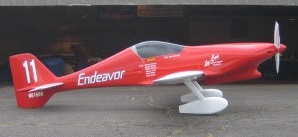
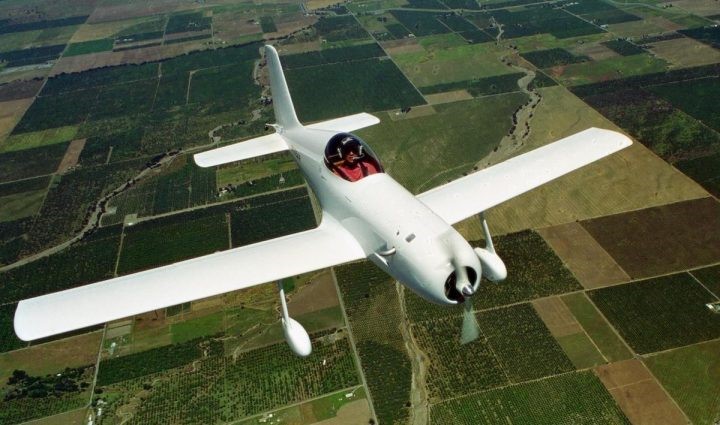
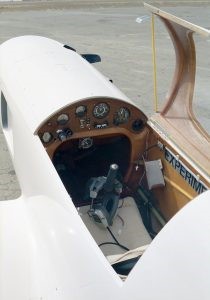
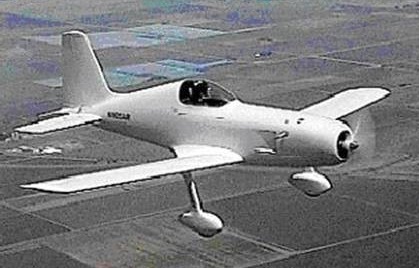
Designed by Mike Arnold, the AR-6 was built David Hoover, Mike Arnold (fuselage plug), Craig Catto (wings), Robby Grove (landing gear), and Steve Hill (carbon fiber prop).

First flown in March 2005, it was raced by David Hoover at the Reno National Air Races in the Formula 1 class from 2005 to 2007, finishing first in the Gold race in 2007.

It was then owned by Steve Senegal of San Bruno, California. In 2008, Steve piloted the AR-6 to victory in the Gold race and won again in 2010

In 2012, Steve set a new race-lap record of 260 mph, and won the Gold race. In 2014, he set a new qualifying lap record of more than 267 mph and won the Gold race in the Formula 1 class.

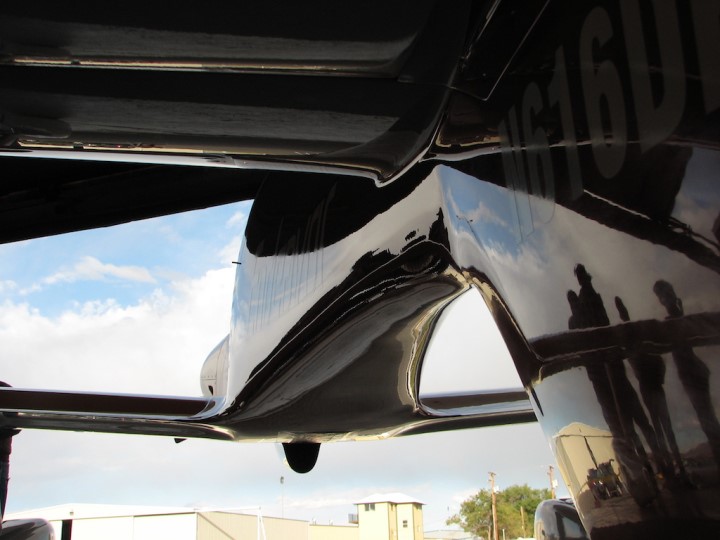
On September 18, 2016, about 1118 Pacific daylight time, the Hoover Arnold AR-6, N616DH, struck Reberry 3M1C1R, N913FT, during the takeoff roll at the Reno-Stead Airport (RTS), Reno, Nevada. The AR-6 was registered to the pilot and operated as Race 11. The 3M1C1R was registered to Hot Stuff Air Racing LLC., Kissimmee, Florida, and was operated as Race 1.

The pilot of Race 11 reported that he was in the back row of the Formula 1 staggered start sequence on runway 8. Once he saw the green flag for start, he initiated takeoff and observed both airplanes to the left and right of him accelerating faster than he did. As the tail of the airplane came up, the pilot observed Race 1 stationary on the runway and he attempted to swerve out of the way and get the airplane airborne. Subsequently, Race 11 impacted Race 1.

The pilot of Race 1 reported that he was in the number four position, which was located in the middle row, inside position. He stated that when running the engine up in anticipation of the start, about 20 seconds before the green flag drop, the engine was not running well enough for flight and he made the decision to shut the engine down to signal the starters to halt the starting process. The pilot recalled that a flagman on his row put his hands in an ‘X’ over his head and he decided to open his canopy to make it clear he was out of the race and so everyone could see him. The pilot further reported that an alternate airplane was signaled to taxi on to the runway to replace his entry and that he felt confident the communications had reached the appropriate people as he waited for personnel to push his airplane off the runway. The pilot stated that shortly after, he saw the flagman run out on to the runway waving his hands over his head as if something was wrong and observed the airplane to his right start his takeoff roll. A few seconds later, Race 6 and Race 8 passed by him on either side, and subsequently, he was impacted from behind.

Examination of Race 1 revealed that the upper portion of the rudder and vertical stabilizer were separated. Multiple propeller slash marks were observed on the right wing, which was partially separated. Examination of Race 11 revealed that the left wing was structurally damaged, and the left main landing gear structure was compressed upward through the wing structure.

Onboard video from Race 1, revealed that the camera was mounted in the forward area of the cockpit, providing video of the pilot, and surrounding runway environment, including the third row of airplanes and flaggers adjacent to the third row. About 4 seconds from the start of the video, the engine was heard running erratically. At 11 seconds, the pilot was observed looking to his right and began shutting down the engine along with starting to open the canopy 2 seconds later. Between 16 and 17 seconds, the canopy was opened. At the same time, a flagger was observed on the ramp side of the runway, dropping a white flag, signaling the start of the race to the third row. At 25 to 26 seconds, airplanes were observed passing on both the left and right side of his position, followed by the left wing and landing gear of Race 11 colliding with the empennage and right wing of Race 1 about a second later. It was noted that during the 10 seconds from the canopy opening to the time of the collision, Race 11 was observed drifting slightly left during the takeoff roll.
Accident Number: WPR16LA185A

Hoover AR-6
Engine: Continental O-200
Prop: Carbon fiber, 54- by 68-inch pitch
Wingspan: 24 feet, 4 inches
Empty Weight: 600 pounds
Fuel Capacity: 5.4 gallons
Top Speed: 310 mph at 3,000 feet MSL
Final Approach Speed: 90 mph
Arnold AR-5

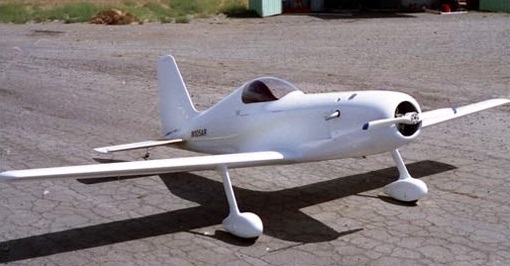
Mike Arnold’s AR-5 has inspired a generation of aerospace engineers by being the first powered aircraft with a flat plate drag of less than 1 square foot. The AR-5 had smashed the ‘impossible’ mark with a flat plate drag area equivalent to just 0.88 square feet.

The AR-5 was foam shaped, sanded, glassed, then sanded construction.

In 1992, the AR-5 set a c-1a/0 record of 213mph on 65HP.

When he was ready, Arnold shared his ‘mystery ship’ with a number of pilots from leading aviation magazines. They all agreed that the little speedster was also a sweet-handling machine, with beautifully harmonised controls and plenty of room for the pilot.

Arnold had originally planned to sell plans for the AR-5 but, while he was satisfied with the design, he decided to wait and see how the gathering storm of product liability suits would play out.

Instead, Arnold fell back on his first craft, producing a series of movies about his plane and selling video copies to homebuilders and aviation enthusiasts. The full set of films is:

  • Why It Goes So Fast
  • How It’s Made
  • Moldless, Low-Drag Wheel Pants
  • The AR-5 In Action
  • Making Fibreglass Molds
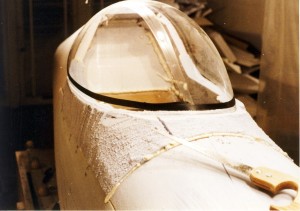
  • Making A Molded Fuselage – Shaping The AR-6

There is no CGI or even a pretty diagram in any of them. Each documentary offers an engaging story as well as plenty of information.

Arnold had an engine failure (broke something internal) and the AR5 had a forced landing. The plane came to a stop with the gear legs bent aft and the airplane was sitting nose down on the cowling. That wrecked the main gear and smacked the engine and firewall on the ground. In the case of other pilot-builders, some have decided to retire the bird rather than risk an in-flight structural failure.

According to his video a soldered connection in the throttle linkage gave way and that was the reason for the engine failure. According to the video the gear mounts were undamaged and the engine mount bent absorbing the impact (no damage to primary structure that he had found). As of the recording date of the video he was planning on returning it to flight, but hadn’t finished or maybe hadn’t even started yet. It was retired.

The AR-5 is currently on permanent display at the Hiller Aviation Museum in San Carlos, California.

AR-5
Engine: 65hp Rotax 582
Span: 21 ft 0 in
Wing area: 56.2sq.ft.
Length: 14.5′
Height: 36″
Empty weight: 488 lb
Seats: 1
Fuselage width: 23″

Arnold, Mike

Mike Arnold was a film-maker by trade but that didn’t stop him from wowing aero engineers with the world’s most efficient aircraft with his AR-5.

Arnold had originally planned to sell plans for the AR-5 but, while he was satisfied with the design, he decided to wait and see how the gathering storm of product liability suits would play out.

Instead, Arnold fell back on his first craft, producing a series of movies about his plane and selling video copies to homebuilders and aviation enthusiasts. The full set of films is:

  • Why It Goes So Fast
  • How It’s Made
  • Moldless, Low-Drag Wheel Pants
  • The AR-5 In Action
  • Making Fibreglass Molds
  • Making A Molded Fuselage – Shaping The AR-6

There is no CGI or even a pretty diagram in any of them. Each documentary offers an engaging story as well as plenty of information.

Mike Arnold died on October 6th, 2015. He considered his aviation films his legacy and, after his passing, the Arnold family generously shared all six on YouTube.

Arnason Global 3

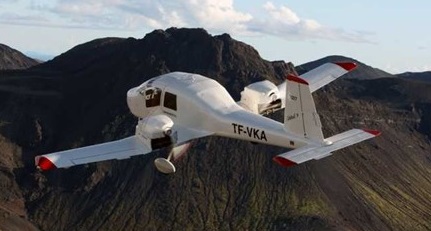
All metal 3 seat light twin designed by Kristjan Arnason of Reykjavik, Iceland.

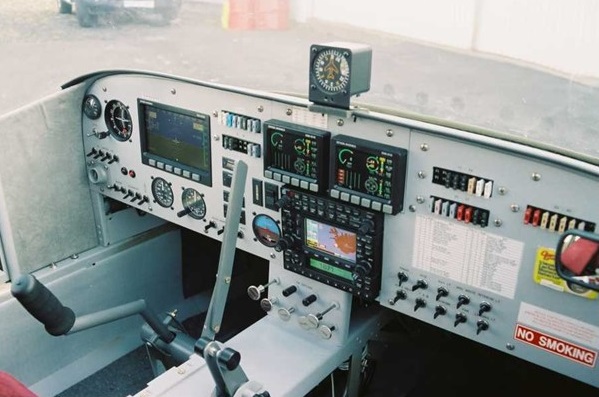
Avionics include Garmin 430 WAAS with world wide database. EFIS Dynon D-100 and engine instruments on two Dynon D-10. Two independent electrical systems and all switches double throw, so that power for each item can be taken from left or right electrical system. Switch is provided to interconnect the batteries for engine starting.

Registered TF-VKA, the Global 3 first flew on June 6, 2008.

Building plans include 59 A1 drawings (33×23 in) and were available for $990 including shipping.

Engine: 2 x Jabiru 2200
Prop: 2 x Sensenich
Cruising speed: 115 knots
Rate of climb: 1100 fpm
Service ceiling: 15,000 ft
Max. gross weight: 1770 lbs
Range: 800 nautical miles 45 min. res