Volvo Aero

Volvo Aero
Nohab Flygmotorfabriker AB
Svenska Flygmotor AB

Nohab Flygmotorfabriker AB was founded in Trollhättan, Sweden, in 1930 to produce aircraft engines for the Swedish Board of Aviation. As the name of the company indicates it was a subsidiary to NOHAB. In 1937 it became a part of the newly founded SAAB but already in 1941 Volvo acquired a majority of the stock and the name was changed to Svenska Flygmotor AB (SFA), and later on Volvo Flygmotor.

Since the 1950s the company have been the major engine supplier to the Swedish Air Force. The Volvo Aero Group has 3,600 employees and in 2003 had total sales of 0.9 billion euros. Today Volvo Aero is a partner in more than ten commercial engine programmes. Components from Volvo Aero are installed in more than 90% of all large commercial aircraft engines sold.

On 6 July 2012 Volvo Aero was acquired by the British aerospace manufacturer GKN in a SEK 6.9 billion deal.

Volvo Aero was a supplier of single-engine systems for military aircraft. These have largely been in partnership with other engine manufacturers, such as the RM1 (de Havilland Goblin) for the Saab 21R, RM2 (de Havilland Ghost) for the Saab J29, RM5 and RM6 (Rolls-Royce Avon) for the Saab 32 Lansen, the RM6B for the Saab 35 Draken, and the RM8 (Pratt & Whitney JT8D) for the Saab 37 Viggen. The Saab JAS 39 Gripen’s RM12 engine is a derivative of the General Electric F404.

Svenska Flygmotor also designed the B42, horizontally-opposed four-cylinder engine, intended for the SAAB Safir. However, SAAB decided on using engines from de Havilland and Lycoming for the Safir. In the end the B42 came to power the Infanterikanonvagn 103 assault gun. A follow-up called B44 powered the Pansarbandvagn 301 armoured personnel carrier.

Volvo Aero delivered engine components, mainly complex engine structures like turbine exhaust casings, turbine mid frames, LPT cases, compressor housings, LPT shafts, vanes, and large rotating parts.

Volvo Aero also had a facility in Trollhättan where they did maintenance on aircraft engines and stationary gas turbines. The aircraft engines are Pratt & Whitney Canada PW100 and TFE-731 engines. The Stationary gas turbines is General Electric LM1600 engine, and the DR990, which Volvo bought the OEM responsibility from Dresser Rand.

Volvo Aero manufactured combustion chambers, nozzles and turbines for commercial launch vehicles.

The company have produced the F-series hydraulic motors under the Volvo Flygmotor and VOAC brands.

Volvo Aero subsidiaries were located in the United States and Norway, in addition to Volvo’s home country, Sweden. The Norwegian plant, in Kongsberg, is the former Norsk Jetmotor, itself formerly a part of Kongsberg Våpenfabrikk.

Vol Mediterrani VM-1 Esqual / Esqual Aerocomp AB VM-1

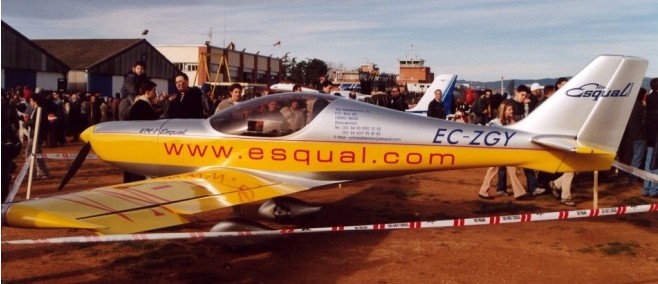
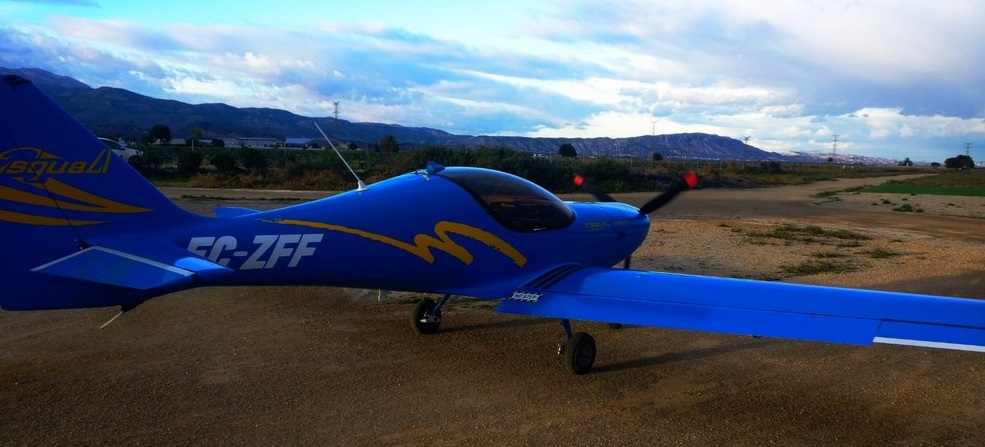
The VM-1 Esqual is a two seat light plane manufactured in composite with high density PVC foam and Epoxy resins. Laminated in a mould and vacuum cured in an oven at constant controlled temperature and humidity.

The fuselage is monocoque. The safety reinforced cockpit has twin axle composite beams all around its frame. The low cantilever wing has positive changing flaps (as high lift devices). The wing structure has a composite sandwich skin with a main double “T” composite spar and an accessory spar near the trailing edge.

Vol Mediterrani VM-1 Esqual

The cockpit seats are side by side. The rudder pedals are adjustable in flight. Electric operated flap and mechanical trim are standard, electric trim is an option. Independent ventilation openings are standard, a cabin heater is an option. The luggage compartment (with 50lts capacity) is located behind the seats and can be accessed during flight.

Vol Mediterrani VM-1 Esqual

The landing gear of the Esqual has a classic tricycle gear which is made of 7175 T6 aluminium grade. The main gear legs are suspended in the main carry through beam together with the reinforced wing spar zone. The main wheels are equipped with independent hydraulic brakes for steering. The nose gear leg is supported in the engine mount and equipped with a free swivel nose wheel.

2009 Price: 75000 EURO

Engine: Rotax 912 ULS (100 HP)
Wing span: 9.10 m
Wing area: 9,0 m²
Length 6.08 m
Height 1.94 m
Empty Weight: 265 kg / 584 lbs
Maximum weight: 544 Kg
Fuel capacity: 2 x 50 lts
VNE: 173 kt / 199 mph / 320 kmh
Stall: 33 kt / 39 mph / 62 kmh
Cruise: 135 kt / 155 mph / 250 kmh
Climb Rate: 1800 ft/min / 9 m/s
Glide Ratio: 1:19
Take-off distance (50ft obstacle): 450 ft / 138 m
Landing distance (50ft obstacle): 660 ft / 200 m
Roll rate (45/45º) 2 sec
Cockpit width 110 cm

Viking Aircraft Engines Viking 130

Viking Aircraft Engine 130HP injected

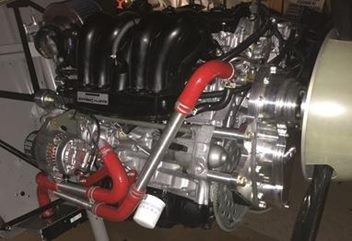
All Viking 130 engines use Variable Valve timing and Variable Valve Lift. The 130 is as close to a Honda Fit car engine as possible, retaining all of its modern features.

The Honda based Viking engine technology include 100% liquid cooling, computerized engine management, networked engine monitor capability, digital ECU, variable intake cam timing, gasoline direct injection fuel system and variable intake valve lift.

The engines are Evans liquid cooled without pressure and run at only 2/3 Honda rated RPM redline. Only one wire and a fuel pump to connect for start. Direct injected, no complicated fuel return system needed.

The 2016 Honda Fit engine manual cover all engine specifics. Cowlings, engine mounts and propeller available along with all other accessories. The Viking has no external exhaust pipes, just a muffler.

The engines are ready to bolt to the airframe as shipped

Viking Aircraft Engines Viking 110

Designed by Jan Eggenfellner, the Viking 110 is a 110hp aircraft engine developed from Honda Fit engine components by Viking Aircraft Engines.

Applications:
Zenith CH-601 CH-650 CH-701 CH-750
Van’s RV-12
Sonex Aircraft Sonex
Just Highlander
Progressive Aerodyne SeaRey

Viking 110
Type: Inline 4 cylinder
Bore: 73mm
Stroke: 90mm
Displacement: 1497cc
Length: 24.64in
Width: 22in
Height: 21.32in
Dry weight: 178lb
Cooling system: liquid
Reduction gear: 2.33/1
Power output: 110hp
Compression ratio: 10.4
Fuel consumption: 8.5gph max

Viking Aircraft Dragonfly / Dart Industries Dragonfly

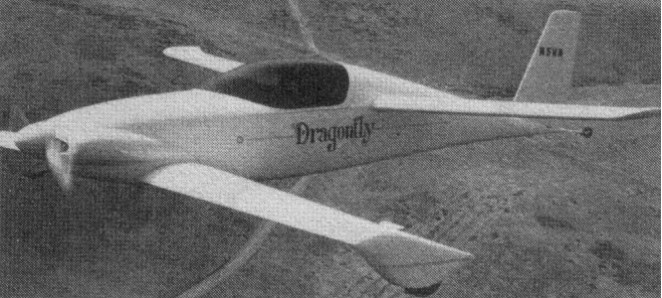
Designed by Robert J. Walters and winner of the Outstanding New Design Award at Oshkosh 1980, the Dragonfly is another canard-configured composite homebuilt in the same vein as the Quickie and VariEze. First flying on 16 June 1980 (N5WN) with two-place side-by-side seating under a bubble canopy, the Dragonfly is powered by a 56 hp 1600cc HAPI/VW engine. The intention of the aircraft is to provide builders with a project that is inexpensive to build and also inexpensive to operate on a readily available engine. The wing and canard are built as a single piece in a jig and the job can be accomplished in a normal two-car garage. The cockpit width is 43 inches, like that of a Cessna 172. A molded canopy was selected to avoid the soapbubble effect of a free-blown canopy. A typical 140-mph cruise burns gas at the rate of 45 mpg. The propeller used is a Great American, with a 40-inch pitch and 52-inch diameter.

Available in three under-carriage options as Mk.I, II or III.

By 1998, out of 2000 plans or kits that had been sold, about 500 were finished.

This 2 place composite design can be built from plans or can be quick built using pre-fab parts.

The DRAGONFLY, in 2008 was available from:
DART Industries
PO Box 223, Botha’s Hill
Kwazula Natal, So Africa 3660

Gallery

Engine: VW
Wing span: 6.71 m
Wing area: 9.45 sq.m
MAUW: 522 kg
Empty weight: 277 kg
Fuel capacity: 57 lt
Max speed: 290 kph
Cruise speed: 265 kph
Minimum speed: 77 kph
Climb rate: 4 m/s
Seats: 2
Plan price (1998): $260
Kit price (1998): $8600

Engine 45-hp 1600 cc Volkswagen
Gross Wt. 1075 lb
Empty Wt. 805 lb
Fuel capacity 15 USG
Wingspan 22 ft
Wing area: 97 sq.ft
Top speed 150 mph
Cruise 155 mph
Climb rate 800 fpm solo
Ceiling 17,000 ft
Seats: 2

Dragonfly
Engine 56hp 1600 cc HAPI/Volkswagen
Wingspan 22 ft
Wing area: 97 sq.ft
Length: 19’0″
Gross Wt. 1075 lb
Empty Wt. 805 lb
Fuel capacity 15 USG
Top speed 168 mph
Cruise 140 mph
Stall: 45 mph
Climb rate 1050 fpm solo
Ceiling 18,500 ft
Range: 500 mi
Seats: 2

Engine: VW 1835cc
Speed max: 180 mph
Cruise: 165 mph
Range: 550 sm
ROC: 850 fpm
Take-off dist: 1200 ft
Landing dist: 2000 ft
Service ceiling: 18,500 ft
HP range: 60-82
Fuel cap: 15 USG
Weight empty: 610 lbs
Gross: 1150 lbs
Height: 4.2 ft
Length: 20 ft
Wing span: 22 ft
Wing area: 102.7 sq.ft
Seats: 2
Landing gear: tail wheel

Dart Industries Dragonfly
Stall: 58 kt / 67 mph / 107 kmh
Cruise: 145 kt / 167 mph / 269 kmh
VNE: 200 kt / 230 mph / 370 kmh
Empty Weight: 370 kg / 815 lbs
MTOW Weight: 551 kg / 1215 lbs
Climb Ratio: 600 ft/min / 3 m/s

Engine: 2180 70HP VW
Span: 22 ft
Length: 19 ft
Empty Weight: 600 lb
Useful Load: 545 lb
Wing Area: 92.2 sq. ft.
Seats: 2 side by side
Take Off Distance: 1200 ft
Stall: 48 mph
Cruise: 165 mph
Rate of Climb: 850 fpm

Viking Air

By 2007 Viking Air owned the rights to all early de Havilland Canada products from the Chipmunk through to Beaver, Otter, Caribou, Twin Otter and Dash 7.

Viking Air completed a ten-minute maiden flight of the first new-build DHC-6 Series 400 Twin Otter on February 16, 2010. The aircraft (c/n 845) flew from the company’s assembly facility at Calgary in Alberta. It has been assigned the registration C-FMJO and is configured with a commuter cabin and will be delivered to launch customer Zimex Aviation of Switzerland for use on oil and gas industry contracts throughout North Africa.

De Havilland Canada ended production of the Twin Otter in 1988 after c/n 844 was rolled out. Viking announced the re-launch of the type and in 2010 ten Twin Otter 400s were in various stages of assembly at Calgary with production ramping up to build one-and-a-half aircraft every four weeks.