Racer 12 Wing area: 12.8 m² Wing span: 10.12 m Aspect ratio: 8 Minimum pilot weight: 50 kg Maximum pilot weight: 75 kg Nose angle: 127°
Racer 13 Wing area: 13.5 m² Wing span: 10.2 m Aspect ratio: 7.7 Hang glider weight: 29 kg Minimum pilot weight: 70 kg Maximum pilot weight: 90 kg Packed length: 5.8 m Packed length short: 3.9 m Number of battens: 26 Nose angle: 127°
Wing area: 14.9 m² Wing span: 10.6 m Aspect ratio: 7.5 Hang glider weight: 32 kg Minimum pilot weight: 60 kg Maximum pilot weight: 117 kg Packed length: 6.1 m Packed length short: 3.9 m Number of battens: 26 Nose angle: 127°
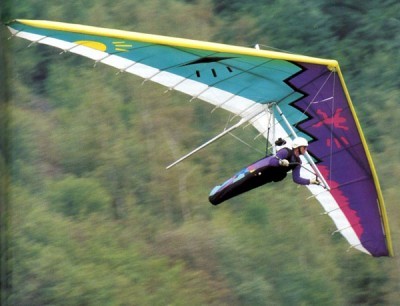
A hang glider circa 2006 with a double surface of 85%. Described as incredible performance and easy handling.
Wing area: 13.8 m² Wing span: 10.15 m Aspect ratio: 7.5 Hang glider weight: 30 kg Minimum pilot weight: 60 kg Maximum pilot weight: 120 kg Minimum speed: 25 km/h Maximum speed: 90 km/h Max glide ratio speed: 43 km/h Packed length: 5.7 m Packed length short: 3.8 m Number of battens: 29 Nose angle: 128°
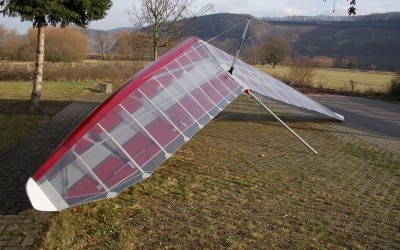
Although Fizz is classified and confirmed DHV 3, it is easier to drive than the Kite which is an intermediate wing DHV2. Incredible performance for a kingposted glider. Very low sink rate, fantastic glide. The wing gives you a precise feeling of the surrounding air. Not hard to land, but requires a good approach because of the flat glide.
Fizz 14 2012 Wing area: 14.1 m² Wing span: 10.41 m Aspect ratio: 7.7 Hang glider weight: 31 kg Minimum pilot weight: 60 kg Maximum pilot weight: 120 kg Minimum speed: 25 km/h Maximum speed: 90 km/h Max glide ratio speed: 45 km/h Packed length: 5.7 m Packed length short: 4.1 m Number of battens: 30 Nose angle: 130°
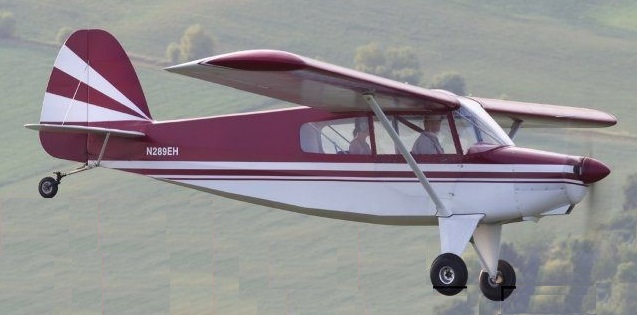
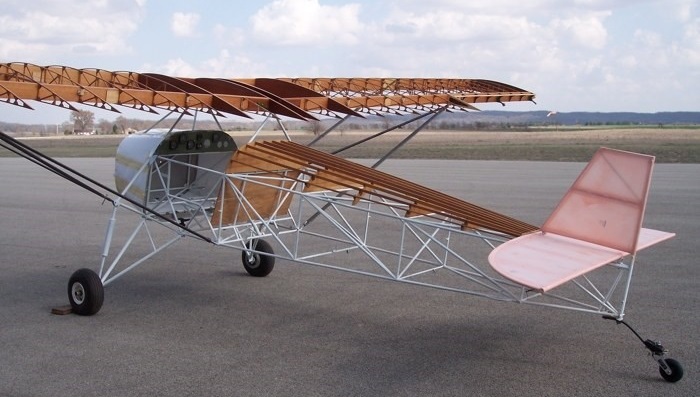
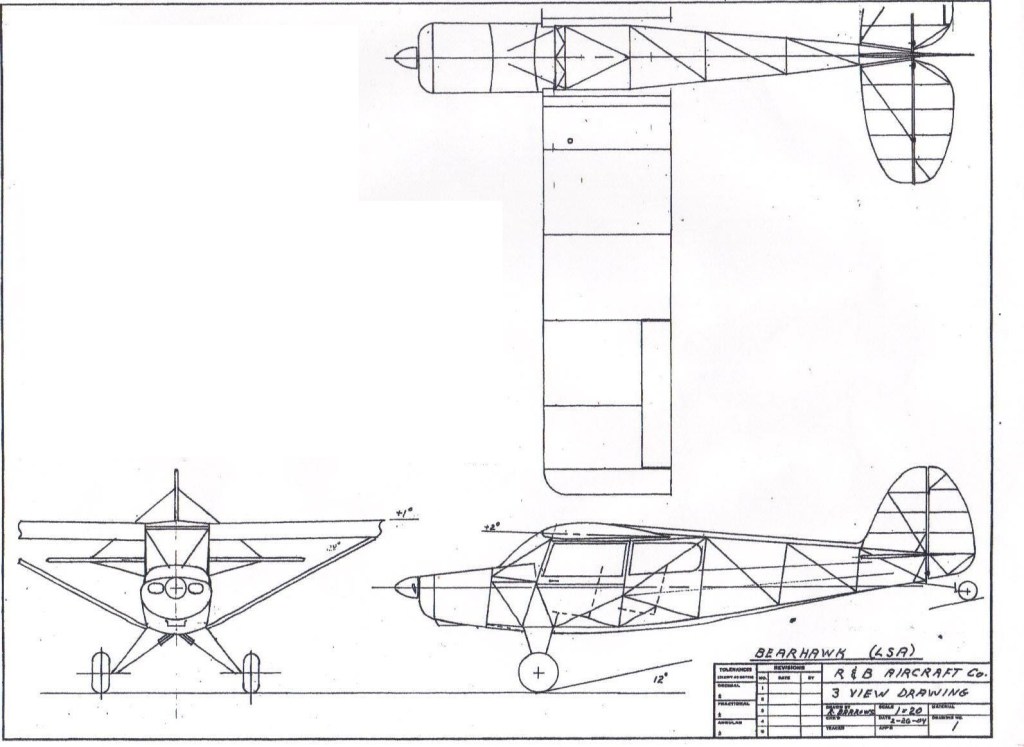
The prototype Bearhawk LSA N289EH had a Continental A65/75 engine, with an empty weight of 728 lb, with an aluminum prop and no electrics. Barrows estimates that 750 pounds is a realistic empty weight for a builder who works hard to keep the airplane light. With the LSA maximum gross weight of 1320 lbs. (in the utility category), this 2-place LSA has a very respectable useful load. Barrows has said that the airplane is really designed for a max gross weight of 1500 lbs (in utility category), so there is a built-in margin of safety for those who do not have to fly under the LSA rules. The Bearhawk LSA utilizes 4130 Chromalloy tube and fabric along with all-aluminum, flush riveted wings.
The Bearhawk LSA can take off in as little as 200 feet and climb at 1500 ft. per minute and then level off and cruise at 120 mph sipping only 5 gph. Barrows reports an economy cruise speed of about 110 mph sipping only 4 GPH with the Continental C-85 engine. With a 30 gallon tank that gives you over 7 hours in the air. Not many vehicles can do 110 mph only consuming 25 miles per gallon. If you want to get there a bit faster, you can push it up in cruise to 120 mph burning about 5 GPH.
The cabin width is a spacious 31” wide and 97” long. The Bearhawk LSA can be flown with the windows open for taking those perfect aerial photos.
Prices and contents of the Bearhawk LSA kits and components (2014): Standard QB Kit – $30,000 (requires some welding) Includes: Quick-build Wing Kit Standard Fuselage
Deluxe QB Kit – $36,000 (no welding required) Includes: Quick-build Wing Kit and Deluxe Fuselage Kit
Quick-build Wing Kit $15,500 These Wings are sold in an advanced level of completion. The top skin is fully riveted. Fuel tanks are included as are the ailerons.
Standard Fuselage Kit – $15,500 – Some welding is required but the fuselage frame comes fully welded with all of the major attachment fittings welded – unpainted (includes landing gear and motor mounts) Also includes Horizontal Stabilizer, Rudder and elevators as well as control sticks and rudder pedals. Deluxe Fuselage Kit – $21,500 – The same as Standard Fuselage but has all the tbs and the frame is primed and painted. Includes all pre-cut sheet metal, doors, and frames, fiberglass nose bowl, tail spring, seat frames, instrument panel blank, etc.
The prices and contents of the kits and components (2014): QUICK BUILD KIT $40,500 The Quick-Build Kit is on the FAA 51% approved kit list. Because the airframe is largely fabric covered and because of the way the FAA constructs its definition of the 51% rule, there is no actual structural fabrication to be done other than completing the riveting of the top skin. This is left partially open so the builder can access and install certain components. Although all of the wing control surfaces are almost ready to be installed, the builder must install the hinges first and then install them, which is part of the 51% program. The same thing is true of the tail, landing gear, control system, etc: the components are finished but must be installed. Assembly and installation not fabrication. The Quick-Build does not include windshield, tires and brakes, covering/painting materials, seats, upholstery kits, cables, pulleys and hardware.
Bearhawk LSA
For 2013 – included with the Quick Build Kit Complete set of plans, with serial number (Note: If you have purchased plans separately, the kit price will be reduced by $295.) Fuselage completely finish welded, no welding required. Ready for stringers, cover and systems installation. Landing gear and tail, completely finished, ready for cover and installation. Control system completely fabricated, ready to install. Wings finished, interior primed, with only the top skin which is already drilled and dimpled and ready to be riveted. Control surfaces assembled, ready to be installed/covered. Wing Struts with end fittings ready for drilling/installation. Fuel tanks ready to be installed (aux tanks optional). Motor mount ready to be installed. Choices are Lycoming 0-320/360, 0-540 and Continental 0-470. Firewall and boot cowl, ready for trimmimg and assembly (not drilled). Utility door and float attachment points standard. The frames for all seats are included. Builder will fabricate seat pans and upholstery. Wing tips fuel caps trim wheel w/chain aileron cable guards Flap/Aileron rod end bearings (10) gascolator clear windshield (tinted or UV block extra) Gerdes brake master cylinders (one set) Wing tie down rings Aileron bellcrank bearings (4)
Builders of the Bearhawk LSA can purchase the plans and can purchase some sub-kits or components.
Bearhawk LSA Engine: Continental, 65-100 hp Wingspan: 34 ft Length: 22 ft 3 in Wing area: 170 sq.ft Gross weight: 1200-1500 lb Height 3 point: 75 in Empty weight: 750+ lb Fuel capacity: 30 USG Vne: 140 mph Landing speed: 30 mph Cruise speed: 100-125 mph Takeoff roll: 200-400 ft Fuel burn: 4-6 USG/hr Range w/res: 650 miles Cabin width: 31 in Seats: 2 tandem Cabin length: 97 in
Side seating, dual controls, 3 throttles – left, center, right – in front of seat cushion. 44″ wide inside. Luggage space under and behind the bench seat. Price includes engine. Info pack, Barnett video and Subaru video – all for $47.50 Kit Price: $32,766 Plans: $185 in 2009. BRC Coupe540 plans 2001: $225. BRC540 Coupe With a maximum airspeed of 138 mph faster than some basic helicopters the sporty “coupe” suffix is fitting. Cruising speed ranges from 85 to 105 mph, depending on altitude and load. The fully enclosed side-by-side two-seater also has dual controls, three throttles and two spaces for luggage.
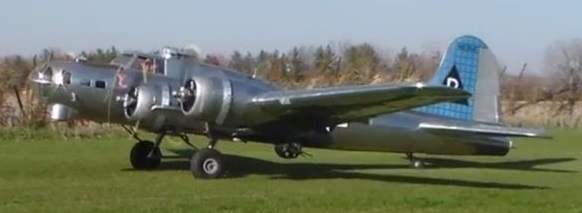
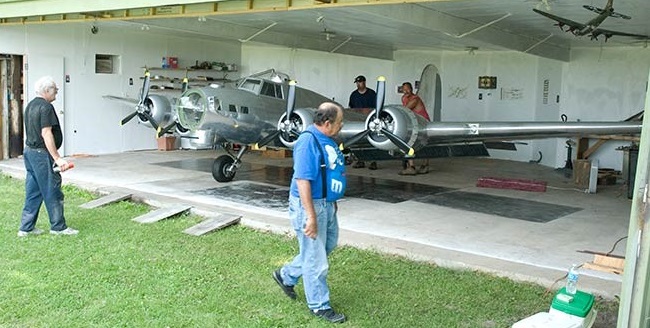
Bally’s Bomber is a ⅓ Scale B-17G aircraft built using 1/9 scale RC model aircraft plans, and carries a single pilot. It is powered by four Hirth 3002 4-cylinder 2-stroke engines, spans 34′ 7″ and weighs an estimated 1,800 lbs.
The unique aircraft received airworthiness certification in September 2016 following initial engine and taxi tests. The first flight was intended to be a high speed taxi test, but the machine was said to “just kind of [take] off”.
On 14 November 2016 Jack Bally`s 1/3 scale B-17 replica performed its maiden flight, departing from its home field in Illinois for a short flight to a local airport, where it was to undergo continued flight tests.
Power Plant: 4 x Hirth 3002, 60 hp Wing Span: 34 ft. 7 in. Length: 25 ft. Tail Height: 6 ft. 10 in. Fuel Capacity: 42 USgal. Empty Weight: 1800 lbs. (Est.) Cruising Speed: 110 kts. (Est.) Crew: 1 Number Built: 1
Jack Allen Bally was born August 9, 1940, in Dixon, IL, the son of Lucian and Avis Justine (Atkinson) Bally. He married Carolyn Beckingham on December 31, 1977, in Oregon, IL. He served in the United States Army from 1962-1964. He enjoyed woodworking, traveling and flying planes. Jack had his instructor and private flying license. Jack worked for the Local Carpenter’s Union for many years prior to his retirement. He built many planes throughout his retirement, his latest being the Bally Bomber B17G 1/3 scale.
Jack Allen Bally, 79, of Dixon, EAA 348338, passed away Sunday, June 21, 2020, at Katherine Shaw Bethea Hospital, Dixon, IL.
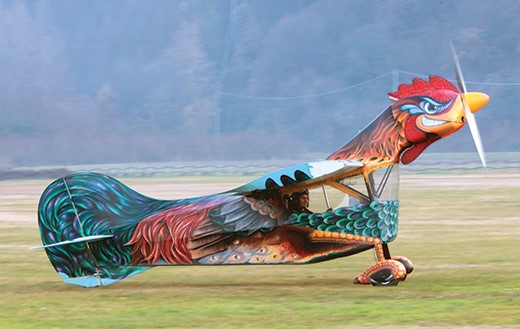
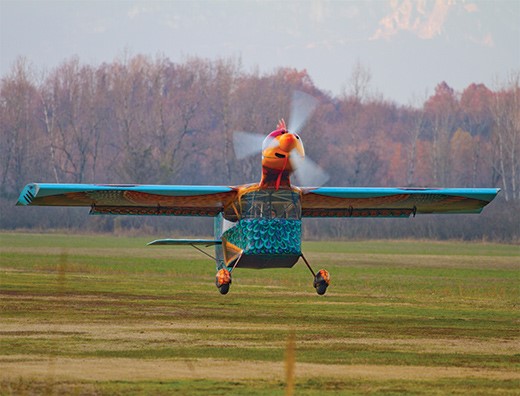
At Nervesa della Battaglia, near Treviso in northeastern Italy, aircraft designer and homebuilt aircraft enthusiast Ottone Baggio conceived the idea of building a flying machine modelled on the world’s best known flightless bird: the rooster.
The engine nacelle (the rooster’s head) would be mounted well ahead and above the wing leading edge. The design does not utilize fuselage and wing components from any other kit aircraft, and is 100% original. The wings are of a conventional, lightweight wood structure with a forward box spar that runs through the roof of the cockpit, plus trailing edge spar; there are no wingstruts, and the wings have a 1 degree dihedral. They are covered in extremely thin-gauge aluminum with a total span of 29 feet, and, unusually, the “bird” has 66%-span flaperons, but these are on the inboard sections of the wings. The wingtips are square and flattish, slightly angled inward with wingtip strobes, and the ailerons are cable operated.
Ottone Baggio with the small-scale model
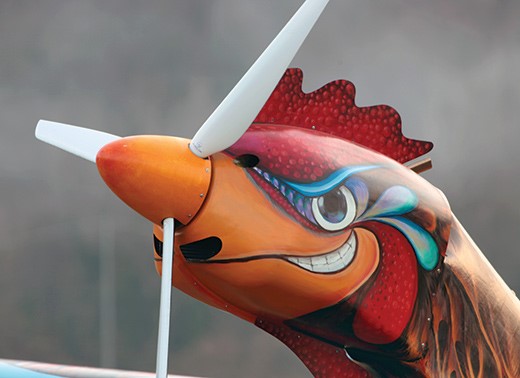
The Rooster took about three years to conceive, design and build. Ottone started with model airplanes, first a “chuck” (hand-launched) glider and then a radio-controlled version. Proving that in small scale such a design would fly, he developed a prototype that would be partially like a conventional, three-axis-controlled small airplane, but would have the world’s most exotic color scheme—plus the head of a rooster.
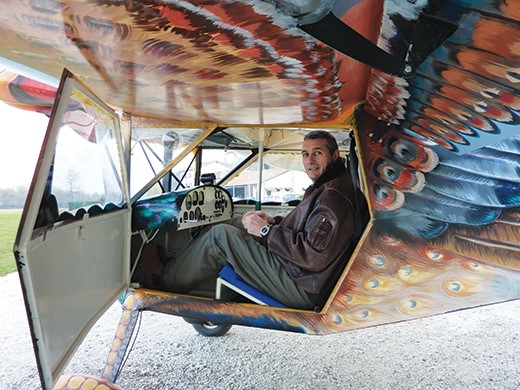
The fuselage is steel tube with gussets covered by fabric, though areas of the forward fuselage are covered in thin-gauge aluminium. The rooster’s head, which is the engine compartment, is a molded composite cowling around a tubular-steel engine bearer. The cockpit resembles that of a 1930s airship gondola with a rounded, acrylic screen and a basic panel. The rudder is linked to the tailwheel, and there are caliper brakes on the mainwheels operated from a hand-actuated brake lever on the panel. Because of the engine’s high thrust line, Baggio has designed a huge tail and rudder relative to the meager 19-foot total length of the rooster, and he even fitted a dorsal “rudder” in which the steerable tailwheel is shrouded.
It has an empty weight of 500 pounds and is powered by a 100-horsepower Rotax 912 engine. The paint job took many months of detailed work with an amazing palette of colors.
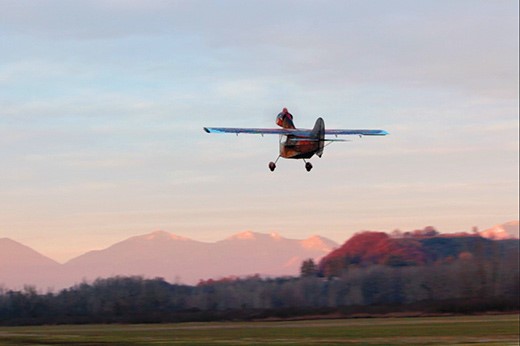
The Rooster, registered in the Italian ultralight sequence as I-9923, was actually completed earlier but suffered some fast-taxi mishaps. In December 2011, the test pilot, fellow homebuilder Daniele Beltrome carried out many fast taxi trials and a few tentative hops. “The Rooster is a difficult aircraft to fly,” he reported (no kidding!) and suggested a few adjustments to its elevators and control-wire cable tensions. The first proper flight, lasting about 10 minutes, had the Rooster leaving the airfield, completing a slow 180 turn and then returning to the airfield.
Daniele Beltrome carried out much of the initial flight testing.
Unfortunately, Beltrome further reported, “The Rooster is unstable in roll and has a tendency to go into the first stages of a spin when you start to turn, if it isn’t noticed and checked.” He put in one stage of the flaperons to try to solve this problem. This is why the first flight turn was a very gentle affair with little more than 5 of bank and often less, with a very obvious and “twitchy” pitch.
The Rooster is its control system works in reverse to a normal three-axis-control aircraft. The control column comes down from the roof of the cockpit, and the control inputs are exactly the opposite to what one learns in normal piloting skills, so you pull back on the stick to go down and vice versa. This is the reason for some of the accidents during early taxi tests. It is apparently more like flying a delta-wing hang glider.
More test flying was planned and the builder may extend the flaperons to full span to help improve roll control. But like the bird of its inspiration, the Rooster is unlikely to fly that much and achieve widespread acceptance among homebuilders and pilots. It is more the product of a dream becoming reality. However, as an aviation spectacle, the sight of the Rooster flying over the Nervesa Valley has gotten everyone talking aviation and flight, though it may also have stirred considerable unrest and disruption to egg production in local hen houses.




 All Aero