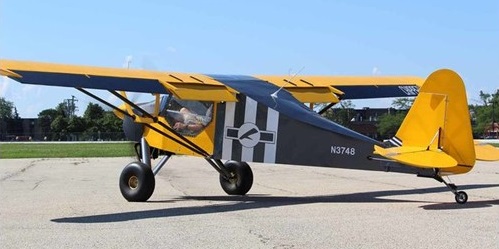
In April 2017 the Belite Chipper hadn’t flown. The Chipper was a work in progress and had to be shipped to Lakeland aboard a truck. Belite Aircraft’s Wiebe said he was creating the experimental Chipper two-place tail dragger as a kit powered by either an 80 or a 100 hp Rotax engine. The prototype Chipper moved from Wiebe’s CAD-machine design to the airplane in four months.
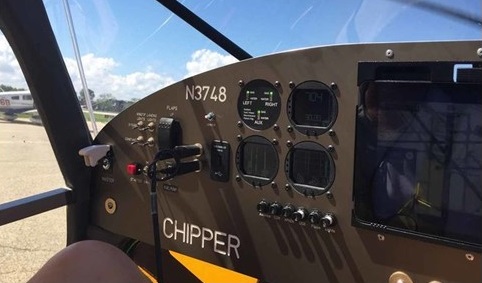
The Chipper kit has very little welding and little use of aluminium. Much of the aircraft is covered with Oratex and use composites and a honeycomb material where they fit. The airplane uses a center-of-the-cabin control stick but came with only a single set of rudder pedals and a side throttle on the left. Additional rudder pedals were in the works, as were a host of other changes.
At AirVenture ‘17 the Chipper had flown off its initial 40-hour flight waiver. A Chipper kit costs $8,995 in 2017, that price doesn’t include the engine, propeller or cockpit instruments. A finished Chipper will run about $32,000.
Empty weight: 520 lb Max gross: 1,000 lb Takeoff roll: less than 300 ft
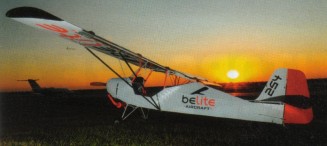
The single seat Belite light sport aircraft first flew on 4 July 2009. The 135 kg aircraft utilises carbon fibre materials in the fabrication of struts, ribs and wing spar. The prototype was powered by a 28 hp / 29 kW MZ-34 engine
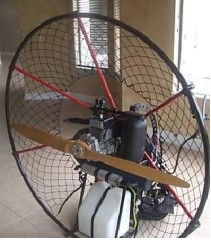
High points have adjustable J-bars, for easier take-off as well as for more comfortable long distance flights.
They are attached to the frame by two silent blocks, which contributes to reduce the engine’s vibrations transmitted to the pilot. Fitted with cruise control and foot rests.
Walter H. Beech formed the Travel Air Manufacturing Company in Wichita, Kansas, USA, in 1924. Following the merger of Travel Air with Curtiss-Wright in mid-1929 Beech was given the position of president of the Aircraft Division.
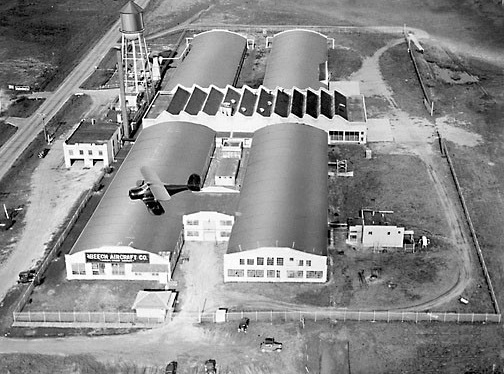
In April 1932, Beech was back in Wichita with a handful of ex Travel Air workers, founded the Beech Aircraft Company, renting space in the idle Cessna plant, and set about designing a luxury, five place biplane with a high speed of 200 mph, a touchdown not above 60, a range of 1,000 miles at a filling, and the comfort and grande luxe you might expect from the rarest and most elaborate sedan. The Company had Walter as president and his wife, Olive as secretary-tresurer.
Beech’s first Beechcraft flew on November 4, 1932. Its official name was Model 17, simply because Beech’’ last project with Travel Air had been Model 16.
Beech Aircraft Company set up shop optimistically in Wichita but suffered: only one aircraft was sold during the first two years. In 1934, however, sales picked up, and 54 airplanes had been delivered by the end of 1935. Walter Beech together with his wife Olive established the Beech Aircraft Corporation during 1932. In late 1950 Walter Beech died but in the 1980s, Mrs. Olive Beech remained in office as chairman of the board of the success story that has built some 45,000 aircraft.
mid-’30s
NOTE: Beech dash suffixes signified general engine groups: A = Wright R-760-E2; B = Jacobs L-5; C = Continental R-9A; D = Jacobs L-6; E = Wright R-760-E1; F = Wright R-1820; L = Jacobs L-4; R = Wright R-975-E3; S = P&W R-985; W = P&W R-985-SCG.
Delivered the 10,000th example of its Beechcraft Bonanza Model 35 in February 1977, and the Bonanza celebrated its 50th anniversary in 1995, with production continuing. Company also supplied military aircraft, and became involved in the construction of aircraft and missile components and missile targets for the U.S. Army. Designed, developed, and manufactured the cryogenic gas storage system for NASA’s Apollo and Skylab projects. Other work included provision of power reactant storage assembly for NASA’s Space Shuttle orbiter. On 8 February 1981, after a share exchange, Beech became a subsidi¬ary of the Raytheon Company but continued to be operated as an independent company until 1994.
Hawker Beechcraft filed for bankruptcy in May 2012. The Wichita, Kansas-based company left court protection in February 2013 and exited the jet business with a pledge to keep servicing the planes.
Textron Inc reached a deal to buy Beechcraft Corp. for $1.4 billion in December 2013. The Providence, Rhode Island-based company will purchase all outstanding equity interests in Beech Holdings LLC, the parent of Beechcraft, it said in a statement yesterday. The deal, which includes the repayment of Beechcraft’s working capital debt, will be financed by a combination of available cash and as much as $1.1 billion in new debt.
Adding Beechcraft models such as the twin-engine King Air will complement a Cessna lineup that ranges from two-seaters to the Caravan turboprop. That market segment is less competitive than private jets, where Cessna has struggled because it doesn’t build the large, long-range planes now favored by corporate buyers.
Textron will take over service for Hawker jets and hopes to convert those owners to Cessna jets, Donnelly said. The company is expecting low revenue from the T-6 military training plane as the U.S. military winds down it purchases and foreign sales of the plane would be a plus, he said.
Of the aircraft in service, 6,400 are King Airs and 2,250 are Hawker jets. The Beechcraft business is in good shape even with the bankruptcy and Textron wasn’t expected to invest extra to fix it.
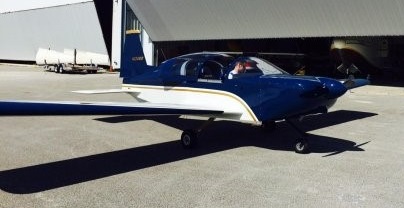
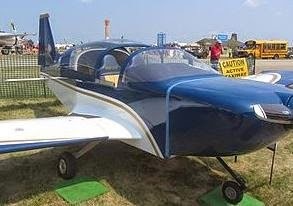
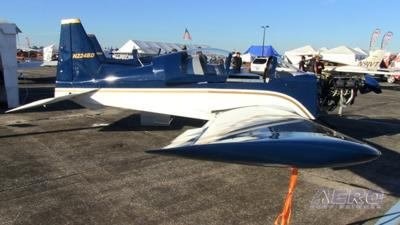
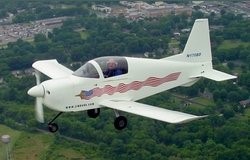
The BD-22 was a two-seat light sport version of the BD-17 with a 47 inch wide cockpit first shown in public in January 2015 as N224BD. Powered by Lycoming O-235 (118 hp) engine. Composite fuselage, metal wings and tricycle undercarriage.
The first BD-22 example built was N224BD which first flew in March 2015. There was only one BD-22, and that was the BD-22L.
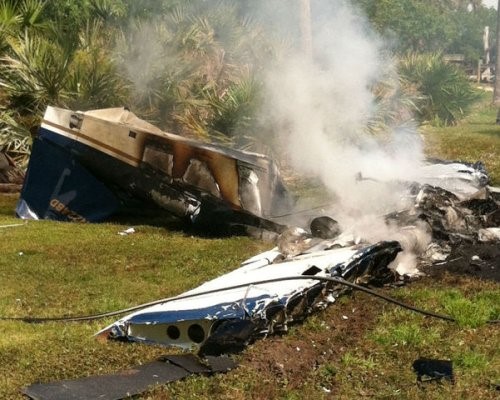
The BD-22L was involved in a fatal crash on 1 April 2015.
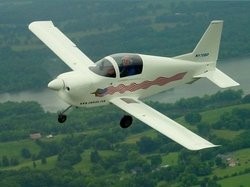
The Bede BD-17 Nugget is an American single-seat monoplane. designed by Bedecorp for amateur construction from a kit.
The Nugget was announced in June 2000 and was designed to be easy to build with a maximum of 110 parts. The first flight of the tricycle landing gear prototype (N624BD) was on 11 February 2001.
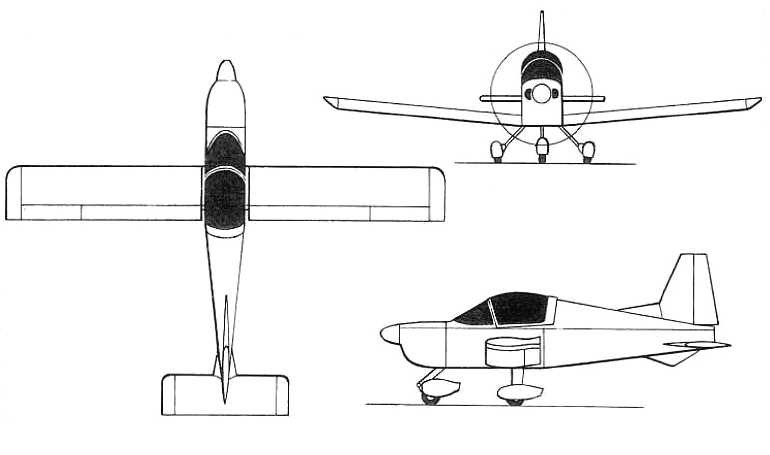
It is an all-metal low-wing constant-chord monoplane, it has optional folding wings and is available with fixed conventional landing gear with a tailwheel or a tricycle landing gear. Scotch ply main legs and differential braking. The prototype BD-17 has 5.00-5 mainwheel tyres and 25 cm (10 in) nosewheel tyre. It can be fitted with an engine between 45 and 80 hp (33.6 to 59.7 kW). The flying controls are conventional and manual. No flaps were fitted on the prototype BD-17 but production kits have flaps.
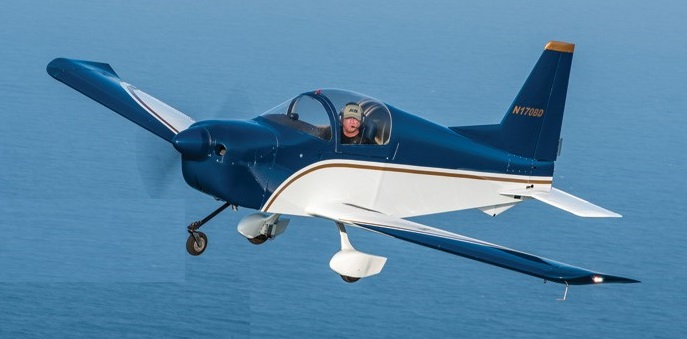
The prototype BD-17L N170BD had a 60 hp (45 kW) HKS 700E two-cylinder four-stroke engine. The pilot has an enclosed cockpit with a rearward-sliding canopy. The structure is all-metal honeycomb sandwich. Honeycomb fuselage covered with 5 mm (0.20 in) aluminium sheet and control surfaces are of urethane foam. Constant-chord wings have extruded tube spar.
The public debut was at Sun ‘n’ Fun, April 2001.
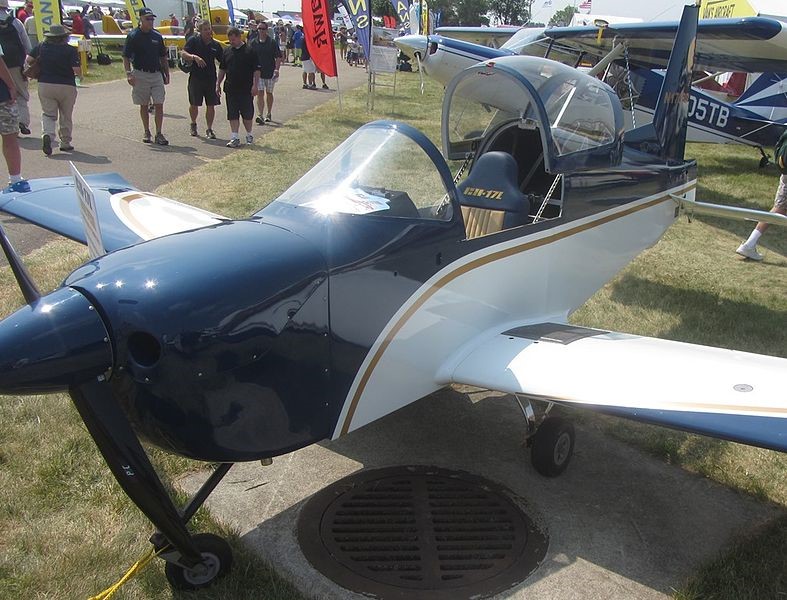
The BD-17L is a LSA version of the original BD-17. The BD-17L sold as a kit,meets the 51% rule.
BD-17L
The BD-17L uses a half inch honeycomb sandwich panels. They are chemically welded with gussets to each other. This concept was originally used on the BD-1 and the Yankee. It is a honeycomb core with .020 skins bonded on each side. This creates an extremely light weight but strong panel.
The BD-17 wing spar is strong, light and simple, extruded aircraft-quality aluminum tube. Both wing spars slide over a center spar rigidly, fastened to the fuselage, providing exceptional load-carrying strength. Ribs are made of the same honeycomb aluminum that makes the fuselage 300% stronger than conventional construction. The BD-17′s wing spar has been tested to 11.2 Gs without failure in destructive testing. The honeycomb wing ribs form a series of sealed panels in each wing, capable of holding up to ten gallons of fuel in each with the option of an additional panel on each wing to store fuel.
The landing gear is one continuous hoop that is fastened to the center section with two pins. The actual assembly to the center section takes approx. 15 minutes. The landing gear is bullet drilled for the brake lines. Fittings are attached at the top and bottom of the hoop. The main landing gear takes approximately 3 hours to build including wheels and brakes.
The BD-17 Nugget possesses exceptional flying qualities. Being small and lightweight, it utilizes the side stick control first adopted on the BD-5. The basic stability in all three axes are positive, both in static and dynamic stability. Control harmony is smooth and even for all three surfaces. Roll response is smooth and positive even into stall buffet. Cockpit room is accommodating for both large and small pilots, and visibility is excellent throughout.
The cost of the BD-17 was US$19,990 less engine in 2003. Seven had been produced by 2011. At least 17 BD-17 kits sold and four aircraft registered by August 2003; three of which were completed by that time.
Bede BD-17 Nugget Engine: HKS 700E, 60 hp (44.6 kW) Wingspan: 21 ft 6 in (6.55 m) Wing area: 53.5 sq ft (4.97 m2) Wing chord, constant: 0.76 m (2 ft 6 in) Wing aspect ratio: 8.6 Length: 17 ft 6 in (5.33 m) Height: 7 ft 9 in (2.36 m) Empty weight: 450 lb (204 kg) Gross weight: 850 lb (386 kg) Fuel capacity: 20 USG / 76 lt / 16.7 Imp gallons Maximum speed: 195 mph (313 km/h, 169 kn) Cruise speed: 150 mph (241 km/h, 130 kn) Stall speed: 52 mph (84 km/h, 45 kn) Range: 702 mi (1,129 km, 610 nmi) Rate of climb: 1,050 ft/min (5.3 m/s) T-O run: 213 m (700 ft) Landing run: 189 m (620 ft) Cockpit max width: 1.17 m (3 ft 10 in) Seats: 1
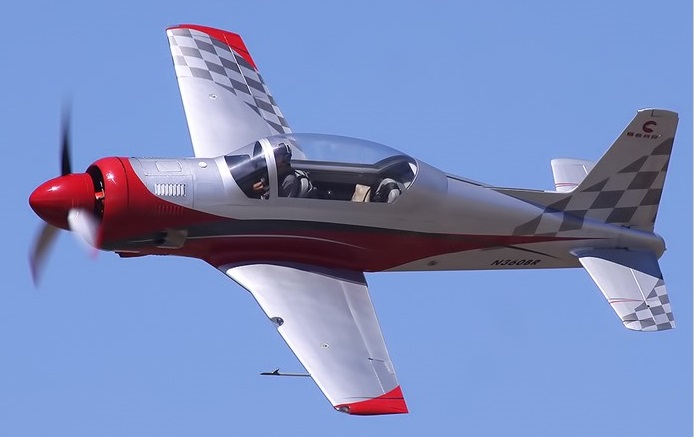
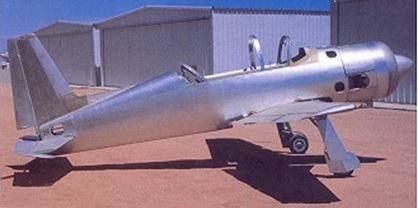
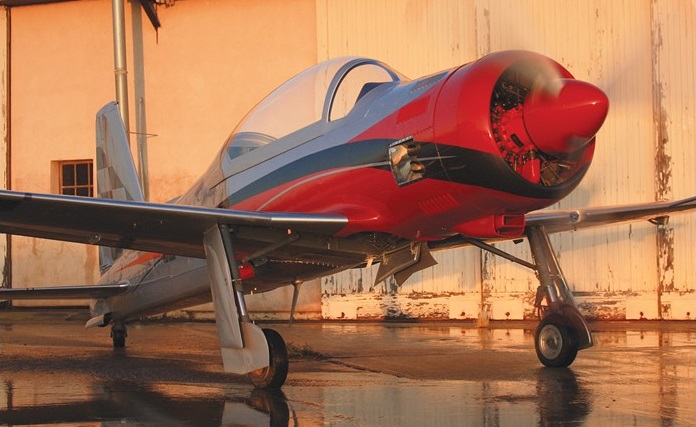
The Bear 360 is a new manufacture, all metal, high-performance, 360 HP radial M-14P powered, tandem seating, Warbird styled aircraft, created by the American-Russian design team that includes Russian aircraft designer, Sergey Yakovlev, and American combat fighter pilot and air racer, Skip Holm. Sergey Yakovlev developed the Bear 360 to military specifications, to meet FAR Part 23 requirements as well as full Russian Military Specifications.
The Bear 360 two place tandem seated cockpit has dual flight controls. Sold in the experimental category, the Bear 360 meets specifications for this type of FAA aircraft category and is a fully documented FAR Part 23 engineered aircraft.
The Bear 360 is powered by the Vedeneyev M-14P, 360 horsepower, supercharged, air-cooled, reciprocating nine-cylinder radial engine. The M-14P will maintain sea level power to 7,500 ft altitude. Engine controls are simplified through fuel scheduling hardware so that the pilot operates only the throttle and RPM controls. Engine starting is electric. Vedeneyev dictates the M-14P’s TBO in terms of cycles, which is a common practice in Russia and Eastern Block countries. In the West and Europe’s JAR it has certified the engine for a 1500 TBO. The Bear 360 has a three bladed hydraulically controlled constant speed MT Propeller certified to meet FAA specifications.
The Bear 360 wing has a NASA 63-215 root and 63-412-tip laminar flow airfoil. Lateral stability has been demonstrated in the full wind tunnel to 30 degrees angle of attack with flaps full up or full down. The wing is constructed around a single piece tapered main spar with stressed aluminum flush riveted skin over conventional stamped aluminum ribs. Wing dihedral is 5.0 degrees. Fuel is contained entirely in the wing structure and no bladders or individual tanks are used except the center sump tank, which feeds the engine (An auxiliary external centerline fuel tank is also available on all aircraft). The landing gear system attaches to the main spar and its surrounding structure. The wing is attached to the fuselage as a single piece structure and the four attach points are precision machined so there is no special rigging required for wing removal/replacement.
The Bear 360 flight control surfaces are all-metal construction and mass balanced. Flight control actuation is through torque and push – pull tube assemblies; no cables are used. Trim on all three axis is electric. Controlled with standard individual push-pull controls.
The Bear 360 fuselage is semi-monocoque, all metal, flush riveted construction. The cockpit width at the sliding rails is 25.5 inches. The windscreen is 3/8ths polycarbonate, and the canopy is a large unobstructed bubble that slides aft, operated by a hand crank. The canopy may be left partially open during start, taxi, takeoff/landing and pattern operating speeds.
The landing gear is conventional, retractable, including the tail wheel. The main gear track is 9.3 feet. The main gear struts are oleo-pneumatic accommodating 8.00X10 inch tires. The brakes are of US manufacture employing two actuation cylinders per brake rotor.
The tail wheel is steerable and pivots through 360 degrees for ground handling/towing. The landing gear retraction and extension is hydraulically operated. An electro-hydraulic pump of US manufacture provides hydraulic pressure. Emergency landing gear extension is by means of a pneumatic charged unlock of the over-center locking mechanism and blow down system. The landing gear system normal operating pressure is nominally 800 PSI. The Bear 360 electrical system is 28 volts and is charged by a 35 amp B&C Specialties SK35 engine driven alternator, and a 24 VDC battery.
The fuel system consists of three wing fuel reservoirs, an engine driven fuel pump, and an emergency electrical fuel boost pump. Wet wings accommodate 37 US gallons each and the sump/feeder tank in the bottom center of the wing holds the remaining 2 gallons of the fuel system, for a total of 76 gallons. For normal operations the fuel boost pump is not required as the engine driven mechanical fuel pump provides both the suction to pull fuel from the sump tank as well as pressure for normal fuel scheduling throughout the engine operating range. The fuel boost pump provides full normal engine operation for starting, takeoff and landing. Additionally, an optional removable 22 US gallon centerline mounted external tank, similar to a WWII drop tank design, is available for all aircraft. This external tank fuel is delivered via an electric fuel pump.
The flaps are electrically actuated, via an electric flap switch and can be manually stopped at any flap position. This 3-position flap switch commands flaps in these positions: flaps up, flaps stopped, or flaps lowering. An electrically actuated speed brake is mounted near the aerodynamic center of the aircraft between the flaps. The speed brake can be employed throughout the entire aircraft flight envelope with minimal change to steady state trim settings. The speed brake can also be employed as a flap for landing.
The cross country baggage compartment or equipment bay is 4.2 cubic feet and is designed to carry airline carry-on-baggage for both pilots. It will accommodate a maximum of 65 pounds.
The Bear 360 had over 1,000 hours of wind tunnel and load testing to destruction, and undergone extensive flight-testing to US military standards in the hands of test pilot Skip Holm, to be issued FAA approval.
The aircraft exhibits buffet 6 knots above the stall, and stalls at 81 KTS. The engineering estimation at stall altitude was 78 KTS at an empty weight of 1878 pounds plus fuel, whereas the prototype was 1901 empty plus fuel/PAX on board. The stall was straightforward, stalled with a mild buffet, and did not have any tendency to snap.
Four different configuration options were offered in 2015: Ready to Fly (RTF) Warbird Edition (2015: US$310,000) Skip Holm Signature Series Almost Ready to Fly (ARF) Does not include: Engine, propeller, avionics, interior or paint. Cockpit, engine, landing gear and wheel wells are painted in 5th generation fighter grey. 2015 US$185,000
The Skip Holm Signature series was the luxury variant of the Bear 360, including a choice of high-end avionics, autopilot, fully customized paint, plus well-appointed cabin amenities such as plush, hand-tooled, leather seating and panels, custom built by the Yakovlev factory.
The Almost Ready to Fly (ARF) Aircraft excludes Engine, Propeller, Avionics, Interior and Paint. If a buyer provided engine and propeller to the factory, these would be installed without charge.
The Bear was under production in Orenburg, Russia, in 2015.
Engine: Vedeneyev M-14P, 360 hp / 420 hp (optional) Wingspan: 23.10 ft Wing area: 93 sq ft Length: 23.25 ft Gross weight: 2760 lb Empty weight: 1860 lb Fuel capacity: 76 USgal Wing loading (at gross): 29.7 lbs/sq ft Vne: 280 kias Max cruise (at Sea Level): 250 kias 75% cruise (at Sea Level): 210 kias Stall (landing configurations) Vso: 70 kias Stall (clean) Vsi: 78 kias S L rate of climb: 1850 fpm Max range @ SL (20 Min reserve): 890 nm Take off roll at sea level (Std day): 825 ft Take off roll over 50 Ft obstacle: 1050 ft Landing at sea level (Std day): 825 ft Landing over 50 Ft obstacle: 1100 ft Max roll rate: 180 Degrees/Second Max ‘G’: +6, -3 Fuel: 100 Low Lead Av Gas, 91 Octane with NO Ethanol
The Freedom Jet, now known as SMART-1, was available only for military shows in conjunction with test and evaluation activities. These aircraft are experimental — research and development category, and were not available for sale to the general public. Renamed as the Small Manned Aerial Radar Target, Model 1 (SMART-1), the tiny jet aircraft that have been performing air shows for the last quarter century have been “drafted” by the military. Its small size, maneuverability, and manned features, plus dependability and economy make the aircraft a threat representative and support system for new system research, design and development. The aircraft is equipped with long range fuel tank, UHF data transmission antenna, TSPI data transmission and recording, and is transportable by road or air cargo.
Thrust – 300 lbs. Wing Span – 17 feet Length – 12 feet Empty Weight – 465 lbs. Gross Weight – 1,150 lbs. Maximum Speed (Sea Level) – 250 knots T.A.S. Minimum (Stall) Speed at Full Gross Weight – 72 knots T.O. Distance – 2,500 feet (S.L.) Maximum Range – 325 n.m. (160 knot economy cruise) Dash Range – 240 n.m. (250 knots) Maximum Operating Altitude – 24,000 feet
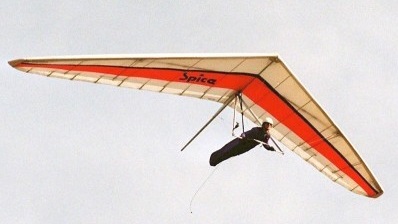
The wing is predictable and damped, with a reactivity in soft roll but fast. Pulling overdrive makes it a bit harder but not super truck, with a good speed. The wing screams you have to push and makes a very soft and frank stall. It tends to roll Dutch with the overdrive pull if you pull the bar and is quite tiring in transition.
Wing area: 14.2 m² Wing span: 10.6 m Aspect ratio: 7.9 Hang glider weight: 36 kg Minimum pilot weight: 64 kg Maximum pilot weight: 95 kg Minimum speed: 25 km/h Maximum speed: 90 km/h Max glide ratio speed: 52 km/h Packed length: 5.7 m Packed length short: 4.1 m Number of battens: 29 Nose angle: 127°

 All Aero