Ben Showers Skytwister

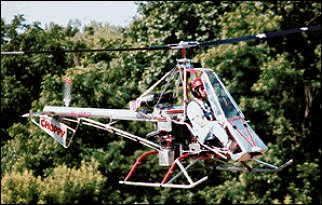
A single seat open frame helicopter. The frame is 4130 steel main frame and bolt-together aluminium tube. A modern version of the Adams-Wilsom Choppy helicopter. Single-seat open-frame helicopter with a Min Speed Hover speed.
Video covers flight and testing. All new aluminum tube tail design. New replaceable landing gear. Easy build design for the true homebuilder. Scratch build entirely from plans; CAD plans $95 in 2009.
Limited components available.

Engine: 66 hp Rotax 582 or Hirth.
Rotor blades: Fleck all 2706 aluminium extrusion
Main rotor: 21.5 ft / 6.55m
Tail rotor: 36 in
Cruise: 65 mph / 105km/h
Top speed: 85 mph / 137km/h.
Empty wt: 320 lb / 144kg
Useful load: 350 lbs.
Gross wt: 670 lbs.
Width: 5 ft 8 in
Height: 6 ft 8 in / 2.03m
Length: 15 ft 9 in / 4.80m

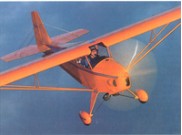
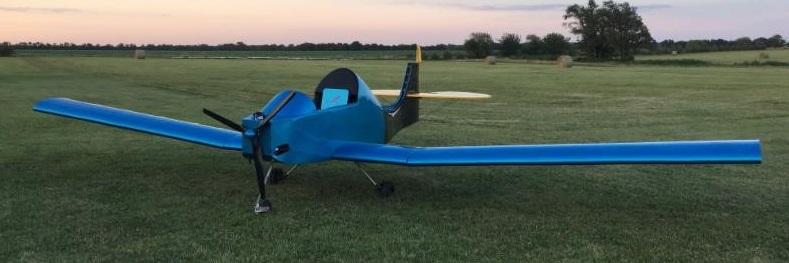
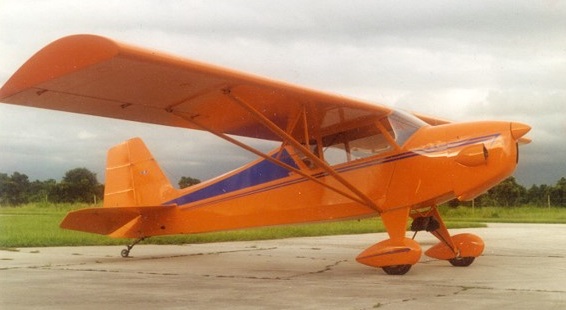
Bellaire Monoplane Co SE-II

Bellaire SE-II                      Courtesy Rick Berstling, West Aviation Co.

This aircraft is available only as pre-built assemblies. All fit and welded 4130 steel components are available with construction drawings. 2009 Price: 17500 USD

Stall: 31 kt / 36 mph / 58 kmh
Cruise: 91 kt / 105 mph / 169 kmh
VNE: 104 kt / 120 mph / 193 kmh
Empty Weight: 245 kg / 540 lbs
MTOW Weight: 522 kg / 1150 lbs
Climb Ratio: 800 ft/min / 4 m/s
Glide Ratio: 9-1
Take-off distance (50ft obstacle): 400 ft / 122 m
Landing distance (50ft obstacle): 400 ft / 122 m

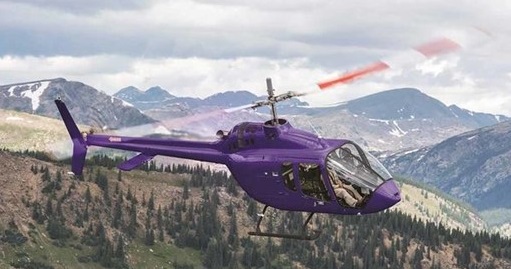
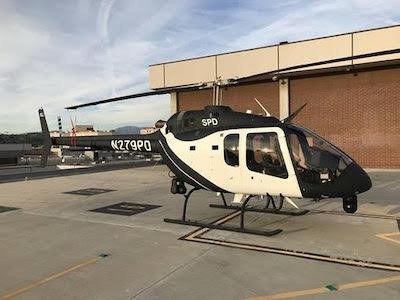
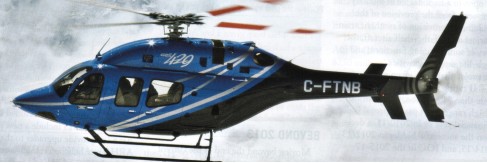
Bell 505 JetRanger X

The Bell 505 features the Safran Helicopter Engines Arrius 2R engine incorporating dual-channel fadec that delivers good performance and reduces pilot workload and Garmin G1000H avionics. Top speed is 125 knots and useful load 1,500 pounds. When announced in 2013, the price was set at $1.07 million.

The five-seat Bell 505 Jet Ranger X received FAA certification six months after notching Canadian approval of the light single, Bell Helicopter announced in June 2017. Deliveries of the five-seat light single to U.S. customers were to begin immediately.

Bell was continuing to work with other certification authorities around the world to bring the 505 to more markets. The Bell Helicopter Training Academy was also prepared for entry into service with customer training and flight training device and coursework on track.

The first delivery of the Bell 505 occurred in March 2017 to Pylon Aviation. Bell confirmed delivery of the 200th Bell 505 Jet Ranger X to Austria-based operator Hubi-fly Helikopter GmbH in August 2019 with the global fleet of 200 aircraft flying across six continents.

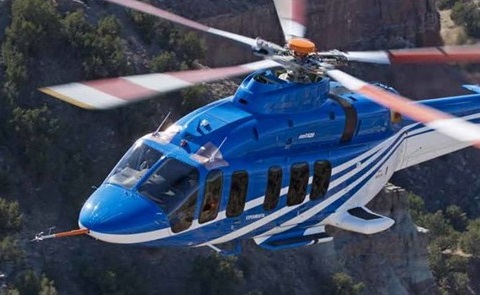
Bell 525 Relentless

Designed to seat up to 20 passengers, the 525 is the first commercial helicopter with a fly-by-wire system, featuring BAE Systems’ flight control computers. The ARC Horizon flight deck is built around the Garmin G5000H integrated touch screen enabled avionics suite, incorporating four LCD screens and two touchscreen controllers into the wide instrument panel.

Powered by two electronically controlled GE CT7-4F1 engines putting out 1,979 shp on takeoff, the 525 is designed to cruise at speeds up to 160 knots with a max range of 560 nm and a useful load of 8,200 pounds.

“Bell Helicopter has worked with the NTSB and FAA since the accident and we are confident in the resumption of flight test activity,” said Bell’s president and CEO Mitch Snyder.

While the final report from the NTSB regarding the accident has not yet been released, the preliminary report said the helicopter broke up in flight. Both test pilots died as a result of the ensuing crash. Before the crash, the flight test program had accumulated more than 260 flight hours for the 525 and Bell hopes to finalize its certification next year.

The FAA has awarded experimental certificate renewal to the Bell 525 Relentless, allowing Bell Helicopter to resume the flight test program after a 2016 crash. Bell Helicopter was to resume testing the 525 Relentless following the FAA’s awarding of experimental certificate renewal. Certification for 20-passenger fly-by-wire helicopter is expected in 2018.

Bell ARH-70 Arapaho

The Bell ARH-70 helicopter was developed for the US Army as a possible direct replacement to the successful but aged Kiowa Warrior series of light armed reconnaissance mounts. In an effort to keep production and acquisition costs down for the US Army, the project attempted to develop a product using existing yet proven components. The Bell ARH was essentially a militarized form of the Bell 407. The ARH-70 came from the US Army’s Armed Reconnaissance Helicopter (ARH) program after the official cancellation of the RAH-66 Comanche light attack helicopter. Initial production forms would have been given the designation of ARH-70A.

In December of 2004, the requirement was sent out by the US Army and interested parties responded with their proposals. Chief among the returns was the Bell Model 407 (billed as an upgraded OH-58 Kiowa Warrior) and a Boeing response. Bell eventually won out and was awarded the multi-billion dollar production contract on July 29th, 2005. The contract called for some 368 production examples and required two prototypes along with two preproduction samples, this later changed to require four pre-production examples instead.

First flight of a demonstrator ARH was achieved on June 3rd, 2005. Further flights ensued and ultimately included additional avionics, mission-specific systems and the selected Honeywell HTS900-2 series turboshaft engine. The engine was trialed only on demonstrators and on the ground to verify its base qualities to this point. After some program delays, the first true ARH-70 prototype (Prototype #2) went airborne on July 20th, 2006, less than one year since the awarding of the Army contract. Prototype #4 was of note for it was forced to make a crash landing at a gold course after suffering an engine failure, this recorded on February 21st, 2007. Though neither of the pilots was harmed in the crash, the airframe was deemed a complete loss and a setback for the ARH program.

Ultimately, delays and product costs soon crept up on the ARH-70. The US Army halted the project, giving Bell one month to get its act in order. For the interim, Bell used its own money to further develop the systems until the US Army agreed to pick up the project once again by the middle of 2007. The rising costs forced an automatic and direct DoD review of the program under the existing Nunn-McCurdy Act. In the 2008 Defense Budget, no money was deviated to furthering the ARH-70. A final attempt to offer the ARH-70 as an export product to help recover some cost fell to naught and the ARH-70 remained in limbo for the time being. At one point, it was expected that some 512 total systems could be purchased by the US military alone, the additional examples over the original agreed upon total being delivered for use by the Army National Guard to replace their aged AH-64 Apaches.

The ARH-70 program proved too much to be a viable option for the US Army, despite the mount reaching all required performance parameters. The Army Acquisition Executive Office for Aviation called for the DoD contract to be terminated in full. The US Department of Defense officially acknowledged the request and did not promote the multi-million dollar expenditure to the US Congress, effectively killing hope for Bell and their new little machine. By this time, a single ARH-70 example had nearly doubled in per-unit cost to an estimated $14.5 million USD. According to Bell, the contract was 53 percent complete at the time of its cancellation on October 16th, 2008, with some 1,500 test flight hours having been recorded.

Design of the ARH-70 followed suit with the OH-58 series family of light helicopters. The two-man crew was seated in a side-by-side arrangement well-forward in the fuselage. Each position featured redundant controls and large, transparent, bulging forward windshields offering excellent visibility. Each pilot maintained their own automobile-style doors, hinged at two points forward, for entry and exit into their respective cockpit seats. Optics and special mission equipment could be mounted externally under the chin portion of the fuselage. The passenger cabin was located directly behind the cockpit and accessed via side access doors. Weapon stub pylons emerged from the fuselage underside and could carry limited offensive munitions. Landing skids were affixed to either fuselage underside and supported at two fixed points. The single engine was fitted high atop the fuselage above and behind the crew cabin. Exhaust jettisoned upwards at the rear of the engine compartment. The engine drove a four-bladed main rotor and a two-bladed tail rotor. The empennage was raised at the rear of the crew cabin and engine compartment, capped by a tall vertical tail fin. Additional vertical fins were set along the sides of the tail system along horizontal planes. The tail rotor was set to face the portside of the aircraft.

Crew accommodations amounted to two pilots in the forward cockpit and up to six passengers in the main cabin.

Power for the ARH-70 was supplied from a single Honeywell HTS900-2 turboshaft engine of 970 shaft horsepower. This powerplant could supply the airframe a top speed of 161 miles per hour with a cruise speed of about 130 miles per hour. Her range was listed at 186 miles with a service ceiling equal to 20,000 feet. Empty weight registered at 2,598lbs with a maximum take-off weight equal to 5,000lbs.

As an armed reconnaissance helicopter and as in the OH-58D before it, the ARH-70 was intended to carry a rather modest arrangement of weaponry. Primary hitting power was to be supplied y a 1 x GAU-19 series 0.50 caliber Gatling gun fitted to an outboard pylon as well as Hydra 70 2.75-inch (70mm) rockets, also on an outboard pylon.

Although referred to in a few official media reports under the designation of ‘Arapaho’, this name was never officially assigned to the ARH-70 product.

Bell ARH-70A (Arapaho)
Engine: 1 x Honeywell HTS900-2 turboshaft, 970shp
Rotor: four-blade main rotor and two-blade tail rotor.
Length: 34.68ft (10.57m)
Height: 11.68ft (3.56m)
Empty Weight: 2,597lbs (1,178kg)
Maximum Take-Off Weight: 5,000lbs (2,268kg)
Maximum Speed: 161mph (259kmh; 140kts)
Maximum Range: 186miles (300km)
Service Ceiling: 20,000ft (6,096m)
Accommodation: 2 + 6
Hardpoints: 2

Bell Helicopter

Bell was responsible for design and construction of the Model 47, the first helicopter to receive Approved Type Certificate from the U.S. Civil Aviation Authority (on March 8,1946), and which remained in production for more than 25 years. Later helicopters of particular importance included the UH-1 Iroquois (Model 204) military utility helicopter (first flown October 1956), and the world’s first purpose-designed tandem two-seat attack helicopter, the Model 209 (military AH-1 HueyCobra), first flown September 1965 and operated by the U.S. Army in Vietnam from 1967. Production of HueyCobra in the U.S.A. ended, but Fuji in Japan still produced examples in the AH-1S version.
Bell programs include remanufacture of 180 AH-1W SuperCobras and 100 UH-1Ns of U.S. Marine Corps into AH-1Zs and UH-1Ys respectively under the H-1 Program, with upgrades common to both helicopter types including the installaton of General Electric T700 engines, four-blade composite hingless and bearingless rotors, and much more besides; upgrade and life-extension of UH-1Hs of other forces to UH-1H-II or Huey II standard (joint Bell and AlliedSignal program) by installation of AlliedSignal T53-L-703 turboshaft engine plus airframe improvements; production of the twin-turboshaft AH-1W SuperCobra for the U.S. Marine Corps (introduced 1986); and upgrade of 411 U.S. Army 0H- 58 Kiowa reconnaissance helicopters to OH-58D Kiowa Warrior armed configuration (also for Taiwan). Also development and production of the BA 609, a civil tiltrotor transport in association with Agusta of Italy, after Boeing’s share in the program was passed to Bell).
Bell participates in the Bell Boeing V-22 Osprey military tiltrotor program (first flown March 1989) to provide the U.S. forces with a vertical-lift transport and multipurpose aircraft capable also of strike, rescue, amphibious combat assault, and anti-submarine work.
Bell Helicopter Company, originally a division of Bell Aircraft, became a branch of Textron Inc. in 1960 and a fully-integrated subsidiary in January 1982. Bell Helicopter Textron Inc. is its current name; Bell has produced well over 33,000 helicopters. In 1986 commercial/civil helicopter production moved to Canada. Came to an agreement with IAR-SA Brasov in 1996 to allow license manufacture of AH-1W SuperCobra in Romania, tied with the purchase of a majority shareholding in IAR-SA Brasov.
A subsidiary of Textron Inc in the USA and Canada.
1995: Bell Helicopter Textron, PO Box 482, Fort Worth, TX 76101, USA, and Bell Helicopter Textron Canada, 12800 Rue de l’Avenir, St Janvier, Quebec J7J 1R4, Canada.
Bell Helicopter Canada was founded in 1984, with a production factory at Mirabel completed 1985 as a division of Textron Canada Ltd. Manufacture of Bell Helicopter Textron Inc. commercial/civil helicopters moved from U.S.A. to Mirabel 1986, leaving U.S. company free to concentrate on military types. Production encompasses Model 206B-3 JetRanger III five-seat light helicopter (first flown 1962 in original form and 1977 as JetRanger III) and its TH-67 military trainer variant; seven-seat Model 206L-4 LongRanger IV (first flown 1974 in original form and certificated 1992 as LongRanger IV); Model 206LT TwinRanger as twin-turboshaft variant of LongRanger (certified 1993); 15-seat Model 212, using twinned turboshafts; Model 230 intermediate- twin ten-seat helicopter (first flown August 1991); Model 407 extra-wide variant of LongRanger with a fourblade main rotor (first flown June 1995); Model 412EP 15-seat utility helicopter, also suited to specialized roles such as law enforcement, SAR, and medical (first flown 1979); Model 427 eight-seater (first flown December 1997) as a lengthened version of Model 407; and Model 430 derived from the Model 230 but with more engine power and a four-blade bearingless composite main rotor (first flown October 1995).

In 1952 Agusta was granted a license to build Bell Model 47 helicopters. First Agusta-built example flew May 1954, and over 1,200 were built before production ended in mid- 1970s. The company also produced Bell Iroquois models as Agusta-Bell 204B and 205, twin-engined Model 212 (still offered as AB-212 Naval/Skyshark) and Model 206 JetRanger (still offered as AB-206B JetRanger III) helicopters. In 1967, under Sikorsky license, production of SH-3D helicopters began, and in 1974 production of HH- 3F (S-61R); production of final HH-3F Combat SAR version lasted into mid-1990s. Together with Elicotteri Meridionali, SIAI-Marchetti, and other Italian companies, Agusta became involved in production of the Boeing Vertol CH-47C Chinook. Other license-built helicopters include AB-412EP/Griffon/Maritime Patrol versions of the Bell 412EP and Griffon, AMD-500E version of the McDonnell Douglas (now Boeing) MD 500E, and Agusta-Boeing 520N NOTAR helicopter.

Bellanca Aircraft Corp / Wright-Bellanca / Columbia Aircraft Co / Bellanca Development Co / AviaBellanca

Giuseppe Mario Bellanca was born in 1886 in Sciacca, Sicily. As a young man, he attended the Technical Institute in Milan, graduating with a teaching degree in mathematics in 1908. During his quest for a second mathematics and engineering degree, he became enamoured of aviation, and set out to design and build his own airplane. Bellanca’s first aircraft design was a “pusher” aircraft, somewhat similar to the Wright Flyer. Lacking funds for such an endeavor, he joined with two partners, Enea Bossi, and Paolo Invernizzi. The union of the three produced the first flight of a totally Italian-designed and Italian-built aircraft in December of 1909. Bellanca’s second design, was a tractor-type aircraft. Although the aircraft was successfully constructed, it was never flown due to insufficient funds for an engine.
At the urging of his brother Carlo, who was already established in Brooklyn, New York, Giuseppe Bellanca immigrated to America in 1911. Before the end of the year, he began construction of his third airplane design, a parasol monoplane. After construction was completed, he took the small craft to Mineola Field on Long Island, NY, and proceeded to teach himself to fly. He began by taxiing. He then, taxied faster, which gave way to short hops. The hops got longer, until, on May 19, 1912, there was not enough room to land straight ahead, and Bellanca had to complete a turn in order land safely. Having successfully taught himself to fly, Bellanca then set about teaching others to fly, and from 1912 to 1916, he operated the Bellanca Flying School. One of his students was a young Fiorello La Guardia, the future mayor of New York City. In return for flying lessons, La Guardia taught Bellanca how to drive a car.
In 1917 the Maryland Pressed Steel Company of Hagerstown, MD hired Bellanca as a consulting engineer. While there, he designed two trainer biplanes, the CD, and an improved version, the CE. With the conclusion of WWI, Maryland Pressed Steel’s contracts were cancelled and the company entered into receivership. Thus, the CE never went into production.
In 1921, a group of investors lured Bellanca westward to Omaha, NE, in hopes of establishing that town as a center for aircraft manufacture. Before the aircraft could be built, the company went bankrupt, but construction of the aircraft continued under the financial backing of a local motorcycle dealer named Victor Roos. The resultant aircraft, the Bellanca CF, was called by Janes’s All the World’s Aircraft “the first up-to-date transport aeroplane that was designed, built, and flown with success in the United States.” Among the local people helping to build the aircraft was the daughter of Bellanca’s landlord, Dorothy Brown. Giuseppe and she were married on November 18, 1922.
Despite its advanced design, the Bellanca CF could not compete with the economics of the time. In the days just after World War I, a surplus Curtiss Jenny could be purchased for as little as $250.00. A Bellanca CF, with a price tag of $5000.00, was just too expensive and the aircraft never went into production. After the disappointment of the CF, Bellanca designed wings for the Post Office Department’s DH-4’s. His new wings were a tremendous improvement over the original design, but only a few aircraft were so modified.
In 1925, Bellanca went to work for the Wright Aeronautical Corporation of Paterson, NJ. His assignment there was to develop an aircraft around the new Wright Whirlwind engine. He already had a design in mind, which was an improved version of the CF, called the CG. This design evolved into the Wright-Bellanca WB-1.
The WB-1 enjoyed a short, but successful flying career. The aircraft had already won one race and efficiency contest before an untimely accident destroyed the craft during preparation for an attempt to break the world’s non-refueled endurance record. Fortunately, at the time of the crash, Bellanca was already working on an improved version, of the WB-1 designated the WB-2.
During 1926, the WB-2 won two efficiency trophies at the National Air Races in Philadelphia. Wright considered putting the aircraft into production, but decided against it to avoid alienating other aircraft companies that were potential customers for their engines. Disappointed by Wright’s decision, Bellanca left the company and joined with a businessman named Charles Levine to form the Columbia Aircraft Company. Wright sold the WB-2 and all drawings and production rights to the new company. The WB-2 went on to a long and fruitful flying career starting with establishing a new world’s non-refueled endurance record of 51 hours, 11 minutes, and 59 seconds in April of 1927.
In the latter half of 1926, Charles Lindbergh wanted to buy the WB-2, now named the ‘Columbia’, for his proposed flight from New York to Paris. He was rebuffed by Levine who also had designs on the flight and the $25,000 prize money. Lindbergh then went to Ryan for his “Spirit of St. Louis”. Meanwhile Levine, in choosing the crew, managed to promise two seats to three people. So while the Columbia was grounded by a court order brought by the third party, Lindbergh took off on his successful flight to Paris.
Eventually, the ‘Columbia’ was cleared of litigation and took off on its successful transatlantic flight on June 4, 1927. In the cockpit were Clarence Chamberlin, one of the pilots of the endurance record and Charles Levine, who became the first transatlantic passenger. The plan was to fly all the way to Berlin, and Chamberlin had vowed to fly until they ran out of fuel. Forty-three hours later, they landed in Eisleben, Germany, the first of two successful Atlantic crossings for Bellanca’s most famous aircraft.
Disappointed because the ‘Columbia’ was not the first aircraft to accomplish the New York to Paris flight, Bellanca severed all relations with Levine, and started his own company, the Bellanca Aircraft Corporation of America, and rented facilities on Staten Island, NY. The new Bellanca model was designated the CH, and was basically a commercial version of the WB-2. The new company also had two other models that were built for special orders, the Bellanca Model J and the Model K.
It was not long before Bellanca caught the attention of the Du Pont family of Delaware. They wanted to start aircraft manufacturing in Delaware, and in late 1927, an agreement was made with Bellanca to locate his factory outside of Wilmington. The site was large enough for a first-class airfield, with a seaplane ramp on the nearby Delaware River.
This was a busy time in Bellanca’s life. Along with all that was happening in his professional life, he and Dorothy celebrated the birth of their son August T. Bellanca in March of 1927.
With the exception of a few years immediately before and during the early stages of WWII, Bellanca was President and Chairman of the Board from the corporation’s inception on the last day of 1927 until he sold the company to L. Albert and Sons in 1954. All assets were acquired by Northern Aircraft in 1955 and Bellanca name finally dropped 1959 after merger with non-aviation companies.
After his departure from the company, Giuseppe and his son, August, formed the Bellanca Development Company with the purpose of building a new aircraft. It would have increased performance due to the use of lighter materials for its structure. Work on this aircraft was progressing when Giuseppe Bellanca succumbed to leukemia and died on December 26, 1960. After his father’s death, August continued the project, and under his guidance, the aircraft, a record breaker, first flew in 1973.
Northern Aircraft became Downer, then Inter-Air, and in 1967, Bellanca Sales, a subsidiary of Miller Flying Services. As the company grew, its name became Bellanca Air¬craft Corporation. Champion Aircraft Corporation was merged into it in 1970, adding two place aerobatic, sport and utility aircraft to the line.
1974 closed with the firm still in the busi¬ness only of building Vikings in Alexandria and Champi¬ons in Osceola, Wisconsin, and with sales slowing a bit. In late 1974, Bellanca was forced to suspend production in order to work off an in¬ventory of airplanes.
In 1978 Bellanca became a wholly-owned subsidary of Anderson, Greenwood, of Houston, Texas, subsequently developing the T-250 Aries and Eagle.
Work stopped in 1980 and the firm liquidated in 1981.
Assets were sold to Viking in 1982.
Viking resumed Viking production in 1984. Work stopped in 1988.
The original Bellanca company was restarted by Guiseppe Mario Bellanca and son August in 1968, initially in West Virginia and later Maryland.
Work stopped in 1986.
The firm was resurrected as AviaBellanca.
In 1993, August Bellanca donated his father’s 1920 CF to the Smithsonian along with many personal and corporate papers and correspondence. NASA craftsmen restored the aircraft and it is on display at the Smithsonian Air & Space Museum’s new Steven F. Udvar-Hazy Center near Washington’s Dulles International Airport. The far-sighted, innovative designer and builder of American aircraft, Giuseppe M. Bellanca was enshrined in the National Aviation Hall of Fame in 1993, the Delaware Aviation Hall of Fame in 1999.

1998:
Avia Bellanca Aircraft Corp
11800 Sunrise Valley drive, Suite 322
Reston
Virginia 20191
USA
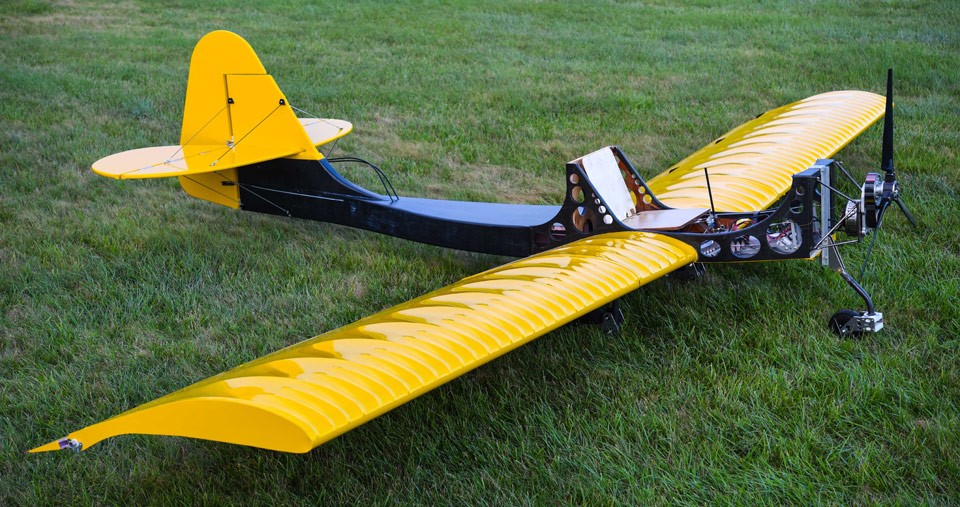
Belite Aircraft SkyDock   

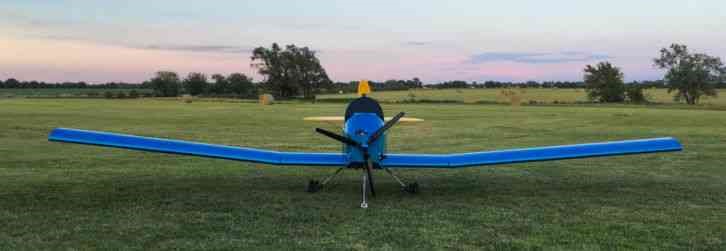
In 2015 Belite Enterprises LLC said the finished product of Belite Aircraft’s new ultralight kit, the Belite SkyDock, successfully flew for the first time. According to the company, “James did several runs up and down the runway. As soon as the plane started to climb, he reduced power to stay in ground effect.

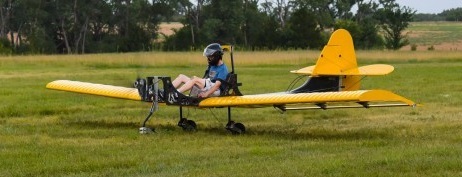
Belite’s SkyDock prototype undergoing taxi tests

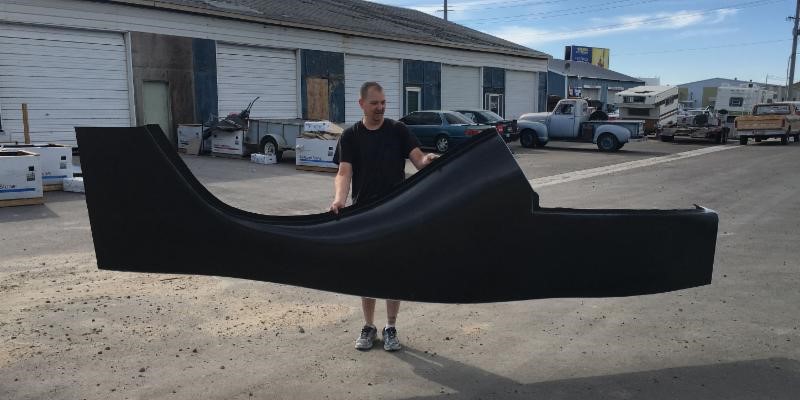
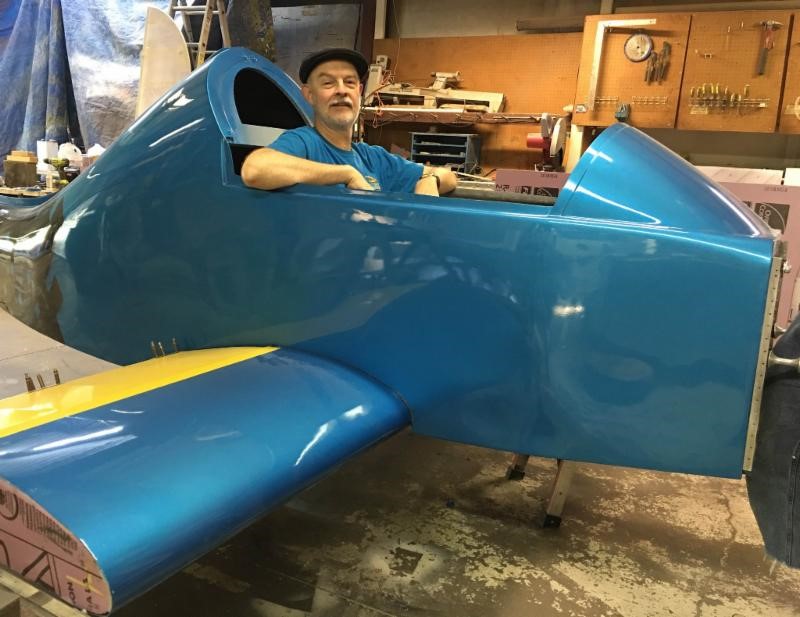
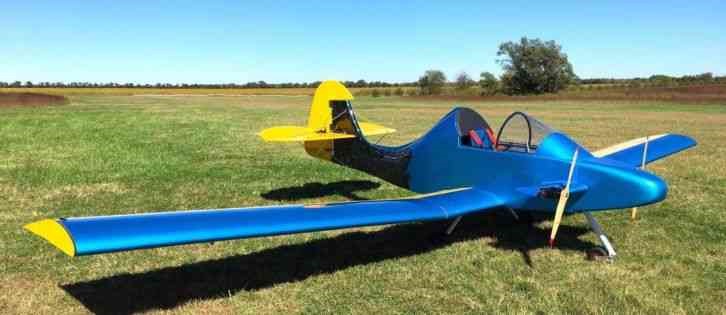
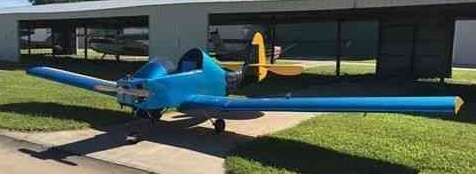
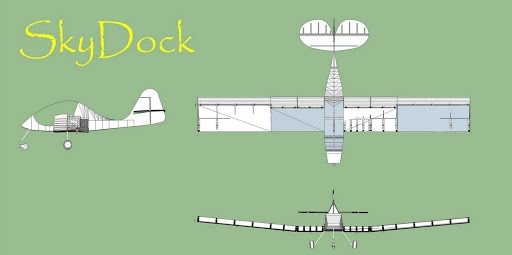
The SkyDock requires less time to build compared to most aircraft kits, and was designed to make building as easy as possible, according to the company. The parts of the kit are made from fiberglass and carbon fiber reinforcements. The SkyDock is made from CNC-cut wood, foam, and aluminum and the parts of the kit come machine cut and drilled, so there’s no welding required.

For the wings, Belite said the builder has to build the spar, put the ribs in place, and apply glue. The low-wing is completely strutless and is designed for efficiency, low drag, and low speed. The SkyDock also features detachable wings for ease of storage and transport.

The Belite SkyDock is available for preorder for $3,995.

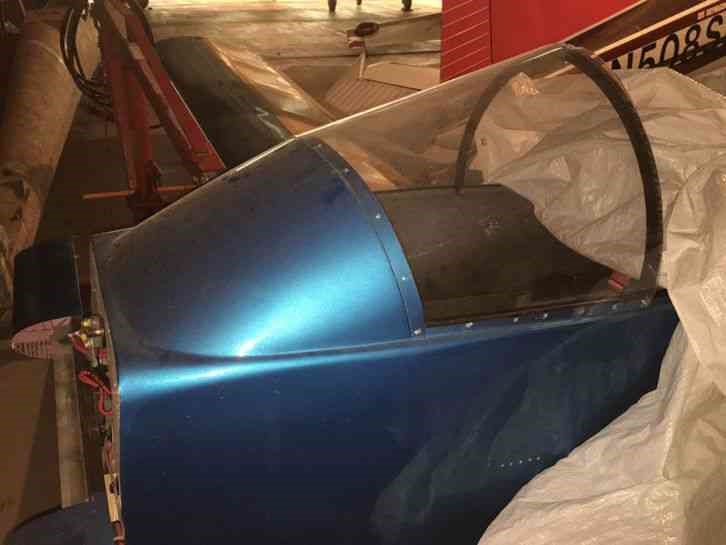
In July 2016 Belite Aircraft’s SkyDock had been updated with a molded carbon fiber fuselaget. With 60 hp, the SkyDock will cruise at about 120 mph. With 36.5 hp, full-power speeds are expected to be greater than 85 mph.

The cabin features an aluminum spar carry-through and carbon fiber over foam core construction. The low-wing, strutless design allows for easy building and high strength, yet the wings detach for storage or transport.

When configured as an ELSA, the SkyDock has about 500 miles. Configured as an ultralight, maximum full-power cruise is 62 mph.

Kits for the SkyDock are priced to reflect different builder preferences, skills, and pocketbooks. The base airframe kit, which includes pre-molded carbon-fiber skins, is priced at $11,280. A complete kit, which includes a full complement of machined components and all nuts, bolts, and rivets, is priced at $20,675. The Polini Thor 250 36.5-hp engine sells for $4,500.

A limited number of additional delivery positions are available for late 2016 and throughout 2017.

In 2016 The BeLIte carbon fiber prototype aircraft known as SkyDock was offered for sale without reserve, as-is.

Located in La Moille IL, the landing gear were included but not installed, windshield included, but Firewall Forward is not included.

It weighs about 240 pounds on landing gear, without engine.