The USAF’s Air Education and Training Command (AETC) began developing the requirements for a replacement for the Northrop T-38 Talon as early as 2003. Originally, the replacement trainer was expected to enter service around 2020. A fatigue failure of a T-38C killed the two-person crew in 2008 and the USAF advanced the target date of initial operational capability (IOC) to 2017. In the Fiscal 2013 budget proposal, the USAF suggested delaying the initial operating capability to FY2020 with the contract award not expected before FY2016. Shrinking budgets and higher priority modernization projects pushed the IOC of the T-X program winner to “fiscal year 2023 or 2024”. Although the program was left out of the FY 2014 budget entirely, the service still viewed the trainer as a priority.
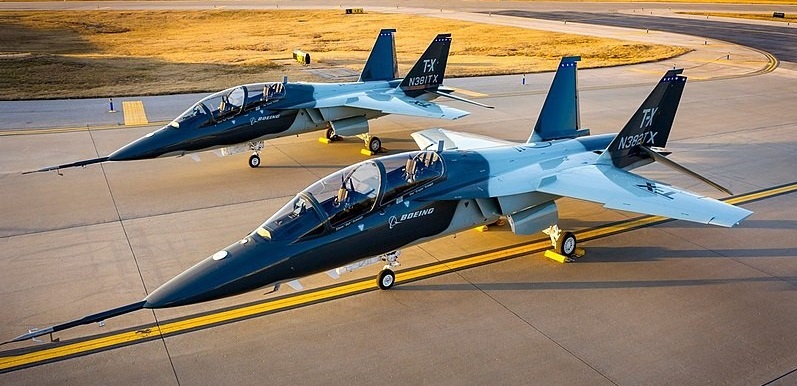
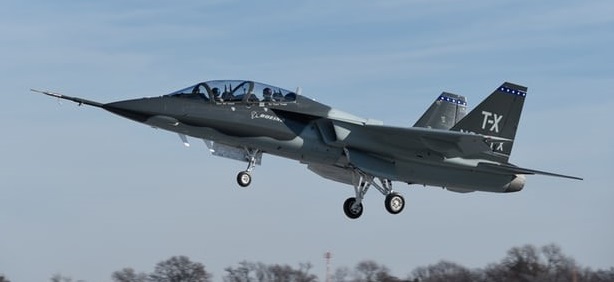
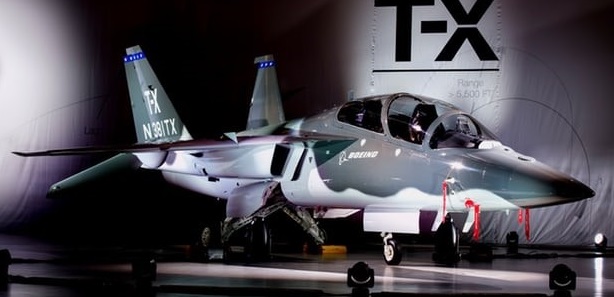
In cooperation with its Swedish aerospace partner, Saab, Boeing’s submission to the competition was the Boeing T-X, a single-engine advanced jet trainer with a twin tail, tandem seating, and retractable tricycle landing gear. The submitted aircraft and demonstration models featured a General Electric F404 afterburning turbofan engine.
The Boeing T-X jet fighter trainer was developed in partnership with Swedish defense contractor Saab. The partners’ strategy was demonstrating to the Air Force and the US Department of Defense the ability of the “blank sheet” aircraft to compete with off-the-shelf competitors for a contract in terms of quick delivery.
It has twin tails derived from Boeing’s F/A-18 for greater maneuverability and a high angle of attack, stadium seating, an advanced cockpit with embedded training, and the ability to blend with state-of-the-art ground-based training. In addition, it’s billed as being maintenance-friendly in anticipation of decades of service.
Boeing revealed its aircraft to the public on 13 September 2016. The first T-X aircraft flew on 20 December 2016, as BTX-1, on a 55-minute flight. Two protypes were built.
On 27 September 2018, Boeing’s design was officially announced as the USAF’s new advanced jet trainer to replace the T-38 Talon. A total of 351 aircraft and 46 simulators, maintenance training and support are to be supplied at a program cost of US$9.2 billion.
In May 2019, Saab announced that it would open a U.S. manufacturing facility for the T-X in Indiana in partnership with Purdue University.
On 16 September 2019, the USAF officially named the aircraft the “T-7A Red Hawk” as a tribute to the Tuskegee Airmen, who painted their airplanes’ tails red, and to the Curtiss P-40 Warhawk, one of the aircraft flown by the Tuskegee Airmen.
U.S. Air Force publicity photo of the T-7A Red Hawk showing Red Tail livery
Boeing intends to offer an armed version of the T-7 as replacement for aging Northrop F-5 and Dassault/Dornier Alpha Jet fleets around the world.
A second T-X was being ground tested in 2017.
The design officially entered production in February 2021 as T-7A for the U.S. Air Force.
Powerplant: 1 × General Electric F404-GE-103, 11,000 lbf (49 kN) thrust dry, 17,000 lbf (76 kN) with afterburner Crew: 2
Boeing, in a joint project with the Defense Advanced Research Projects Agency, had begun testing its revolutionary new canard rotor/wing aircraft, known as the X 50A Dragonfly, making the aircraft’s first hover flight by 2004. It is designed to combine the speed and range of a fixed wing aircraft with the flexibility of a helicopter. Its rotor is designed to be used for take off and landing, while in flight it stops and is used as a fixed wing. The aircraft is 17.7 feet long and 6.5 feet high and weighs 1460 pounds. The rotor/wing diameter is 12 feet. It also has a fixed canard measuring 8.9 feet in span and an 8.1 foot span horizontal tail and is propelled by a conventional turbofan engine.
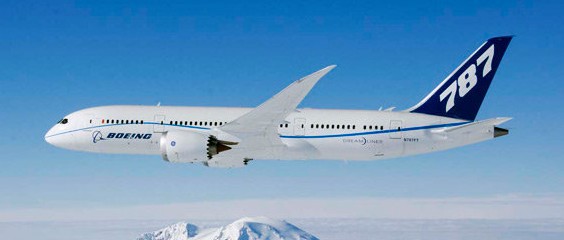
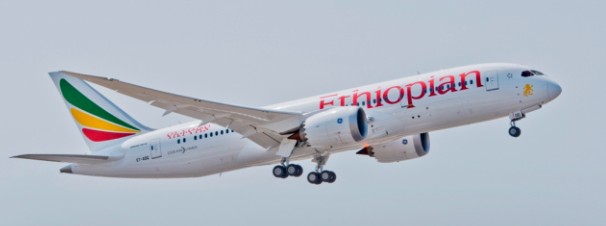
The Boeing 787 Dreamliner is a long range, mid-sized, wide-body, twin-engine jet airliner developed by Boeing Commercial Airplanes. It seats 210 to 330 passengers, depending on the variant. Boeing states that it is the company’s most fuel-efficient airliner and the world’s first major airliner to use composite materials for most of its construction. The 787 was designed to become the first production composite airliner, with the fuselage assembled in one-piece composite barrel sections instead of the multiple aluminum sheets and some 50,000 fasteners used on existing aircraft. Boeing selected two new engine types to power the 787, the General Electric GEnx and Rolls-Royce Trent 1000. The two different engine models compatible with the 787 use a standard electrical interface to allow an aircraft to be fitted with either Rolls-Royce or General Electric engines. This aims to save time and cost when changing engine types.
During the design phase the 787 underwent extensive wind tunnel testing at Boeing’s Transonic Wind Tunnel, QinetiQ’s five-meter wind tunnel at Farnborough, UK, and NASA Ames Research Center’s wind tunnel, as well as at the French aerodynamics research agency, ONERA. The final styling of the aircraft was more conservative than earlier proposals, with the fin, nose, and cockpit windows changed to a more conventional form. By the end of 2004, customer-announced orders and commitments for the 787 reached 237 aircraft. Boeing initially priced the 787-8 variant at US$120 million, a low figure that surprised the industry. In 2007, the list price was US$146–151.5 million for the 787-3, US$157–167 million for the 787-8 and US$189–200 million for the 787-9.
First offered in late 2003, the program was officially launched in April 2004. The aircraft’s initial designation 7E7 was changed to 787 in January 2005. Assembly started in 2006, the first 787 unveiled in a roll-out ceremony on July 8, 2007, at Boeing’s Everett assembly factory, by which time it had become the fastest-selling wide-body airliner in history with 677 orders. First flown in December 2009, by September 2010, 847 Boeing 787s had been ordered by 56 customers. As of 2010, launch customer All Nippon Airways has the largest number of 787s on order.
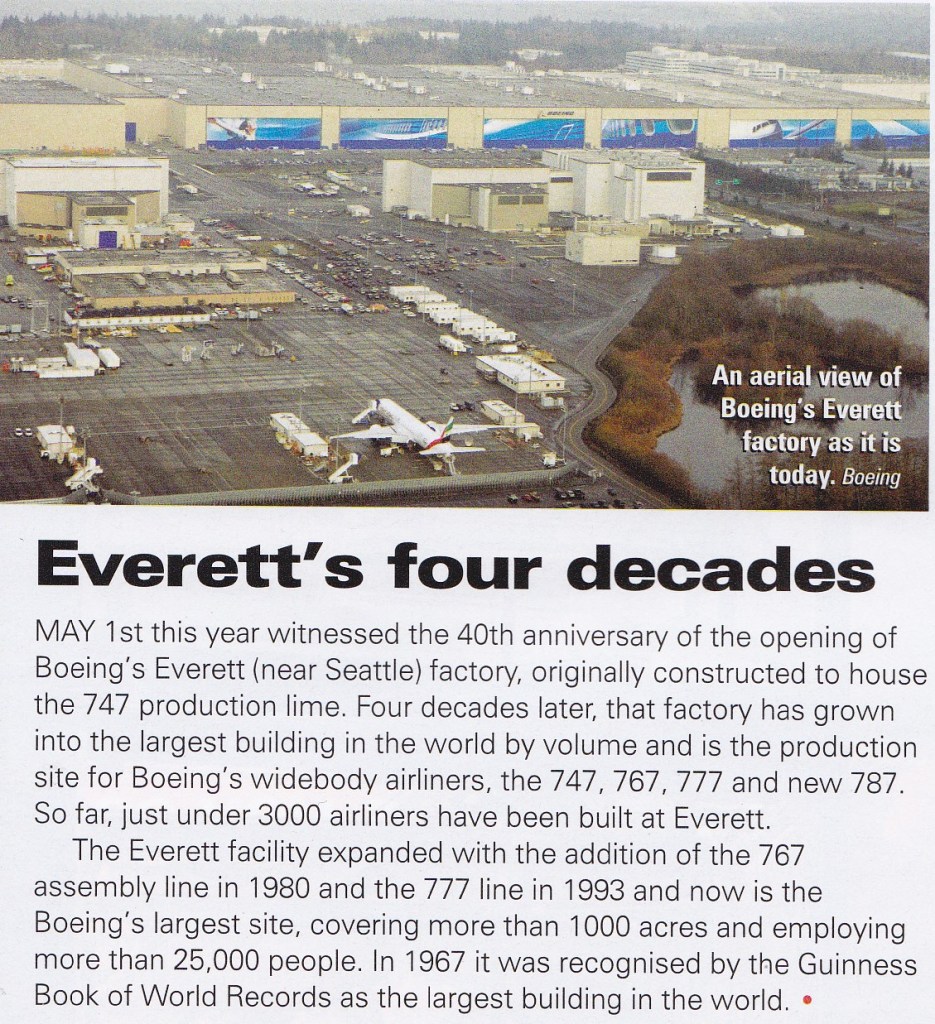
The 787 is being assembled at the Boeing Everett Factory in Everett, Washington. Aircraft will also be assembled at a new factory in North Charleston, South Carolina. Both sites will deliver 787s to airline customers. Originally planned to enter service in May 2008, the project has suffered from repeated delays and is now more than three years behind schedule. The airliner’s maiden flight took place on December 15, 2009. Boeing announced on December 16, 2003, that the 787 would be assembled in its factory in Everett, Washington. Instead of building the complete aircraft from the ground up in the traditional manner, final assembly would employ just 800 to 1,200 people to join completed subassemblies and to integrate systems. Boeing assigned its global subcontractors to do more assembly themselves and deliver completed subassemblies to Boeing for final assembly. This approach was intended to result in a leaner and simpler assembly line and lower inventory, with pre-installed systems reducing final assembly time by three-quarters to three days. Subcontracted assemblies included: wing manufacture (Mitsubishi Heavy Industries, Japan, central wing box) horizontal stabilizers (Alenia Aeronautica, Italy; Korea Aerospace Industries, South Korea) fuselage sections (Global Aeronautica, Italy; Boeing, North Charleston, USA; Kawasaki Heavy Industries, Japan; Spirit AeroSystems, Wichita, USA; Korean Air, South Korea) passenger doors (Latécoère, France) cargo doors, access doors, and crew escape door (Saab, Sweden) floor beams (TAL Manufacturing Solutions Limited, India) wiring (Labinal, France) wing-tips, flap support fairings, wheel well bulkhead, and longerons (Korean Air, South Korea) landing gear (Messier-Dowty, France) power distribution and management systems, air conditioning packs (Hamilton Sundstrand, Connecticut, USA). tail (Alenia).
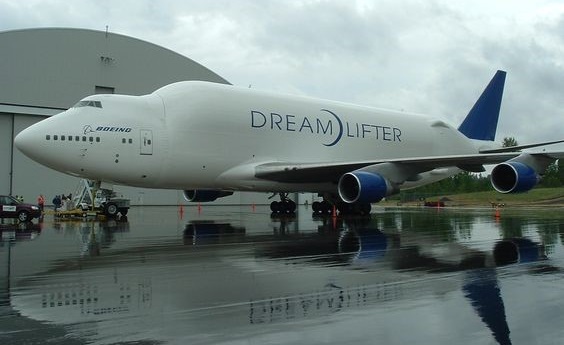
To speed delivery of the 787’s major components, Boeing modified several used 747-400s into 747 Dreamlifters to transport 787 wings, fuselage sections, and other smaller parts. Japanese industrial participation was very important to the project, with a 35% work share, the first time Japanese firms had taken a lead role in mass production of Boeing airliner wings, and many of the subcontractors supported and funded by the Japanese government. On April 26, 2006, Japanese manufacturer Toray Industries and Boeing announced a production agreement involving US$6 billion worth of carbon fiber, extending a 2004 contract and aimed at easing production concerns.
Boeing had originally planned for a first flight by the end of August 2007 and premiered the first 787 at a rollout ceremony on July 8, 2007, which matches the aircraft’s designation in the US-style month-day-year format (7/8/07). However, the aircraft’s major systems had not been installed at that time, and many parts were attached with temporary non-aerospace fasteners requiring their later replacement with flight fasteners. Although intended to shorten the production process, 787 subcontractors initially had difficulty completing the extra work, because they could not procure the needed parts, perform the subassembly on schedule, or both, leaving remaining assembly work for Boeing to complete as “traveled work”.
The 787 Dreamliner’s first public appearance was webcast live on July 8, 2007. Rolled out on 8 July 2007 with 677 firm orders from 47 operators, the prototype was held together largely with temporary fasteners in order to meet the date. At the time QANTAS ordered 20 more.
On September 5 Boeing announced a three-month delay, blaming a shortage of fasteners as well as incomplete software. On October 10, 2007, a second three-month delay to the first flight and a six-month delay to first deliveries was announced due to problems with the foreign and domestic supply chain, including an ongoing fastener shortage, the lack of documentation from overseas suppliers, and continuing delays with the flight guidance software. Less than a week later, Mike Bair, the 787 program manager was replaced. On January 16, 2008, Boeing announced a third three-month delay to the first flight of the 787, citing insufficient progress on “traveled work”. On March 28, 2008, in an effort to gain more control over the supply chain, Boeing announced that it planned to buy Vought Aircraft Industries’ interest in Global Aeronautica; the company later agreed to also purchase Vought’s North Charleston, S.C. factory.
On April 9, 2008, Boeing officially announced a fourth delay, shifting the maiden flight to the fourth quarter of 2008, and delaying initial deliveries by around 15 months to the third quarter of 2009. The 787-9 variant was postponed to 2012 and the 787-3 variant was to follow with no firm delivery date. On November 4, 2008, the company announced a fifth delay due to incorrect fastener installation and the Boeing machinists strike, stating that the first test flight would not occur in the fourth quarter of 2008. After assessing the 787 program schedule with its suppliers, Boeing confirmed on December 11, 2008 that the first flight would be delayed until the second quarter of 2009.
On June 15, 2009, during the Paris Air Show, Boeing said that the 787 would make its first flight within two weeks. However, on June 23, 2009, Boeing announced that the first flight is postponed “due to a need to reinforce an area within the side-of-body section of the aircraft”. Boeing provided an updated 787 schedule on August 27, 2009, with the first flight planned to occur by the end of 2009 and deliveries to begin at the end of 2010. The company expects to write off US$2.5 billion because it considers the first three Dreamliners built unsellable and suitable only for flight tests.
The first Boeing 787 underwent taxi tests at Paine Field in November and December 2009.
As Boeing worked with its suppliers on early 787 production, the aircraft design had proceeded through a series of test goals. On August 7, 2007, on-time certification of the Rolls-Royce Trent 1000 engine by European and US regulators was received. On August 23, 2007, a crash test involving a vertical drop of a partial composite fuselage section from about 15 ft (4.6 m) onto a 1 in (25 mm)-thick steel plate occurred in Mesa, Arizona. The results matched what Boeing’s engineers had predicted, allowing modeling of various crash scenarios using computational analysis instead of further physical tests. On June 20, 2008, the 787 team achieved “Power On” of the first aircraft, powering and testing the aircraft’s electrical supply and distribution systems On May 3, 2009, the first test 787 was moved to the flight line following extensive factory testing, including landing gear swings, systems integration verification, and a total run through of the first flight. Boeing spent most of May 2009 conducting tests on the first 787 prototype in preparation for the first flight. On March 28, 2010 the 787 completed the ultimate wing load test which requires that the wings of a fully assembled aircraft be loaded to 150% of design limit load and held for 3 seconds. The wings were flexed approximately 25 ft (7.6 m) upward during the test.
On December 15, 2009, Boeing conducted the Dreamliner’s maiden flight with the first 787-8, originating from Snohomish County Airport in Everett, Washington at 10:27 am PST, and landing at Boeing Field in King County, Washington at 1:35 pm PST. Originally scheduled for four hours, the test flight was shortened to three hours because of bad weather.
The third Boeing 787-8 Dreamliner (N7874 c/n 40693 ZA004) joined the test programme in February 2010.
The 787 flight test program is composed of 6 aircraft, ZA001 through ZA006, four with Rolls-Royce Trent 1000 engines and two with GE GEnx-1B64 engines. The second 787, ZA002 in All Nippon Airways livery, flew to Boeing Field on December 22, 2009 to join the flight test program; the third 787, ZA004 joined the test fleet with its first flight on February 24, 2010, followed by ZA003 on March 14, 2010. On March 24, 2010, testing for flutter and ground effects was completed, clearing the aircraft to fly its entire flight envelope.
On April 23, 2010 Boeing delivered their latest 787 to a hangar at Eglin Air Force Base, Florida for extreme weather testing in temperatures ranging from 115 °F to -45 °F (46 °C to -42 °C), with all steps necessary to prepare for takeoff taken once the plane stabilizes at either temperature extreme. Dreamliner ZA005, the fifth 787 and the first with General Electric GEnx engines began ground engine tests in May 2010. ZA005 made its first flight on June 16, 2010 and joined the flight test program. In June 2010, gaps were discovered in the horizontal stabilizers of test aircraft, due to improperly installed shims; all aircraft produced then were to be inspected and repaired. The 787 made its first appearance at an international air show at the Farnborough Airshow, UK on July 18, 2010.
Boeing 787-8
As of November 8, 2010, the six 787 test aircraft had flown 2,290 hours in 735 flights combined.
On November 9, 2010, Boeing 787, ZA002 made an emergency landing after smoke and flames were detected in the main cabin during a test flight over Texas. A Boeing spokeswoman said the airliner landed safely and the crew was evacuated after landing at the Laredo International Airport, Texas. The electrical fire caused some systems to fail before landing. Following this incident, Boeing suspended flight testing on November 10, 2010. Ground testing has been performed instead. On November 22, 2010, Boeing announced that the in-flight fire can be primarily attributed to foreign object debris (FOD) that was present in the electrical bay. After electrical system and software changes, 787s returned to company flight testing on December 23, 2010.
The 787 features lighter-weight construction. Its materials (by weight) are: 50% composite, 20% aluminum, 15% titanium, 10% steel, 5% other. The craft will be 80% composite by volume. Each 787 contains approximately 35 short tons of carbon fiber reinforced plastic, made with 23 tons of carbon fiber. Aluminum is used on wing and tail leading edges, titanium used mainly on engines and fasteners, with steel used in various places.
The 787-8 is the base model of the 787 family with a length of 186 feet (57 m) and a wingspan of 197 feet (60 m) and a range of 7,650 to 8,200 nautical miles (14,200 to 15,200 km) depending on seating configuration. The 787-8 seats 210 passengers in a three class configuration. The variant will be the first of the 787 line to enter service. Boeing is targeting the 787-8 to replace the 767-200ER and 767-300ER, as well as expand into new non-stop markets where larger planes would not be economically viable. The bulk of 787 orders are for the 787-8.
In August 2011 the 787 received FAA certification for commercial operations. The first customer, All Nipon Airways was scheduled to receive the first delivery at Tokyo on 28 September, 2011 (about three years behind schedule), and orders stood at 827 aircraft (at US$185 million).
The Boeing 787-9 made its inaugural flight on 17 September 2013 at Paine Field in Everett, WA. The stretched 787 took off at 11:02 AM and completed a 5 hour and 16 minute flight, landing at Boeing Field in Seattle. During the flight, 787-9 Senior Project Pilot Mike Bryan and 787 Chief Pilot Randy Neville departed to the north, reaching an altitude of 20,400 feet and an airspeed of 250 knots, customary for a first flight. While captains Bryan and Neville tested the airplane’s systems and structures, onboard equipment transmitted real-time data to a flight-test team on the ground in Seattle.
Boeing 787-9
Powered by two Rolls-Royce Trent 1000 engines, the first 787-9 was to be joined in flight test by two additional airplanes, one with General Electric GEnx engines.
Boeing 787-3 Dreamliner Engines: 2 x General Electric OR Rolls Royce Trent 1000 turbofan, 53,000lbs thrust Length: 186.02ft (56.7m) Width: 170.60ft (52.00m) Height: 55.45ft (16.90m) Maximum Speed: 587mph (945kmh; 510kts) Maximum Range: 3,511miles (5,650km) Service Ceiling: 42,979ft (13,100m) Accommodation: 2 + 290 Empty Weight: 222,667lbs (101,000kg) Maximum Take-Off Weight: 374,786lbs (170,000kg)
787-8 Dreamliner Engines: 2 x General Electric Genx, 64,000 lbf (280 kN) or Rolls-Royce Trent 1000, 71,000 lbf (320 kN) Cockpit crew: Two Seating: 210-290 Length: 186 ft (56.7 m) Wingspan: 170 ft 6 in (52.0 m) Wing area: 3,501 sq ft (325 m2) Wing sweepback: 32.2 degrees Height: 55 ft 6 in (16.9 m) Fuselage Width: 18 ft 11 in (5.77 m) Fuselage Height: 19 ft 7 in (5.97 m) Maximum cabin width: 18 ft (5.49 m) Cargo capacity: 4,822 cu ft (137 cu.m) 28× LD3 or 9x (88×125) pallets or 8x (96×125) pallets + 2x LD3 Maximum takeoff weight: 502,500 lb (228,000 kg) Maximum landing weight: 380,000 lb (172,000 kg) Operating empty weight: 242,000 lb (110,000 kg) Cruising speed: Mach 0.85 (567 mph, 490 knots, 913 km/h at 35,000 ft/10,700 m) Maximum speed: Mach 0.89 (593 mph, 515 knots, 954 km/h at 35,000 ft/10,700 m) Range, fully loaded: 7,650–8,200 nmi (14,200–15,200 km; 8,800–9,440 mi) Maximum fuel capacity: 33,528 US gal (126,920 L) Service ceiling: 43,000 ft (13,100 m)
787-9 Dreamliner Engines: 2 x General Electric Genx, 64,000 lbf (280 kN) or Rolls-Royce Trent 1000, 71,000 lbf (320 kN) Cockpit crew: Two Seating: 210-290 Length: 206 ft (62.8 m) Wingspan: 197 ft 3 in (60.1 m) Wing area: 3,501 sq ft (325 sq.m) Wing sweepback: 32.2 degrees Height: 55 ft 6 in (16.9 m) Fuselage Width: 18 ft 11 in (5.77 m) Fuselage Height: 19 ft 7 in (5.97 m) Maximum cabin width: 18 ft (5.49 m) Cargo capacity: 6,086 cu ft (172 cu.m) 36× LD3 or 11x (88×125) pallets or 11x (96×125) pallets Maximum takeoff weight: 545,000 lb (247,000 kg) Maximum landing weight: 425,000 lb (193,000 kg) Operating empty weight: 254,000 lb (115,000 kg) Cruising speed: Mach 0.85 (567 mph, 490 knots, 913 km/h at 35,000 ft/10,700 m) Maximum speed: Mach 0.89 (593 mph, 515 knots, 954 km/h at 35,000 ft/10,700 m) Range, fully loaded: 8,000–8,500 nmi (14,800–15,700 km; 9,210–9,780 mi) Maximum fuel capacity: 33,428 US gal (126,540 L) Service ceiling: 43,000 ft (13,100 m)
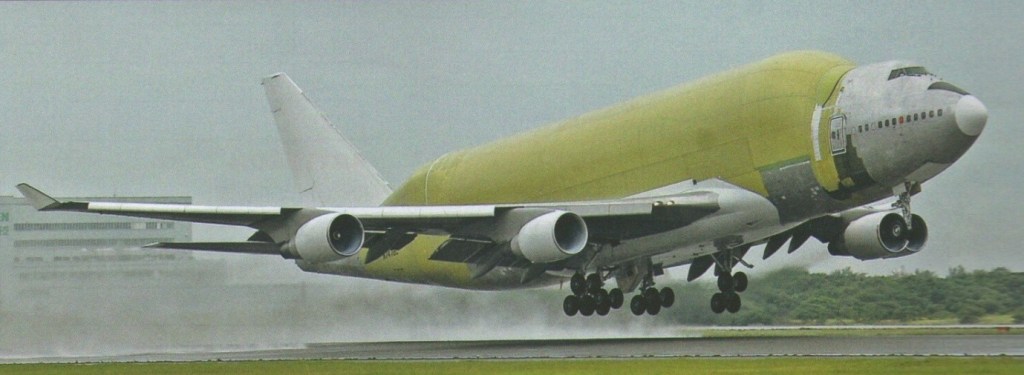
The first of an initial three Boeing 747-400 Large Cargo Freighters designed to transport major assemblies for the 787 to Everett for final assembly made its maiden flight on 9 September 2006 after conversion by Evergreen Aviation Technologies in Taiwan.
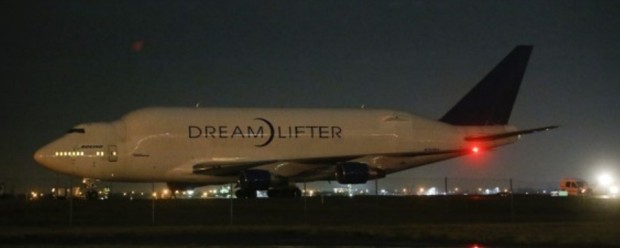
The Atlas Air 747 Dreamlifter is a modified 747-400 passenger airplane that can haul more cargo by volume than any airplane in the world. When fully loaded, the Dreamlifter needs a runway 9,199 feet long to take off.
The plane was owned by Boeing and operated by Atlas Air.
Boeing’s modified 747-400 was built to transport wings, tail, and fuselage components for Boeing 787 Dreamliners and other oversized cargo.
Only four of the modified 747-400s were ever built. The fuselage diameter of the Dreamlifter is 18 inches larger than the fuselage of the Airbus A380, the world’s largest passenger jet.
The first product, B & W Seaplane of 1916, was designed by William Boeing in conjunction with Conrad Westervelt. The company secured the first of many military contracts in June 1916, when it received an order from the Navy Department to build 50 HS-2L flying boats. First production order was for Model C seaplane trainer for U.S. Navy (first flown 1916), followed by Model EA land trainer of 1916 for U.S. Army. Name changed to Boeing Airplane Company April 26,1917. Improved Model C of 1918 was first mass-produced Boeing aircraft, built alongside Boeing-constructed Curtiss HS-2L flying-boats. First post-First World War design was the B-1 three-seat flying-boat (first flown December 1919), while in 1920 the first flight took place of the first of many Boeing-built DH-4s (based on British Airco D.H.4). Built ten U.S. Army-designed GA-1 armored ground attack triplanes (first flown May 1921) but just two GA-2s, followed by 200 Thomas-Morse MB- 3A pursuit aircraft (first flown 1922). The Boeing company has contracted with Thomas Morse to build the MB-3 fighter. With this experience Boeing undertook the development of their own PW-9 pursuit aircraft. Bid successfully for the San-Francisco-Chicago airmail route in 1927 and formed subsidiary Boeing Air Transport to operate the route. In 1928, Boeing Airplane and Transportation Corporation went pub¬lic and the stock sold quickly. As other airlines were acquired, this became Boeing Air Transport System. Merged with Pratt & Whitney, Standard Steel Propeller Co, and two small aircraft manufacturers to form United Aircraft & Transport Corporation in 1929. All continued to operate under original identities. Encouraged, Boeing formed the United Aircraft and Transport Corporation, which included Boeing Airplane Company, Pratt & Whitney, Chance Vought, Sikorsky, Hamilton Propeller, Pacific Air Transport. First real success with own-design military aircraft came in 1923, with the PW-9/FB-1 series, which had a fabric-covered welded-steel-tube fuselage. Other aircraft followed in quick succession, types of particular note including the Boeing Model 40, designed for carriage of airmail plus two (and later four) passengers, used by new Boeing Air Transport. Model 80 12-passenger transports with three Pratt & Whitney Wasp engines introduced by Boeing Air Transport in 1928. World’s first airline stewardesses introduced on these aircraft 1930. In 1929 Lloyd Stearman sold his Stearman Aircraft Company to the ‘United Aircraft and Transport Corporation’. Model 80A with more powerful Hornet engines and seats for 18 passengers followed. Biggest military order to that date (other than MB-3As) came in 1931, when U.S. Army ordered 135 P-12E single-seat fighters, and U.S. Navy 113 of the similar F4B-3: total of 586 aircraft in this series built by 1933 (prototype Model 83 for P-12 series had flown June 1928). Boeing Model 200 Monomail, mail/cargo aircraft, first flew May 1930; revolutionary aircraft with cantilever allmetal monoplane wing, retractable main landing gear and a specially designed antidrag cowling for its single Hornet engine. A second Monomail, Model 221, had six-seat passenger cabin. Military development of this aircraft resulted in YB-9 bomber (first flown April 1931), forcing evolution of new fighter types. Boeing produced P-26 single-seat all-metal monoplane fighter (first flown March 1932), of which 136 bought by U.S. Army. Biggest step forward came with the Model 247 (first flown February 1933), most advanced conception of a transport aircraft anywhere in the world at that time. Introduced wing and tail unit leading- edge de-icing, control surface trim tabs and, in production aircraft, controllable-pitch propellers and autopilot. It was the first twin-engined monoplane transport that could climb with a full load on the power of one engine. In 1934 legislation prevented aircraft and engine manufacturers from operating airlines. Boeing resigned as chairman, sold out his stock and the corporation was divided into three new companies in September 1934 United Air Lines to handle air transport, United Aircraft Corporation to take over the eastern manufacturing firms and Boeing Airplane Company to manage Western operations, together with Stearman, a wholly owned subsidiary. The name Boeing Airplane Company was readopted in 1948. In May 1961, following acquisition of Vertol in 1960, became known as The Boeing Company, which remained the name in 1999. Changes in the company structure took place in 1996, when on December 15 it was announced that a merger had been agreed with McDonnell Douglas. The two large organizations began operating as a single company from August 4,1997, under the Boeing name. Also in December 1996 Boeing purchased Rockwell International’s aerospace and defense units, these being retitled Boeing North American Inc. and subsequently becoming part of Boeing’s Space Systems business unit. Several internal restructures of the Boeing organization followed, the set-up comprising three main groups, namely, Information, Space, and Defense systems Group (ISDS), Boeing Commercial Airplane Group (BCAG), and Boeing Shared Services Group; the latter for information management and computing resources. Within ISDS are various business units comprising Aircraft and Missile Systems (to undertake Boeing’s military airplane and helicopter programs, plus oversee tactical missile development), Boeing Space Systems (to oversee Boeing’s space programs for DoD and NASA), Information and Communication Systems (programs include AWACS surveillance systems, communications systems and more), Phantom Works (a previous McDonnell Douglas unit for advanced research and development, with programs including research into hypersonic aircraft), and Business Resources. BCAG is headquartered at Renton but has units in various other locations. This group comprises Customer Services, Douglas Products Division (for manufacturing airliners that originated from McDonnell Douglas, such as the MD-80, MD-90, MD-11, and B717), Engineering Division, Fabrication Division (constructing components), Materiel Division (made responsible for materials and subcontracted components), Propulsion Systems Division (engine preparation for airliners), 737/757 Programs, 747/767 Programs, 777 Program, and Wichita Division (components and subassemblies). Significant military aircraft since the early 1930s have included the B-17 Flying Fortress bomber (first flown July 1935), of which 12,731 examples were built; B-29 Superfortress bomber (first flown September 1942); B-47 Stratojet medium jet bomber (first flown December 1947); B-52 Stratofortress intercontinental strategic bomber (first flown April 1952); E-4 National Airborne Operations Center aircraft (first flown June 1973); E-3 Sentry airborne early warning and control system aircraft (delivered from March 1977); E-6 Mercury survivable airborne communications system aircraft for the U.S. Navy (first flown February 1987); and EC-18 advanced range instrumentation and cruise missile control aircraft. The B-52H Stratofortress continues to form a major component of the USAF, and proposals were made in 1998 to re-engine 71 examples of this eight-engined bomber with four very powerful Rolls- Royce RB211-535E-4 turbofans each. Continuing military programs in 1999 include work in developing the AL-1A Airborne Laser aircraft based on the Model 747 Freighter; development of Boeing’s contender for the Joint Strike Fighter program to produce a multipurpose combat aircraft with CTOL/STOVL flight characteristics to replace a range of present warplanes from about the year 2008; new AWACS aircraft for export based on 737 and 767 airframes (first flight of an E-767 AWACS with structural AWACS features for Japan, August 1996); and production of the F-15 Eagle, F/A-18 Hornet and Super Hornet, Harrier II and II Plus, and T-45 Goshawk (all ex-McDonnell Douglas). Aircraft which have made important contributions to global air transport, in addition to those previously mentioned, include the Model 314 flying-boat (first flown June 1938); Model 307 Stratoliner with pressurization (first flown December 1938); Model 377 Stratocruiser (first flown November 1944 as XC-97 military transport); Model 367-80 turbojet transport (first flown July 1954) which was put into production as a military tanker-transport for the USAF as the KC-135 Stratotanker and as the Model 707 commercial airliner; Model 727 tri-jet short/medium-range airliner (first flown February 1963); Model 737 twin turbofan short-range airliner (first flown April 1967 and still in production in 1999 in advanced and Next Generation versions, with development continuing and over 4,000 sold); Model 747 four-jet wide-body high-capacity airliner (first flown February 1969 and given the press nickname “Jumbo Jet”; still in production in 1999 in latest 747-400 series versions, with new versions under development); Model 757 twin-jet medium-range airliner (first flown February 1982); Model 767 twin-jet wide-body medium/longrange airliner (first flown September 1981); and Model 777 twin-jet wide-body long-range airliner.
Since the merger with McDonnell Douglas, the Boeing aircraft range also includes the Model 717 (first flown 1998; formerly the McDonnell Douglas MD- 95), C-17A Globemaster III military heavy-lift and longrange transport (first flown September 1991; commercial version proposed as the MD-17); MD-11 medium/long-range tri-jet airliner (first flown January 1990); MD-80 twin-jet short/medium-range airliner (first flown October 1979 as follow-on to similar but older DC-9); MD-90 twin-jet medium-range airliner (first flown February 1993 as longer and advanced development of MD-80); F-15 Eagle; F/A- 18 Hornet and Super Hornet; Harrier II and II Plus; T-45 Goshawk; and various helicopters. Since taking over Rockwell International’s aerospace and defense units, the B-1B Lancer long-range variable-geometry strategic bomber is technically also a Boeing type, although production of 100 ended in 1988. Since the merger of Boeing and McDonnell Douglas, Boeing’s helicopter range has grown. However, Boeing took the strategic decision to concentrate on military helicopter programs and sold its 49% share in the Model 609 civil tilt-rotor transport to its development partner Bell Helicopter Textron (now called BA 609; the MD 500/520/530/Defender and MD 600N helicopter ranges thereafter (plus MD 900/902 Explorer/Combat Explorer not selected by Bell) remained for sale elsewhere, some using the unique NOTAR antitorque system. Boeing has sold its civil helicopter production line, formerly manufactured by McDonnell Douglas, to Dutch company MD Helicopters on 19 February 1999. The sale, coming only two years after Boeing themselves purchased the range through a merger. The sale includes the MD500E, 520N, 530F and 600N models, as well as the twin-engined MD Explorer and the licence to incorporate the no tail rotor (NOTAR) system on future aircraft. Boeing does, however, keep the ownership of the NOTAR technology. Boeing continued to produce the machines, under contract to the new Dutch owners, until early 2000. However, Boeing continued its partnership with Bell over development and production of the V-22 Osprey military tilt-rotor transport and multipurpose aircraft for the U.S. forces (first flown March 1989). Not for sale was the inherited AH-64 Apache attack helicopter, produced also in the U.K. in AH-64D Apache Longbow form. Boeing’s own H-47 Chinook continued in production, and Boeing remained partnered with Sikorsky in the development of the RAH-66 Comanche multirole battlefield helicopter for the U.S. Army (first flown January 1996).
Boeing enhanced its space prowess through the merger in 1997 with McDonnell Douglas and the acquisition the year before of the defense and space units of Rockwell International.
In 1998 Boeing was under contract to the United Space Alliance for shuttle orbiter production, modifications and operations, and for overall shuttle system and payload integration services, with additional responsibility for launch and mission support.
In 1999 Boeing operations were located in 27 states, and the company had employees in more than 60 countries. The company was organized into three major business segments: Boeing Commercial Airptane Group, Military Aircraft and, Missile Systems Group, and Space and Communications Group.
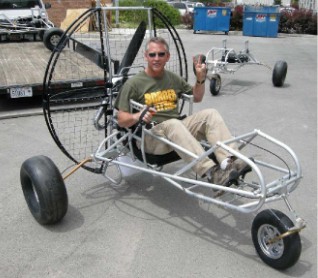
The S-Trike can be used with pretty much any paraglider and some skydiving & base jumping canopies for a variety of applications from transporting heavy gear to acrobatics. With the standard Flat Top 200 attached to the back it is capable of carrying up to 350 lbs. That means a 180 lb pilot can stow up to 170 lbs of gear in the detachable luggage pouch below the unit. Perfect for ferrying gear into remote areas. It can fly as high as 18,000 ft and has a fuel range of 280 miles. With up to an 11:1 glide ratio and speeds up to 50mph it is versatile. With a weight of only 144 lbs total after the addition of a Flat Top 200 it is easily within the ultralight classification so there is no license required for the pilot. It is portable when used with the travel rack designed for it which fits any standard receiver hitch and allows both the Flat Top and S-Trike to be carried behind a vehicle without need for a trailer. Perfectly balanced and fitted with a castered front landing gear the pilot can focus on flying the canopy during launch & landing as the S-Trike will happily follow along to the inputs from recommended gliders. Once under way and your canopy is flying over head the input from the canopy will allow you to steer back and forth and even drive around in circles without having to press the steering peddles or brakes on the S-Trike for direction while on the ground. This lightens the load on the pilot allowing them to focus more freely on throttle and toggle input. The glider hooks in much lower than on other designs making the unit far more stable and less prone to tipping but even with low hang points and a very low center of gravity life saving crumple zone was not forgotten. With over 21 inches of travel and spring steel axles the S-Trike will absorb an enormous amount of impact to help keep the pilot safe. Topped off with a quick release seat belt, an all aluminum 6061 T6 chassis and fitted with a High Energy reserve parachute you can see why pilots feel so secure flying it. The Flat Top 200 power plant is also its own backpack aircraft. If you have a tight or rough launch area you can always unhook the Flat Top and just foot launch it without the S-Trike. High speed stable to over 50mph you can launch much faster gliders for acro or xc flying. Toe steering, heel brakes. Left for left, right for right. Just like an airplane. Hold one brake to make tight turns or reverse launch in wind Every S-Trike joint is machined and fit perfectly. Spare parts are a breeze to install and it is more cost affective than welding. Cross drilled disk brakes allow you to drive it around like an ATV. The Alaskan bush tires and spring axels deliver a smooth ride even on rough ground. The S-Trike luggage bag can fit 7 gallon and 5 gallon gas cans comfortably together, and doubles as a mud flap and prop shield. In about 60 seconds the S-Trike can be broken down and clamped to its travel rack. By having 2 lighter pieces to deal with it is easy for a person to manage setup by themself. The S-Trike has adjustable lumbar support, well laid out controls for comfort and 21 inches of spring steel suspension to absorb impact, the S-Trike sets a new standard for safety. Equipped with a parking brake it gives you the ability to setup to launch on a hill, lock the wheels for transport or make the S-Trike paramotor stay put while warming up the engine. Price 2009: US$4,000.00
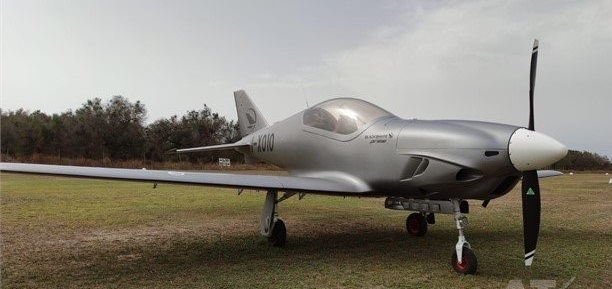
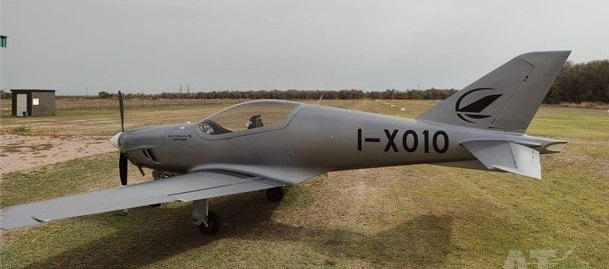
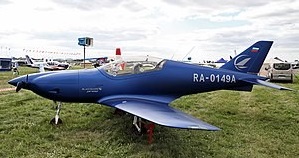
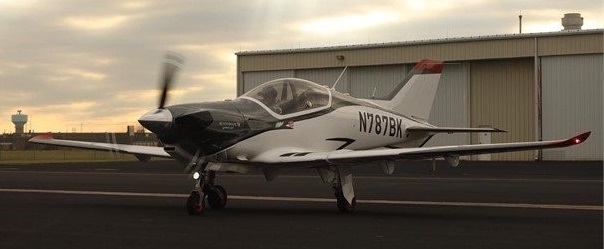
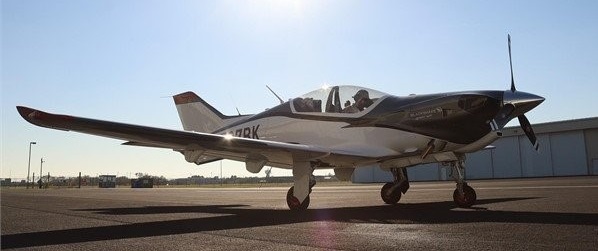
The Blackshape Prime started as the Millennium Master, but the design was later acquired and further developed by Blackshape. The aircraft was designed to comply with the Fédération Aéronautique Internationale microlight rules. It features a cantilever low-wing, a two-seats-in-tandem enclosed cockpit under a bubble canopy, retractable tricycle landing gear and a single engine in tractor configuration.
The aircraft is made from pre-preg carbon fibre. Its 7.94 m (26.0 ft) span wing has an area of 9.96 sq.m (107.2 sq ft) and double slotted flaps. The standard engine available is the 100 hp (75 kW) Rotax 912ULS four-stroke powerplant, driving a two bladed constant speed propeller, which gives it a maximum level speed of 300 km/h (186 mph) and a cruise speed of 275 km/h (171 mph). The 115 hp (86 kW) Rotax 914 was also available as an option.
The aircraft first flew in 2007 and was introduced at the Aero show held in Friedrichshafen in 2009. It is supplied as a complete ready-to-fly-aircraft by Blackshape srl, the company founded in Monopoli by Luciano Belviso and Angelo Petrosillo.
Powerplant: 1 × Rotax 912ULS, 75 kW (101 hp) Propeller: 2-bladed MT-Propeller MTV-33-1-A constant speed Wingspan: 7.94 m (26 ft 1 in) Wing area: 9.51 m2 (102.4 sq ft) Length: 7.18 m (23 ft 7 in) Height: 2.41 m (7 ft 11 in) Empty weight: 296.5 kg (654 lb) Gross weight: 472.5 kg (1,042 lb) Fuel capacity: 66 litres (15 imp gal; 17 US gal) Maximum speed: 300 km/h (190 mph, 160 kn) Cruise speed: 275 km/h (171 mph, 148 kn) Stall speed: 65 km/h (40 mph, 35 kn) flaps down Never exceed speed: 305 km/h (190 mph, 165 kn) Wing loading: 49.68 kg/m2 (10.18 lb/sq ft) Crew: one Capacity: one passenger
The Blackshape Gabriel trainer aircraft was developed by Italian aircraft maker Blackshape to serve both military and civil pilot training.
The Bk160 Gabriel aircraft base model was launched at the AERO Friedrichshafen trade show held in April 2017, while its upgraded version, designated Gabriel Turboprop (Gabriel-TP), was launched at the Singapore Airshow 2020.
The Gabriel trainer aircraft received design organisation approval and the type certificate in CS-VLA (Very Light Aeroplanes) category from the European Aviation Safety Agency (EASA).
Powered by a turboprop engine, the upgraded trainer variant is intended primarily for military pilot training.
Blackshape plans to cooperate with aircraft manufacturers in South East Asian countries including Vietnam, Myanmar, Philippines, and Malaysia to provide either knock-down kits or full technology transfer for local production of the Gabriel trainer.
Blackshape Bk100-Prime ultralight aircraft serves as the basis for the Gabriel trainer aircraft as well as for ISR and optionally-piloted aircraft versions. A total of 58 Blackshape Prime aircraft were operational in 18 countries, while its special configurations were in service with military operators.
The Gabriel trainer aircraft features aerodynamic fixed-wing design with its design optimised to reduce maintenance and direct operating costs.
Carbon fibre is used in the construction of the aircraft and the fuselage is equipped with low-wing configuration with a wing area of 10.31m² and a wing span of 9m.
The overall height of the trainer is 2.45m, while the overall length is 7.45m. The aircraft has a maximum take-off weight of 850kg, a useful load of 220kg with the capacity to carry 33kg of baggage on-board.
The aircraft is outfitted with an electrical systems with military-grade wiring, temperatures and fuel capacity sensors, anti-blast fuel tanks, and five-point certified safety seat belts. It is also fitted with a ballistic parachute.
The on-board differential braking system is used to steer the aircraft, while the landing gear is electrically actuated.
Gabriel trainer aircraft is equipped with glass cockpit with dual flight controls. It accommodates two pilots in tandem configuration.
The Gabriel can be armed with external payloads, allowing for the training of pilots on light-strike or counter-insurgency (COIN) operations.
The Blackshape Gabriel trainer aircraft is powered by a Lycoming IO-320-D1B engine of 160hp power at 2,700rpm. The engine has a compression ratio of 8.50:1 and drives Hartzell Raptor Series composite propellers in tractor configuration.
The power-plant offers a maximum speed of 164k at sea level and can reach altitudes of 15,000ft. The maximum rate of climb is 1,550fpm, while the maximum endurance is 192 minutes. The trainer requires a take-off distance of 250m and the landing ground roll of 190m.
The load factor of the aircraft is +4.4/-2g. Equipped with Roll Royce turboprop engine, the Gabriel-TP variant can attain a true airspeed of 200k at sea level.


 All Aero