Bygate Tiger Hawk           

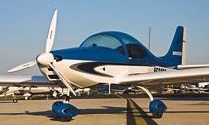
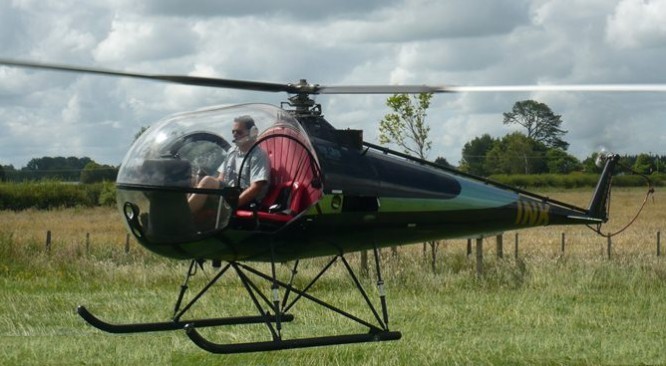
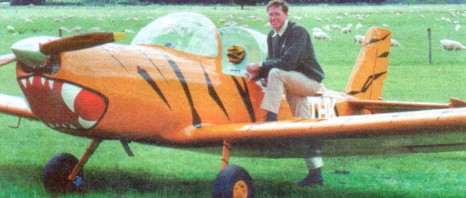
Of all-wood construction and covered with ceconite, the Tiger Hawk is finished with an Imron 700 paint system. All the de­sign, fabricate and construction was carried out by Tim Bygate. This is no mean feat when you have to design each component before con­structing it. The airframe contains a number of different timbers. Spruce was used for the spars, wing ribs, etc along with some Douglas Fir. The plywood covering found on the wings, turtle deck and seat was Birch and Hoop Pine. Tim found one of the trickier pieces to build was the Perspex canopy.

The Tiger Hawk was powered by an EA81 Subaru with a 2: 1 belt drive reduc­tion system made by Cannings Engineering in Christchurch, New Zealand. The engine was stripped by Tim and measured for wear and tear and when reassembled it produced approx. 80 hp at 5400 rpm.

All construction was carried out in a small shed at the Hanmer Springs Forestry Camp in New Zealand by Tim Bygate, the designer. This shed kept expanding as the aircraft grew until finally on the completion the whole front of the shed had to be removed to en­able the plane to be removed for its first flight on September 7, 2001.

Brumby 610 Evolution

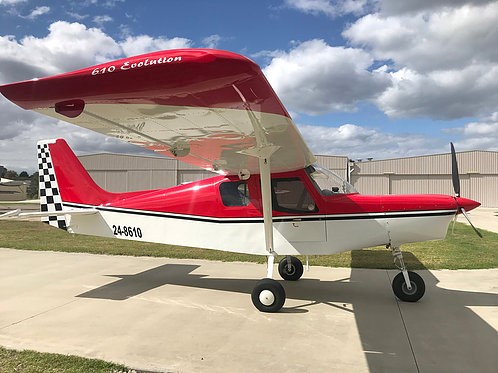
An Australian-made light sport aircraft factory built circa 2015.

Feature include:
Cabin heat
Electric flaps
Rudder trim
Adjustable seats
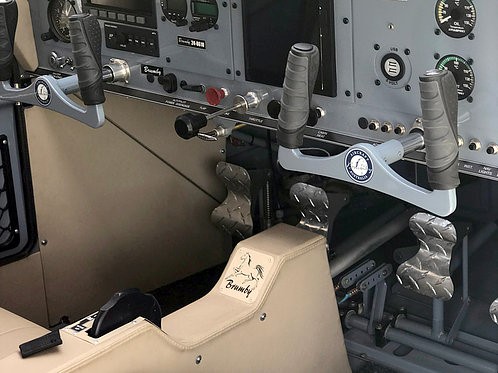
Steerable nosewheel / dual brakes
Wiring for lighting and circuit breakers ready for full lights
Dual fuel valves (right and left wings)
Electric fuel gauge
Wheels 6” high profile
Full front oleo strut
Compass

Engine: Rotax 912ULS
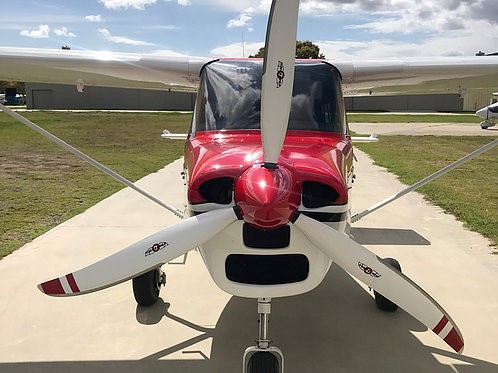
Propeller: Sensenich ground-adjustable, 3 blade
MTOW: 600kg
Fuel capacity: 136 Lt
Top speed: 100kts IAS

Belite Aircraft Sealite

Belite Aircraft has developed the single-seat Sealite amphibious floatplane that weighs less than 338 pounds empty and meets FAR 103 requirements for ultralight float-equipped “vehicles,” as the FAA calls them.

The Sealite flew in December 2013, the 110th anniversary of the Wright brothers’ first flight at Kitty Hawk. Belite President James Wiebe made the first flight – “I was pleased with this test flight. It demonstrated the performance and utility possible with a single-place amphibious aircraft. The ground roll was very short, the climb rate was impressive, and the landing manners were easy and benign”.

The first flight was from a grass strip but water tests are planned. The vehicle is an adaptation of the company’s UltraCub model. It made the weight with extensive use of carbon fiber in the floats and wing spars. The wings and floats weigh only 20 pounds each.

BRM Aero Bristell NG 5

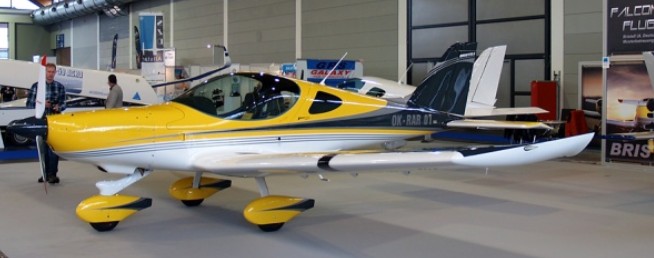
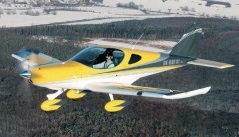
The BRM Aero Bristell is a Czech low-wing, two-seat in side-by-side configuration, single engine in tractor configuration, ultralight and light-sport aircraft that was designed by Milan Bristela and produced by BRM Aero. The aircraft was supplied as a complete ready-to-fly aircraft.

The aircraft was designed to comply with both European microlight rules and also the US light-sport aircraft regulations, by using different versions for each regulatory environment.

The aircraft is made from aluminium and features a 130 cm (51 in) wide cabin at the shoulder, with a bubble canopy over the cockpit. The wings feature flaps. The standard engine is a 60 kW (80 hp) Rotax 912UL, with the 75 kW (101 hp) Rotax 912ULS, the 71 kW (95 hp) ULPower UL260i/iS and the 88 kW (118 hp) ULPower UL350iS powerplants optional. The 115 hp (86 kW) Rotax 914, 85 hp (63 kW) Jabiru 2200 and 120 hp (89 kW) Jabiru 3300 are also available. Other engines are planned, particularly for the United States market. The aircraft has a useful load of 279 kg (615 lb). The landing gear is of tricycle configuration.

The aircraft was introduced at the Aero show held in Friedrichshafen in 2011. After 42 examples had been completed (September 2011) the aircraft was introduced into the US market in September 2011 at the AOPA Summit. The 2011 base price was US$125,000.

Ultralight aeroplane Bristell UL and its modifications Bristell HD, Bristell RG and Bristell LSA are aeroplanes for flight training in flight schools, gliders towing and recreational flying.
The Bristell HD version offers heavy-duty wing spars, and Bristell RG is a version with retractable undercarriage.

The Bristell tricycle-gear (and new taildragger version), low-wing S-LSA comes standard with 10-inch Dynon SkyView or Advance Flight Systems AF5600 EFIS panel, Com, two-axis autopilot, BRS parachute and leather interior. Price 2012: $156,000.

Gallery

Variants:

Bristell UL
Base ultralight model
Engine: 1 × Rotax 912ULS , 75 kW (100 hp)
Wing span: 8,13 m (26 ft 8 in)
Wing area: 10,5 sq.m (113 sq ft)
Wing loading: 45 kg/ sq.m
Length: 6,45 m (21 ft 2 in)
Height: 2,28 m (7 ft 6 in)
Cabin width: 1,3 m
Empty weight: 290 kg (639 lb)
Maximum take-off weight: 472,5 kg (1,042 lb)
Useful load: 182,5 kg
Fuel tanks capacity: 130 lt (29 imp gal; 34 US gal)
Fuselage luggage compartment: 15 kg
Wing luggage compartment: 2 x 20 kg
Load factors: +4/-2g
Stall speed with flaps VSO: 52 km/h
Stall speed without flaps Vs1: 67 km/h
Manoeuvring speed VA: 165 km/h
Maximum flap speed VF: 139 km/h
Cruising speed: 214 km/h 250 km/h
Never exceeded speed VNE: 270 km/h
Seats: 2

Bristell HD
Heavy duty model
Wing span: 8,13 m
Wing area: 10,5 sq.m
Wing loading: 57,1 kg/ sq.m
Length: 6,45 m
Height: 2,28 m
Cabin width: 1,3 m
Empty weight: 310 kg
Maximum take-off weight: 600 kg
Useful load: 290 kg
Fuel tanks capacity: 130 lt
Fuselage luggage compartment: 15 kg
Wing luggage compartment: 2 x 20 kg
Load factors: +4/-2g
Stall speed with flaps VSO: 78 km/h
Stall speed without flaps Vs1: 87 km/h
Manoeuvring speed VA: 165 km/h
Maximum flap speed VF: 139 km/h
Cruising speed: 250 km/h
Never exceeded speed VNE: 290 km/h
Bristell LSA
Model for the US light-sport aircraft category
Wing span: 9,13 m
Wing area: 11,75 sq.m
Wing loading: 51,06 kg/sq.m
Length: 6,45 m
Height: 2,28 m
Cabin width: 1,3 m
Empty weight: 330 kg
Maximum take-off weight: 600 kg
Useful load: 270 kg
Fuel capacity: 130 lt
Fuselage luggage capacity: 15 kg
Wing luggage compartment: 2 x 20 kg
Load factors: +4/-2g
Stall speed with flaps VSO: 58 km/h
Stall speed without flaps Vs1: 74 km/h
Manoeuvring speed VA: 165 km/h
Maximum flap speed VF: 139 km/h
Cruising speed: 250 km/h
Never exceeded speed VNE: 290 km/h
Bristell RG
Rectractable gear model
Wing span: 9,13 m (30.0 ft)
Wing area: 11,75 sq.m
Wing loading: 51,06 kg/ sq.m
Length: 6,45 m
Height: 2,28 m
Cabin width: 1,3 m
Empty weight: 335 kg
Maximum take-off weight: 600 kg (1,323 lb)
Useful load: 265 kg
Fuel tanks capacity: 130 lt
Fuselage luggage compartment: 15 kg
Wing luggage compartment: 2 x 20 kg
Load factors: +4/-2g
Stall speed with flaps VSO: 58 km/h
Stall speed without flaps Vs1: 74 km/h
Manoeuvring speed VA: 165 km/h
Maximum flap speed VF: 139 km/h
Cruising speed: 250 km/h
Never exceeded speed VNE: 290 km/h
BRM Aero Ltd

BRM Aero Ltd was established for development, production, sale and maintenance of ultralight and light sport aeroplanes. The company is mostly oriented on individual orders.
The company finished colaboration with ROKO AERO company and stopped sale of NG 4 aircrafts built from ROKO AERO quick built kits, but continued to support the NG 4 customers with spare parts, repair and any kind of modifications on their aircraft.

2012: Václava Kulíška 1224
686 05 Uherské Hradiště
Czech Republic

Breezer Aircraft Breezer

Breezer is an ultra light, LSA, and experimental category design.
The entire cockpit was designed ergonomically; from the instrument panel to the seating arrangement, everything was modeled and shaped.
Planning for a Breezer kit plane version from day one, the aluminum airframe structure design was kept simple and sturdy. To assemble the pre-manufactured components, you only need a flat table top. The high level of prefabrication allows a rapid fuselage assembly. Accurate matched drilling lets you to assemble aluminum alloy parts without extensive jigging. Other parts, like the spar center section, are provided fully assembled. Wherever needed the fuselage is reinforced in an optimal way.
The wings are built in a spar/rib structure. As the wings sport no wash-out, neither aerodynamically nor geometrically, these can be built on a flat table top. Jigging is minimal. Like with the fuselage, the wing parts come with most holes match drilled into the ribs, spar and wing skin. This assures that assembly errors are eliminated from the outset.
This same simple and sturdy structure is used to assemble the horizontal stabilizer and elevator.
The Breezer experimental category kit plane was developed along with the ultralight. The following items were modified for the experimental category kit plane:

  • MTOW raised to 580 kg / 1279 lb
  • Stronger wing spar
  • Stronger wing spar center section
  • Stronger stabilizer (as requested by the Swiss)
    After Germany allowed sailplanes to be towed by ultra light aircraft, the Breezer was tested and found suitable for towing flights.
    The Breezer is made in three models. The Breezer CR. The Breezer Club as a dedicated flight training edition, and the Breezer Acro, aerobatic aeroplane.
Breezer II

In 2012 the all-metal Breezer II was available as a ready built or E-LSA kit airplane. Price 2012: S-LSA Breezer is US$125,800. Quick Build kit (less engine and avionics): US$46,600.

Engine: Rotax 80 hp
Cruise speed (75%): 180 km/h / 112 mph
Maximum Speed Vne: 245 km/h / 152 mph
Stall speed: 64 km/h / 40 mph
Climb speed: 4,5 m/s / 886 fpm
Wingspan: 8,03 m / 26.4 ft
Cabin width: 1,16 m / 45,7 in
Length: 6,40 m / 21 ft
Height: 2,15 m / 7 ft
Wing area: 10,92 sq.m / 117.5 sq ft
Empty weight incl. BRS: 296 kg / 652.6 lb
Maximum gross weight: 472,5 kg / 1041.7 lb
Load: 176,5 kg / 389 lb
Fuel capacity: 70 liter / 18.5. USgal
Average fuel consumption / hr: 11-14 lt / 2.9 -3.7 USgal
Take off dist: 135 m / 443 ft
Landing dist: 140 m / 459 ft

Engine: Rotax 100 hp
Cruise speed (75%): 200 km/h / 124 mph
Maximum Speed Vne: 245 km/h / 152 mph
Stall speed: 64 km/h / 40 mph
Climb speed: 6 m/s / 1181 fpm
Wingspan: 8,03 m / 26.4 ft
Cabin width: 1,16 m / 45,7 in
Length: 6,40 m / 21 ft
Height: 2,15 m / 7 ft
Wing area: 10,92 sq.m / 117.5 sq ft
Empty weight incl. BRS: 300 kg / 661.4 lb
Maximum gross weight: 472,5 kg / 1041.7 lb
Load: 172,5 kg / 380 lb
Fuel capacity: 70 lt / 18.5 USgal
Average fuel consumption / hr: 12-15 / lt / 3.1-3.9 USgal
Take off dist: 95 m / 312 ft
Landing dist: 140 m / 459 ft

Breezer II
Engine: Rotax 912 ULS, 100hp@SL
Propeller: 3-blade Neuform
Gross weight: 1320 lb
Empty weight with optional BRS: 763lb
Useful load, std: 557 lb
Payload, full std. fuel: 518lb
Fuel capacity (lbs.): 21
Wing area: 117.5 sq. ft
Cruise speed, 75% power: 105 kt
Range with 30-min. reserve, 75% power: 420 nm
Best rate of climb, solo: 1181 fpm
Best rate of climb, two people: 900 fpm
Service ceiling: 14,500 ft
Takeoff over 50 ft obstacle: 925 ft
Landing ground roll: 606 ft
Vne: 120 kt
V Stall: 36 kt

Breezer Aircraft GmbH

In 2000 engineer Ralf Magnussen designed and built the very first Breezer prototype.
In 2006 Breezer Aircraft GmbH & Co.KG was founded to produce high quality units. The production facilities were relocated to Bredstedt, in the north of Germany, where a commercial development area offered ample space to set up our new Breezer Aircraft development and production centre.
By 2005 there were twenty employees, and an aircraft division managed by engineer Ralf Magnussen, geared towards product development and production. A Flight Training Center offers an in-house flight training facility.
There is a Sales & Finance division that markets the Breezer product line, with offerings for leasing or financing.

Brantly-Hynes B-2 / B2B / YHO-3 / H-2

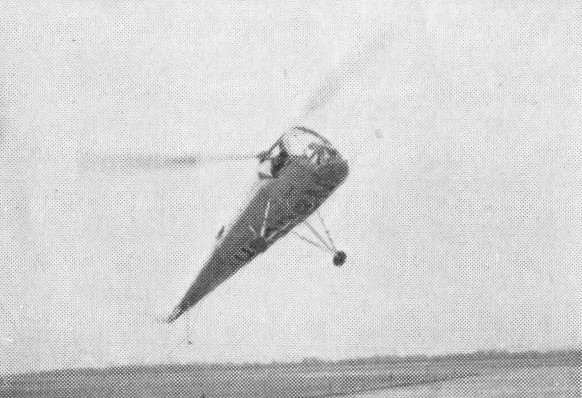
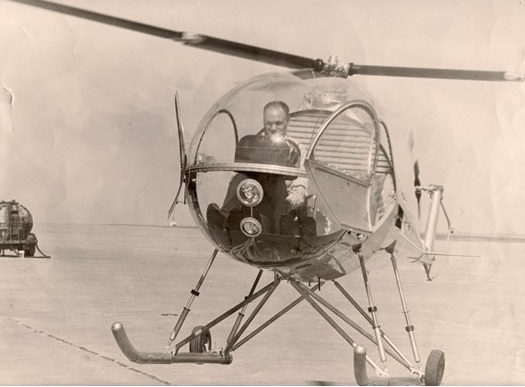
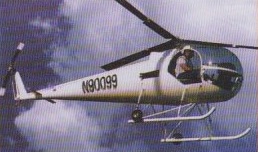
Developed from coaxial twin-rotor B-1 by Newby Brantly, the B-2 with single main rotor and anti-torque tail rotor configuration first flew on 21 February 1953. An improved second prototype flew on 14 August 1956. This was to enter production in 1958 receiving FAA certification on 27 April 1959.

1955 B-2

A total of 194 B-2s and 18 B-2As (with additional headroom) were produced between 1960 and 1963 and the improved Model B-2B with metal rotor blades and fuel-injected Lycoming IVO-360-A1A engine was certified on 1 July 1963. A total of 165 were built between 1963 and 1967 (the company owned by Gates Learjet from 1966).

B2A

Type certificates for the Brantly Bs were purchased in 1971 by Michael Hynes and revised as the 2 H2/YHO 3BR.
Michael K. Hynes established Brantly-Hynes Helicopter Inc. on 1 January 1975, initially to provide product support for the large number of Brantly helicopters in use.
He subsequently started up a production line for the B-2B and built one (as H-2) in 1975, and also the larger Model 305. James T. Kimura was the third owner of the B-2 type certificate, and delivered his first B-2B on 25 August 1990.
Brantly Helicopter Industries (BHI) took over manufacturing and marketing rights and production facilities in 1989 with three were built under this name, which received the FAA production certificate on 19 July 1996. The first new-build B-2B (N25411 c/n 2001) was flown on 12 April 1991. In 1992, a B-2B cost US$120,000 to US$135,000 depending on equipment fit.
On 23 December 1994, Brantly International obtained the type certificates for the Brantly B-2B and 305 helicopters from Japanese-American businessman James T Kimura’s Brantly Helicopter Industries, which had acquired them in May 1989. In 2002, Brantly employed 40 in its 2,790 ha facility. By 2002, Brantly Helicopter Inc of Vernon, Texas were again producing the B2B.

Brantly B2B

British Executive Air Services had acquired a production licence for the B-2.
In 2003 the cost was US$170,000 basic equipped.

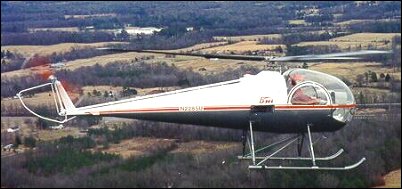
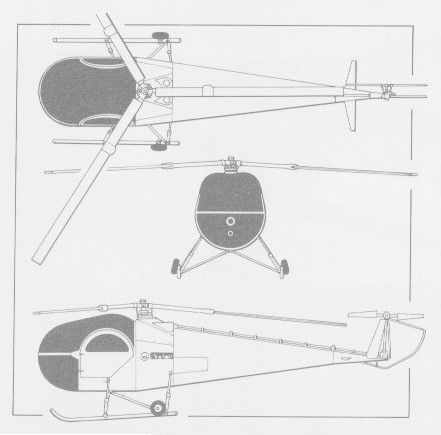
A relatively simple design, with blown main transparency and constant-taper fuselage. Double-articulated three-blade main rotor with pitch-change and flapping hinges close to hub and flap/lag hinges at 40% blade span; symmetrical, rigid, inboard blade section with 29% thickness/chord ratio, outboard section NACA 0012; outer blades quickly removable for compact storage; rotor brake standard; two-blade tail rotor mounted on starboard side, with guard. Transmission through automatic centrifugal clutch and planetary reduction gear. Bevel gear take-off from main transmission, with flexible coupling to tail rotor drive-shaft. Main rotor/engine rpm ratio 1:6.158; tail rotor ratio 1:1. Main rotor minimum speed 400 rpm; maximum 472 rpm.
Conventional and manual controls; small fixed tailplanes on port and starboard sides of tailcone. A semi-monocoque fuselage with alloy-stressed skin. Inboard rotor blades have stainless steel leading-edge spar; outboard blades have extruded aluminium spar; polyurethane core with bonded aluminium envelope riveted to spar. All-metal tail rotor blades. Fixed skid type landing gear with oleo-pneumatic shock-absorbers; small retractable ground handling wheels, size 10×3.5, pressure 4.12 bar; fixed tailskid. Optional inflatable pontoons attach to standard skids for over-water operation. One 134kW Textron Lycoming IVO-360-A1A flat-four air-cooled piston engine, mounted vertically. Fuel contained in two interconnected bladder tanks behind cabin, total capacity 117 litres of which 115 litres are usable. Oil capacity 6.9 litres. Two seats, side by side in enclosed cabin; forward-hinged door on each side. Dual controls and cabin heater standard. Ground accessible baggage compartment, maximum capacity 22.7kg in forward end of tailcone.

In 1959 the Army procured five examples of the Brantly Model B-2 light helicopter for evaluation in the observation role. The five machines obtained by the Army (serials 58-1492 through -1496) were designated YHO-3 and tested at both Fort Rucker and the Naval Air Test Center at Patuxant River, Maryland. The aircraft was ultimately judged to be too small to be of practical military use and all five examples were eventually returned to the manufacturer.

Brantly B-2B

B-2
Engine: Lycoming 135 hp
Rotors: 3-blade main 2-blade tail
Rotor diameter: 23 ft
Loaded weight: 1,250 lb
Seats: 2

B2B
Engines: Lycoming IVO-360-A1A, 180 hp,134kW.
Main rotor diameter: 7.24m
Fuselage length: 6.63m
Height: 2.06m
Disc loading: 3.7 lb/sq.ft.
Pwr loading: 9.3 lb/hp.
Max TO wt: 1670 lb / 757kg
Empty wt: 1032 lb / 463kg
Equipped useful load: 576 lb.
Payload max fuel: 390 lb.
Range max fuel/ cruise: 152 nm/1.8 hr.
Range max fuel / range: 196 nm/ 2.3 hr.
Service ceiling: 12,500 ft / 3290m
Max speed: 161km/h
Max cruise: 87 kt / 145km/h
Max range cruise: 87 kt.
ROC: 1400 fpm.
HIGE: 4300 ft.
HOGE: 2500 ft.
Max sling load: 400 lb.
Fuel cap: 186 lb.
Seats: 2.

2 H2/YHO 3BR
Engine: Lycoming IVO-360-A1A, 180 hp.
TBO: 900 hrs.
Main rotor: 23.7 ft.
Length: 28 ft.
Height: 6.8 ft.
Max ramp weight: 1670 lbs.
Max takeoff weight: 1670 lbs.
Standard empty weight: 1069 lbs.
Max useful load: 601 lbs.
Zero fuel weight: 1490 lbs.
Max landing weight: 1670 lbs.
Max sling load: 400 lbs.
Disc loading: 3.7 lbs/sq.ft.
Power loading: 9.3 lbs/hp.
Max usable fuel: 183 lbs.
Max rate of climb: 1330 fpm.
Service ceiling: 12,500 ft.
Hover in ground effect: 4,300 ft.
Hover out of ground effect: 2500 ft.
Max speed: 87 kts.
Normal cruise @ 3000 ft: 78 kts.
Fuel flow @ normal cruise: 72 pph.
Endurance @ normal cruise: 2.4 hr.
Seats: 2.

Brantly B-2B
Engine: Lycoming IVO-360, 180 hp
Rotor span: 7.24 m
Blade area: 0.203 sq.m
MAUW: 757 kg
Empty weight: 463 kg
Max speed: 161 kph
Cruise speed: 145 kph
Climb rate: 9.6 m/s
Seats: 2

Bradley Aerospace Pitbull

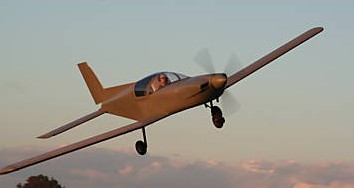
The Bradley Pitbull was designed as a first time builders project for assembly in 250 hrs. No jigs or alignment beams are needed, and no special tools required. Of all metal construction, there is no bending, forming or welding to do.
Only 2024 T3 Aircraft grade aluminum is used for skins, wing ribs and bulkheads. All skins, ribs and bulkheads are blind riveted. With spring undercarriage, the front gear is castering.
The kit also includes a carbon fiber canopy frame and windshield bow, and F-15 style canopy. Matco wheels and brakes and tires are included. Wing tips with inset lighting and strobes and all hardware are included in kit.
4130 steel tube pushrod controls and housed push pull cables are fitted and a 46 US gallon fuel capacity.
The Pitbull is available as a tricycle or tail wheel versions, and it accepts the Lycoming O-320 or )-360 or any 100 to 200 Hp engines.
The Pitbull qualifies in the Experimental (150-200HP) and Light Sport category (100hp).
The Speed wing has a 9+ 9- g rating (Aerobatic).