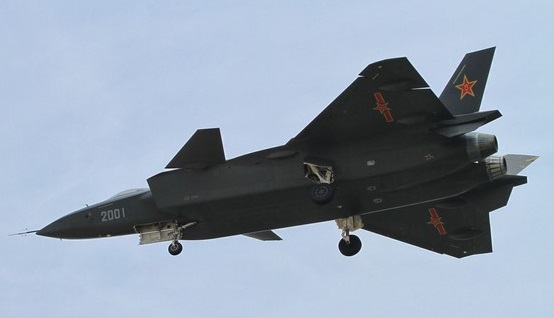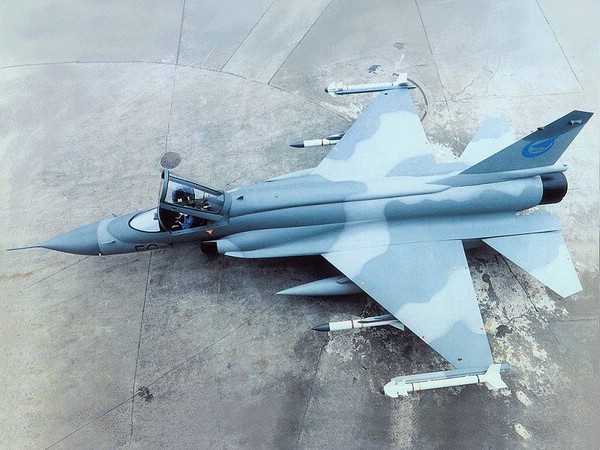
Chengdu FC-1 / JF-17 Thunder

The origins of the ‘Super-7’ can be traced back to 1986 when Pakistan and China wanted to modernise the J-7 with western avionics and engine. The project was named ‘Saber II’ by the PAF and would replace its F-6s. In January 1987, Grumman Aerospace was seleted as primary contractor and several other western firms competed to provide the engine and avionics. By 1989 the projected costs had significantly increased (some sources say 40%) and was deemed a highly financial risk by the Pakistan Air Force. On top of that, Chinese relations with the west broke down. Subsequently the contract was cancelled.
Chengdu continued the development under the new designation FC-1 (Fighter China-1) aimed at creating an affordable fighter for the export market. In 1995 Pakistan regained interest in a joint development with China. The 1993 US sanctions prevented the PAF from acquiring Western technology or weapons. In June 1999, China and Pakistan signed the joint development and production agreement to co-develop the FC-1. Chengdu was selected as primary contractor and the Russian Mikoyan Aero-Science Production Group (MASPG) was contracted to provide the Klimov RD-93 turbofan engine and design assistance too.
The FC-1 design has little in common with the J-7 and is believed to be based on Mikoyan’s concept for a single-engine fighter based on the MiG-29. The FC-1 also shows features from the F-16 design, although the layout is somewhat more conventional.

The FC-1/JF-17 multirole combat fighter platform was developed jointly by the Chengdu Aircraft Industry Corporation and the Pakistan Aeronautical Complex to produce a cost-effective, multi-faceted airframe to use modern avionics and weapons packages for the Pakistani Air Force – essentially a modernized “budget fighter”.
As such, the FC-1 Xiaolong (“Fierce Dragon”)/JF-17 Urdu (“Thunder”) was begun – the former being the Chinese designation while the latter being the Pakistani designation. The joint program began loosely in 1998 and became a formalized agreement in 1999. The initial prototype was available and made airborne by 2003. Follow-up testing and revisions ensued and a newer prototype form flew in 2006. All testing was handled in China until 2007 saw deliveries of examples for evaluation by the Pakistani Air Force. Evaluation proved favorable and the Pakistani Air Force officially accepted the aircraft into service under the designation of JF-17 “Urdu”. The first operational squadron was formed in February of 2010.

At least 150 examples were on order and the total PAF inventory may grow to 250 total aircraft in service.
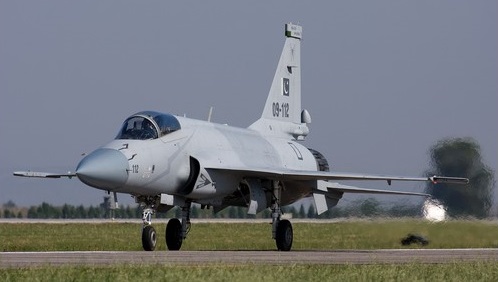
JF-17

The FC-1/JF-17 was initially conceived in three single-seat prototypes known simply as the PT-01, PT-02 and the PT-03. The first FC-1 was rolled out on 31 May 2003. It made its first flight on 24 August 2003, although some say 2 or 3 September 2003. It was quickly followed by a second airframe (PT-2) for static tests and two more flying prototypes. The third prototype PT-3 has joined PT-1 in the flight testing program on 9 April 2004. These were followed into development by the revised single-seat prototypes encompassing the PT-04, PT-05 and the PT-06. From the PT-04 prototype, the single-seat production form was born and is now known under two distinct designations as the “JF-17 Urdu” (in Pakistan service) and the “FC-1 Xiaolong” (in Chinese service). To follow will be a two-seat mount that will double as both a pilot trainer (fitting the student in the forward cockpit with the instructor in the aft cockpit) that will make use of less internal fuel stores and a dedicated strike fighter.
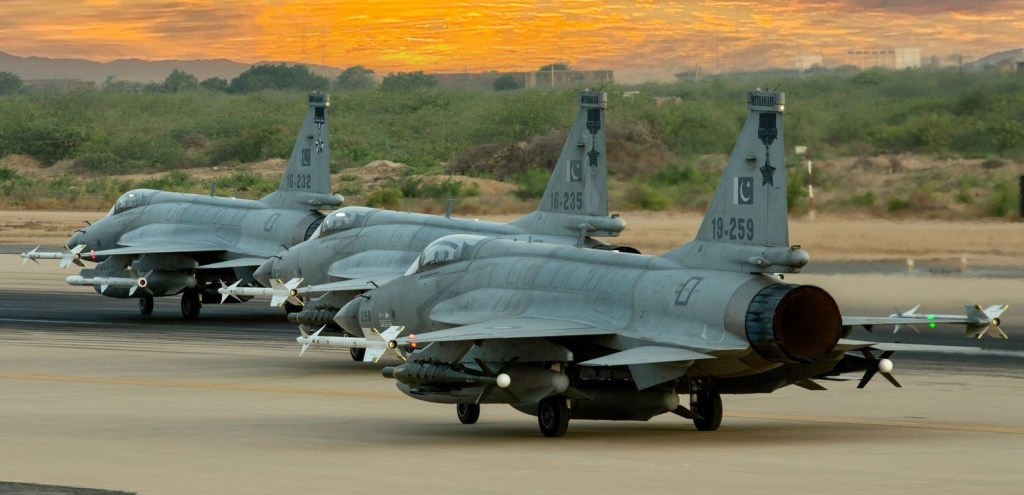
The Chengdu FC-1/JF-17 makes use of a cylindrical fuselage with the cockpit set well-ahead on the airframe. The front of the fuselage was capped by a nose cone assembly housing the radar. The cockpit is covered over in a single piece canopy with a forward piece. Intakes feed a single powerplant buried within the fuselage. An intake is mounted to either side of the airframe just below and aft of the cockpit with small bulges ahead of each opening to help induce airflow. Wings are mid-set along the sides of the aircraft and feature highly-swept leading edge surfaces. The wings have underwing pylon hardpoints and wingtip missile launchers. The fuselage spine conforms to become the base of the single vertical tail fin atop the empennage. All-moving horizontal tailplanes are set to either side of the empennage. The engine exhausts at the extreme rear. Some of the integrated avionics are set in a rear package, appearing as a rounded protrusion just above the jet exhaust ring and at the base of the vertical tail fin. A pair of ventral strakes can clearly be seen at the base of the empennage. The FC-1/JF-17 makes use of a fully-retractable tricycle landing gear featuring two single-wheeled main landing gear legs as well as a single-wheeled nose landing gear leg. Construction of the airframe is of semi-monocoque format and made up of aluminum alloys as well as utilizing titanium allows and steel in certain high-stress areas. Control surfaces are under the control of a digital flight control system while the pilot has HOTAS configuration (Hands On Throttle and Stick).
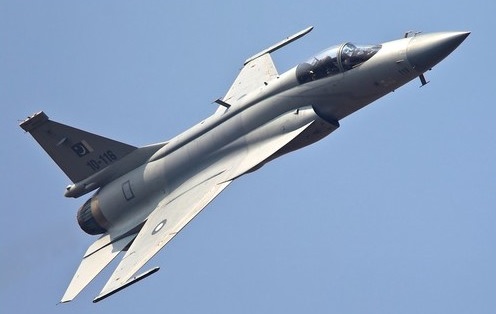
JF-17

The Chengdu FC-1/JF-17 makes use of a single Klimov RD-93 turbofan engine delivering 11,106lbf of standard thrust and up to 18,973lbf of thrust when utilizing afterburner. Maximum speed is listed at approximately March 1.8 or about 2,205 kilometers per hour. The FC-1/JF-17 has a ferry range of up to 2,175 miles with a combat radius of 840 miles. Service ceiling is listed at 54,790 feet.
Standard armament is a fixed, forward-firing 23mm GSh-23-2 twin-barrel cannon of Russian origin. This can be replaced with the larger-caliber 30mm GSh-30-2 series cannon at the expense of ammunition. The FC-1/JF-17 has seven hardpoints. Hardpoints include the wingtip launchers (reserved for short-ranged air-to-air missiles), four underwing stations (the two innermost plumbed for fuel stores) and a single fuselage centerline location, this also plumbed for external fuel stores. The FC-1/JF-17 can sport an underfuselage tank of 800 liters while the two underwing stations can carry either 800 liter or 1,000 liter fuel.
The FC-1/JF-17 makes use of a NRIET KLJ-7 series multi-mode fire-control radar that handles tracking and engagement of targets, even at beyond visual ranges. Range is approximately up to 75 kilometers on its X-band frequency.

In February of 2010, the Pakistan Air Force had at least fourteen JF-17 “Thunder” operational examples, these with the 36th Tactical Attack Wing out of PAF Base in Peshawar. These Thunders are under ownership of the No. 26 Squadron known as the “Black Spiders”.

In late 2009, the FC-1 was known to have passed a procurement hurdle in China that seems to indicate that the Xiaolong will, at some point, arm the People’s Liberation Army Air Force in the near future.
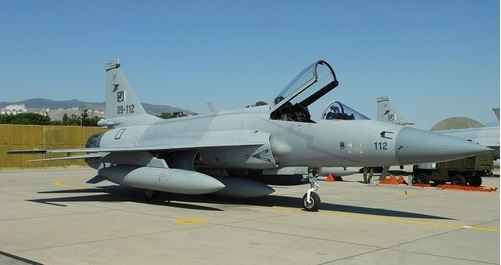
JF-17

The JF-17 began small-batch deliveries to China in 2006. Pakistan received their first aircraft six months later, reaching operational status in 2010. Pakistan has already put the type to use, flying it against targets in South Waziristan. The Chinese seem to be operating fewer JF-17s than the Pakistanis, but development is already underway for an improved Block 2 variant, intending to incorporate more composites into the structure, as well as newer avionics and an IRST. Many countries, particularly in Africa and the Middle East, have expressed interest in the JF-17. While there have been tentative talks with Zimbabwe, Argentina, and Egypt to procure the aircraft, however, no purchases have materialized. More recently, Nigeria has looked into buying several JF-17s from Pakistan, but an actual order has yet to occur. According to the chief designer of the JF-17, this is due to a combination of political factors and the fact that the JF-17 just can’t compete with contemporary Gen 4 fighters. It is a great budget replacement for the MiG-21 (unit price of ~$20 million), it lacks the capabilities that countries are looking for in a fighter.

PAC Kamra has delivered nearly 120 JF-17 Block I and II fighter jets to the PAF since 2009. Since its induction in the PAF in 2007, the JF-17 has been upgraded several times. The JF-17, with a service ceiling of 50,000 feet and a peak speed of around 1,200 mph, can carry out a variety of tasks, including aerial intercept and ground assault. It can hold around 7,000 pounds of ordnance on seven hardpoints and is equipped with a single twin-barrel 23 mm autocannon.
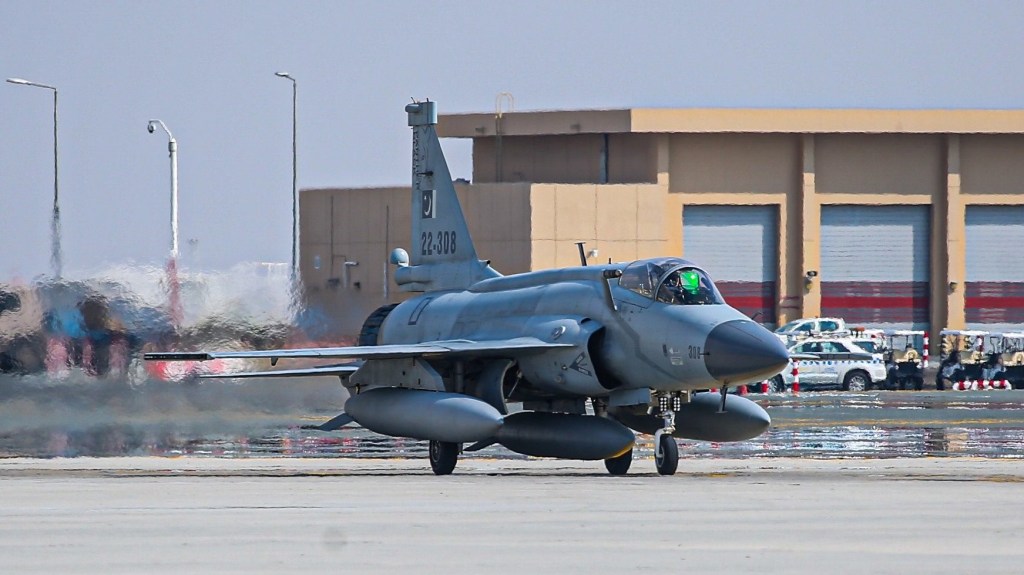
Pakistan JF-17

The JF-17 is only in service with three countries — Pakistan, Myanmar, and Nigeria. In December 2023, PAF inducted the latest Block III variant into its fleet.

Chegdu FC-1 Xiaolong / JF-17 Thunder
Engine: 1 x Klimov RD-93 turbofan, 49.4 kN (11,103 lb st) dry or 84.4 kN (18,969 lb st) with afterburner
Length 14.97 m (49 ft 1.5 in)
Height 4.77 m (15 ft 8 in)
Wing span 9.46 m (31 ft 0.5 in)
Maximum Speed: 1,370mph (2,205kmh; 1,191kts)
Maximum Range: 1,864miles (3,000km)
Service Ceiling: 54,790ft (16,700m; 10.4miles)
Armament: 1 x 23mm GSh-23-2 twin-barreled cannon OR 1 x 30mm GSh-30-2 cannon
Hardpoints: 7 (including wingtip)
External ordnance: Up to 8,000lbs / 3,629 kg
Accommodation: 1
Empty Weight: 14,134lbs (6,411kg)
Maximum Take-Off Weight: 20,062lbs (9,100kg)
Normal Take-Off Weight: 9,072 kg (20,000 lb)
G-limit: +8.5
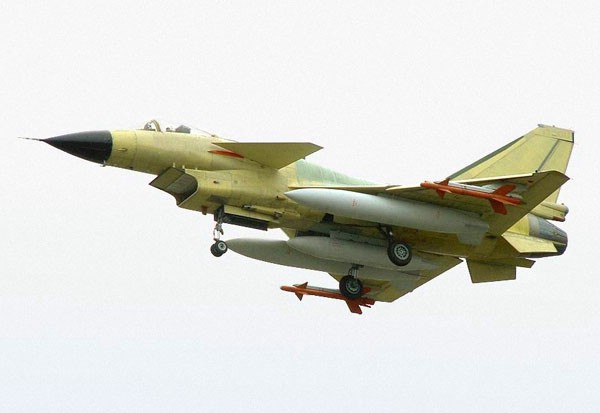
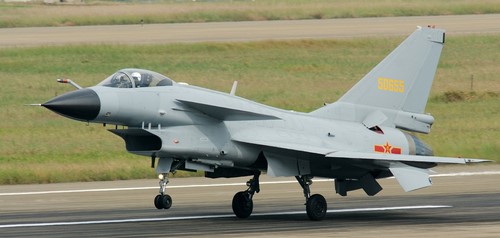
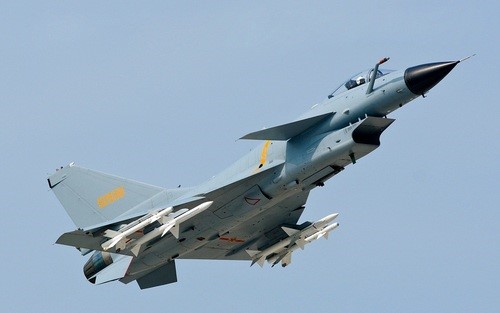
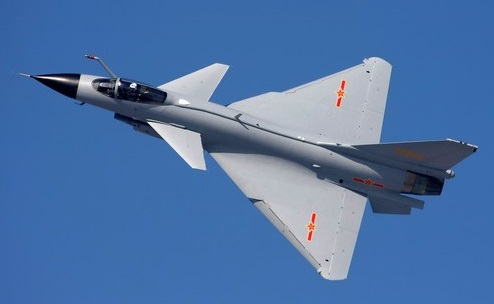
Chengdu J-10 (Vigorous Dragon) / F-10 Vanguard

With funding in place several years before actual development of the aircraft began, the official call came in the form of Project 8610 – the requirement for an indigenous Chinese air superiority fighter to combat similar fourth generation systems in Russia and the West.
The J-10 program increased in 1986 under the guise of the Chengdu Aircraft Design Institute. Designed by 611 Aircraft Design Institute, Chengdu, the J-10 (Jian-10 meaning Fighter-10) built by Chengdu Aircraft Industry Corporation (CAC) is a multi-role fighter for the China’s Peoples Liberation Army Air Force (PLAAF). The J-10 is to replace the older J-7 and Q-5 attack aircraft.
The Project 8610 aircraft development was launched by No.611 Research Institute in October 1988, following approval the previous month. The Chengdu J-10 started as a development of the IAI Lavi, although little of the original Lavi design remains, and features a compound delta-wing design with canards placed higher in front of the main wing and behind the canopy. The light weight airframe is powered by the Russian built AL-31FN engine, which is a modification of the Su-27 and Su-30 AL-31F power plant. The J-10’s AL-31FN engine is not equipped with thrust vectoring. According to Russian reports, China ordered 100 AL-31FN engines to support J-10 production in July 2005, having received 54 engines between 2002 and 2004 for the initial production batch. The main engine intake is located on the belly and has a rectangular shape.

Chengdu J-10 Article

The J-10 was originally designed around an indigenous Chinese powerplant designated as the WP-15, a turbojet type engine. Support for the engine project was eventually dropped so the Chinese found a solution in the Russian-made Salyut AL-31F turbofan as a comparable replacement. The Russian engine featured a thrust output of up to 27,557 with full afterburning and was essentially a specially-modified version of the AL-31F series that has powered the Sukhoi Flanker family.
While the Russian engine selection has proven successful for early J-10s, the Chinese have once-again taken to develop their own in-house engine with the WS-10A. Though a little larger and lower-rated than the Russian AL-31 series, the 24,729lb thrust (with full afterburn) is a capable propulsion system that makes marketing the J-10 to foreign air forces that much easier for the Chinese (as opposed to receiving clearance from the Russians in re-selling the J-10 with Russian technology).

The J-10 makes use of a “tail-less” delta wing configuration (with forward situated canards). The delta wings are low-mounted monoplanes with gradual sweep back that run along more than half the length of the fuselage sides. Ventral strake-type fins are added at the main wing bases to the extreme end of the fuselage. The fuselage itself is quite tubular in appearance when view in forward profile and comes with a conical nose (housing the radar array) assembly fitted just forward and below the high-mounted cockpit.
The cockpit features a two-piece curved canopy hinged at the rear. Entry to the cockpit is standardized from the portside via a ground-based step ladder. In the two-seat J-10, an instructor occupies a raised rear cockpit position seeing over and past the student’s forward cockpit position. The entire cockpit area is therefore lengthened and both crew sit under a longer, two-piece canopy hinged at rear with a heightened dorsal spine for the additional avionics needed in the second cockpit. The pilot controls the J-10 through a conventional HOTAS (Hands-On Throttle and Stick) arrangement and sits in a “zero-zero” ejection seat – allowing for powered ejections at “zero” speeds and at “zero” altitudes for ultimate safety. The cockpit is dominated by three large liquid crystal multi-function displays (MFD) that help de-cluster the instrument panel while aiding in the pilot’s workload.
Canards are fitted to either side, aft and below the cockpit- and add forward stability. The forward fuselage elegantly contours into the base of the single large-area vertical tail fin adorning the empennage. The lack of horizontal planes on the tail mean that the main wing assemblies straddle either side of the engine exhaust at rear. A static fuel probe is situated to the forward starboard side of the fuselage. Construction of the fuselage includes use of composite materials throughout.
One of the more distinct design elements of the J-10 is the rectangular under-fuselage intake opening feeding the single engine. The undercarriage is of a conventional tricycle arrangement made up of two single-wheeled main legs and a two-wheeled nose leg. The nose landing gear is fitted under and aft of the intake opening and retracts backwards in a housing. The main landing gear legs retract in a forward fashion along the sides of the fuselage at about amidships.

The aerodynamically unstable design is controlled by a digital fly-by-wire system. The cockpit is fitted with three multifunctional displays (MFD) and a wide-angle HUD. Also there is evidence that a Helmet Mounted Sight (HMS) will be incorporated.
Standard armament for the J-10 is a twin-barrel Type 23-3 23mm cannon (offset to port under the intake near the nose landing gear) and eleven hardpoints made up of six underwing (three to a wing) and five under-fuselage positions. The five underfuselage positions include a centerline hardpoint, a pair of forward-mounted hardpoints (near the intake opening) and a pair of aft-mounted hardpoints (about mid-fuselage) all centered around the external structure that makes up the intake assembly. Total munitions load has a reported limitation of up to 9,900lbs.
The J-10 can sport up to 3 x external jettisonable fuel tanks for increased operational ranges. One such implement is carried along the centerline fuselage (about 450 gallons) whilst the other two can be fitted on cleared underwing hardpoints (212 gallons each).
The J-10 can be armed with the Russian R-73 and R-77 or Chinese PL-8, PL-10, and PL-11 air-to-air missiles as well as a wide variety of air-to-ground weapons. Also it was reported in June 2005, that the J-10 has completed integration testing of China’s new PL-12 (SD-10) active guided air-to-air missile. Although the J-10 development program started with the aim for creating a fighter, after selection of the J-11 the main focus has been on increasing its air-to-ground capability. The J-10 will also be able to carry Chinese developed anti-ship and anti-radiation missiles.
The first prototype ‘1001’ made its first flight on 22/23 March 1998 by test pilot Lei Quiang. The flight lasted all but 20 minutes. Following the first prototype another 8 prototypes have appeared. The second prototype ‘1002’ was lost in a fatal accident in late 1997, and also the third prototype ‘1003’ had crashed in a fly-by-wire incident.
Six production examples soon followed the prototypes, in 2002 the first pre-production aircraft making its maiden flight. From there, after some 18 years of total development time, the J-10 culminated in an official clearance for operational service and was delivered to the PLAAF on 23 February 2003 when the first 10 J-10s joined the 13th Operational Trials Regiment of the Flight Test and Training Centre at Cangzhou-Cangxian.
The type was declared operational in December 2003. The PLAAF’s 3rd Test Flight Regiment started operating the J-10A from the Chengdu factory airfield at Wenjiang in 2004. The 44th Air Division’s 131st Fighter Regiment at Mengzi, Yunnan, became the first operational J-10A unit on July 13, 2004, and had received 32 J-10As by 2005. Also the division’s 130th Fighter Regiment is reportedly being equipped with the J-10. A third fighter regiment was equipped with the J-10 in early 2006.

The J-10 would be declassified at the Zhukai Air Show in November 2006, but the aircraft’s appearance was cancelled reportedly due to safety concerns. On December 29, 2006, however, China’s state-run Xinhua News Agency officially confirmed that the Chengdu J-10 is in operational service with the PLAAF. The same day, China Central Television (CCTY) broadcasted footage of the aircraft firing air-to-air missiles, air-to-ground weapons and undertaking aerial refuelling with a Xian H-6 tanker.
The aircraft was officially introduced in 2005, unveiling nearly two decades of secrecy and denials by the Chinese government, and solidified the Chinese nation as a premier developer of air arms for the foreseeable future. Some 100 production examples were delivered to the People’s Liberation Army Air Force from 2004 into 2006 and current totals of this aircraft in the Chinese inventory range from 120 to 160 examples with some 300 believed to be required. Production has been handled by the Chengdu Aircraft Industry Corporation (CAIC), overseers of the firm that designed the J-10.
The J-10 is rated as a Mach 2.2-capable fighter platform and the airframe can sustain up to 9 positive and -3 Gs. Maximum range is limited to 2,113 miles without droptanks or in-flight refueling (accomplished via a probe) while a service ceiling of 65,600 feet is reported.
The J-10 has been developed into a handful of variants. The J-10A remains the principle single-seat multirole aircraft platform and is marketed under the designation of F-10A for export.

Further developments include a two-seat trainer, twin engine variant, and a dedicated air-to-ground version with a redesigned nose section. In November 2004 Air Forces Monthly published a recent photograph of the what is believed to be the first two-seat J-10 (believed to be designated J-10B, but J-10S has also been reported) that had begun test-flying. It is believed development of the two-seat trainer was started in 2000 and that the first flight of the two-seat J-10B took place on December 26, 2003. The forward fuselage of the aircraft was stretched to accommodate the additional cockpit. Reportedly the J-10B is combat capable and can be used as airborne command & control aircraft with the formation commander occupying the rear seat.
The J-10S is the two-seat version suitable for training J-10 pilots-to-be yet they retain the full ground strike capabilities of the base J-10A multirole fighter. The J-10B is thought to be an upgraded version of the base J-10 and feature a distinctly redesigned intake opening, revised ventral fins and a redesigned vertical tail as well as an integrated infra-red search and track sensor. A new nose assembly is also reportedly housing an all-new radar suite.

It is also reported a more advanced version is under development. The new J-10 version is reportedly called the Super-10, and has a more powerful engine, thrust-vector control, stronger airframe and passive phased-array radar.
China is believed to have a requirement of 300 aircraft of the type. On April 12, 2006 the Pakistani cabinet approved the purchase of at least 36 J-10s under the designation “FC-10” (FighterChina-10).

The Pakistani Air Force remain the only other (presumed) operators of the J-10 and designate their systems as the F-10A/B Vanguards. At least 32 to 40 J-10s are known to have been purchased with deliveries beginning in 2009. Pakistan has already made clear their intent to purchase more FC-20s in the future.

The J-10C was inducted in Pakistan’s Air Force in March 2022 to counterbalance India’s procurement of French-built Rafale fighter jets. Pakistan has been calling the Chinese jet the “Dragon from the East.” The omni-role aircraft is armed with an advanced electronics warfare suite. The J-10C’ Vigorous Dragon’ all-weather fighter aircraft and can be equipped with a variety of 4th-generation air-to-air missiles, including the Chinese PL-10 short-range missile and the PL-15 beyond visual range missile.

 Pakistan’s J-10C

The J-10C in Chinese service has notable features like an infrared search and track and laser rangefinder dome in front of the cockpit, as well as a glass cockpit with a wide-angle holographic head-up display. It is also equipped with an Active Electronically-Scanned Array (AESA) radar.

Chengdu J-10A (Vigorous Dragon)
Engine: 1 x Woshan WS-10A Taihang OR Saturn Lyulka AL-31FN afterburning turbofan, 29,101 lbs thrust with afterburning.
Length: 50.85ft (15.5m)
Width: 31.82ft (9.70m)
Height: 15.68ft (4.78m)
Wing area: 39sqm
Maximum Speed: 1,452mph (2,336kmh; 1,261kts)
Maximum Range: 1,118miles (1,800km)
Service Ceiling: 65,617ft (20,000m; 12.4miles)
Armament: 1 x 23mm Type 23-2 double-barreled cannon
Up to 9,900lbs of external ordnance
Hardpoints: 11 (six underwing, five underfuselage).
Accommodation: 1
Empty Weight: 21,451lbs (9,730kg)
Maximum Take-Off Weight: 40,786lbs (18,500kg)

Chengdu Aircraft Company / CAC

Founded in 1958 for jet fighter and jet trainer development and production, based on original Soviet designs. J- 7 tactical fighter and air-defense interceptor first flew in January 1966, developed from the Soviet MiG-21 F-13 following 1960-1961 discussions between the two nations, though technology transfer had not been completed when cooperation came to an abrupt end. J-7 originally assembled by Shenyang, but production moved to Chengdu in 1967. Many new versions followed, including F-7 Airguards for export, with production and development continuing in 1999. A replacement for J-7/F-7 has been under development as the FC-1. Another early program led to the JJ-5 which first flew in May 1966 as an advanced lead-in/fighter conversion trainer, based on the Shenyang J-5A single-seat fighter (itself a Chinese-produced variant of the Soviet MiG-17PF), but with a MiG-15UJI-style tandem cockpit arrangement. Much more recently, Chengdu has also developed the new J-10 as a very advanced multirole fighter, first flown in March 1998 and possibly using some technology derived from the abandoned Israeli Lavi program of the 1980s. A further multirole fighter has been under development as J-12, about which little is yet known.

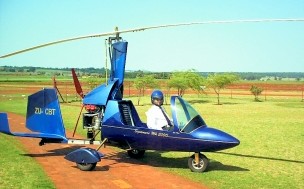
Chayair Sycamore Mk.2000

At 17 ft., 9 in., the tandem Sycamore is one of the longer gyroplanes, using a 115-hp engines and reaching speeds up to 106 mph. The Mk2000 is partially enclosed.
Square and round-tube aluminum airframe with composite semi-enclosure. Instrument panel.
Available: Production built, licensed in the LSI amateur-built class.

Two-seat tandem, semi-enclosed gyroplane
Engine: 115 hp Rotax 914, turbo charged four-stroke
Propeller: 68″ ARPLAST 3-blade
Rotor Blades: Chayair composite
Specifications:
Min Speed 35 mph
Cruise 80 mph
Top Speed 110 mph
Empty Weight 365 kg
Useful Load 225 kg
Gross Weight 590 kg
Width 5’11”
Height 8’6″
Length 17’9″

Chayair Sycamore Mk.I

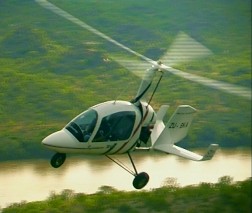
At 17 ft., 9 in., the tandem Sycamore is one of the longer gyroplanes, using a 115-hp engines and reaching speeds up to 106 mph. The Mk1 is fully enclosed.
Square and round-tube aluminum airframe with composite enclosure, removable doors. Instrument panel.
Available: Production-built, licensed in the LS1 amateur-built class.

Two-seat tandem fully enclosed gyroplane
Engine: 115 hp Rotax 914 turbocharged four-stroke
Propeller: 68″ ARPLAST 3-blade
Rotor Blades: Chayair composite
Min Speed 35mph
Cruise 80 mph
Top Speed 110 mph
Empty Weight 380 kg
Useful Load 210 kg
Gross Weight 590 kg
Width 5 ft 11 in
Height 8 ft 6 in
Length 17 ft 9 in

Changhe WZ-10

The CAIC WZ-10 (Changhe Aircraft Industries Corporation / Wuzhuang Zhisheng) is an attack helicopter, with this particular model being produced for use by the People’s Republic of China.
The two crew members sit in tandem with the pilot in the rear and seated higher than his gunner at front. Wing stubs provide the ability for the system to wield munitions of various sorts and center around anti-tank missiles. Additionally the WZ-10 is believed to possess anti-aircraft abilities. Standard armament includes a chin-mounted 23mm cannon.

Power is derived from twin turboshafts centering on the Pratt & Whitney Canada PT6C-67C series. These two engines produce 1,531 horsepower each. The systems drive a five-blade main rotor and a four-blade tail unit. The transmission development is based on help from Agusta Westland. In all, the helicopter is believed to be in the same class as modern systems such as the Denel Rooivalk and Eurocopter Tiger and is slated for operational service beginning 2008.

CAIC WZ-10
Engines: 2 x Pratt & Whitney Canada PT6C-67C turboshaft, 1,531hp
Main rotor: five-blade
Tail rotor: four-blade
Length: 46.26ft (14.1m)
Height: 12.63ft (3.85m)
Maximum Speed: 168mph (270kmh; 146kts)
Maximum Range: 497miles (800km)
Service Ceiling: 19,685ft (6,000m; 3.7miles)
Armament: 1 x 23mm cannon in undernose position
Accommodation: 2
Hardpoints: 4
Empty Weight: 12,214lbs (5,540kg)
Maximum Take-Off Weight: 13,228lbs (6,000kg)

Changhe Aircraft Industries / CHAIG / Jingdezhen Helicopter Corporation

Changhe began producing coaches and commercial road vehicles in 1974. These and other automotive products still account for much of output, but batch-produced helicopters have included the Z-8 and Z-l 1. First flew in December 1985 a heavy commercial/military transport and anti-ship helicopter as the Z-8, based on the French Aerospatiale Super Frelon. More recently developed a small multipurpose single-turboshaft helicopter as the Z-11, first flown 1996 and possibly based in part on Eurocopter Ecureuil. Name changed to Jingdezhen Helicopter Corporation in 1998.

CHAIG (formerly Changhe Aircraft Factory), occupied a 433 ha site at Jingdezhen, had a workforce of more than 10,000 in 1998.

CHAIG is responsible for manufacture of the tailcone vertical fin and horizontal stabiliser of the Sikorsky S-92 helicopter. The tail for the first S-92 was delivered to Sikorsky in May 1997. Changhe is also thought likely to become the centre for any Chinese licensed manufacture of the AgustaWestland A 109E Power, which was the subject of Sino-Italian negotiations in late 2002/earIy 2003.

Chance Vought Corp / Lewis and Vought Corp

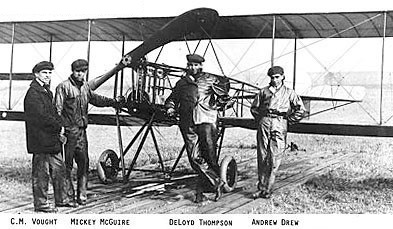
Chance Vought with others and an early design, unidentified, possibly an exhibition machine for DeLloyd Thompson

Lewis and Vought Corporation of Long Island, New York, built training aircraft in 1918 to designs of Chance M. Vought, for U.S. Army.

Chance Vought Article

Lewis & Vought Corporation was renamed Chance Vought Corporation after First World War. From 1922-1926 produced UO-1 observation float biplanes (developed from VE-7/9) and FU-1 catapult fighter seaplanes for U.S. Navy, followed in 1927 by O2U observation landplanes for same customer, first of several Vought designs to bear the name Corsair. Moved to East Hartford, Connecticut, in about 1930, where until 1935 it continued the Corsair series with 03U observation biplanes and similar SU scouts, again for U.S. Navy.
Became Chance Vought Division of United Aircraft Corporation in 1934, initially continuing production at East Hartford of O3U/SU Corsairs. These were followed by Vought SBU two-seat scout-bomber, designed in 1932 and produced for U.S. Navy between 1935-1937.
In 1928, Boeing Airplane and Transportation Corporation went public and the stock sold quickly. Encouraged, Boeing formed the United Air¬craft and Transport Corporation, which included Boeing Airplane Company, Pratt & Whitney, Chance Vought, Sikorsky, Hamilton Propeller, Pacific Air Transport and Boeing Air Transport.
In 1934, Boeing was informed by the U.S. Government that he was violating the new antitrust laws. He resigned as chairman, sold out his stock and the corporation was divided into three new companies –United Air Lines to handle air transport, United Aircraft Corporation to take over the eastern manufacturing firms and Boeing Airplane Company to manage Western operations.

From 1936 concentrated primarily upon manufacture for the US Navy, major programs including the SB2U Vindicator scout-bomber, OS2U Kingfisher observation aircraft, and F4U Corsair single-seat naval fighter. Of the massive production of the wartime Corsair, which continued until 1952, Vought alone built more than 7,700.

Joined with Sikorsky Division of UAC in April 1939 to form Chance Vought and Sikorsky Aircraft Division of United Aircraft Corporation. Vought and Sikorsky were reconstituted in January 1943 as separate manufacturing divisions of UAC, so that Sikorsky could concentrate on helicopter development and Vought on combat aircraft, primarily the F4U and OS2U. On 1 July 1954 the company became independent of UAC, under the new name of Chance Vought Aircraft Inc. Chance Vought moved headquarters to Stratford, Connectictut. Vought-Sikorsky products at this time included the Sikorsky-designed VS- 43 and VS-44 flying-boats and the historic VS-300, the world’s first fully practical helicopter, from which the production R-4 and R-5 and later designs were developed. After the war, Chance Vought Aircraft Division moved to Dallas, Texas, in 1948-1949, and produced its first jet fighter for the US Navy, the F6U Pirate. Became Chance Vought Aircraft Inc. after becoming separate and independent from UAC on July 1,1954. Main product during this stage of its history was the unorthodox F7U Cutlass, in production 1952-1955 for the U.S. Navy. Deliveries began also in 1957 of the F-8 (originally F8U) Crusader, development and production of which continued as the LTV F-8 after further company metamorphoses into Chance Vought, Chance Vought & Sikorsky VS-44A Excalibur flying-boat, Chance Vought F7U Cutlass carrier-based fighter Corporation (from December 31,1960), and a merger on August 31,1961 with Ling-Temco Electronics Inc. to form Ling-Temco-Vought Inc.

Within the latter structure, Vought became, successively, the Aerospace Division of LTV, then Vought Aeronautics Company (Division of LTV Aerospace Corporation). Corsair II production under the name of the Vought Corporation. In 1964 in combination with Hiller-Ryan developed the XC-142A VTOL transport with swivelling wings. LTV Electro-systems developed the L450F quiet reconnaissance aircraft in 1970.

Since January 1, 1976 it has continued its activities as Vought Corporation, a subsidiary of the LTV Corporation.

Undertook considerable subcontract work, including on B-2 and many transport aircraft. Teamed with Argentina to propose Pampa 2000 for JPATS program, but not selected. Took name Vought once again in 1992. Became LTV Aircraft Products Group in 1986 and LTV Aerospace and Defense Company 1990. Following 1992 sale of 49 percent stock in LTV to Northrop and Carlyle Group, became Vought Aircraft Company, finally merging as a division of Northrop Grumman in 1994 after remaining stock purchased, becoming Northrop Grumman’s headquarters for its Commercial Aircraft Division.

Chaika L-4 / L-6 / L-44

L-44

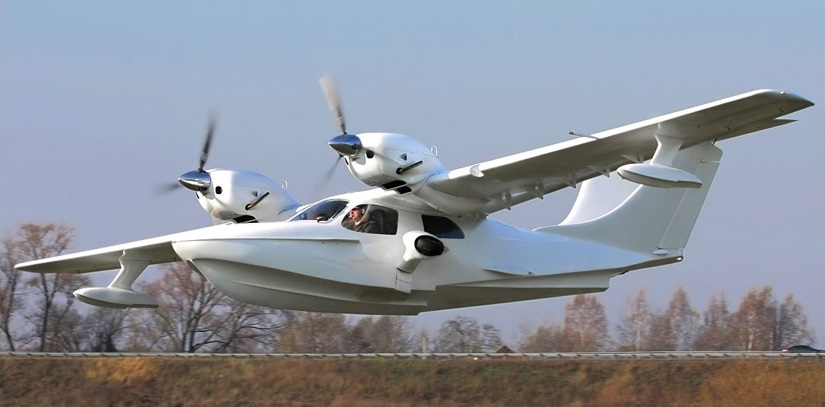
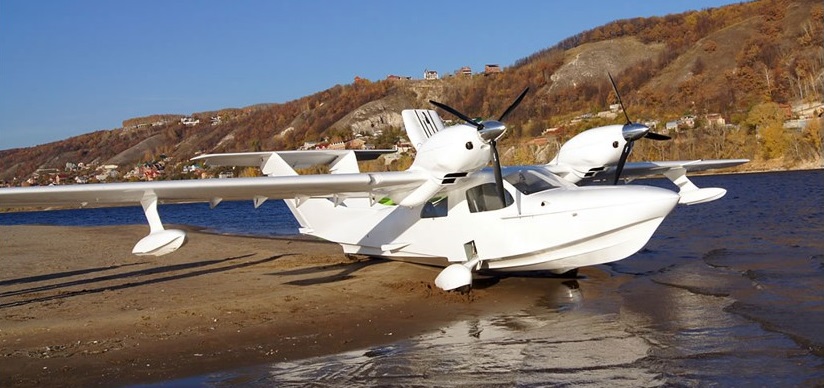
Several companies and groups have developed a series of designs which began at an offshoot of the Trod Kuznetsov aircraft engine plant in Samara. Beginning with the L-3, they differ in size and engine type but all are twin engine amphibians with a characteristic V tail. The L-4 is a direct development of the L-6M, promoted by AeroVolga. Its design began in August 2004.

L-44

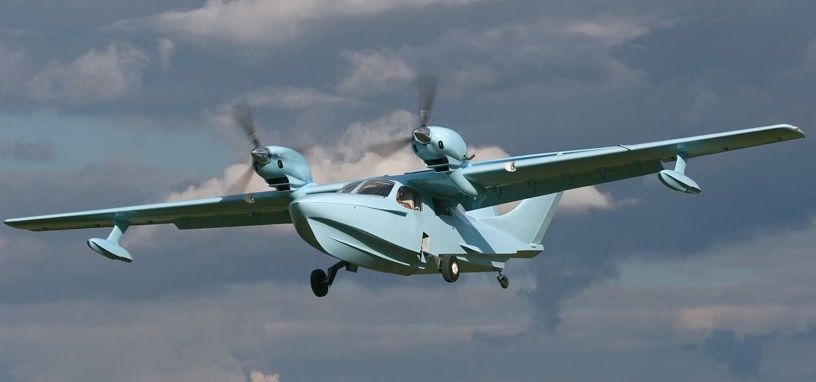
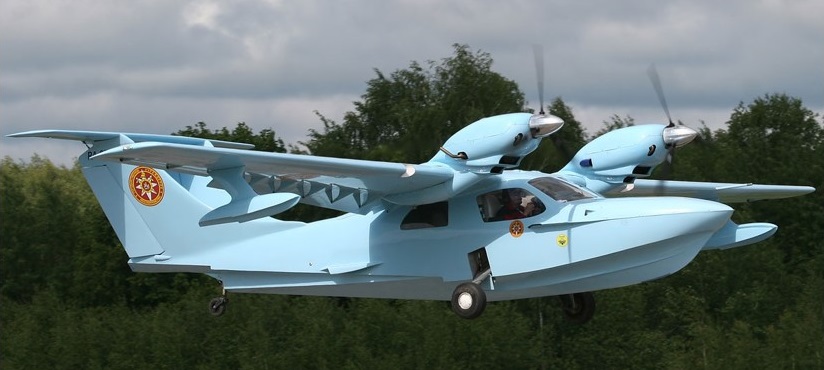
All L-4 variants have the same layout and all are largely built of composite materials. They are high-wing monoplanes with twin engines mounted close to the fuselage, on top of the wing. The wings have straight taper on both edges and almost square tips. The L-4 has a pair of flaps on each wing. Its hull has two steps and there are small winglets at waterlevel just aft of the trailing edge. The cabin extends from below the leading edge rearwards to the winglets. Fixed floats under the wings stabilize the L-4 on water; it is operable with waves to 400 mm (15 in) high.

L-44

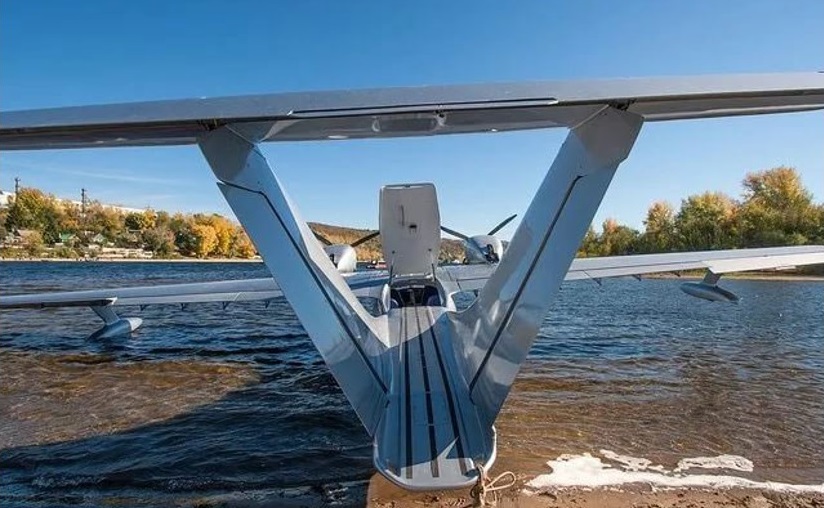
The most unusual feature of the L-4 is the empennage arrangement: it has twin fins, mounted on the fuselage and extended forward with long, curved dorsal fillets, separated at the base by the full fuselage width and leaning slightly outwards. The fins carry conventional rudders and the single tailplane is mounted upon the fin tips, extending well beyond them. Tailplane and single piece elevator together are trapezoidal; there is a trim tab at the centre of the elevator. The reason for the design is that the spine serves as a walkway to access the plane from behind, when moored at shore.

L-44

The L-4 has a conventional undercarriage for land use, all three wheels and the water rudder being retractable.

L-44

The first flight of the L-4 was in June 2005. The more powerful L-44 flew in 2009.

By mid-2008 sales, probably including L-6s from AeroVolga, had reached 14.

L-44

Gallery

Chaika L-44 (English: Seagull).
Powerplant: 2 × Rotax 914, 84.5 kW (113.3 hp)
Propellers: 3-bladed Airmaster AR332
Wingspan: 13.50 m (44 ft 3 in)
Wing area: 22.45 m2 (241.6 sq ft)
Length: 8.50 m (27 ft 11 in)
Height: 2.52 m (8 ft 3 in) excluding propellers
Empty weight: 830 kg (1,830 lb)
Max takeoff weight: 1,460 kg (3,219 lb)
Fuel capacity: 230 kg (507 lb)
Maximum speed: 220 km/h (137 mph; 119 kn)
Cruise speed: 180 km/h (112 mph; 97 kn)
Never exceed speed: 250 km/h (155 mph; 135 kn)
Range: 1,598 km (993 mi; 863 nmi)
Service ceiling: 4,000 m (13,000 ft) service
Power/mass: 8.64 kg/kW (14.20 lb/hp)
Take-off run: 250 m (820 ft)
Crew: 1
Capacity: 3 passengers