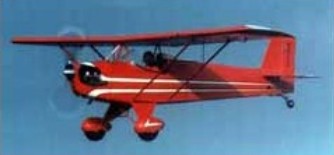
Corben Junior Ace / Ace Aircraft Junior Ace

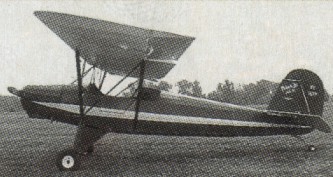
The Junior Ace is lightweight, easy to build, fun to fly and requires minimal maintenance. It has been modified from the original Corben Baby Ace so that it can utilize aircraft engines. The fuselage has also been widened, the horizontal stabilizer was modified for easier construction and modern aircraft wheels and brakes are now called for. With nearly a 34 ft wingspan and Clark Y airfoil, the Pober Junior Ace, designed by EAA founding president Paul Poberezny, is docile in stall and landing patterns. Airframe is 4130 steel tubing, wings are all wood and the recommended powerplant is a Continental C-85. Empty weight of the Junior Ace is 750 pounds and gross capacity is 1,320 pounds.
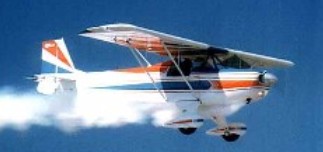
Junior Ace E

The Pober Junior Ace made its first flight with Captain Bud Judy at the controls. This first flight was successful and displayed the short field capabilities as well as low stall speed – ideal for small airstrips. The drawings for the airplane have full size wing rib drawings and two types of ailerons – the Friess aileron being a bit more responsive and lighter on aileron control. The indicated stall speed with one person on board is approximately 36 mpg. Indicated cruise with the Continental C-85-8 was a little over 80 mph. The Pober Junior Ace is open cockpit. The fuselage is chromoly steel tube, the tail group is chromoly steel tube and flat sheet stock to form ribs. The landing gear is chromoly tube with coil spring shocks. Wings are spruce spars and ribs. Two place side by side.
The kit price in 2009 was US$20950.

Junior Ace E
Engine: 85hp.
Span: 26’5”.
Wing area: 112 sq.ft.
Length: 17’9”.
Max wt: 1150 lbs.
Empty wt: 640 lbs.
ROC: 500 fpm.
Cruise: 78 kts.
Seats: 2.

Pober Junior Ace
Engine: Continental C-85, 85 hp.
HP range: 85-125.
Speed max: 130 mph.
Cruise: 80 mph.
Range: 250 sm.
Stall: 38 mph.
ROC: 500 fpm.
Take-off dist: 350 ft.
Landing dist: 450 ft.
Service ceiling: 25,000 ft.
Fuel cap: 12 USG.
Weight empty: 750 lbs.
Gross: 1320 lbs.
Height: 7.33 ft.
Length: 20 ft.
Wing span: 34 ft.
Wing area: 168 sq.ft.
Seats: 2.
Landing gear: tail wheel.

Engine: Lycoming O-235.
Hp range: 65-125.
Wingspan: 26.5 ft.
Length: 17.9 ft.
Wing area: 110 sq.ft.
Empty wt: 700 lbs.
Mtow: 1320 lbs.
Fuel cap: 22 USG.
Cruise: 100 mph.
Stall: 44 mph.
Range: 410 sm.
Roc: 500 fpm.
To dist: 600 ft.
Ldg dist: 300 ft.
Cockpit width: 40 in.

Ace Aircraft Corben Junior Ace Model E
Engine: Continental, Lycoming
Horsepower: 85-120
Propeller: 2 blade metal or wood
Cabin Width: 30 or 36 inches (76 or 91 cm)
Gross Weight: 1320 lbs (600 kg)
Empty Weight: 700 lbs (345 kg)
Useful Load: 620 lbs (270 kg)
Fuel Capacity: 22 USG (83 l)
Wingspan: 26.5 ft (8 m)
Wing Area: 110 sq.ft (10.2 sq.m)
Wing Loading: 12 lbs/sq.ft (58.6 kg/sq.m)
Overall Length: 18 ft (5.49 m)
Maximum Speed VNE: 113 kt | 130 mph | 209 kmh @ sea level
Cruise Speed: 95 kts
Stall Speed(@ MTOW): 38 kt | 44 mph | 71 kmh
Service Ceiling: 10,500 ft (3,200 m)
Takeoff Distance: 600 ft (183 m)
Landing Distance: 300 ft (91.5 m)
Rate of Climb(gross): 500 fpm
Center Of Gravity Aft Limit: 18.36″
Center Of Gravity Forward Limit:11.88″
Empty Cg: 12.5″ To 13.5″
Incidence Angles: Reference: Upper Longeron
Horiz. Stab: 0.0 Degrees
Wing: +1.18 Degrees
Engine: 0.0 Degrees Vert./Hor.
Vertical Fin: 0.0 Deg. (Fuse C/L)
Control Surface Travel Ailerons: 20 Deg. Up/Dn
Elevator: 32 Deg. Up/Dn
Rudder: 27 Deg. L/R
Center Of Gravity Aft Limit=18.36″
Forward Limit=11.88″
Empty Cg= 12.5″ To 13.5″
Incidence Angles: Reference= Upper Longeron
Horiz. Stab.= 0.0 Degrees
Wing= +1.18 Degrees
Engine= 0.0 Degrees Vert./Hor.
Vertical Fin= 0.0 Deg. (Fuse C/L)
Control Surface Travel Ailerons: 20 Deg. Up/Dn
Elevator: 32 Deg. Up/Dn
Rudder: 27 Deg. L/R
Landing Gear: FG (tailwheel or trike)
Seats: 2 Side-by-Side

Acro SportInc Pober Junior Ace
Engine: Continental C-85, 85 hp
HP range: 85-125 hp
Top speed: 130 mph
Cruise: 80 mph
Stall: 38 mph
Range: 250 nm
Rate of climb: 500 fpm
Takeoff dist: 350 ft
Landing dist: 450 ft
Service ceiling: 25,000 ft
Fuel capacity: 12 USG
Empty weight: 750 lb
Gross weight: 1313 lb
Height: 7.3 ft
Length: 20 ft
Wing span: 34 ft
Wing area: 168 sq.ft
Seats: 2
Undercarriage: tailwheel
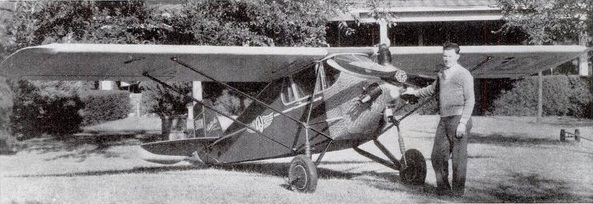
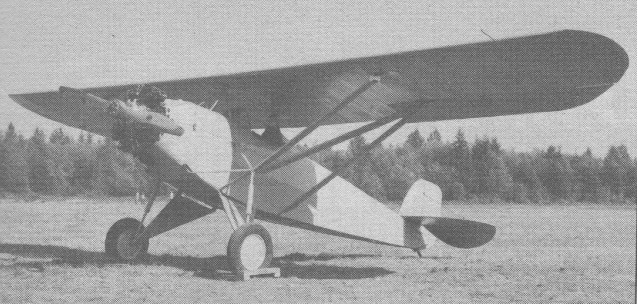
Corben Baby Ace / Ace Aircraft Baby Ace

The Corben Baby Ace of 1929 was a professional design based on the Heath Parasol, but was a little more comfortable and had much better performance because of higher power. A 40-hp French Salmson AD-9 was used. Only six were factory-built, and a few were built from magazine plans in the 1930s.

The original Corben Baby Ace first flew back in 1931.

A single seat, high wing, sport plane powered by a modified Ford Model A 4 cyl inline engine. A simple and conventional design of open cockpit, strut-braced wing and tailplane, and a fixed, strutted, undercarriage. Later up-dated and marketed as the Pober Super Ace.

In 1954, Paul Poberenzy, who a year earlier had founded the still fledgling Experimental Aircraft Association, built a Baby Ace aircraft as a three part series in Mechanix Illustrated. The success of the articles caused an explosion in the homebuilt movement. The Baby Ace that Mr. Poberenzy built for Mechanix Illustrated is now in the EAA AirVenture Museum.

Corben Baby Ace D

The Baby Ace was extensively redesigned in 1955 as an ultralight monoplane specially designed for the amateur builder, the Baby Ace Model D. Baby Aces usually carry Continental engines rated from 65 to 85 hp and their performance is considered excellent by owners. Construction consists of a steel tube fuselage, all-wood wings and fabric covering. The wing is Clark Y mod from the root to the tip.

The Model C was refined by Ed Jacobs as the Model D. This first flew, as the DuCharme/EAA Baby Ace, on 16 November 1956.

In 1961 Ace Aircraft Mfg Co (Edwin T Jacobs), McFarland WI, purchased Baby Ace rights from Cliff DuCharme, West Bend WI.

Plans offered in 1968 for single-place Baby Ace ($28.50) and two-place Junior Ace, or Model E ($36.50). The kit price in 2009 was US$18950.

Gallery

Variation:
Dunn D-1

Specifications:

Engine: Szekley, 40 hp
Wingspan: 28 ft 8 in
Length: 17 ft 5 in
Height: 6 ft 0 in
Speed: 85 mph
Seats: 1

Baby Ace Model D
Engine: Continental C-65, 65 hp.
Hp range: 65-120.
Gross Wt. 950 lb.
Empty Wt. 575 lb.
Fuel capacity 17 USG.
Wingspan 26 ft 5 in
Length: 17 ft 9in
Wing area: 112 sq.ft.
Top 110 mph.
Cruise 90-100 mph.
Stall 34-38 mph.
Climb rate 1200 fpm.
Takeoff run 200ft.
Landing roll 250 ft.
Range 350-400 sm
Cockpit width: 34 in.
Seats: 1.

Ace Aircraft Corben Baby Ace Model D
Engine: Continental, Lycoming
Horsepower: 65-100
Propeller: 2 blade metal or wood
Cabin Width: 24 inches (61 cm)
MTOW Weight: 950 lbs (430 kg)
Empty Weight: 575 lbs (260 kg)
Useful Load: 375 lbs (170 kg)
Fuel Capacity: 17 USG (64 lt)
Wingspan: 26.5 ft (8 m)
Wing Area: 110 sq.ft (10.2 sq.m)
Wing Loading: 8.6 lbs/sq.ft (42 kg/sq.m)
Overall Length: 17.9 ft (5.46 m)
Maximum Speed VNE: 96 kts | 110 mph | 177 kmh @ sea level
Cruise Speed: 87 kts | 100 mph | 161 kmh
Stall Speed(@ MTOW): 30 kts | 34 mph | 55 kmh
Service Ceiling: 10,500 ft (3,200 m)
Takeoff Distance: 300 ft (91.5 m)
Landing Distance: 250 ft (76 m)
Rate of Climb(gross): 1200 fpm | 6 m/s
Centre of Gravity Aft Limit: 18.36 in
Centre of Gravity Forward Limit: 11.88 in
Empty Cg: 12.5 in To 13.5 in
Incidence Angles: Reference: Upper Longeron
Horiz. Stab: 0.0 Degrees
Wing: +1.18 Degrees
Engine: 0.0 Degrees Vert./Hor.
Vertical Fin: 0.0 Deg. (Fuse C/L)
Control Surface Travel: Ailerons: 20 Deg. Up/Dn
Elevator: 32 Deg. Up/Dn
Rudder: 27 Deg. L/R
Landing Gear: FG (tailwheel or trike)
Seats: 1

Cooke Avian Adventurer

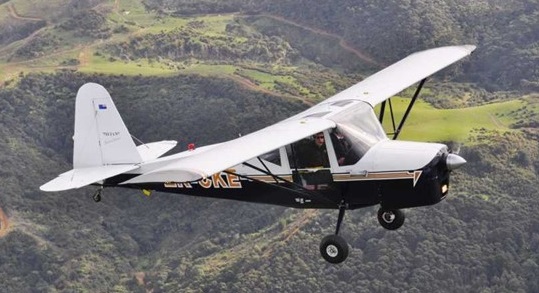
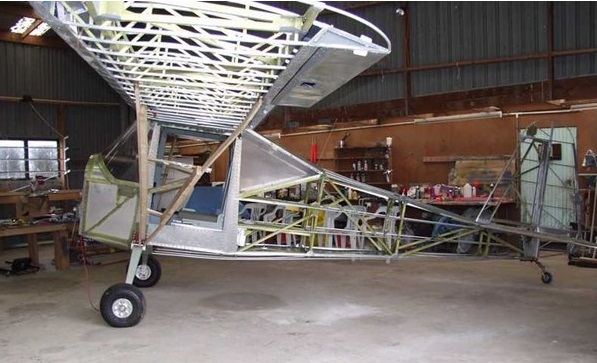
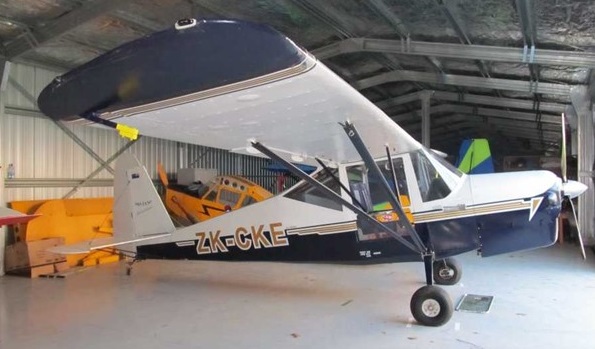
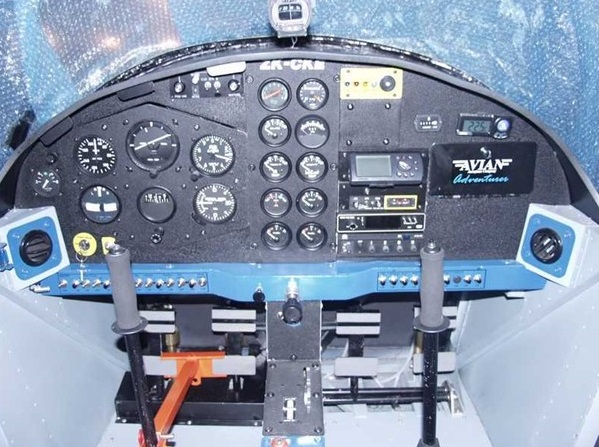
The Cooke Avian Adventurer is a one-off design constructed of riveted alloy extrusions, and fabric covered. Design and built by Bruce Cooke of Cambridge, New Zealand, construction was over 10 years and the approximate cost to build was NZ$10000-$20000. A two seat side by side plus large baggage bay, ultralight, there are full dual controls.

The aircraft is influenced by the classic taildraggers such as the Piper Cub, Cessna Bird Dog and the Auster series. Construction is of rivetted interlocking aluminium extrusions. This construction method results in a high component count but it avoids the necessity for expensive sheetmetal tooling. The outward sloping cabin sides reduce the amount of bending required for the bottom longerons while allowing very generous shoulder room for the two side by side occupants and giving an almost directly down view through the fully glazed upward opening doors. The airframe is covered with Stits Polyfiber fabric.

The engine is Subaru EJ 20 “Matariki” (Subaru and Matariki both refer to the cluster of 6 stars in the Taurus constellation named Pleiades by the ancient Greeks), which produces 140 HP Nominal and drives a 3 bladed electrically variable Ivoprop through a Neil Hintz gearbox.

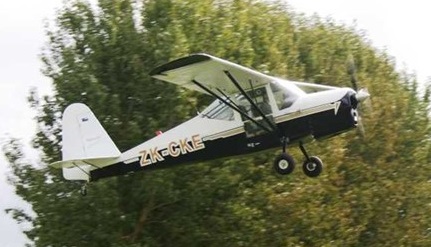
Bruce Cooke’s Avian Adventurer ZK-CKE c/n AV08-1 was first registered on 19/11/08, although it did not fly until March 2011.

The first flight in March 2011 was at Hamilton with test pilot Bob Monds.

Gallery

Engine: Subaru EJ20 Matariki, 140 hp
Prop: Ivoprop 3 bladed electrically variable
Wingspan: 10.23 metres
Length: 7.63 metres
Empty Weight 640kg
MAUW 850kg
Cruise: 90-95 knots
Stall speed: 35 knots
Fuel burn at cruise: 27 lt/hr

Cook Westland Bush Plane             

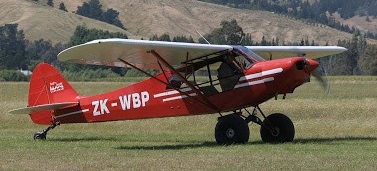
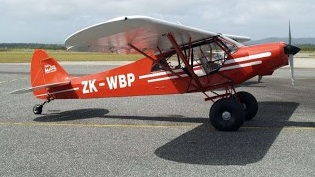
The Westland Bush Plane was built by Russell Cook of Kaihinu, north of Hokitika, New Zealand, around 2008. It may look like a Cub, but the only original bit of a Cub is one wing. The dimensions are all bigger than the standard PA-18, and the whole lot is built from scratch. The tundra tyres are for landing in the West Coast river beds.

Registered ZK-WBP (c/n 0017251) the Westland Bush Plane has an extra side door to the luggage area behind the rear seat.

It received some minor damage on 23 July 2011 whilst landing on a river bed.

Continental CD-155 / Centurion 2.0

The four-cylinder in-line engine Centurion 2.0s, became the Continental CD-155

Aviation services company Africair retrofitted three Ethiopian Airlines Aviation Academy Cessna 172 Skyhawks with diesel engines and was installing Continental Diesel engines. Ethiopian Airlines use their new diesel 172s to conduct flight training, averaging 6-7 hours per aircraft per day during peak training. Over a thousand pilots enrol in the academy every year. The new engines can run on diesel or jet fuel.
The retrofit process involves the modified engine, fuel lines, relocating the main battery, installing backup batteries, modifying the instrument panel, replacing fuel caps and ports etc. Converting a Skyhawk costs around $90 000 in 2016, according to Africair. The 155 hp CD-155 engines are manufactured in Germany by Continental Motors Group, Ltd., an AVIC International Holding Corporation company. Previously the company was known as Centurion Aircraft Engines before its 2013 acquisition by Continental.

Africair has been retrofitting diesel engines for over a decade, with more than 60 retrofits, installations and upgrades on mostly Cessna 172s in Egypt, South Africa, Germany, and Guadeloupe, and the company has exported retrofitted aircraft from Miami to Iraq, Ethiopia, Angola, Libya, Colombia and other countries. In 2013 Africair supplied six new Skyhawks with diesel engines to the Angolan Air Force, which uses them for ab-initio flight training.

Continental TD-300

In 2008, Teledyne Continental’s new president, Rhett Ross, announced that the company is very concerned about future availability of 100LL avgas, and as a result will develop a Diesel engine in the 300 hp (220 kW) range for certification in 2009 or 2010.

Rather than develop a new Diesel engine from scratch, Continental decided to license an existing design to develop. The company did not release details on which engine they licensed, but the aviation media have identified it as the French SMA SR305-230 engine.

The Continental TD-300 is a four-cylinder, horizontally opposed aircraft Diesel engine produced by Continental Motors, Inc.

The engine was type certified by the US Federal Aviation Administration in April 2013.

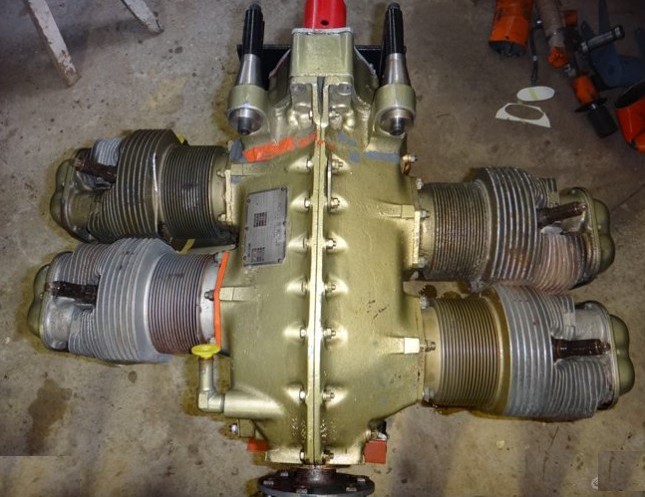
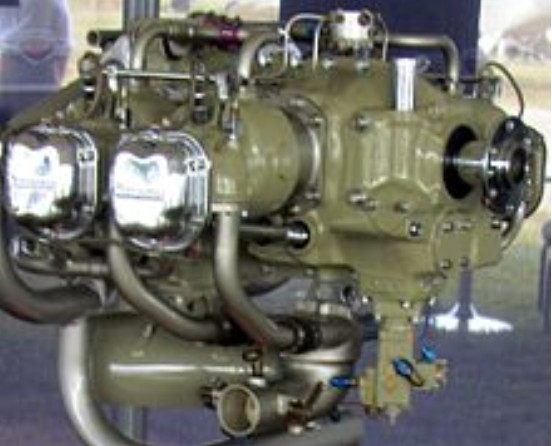
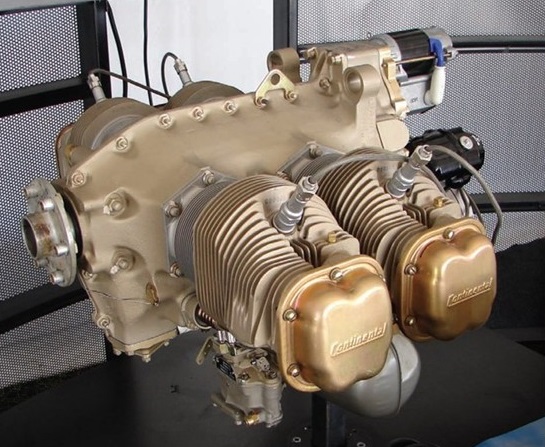
Continental C90 / O-200 / IOL-200 / Voyager 200 / Rolls-Royce RR C90 / O-200 / O-205

Continental O-200-A

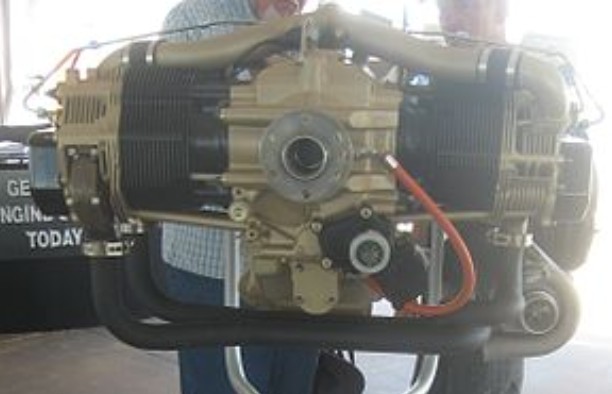
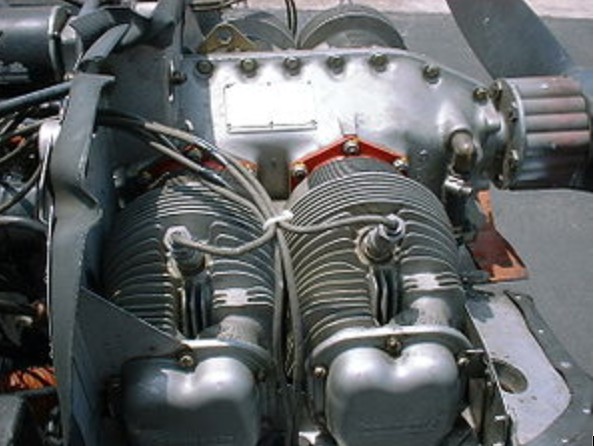
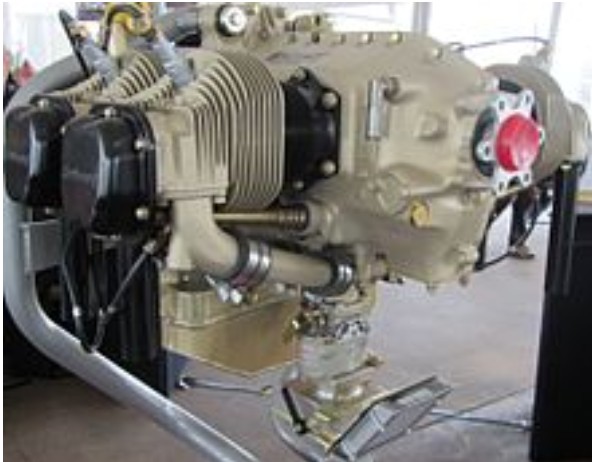
First run in 1947, the Continental C90 and O-200 are a family of air-cooled, horizontally opposed, four-cylinder, direct-drive aircraft engines of 201 in³ (3.29 L) displacement, producing between 90 and 100 horsepower (67 and 75 kW).

The C90 was introduced in 1947 as a follow-on to the A65, which had been in production since 1939. Many of the designs powered by the C90 are upgraded variants of earlier A65 powered designs, such as the Piper J-3 Cub and PA-11 Cub Special, Aeronca 7AC, and Luscombe 8A. The engine was developed from the earlier O-190 by increasing the stroke 1⁄4 inch.

This engine family is considered to be dependable, according to both industry publications and the FAA, certified under ATC 252.

While the C90 is approved for takeoff power of 95 horsepower (71 kW) for 5 minutes, the designation derives from its continuous power rating of 90 hp (67 kW). As noted above, certain models of the C90 replace the usual carburetor with a fuel injection system. In addition, there are models which provide for the installation of a controllable pitch propeller and one, the C90-12FP, designed for pusher installation. While slightly less horsepower than the O200, many floatplane operators prefer the performance of the C90 over the O200, due to its higher torque at lower rpm. This is primarily due to the C90’s camshaft design. The C90 is also known by its military designation of O-205.

Though the C90 was superseded by the O-200, and many of the designs utilizing the O-200 had gone out of production by 1980, with the 2004 publication of the United States Federal Aviation Administration light-sport aircraft regulations came a resurgence in demand for the O-200. The light-sport aircraft standard is for small, simple single- and two-seat aircraft for which the O-200 is well-suited.

The O-200 is an updated and upgraded version of the engine, achieving increased power of 100 hp (75 kW) as a result of higher maximum rpm. The standard and most common model of the engine is the O-200-A; the -B model is designed for pusher installation, the -C model provides for the installation of a controllable pitch propeller, and the -D model is a lightweight model designed for Light Sport aircraft.

Continental O-200D

With 23,949 Cessna 150s built, this type is the most common application for the O-200.

In a cooperative venture, Rolls-Royce produced these same designs in England, under separate certification, with model designations beginning RR, e.g. the Rolls-Royce RR C90-12FH is the equivalent of the Continental C90-12FH; the Rolls-Royce versions are “directly interchangeable with the equivalent models manufactured by Continental.” The Rolls-Royce O-200-A powers the Beagle B.121 Pup 100, the Bölkow BO 208 C Junior, the Avions Robin DR 220, and the Morane-Saulnier MS-880.

Rolls Royce O-200-B

All versions of the C90 and O-200 are Four-stroke reciprocating engines and are all similar in size, displacement and weight. These engines are typically fitted with an updraft carburetor, though the C90-8FJ, -12FJ, and -14FJ are equipped with fuel injection systems. They utilize a redundant ignition system requiring no external power, driving two magnetos, each of which fires one spark plug per cylinder. Each cylinder has one intake valve and one exhaust valve, pushrod-activated.

Continental’s recommended time between overhaul (TBO) for these engines is 1,800 hours of operation or 12 years in service, whichever is reached first. The standard certification for the C90 and O-200 specifies Avgas 80/87 as the minimum fuel grade. Both are eligible for operation on automobile gasoline on the basis of Supplemental Type Certificates.

An engine designated the IOL-200, an O-200 variant modified with fuel injection and liquid cooling, powered the 1986 non-stop, non-refueled global circumnavigation flight of the Rutan Voyager. The 110-horsepower (82 kW) IOL-200, also referred to as the Voyager 200, was the rear engine and—unlike the forward engine, another modified engine, a Continental O-240 —ran throughout the entire 9-day flight save for a four-minute shutdown due to a fuel problem.

Continental IOL-200

Formula One racer Sharp Nemesis, designed and flown by Jon Sharp, was powered by a ‘stock’ O-200. Between 1991 and 1999, the plane won 45 of the 48 events in which it was entered, as well as winning three Louis Blèriot medals, four Pulitzer Trophies, and setting 16 speed records in its class. In one of those records, Nemesis was clocked at over 290 mph (467 km/h). By contrast, the O-200 powered Legend Cub cruises at 95 mph (152.9 km/h).

TCM O-200

Gallery

Variants:

C90
90-95hp 201ci

C90-9F
O-200-A but wt 184 lb

C90-8FJ

C90-12F
C-90-8F with starter

C90-12FH
C-90-12F with manual hydraulic prop

C90-12FJ

C90-12FP

C90-14FJ

O-200-A
standard model

O-200-B
designed for pusher installation

O-200-C
provides for the installation of a controllable pitch propeller

O-200-D
a lightweight model designed for Light Sport aircraft.

IOL-200 / Voyager 200
The forward engine of the round the world flight Rutan Voyager

TSIO-200
145hp O-200A
Turbocharger
electrical system
Weight: 239 lb

O-205 / Rolls-Royce O-200-A
(a.k.a. Rolls-Royce/Continental O-200-A) Licence production of the O-200 in the United Kingdom for Beagle Pup

Applications:
Aeronca Champion 7EC
AMD Zodiac
Anglin J6 Karatoo
Bearhawk LSA
Bölkow Bo 208
Bushcaddy R-120
Cassutt Special
Cessna 150
Cessna 162 Skycatcher
Civil Aviation Department MG-1
Coupé-Aviation JC-200
CubCrafters Carbon Cub EX
CubCrafters CC11-100 Sport Cub S2
Falconar F11 Sporty
Falconar Minihawk
Fisher Celebrity
Fisher Dakota Hawk
Flaeming Air FA 04 Peregrine
Interstate Cadet
IndUS Aviation Sport E
Jodel D113-D11
Jodel DR1050 Excellence
Luscombe LSA-8
Malmö MFI-9
Mignet Pou-du-Ciel
Nexaer LS1
RLU-1 Breezy
Rutan Voyager
Ryan ST-100 Cloudster
VTOL Aircraft Phillicopter
Warner Sportster
World Aircraft Spirit

Specifications:

O-200-A
Type: Four-cylinder air-cooled horizontally opposed piston engine
Bore: 4.06 in (103.1 mm)
Stroke: 3.88 in (98.6 mm)
Displacement: 201 in³ (3.29 L)
Length: 28.53 in (724.7 mm)
Width: 31.56 in (801.6 mm)
Height: 23.18 in (588.8 mm)
Dry weight: 170.18 lb (77.19 kg) dry, without accessories
Valvetrain: Hydraulic lifters, two pushrod-actuated valves—one intake, one exhaust—per cylinder
Fuel system: Updraft carburetor with manual mixture control
Fuel type: 80/87 avgas minimum
Oil system: 6 US quart (5.7 L), wet sump
Cooling system: Air-cooled
Power output: 100 hp (75 kW)
Specific power: 0.5 hp/in³ (23 kW/L)
Compression ratio: 7.0:1
Power-to-weight ratio: 0.56 hp/lb (920 W/kg)