d’Arrigo, Angelo

D’Arrigo was born in Catania, Sicily, April 3, 1961, but grew up from a very early age in Paris, as his parents emigrated there in search of work. He returned to Sicily after graduating from the university in Paris, and from his base on Mt. Etna gained a number of world records and world titles in the field of ultra light flying and free flying.

In 2001 he initiated a sequence of breath-taking events which saw him flying alongside various birds of prey as he attempted to learn from them their techniques for migratory flight by taking advantage of thermal air currents for long distance flight with low energy consumption.

In 2002 he crossed the Sahara and the Mediterranean with an eagle. His hang glider was launched from a microlight.

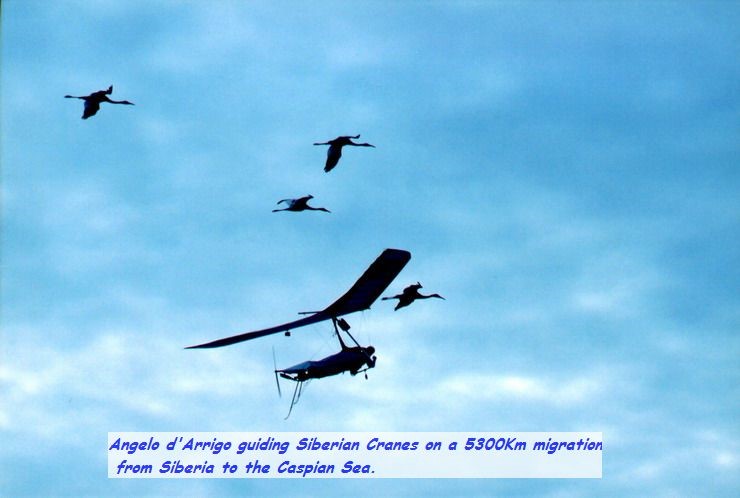
In 2003 he flew 5,500 kilometres from northern Siberia to the Caspian Sea in Iran in the company of a flock of Siberian cranes who had been born in captivity and, due to imprinting, considered him their parent. The bird is at risk of extinction, and, in order to try to save the species, Russian ornithologists hatched a plan. It called for having the eggs incubated under Angelo’s hang-glider, so the chicks saw this as they hatched. Angelo would then be with the chicks as they fledge. When they were ready to fly, they would fly alongside Angelo so they would consider him their mentor. That way, he could show them the traditional migratory route for their species. They had no other way to learn it. This approach was similar to the one taken in the movie Fly Away Home.

In 2004, he was aerotowed by Richard Meredith-Hardy and released over Mount Everest another world record. He reportedly made this flight over the summit of Everest with a trained Nepalese eagle. However, there were no eyewitnesses to this achievement, even though climbers saw and photographed Meredith-Hardy’s microlight aircraft. No evidence in the form of videos or photography has ever been brought forward, either, despite the fact that d’Arrigo’s hang-glider was equipped with three video cameras and two still cameras. The story is fully narrated in the documentary Flying Over Everest by director Fabio Toncelli.

In 2006 he followed the migratory routes of the condor over Aconcagua in the Andean Cordillera, the highest mountain in the Americas.

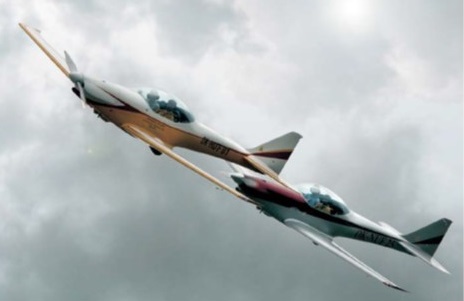
On March 26, 2006, he died in an accident during an airshow at Comiso, Italy, at the age of 44. A small Sky Arrow airplane, in which he was a passenger, fell 200 meters to the ground. Both d’Arrigo and the pilot, a general of the Italian Air Force and ex-test pilot, were killed on impact. At the time of his death, Angelo was engaged in planning an expedition to Peru to re-introduce two Andean condors bred in captivity and raised by d’Arrigo at his home on Mount Etna. A documentary about this was being made at the time. It was called “Born to Fly”.

In memory of her husband, his widow Laura instituted a charity, the Fondazione Angelo d’Arrigo, with the aim of helping children in Peru. Angelo d’Arrigo was posthumously given the alternative sportsperson’s award at the 2006 Laureus World Sports Awards.

Tiziano Danieli Piuma

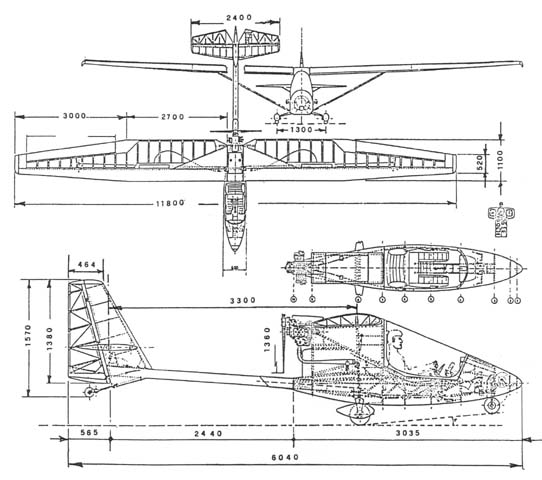
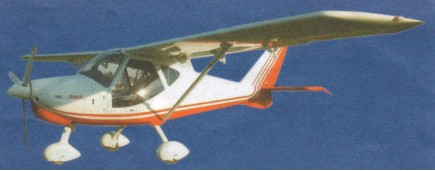
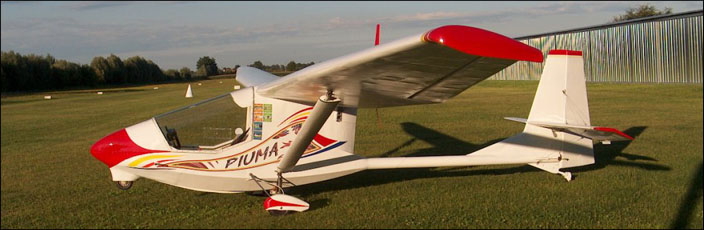
The ultralight motorglider Piuma appeared in 1989 because the designer and builder was looking for a safe ULM motorglider, easy to build and to pilot, whose flight and comfort was better than the “fabric and tube” ULM available at the time.
The Original Piuma first flew in 1990 and the project changed and the plans were modified with improvements. The Original Piuma is the more quiet version and the more suitable as first construction. The steel landing gear, with rubbers shock-absorbers, also allows the beginners hard landing. The 2005 plans allow to build the streering front gear. This improvement also allowed to increase the top speed of 5 km/h (3 mph).
ULM single seat motorglider made of fabrics and wood, only the tail pipe in aluminium alloy and propulsive engine. The maximum wing loading is 4.3 lb/sq.ft; this low wing loading allows the motorglider to fly at low stall and landing speeds. The glide ratio is about 16 – 17 and the minimum sink rate is 200 ft/min.; it is possible to use a little 25 HP engine with very low consumption (1 Imp Gal/h). The stall speed is 30 MPH and the take-off speed is normally 34 MPH, but it is possible also 29 MPH, for the ground effect. The normal cruising speed is 50 MPH and the VNE is 75 MPH.
Construction characteristics
Conventional 3 axis control with air-brakes.
The wings are tapered; the chord at root is 47,2 inches and at tip is 21,6 inches.
The wing profile is the Rhode St. Genese 36, with the 16% thickness.
The landing gear is built with the Cr-Mb steel, with the rubbers shock-absorbers, and it is put very near (but in front of) the C of G. The wheels have brakes and fairings. The nose wheel has no steering and shock-absorber.
The little tail wheel and the rudder are steerable at the same time; this special shape unites the advantages of the classic three wheel in tricycle formation take-off and landing and the good ground characteristic of the tail-dragger formation.
The instruments panel is big enough for a complete set of instruments. The fuel-tank can contain more than 4 Imp Gal. and it is sufficient for 4 fly-hours (or much more of soaring).
The plans have been improved compared with the prototype (that has flown very well since the 1990).
They are available, with notes in English and with a new construction handbook in English of 39 pages, with more of 50 photos and some little draws for the explanation.
Also the tail boom is available: diameter 127 mm – thickness 1,5 mm – length 5,2 m.
The complete material list is in the handbook (birch plywood, spruce, aluminium, steel, fabric, etc.).
The material cost, without engine and instruments, was about 6000 euro, at the 2007 prices.

Since 2003 the original Piuma plans allow nosewheel steering.
The Piuma Evolution is different from the Original Piuma in the following modifications:
Fuselage shape: the cockpit is 1 inch more wide. The rear side is completely tapered and the lower side is rounded for better attractiveness and aerodynamic.
Wing shape: the chord at root is 43,3 inches (the original is 47,2 inches) and the aspect ratio is 13/1 (original 11,2/1). Dihedral is 2 degrees instead of 3 degrees and the wing profile changes from 16% into 15%. Max thickness.
Tail shape: the tail and fin area now are more little and slimmer; the tail is cantilever, with 2 little strut drops. The 8 steel cables used in the Original Piuma were removed.
Wing struts: now the wing struts are smaller and they are aluminium-alloy.
Engine: the engine is partially hidden by the wings in the Original Piuma; now it is in the full air and it is possible to use the engine at the full power for longer.
Front wheel: now it is electrically retrectable; it is also possible to build it fixed and with fairing, steering too.
Landing gear: the wood landing gear covered with epoxy glass (or epoxy carbon fiber) is much more aerodynamic.
Seat: it is shaped for a more outstretched position, right for a glider. It is more comfortable and also suitable for 6 feet tall pilots (or little more).
Instrument panel: it is more similar to a glider panel.
Tail trim: it is electrical; the construction is clearly drawn in the plans.
Aerodynamic brakes: the controls and have been improved and drawn in 1 to 1 scale.
The best efficiency now is 20 and the normal cruise is about 63 MPH at 80% power with a 25HP engine.
The estimated building time is 1000 hours, the same of the Original Piuma.

Evolution Piuma (a little faster and more suitable for soaring, with a best glide ratio of 20) and Tourer Piuma (it’s the faster version for tourism, normal cruise 84 mph) became available.
The Italian C.A.P. (E.A.A. chapter n. 459) gave two prizes for the best ultralight project and the best achivement during the Carpi meeting of 1997 and 1999 (prize “Giancarlo Maestri” and “Caproni Cup”).
It is also possible to build two stronger versions of the one seat Piuma, for heavier pilots:
Rotax 447 Evolution Piuma (max take-off weight 660 lbs)
Rotax 447 Tourer Piuma (max take-off weight 660 lbs)
Plans only are sold.
All the “Piuma” versions are designed in accordance with the aeronautical standard and, for both the one seat Piuma and the Piuma Twin, the “project books” are available (only in Italian, at the moment). Every “project book” is composed of three parts:
The motivations of the choices about the shapes (wings, fin, rudder and elevators, fuselage with the rear engine mounting, etc.) with a lot of draws showing the fuselage, wings, tail, etc.
Structural calculations.
Characteristics of fly, wing and total drag, wing lift, efficiency, Vx, Vy, VNE, Vstall, etc.
The plans are composed of technical drawings of big dimensions (24 x 40 inches).
Some details must be realized with the lathe and the cutter, but almost the entire construction may be built without special tools; it is very easy and the planner completed the original Piuma after 18 months of work, in the 2 car garages, 7 yards long and 4,4 yards wide.
Normally about 1000 hours are sufficient to complete construction.
The wings, fin, rudder and elevators ribs are drawn in 1 to 1 scale; the same scale is used for a lot of wood or aluminium details. The handbook describes the work the step by step and the check list for the pre-fly controls.
About 30 minutes are sufficient to assemble or disassemble the Piuma.

The Piuma Evolution construction plans are composed of 15 drawings with references in Italian and english and a handbook in Italian language (35 pages) or English (25 pages). These books contain a lot of photos and little drawings and the materials list.
Also the tail boom is available: diameter 127 mm – thickness 1,5 mm – length 5,2 m.
The material cost, without engine and instruments, is about 6000 euro, at the 2007 prices.
The time of construction is about 1000 hours.

The Piuma Tourer is the fast version. The basic information about the fuselage and the tail is the same as the Piuma Evolution.
The only difference between the “fast version” and the Piuma Evolution is the wing with less span and area and with two different profiles.
Changes in comparison with the Piuma Evolution are:
WING profile: NACA 4415 (for the rectangular wing area); NACA 2R1-12 (for the tip – sweepback 3degrees)
Wing areas: change from 114,1 sq.ft into 99 sq.ft (wing loading = 5,5 lb/sq.ft)
Wing span: change from 38,7 ft into 34,1 ft; the aspect ratio is 11,7
Tailplane balancing
Change of the wing connection point for the strut
Spar thickness increase
Max take-off increase to 550 lbs

On request it is possible to build the Rotax 447 Tourer Piuma Version (max take-off weght 660 lbs).
The plans are the same 15 drawings of Piuma Evolution with one big drawing more showing:
The 9 ribs profiles.
The new wing design.
The new spar.
The tailplane balancing system.
The material cost, without engine and instruments, is about 6000 euro, at the 2007 prices.

Original
Wing span: 38.4 ft
Total wing area: 125 sq.ft
Aspect ratio: 11.2
Dihedral: 3 degrees
Total tailplane area: 17.2 sq.ft
Tail arm: 10.7 ft
Length overall: 19.4 ft
Max height: 4.6 ft
Empty weight: 320 lb
Max take-off weight: 518 lb
Max wing loading: 4.14 lb/sq.ft
Recommended load factors: + 3.4 -1.2
Ultimate load factors: + 6.8 – 2.5
Max level speed: 59 MPH
Normal cruising speed: 50 MPH
Stalling speed: 30 MPH
Never exceed speed: 75 MPH
Best glide ratio with power off: 17
Take-off: 330 ft
Landing: 330 ft
Max climb rate at sea level: 390 ft/min
Min sink rate (at 36 MPH): 200 ft/min
Engine: 25 HP

Piuma Evolution
Wing span: 38,7 ft
Total wing area : 114 sq.ft
Aspect ratio: 13
Dihedral: 2 degrees
Total tailplane area: 15 sq.ft
Tail arm: 10,8 ft
Length overall: 19,7 ft
Max height: 5,3 ft
Empty weight: 330 lb
Max take-off weight: 530 lb
Max wing loading: 4,6 lb/sq.ft
Recommended load factors: + 3.5 – 1.9
Ultimate load factors: + 7 – 3.8
Max level speed: 72 MPH
Normal cruising speed: 62 MPH
Stalling speed: 35 MPH
Never exceed speed: 84 MPH
Best glide ratio (at 43 MPH): 20
Take-off: 330 ft
Landing: 330 ft
Max climb rate at sea level: 460 ft/min
Min sink rate (at 39 MPH): 165 ft/min
Engine: 25 HP

Tourer
Max level speed (with 35 hp engine): 93 mph
Normal cruising speed: 84 mph (glide ratio = 10)
Never exceed speed: 100 mph
Stalling speed: 39 mph
Max climb rate at sea level: 1000 ft/min
Min sink rate (at 42 mph): 235 ft/min
Best glide ratio (47mph): 17

Dallach Evolution / DG Aircraft Evolution / UL-JIH E100 Evolution

The Wolfgang Dallach Company collapsed and on 1 August 2008 DG Aircraft GmbH took over support of the Dallach “Fascination”, “Evolution”, “Sunwheel” and all derivatives.

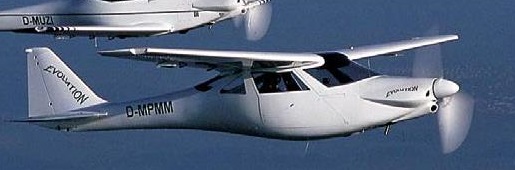
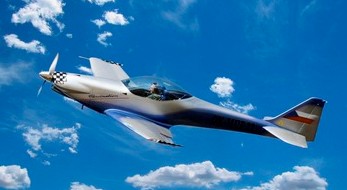
A side-by-side two-seat, cantilever high-wing monoplane of composite structure. Wing with slotted flaps, fixed or retractable tricycle undercarriage.

The E100 Evolution was later produced by Jaroslav Sedláček UL-JIH.

Gallery

Stall: 35 kt / 40 mph / 64 kmh
Cruise: 146 kt / 168 mph / 270 kmh
VNE: 162 kt / 186 mph / 300 kmh
Empty Weight: 270 kg / 595 lbs
MTOW Weight: 472 kg / 1041 lbs
Climb Ratio: 1200 ft/min / 6,5 m/s
Take-off distance (50ft obstacle): 330 ft / 100 m
Landing distance (50ft obstacle): 330 ft / 100 m

Engine: Rotax 912, 80 hp
Wing span: 9.4 m
Wing area: 11.2 sq.m
MAUW: 450 kg
Empty weight: 280 kg
Max speed: 250 kph
Cruise speed: 230 kph
Minimum speed: 65 kph
Climb rate: 5 m/s
Seats: 2

Jaroslav Sedláček UL-JIH E100 Evolution
Engine: Rotax 912UL (ULS)
Propeller: ground-adjustable DUC, or variable-pitch Woodcomp SR 3000/2W
Span: 9,12 m
Length: 6,9 m
Wing area: 11 sq.m
Weight: 294 kg
Cruising speed: 243 km/h

Dallach Fascination / W.D. Flugzeugleichtbau Fascination / Siggi’s Aeroplane Works D-4 Fascination / DG Aircraft Fascination / UL-Jih Fascination

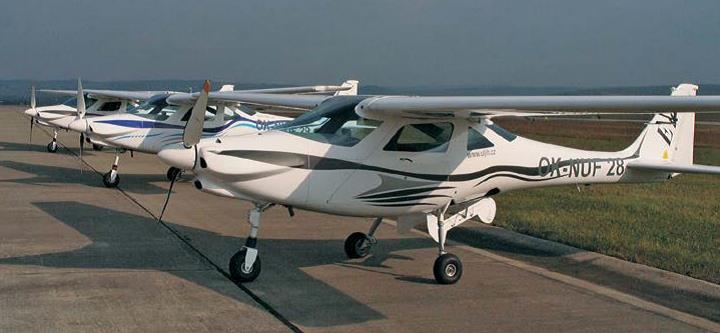
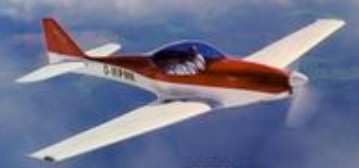
The Fascination was marketed by WD Flugzeugleichtbau of Heubach, Germany as the Dallach D.4 Fascination. This was an aircraft of mixed construction, including wood, composites and steel components with fabric covering. It first flew in 1996. An all-composites version, the Dallach D.4 BK Fascination was flown in 1999.

The Fascination has a spaceframe fuselage and composite wings covered in Dacron. It is equipped with a retractable undercarriage, wing flaps and a variable pitch prop. It is powered by a Rotax 912 UL or Rotax 912 ULS engine. Price 2009: 84000 EURO

The Fascination F100 is an advanced version of the ultralight/VLA airplane which was based on the all composite VLA layout of the Fascination (D4BK) by Wolfgang Dallach. During and after his collaboration with Wolfgang Dallach, Jaroslav Sedláĉek from UL-Jih in the Czech Republic made own contributions to the design which finally led to the UL-Jih F-100.

Fascination D-4B

The Wolfgang Dallach Company collapsed and on 1 August 2008 DG Aircraft GmbH took over support of the Dallach “Fascination”, “Evolution”, “Sunwheel” and all derivatives.

The Czech Kaplice company UL-Jih successfully completed testing the Fascination F100. On December 12, 2007, the craft was weighed in the presence of the LAA’s chief inspector, the German engineer Otto Bartsch, and a representative of the French company J.F. Boudet. The aircraft, together with adjustable propeller and retractable landing gear in operational mode, weighed 294 kg. The hull also passed the stress test with an overall burden of 3265 kg. In July of 2007 the wings were subjected to a fracture test with a 2100 kg load. In 2008 the aircraft will be ready for the French and German market. 2009 Price: 62500 EURO

Fascination F100

UL-Jih fabricated the Fascination F100 models and claimed sole production and marketing rights both to the D.4 and D.5 when WD Flugzeugliechtbau ceased trading in 2005, though those rights are challenged by Swiss Light Aircraft AG, who build their own versions.

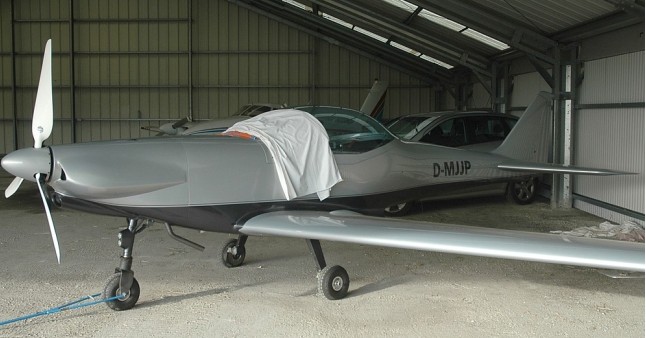
The later Fascinations are all-composite aircraft, with a low wing of trapezoidal planform. The ailerons have external balance trim tabs and sealed nosegaps. Inboard, there are electrically operated Fowler flaps. The fuselage becomes slender towards the tail, where the trapezoidal tailplane is set at mid-height, the elevators having a small cutout for rudder movement. The fin is swept but the rudder has vertical edges; it extends to the bottom of the fuselage. The cockpit seats two in side-by-side configuration under a one-piece bubble canopy, lever hinged from the rear; behind the seat backs there is luggage space. Until 2008, all Fascinations had a retractable tricycle undercarriage. The main wheels, mounted from the fuselage on cantilever spring legs, retract electrically outward into the wing and the nosewheel retracts rearwards. The fixed wheel option has wheel fairings. The main wheels have brakes and the nosewheel power steering. A Stratos Magnum 501 ballistic recovery parachute is fitted.

The Fascination has been marketed both complete and in kit form. More than 200 had been sold by 2006 and 183 appeared on the mid-2010 civil registers of European countries, excluding Russia. The price in 2017 was €89.380 for the F100.

It was reported that Fascination-airplanes (various versions) were flying in countries as remote as Brazil, Australia, and the Philippines.

Gallery

DN4
Original mixed construction Fascination
First flew 1996
41 built

DN4 BK
Composite construction
Stall: 35 kt / 40 mph / 64 kmh
Cruise: 146 kt / 168 mph / 270 kmh
VNE: 157 kt / 180 mph / 290 kmh
Empty Weight: 290 kg / 639 lbs
MTOW Weight: 450 kg / 992 lbs
Climb Ratio: 1600 ft/min / 8,5 m/s

F80
Engine: Rotax 912UL, 59.6 kW (79.9 hp)
Wing span: 9.10 m (29 ft 6 in)
Wing area: 10.6 sq.m (115.2 sq ft)
Length: 6.87 m (22 ft 6 in)
Height: 2.10 m (6 ft 11 in)
MAUW: 472.5 kg (1,042 lb)
Empty weight: 297 kg (655 lb)
Fuel capacity: 96 L (25.3 US gal; 21.1 Imp gal)
Never exceed speed: 270 km/h (170 mph, 150 kn)
Cruise speed: 243 km/h (151 mph, 131 kn)
Stall speed: 65 km/h (40 mph, 35 kn) flaps extended
Climb rate: 6.0 m/s (1,180 ft/min)
Range: 1,400 km (870 mi, 760 nmi) with max fuel
g limits: +4.0/-2.0
Certification: VZ
Seats: 2
Fuel consumption: 15 lt/hr
Price (1998): 120 500 DM
Kit price (1998): 76 300 DM

F100
Engine: Rotax 912ULS
Propeller: ground-adjustable DUC, or variable-pitch Woodcomp SR 3000/2W
Span: 9,00 m
Wing area: 10,76 sq.m
Length: 6,65 m
Stall: 35 kt / 40 mph / 65 kmh
Cruise: 132 kt / 152 mph / 245 kmh
VNE: 146 kt / 168 mph / 270 kmh
Empty Weight: 300 kg / 661 lbs
MTOW Weight: 472 kg / 1041 lbs
Climb Ratio: 1200 ft/min / 6 m/s
Glide Ratio: 10
Take-off distance (50ft obstacle): 690 ft / 210 m
Landing distance (50ft obstacle): 1150 ft / 350 m

CZAW SportCruiser / PS-28 Cruiser / Czech Sport Aircraft SportCruiser

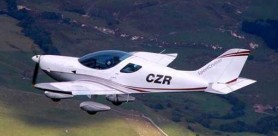
An all-metal, low-wing, 100hp SportCruiser is priced at $65,000 (FOB Indiantown 2009) and burning around 4~4.5 gallons of auto gas per hour. It has American-designed, all-metal traditional construction and US-sourced materials and airframe components. All three SAW aircraft are designed to be easy to fly, with touchdown speeds in the high 20-knot range. Sport Aircraft Works, importer and distributor of the Czech Aircraft Works designs, completed all the certification work on time.
Named ‘SportCruiser’ it is designed by Jiří Konečný and manufactured by Czech Aircraft Works.

The all-metal SportCruiser flew for the first time in 2005 and features a similar wing, main undercarriage and canopy arrangement as the CH601 XL. But with an all-new nose-wheel undercarriage, streamlined fuselage and swept-back tail arrangement, the SportCruiser is a deluxe low wing aircraft with superior performance.
The slow stall speed is achieved by electrically operated slotted flaps, with the ailerons and elevator being push-rod operated for better control response. The main gear consists of two composite gear legs (tried & proven on the CH601XL), equipped with toe operated differential hydraulic brakes.

The SportCruiser is fitted with the 100HP Rotax 912ULS engine and a Woodcomp Klassic 170/3/R propeller, either ground adjustable or electric constant speed. The Jabiru 3300 of 120 hp is optional.

The SportCruiser has an optional Ballistic Recovery Systems parachute, auto pilot and Dynon or TruTrak EFIS.

The aircraft is capable of cruising at 214 km/h (133 mph) with a range of 1,014 km (630 mi). No wind, standard day gross weight takeoff is achieved in 106 m (348 ft) and landing in 123 m (404 ft).

The SportCruiser is designed to fit into the ultralight or microlight category in several countries as well as the United States’ Light-sport Aircraft category. Between 2006 and 2010 it was available either as a kit, or as a fully built production model. The SportCruiser is accepted as a US FAA LSA, FAA homebuilt kit and the UK under BCAR Section “S”.

The SportCruiser has an optional Ballistic Recovery Systems parachute, auto pilot and Dynon or TruTrak EFIS.

The SportCruiser’s stall behaviour is consistant; with the aircraft buffeting strongly from the tail end before the stall and eventually breaking with a straight nose drop four times out of five. When a wing drop does occur, or is induced, the wing drop is to the right but only through 15 to 20 degrees. The wing starts flying again as soon as the nose has fallen through, even against full back stick.

Comments from people who have flown the SportCruiser are that it is a well mannered aircraft, positively stable about all axis, with nicely balanced controls.

The seating is very comfortable with room to accommodate tall people and long legs. With a very user friendly cockpit environment, this is a confidence-inspiring aircraft to fly, yet sparkling enough in its handling to satisfy the most sporting aviator.

With 10 new US registrations, the SportCruiser numbers 192 flying in the US in 2012. Base price 2012: $119,000.

On 21 January 2010 Piper Aircraft announced that they had licensed a derivative of the SportCruiser and would market it as the PiperSport. Piper CEO Kevin Gould said: “The PiperSport is an amazing entry-level aircraft that will bring new customers into Piper and lead the way for those customers to step up into more sophisticated and higher performance aircraft within our line over time.”

The PiperSport is a minimally modified version of the existing SportCruiser. The plan was that it would continue to be manufactured by Czech Sport Aircraft, with Piper’s manufacturing operation playing no part in the construction, although Piper was distributing parts. The changes to the aircraft are stronger nosegear, a Ballistic Recovery Systems parachute and leather interior both as standard equipment, a cockpit sunshade and modified pitch controls, plus a custom paint scheme. Previously the Sport Cruiser was available as a completed aircraft or a kit, but Piper offered it only as a completed aircraft, sold as a Special Light-sport aircraft in the USA. It was distributed by the Piper dealer network worldwide. Deliveries under the Piper name commenced with the initial customer receiving their aircraft on 13 April 2010 at Sun ‘n Fun. The aircraft was offered in three different trim and avionics configurations, with higher end models offering the Dynon Avionics D100 glass cockpit and autopilot. All models were delivered with the Rotax 912S powerplant of 100 hp (75 kW). The price in 2010 was USD$119,000 – $139,000.

PiperSport LSA aircraft exhibited at the 2011 Sun ‘n Fun show at Lakeland Linder International Airport Florida

Piper indicated that they had carried out extensive test flying on the SportCruiser before agreeing to add it to their line and that the aircraft’s slow sales in the past had been related to marketing issues and not any deficiencies with the aircraft design. Piper planned to market the aircraft to flight schools as well as private owners.

On 12 January 2011, after selling a total of 45 aircraft, Piper announced that the PiperSport would be discontinued. Piper CEO Geoffrey Berger stated:

After a year working with Czech Sport Aircraft, Piper determined that it is in our company’s best long-term interests to discontinue the business relationship which distributed a Light Sport Aircraft manufactured by the Czech company and distributed under Piper’s brand by a separate distributor network. Clearly, the company has a different business perspective and approach to the market than Czech Sport Aircraft.

After the Piper announcement the PiperSport importer and dealer network indicated that the aircraft would be continued to be imported under a new name. Importer U.S. Sport Aircraft CEO Don Ayres stated that said his company was engaged in “business as usual…aircraft will continue to be sold and supported”.

Czech Sport Aircraft reacted to the ending of the Piper deal by indicating that business would continue through the same distributor and dealer network and that the name of the aircraft would be changed back to SportCruiser. The company did indicate that the disagreement with Piper involved the geographical focus that Piper had put on marketing in the US to the detriment of the rest of the world. The company indicated that it will continue to develop the aircraft and planned revisions to the spinner, canopy, elevator, ailerons and wingtips in the immediate future.

Variants:

SportCruiser
Version built 2006–10 and 2011–present by Czech Sport Aircraft, available as a kit or completed aircraft and equipped with 100 hp (75 kW) Rotax 912ULS or 120 hp (89 kW) Jabiru 3300 engine.

PiperSport
Version built 2010–2011 by Czech Sport Aircraft and marketed by Piper Aircraft, available only as a completed aircraft and equipped with 100 hp (75 kW) Rotax 912ULS engine. Discontinued in January 2011.

PS-28 Cruiser
Version built for EASA CS.LSA certification with 600kg gross weight limit.

Gallery

Stall: 30 kt / 34 mph / 55 kmh
Cruise: 117 kt / 135 mph / 217 kmh
VNE: 139 kt / 160 mph / 258 kmh
Empty Weight: 720 lbs
MTOW Weight: 599 kg / 1320 lbs
TO run; 420 ft
Take-off distance (50ft obstacle): 700 ft / 213 m
Landing distance (50ft obstacle): 400 ft / 122 m
Fuel capacity: 30 USG
Endurance: 6.7 hr
Range: 650 nm
Stall: 34-42 kt
75% cruise: 109 kts
ROC: 980 fpm
Cockpit width: 46 in

CZAW SportCruiser
Engine:Rotax 912
Horsepower: 100@SL
TBO (hrs.): 2000
Fuel type: 100/100LL
Propeller type: FP/3-blade
Landing gear type: Tri./Fixed
Max ramp weight (lbs.):1320
Gross weight (lbs.): 1320
Landing weight (lbs.):1320
Empty weight, std. (lbs.): 765
Useful load, std. (lbs.): 555
Useful fuel, std. (gals.):30
Usable fuel (gals.): 37
Payload, full std. fuel (lbs.): 392
Wingspan: 28 ft. 9 in.
Overall length: 21 ft. 4 in.
Height: 6 ft. 5 in.
Wing area (sq. ft.):141.6
Wing loading (lbs./sq. ft.): 9.3
Power loading (lbs./hp.): 13.2
Wheel size (in.): 6.00 x 6
Seating capacity: 2
Cabin width (in.): 46.5
Cruise speed 75% power @ 8,000 ft.: 115 kt
Range (nm) 75% power: 575
Vso (kts.): 32
Best rate of climb (SL gph): 1200
Service ceiling (ft.): 20,000
Takeoff ground roll (ft.): 360
Landing ground roll (ft.): 400

Engine: Rotax, 100 hp
Wing span: 8.7m
Length: 6.5m
Wing area: 11.8 sq.m
Wing loading: 49 kg/sq.m
Empty weight; 307 kg
Gross weight: 544 kg
Cabin width: 1.14m
Fuel capacity: 2 x 56 lt
Load factor: +6 -4G
Take off: 100m
Landing; 100m
ROC: 1200 fpm
Stall: 26-29 kt
75% cruise: 110 kt
Vne: 140 kt
Range 75% no res: 700 nm
Endurance no res: 7 hr

SportCruiser SC3D
Engine: Rotax 912IS 100hp
Propeller: Ground adjustable (CSU available)
Wing span: 8.86 m
Wing area: 12.2 sq.m
Length: 6.5 m
Height: 2.3 m
Seating: 2 side by side
Cabin width: 1.24 m
Empty weight: 365 kg
Gross weight – LSA: 600 kg
Gross weight – Microlight: 544 kg
Fuel capacity: 120 L (2x 60 litre wing tanks)
Never exceed speed (Vne): 140 knots
Cruise speed: 115 knots
Stall speed (flaps): 27 knots
Stall speed (clean): 32 knots
Rate of climb: 1200 fpm (6.1 m/sec)
Take-off distance (grass): 130 m
Landing distance (grass): 150 m
Cruise duration: 8 hrs (no reserve)
Cruise range: 800 nm (no reserve)
Design loading: +4/-2 (ultimate +6/-6)

CZAW SportCruiser
Engine: 1 × Rotax 912 ULS2, 73.5 kW (98.6 hp)
Propeller: 3-bladed Woodcomp Klassic 170/3/R
Wingspan: 8.6 m (28 ft 3 in)
Wing area: 12.3 sq.m (132 sq ft)
Length: 6.62 m (21 ft 9 in)
Height: 2.315 m (7 ft 7 in)
Empty weight: 388 kg (855 lb)
Gross weight: 600 kg (1,323 lb)
Fuel capacity: 114 litres (25 imp gal; 30 US gal)
Maximum speed: 220 km/h (140 mph, 120 kn)
Cruise speed: 172 km/h (107 mph, 93 kn) 75% power at 3000 ft
Stall speed: 55 km/h (34 mph, 30 kn)
Never exceed speed: 255 km/h (158 mph, 138 kn)
Range: 953 km (592 mi, 515 nmi) with 30 minute reserve
Endurance: 5:25
Rate of climb: 4.2 m/s (830 ft/min)
Crew: one
Capacity: one passenger
CZAW Lake Sport Mermaid / WetAero M6 Mermaid

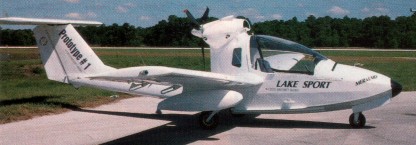
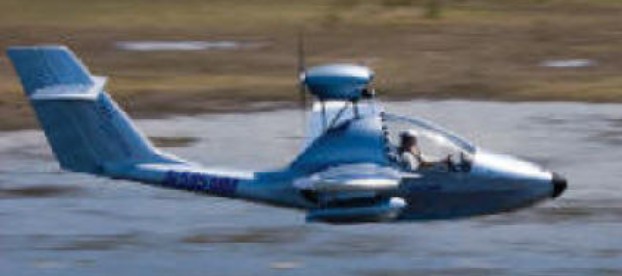
The all-new Mermaid is the first amphibian to be designed especially to comply with the FAAs new Light Sport Aircraft rules. It is also the first new certified single-engine amphibian to reach production in decades.
The design parameters were challenging: make a certifiable, roomy amphibian that will fit the LSA rules (2-place, 1235 pounds gross, low stall speed), and that will be affordable, reliable, and fun to fly; then give it the speed and range to be practical as a transportation device, and dual controls, for training and peace of mind. The Mermaid does it all, and more.
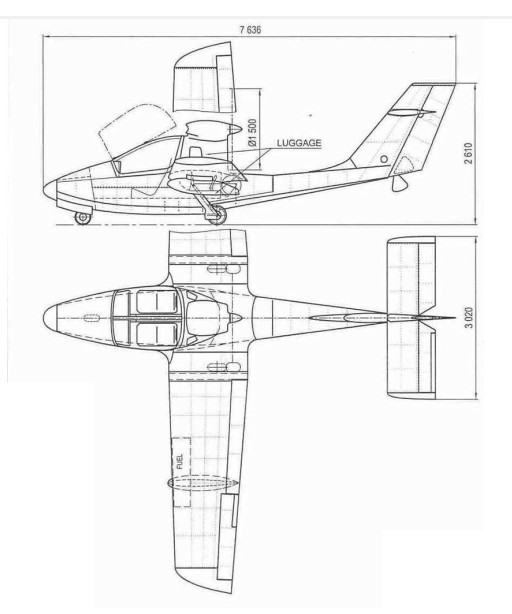
Of conventional all-metal design, the Mermaid is built by European craftsmen, with US-sourced materials. Its five watertight compartments are built with EDO-style pump-outs. The slipper-clutch Rotax 912ULS (914 also available) puts out 100 reliable horsepower while burning well under 5 gph. The useful load is over 500 pounds, and the large baggage area is located nearly on the CG, to make its capacity truly usable. The wide cockpit is comfortable; and it affords a large panel area.

In the US, the very early stages of prototype 1 used a Rotax 100HP as the power plant. This installation was refined over the next two years with probably no less than 6 different configurations using the Rotax. After essentially complete redesign of the prototype number one in the U.S. with this power plant, the next one and half years of performing flight and water testing gave good results. Even though adequate in horsepower, performance should be better on hot and heavily loaded days, and there were propeller inefficiencies from some of the after body aerodynamic interference.

WetAero M6 Mermaid

During one of the demo flights a customer from Australia suggested it might have better performance with a Jabiru 125 HP power plant. During initial flight tests this power plant proved to perform slightly better than the Rotax. But the installation was still lacking its full potential until repositioned higher above the after body structure. This one modification substantially increased the performance of the M6. The Jabiru was a tough engine to cool in the pusher configuration. After almost a year perfecting this engine installation they were capable of running on step taxi without limitations.

But then one customer insisted on the Rotax installation.

Dan Card received the first production Mermaid in parts and began construction in December 2005. Parts and pieces to make the fuselage, bulkheads, tail, and wings arrived from Czech Aircraft Works, where they were previously partially assembled using the factory jigs. Dan still had much of the aircraft to build. The challenge to build the first customer-built Mermaid began with assembling the aircraft for fit and finish while meeting the individual aspects of being “the first.” The construction of the Mermaid is very conventional as far as riveted aluminum monocoque construction goes. With plenty of traditional rivets to squeeze and buck, the fuselage in essence emerges in one piece, from nose to vertical stabilizer, including a robust center section to which the wings attach. The V hull is reinforced with a boxed section (at the bow) that houses the nose wheel when it’s retracted and closed off by its doors. It’s also triangulated with a flat floor onto which the seats, rudder pedals, and center console get fastened. With a series of 10 bulkheads, about a foot apart, completing the structure, the hull area below the seats becomes exceedingly robust.

The wing center section extends past the cockpit just far enough to support (or be supported by) the repositionable (not fully retracted) hydraulically actuated main gear. The wings are attached just outside the main gear bay via three bolts in the main spar and one in the drag spar, but in each instance, there is no carry-through of either spar. The ailerons on the Mermaid are actuated by push-pull and torque tubes, not cables. The flaps stop at the butt end of the wing and do not extend through the center section and die into the fuselage. They are slotted and use a displaced hinge pivot similar to the RV-10, a Cirrus SR22, or a Lancair Legacy; not really clean, but simple. The center section is also used as a platform for supporting/carrying ancillary systems like the battery, fuel pumps and filters, strobe pack, solenoids, disconnects, and relays, but it also serves as the main attachment for the engine pylon.

This Mermaid’s inaugural flight took place in September 2007 and was conducted over the rural farmlands of Fresno, California.

The Mermaid received ASTM certification #19.

Stall: 35 kt / 40 mph / 64 kmh
Cruise: 100 kt / 115 mph / 185 kmh
VNE: 115 kt / 132 mph / 212 kmh
Empty Weight: 330 kg / 727 lbs
MTOW Weight: 560 kg / 1235 lbs
Climb Ratio: 1000 ft/min / 5 m/s
Take-off distance (50ft obstacle): 600 ft / 183 m
Landing distance (50ft obstacle): 600 ft / 183 m

Engine: Jabiru 3300, 120 hp
Wing span: 31 ft
Wing area: 124 sq.ft
Length: 24 ft
Empty weight: 888 lb
Gross weight: 1430 lb
Fuel capacity: 30 USG
Cruise: 115 mph
Stall: 40 mph
Range: 580 sm
Rate of climb: 1000 fpm
Takeoff dist: 450 ft
Landing dist: 500 ft
Seats: 2
Cockpit width: 44 in
Landing gear: retract tricycle
LSA: yes

WetAero M6 Mermaid
Engine: Rotax 912 ULS
Wing span: 33.3 ft / 10,152 m
Length: 25 ft / 7,62 m
Wing area: 134.5 sq.ft / 12,5 sq.m
Wing loading: 10.65 lb/sq.ft / 45,6 kg/sq.m
Empty weight: 925 lb / 420 kg
Gross weight: 1430 lb / 650 kg
Useful load: 505 lb / 230 kg
Cabin width: 46 inch / 117 kg
Fuel capacity: 2×15 U.S.gal / 2×57 liters
Luggage space: 16 cu.ft / 450 lt
“G” limit: +4 / -2 G
Take-off (grass): 511 ft / 156 m
Take off (50″ object grass): 850 ft / 259 m
Climb rate: 800 fpm / 4 m/s
Stall speed with flaps: 32 mph / 52 km/h
Stall speed w/o flaps: 36 mph / 57 km/s
Cruise speed (75% power – TAS): 110 mph / 177 km/h
Never exceed speed (VNE): 155 mph / 250 km/h
Range (75% power, no res.): 450 sm / 725 km
Endurance (no res.): 4,5 hours
Landing ground roll (grass): 434 ft / 132 m
Price 2012: $147,000 Rotax 912ULS Base Model
$168,000 fully optioned.

WetAero M6 Mermaid
Jabiru 3300 120 HP
Takeoff (grass): 450 ft / 137 m
Takeoff (50-foot object grass): 1,080 ft / 330 m
Climb rate: 910 fpm / 4,6 m/s
Stall speed with flaps: 32 mph / 52 km/h
Stall speed w/o flaps: 36 mph / 57 km/h
Cruise speed (75% power TAS): 118 mph / 190 km/h
Never-exceed speed (Vne): 155 mph / 250 km/h
Range (75% power, no reserve): 620 sm / 1000 km
Endurance (no reserve): 4 hours
Landing ground roll (grass): 434 ft / 132 m

CZAW / Czech Aircraft Works / Czech Sport Aircraft

In 1992, Heintz also entered into a license agreement with Czech Aircraft Works of Stare Mesto, Czech Republic, to produce and market his Zodiac CH 601 and STOL CH 701 designs for the European market. The Czech-produced Zodiacs were modified and lightened to meet European rules for microlight aircraft. CZAW produced some 750 such machines under this agreement. On 31 December 2006, after the license agreement, under which the Zenair Zodiac CH 601 and STOL CH 701 light aircraft designs were produced by CZAW, was terminated and the Czech production came to an end.

Czech Aircraft Works (CZAW) was renamed Czech Sport Aircraft.

Culp Sopwith Pup

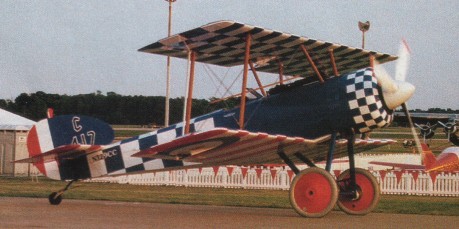
A scratch built replica from scaled up model aircraft plans. The project took approximately 5 years to complete. The aircraft took the Bronze Lindy award in the plansbuilt category at Oshkosh 2004.

Engine: M-14P, 360 hp
HP range: 200-400 hp
Cruise: 160 mph
Stall: 38 mph
Range: 690 sm
Rate of climb: 4000 fpm
Takeoff dist: 300 ft
Landing dist: 400 ft
Fuel capacity: 53 USG
Empty weight: 1750 lb
Gross weight: 2400 lb
Length: 18 ft
Wing span: 26.5 ft
Wing area: 265 sq.ft
Seats: 2
Cockpit width: 26 in
Landing gear: tailwheel