Destiny Powered Parachutes was founded by sole company owner John Rivers. Using connections from his background in NASCAR Winston Cup auto racing, Rivers designed a sturdy carriage using crashworthy concepts from the racing world. His goal was to provide a higher level of comfort and safety in the carriage than he saw in other brands. A company of 15 employees expected to grow to 20 during 2001, Destiny taps its Michigan-based community for many retired auto workers who are rich in knowledge about machining and parts fabrication. Hiring has been furious with the company growing from 2 employees to 15 in just 2 years.
Began operating circa 2000, in Three Rivers, Michigan.
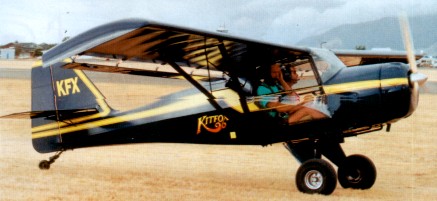
The Kitfox Model 1 introduced the “bump” cowl that has become the signature of the Kitfox. This cowl design was originally intended to accommodate a small radial engine, but the engine intended for the Kitfox never matured. The “round engine” look was retained, and remained popular. The Model 1 had an empty weight of only 425 pounds, and a gross weight of 850 pounds. The Rotax 532 was the engine of choice, although other two-stroke engines have been used. From a flying standpoint, the Kitfox Model 1 is an ultralight by today’s standards. It is a very simple, basic airplane that is light weight and relatively high powered (usually 65 hp). The interior can best be described as “cozy,” and the aircraft was usually built without dual brakes. The Model 1 accelerates rapidly and has light ailerons. There is a good deal of adverse yaw coupled with a neutral yaw axis. The adverse yaw is easily taken care of with rudder. The wing construction of tubular aluminium spars and wooden ribs, with full span Junkers type flaperons. The flaperons may be moved as flaps to affect pitch trim and lower the stall speed. The flaps can be extended 0 20 degrees and still allow full aileron travel. Lowering the flaperons to more than 2/3 of their full travel will result in up to a 50% reduction in roll rate. Takeoffs and landings are quite normal for a tailwheel airplane and easier than most. The nose fuel tank keeps most of the mass (center of gravity) right along the centerline, and directional control is not a major challenge.
The larger, wider Kitfox Model 2 was introduced in 1989. This “beefier” Kitfox allowed for greater useful loads and more room in the cabin. The Model 2 featured a larger vertical tail area and the new Rotax 582 engine option. The gross weight was increased to 950 pounds. The airfoil and control systems remained the same as the Model 1, but spars were strengthened to accommodate the higher gross weight. Flying-wise, the Kitfox Model 2 is quite similar to the Model 1. The larger tail surface helped some with the yaw issues, but was somewhat offset by larger engines and the introduction of wing tanks. Like the Model 1, the Model 2 is yaw neutral and needs to have the nose “placed” where it needs to be. Flaperon use and characteristics are virtually identical to the Model 1. Dual brakes were available for late Model 2 airplanes, and many earlier Model 2 airplanes have had dual brakes installed. Ground handling is similar to the Model 1, but the increase in gross weight, therefore greater mass, does cause one to pay a bit more attention to the landing rollout. Composite floats were developed, adding 70 lb to the airframe after substituting for the main gear. The Kitfox Model 3 featured structural changes that were designed to improve flight characteristics and provide a better platform for more powerful engines like the new 80 hp Rotax 912. A larger vertical stabilizer and rudder were added, as well as larger, stronger lift struts and spar carry through tubes in the fuselage. The gross weight was increased to 1050 pounds, but the empty weight only went up by a few pounds. This was the last Kitfox to use the original airfoil and flight control system introduced on the Model 1. The Model 3 was the first major attempt to aggressively deal with the yaw control issue. It should be remembered that we are not talking about yaw instability, but a neutral yaw condition. In other words, it was desired to have the airplane return to straight flight after pressing a rudder without having to move it back with your feet. Much of this objective was achieved by increasing the size of the vertical fin. The flaperon system is identical to the Model 1 and Model 2, with very similar handling characteristics. Again, the higher gross weight requires one to practice at least average tailwheel skills.
Introduced at Oshkosh in 1991, the Kitfox Model 4 was a completely new aircraft featuring innovations that enhanced the STOL abilities, improved flight handling and stability, and increased top speed by 10 to 15%. The Model 4 featured a new higher speed, laminar flow airfoil, new flaperon design, metal flaperon attach brackets, and a brand new 2:1 differential aileron control system that allows much improved control at full flaps. The gross weight of the Kitfox Model 4-1050 was the same as the Model 3, 1,050 pounds.
Kitfox IV
The Model 4 is an ideal platform for the Rotax 912 series of engines but is equally suitable for two-stroke engines. From a flying standpoint, the Kitfox Model 4-1050 was a genuine attempt to make the Kitfox handle like a contemporary, certified airplane, without losing the heritage of agility. It worked. The new airfoil added speed and performance. The flaperon airfoil, area, placement and movement ratios were changed significantly. For the first time, the flaperon moving up traveled twice as far as the flaperon moving down. This is similar to a Piper Cherokee. Rudder coordination was made much easier. The flaperons continued to be used for climb and cruise pitch trim, and back pressure is required to maintain approach speed. While reduction of roll rate was not as pronounced, the use of full flaperons did reduce the roll by up to 30% and increased the stick loads. The vertical fin area remained the same as the Model 3, once again a bit small for the larger engines now being installed. While yaw stability was no longer neutral, it was not aggressively positive. It would take one more iteration to get yaw stability to a more contemporary feel. The Kitfox Model 4-1200, marketed under the name of the Kitfox Classic 4, is the final evolution of the original Denney Aerocraft Kitfox design that began in 1984. One of the most successful kits on the market today, the Classic 4 kit has been sold continuously since late 1991. The Classic 4 has heavier lift struts and gear legs, as well as beefed up carry through tubes in the fuselage, to allow for a higher gross weight than the earlier Model 4 kits. The height of the vertical stabilizer and rudder was increased by 10 inches, and the rudder depth was increased by 2 inches to allow for improved handling. The Classic 4 is also available in a short wing Speedster configuration for those wishing more speed and a higher roll rate. In 1994, a light weight version of the Classic 4 was introduced with a Rotax 503 as the standard power plant. This airplane, known as the Kitfox XL, qualified as an ultralight trainer, but did not gain market popularity.
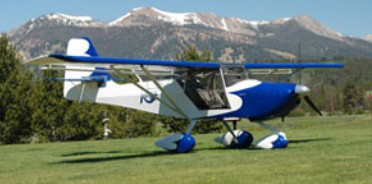
In 2001, an upgraded version of the Kitfox XL was introduced as the Kitfox Lite Squared and met with instantaneous market success. The Kitfox Classic 4 remains suitable for both the two-stroke and four-stroke Rotax 912 engine series. Many other engines have been adapted to the Kitfox Classic 4. Not only is the Kitfox Model 4 (Classic 4, Speedster, Lite Squared) the final evolution of the original Denney Aerocraft concept in terms of structure and engineering, but it is the best flying of all the previous versions. The vertical surfaces were increased significantly, resulting in excellent, positive, yaw stability. The Speedster version of the Model 4 added aerodynamic enhancements to the empennage, including an electric trim tab. Speedster modifications can be used on any Model 4 variant. Handling is smooth and crisp. While rudder coordination is needed, it is much closer to what most pilots encounter in today’s modern training airplanes. The higher gross weight and larger wing fuel tanks cause one to pay attention on landing rollout, but the much larger vertical tail surface gives you all the control power needed, and then some. The available electric pitch trim allows the Model 4 (in all its variations) to be trimmed for hands off flight in almost all normally anticipated flight attitudes. Many Model 4 aircraft were equipped with the 4-cylinder, 4-stroke, Rotax 912 that produces 80 HP. Model 4 variants are now turning up with the 100 HP Rotax 912S, resulting in power loadings that are better than the original, light weight, Model 1. Be prepared for an airplane that is ready to fly before you are. In 2001, the Classic 4 was packaged as the Lite Squared and introduced into the ultra light community as a two place, ultra light trainer. This packaging resulted in the Classic 4/Lite Squared being adapted to tri-gear in addition to the familiar tail wheel configuration. The Kitfox IV features a laminar flow wing aerofoil as well as a new flaperon aerofoil providing a full span, high performance fowler flap like performance. The new wing contributes to an increase in cruise speed of around 25 mph claims the manufacturer while decreasing the stall by about 2 mph. Computer marketing pioneer Phil Reed bought rights to the Kitfox line, changed the company name to SkyStar, brought out new sleeker looking models including trigears, and sold the company when sales began to slacken. Several groups of investors made Kitfox kits for a while, but the project eventually collapsed into bankruptcy. The McBeans have put the Kitfox, or at least one top-end model, back in the game. In 1994, SkyStar aircraft was faced with an increasing demand to produce a significantly larger version of the Kitfox that would be able to utilize contemporary certified engines (Continental and Lycoming) in addition to the Rotax 912 engines. The answerer to this demand was the entirely new Kitfox Series 5. While appearing very similar to the Kitfox Classic 4, it is, in fact, a completely new design. The Kitfox Series 5 introduced a new marketing approach in which different variations of the Series 5 were given names. The tailwheel version became known as the Safari, and the tri-gear version (the first production tri-gear airplane based on the Kitfox design) was named the Vixen. The Vixen utilized a swept tail, a cosmetic change that did not affect performance. Originally introduced with a gross weight of 1400 pounds, the gross weight was increased to 1550 pounds in mid-1995. The handling characteristics became much more like those of contemporary certified aircraft, but lost none of the agility that had become a Kitfox trademark. As with all Kitfox aircraft, the folding wing feature was retained. In 1998, the name of the Safari was changed to the Outback, and the Vixen became the Voyager, but the basic features remained the same. A short wing version of the Series 5 was also sold, and it was known as the Series 5 Speedster. Although heavier and larger, the Series 5 is an aerodynamically cleaner design than the Classic 4 and cruises at a higher speed. The Series 5, and variations thereof, are a delight to fly. Refinements to the vertical tail surfaces and a new, trimable, horizontal stabilizer enhanced the pitch feel. The Series 5 has a “smoother” feel than the quick reacting Model 4, but retains the overall agility. Yaw stability is positive and good. The greater weight of the 1550 pound airplanes, coupled with the greater mass of Continental and Lycoming engines, causes the Series 5 to feel very much like a larger, heavier, certified airplane. This is not a surprise, as the Series 5, along with its tooling, was specifically designed to meet Primary Aircraft certifications standards. The tri-gear version of the Series 5 (Vixen/Voyager) is a contemporary nose gear airplane in all respects. The use of differential braking to steer the tri-gear airplane may take some practice, but offers unparalleled ground maneuverability. The larger engine choices result in a larger cowling and limited forward visibility during ground operation of the tailwheel version of the Series 5. Good tailwheel proficiency is suggested before your first flight of the “limited view” Series 5. Cruise flight in the Series 5 is nose low, resulting in very good in-flight visibility.
In 1990 the first Skyfox (RPX-44), the Philippine version of Kitfox, assembled by the Philippine Aircraft Company, Inc. (PACI) in agreement with Denney Aerocraft of the U.S.A., flew. By 1995 the Kitfox was being built under licence in the Philippines by PACI. The Speedster version is based on the Classic IV or series V.
SkyStar’s new management team introduced the Kitfox Series 6 in 2000. The multiple versions of the Series 5 Kitfox were all rolled into a single airplane that possessed the most versatile features of all the Kitfox’s. The Kitfox Series 6 has a useful load of up to 800 pounds and a range of over 700 miles, coupled with cruising speeds of over 120 mph. The factory’s Series 6 actually averaged 137 mph in the Sun ‘n Fun 100 Air Race in 2001, and that was with two folks on board. The Series 6 could be configured as either a tri-gear or tailwheel airplane, and can be converted to either version after assembly is completed. Assembly times were significantly reduced, and the Series 6 accommodates more engine types than any other Kitfox. The look, feel and flight characteristics of the Kitfox Series 6 are like those of the most sophisticated, certified airplane, but none of the Kitfox adventure has been sacrificed. All of the good flying qualities inherent to the Kitfox Series 5 are present in the Kitfox Series 6. The Series 6 has a heavy-duty landing gear system that improves soft and rough field ground handling. The Series 6 no longer used the bungee/tube landing gear that was standard on the Series 5, resulting in a more easily controlled airplane during rollout after a tailwheel landing. Like all Kitfox’s, the Series 6 retains the ability to perform awesome forward slips and is an ideal airplane for short field operations. The Kitfox Series 6 has a refined flap system that allows the selection of two optimum flap positions. The first notch is used for takeoff and approach. while the second notch is generally reserved for landing. The tri-gear version of the Series 6 is very well balanced, and smooth takeoff and landing rotations are effortless. The Model 6 kits are intended for rapid assembly. All of the welding is done at the factory, then powder coated. The wings and ailerons are fabricated in the factory, and fuel tanks are fitted and ready to be bolted in. Most components are prefabricated or preshaped and finished for quick attachment. John and Debra McBean decided to concentrate on the Super Sport model, replacing the Classic IV. The Super Sport kit cost $5000 more than the Classic IV did, and the 80-hp Rotax 912 engine should work well in the Super Sport.
The Kitfox Series 7 introduces a variety of both major and subtle changes in the Kitfox history of ongoing product development. Most noteworthy is a variety of engine system enhancements that have resulted in an airplane that can cruise at over 150 mph, fly 700 miles non-stop, and heft a useful load of 700 pounds. Through use of the remarkable Rotax 914, turbo-charged engine, the Kitfox Series 7 has a service ceiling of 25,000 feet, meaning it can operate from any public use airport in the United States, without concern over runway length, field elevation or air temperature. Flight control improvements have lowered the landing speed and reduced aileron induced yaw. The larger elevator and new manual trim system strengthen pitch authority and stability. The entire Rotax engine installation has been greatly simplified, resulting in a significant reduction in assembly time. This new installation also results in much improved windshield weatherproofing. Like the Kitfox Series 6, which has been replaced by the Series 7, convertible landing gear, folding wings, and many custom features are standard. While many of the Series 7 performance improvements are achieved with the Rotax 914, Continental and Lycoming engines, in addition to the popular Rotax 912S, remain very popular engine choices. Most Series 7 improvements can be retrofitted to the Kitfox Series 5 and 6.
New from Skystar in 1998 was the Kitfox Lite, as a US Part 103 ultralight. It has a spaceframe fuselage, wings with tubular spars and plywood ribs. The Fowler flaps have been retained.
Skystar Kitfox Lite
More than 5,000 had been delivered by 2012. The latest model, Kitfox SLSA, was available ready to fly or as a kit, this fabric/tube taildragger (also tricycle gear) backcountry STOL performer then offering a Rotax 912iS fuel-injected version. Price 2012: $99,995.
Kitfox 1 Engine: Rotax 532LC, 64 hp. Max wt.: 950 lbs Wing span: 32 ft. Wing area: 128 sq.ft. Wing loading: 7.42 lbs/sq.ft Power loading: 14.61 lbs/hp Average empty weight: 426 lbs. Average useful load: 424 lbs. Max speed (Vne): 100 mph Cabin width: 36 in. Length (wings folded): 21 ft. Width (wings folded): 7 ft. 10 in. Height: 67 in. Average cruise speed: 75 mph Stall Speed: 36 mph Seats: 2
Kitfox II Engine: Rotax 582, 64 hp. Wing span: 32 ft. Wing area: 128 sq.ft. Gross weight: 950 lbs. Average cruise speed: 85 mph Stall Speed: 36 mph Average empty weight: 426 lbs. Average useful load: 524 lbs. Max speed (Vne): 100 mph Cabin width: 39.5 in. Length (wings folded): 21 ft. 1 in. Width (wings folded): 7 ft. 10 in. Height: 67 in.
Kitfox III Engine: 912, 80 hp. Gross weight: 1050 lbs. Average cruise speed: 85 mph Stall Speed: 37 mph Average empty weight: 460 lbs. Average useful load: 590 lbs. Max speed (Vne): 100 mph Cabin width: 39.5 in. Wing span: 32 ft. Length (wings folded): 21 ft. 1 in. Width (wings folded): 7 ft. 10 in. Height: 67 in
Kitfox IV Classic Engine: Rotax 912, 80 hp. HP range: 50-100. Speed max: 112 mph. Cruise: 110 mph. Range: 570 sm. Stall: 32 mph. ROC: 840 fpm. Take-off dist: 200 ft. Landing dist: 200 ft. Fuel cap: 26 USG. Weight empty: 495 lbs. Gross: 1200 lbs. Height: 75 ft. Length: 18.42 ft. Wing span: 32 ft. Wing area: 132 sq.ft. Seats: 2. Landing gear: tail wheel.
Kitfox IV Classic Engine: Rotax 912, 80 hp. HP range: 50-100. Cruise: 110 mph. Range: 700 sm. Stall: 36 mph. ROC: 1300 fpm. Take-off dist: 250 ft. Landing dist: 250 ft. Fuel cap: 27.5 USG. Weight empty: 650 lbs. Gross: 1200 lbs. Length: 18.5 ft. Wing span: 32 ft. Wing area: 132 sq.ft. Seats: 2. Cockpit width: 39 in Landing gear: tail wheel. LSA
Skystar Aircraft Classic IV Engine: Rotax 912, 80 hp Wing span: 9.75 m Wing area: 12.40 sq.m MAUW: 543 kg Empty weight: 278 kg Max speed: 180 kph Cruise speed: 175 kph Minimum speed: 60 kph Climb rate: 6 m/s Seats: 2 Fuel consumption: 13 lt/hr Kit price (1998): US$25,285
Kitfox V Engine: Rotax 912, 80 hp. HP range: 80-125. Speed max: 123 mph. Cruise: 110 mph. Range: 605 sm. Stall: 35 mph. ROC: 750 fpm. Take-off dist: 185 ft. Landing dist: 215 ft. Fuel cap: 26 USG. Weight empty: 705 lbs. Gross: 1550 lbs. Height: 7.5 ft. Length: 20.58 ft. Wing span: 29 ft. Wing area: 121 sq.ft. Cabin width: 42.5 in. Seats: 2. Landing gear: tail wheel.
Skystar Kitfox V Engine: Continental IO-240, 125 hp Wing span: 8.84 m Wing area: 11.13 sq.m MAUW: 703 kg Empty weight: 406 kg Fuel capacity: 99 lt Max speed: 233 kph Cruise speed: 222 kph Climb rate: 6 m/s Seats: 2 Fuel consumption: 25 lt/hr Kit price (1998): $15,995
Kitfox Vixen Engine: Continental IO-240, 125 hp. HP range: 80-125. Speed max: 145 mph. Cruise: 138 mph. Range: 618 sm. ROC: 1200 fpm. Take-off dist: 230 ft. Landing dist: 220 ft. Fuel cap: 26 USG. Weight empty: 725 lbs. Gross: 1550 lbs. Height: 8.08 ft. Length: 20.25 ft. Wing span: 29 ft. Wing area: 121 sq.ft. Seats: 2. Landing gear: nose wheel.
Kitfox Safari Engine: Continental IO-240B, 125 hp. HP range: 80-125. Speed max: 136 mph. Cruise: 130 mph. Stall: 43 mph Range: 610 sm. ROC: 1800 fpm. Take-off dist: 129 ft. Landing dist: 300 ft. Fuel cap: 27 USG. Weight empty: 750 lbs. Gross: 1550 lbs. Height: 5.7 ft. Length: 19.2 ft. Wing span: 29 ft. Wing area: 120 sq.ft. Seats: 2. Landing gear: tail wheel.
Kitfox IV Speedster Speed max: 120 mph. Cruise: 115 mph. Range: 640 sm. Stall: 39 mph. ROC: 1200 fpm. Take-off dist: 200 ft. Landing dist: 240 ft. Engine: Rotax 912, 80 hp. Fuel cap: 26 USG. Weight empty: 640 lbs. Gross: 1200 lbs. Height: 6.64 ft. Length: 18.33 ft. Wing span: 28.66 ft. Wing area: 116.8 sq.ft. Seats: 2. Landing gear: tail wheel.
Kitfox Super Sport Cruise: 120 mph Stall: 41 mph Range: 700 sm Rate of climb: 1300 fpm Takeoff dist: 290 ft Landing dist: 270 ft Engine: Rotax 912S, 100 hp HP range: 80-100 hp Fuel capacity: 18 USG Empty weight: 750 lb Gross weight: 1320 lb Length: 19.8 ft Wing span: 32 ft Wing area: 132 sq.ft Seats: 2 Cockpit width: 43 in Landing gear: nose or tail
Kitfox Lite Squared
Skystar Kitfox Lite Engine: 2SI F 35, 30 hp Wing span: 9.14 m Wing area: 10.23 sq.m MAUW: 226 kg Empty weight: 113 kg Max speed: 101 kph Cruise speed: 101 kph Minimum speed: 43 kph Climb rate: 3 m/s Seats: 1 Fuel consumption: 10 lt/hr
Denny Aerocraft Co was the original Idaho source for the Denny Kitfox two-seat cabin homebuilt with good short-field characteristics, first flown 1984 and hugely successful. Manufactured under license in Australia, Brazil, Philippines, Portugal, and South Africa, and developed into improved variants. See Skystar Aircraft Corporation.
Denney Aerocraft produced the first Kitfox kit in November of 1984 in a small factory in Boise, Idaho. The Kitfox was designed as a lightweight, two-place sport aircraft with excellent STOL (Short Takeoff and Landing) performance and the ability to operate from short and unimproved airfields. The Kitfox features folding wings and is easily trailered, allowing owners to share hangar space or keep their Kitfox’s at home in a single car garage. Six Model 1 Kitfox’s were delivered that first year. Since 1984, over 4,000 Kitfox kits have been delivered to builders throughout the United States, Canada, and over 42 foreign countries. Under Dan Denney’s leadership, the Kitfox evolved from the original Model 1 to continually improved versions referred to as the Models 2, 3, 4, and Classic 4.
In June 1992, Phil Reed / SkyStar Aircraft Corporation purchased the rights to produce the Kitfox kit from Denney Aerocraft. (1995: 100K N.Kings Rd, Nampa, ID 83687, USA.) SkyStar immediately began development of a completely new Kitfox, the Series 5. This larger aircraft was designed to fit the needs of a growing segment of the marketplace that wanted a “Weekend Cruiser.” These pilots wanted a recreational airplane that combined the best attributes of the Kitfox with greater useful loads, certified engines, increased cabin space, and larger cargo capacity. The Series 5, which offered both a taildragger (the Outback/Safari) and a tri-gear (the Vixen/Voyager) configuration, answered these requests and became one of the most successful introductions in the history of the kit plane industry. In January of 2000, an employee group acquired SkyStar Aircraft. SkyStar announced the new Kitfox Series 6, an airplane that incorporated all of the best features of all versions of the Series 5. The Series 5 evolved into the Series 6, and then the Series 7. In October of 2005, Skystar encountered financial difficulties and ceased operations. In April of 2006, the assets of Skystar were acquired by Kitfox Aircraft LLC, a newly formed organization operated by John and Debra McBean. The McBean’s own and operate Sportplane LLC, a Kitfox specialty supply firm they founded after John’s departure from Skystar in 2003.
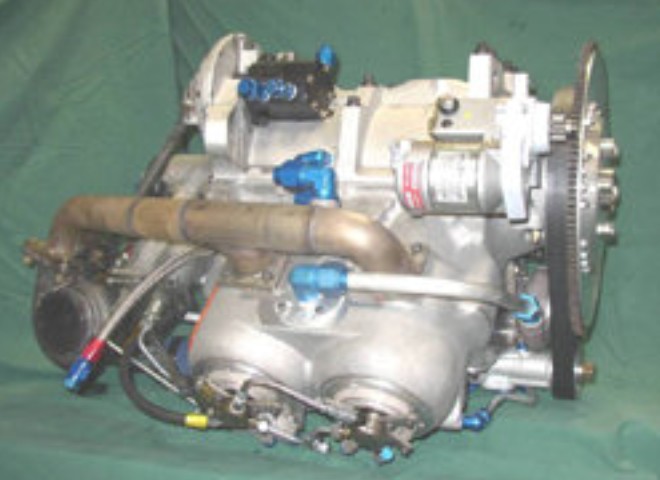
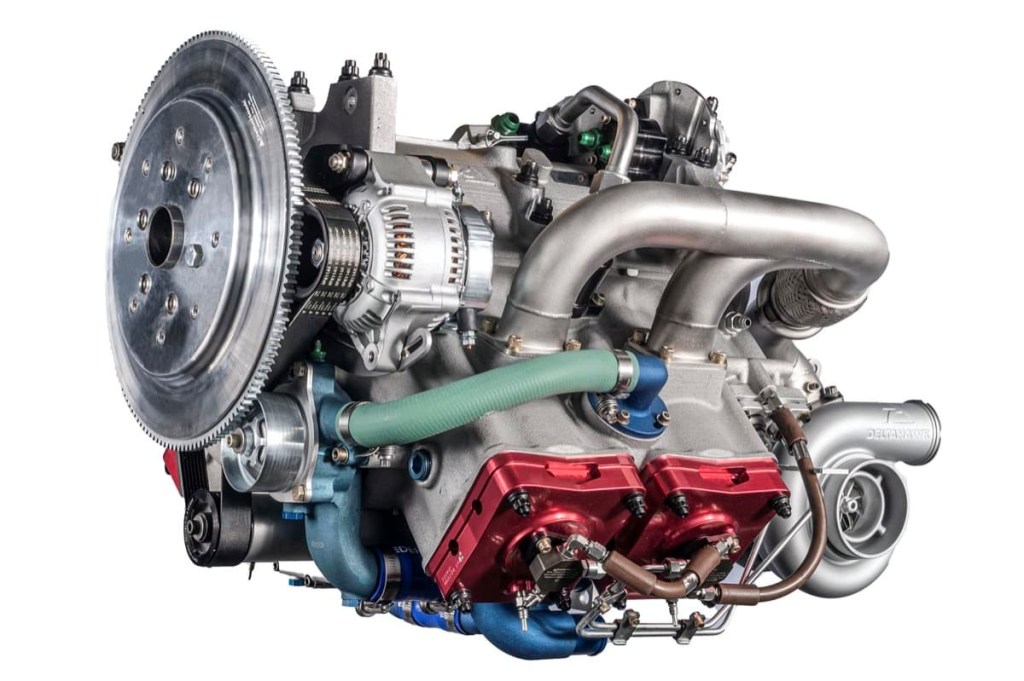
These diesel engines are is manufactured by DeltaHawk and feature a direct drive four cylinder two stroke, inverted V configuration, liquid cooling, direct injection, and turbo-diesel.
Optional Equipment includes hydraulic governor (with constant speed propeller option), a low noise exhaust (meets German noise regulations in combination with 3-blade propeller), and either a 3-blade constant speed or 2-blade fixed pitch propeller.
These firewall forward DeltaHawk engines kits are approved to operate on Diesel and Jet fuel.
DHK180
The 180-hp DHK180 is the first of a family of engines to come from DeltaHawk, according to officials with the Racine, Wisconsin-based company.
Featuring an inverted-V engine block, turbocharging and supercharging, mechanical fuel injection, liquid cooling, direct drive, and 40% fewer moving parts than other engines in its category, the 180-hp DHK180 engine is a clean-sheet design secured by multiple patents, company officials noted.
According to company officials, the new engine is “highly responsive and produces more usable torque than traditional aircraft engines in its class, all while burning significantly less fuel and with a resulting lower net carbon footprint. The engine can burn both Jet-A and sustainable aviation jet fuels.
With FAA certification in hand, performance and technical upgrades were underway, along with additional endurance testing and flight evaluations in multiple aircraft.
The new engine was selected by NASA to power the hybrid propulsion system planned for its Subsonic Single Aft Engine Aircraft (SUSAN) scale flight test vehicle, a proof-of-concept electro-fan design for future regional transport aircraft. The DeltaHawk engine has also been selected by Ampaire for an upcoming aircraft testbed application in support of NASA’s Small Business Innovation Research initiative.
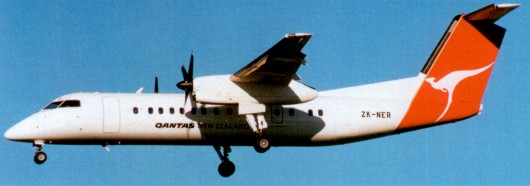
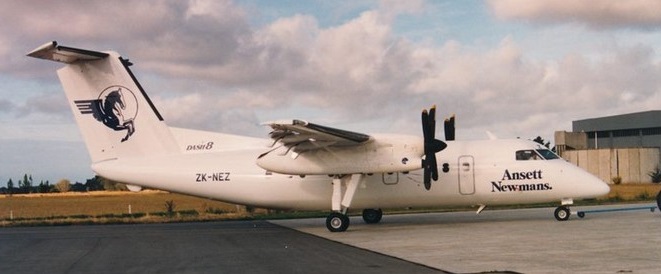
The Dash 8, of high wing monoplane configuration powered with two P&W 120s, was announced by de Havilland Canada in 1979 as a complement to the larger four engined STOL capable Dash 7. The company’s first transport not optimised for short take-off and landing. The go-ahead to cut metal was announced in September 1980 and the prototype Dash 8 series 100 rolled out in Downsview, Ontario, in April 1983.
The fuselage cargo-loading door is standard, and other features include a retractable tricycle landing gear with twin-wheel units, large-span T-tail, and a high-mounted wing carrying two fuel-efficient Pratt & Whitney PW120 advanced turboprop engines driving large-diameter slow-turning four-bladed propellers (originally the PT7A) ensuring very low noise levels. These engines also have safety features which ensure that if one fails the other automatically increases its output to 1492kW.
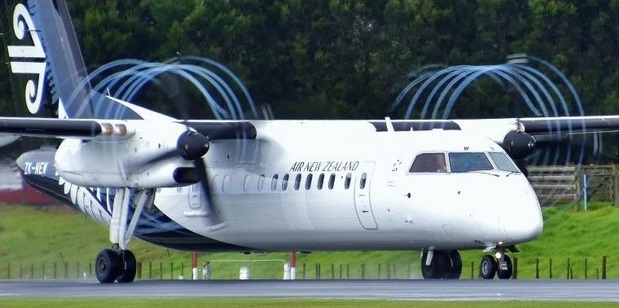
The prototype of the 36-seat Series 100 flew for the first time on 20 June 1983. Canadian certification followed on 28 September 1984. The first customer was to be norOntair of Canada on 23 October 1984. Orders for the initial 100 series production version had reached 230 by 1990. The -100A series followed in 1990. The -100A model had a revised interior with more headroom and enhanced PWI20A engines and in 1992 was offered with the more powerful PW121 engines. In 1992 the production switched to the Dash 8-200 and the first deliveries began in April 1995. The Dash 8-200 has PW123C engines, which gave the -200 series an increase in top speed of 30 knots over the 100 series. The -200B series has the PW123Bs for better ‘hot and high” performance. From April 1996 all Dash 8 aircraft delivered were fitted with a computer-controlled noise and vibration suppression system (NVS). To reflect this the name was changed to Dash 8Q (for “quiet”). In 1998 this was changed again to Dash 8-Q200 when the new interior was introduced. The Dash 8-Q200 holds 37 passengers. Boeing, within a month of purchasing DHC, signalled their commitment to the enterprise by announcing mid-1985 the development of a stretched 50/56 passenger Dash 8 Series 300 for a first flight on 15 May 1987 (modified Series 100 prototype). This became the -300 series and the first aircraft was an earlier prototype Dash 8 converted to the new length of 25.68 metres. It first flew on 15 May 1987. Canadian certification followed on 15 February 1989 and the first deliveries were to Time Air later on 27 February 1989, FAA type approval on 8 Tune 1989. The stretch for the series -300 was effected with a “plug,” forward and aft of the wing. of 3.43 metres. The wings also have a greater span of 27.43 metres over 25.91 metres. Other smaller changes were a larger toilet, a repositioned galley and a new galley door, an additional wardrobe, dual air conditioning packs and the option for an APU. Orders for the Srs 300 were in excess of 100 by 1990, deliveries starting in February 1989. The Dash 8-300 provides a very good single engine performance, being able to climb to 14,000 feet at maximum all up weight or descend to 16,000 feet on one engine. Further variants of the 300 series were offered with the first, the -300A, being in 1990 with increased higher gross weights, interior improvements and the standard PW123A engines. The -300B was introduced in 1992 with PW123B engines as standard. All Dash 8-300 aircraft built since April 1996 have also been fitted with NVS and throughout the ’90s Boeing Canada worked on variants for both military and civil applications. Two transport versions are in service with the Canadian Department of National Defence as CC 142s and four navigation trainers are on order as CT-142. The USAF has two on inventory as E¬9As for range control on the Gulf Missile Test range.
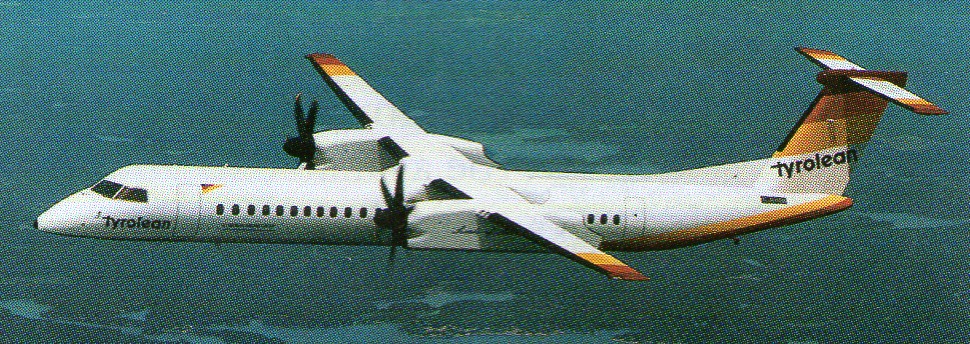
In 1986 de Havilland Canada, by then part of Bombardier, started development of a larger 50-seat regional airliner. 1998 the aircraft where renamed Dash 8Q-300s when the new interior was introduced. Six twin-turboprop Dash 8s ordered by the Canadian Armed Forces have long-range fuel tanks, rough-field landing gear, strengthened floors, and other equipment changes. Designated Dash 8Ms by DHC, four will be used as navigation trainers, while the other two will be allocated to transport duties in Europe, replacing Dash 7s. The 1987 commercial variant was the stretched 50-56-seat Series 300. The 37-seat Dash 8 Series 200 and 50-seat Series 300 turboprops were being produced at the rate of two per month in 1998. Launched in June 1995 as stretch of Series 300, the -Q400, can hold 70 passengers, equipped with a computer-controlled noise and vibration suppression system, indicated by the “Q” (standing for quiet) before the model/number designator. First flown on 31 January 1998, FAA FAR Pt 25 approval was received on 8 February 2000. First delivery was to SAS Commuter 20 January 2000, followed by service entry 7 February on the Copenhagen, Denmark, to Poznan, Poland route.
The low-noise Dash 8 Q became the standard version from 1996
By January 1991 the Dash 8 order book stood at 361 aircraft, comprising 251 Series 100s and 110 Series 300s, with around 230 delivered. A Q300 delivered to Air Nippon on 6 March 2001 was the 600th Dash 8.
Bombardier Dash 8-400
In June 2009 Bombardier sold the Q400 aircraft program to Longview, the company that owns Viking Air. A separate company called DeHavilland Aircraft of Canada was created to build and support the Q400.
In 2025 a used Q400 plane can be purchased for about $5 million and can be retrofitted for firefighting for an additional $5 million.
Variants:
CC-142: designation of two Series 100s bought by the Canadian. Department of National Defence but operated since March 1987 by the Canadian Forces at Lahr, Germany. Used as passenger/cargo transports, the aircraft are equipped with long-range fuel tanks, rough field landing gear,, high strength floors and a special-mission-related avionics fit.
CT-142: designation of four Series 100s, acquired by the Canadian DND, and operated as specially configured navigation trainers by the Canadian Forces. Otherwise equipped similarly to the CC-142, the trainers are distinguished by their extended noses.
Dash 8M-100: two specially-equipped Series 100s used by the Canadian Department of Transport to calibrate ILS, VOR and MLS systems at Canadian airports.
Dash 8M-300ASW Triton: designation of a proposed maritime patrol or anti-submarine warfare version of the Series 300 equipped with Harpoon or Exocet-type anti-shipping missiles mounted on lower side fuselage sponson hardpoints, and four underwing pylons, outboard of the engines, capable of carrying missiles, torpedoes, mines, sonobuoys or searchlights. With a full range of ASW sensors including FLIR, MAD and search radar operated by a six-man crew, maximum endurance is over 11 hours.
E-9A: designation of two standard Series 100 aircraft acquired by the US Air Force in 1985 as airborne platforms to perform telemetry and data link duties in connection with drone and missile testing at Tyndall AFB, Florida. Modified by the Sierra Research division of LTV, the E-9A carries a large fuselage fairing containing a steerable phased-array antenna, underfuselage search radar and special avionics. Both aircraft were delivered in 1988.
Dash 8 Series 100 Engines: 2 x Pratt & Whitney Canada PW120A turboprops, 1491kW Take-off weight: 15650 kg / 34503 lb Empty weight: 9979 kg / 22000 lb Wingspan: 25.91 m / 85 ft 0 in Length: 22.25 m / 73 ft 0 in Height: 7.49 m / 25 ft 7 in Wing area: 54.35 sq.m / 585.02 sq ft Cruise speed: 497 km/h / 309 mph Ceiling: 7620 m / 25000 ft Range w/max.payload: 2010 km / 1249 miles
Dash 8 Series 200 Engines: 2 x Pratt & Whitney Canada PW120A turboprops, 1491kW Take-off weight: 15650 kg / 34503 lb Empty weight: 9979 kg / 22000 lb Wingspan: 25.91 m / 85 ft 0 in Length: 22.25 m / 73 ft 0 in Height: 7.49 m / 25 ft 7 in Wing area: 54.35 sq.m / 585.02 sq ft Cruise speed: 497 km/h / 309 mph Ceiling: 7620 m / 25000 ft Range w/max.payload: 2010 km / 1249 miles
Dash 8 Series Q200 Engines: 2 x Pratt & Whitney Canada PW120A turboprops, 1491kW Take-off weight: 15650 kg / 34503 lb Empty weight: 9979 kg / 22000 lb Wingspan: 25.91 m / 85 ft 0 in Length: 22.25 m / 73 ft 0 in Height: 7.49 m / 25 ft 7 in Wing area: 54.35 sq.m / 585.02 sq ft Cruise speed: 497 km/h / 309 mph Ceiling: 7620 m / 25000 ft Range w/max.payload: 2010 km / 1249 miles
DHC 8 Dash 8-300 Length: 84.318 ft / 25.7 m Height: 24.606 ft / 7.5 m Wingspan: 89.895 ft / 27.4 m Wing area: 604.937 sqft / 56.2 sq.m Max take off weight: 41101.2 lb / 18640.0 kg Weight empty: 24696.0 lb / 11200.0 kg Max. weight carried: 16405.2 lb / 7440.0 kg Max. speed: 286 kts / 530 km/h Landing speed: 76 kts / 141 km/h Cruising speed: 270 kts / 500 km/h Initial climb rate: 1771.65 ft/min / 9.00 m/s Service ceiling: 25098 ft / 7650 m Wing load: 68.06 lb/sq.ft / 332.00 kg/sq.m Range: 891 nm / 1650 km Engine: 2 x Pratt & Whitney 123, 1751 shp Crew: 2 Payload: 50-56pax
Dash 8-300A Payload: 6272kg
Dash 8-311 Engines: 2 x Pratt & Whitney of Canada PW123 turboprops, 2,380-shp. Props: four bladed Hamilton Standard 14SF-23. Max cruise: 287 kts. Initial ROC: 1800 ft/ min. Empty wt: 11.657 kg. MTOW: 19,505 kg. Cruise 92%: 276 kts. Fuel flow @ 92%: 360 kg/hr each. Seats: 56.
On January 13, 2008, the Brazilian Roman Catholic priest and human-rights defender Adelir Antonio de Carli lifted off from Ampere, Brazil, suspended under 600 helium-filled party balloons, and reached an altitude of 5,300 metres (17,400 ft) before landing safely in Argentina. On April 20, 2008, lifting off from Paranagua, Brazil, in an attempt to fly 725 km (450 mi) inland to Dourados, Brazil, he flew using a chair suspended under 1,000 party balloons, reaching an altitude of 20,000 feet (6,100 m). Not having checked the weather forecast, he got caught in a storm. He had a GPS but did not know how to operate it. He was last heard on the radio eight hours after liftoff approaching the water after flying off the coast, unable to give his position, and crashed in the Atlantic Ocean; part of his body was found by the Brazilian Navy near an offshore oil platform on July 4, 2008. The act won him a 2008 Darwin Award.
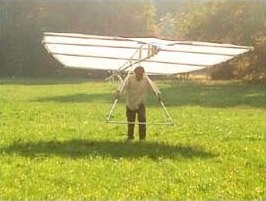
The d’Arrigo Da Vinci Volante Piume Glider is a 2003 realization of a glider design by Leonardo da Vinci of 1490–1496 which was found as a drawing and identified with the name “Piume” (Feather), only coming to light with the rediscovery in 1966 of the da Vinci Madrid Codices. The replica was designed by Angelo d’Arrigo, a hang glider pilot, who actually flew the aerodynamically-modified replica in 2003.







 All Aero