Wilksch WAM 120 / WAM 160

The Wilksch WAM series is a family of aero-engines for light and general aviation aircraft. WAM series engines are produced by Wilksch Airmotive in Gloucestershire, England. The engine outputs range between 100 hp (75 kW) and 190 hp (142 kW), and are suitable for both tractor and pusher configurations. Initially intended for homebuilt aircraft, the WAM engines may become certified for use on factory-built aircraft.

Wilksch engines are compression ignition engines which burn Diesel fuel or jet fuel. Aero-diesels are more efficient than the avgas engines more commonly found in general aviation aircraft. Kerosene jet fuel is ideal for jet turbines, but it lacks the lubricity of Diesel fuel. Accordingly, Diesel aero-engines that use jet fuel must have sufficient lubrication to compensate.

The WAM unit is a direct-drive two-stroke inverted inline triple with wet-sump, liquid cooling, supercharger, turbocharger and intercooler. Compression boost at startup comes via a supercharger, but once the engine is running, a turbocharger provides additional boost. Being inverted, the engine has its crankshaft at the top directly driving the propeller, and a camshaft at the bottom, immersed in sump oil. Charged air for combustion is introduced under pressure through a gallery of small ports, and exhaust gases are later expelled through a poppet valve in the cylinder head.

The intake ports are small enough to ensure that piston rings do not need to be pegged. Instead of using a gudgeon pin, each piston is connected to its connecting rod via a ball and socket joint, to enable the piston to rotate. This feature may be abandoned in favour of conventional gudgeon pins.

Fuel is filtered, and then supplied by a high pressure feed, surplus fuel being returned to the tank. Fuel injection is by IDI (indirect injection), whereby fuel is injected into a prechamber. A rather old-fashioned system, IDI was adopted for its simplicity and robustness.

Initial development was assisted with a UK government (DTI) grant. The prototype was a two-cylinder model capable of 80 hp (60 kW). The three-cylinder WAM120 produced 100–120 hp (75–89 kW), and the factory intended to produce a follow-up four-cylinder 160 hp (119 kW) motor to compete with engines such as the Lycoming O-360. However, funding proved problematic, and it became expedient to extend the product range by developing a larger capacity version of the three-cylinder motor. Wilksch are said to be still working on a four-cylinder motor.

The testbed aircraft for air trials were a Piper Cub a Shaw Europa and a Thorp T211. To date, some 20 aircraft have flown with WAM power, and one engine has been installed (in pusher mode) in a Staverton-based Rutan Long-EZ. In July 2009, Liberty Aerospace installed a WAM in the USA-built Liberty XL2 aircraft, and the company has agreed to assist Wilksch Airmotive in obtaining FAA certification for the WAM series. This cooperative effort bodes well for the future of Wilksch Automotive, and is expected to lead to the WAM engine becoming a specified option for the Liberty XL2.

Variants:
WAM120 three-cylinder engine
WAM 160 four-cylinder engine (proposed)

Applications:
Europa XS
Liberty XL2
Thorp T211
Rutan Long-EZ
Murphy Rebel
Jodel
Vans RV-9
Cosy

Specifications:
WAM120
Type: two-stroke inverted inline triple
Valvetrain: ohc (exhaust) & peripheral ports (inlet)
Supercharger: yes
Turbocharger: yes
Fuel system: IDI Fuel Injection
Fuel type: AVTUR or DERV
Oil system: wet sump
Cooling system: Liquid-cooled
Power output: 120 hp (89 kW) at 2,700 RPM

Whitney DW200 Boomerang

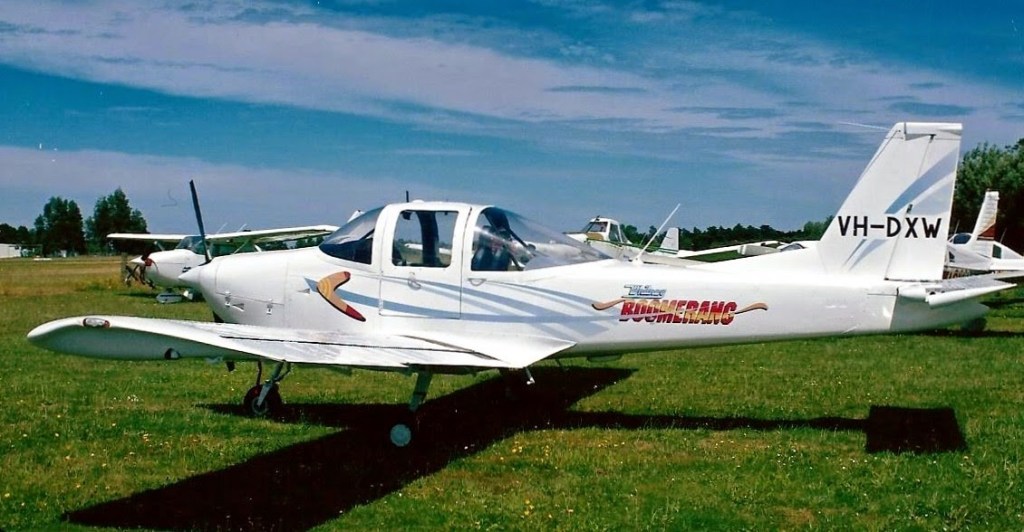
Ardmore NZ January 2009

The ‘official’ first flight of the Whitney Boomerang was at manufacturer Dean Wilson Aviation’s Kingaroy Queensland on 16 July 2006. The real first flight was conducted a couple of days earlier.

Whitney DW200 Boomerang Article

The Whitney Boomerang was designed by C W (Bill) Whitney and gained FAA23 certification on December the 18th 2007 – the fifth Australian designed aircraft to do so.

A distinctive feature of the fuselage is a 4130 tubular steel frame cockpit cage tested to withstand 12g forward loads, that also provides roll-over and side intrusion protection.

It is powered by a Lycoming O-235-N2C engine and a McCauley 1A135/JCM7147 propeller. MCTOW is 825kg.

It went into production as the DW200 Whitney Boomerang with Dean Wilson Aviation’s Queensland Aviation Manufacturing division at Kingaroy, Queensland in 2006 and first flew that July. It was hoped that it would be a replacement for the Piper PA-38 Tomahawk and the Cessna 152. It was demonstrated on numerous occasions and even made the flight to NZ arriving at Kerikeri on 03-10-2008.

New Zealand Type Acceptance was been granted to the Dean-Wilson DW200 Series (also known as the Whitney Boomerang) on 24-10-2008 based on the FAA and CASA type certificates. The application for New Zealand type acceptance of the Model DW200 was from the manufacturer, dated 7 October 2008.

Ardmore NZ January 2009

The new Boomerang made an ‘official’ first flight on 16 July 2006. The first real flight was a few days earlier.

Following the gaining of its NZ certification VH-DXW returned across the Tasman Sea to Australia.

The launch customer was Minovation Flying Training at Jandakot, Perth and then with Flight One at Archerfield, Brisbane. Foreign interest faded after a burst of initial interest and an order for 10 aircraft from India.

2007

Due to lack of sales the assets of the collapsed Dean-Wilson Aviation company at Kingaroy were offered for sale. On 27-05-2011 an advert in the “Australian” newspaper invite expression of interest in acquiring the assets of the Companies manufacturing the Whitney Boomerang. This included the type certificate, plant and equipment, parts and tooling and the hangar housing the facility at Kingaroy.

Engine: Lycoming O-235, 115 hp / 86 kW
MTOW: 750 kg / 1653 lb
Cruise: 95 kt / 176 kph
Load: +4.0 / -2.2 g

WAACO Staggerbipe

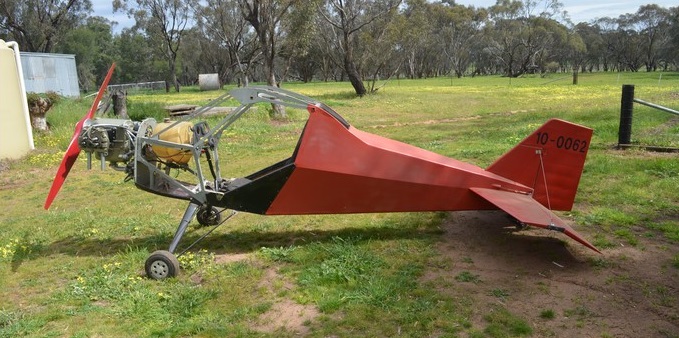
Reverse Stagger winged biplane, single seater, VW powered, 145 kg empty, stressed to +9, — 6 G’s. For possible restricted aerobatics. Three axis controls via full span ailerons, large rudder and elevator. Taildrag¬ger configuration. Fully enclosed cockpit can be made semi-open by removing both doors. Fuselage is constructed with square hollow aluminium tubing, riveted, epoxied, and co¬vered with ceconite. A 2 stroke engine option is available.

Courtesy Brian Creek

Max Kremke displayed the Staggerbipe, unfinished at Mangalore in 1984. Max originally had it on a composite landing gear spring that proved too soft and it was after that he substituted the CRMO gear legs.

It was finished and painted, blue with red and white accents, but possibly never flown but it appeared capable of flight. It had instruments fitted.

Courtesy Brian Creek

Circa 2018 LAME Brian Creek picked it up because of an interest in early aero engines. Installed was a Continental A40 engine, and the cowls suited the A40 – no sign of a VW installed ever. He did discover that the aircraft was first registered in 3/04/1988 and de-registered 22/04/2009. It appears to have never flown.

Engine: VW 1300, 42 hp
Prop: 135cm x 84cm pitch
Wingspan: 6.1m top, 5.5 m lower
Length: 4.4m
Fuel capacity: 31 lt
Weight: 150 kg
Cruise speed: 65-70 kt
Stall: 28 kt

Weller UW-9 Sprint

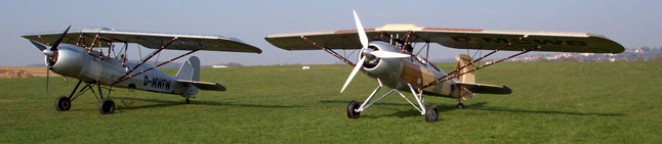
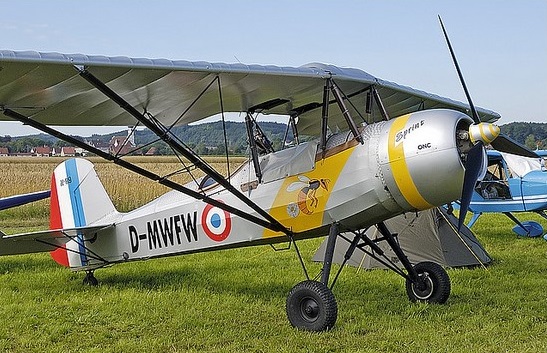
In production in 2012, the Weller UW-9 Sprint is a German ultralight aircraft designed and produced by Weller Flugzeugbau of Bibersfeld.

The UW-9 is intended as a nostalgic 1930s style design that would comply with the Fédération Aéronautique Internationale microlight rules. It features a strut-braced parasol wing, a two-seats-in-tandem open cockpit, fixed conventional landing gear and a single engine in tractor configuration.

The aircraft fuselage is made from welded steel tubing, with bolted-together aluminum tubing spar ladder-construction wings, all covered in doped aircraft fabric. Its wing has a cut-out in the centre trailing edge for rear cockpit access. The wing is supported by “V”-struts and jury struts. The tailplane is also supported by “V”-struts.

Standard engines available are the 70 hp (52 kW) Sauer UL 2100, the 75 hp (56 kW) Limbach L2000EA, the 100 hp (75 kW) Rotax 912ULS four-stroke powerplants, or the 85 hp (63 kW) Rotec R2800 radial engine. The Sprint is approved for aero-towing gliders and banner towing in Germany.
Specifications (version)

The aircraft is supplied as a kit for amateur construction or as a complete ready-to-fly-aircraft. The 2011 unit cost was €55,000.

Engine: 1 × Sauer UL2100 four cylinder, air-cooled, four stroke aircraft engine, 52 kW (70 hp)
Propellers: 3-bladed composite
Length: 5.7 m (18 ft 8 in)
Wingspan: 9.8 m (32 ft 2 in)
Height: 2.5 m (8 ft 2 in)
Wing area: 13.3 m2 (143 sq ft)
Empty weight: 290 kg (639 lb)
Gross weight: 472.5 kg (1,042 lb)
Fuel capacity: 87 litres (19 imp gal; 23 US gal)
Maximum speed: 170 km/h (106 mph; 92 kn)
Cruising speed: 130 km/h (81 mph; 70 kn)
Stall speed: 62 km/h (39 mph; 33 kn)
Range: 630 km (391 mi; 340 nmi)
Endurance: 7 hours
Maximum glide ratio: 10.5:1
Rate of climb: 6.8 m/s (1,340 ft/min)
Wing loading: 35.5 kg/sq.m (7.3 lb/sq ft)
Crew: one
Capacity: one passenger

Weller Uli NG

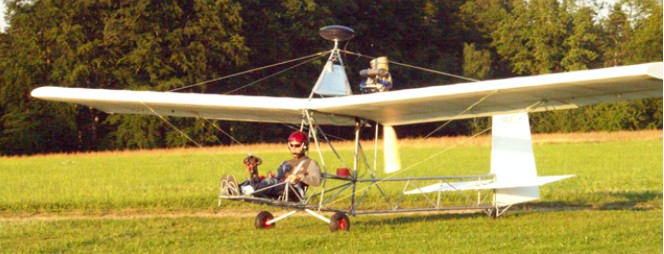
The Weller ULI NG (New Generation), sometimes called the Weller Uli NG, is a German ultralight aircraft, designed and produced by Weller Flugzeugbau of Bibersfeld. It was introduced at the Aero show held in Friedrichshafen in 2010. The aircraft is supplied as a complete ready-to-fly-aircraft.

Wingspan: 9,68 m
Wingarea: 12,78 sq.m
Length: 5,92 m
Empty weight: 116 kg
MTOW: 220 kg
Stall: 45 km/h
Max speed: 95 km/h
Climb rate: 2 m/s
Cruise: 65-85 km/h
Endurance: 2:30 Std.
Range: 150 km + Reserve

Weatherly Aviation Co Inc

John C. Weatherley operated the Weatherley Campbell Aircraft Company as a fixed-base operator, at Dallas, Texas. Acquired plans of the Colt 4-seater from Luscombe Airplane Corporation.
The Weatherly cropduster had its origins in Texas but, when manufacturing began, it was California that John Weatherly turned to for the production of this typical low-wing American cropduster. Weatherly has been building cropdusters since 1960 at Hollister, not far south of San Francisco. At first these aircraft were modified from the ex-military World War Two trainer, the Fairchild M-62 Cornell. When the supply of Fairchild aircraft ran out, John Weatherly started to build the complete aircraft.
Weatherley Aviation Company established at Hollister, California. Built WM 62C agricultural aircraft 1961-1965, a converted Fairchild 62. Developed W.201, a much-improved agricultural aircraft in 1967; followed by 201A in 1970 and 201C in 1975. In production in 1998 were the 600 and 600 BTG single-seat agricultural aircraft, the latter a turboprop version.
In 1990, the company moved production from Hollister to Lincoln, near Sacramento, and in recent times (circa 2000) Hal Weatherly, a nephew of John Weatherly, has taken over running the company.

Wassmer Aviation Ltd

Wassmer Aviation Ltd., founded in 2007, is a small aircraft design and engineering company based in Wohlen, Switzerland. The main purpose of the company is to support the development of the MSW Votec 252T/352T aerobatic training aircraft. The entirely new high-performance aerobatic trainer in side-by-side configuration was designed by Max Vogelsang on the basis of the MSW Votec 322.

It is a main target to achieve, together with MSW Aviation AG, the EASA certification for the Votec 252-T aerobatic trainer and to offer it to the interested clientele.

In addition, Wassmer Aviation support several other experimental aircraft projects.

Wassmer Aviation also keep historical aircraft up in the air. Their ex Swiss Airforce Pilatus P-3/05 is in flying condition and the renovation of a very rare ex Swiss Airforce North American AT-16 (ex U-323) was under way in 2013.

Wasp Systems Wasp SP-Mk4

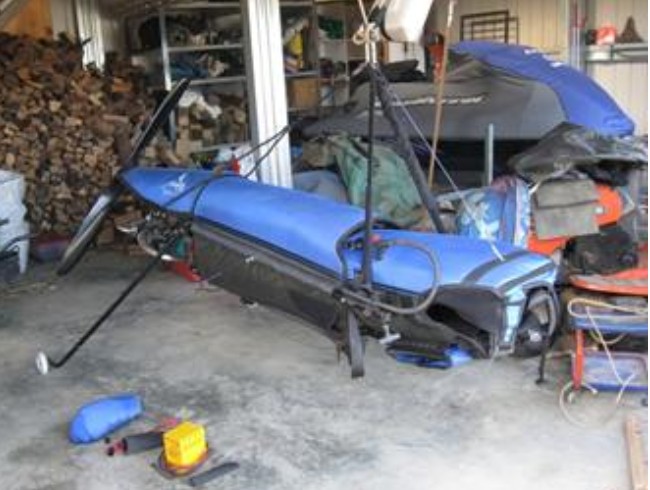
A powered hang glider harness, built by Chris Taylor in the UK in 2007.
The SP-4 uses quality fittings, and the best buckles on the market. It is electric start, with the master switch and start button neatly fitted in the ends of the two main tubes of the frame. Has its own charger, tip protectors and carbon propellor.
Comesw with a Radne engine and fits a Vittorazzi of more power.
To launch you start off with a mouth throttle (which has a safety microswitch fitted), and then as soon as you are comfortably airborne, you swap over to the foot throttle. Climb in, zip up and enjoy the ride.
It has a pouch for an emergency parachute. Pockets for all sorts, including your radio, a large storage area inside the main pod for those long x-countries.

War Aircraft Replicas (WAR)

The principle of the half-scale design was generated WAR Aircraft Replicas, Santa Paula, California, in 1973. The concept involves the use of a common-design wood fuselage box and spar structure. The desired contours to duplicate a particular aircraft are obtained by carving polyurethane foam that is covered with fabric and epoxy resin to form a structure stressed for + or -6g. By changing fuselage contours, using different engine cowlings and wingtips, and by shape changes to tail surfaces, a number of different aircraft could be copied.
The company fell into financial difficulties in the late 1980s following the death of its president, Peter Nieber, in the prototype P-51.
In 1996 the concept was revived by Carl E. Boenig of Tampa, Florida, when he formed WAR Aircraft Replicas of Florida to market some of the original plans.

1998-2008: War Aircraft Replicas
P.O.Box 79007
Tampa, FL 33619