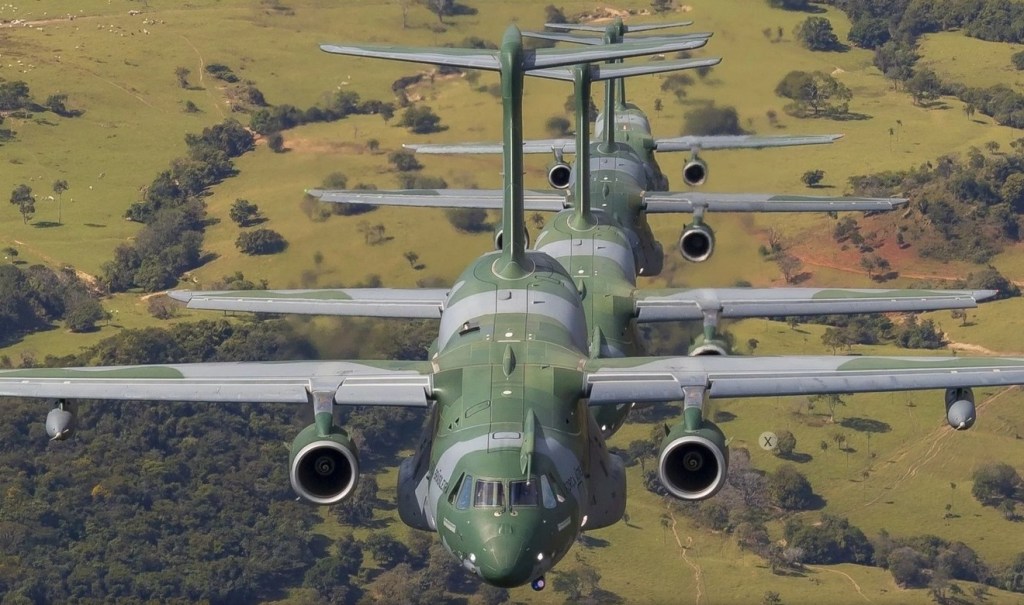
The KC-390 is a tactical transport and inflight refuelling aircraft. Powered by two specially designed Pratt and Whitney V2500-E5 engines, it can carry 26 tons of cargo, including vehicles like two M113 armored personnel carriers, or a UH-60 Blackhawk helicopter. The biggest aircraft produced in Latin America, it is designed to take off and land on semi-prepared and unpaved airfields. Portugal is a major partner in the KC-390 program, with some of its parts including the aircraft central fuselage being produced by Embraer’s subsidiary OGMA in Evora, about a hundred kilometers east of Lisboa. While Boeing was taking over the commercial aviation activities of Embraer, the two manufacturers agreed on a second joint venture to continue the production of the KC-390. Embraer should hold a 51% stake and Boeing ‒ the remaining 49%, of this new company.
Despite its smaller capacities in both range and payload compared to the new Airbus A400M Atlas, its price was attractive ($85 million compared to $165 million for Airbus transporter).
In 2014, the Brazilian Air Force ordered a total of 28 KC-390s with logistic support from the Brazilian manufacturer. It should progressively replace the C-130 Hercules within the FAB. In 2019 Embraer delivered the first KC-390 to the Brazilian Air Force (FAB) at the military base in Anapolis, in west-central Brazil.
It obtained the type certificate from the Brazilian Civil Aviation Authority (ANAC) in 2018.
In July 2019, Portugal placed a firm order for five KC-390 transport aircraft, becoming the first international customer for the plane. Embraer announced on July 11, 2019, that the Portuguese Council of Ministers had approved an order for five KC-390 multi-mission aircraft, a flight simulator, and logistical support, in a contract that should amount to €827 million. These aircraft are due to replace the Lockheed Martin C-130H of the Força Aerea Portuguesa (FAP), the Portuguese Air Force. They should be assigned to the 501 Transport Squadron “Bisontes”, based in Montijo Air Base (LPMT). The delivery should begin in 2023 and end by 2027.
Embraer has also received letters of intent from the Czech Republic (another partner in the program), as well as Argentina, Chile, and Colombia, for a total backlog of 35 aircraft.
During the mid-1980s, Embraer was working on the Short Tucano alongside a new version designed EMB-312G1, carrying the same Garrett engine. The EMB-312G1 prototype flew for the first time in July 1986. However, the project was dropped because the Brazilian Air Force was not interested in it. Nonetheless, the lessons from recent combat use of the aircraft in Peru and Venezuela led Embraer to keep up the studies. Besides a trainer, it researched a helicopter attack version designated “helicopter killer” or EMB-312H. The study was stimulated by the unsuccessful bid for the US military Joint Primary Aircraft Training System program. A proof-of-concept prototype flew for the first time in September 1991. The aircraft features a 1.37-m (4.49-ft) fuselage extension with the addition of sections before and after of the cockpit to restore its center of gravity and stability, a strengthened airframe, cockpit pressurization, and stretched nose to house the more powerful PT6A-67R (1,424 shp) engine. Two new prototypes with the PT6A-68A (1,250 shp) engine were built in 1993. The second prototype flew for the first time in May 1993 and the third prototype flew in October 1993. The request for a light attack aircraft was part of the Brazilian government’s Amazon Surveillance System project. This aircraft would fly with the R-99A and R-99B aircraft then in service and be used to intercept illegal aircraft flights and patrol Brazil’s borders. The ALX project was then created by the Brazilian Air Force, which was also in need of a military trainer to replace the Embraer EMB 326GB Xavante. The new aircraft was to be suited to the Amazon region (high temperature, moisture, and precipitation; low threat). The ALX was then specified as a turboprop engine aircraft with a long range and autonomy, able to operate night and day, in any meteorological conditions, and able to land on short airfields lacking infrastructure.
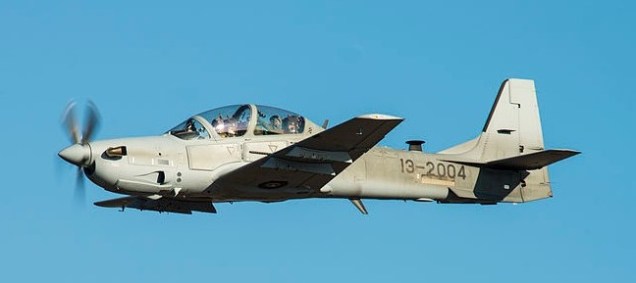
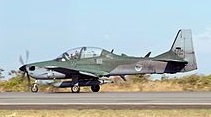
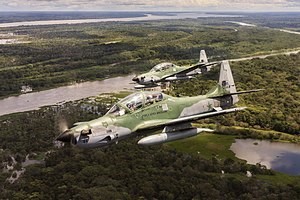
The Embraer EMB 314 Super Tucano, also named ALX or A-29, turboprop light attack aircraft is designed to operate in high temperature and humidity conditions in extremely rugged terrain, the Super Tucano is highly maneuverable, has a low heat signature, and incorporates fourth-generation avionics and weapons systems to deliver precision-guided munitions.
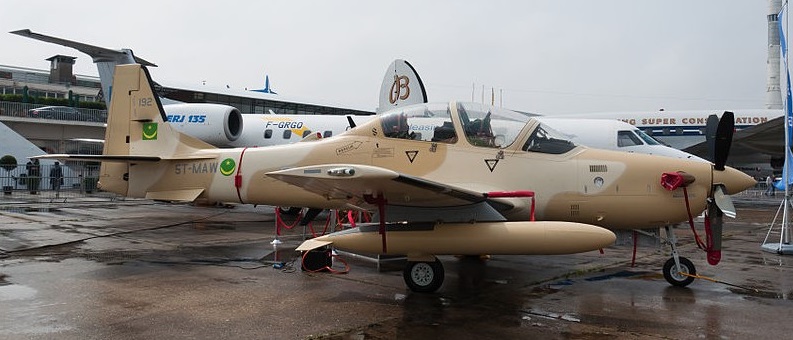
Mauritania AF A-29B 5T-MAW
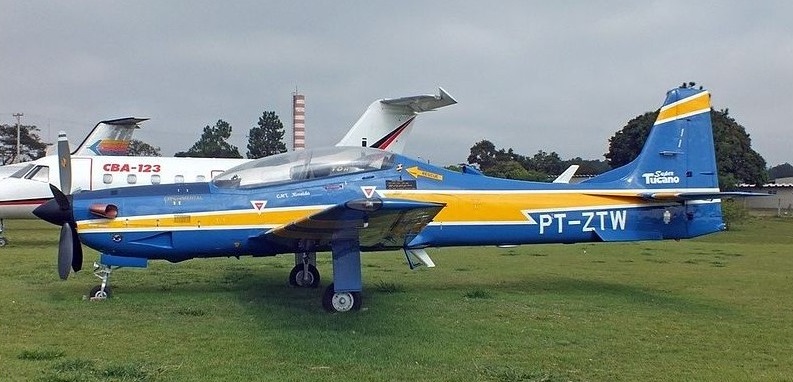
In August 1995, the Brazilian Ministry of Aeronautics awarded Embraer a $50 million contract for ALX development. Two EMB-312Hs were updated to serve as ALX prototypes. These made their initial flights in their new configuration in 1996 and 1997, respectively. The initial flight of a production-configured ALX, further modified from one of the prototypes, occurred on 2 June 1999 (PT-ZTW).
The second prototype was brought up to two-seater configuration and performed its first flight on 22 October 1999. The changes had been so considerable that the type was given a new designation, the EMB-314 Super Tucano. The total cost of the aircraft development was quoted to be between US$200 million and US$300 million.
EMB-312H Prototype PT-ZTW first flew on 9 September 1991, and currently is on display at the Memorial Aeroespacial Brasileiro in São José dos Campos.
EMB-312H Prototype PT-ZTW first flew on 9 September 1991, and currently is on display at the Memorial Aeroespacial Brasileiro in São José dos Campos.
Variants:
A-29A
A-29A
Single-seater for attack and armed reconnaissance (on interdiction tasks), attack and cover (on close air support tasks), able to intercept and destroy low-performance aircraft, incorporates an additional fuel tank (+ 400 liters)
A-29B Twin-seater for the same tasks as the single-seat version, also used in training and advanced aerial control (on monitoring tasks)
Operators:
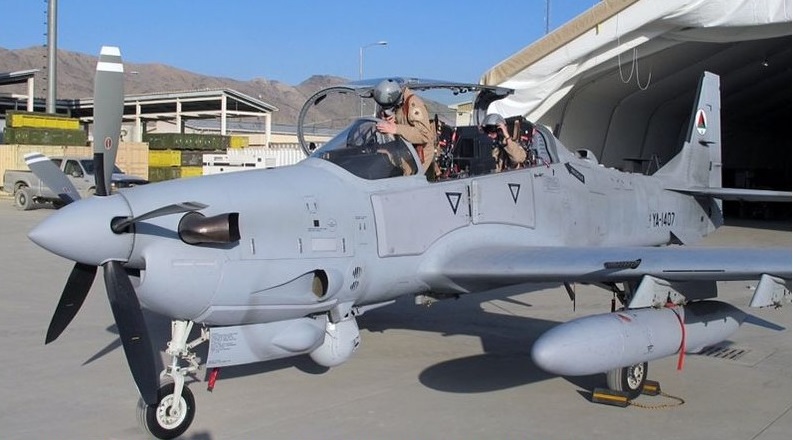
Afghan Air Force Embraer A-29 Super Tucano
Afghan Air Force – 20 aircraft ordered. The first aircraft were delivered in 2016 and the last were to be in service by late 2018. The first A-29 Super Tucano of the Pentagon’s Light Air Support (LAS) program, destined for the Afghan Air Force, delivered to the US Air Force in Jacksonville, Florida, by the Sierra Nevada Corporation and Embraer in September 2014. The first eight Afghan airmen are trained in the US to form a new Afghan fighter squadron. The first four aircraft arrived in-country at Hamid Karzai International Airport in Kabul on the 15 January 2016. Four more were delivered in July 2016, and an additional four arrived in March 2017, bringing the total of delivered Super Tucanos to 12.
National Air Force of Angola – six aircraft ordered. Deliveries were scheduled to begin in early 2012; but the first three delivered on 31 January 2013.
Brazilian Air Force – 99 aircraft (33 A-29A & 66 A-29B). At least 4 aircraft lost.
Air Force of Burkina Faso – 3 aircraft delivered in September 2011 of version A-29B.
Chilean Air Force – 12 aircraft.
Colombian Air Force – 25 aircraft, introduced between 2006 and 2008. At least one aircraft crashed, claimed shot down by FARC.
Dominican Air Force – 8 aircraft
Ecuadorian Air Force – 18 aircraft, all delivered by 2011.
Ghana Air Force – 5 aircraft ordered in 2015.
Honduran Air Force – 2 aircraft ordered in 2014.
Indonesian Air Force – 16 aircraft ordered & delivered, one lost in a crash February 2016. The first four aircraft of the first batch of eight were delivered as of August 2012, the delivery of the second batch of four aircraft was delayed till September 2014. A total of 16 were ordered in 2011 with deliveries taking place in 2012, 2014, 2015 and 2016.
Lebanese Air Force – 2 A-29s delivered in October 2017, 4 more to be delivered in 2018.
Mali Air Force – 6 A-29 on order.
Mauritanian Air Force – 4 aircraft ordered, received two aircraft as of December 2012, two more aircraft on order.
Nigerian Air Force – 12 aircraft on order
Senegalese Air Force – 3 aircraft on order.
EP Aviation – part of Academi (formerly Blackwater) – at least one twin-seater variant for pilot training (delivered in February 2008).
United States Navy leased an aircraft for testing, as part of the Imminent Fury program.
The first A-29 Super Tucano of the Pentagon’s Light Air Support (LAS) program, destined for the Afghan Air Force, has been delivered to the US Air Force in Jacksonville, Florida by the Sierra Nevada Corporation and Embraer in September 2014. The LAS contract was developed by the Pentagon to supply Afghanistan’s military with 20 planes, which should ensure air superiority in the country after the majority of US forces leave. Because the contract is a foreign military sale, Nevada-based SNC and Brazil-based Embraer deliver the planes to the Air Force, which then passes them on to the Afghan military. The first of 20 A-29 Super Tucano aircraft arrived at Moody Air Force Base on September 26, 2014 in preparation for the Afghanistan pilot and maintenance training mission.
EMB 314 Super Tucano Engine: 1 × Pratt & Whitney Canada PT6A-68C turboprop, 1,196 kW (1,600 shp) Propeller: Hartzell 5-blade constant speed, fully feathering, reversible-pitch propeller Wingspan: 11.14 m (36 ft 6.5 in) Wing area: 19.4 sq.m (208.8 sq ft) Length: 11.38 m (37 ft 4 in) Height: 3.97 m (13 ft 0.25 in) Empty weight: 3,200 kg (7,055 lb) Max. takeoff weight: 5,400 kg (11,905 lb) Payload: 1,500 kg (3,307 lb) Maximum speed: 590 km/h (319 knots, 367 mph) Cruise speed: 520 km/h (281 knots, 323 mph) Stall speed: 148 km/h (80 knots, 92 mph) Service ceiling: 10,668 m (35,000 ft) Rate of climb: 16.4 m/s (3,242 ft/min) Range: 720 nmi (827 mi, 1,330 km) Combat radius: 550 km (300 nmi, 342 mi) (hi-lo-hi profile, 1,500 kg (3,300 lb) of external stores) Ferry range: 1,541 nmi (1,774 mi, 2,855 km) Endurance: 8hrs 24mins g-limit: +7/-3.5 g) Crew: Pilot plus one navigator/student Armament: 2× 12.7 mm (0.50 in) 1,100 rounds per minute FN Herstal M3P machine guns, one in each wing. Hardpoints: 5 (two under each wing and one under fuselage centreline) with a capacity of 1,550 kg (3,300 lb)
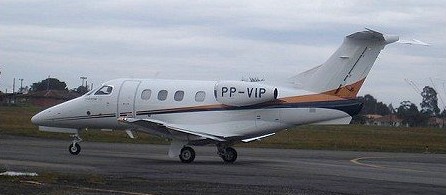
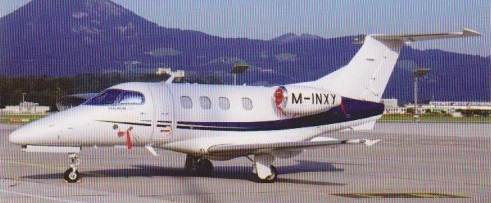
The Embraer Phenom 100 is a very light jet developed by Brazilian aircraft manufacturer Embraer. It has a capacity for 4 passengers in its normal configuration, but it can carry up to 6-7 passengers with a single crew. The Embraer Phenom 300 can carry 8 or 9 occupants with a flying range of 1,971 nautical miles.
Embraer Phenom 100 M-INXY
Phenom 100 Engine: 2 x Pratt & Whitney Canada PW617F-E turbofans, 1695 lb / 770kg thrust Wingspan: 40 ft. 4 in / 12.30 m Overall Height: 14 ft 5 in / 4.4 m Overall Length: 42 ft. 0 in / 12.80 m Max take-off weight: 4750 kg / 10472 lb Empty weight: 3235 kg / 7132 lb Useful Load: 3384 lb Payload, Full Std. Fuel: 580lb Usable Fuel: 2804 lb Baggage Capacity: 67 cu. ft Max Certified Altitude: 41,000 ft / 12500 m Max Range: 1178 nm / 2182 km / 1356 miles Max. speed: 722 km/h / 449 mph Max Cruise Speed: 390 kt / Mach 0.70 Takeoff Distance, ISA: 3125 ft Takeoff Distance, 5,000 MSL, 25 deg C: 5926 ft Landing Distance: 2475 ft Max Demonstrated Crosswind: 17 kt Seating Capacity: 1+5/7 2009 Price: $3.6 million
Phenom 300 Engines: 2 x 1450kg Pratt & Whitney Canada PW535E turbofans Wingspan: 16.2 m / 53 ft 2 in Length: 15.9 m / 52 ft 2 in Height: 5 m / 16 ft 5 in Take-off weight: 7951 kg / 17529 lb Max. speed: 834 km/h / 518 mph Ceiling: 13716 m / 45000 ft Range: 3650 km / 2268 miles Crew: 1 Passengers: 6-8
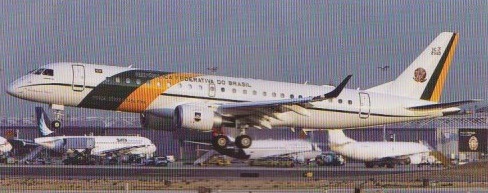
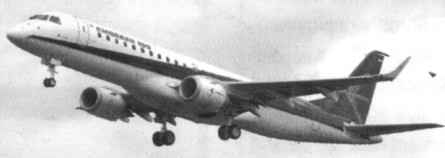
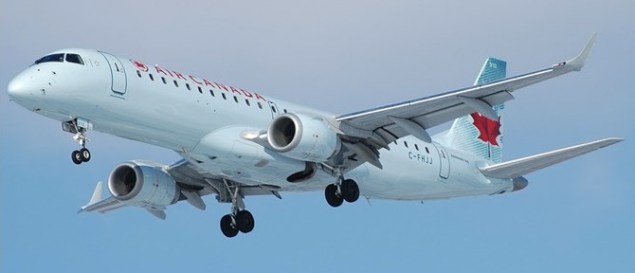
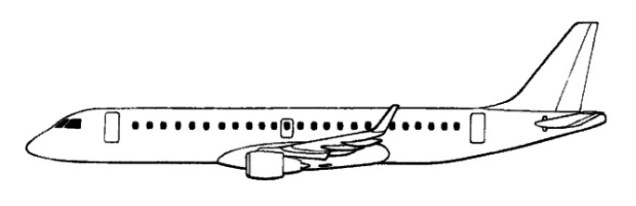
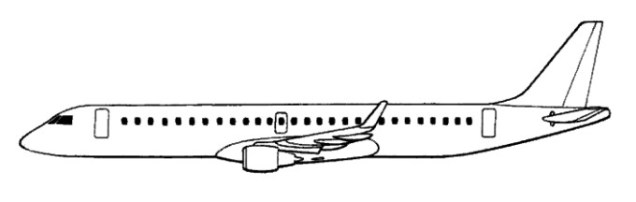
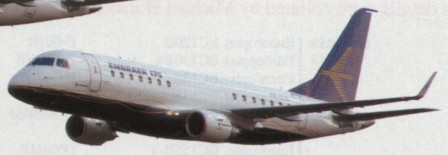
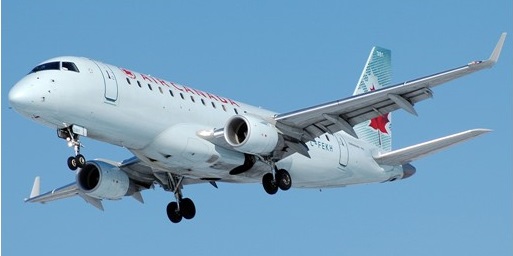
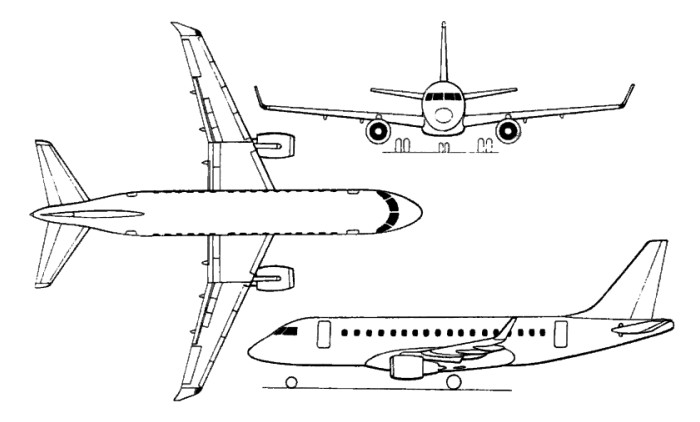
The ERJ-190 is a further stretch, by 6.25m, of the ERJ-170 to accommodate up to 104 passengers. The wing span is increased by 2.56m, GE CF34-8E-10 engines fitted, and strengthened landing gear. The –190 was available in Standard and Long-Range versions. The launch customer was JetBlue, who ordered 100, plus 100 options, on 10 June 2003. The Embraer 190 first flew in 2004 from Sao Jose dos Campos, Brazil. The fly-by-wire twin had 110 firm orders at the time. First delivery was in the third quarter of 2005. Formerly the ERJ-190-200, the ERJ-195 was a further stretch of the ERJ-190 by 2.41m to accommodate up to 110 passengers, also available in Standard and Long-Range versions. The first metal was cut on 23 August 2002, and first delivery in December 2004.
The ERJ-170 was announced in February 1999, and first orders announced on 14 June 1999. First rolled out on 29 October 2001, the first flight was achieved on 19 February 2002. C/n 0002 in Crossair colours was flown on 9 April 2002, by which time the first aircraft had completed 40 hours of test flying. C/n 0003 (first equipped with full Honeywell Pnmus Epic avionics suite) on 25 May 2002; c/n 0004 on 19 June 2002; c/n 0005 on 14 July 2002: and c/n 0006 on 27 July 2002.
It was announced at roll-out that the ERJ prefix was discontinued and that ERJ-190-200 was to be known as the Embraer 195; the intermediate Embraer 175 simultaneously revealed. The public debut was at the Regional Airline Association convention at Nashville, Tennessee 12 to 15 May 2002, followed by a European debut at Farnborough International Air Show on 22 July 2002, followed by a European demonstration tour comprising 18 flights totalling more than 100 hours. Six flying aircraft were scheduled to conduct a 1,800 hour flight test programme, culminating in CTA/JAA certification in November 2003. The original ERJ-170 has 70 seats, the ERJ-175 is five feet longer with 78. Each version of Embraer’s biggest regional jets come in a standard and long range version, plus the company is looking at a variant of the ERJ-170 as a corporate jet.
ERJ-170
The Embraer 175 first flew on 14 June 2003, from Sao Jose dos Campos, Brazil. The 175 is 70in (1.78m) longer than the 170 but for commonality retains the same cockpit and engines. The fuselage stretch is by means of two plugs to accommodate 78 to 86 passengers; offered in Standard and Long-Range versions.
ERJ-170 Engines: two 14,000 lb. General Electric CF34-8E Gross weight: 78,153 lbs Empty weight: 44,422 lbs Max cruise: 470 kts Range: 1,800–2,100 nm Service ceiling: 37,000 ft Takeoff field length: 5,499 ft Landing field length: 399 ft. Seats: 78
Empresa Brasiliera de Aeronautica SA was founded in August 1969 and began operations in January 1970 to promote the Brazilian industry. Brazil found¬ed its industry on a major program to build 112 Italian Aermacchi M.B.326 jet trainers under license for the air force. Although it was set up with government backing, the state shareholding in Embraer has steadily decreased from over 80 percent in 1970. Embraer officially commenced operations at the beginning of 1970, with a staff of only 600, all Brazilian nationals. Work at the new company continued on the turbo-prop design until, in August ‘72 the first EMB-110 Bandeirante made its maiden flight. During the same period Embraer also began development of a single-engine agricultural aircraft, to be known as the EMB-200 Ipanema. Further expansion of the Embraer product range soon followed, including Bandeirante variants in profusion and the Xingu executive twin, while a number of different models were also built under cooperative agreements with foreign manufacturers. In August 1974 signed cooperative agreement with Piper Aircraft Corporation, and in 1975 with Northrop. Work on Tiger II components started 1976. Six of the Piper range were produced by the Brazilian company, while the Xavante military jet trainer is built under licence to Aeronautica Macchi of Italy. By 1980 19 models were in production, and still more in development. Successful production of the Bandeirante twin-turboprop light transport (first flown October 1968) ended in 1994. Other early production programmes included the pressurized EMB-121 Xingu transport, EMB-111A Patrulha for maritime surveillance, and Xavante (license-built Italian Aermacchi jet trainer and attack aircraft). Privatization completed in December 1994, with the Brazilian Federal Government retaining some 15 per cent of capital. Production in 1999 included the EMB-312 Tucano turboprop trainer (first flown August 1980), EMB-314 Super Tucano (first flown May 1993) and ALX special application version, EMB-120 Brasilia regional transport (first flown 1983), ERJ135 37-passenger regional jet (first flown July 1998), ERJ145 50-seat regional jet (first flown August 1995), and surveillance versions of the ERJ145. International program is AMX combat aircraft with Aermacchi and Alenia of Italy. Divisions of EMBRAER include Industria Aeronautica Neiva SA. Embraer was a nearly bankrupt concern when it was restructured and privatised in 1995.
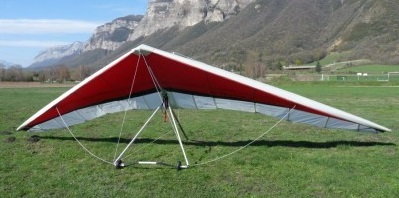
The Windigo is a 2009 hang glider for Intermediate pilots. The Windigo is a very good wing, with nice wingovers, and little return to neutral.
Windigo 135 Wing area: 13.5 m² Wing span: 9.2 m Aspect ratio: 6.3 Hang glider weight: 26 kg Minimum pilot weight: 40 kg Maximum pilot weight: 60 kg Minimum speed: 25 km/h Maximum speed: 80 km/h Packed length: 3.5 m Number of battens: 20
Windigo 140 Wing area: 14 m² Wing span: 10 m Aspect ratio: 7.1 Hang glider weight: 28 kg Minimum pilot weight: 55 kg Maximum pilot weight: 75 kg Minimum speed: 25 km/h Maximum speed: 80 km/h Packed length: 4.2 m Number of battens: 20
Windigo 150 Wing area: 15 m² Wing span: 10 m Aspect ratio: 6.6 Hang glider weight: 29 kg Minimum pilot weight: 70 kg Maximum pilot weight: 85 kg Minimum speed: 25 km/h Maximum speed: 80 km/h Packed length: 4.2 m Number of battens: 20
Windigo 165 Wing area: 16 m² Wing span: 10 m Aspect ratio: 6 Hang glider weight: 31 kg Minimum pilot weight: 75 kg Maximum pilot weight: 100 kg Minimum speed: 25 km/h Maximum speed: 80 km/h Packed length: 4.2 m Number of battens: 20
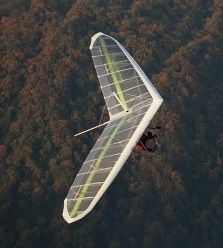
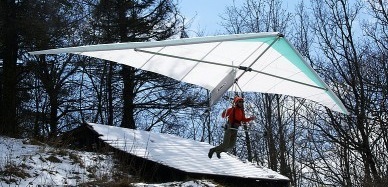
The Ellipse Titanium is a 2010 hang glider for Advanced pilots.
The Titanium “all options” version has balestrons and special fabrics (Extrados and B.de Attack). For take-off the adjustment of the anchor point forward (innovation of Ellipse) of the trapeze provides a very nice position and efforts are quite acceptable. The overdrive must be stretched at least 1/3 to change the behavior. As soon as it is stretched, the wing becomes more precise. As it is stretched, beyond 1/3, the handling becomes lost and the speed really increases.
The sail is not tight on the ground and some wrinkles remain in the air if we do not tend at all overdrive (normal). But the flight qualities remain perfect even without stretched overdrive. This machine is intended for young drivers (not out of slope but a little later) and especially for experienced drivers who are looking for an easy, maneuverable, simply posable, with performance.
Titanium S Wing area: 13.4 m² Wing span: 9.3 m Aspect ratio: 6.45 Hang glider weight: 29 kg Minimum pilot weight: 50 kg Maximum pilot weight: 70 kg Number of battens: 18
Titanium M Wing area: 14.7 m² Wing span: 9.8 m Aspect ratio: 6.53 Hang glider weight: 31 kg Minimum pilot weight: 65 kg Maximum pilot weight: 85 kg Number of battens: 20
Titanium L Wing area: 15.5 m² Wing span: 10.2 m Aspect ratio: 6.5 Hang glider weight: 32 kg Minimum pilot weight: 80 kg Maximum pilot weight: 105 kg Number of battens: 20




 All Aero