The carbon fiber Epic Escape is a pressurized single-engine turboprop that is a 92% scaled down version of the Epic LT. The pressurized, carbon-composite fuselage carrys 4-5 passengers, and the slight reduction in size allows the Escape to fly even faster than the Epic LT. The high tech airframe design with the Honeywell Garrett-10 1000 horsepower engine gives 360 KTAS. The four or five-place cabin has reclining leather seats, and exotic wood trim. The Escape VLJ turboprop was to be available as an experimental aircraft.
Seats; 4 or 5 Pressurization; 6.5 psi Engine; 1,000 hp Length; 33.4 ft. Wingspan; 36.3 ft. Height; 11.7 ft. Cabin length; 14.5 ft. Cabin width; 4.7 ft. Cabin height; 4.4 ft. Empty weight; 2,750 lbs. Maximum take-off weight; 5,500 lbs. Maximum payload with full fuel; 855 lbs. Maximum cruise; 365 KTAS Economy cruise; 300 KTAS Ceiling; 28,000 ft. Time to climb; 28,000 ft., 8 min. Range economy cruise (res / max pax); 1,800 NM
The Victory is a carbon fiber very light jet with single-pilot operation. It has a high speed 320+ knot cruise up to FL280. The 4-5 seat Victory jet was available as an experimental category aircraft.
Engine: Pratt & Whitney PW617, 1450 lb Length: 33.3 ft Wing span: 36.3 ft Wing area: 203.5 sq.ft Height; 10.7 ft Empty weight: 2700 lb Gross weight: 5500 lb Fuel capacity: 278 USG Maximum payload with full fuel; 900 lb Maximum cruise; 320 KTAS Economy cruise; 250 KTAS Stall: 62 mph Range economy cruise (with res / full passengers); 1200 NM Takeoff dist: 2500 ft Landing dist: 2500 ft Ceiling; 28,000 ft. Time to climb; 28,000 ft., 10 min Seats: 4-5 Landing gear: nose Pressurization; 6.5 psi Cabin length; 14.5 ft. Cabin width; 4.7 ft. Cabin height; 4.4 ft.
The carbon fibre Epic LT was designed and built by Rick Schameck in 14 months to 2004. The Epic Dynasty is the certified version of the Epic LT. With nearly 2000 hours logged toward certification, the Dynasty was undergoing testing mandated by Transport Canada towards Transport Canada Certification, enabling Part 135 on demand charter and air taxi services.
The Dynasty has all the features of the Epic LT, plus some extras. Available long range tanks extend the Dynasty to an estimated range of almost 1900nm. The carbon fiber fuselage paired with a PT-6 engine delivers 340 knots of true air speed. Like the Epic LT, the Dynasty carries six passengers with full fuel and baggage.
Epic LT Engine: P&W PT6-67A, 1200 hp HP range: 750-1200 Cruise: 402 mph Stall: 68 mph Range: 1840 sm Rate of climb: 4800 fpm Takeoff dist: 1500 ft Landing dist: 1500 ft Fuel capacity: 289 USG Empty weight: 4200 lb Gross weight: 7329 lb Length: 36.7 ft Wing span: 43 ft Wing area: 203.5 sq.ft Seats: 6 Landing gear: nose
Epic Dynasty Engine: Pratt & Whitney PT6-67A Wingspan: 43 ft Height: 12.5 ft Length: 35.8 ft Wing area: 203.6 sq. ft Empty weight: 4,000 lb Maximum take-off weight: 7,300 lb Usable load with standard fuel: 1,350 lb Maximum cruise: 340 KTAS Economy cruise: 288 KTAS Certified ceiling: 31,000 ft Time to climb: 9 minutes to 25,000 ft Range max cruise (w/ IFR res @ MTOW /opt LR tanks: 1,874 NM Range maximum cruise (with IFR reserves @ MTOW): 1,200 NM Take-off distance (over 50′ obstacle): 1,600 ft. Landing distance (over 50′ obstacle): 1,840 ft. Fuel capacity: 288 gallons usable Fuel capacity (optional long range tanks): 350 gallons usable Seats: 6 Cabin length: 15 ft Cabin width: 4.6 ft Cabin height: 4.9 ft Pressurization: 6.5 psi
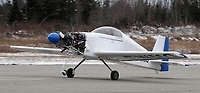
The Épervier Project was developed within the framework of an end-of-program project for the Mechanical Engineering bachelor degree at the Université de Sherbrooke, in 2008. The goal of the project was to design and construct a single passenger, homebuilt construction plane.
The team was made of David Rancourt, Nicolas Vincent, François Bérubé, David Barabé, Mathieu Lavoie, Gabriel Arsenault, Maya Caron, Jasmin Mc Fadden, Francis Beaucaire, Miguel Costa, Mathieu Lessard, Guy Bilodeau.
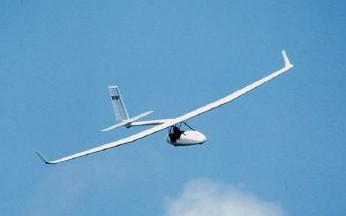
Designed at the Zurich University School of Engineering, the project started in 1998 with the concept prototype, stage P1, first flying in September 2001. The concept prototype, stage P2, modified from the P1, first flew in May 2002. Concept prototype, stage P2 E P2 with detail evolutions first flew in March 2003. The result was a successfully tested prototype Archaeopteryx P2E. For flight testing many successful flights were accomplished AND since then, by foot start and bungee cord, from the level by auto, winding, trike and UL-tows were achieved. The flight behaviour was of a completely new, safe airplane, which fulfils all requirements of its product requirement specifications and for the pilot new possibilities in the super-light sail flight opens.
Span: 13.6 m Length: 5.7 m Height: 2.9 m Wing area: 12.8 sq.m Wing loading: 9.0-12.5 kg/sq.m Take-off weight: 115-160 kg Pilot size: 1.65-1.95 m Pilot weight: 55-100 kg Load factor: +5.3/-2.65 g Stall: 30-35 km/h Vne: 130 km/h Min sink: 0.44-0.51 m/s Glide ratio: 28 Min turn radius 45 deg bank: 15 m
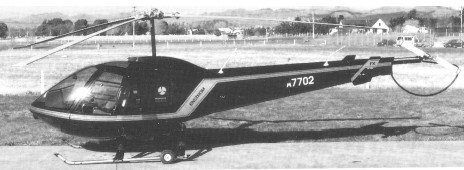
The Model 280 Shark is an improved F-28A, with revised nose contours of better aerodynamic shape. A conventional light helicopter with skid landing gear, tubular metal tail rotor protector, and a horizontal stabiliser with fins at tips. High inertia, three-blade fully articulated rotor head with blades attached by retention pin and drag link have control rods passing inside a tubular rotor shaft to a swashplate inside fuselage. No rotor brake is fitted. The non-folding blades have a MAC A 0013.5 section, and a two-blade teetering tail rotor is fitted. A thirty-groove belt drive runs from the horizontally mounted engine to the transmission. The flying controls are conventional and manual, with a trim system that absorbs feedback from the rotor and repositions stick datum as required by pilot. With bonded light alloy blades, the fuselage has a glass fibre and light alloy cabin section, steel tube centre-section frame, and stressed skin aluminium tailboom. The skids are carried on Enstrom oleo-pneumatic shock-absorbers. Air Cruiser inflatable floats are available optionally. Fuel is in two tanks, each of 79.5 litres. Total standard fuel capacity is 159 litres, of which 151 litres are usable. Auxiliary tank, capacity 49 litres, can be installed in the baggage compartment. Electrical power is provided by a 24V 70A engine-driven alternator, 12V 70A system optional. No hydraulic system is fitted. Shoulder harnesses are equipped for three seats and night lighting is standard on the 280FX. Night lighting includes instrument lighting with dimmer control, position light on each horizontal stabiliser tip, anti-collision light and nose-mounted landing light. Optional equipment for both F28F and 280FX includes fixed float kit, wet or dry agricultural spray kit and cargo hook for utility missions. Wide instrument panel available for IFR training. Accomodating a pilot and two passengers, side by side on bench seat, the centre place is removable. Removable door on each side of cabin. Baggage space is aft of engine compartment, with an external door. Cabin heated and ventilated. Developed in 1973 as a luxury version of the F-28A, FAA certification was achieved in September 1974. A collaboration between a Boston industrial design firm and the Enstrom engineering team yielded the new aerodynamically styled airframe. Immediately put into production, a number of models were developed and produced based on the body style of the 280 Shark (mechanically identical to the F-28C).
F-28C/280C: improved versions, introduced in 1975 replacing the F28A and 280, powered by the 153kW Avco Lycoming HIO-360-E1AD engine with a Rajay 301-E-10-2 turbocharger; the tail rotor was moved to the port side of the fuselage and the direction of rotation reversed. Certified by the FAA in 8 December 1975, production ceased in Novembr 1981. In 1977 Enstrom Helicopters received FAA certification for an increase from 2,200 to 2,350 pounds gross weight for the turbo¬charged Model 280C. Fixed waste gate turbocharging on the Enstrom’s 205 hp Lycoming HIO 360 engine enables the F 28C and the 280C to lift their 2,350 pound gross weights at den-sity altitudes up to 13,000 feet. In addition to the turbo¬charging, Enstrom shifted the tail rotor from the right to the left side of the tail boom, thus placing the anti torque device where it reacts more favorably with the main rotor’s downwash and, therefore, is more effective. A tail rotor blade with a wider chord has been tested and is being retrofitted to all C models of the F 28 and the Shark 280. The FAA has approved the modification.
F-28F Falcon/280F: FAA certificated in January 1981, the F-28F and 280F were powered by the turbocharged 168kW Avco Lycoming. HIO-360-F1AD engine
280FX: updated version of the Model 280F fitted with faired landing gear, new seats, redesigned vertical and horizontal tail surfaces, covered tail rotor shaft and tail rotor guard powered by one 225 hp (168 kW) Lycoming HIO-360-F1AD. First flown in December 1983 and certificated in January 1985. Export customers include the Chilean army which bought 15
280L Hawk: work on a four-seat version of the 280C began in January 1978 and a prototype was first flown on 27 December 1978. The main rotor diameter was increased by 0.61m and the fuselage lengthened by 0.91m. Powerplant of the F-28F/280F was retained and fuel capacity increased to 170 litres. However, full development was postponed indefinitely in 1983 following a change in company ownership
Spitfire Mk 1: developed by the Spitfire Helicopter Company of Lynnfield, Massachusetts, from the basic Enstrom F-28A design, the Spitfire Mk 1 appeared in 1976, powered by a 313kW Allison 250-C20B turboshaft
The turbine-powered 280FX, a modified piston-powered model in which an Allison 250-C20 turbine engine with the Enstrom drive train and rotor system was integrated, flew first in December 1988. Turbine-powered certification of the TH28 came in September 1992 and the 480, to FAR Pt27 standards, in December 1994.
The Model 480 Eagle is a development of the 280L Hawk, with seating for five and power provided by the Allison 250-C20B turboshaft. Although the Enstrom helicopters are intended mainly for light passenger operations, the F-28C and Model 280C can be used in the agricultural role with two side-mounted chemical hoppers and their associated spraybooms. Liquid chemical capacity is 340 litres, and powder chemical capacity 0.5cu.m.
A total of 735 of the earlier versions produced (14 F28, 315 F28A, 121 F28C, 56 F28C-2, 21 280, 206 280C and two 280L). A total of 98 280FX built up to mid-2003, a further two 280 registered in early 2003. The Chilean Army operates 15 280FX for primary and instrument training. The Venezuelan National Guard took delivery of four 280FX for training in January 2002. Basic 2004 price was US$320,000 for the F28F Falcon and 280FX Shark.
280 Shark Engines: Lycoming HIO-360-C1A, 205 hp. Seats: 3. Disc loading: 2.67 lb/sq.ft. Pwr loading: 10.48 lb/hp. Max TO wt: 2150 lb. Empty wt: 1450 lb. Equipped useful load: 642 lb. Payload max fuel: 402 lb. Range max fuel/ cruise: 224 nm/2.1 hr. Range max fuel / range: 245 nm/ 3.0 hr. Service ceiling: 13,000 ft. Max cruise: 102 kt. Max range cruise: 83 kt. ROC: 1000 fpm. HIGE: 5600 ft. HOGE: 3700 ft. Max sling load: 500 lb. Fuel cap: 240 lb.
F-280C Turbocharged Engines: Lycoming HIO-360-E1AD, 205 hp. Seats: 3. Disc loading: 2.73 lb/sq.ft. Pwr loading: 10.73 lb/hp. Max TO wt: 2200 lb. Empty wt: 1495 lb. Equipped useful load: 647 lb. Payload max fuel: 407 lb. Range max fuel/ cruise: 193 nm/1.9 hr. Range max fuel / range: 201 nm/ 2.7 hr. Service ceiling: 18,000 ft. Max cruise: 96 kt. Max range cruise: 76 kt. ROC: 1300 fpm. HIGE: 13,800 ft. HOGE: 8300 ft. Max sling load: 500 lb. Fuel cap: 240 lb.
280C Shark Engine: Lycoming HIO-360-E1AD, 205 hp. TBO: 1000 hrs. Main rotor: 32 ft. Seats: 3. Length: 28.7 ft. Height: 9.2 ft. Max ramp weight: 2350 lbs. Max takeoff weight: 2350 lbs. Standard empty weight: 1592 lbs. Max useful load: 758 lbs. Max landing weight: 2350 lbs. Max sling load: 1000 lbs. Disc loading: 2.9 lbs/sq.ft. Power loading: 11.5 lbs/hp. Max usable fuel: 240 lbs. Max rate of climb: 1200 fpm. Service ceiling: 12,000 ft. Hover in ground effect: 8800 ft. Hover out of ground effect: 4100 ft. Max speed: 102 kts. Normal cruise @ 3000 ft: 92 kts. Fuel flow @ normal cruise: 85 pph. Endurance @ normal cruise: 2.7 hr.
280FX Shark Engine: 1 x Textron Lycoming HIO-360-F1AD. Instant pwr: 170 kW. Rotor dia: 9.8 m. MTOW: 1180 kg. Useful load: 460 kg. Max speed: 102 kts. Max cruise: 102 kts. Max range: 483 km. HIGE: 13,200 ft. HOGE: 8700 ft. Service ceiling: 12,000 ft. Crew: 1/2. Pax: 1/2. Seats: 3.
As R. J. Enstrom Corporation, was formed in 1959 by Rudy Enstrom in Menominee, Michigan to develop experimental helicopter, first flown November 1960. Developed type (F-28) flown May 1962; and deliveries of further-improved F-28A began in 1968. First year’s production was 43 aircraft. In 1968 first tests were made with turboshaft installation. Enstrom sold only nine F¬28s before being purchased by the Purex Corporation in early 1968, and Purex suspended all operations in February 1970. In Janu¬ary 1971, defense lawyer F. Lee Bailey purchased the majority in¬terest in Enstrom and embarked on an ag¬gressive reorganization and production resumed in 1971 under Enstrom Helicopter Corporation title. Between ear¬ly 1972 and June 1975, the gross income of Enstrom Helicopter rose at a compounded growth rate of nearly 45 percent. 1977: Enstrom Helicop¬ter Corporation, Menominee, Michigan, USA. After intervening acquisitions, including operation as part of Pacific Airmotive Aerospace Group, 1980 purchase by Bravo Investments BVC of the Netherlands, and acquisition by US investors, resumed manufacture. By June 1977 the 500th Enstrom helicopter had been delivered. The Enstrom Helicopter Company, offering the piston-engined three-seat F28F (first flown December 1980 as improved F-28 type) and 280FX (available since 1985), latter based on F28F but with airframe and cabin refinements. Also offers the five-seat 480 Turbine (first flown October 1989), using an Allison turboshaft engine.
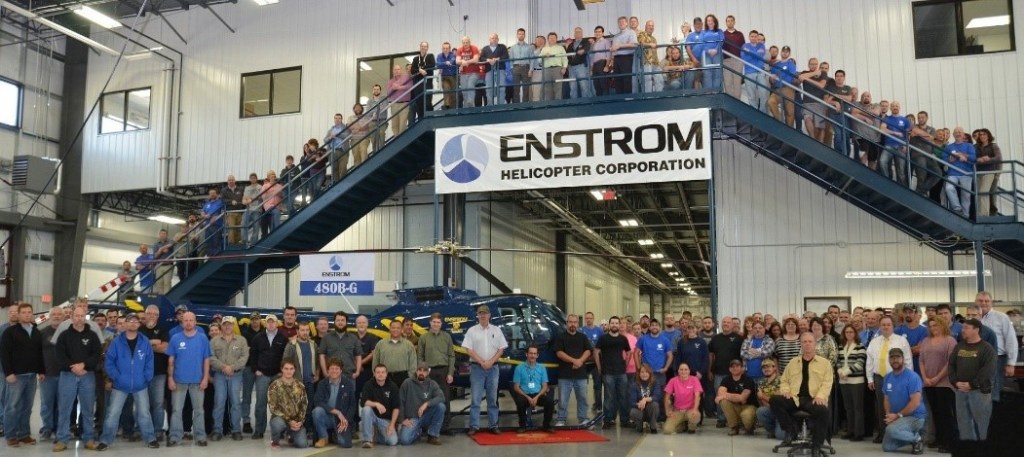
Enstrom was acquired by Chinese firm Chongqing General Aviation Industry Group (CGAG) in December 2012. CGAG offers a bundle of other products and services, including emergency rescue, aerial forest fire protection, agricultural spray application, aerial photography, and a host of others through its subsidiaries. The new owner tried to turn the storied brand around by investing up to $8 million to upgrade Enstrom’s factory. They nearly doubled the space, expanding it to a 160,000-square-foot FAA-approved manufacturing facility. The company also hired more than 200 new employees.
The company showed signs of tenacity when it celebrated its 60th anniversary in 2019.
In 2019, the company ranked third in sales of piston helicopters, with 38 sold between 2018 and 2019, but the overall rotorcraft market was in the midst of a slump. The 2019 annual report from General Aviation Manufacturers Association (GAMA) that tracks aircraft deliveries showed that 2019 was the slowest year for rotorcraft sales in the preceding seven years.
Then the pandemic hit.
GAMA’s data showed that from 2019 to 2020, the overall piston helicopter market sales and deliveries decreased by 20.7 percent.
After nearly 65 years in business, Enstrom Helicopter Corp. closed its factory doors on 21 January 2021 after declaring Chapter 7 bankruptcy.
Despite building more than 1,300 helicopters that were sold to customers in more than 50 countries, the Michigan-based company announced that “several financial difficulties,” some related to the pandemic, compelled its owners to close the company.
Dennis Martin, Enstrom’s director of sales, shared the news in a letter to its suppliers and dealers in which he confirmed “all existing contracts and agreements [with the company] will become null and void.”
All employees, about 30 in total, lost their jobs.
Enstrom’s final delivery—a pair of 280FX aircraft—was to the Peruvian Air Force in December 2021. Meanwhile, Enstrom ceased its parts and overhaul supply services on January 7, before ending its technical support on January 19.
They have already fielded multiple requests from interested parties who would like to buy the company’s assets out of bankruptcy, and maybe invest in revamping the company.
In a Chapter 7 bankruptcy, the assets of a company are usually liquidated and the proceeds are used to pay off outstanding debt to creditors.
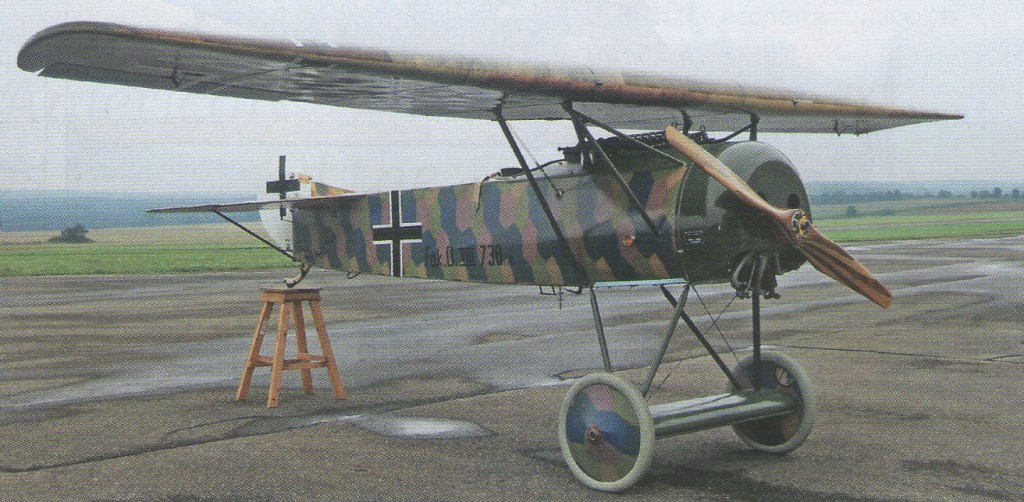
Achim Engels’ company has set up a small factory production line (2010) of airworthy reproductions of WW 1 aircraft, including the Engels E6 Fokker D.VIII.
Achim Engels’ company has set up a small factory production line (2010) of airworthy reproductions of WW 1 aircraft, including the Engels E6 Fokker E.III.


 All Aero