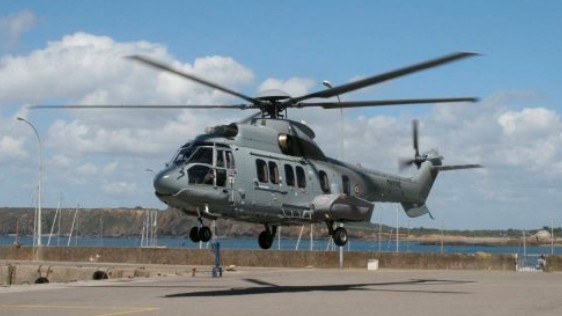
Eurocopter EC-725 Cougar (military Super Puma Mk.2).
The Eurocopter EC 225 civilian and its EC 725 militarized variant is an improved version of the Puma family line. This system first flew in November of 2000 and features a five-bladed main rotor assembly. It also has a larger cabin with newer Makila 1A4 turboshaft engines featuring FADEC (Full Authority Digital Engine Control), a greater Maximum Take-Off Weight (MTOW) and revised EFIS avionics.
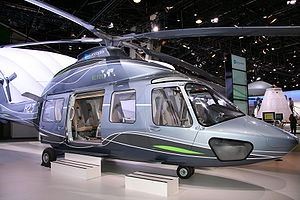
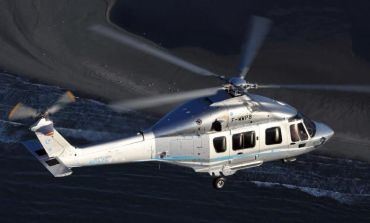
The Airbus Helicopters EC175 (also Avicopter Z-15) is a 7-ton class medium utility helicopter being developed by Airbus Helicopters (formerly Eurocopter Group) and AVIC. Formally launched at Heli-Expo in Houston on 24 February 2008, the EC175 was due to be certified in 2011.
A development contract for the EC175 was signed on 5 December 2005, with Preliminary Design Review (PDR) completed on 5 December 2006 and Critical Design Review (CDR) completed on 5 December 2007. Development of the EC175 was expected to cost €600 million.
During the EC175’s formal unveiling at Heli-Expo 2008, Eurocopter booked a total of 111 purchase options from 13 customers, including launch customers Bristow Helicopters and the VIH Aviation Group. During the Zhuhai Airshow in November 2008, a letter of intent for 5 Z-15s was signed between HAIG and Chinese domestic general-purpose aviation company Longken General Aviation Cooperation.
First flown on the 4 December 2009, the prototype had its official maiden flight on 17 December 2009 in Marignane, France.
The EC175 held the 3km and 6km time-to-climb records for its class, ratified by FAI, at about a minute per kilometre.
The EC175 will be extensively designed and built using computer-aided design/computer-aided manufacturing (CAD/CAM). The gears and the casing of the EC175’s main gearbox (MGB) have, for example, been completely developed using CATIA V5, a first for Airbus Helicopters. The use of CAD has allowed Airbus Helicopters and HAIG to create a virtual mock-up, simplifying the task of coordinating between partners based 10,000 km apart. The first EC175 airframe structure was delivered by HAIG to Airbus Helicopters Marignane in November 2008.
The EC175 is powered by two 1,325 kW (1,775 shp) class, Full Authority Digital Engine Control (FADEC)-equipped Pratt & Whitney Canada PT6C-67E turboshafts, with 5,000 hour time between overhaul (TBO) and on-condition maintenance. The aircraft has a five-blade Spheriflex main rotor and a three-blade tail rotor. The EC175’s main gearbox incorporates two accessory gearboxes, de-clutchable, avoiding the cost and weight of an auxiliary power unit (APU).
The EC175 has a 16-seat interior with access through sliding doors, and jettisonable windows. The EC175’s cockpit features four 6X8 inch multi-function LCD displays, plus an optional central mission display. The EC175’s avionics are derived from those developed for the EC225, and include a 4-axis dual duplex autopilot, linked to the aircraft’s Flight Management System.
Airbus Helicopters will have responsibility for the EC175’s main gearbox, tail rotor, avionics, autopilot, hydraulic and electrical systems, doors and transparencies. Airbus Helicopters will also be the technical lead and system integrator, and will build two of the three prototypes (the first and third). HAIG will be responsible for the airframe, tail and intermediate gearboxes, main rotor, fuel system, flight controls and landing gear.
Price 2014: US$7,900,000
Variants: EC175 Aircraft produced by Airbus Helicopters for the European, American and international markets.
Z-15 Aircraft produced by HAIG for Chinese operators.
Specifications:
EC175 Engines: 2 × Pratt & Whitney Canada PT6C-67E turboshaft, 1,324 kW (1,776 shp) each Length: 15.68 m Rotor diameter: 14.80 m Height: 3.47 m (5.34 m overall) Disc area: 172 m² Empty weight: 4,603 kg Max. takeoff weight: 7,800 kg (16,535 lb) Fuel capacity: 2,616 lt / 695 USgal Maximum speed: 315 km/h Cruise speed: 285 km/h Range: 1259.36 km (680 nmi, 782.53 mi) Service ceiling: 6,000 m Crew: 2 pilots Capacity: 16/18 passengers Cabin Volume: 434 cu ft Baggage Volume: 95.4 cu ft
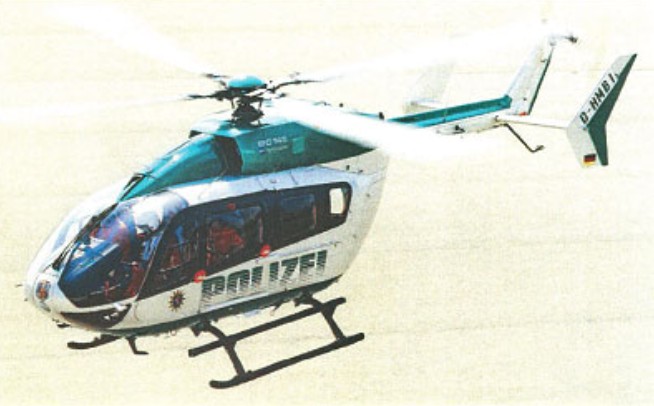
Incorporation of EC 135 technology into the BK 117 began in 1997. Named EC 145 in late 1990, but retains engineering designation BK 117C-2 and is marketed in Japan as such.
The first flight of German aircraft (D-HMBK) (unannounced) was on 12 June 1999, and the first flight of Japanese prototype was on 15 March 2000. A third prototype (D-HMBL) joined the programme on 14 April 2000, and fourth (D-HMBM) on 27 October 2000. Kawasaki builds tail section; Eurocopter responsible for forward section. Certification by LBA received 12 December 2000; commercial launch at Paris Air Show, June 2001; FAA certification awarded 14 February 2002, coincident with type’s formal “introduction” at HeliExpo, Orlando, Florida.
Launch customer was French Securite Civile, which ordered 32 in December 1997 for delivery between and 2006 to replace Alouette III; two preproduction examples delivered May 2001 for familiarisation; first production example (F-ZBPA) formally handed over at Nimes-Garons 24 April 2002; initial batch of 15 received by mid-2003. Second customer is French Gendarmerie, with firm order for eight placed in 1999; deliveries began and initial batch of five received by mid-2003. ADAC (German Automobile Club) ordered two in June 2001 to become civilian launch customer; delivery in 2002. Eight ordered in 2001, including four for Rega HEMS in Switzerland, delivered from 21 November 2002. Two for Hesse Police (Germany) delivered from April 2002.
The Securite Civile contract was valued at US$170 million. Flyaway cost reported as US$4.9 million (2000).
The BK 117 fuselage was redesigned forward of engines; new nose, based on EC 135, provides improved visibility. Main rotor blades are same diameter as BK 117, but have EC 135 profile. The EC-145 has composite main rotor blades with a rigid rotor system. Redesigned tail rotor.
Two Turbomeca Arriel 1E2 turboshafts, each rated at 550kW for take-off, 516kW maximum continuous and 574kW for 2 1/2 minutes’ OEI. Main transmission rated at 776kW for twin-engine T-O, 632kW maximum continuous, for single-engine operarion 551kW allowed for 2 1/2 minutes, 404kW for maximum continuous. Standard fuel contained in main tank, usable capacity 741.5 litres and left and right supply tanks, usable capacities 59 litres and 67 litres respectively, for total capacity of 867.5 litres. Optional long-range tanks increase usable capacity to 1,086 litres.
Compared with BK 117, cabin is more spacious through removal of centre post and door supports.
America’s world-predominant aerospace industry, particularly in the rotary-wing field, also failed to prevail in the US Army’s selection for its major Light Utility Helicopter (LUH) programme to replace an initial 322 Bell UH-IHs and OH-58A/Cs over ten years. Despite an impressive range of indigenous options, the US Army was allowed preference for EADS/Eurocopter’s UHA45.
This is the military version of the civil utility twin Turbomeca Arriel 1E2 turboshaft-engined EC145, redesignated UH-72A Lakota (an American Indian tribe) by the US Army. Part production and overall assembly will be undertaken in the USA by American Eurocopter in Columbus, Mississippi, and Turbomeca USA in Grand Prairie, Texas.
The 100th example of the UH-72A Lakota 09-72100IN697AE (c/n 9315) was handed over to the US Army on March 4 2010 at American Eurocopter’s production facility in Columbus, Mississippi. It was to be assigned the Combat Training Center of the Joint Multinational Readiness Command at Hohenfels, Germany. There it was to be equipped with a Multiple Integrated Laser Engagement System (MILES), a SMart On-Board Data Interface Module (SMODIM), and an electronic data manager.
Engine: 2 x Turbomeca Arriel 1E2 turboshaft, 770 shp. Main rotor diameter: 11.0m Tail rotor diameter: 1.96m Overall length, rotors turning: 13.03m Fuselage length: 10.19m Height overall, rotors turning: 3.96m Height to top of main rotor head: 3.45m Max T-O weight: 3585kg Empty weight: 1792kg Max underslung load: 1500kg Max speed: 145 kts. Never exceed speed (3000kg T-O weight): 278km/h Max cruising speed: 252km/h Max rate of climb: 674m/min Service ceiling: 5485m Hovering ceiling, IGE: 4695m Hovering ceiling, OGE: 4345m Range at normal cruising speed, standard fuel: 700km Range at normal cruising speed, optional fuel: 875km
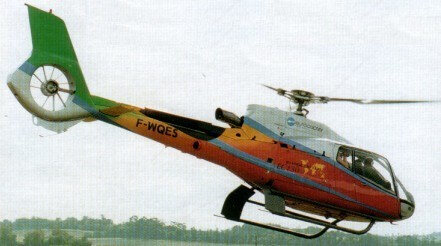
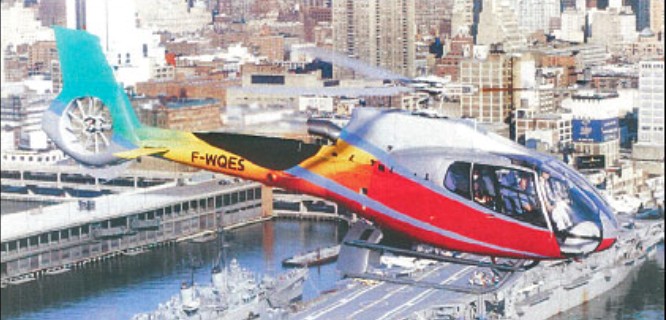
The design is as for the AS 350B3, but considerably modified external appearance, with windscreen side panels, doors and landing gear from EC 120, plus Fenestron based on EC 135, although symmetrical, carried by redesigned tailboom. The dual hydraulic system is from the AS 355N. Cabin width was increased by 25cm to give an additional 23% internal space, accommodating seven or eight seats and enlarged (10%) baggage compartment.
Power is one 543kW Turbomeca Arriel 2B1 turboshaft with transmission rated at 632kW for T-O, with FADEC. Fuel capacity 540 litres in single tank. The EC-130 retains the AS 355B3 engine and transmission, but automatic system (in conjunction with dual-channel FADEC, plus third, digital, back-up channel) matches rotor speed to flight conditions for noise reduction. The 84.3 EPNdB flyover rating is 7 dB below ICAO limit and 0.5 dB under special Grand Canyon National Park restrictions achieved by use of parabolic rotor tips.
A second prototype (F-WQES) assisted in a 200 hour test programme, including high-altitude testing in Albuquerque, USA, in September 2000.
With dual controls, accommodation is for a pilot and up to seven passengers in a transport role, or pilot and one or two stretcher patients plus two medical attendants in casualty evacuation configuration.
JAA certification was achieved on 14 December 2000, and FAA certification on 21 December 2000. The EC-130 was revealed only in February 2001, when initial production aircraft (also 3,000th of Ecureuil family) were handed over to Blue Hawaiian Helicopters at HeliExpo. Four preproduction helicopters were delivered to the launch customers in the first half of 2001.
The initial production version, the EC-130B4, has a dual-channel FADEC (full authority digital electronic control) unit and a third, independent channel for engine control. The engine is the Turbomeca Arriel 2B1 turbine (the same as that fitted to the AS 350 B3, sans the FADEC system), which gives a maximum shaft horsepower at take-off of 847. The Arriel drives a Starflex-type main rotor, the speed of which is automatically varied to reduce noise, giving a fast cruise speed of 127 knots, a maximum take-off weight of 2,400 kg and a useful load of 1030 kg, and a range at this weight of 345 nm. Equipment includes a 4.5kW 28V DC starter-generator, 15 Ah batteryand a 28V DC cabin outlet.
Announced orders included Blue Hawaiian (10 in 2001), Rocky Mountain Helicopters (10 in 2001), Mont Blanc Helicopteres (two) and five to UK customers. Deliveries started in June 2001 and totalled 10 in 2001 and 30 in 2002. The cost in 2002 was US$1.6 million.
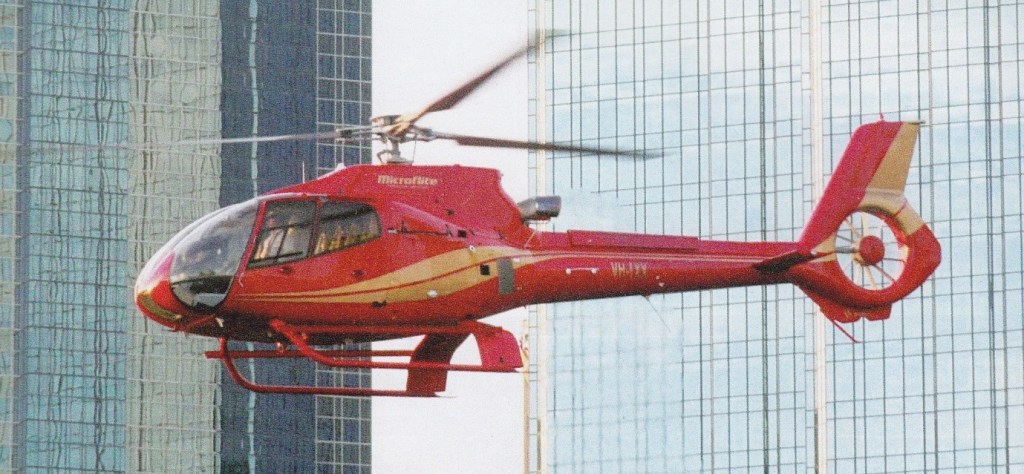
Eurocopter EC 130B4 VH-IXX
EC-130B4 Engine: Turbomeca Arriel 2B1, 847 shp (728 shp max continuous) Main rotor diameter: 10.69m Overall length, rotors turning: 12.64m Fuselage length: 10.68m Height to top of fin: 3.61m Height to top of rotor head: 3.34m Max T-O weight, internal load: 2400kg Max T-O weight, external load load: 2800kg Empty weight: 1360kg Never exceed speed: 287km/h Max operating speed: 235km/h Max rate of climb at sea level: 698m/min Service ceiling: 7010m Hovering ceiling, IGE: 5875m Hovering ceiling, OGE: 5320m Range: 345 nm. Pax cap: 7/8.
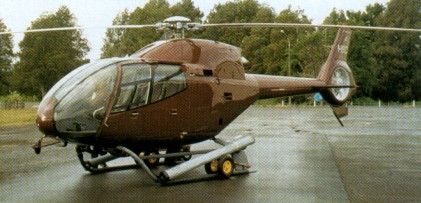
EC-120 Engine: 1 x Turbomeca Arrius 1B1. Instant pwr: 373 kW. Rotor dia: 10.2 m. MTOW: 1550 kg. Useful load: 700 kg. Max cruise: 130 kts. Max range: 600 km. Service ceiling: 7850 ft. Crew: 1. Pax: 4. Seats: 5.
EC-120B Engine: 1 x Turbomeca Arrius 2F, 504 shp. Length : 37.795 ft / 11.52 m Height : 11.155 ft / 3.4 m Rotor diameter : 33.465 ft / 10.2 m Max take off weight : 3704.4 lb / 1680.0 kg Weight empty : 1973.5 lb / 895.0 kg Max. payload weight : 1653.8 lb / 750.0 kg Max. speed : 150 kts / 278 km/h Econ cruise: 105 kts. Max cruise: 123 kts. Initial climb rate: 1474.41 ft/min / 7.49 m/s Service ceiling: 20013 ft / 6100 m Range: 405 nm / 750 km Crew: 1 Payload: 4pax / 750 kg
Eurocopter GIE was formed in Paris in 1984 as a company jointly owned by Aerospatiale and MBB to persue the development of three versions of the basic combat helicopter, the PAH, HAP and HAC.
A two-seat microlight with piston engine carried above high-mounted wing, developed from JF91 microlight. Stylish, comfortable cabin cabin with excellent visibility, stable & forgiving flight characteristics, aerodynamic airframe with high structural intergrity, low operational costs. Also available in handicapped version. 2009 Price: 41000 EURO
Stall: 30 kt / 35 mph / 56 kmh Cruise: 83 kt / 96 mph / 154 kmh VNE: 97 kt / 112 mph / 180 kmh Empty Weight: 279 kg / 616 lbs MTOW Weight: 449 kg / 990 lbs Climb Ratio: 1380 ft/min / 7 m/s Take-off distance (50ft obstacle): 394 ft / 120 m Landing distance (50ft obstacle): 394 ft / 120 m
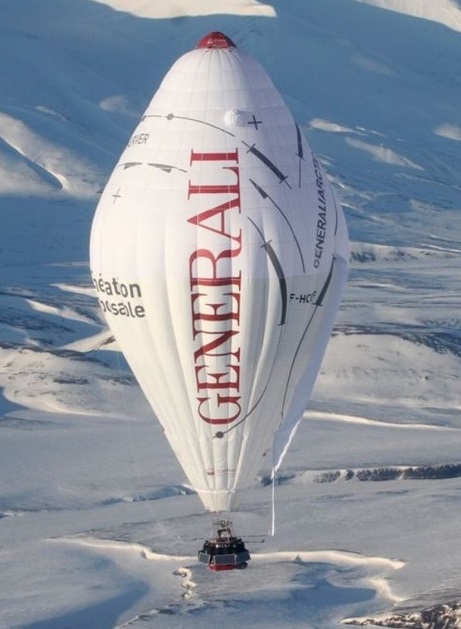
From April 5 to 10, 2010, the explorer Jean-Louis Etienne carried out on board a rozière the first crossing of the Arctic in 121 hr. Departing from the Norwegian archipelago of Spitsbergen, it traveled 3,130 kilometers before landing about 250 kilometers north of Batagai, in eastern Siberia.
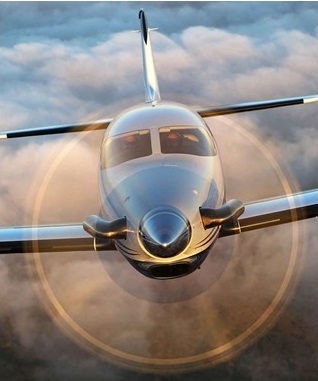
Epic Aircraft completed the successful maiden flight of its first conforming prototype E1000 single-engine turboprop, code-named FT1, putting the manufacturer on track to achieve certification later in 2016.
FT1 made its successful first flight on December 19 2015 from the Bend Municipal Airport. After the 20-minute test hop, Epic chief pilot David Robinson reported, “The aircraft handled extremely well and performed just as expected,” according to an Epic statement.
FT1 testing was assessing general handling qualities, operational performance, systems operations in normal mode, failure scenarios, extreme conditions and Flight Into Known Icing (FIKI) requirements.
The second and final flight test article, FT2, was scheduled to fly that spring, and will reflect as closely as possible the E1000 production aircraft, both in equipment and manufacturing process.
FT2 testing will focus on assessing interior and cabin functionality, including fuel, hydraulic, avionics, navigational and environmental systems.
Priced at $2.95 million the E1000 is powered by the single 1,200-horsepower Pratt & Whitney PT6A-67A turbine engine, giving is a top speed of better than 325 ktas, a max range of 1,650 nautical miles, climb rate over 4,000 feet per minute, ceiling of 34,000 feet, and full-fuel payload of 1,120 pounds.
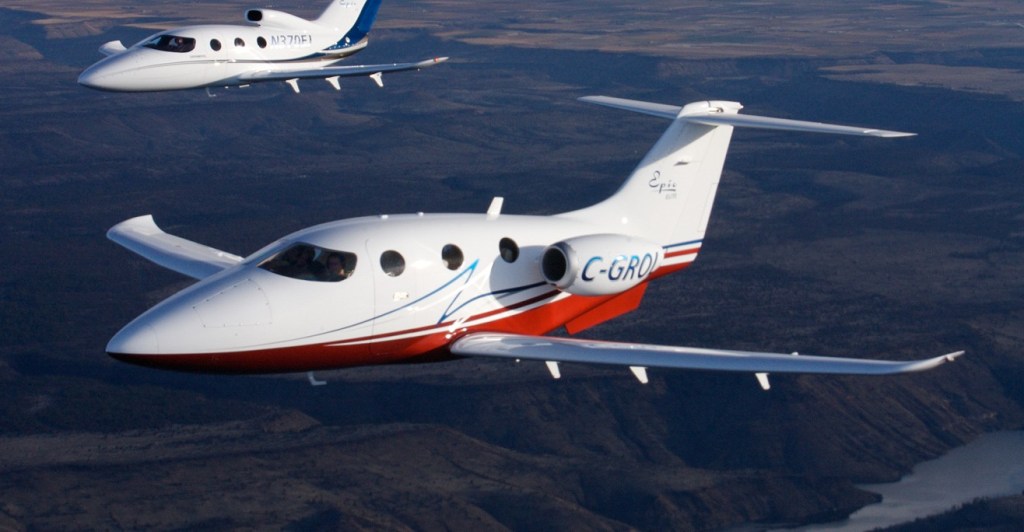
The VLJ, single-pilot, twin-engine Epic Elite Jet carbon composite design has 3100 lbs of thrust from two Williams FJ33-4A FADEC engines. The computer-designed fuselage allows the Elite to operate to Flight Level 410. The carbon composite construction requires no rivets producing a smooth and fast surface that offers a more functional cabin and cockpit. The Elite can cruise at 410 KTAS and travel more than 1600 nautical miles with a payload of nearly 1700 lbs, with 6-8 passengers, full fuel. The pilots enjoy ergonomic seats and a state-of-the-art glass cockpit. In the cabin, deep-cushion leather seats recline and with a maximum cabin pressurization of 8.5 psi. The Elite is a 7-place experimental jet.
Engine; Williams International FJ-33-4 Length; 39.9 ft. Wingspan; 44 ft. Height; 12.4 ft. Cabin length; 17 ft. Cabin width; 4.8 ft. Cabin height; 5 ft. Empty weight; 4,000 lbs. Maximum take-off weight; 7,700 lbs. Maximum payload with full fuel; 1,330 lbs. Maximum cruise; 412 KTAS Economy cruise; 385 KTAS Ceiling; 41,000 ft. Time to climb; 41,000 ft., 17 min. Range maximum cruise (with reserve and at maximum payload); 1400 NM Range economy cruise (with reserve and with six passengers); 1400 NM Seats; 6 to 8 Pressurization; 8.5 psi







 All Aero