Evektor s r.o. dates back to 1991, when it was established by three men creating a company focused on aerospace and automotive industries. The company headquarters is located at the international airport in Kunovice in South Moravia near to Austria and Slovakia.
In 1992 Evektor established cooperation in the aerospace industry, sharing in the development of the light attack airplane L 159 and, in 1996, establishing cooperation in development of the Ibis Ae-270.
In 1996 Evektor developed the braced high-wing two-seat FOX airplane (a variant of the German Ikarusflug Eurofox, with Evektor of the Czech Republic having undertaken important design work, and Aeropro of Slovakia building airframes for Fox and Eurofox) and began marketing the Fox.
Also in 1996 Evektor purchased 100% of the Aerotechnik CZ company. After fusion with Evektor, the Aerotechnik company was transformed into share holding company Evektor-Aerotechnik in 1999.
2000->
Eviation Alice

In planning since 2016.
In June 2019 Eviation Aircraft was preparing to start flight testing Alice, its new all-electric regional airliner, in the U.S. En route to its U.S. base in Prescott, Arizona, the Israeli start-up company brought its full-scale prototype of the nine-seat, all-composite design to the Paris Air Show in June 2019 and announced a “double-digit” launch order for the $4 million aircraft from U.S. operator Cape Air.
In June 2019 Eviation Aircraft was preparing to start flight testing Alice, its new all-electric regional airliner, in the U.S. En route to its U.S. base in Prescott, Arizona, the Israeli start-up company brought its full-scale prototype of the nine-seat, all-composite design to the Paris Air Show in June and announced a “double-digit” launch order for the $4 million aircraft from U.S. operator Cape Air.

On 27 September 2022 the Alice first flew, from Grant County International Airport, Washington State, USA.

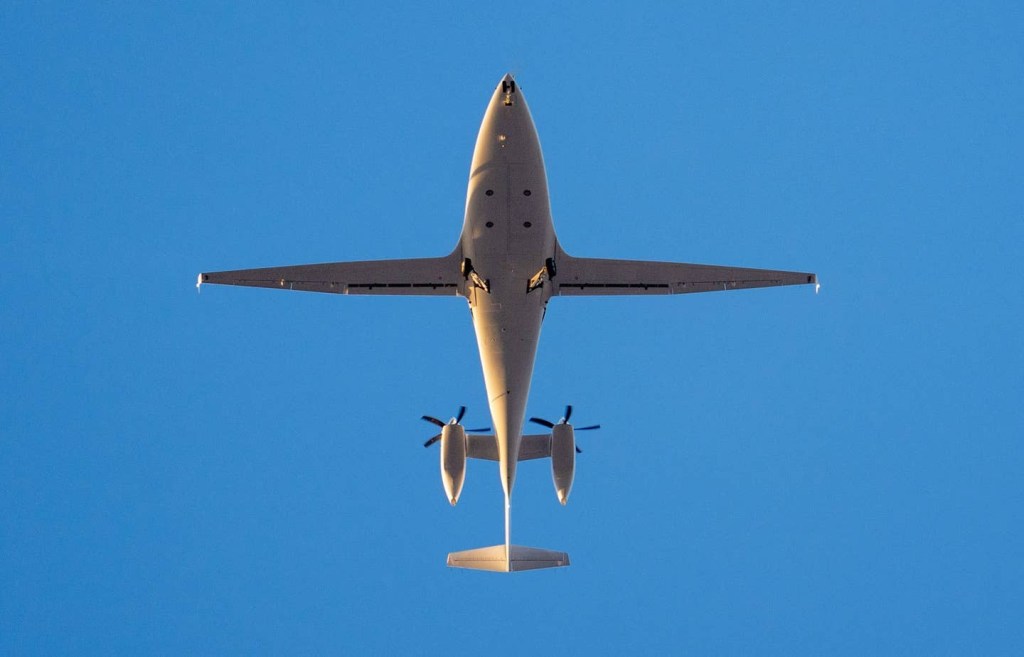
The world’s first flight was for eight-minutes. The successful maiden flight reached an altitude of 3,500 feet (1,067m) and the zero-emissions plane was powered by two 640-kilowatt electric motors.
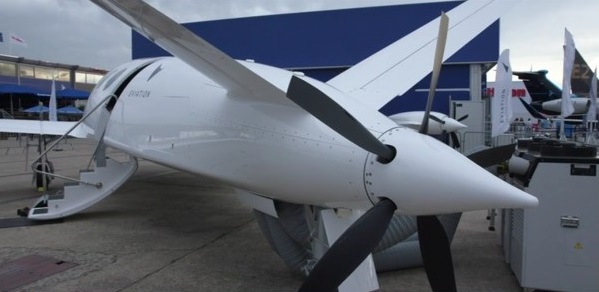
Eviation expected the path to FAA Part 23 type certification to take between 24 to 30 months after the Alice achieves its first flight by the end of 2019, allowing for entry into service by the end of 2022. It was set to be the first Part 23 all-electric aircraft and the first with full fly-by-wire flight controls. The manufacturer claimed it was fully funded through to the start of series production.

The requirements for an all-electric plane are very different from those of conventional aircraft. The biggest challenge is weight, thanks to the fact that batteries provide considerably less mileage to the pound compared to energy-dense jet fuels.
That makes slashing the weight of other components a priority and the plane features lightweight composite materials “where no composite has gone before,”. Eviation has also done away with the bulky mechanical systems used to adjust control surfaces on the wings, and replaced them with a much lighter fly-by-wire system that uses electronic actuators controlled via electrical wires.
The company’s engineers have had to deal with a host of other complications too, from having to optimize the aerodynamics to the unique volume and weight requirements dictated by the batteries to integrating brakes designed for much heavier planes.
Eviation says the Alice will be comparable in price to similar sized turboprop aircraft like the Beechcraft King Air and cheaper than small business jets like the Embraer Phenom 300. And crucially the relative simplicity of electrical motors and actuators compared with mechanical control systems and turboprops or jets means maintenance costs will be markedly lower.
In Feb 2022 the first commercial all-electric passenger plane was just weeks away from its maiden flight, according to its maker Israeli startup Eviation. If successful, the nine-seater Alice aircraft would be the most compelling demonstration yet of the potential for battery-powered flight.
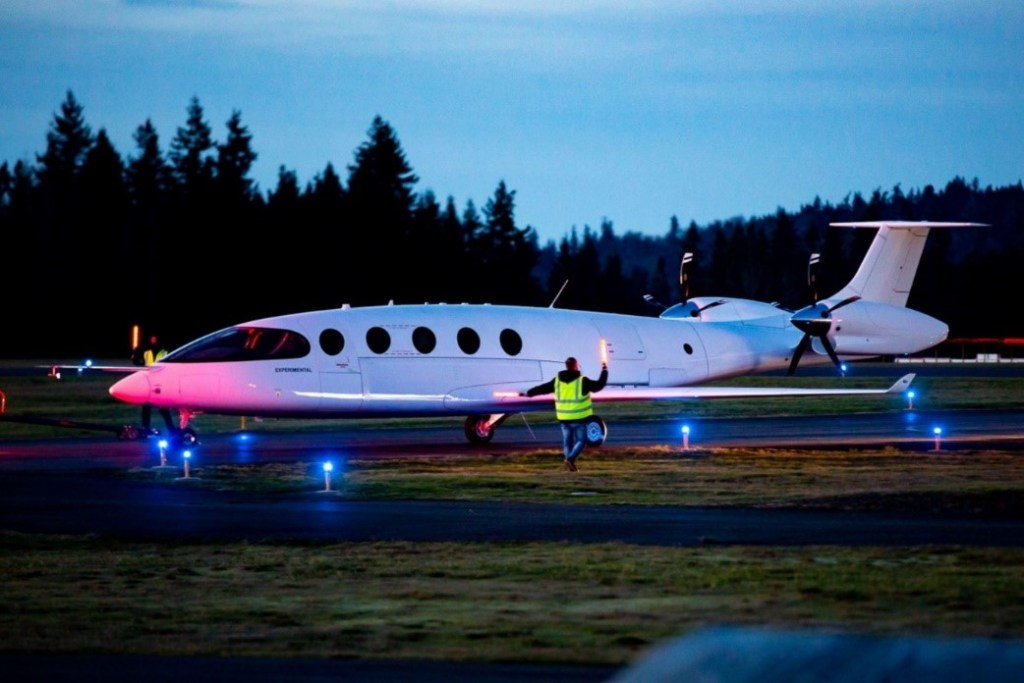
The Alice was undergoing high-speed taxi tests at Arlington Municipal Airport close to Seattle. This involved subjecting all of the plane’s key systems and fail-safe mechanisms to a variety of different scenarios to ensure they are operating as expected before its first flight. The company was five or six good weather days away from completing those tests, after which the plane should be cleared for takeoff.
The Alice should ultimately be capable of cruising speeds of 250 knots (463 kph) and a maximum range of 440 nautical miles (815 km).
The company has already received advance orders from logistics giant DHL and Massachusetts-based regional airline Cape Air.

Even accounting for the need to replace batteries every 3,000 flight hours, Eviation expects Alice’s operating costs to be about half those of similar sized aircraft.
In 2025 Electric aviation’s prospects took a hit after a leading developer paused work on its prototype aircraft.
Eviation laid off the majority of its staff and halted development of its all-electric Alice, designed for two crew and as many as nine passengers. The manufacturer struggles to secure funding to keep the project alive.
Founded one decade ago, Eviation unveiled its first one-quarter-scale Alice prototype, “The Orca,” at the 2017 Paris Air Show. At the 2019 event, it revealed the first full-scale prototype of the regional commuter aircraft. Since then, though, the model has undergone more redesigns (two) than test flights.
Alice was conceived as a middle-mile aircraft, designed for short-hop, city-to-city flights spanning about 250 nm. Its two electric engines produce zero emissions. According to the company, they are cheaper, quieter, and require less maintenance than combustion engines. The aircraft can carry nine passengers or up to 2,500 pounds of cargo, with a top speed of 260 ktas.
Eviation has taken more than 600 orders for Alice, including from DHS Express, Air New Zealand, and GlobalX.
The program would not be fully shut down but did not elaborate further.
According to SMG Consulting’s Advanced Air Mobility (AAM) Reality Index, which tracks investments in manufacturers of electric and other AAM aircraft, Eviation has received $200 million in funding. Its last funding raise was in 2019.
Engines: 2 x Magni 650, 640 kW
Wingspan: 62 ft 10 in / 19.15 m
Length: 60 ft 9 in / 18.52 m
Height: 14 ft / 4.28 m
MTOW: 16,500 lb
Payload (Commuter): 2,500 lb
Typical Cruise Speed: 250 kts
Max cruise speed: 250 kts
Max Range: 440 NM
Climb Rate: 2,000 ft/min
Landing Distance: 2,040 ft
Take-off Distance: 2,600 ft
Eviation

Eviation was co-founder by Omer-Yohay (left) and Aviv Tzidon (right) in Tel Avib, Israel, in 2015.
The company initially bult drones.
In 2019 Clermont Group acquired 70% of Eviation.
A full-size, functional prototype, the Alice, appeared at the 2019 Paris Air Show.
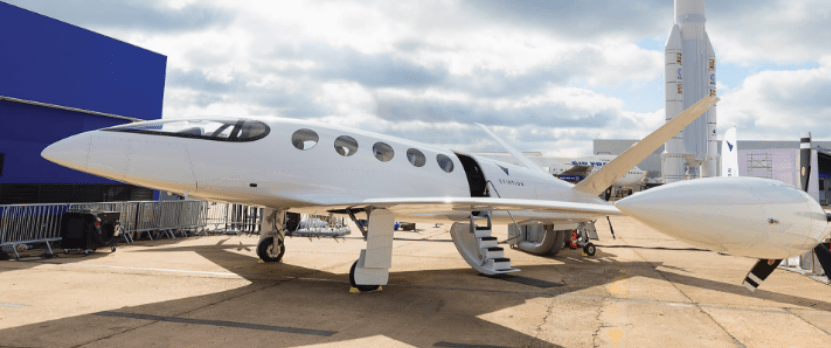
In 2020 Eviation moved its headquarters to Arlington, WA, USA, and secured manufacturing facilities. Assembly of the first production configuration Alice (commuter variant), Executive and cargo variants was unveiled.
In 2022 the Alice first flew.
EU-WISH Aircraft
2008: 1601 Coles Creek Rd, Hermann, MO 65041, USA.
2010: EU-WISH Aircraft, RR2, EU-WISH Airport, Hermann, MO 65041, USA
EU-Wish Aircraft became the owner of the Smythe Sidewinder Design.
Europrop International
Europrop International GmbH (EPI) is a joint venture among four European aero-engine manufacturers, MTU Aero Engines, Snecma, Rolls-Royce, and Industria de Turbo Propulsores. The company’s sole product is the Europrop TP400-D6 7970 skW/10,690shp turboprop developed for the Airbus Military A400M.
The EuroProp joint company is an alliance of:
MTU Aero Engines (28%) Germany
Rolls-Royce (28%) United Kingdom
Snecma (28%) France
Industria de Turbo Propulsores (Sener Aeronáutica and Rolls-Royce) (16%) Spain
Workshare on the TP400-D6 engine is split based on the number of aircraft purchased by each of the partner nations. The 2010 shares were: Snecma 32.2% (including work at Techspace Aero), Rolls-Royce 25% (includes work at German operations), MTU 22.2%, ITP 20.6% (includes a Turkish share from TEI who were responsible for the front bearing structure and exhaust nozzle assemblies).
Eurospace Sails Independent
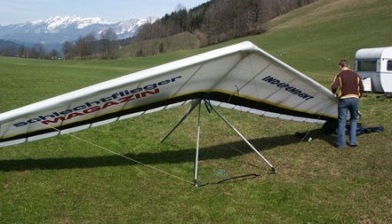
The Europe Sails Independent is a hang glider for Advanced pilots. The glider itself is easily within the (2006-2007) range of performance of similar topless gliders. With only 2-3 gliders/year made by the company they use parts from other manufacturers. Carbon parts are made in-house. This glider features unique Carbon wing-tips which are big, extremely stable and – affordable. The manufacturer makes the setup of the glider according to the personal experience and wishes of the pilot.
Performance and Flight characteristics depend on the setup: The sail can be stretched up to drumhead hardness for competitive and high performance gliding.
Independent 13
Wing area: 13 m²
Wing span: 10 m
Aspect ratio: 7.6
Hang glider weight: 31 kg
Minimum pilot weight: 56 kg
Maximum pilot weight: 90 kg
Packed length: 5 m
Packed length short: 3.95 m
Number of battens: 28
Nose angle: 127°
Independent 14
Wing area: 14.3 m²
Wing span: 10.35 m
Aspect ratio: 7.4
Hang glider weight: 34 kg
Minimum pilot weight: 75 kg
Maximum pilot weight: 110 kg
Packed length: 5.14 m
Packed length short: 4.08 m
Number of battens: 28
Nose angle: 127°
Euroenaer
In 1997, once the basics of engineering and financing were solved, Euroenaer was created, based at the airport in Den Helder, whose objectives were generally produce structural analysis and design, product design and production of aircraft technology. The company was organized according to 21 JAA (Joint Aviation Authorities) requirements and was certified as an organization design and production organization to achieve design type certificate of aircraft. Subsequently Euroenaer sought FAA certification, using the Euro-Enaer EE-10 Eaglet CC-PZL.
Monetary contributions came from several European investors and other institutes that were linked to the Eaglet Project.
1) ENAER accounted for 21% of the capital;
2) The Aerospace Business Group (owned by Hein Langendijk), grew to 51% of the company;
3) TIFAN (a fund formed by universities and local banks) and the holding Thresoor Bunshoten, 10%;
4) A number of other small investors like Jan Van Toorn.
The technical-academic institutions that were supporting the project, include:
1) Faculty of Aerospace Engineering of Delft University of Technology;
2) The Dutch Technical Research Institute / Centre of Lightweight Structures (TNO), experts in the field the VISA project – Vacuum Injection Small Aircraft, with the concept of Resin Transfer Moulding RTM.
3) Also participate as a contractor of the project in the Netherlands was Aircraft Company Renegade CV (GRA-CV) [a company of K3C Group], which designed and built production molds for the windshield, central panel and column, flaps and slots, Mount Compass, dummy instruments, and several other small parts. It also established the facilities for testing wing design (although the windscreen and doors were actually manufactured by Mecaplex, Switzerland).
The final certification of design and manufacturing rights for the Euro-Enaer EE-10 Eaglet took longer than desired, and that during this delay EuroEnaer began with financial difficulties that made it go bankrupt. Additionally, the participating contractor gamely Renegade Aircraft CV ( GRA -CV ) , in 2001 provided additional problems to the project by way of claiming the protection of their rights related Eaglet and threatened with lawsuits to be taken advantage of such designs , including specifically related companies Eaglet .
Eurodisplay SR-01 Magic
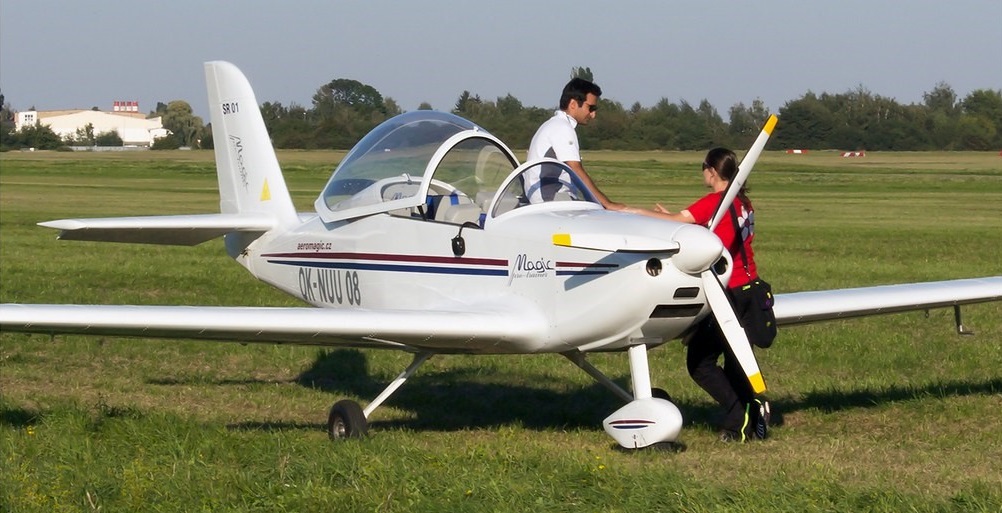
The Eurodisplay SR-01 Magic was designed to comply with the Fédération Aéronautique Internationale microlight rules and US light-sport aircraft rules. Designed and produced by Eurodisplay of Kozomín It features a swept cantilever low-wing, a two-seats-in-tandem enclosed cockpit under a bubble canopy, fixed, or optionally retractable, tricycle landing gear and a single engine in tractor configuration. The tandem arrangement was chosen to provide military trainer-like seating.
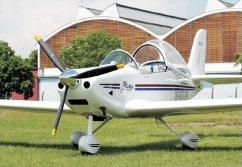
The aircraft is made from sheet aluminum. Its wing has single-slotted flaps. Standard engines available were the 80 hp (60 kW) Rotax 912UL, the 100 hp (75 kW) Rotax 912ULS and the 115 hp (86 kW) Rotax 914 four-stroke powerplants.
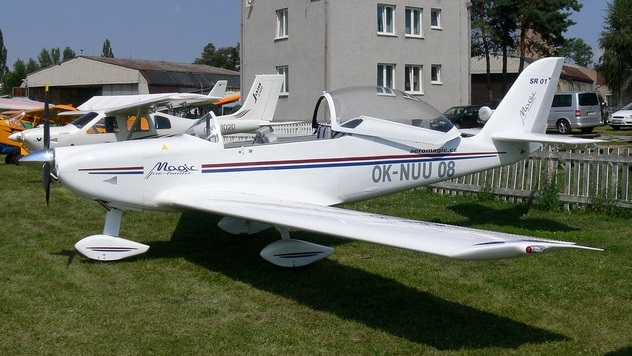
Rate of climb: 5 m/s (980 ft/min)
Crew: one
Capacity: one passenger
SR-01 Magic LSA ProTrainer
Version for the US light-sport market
Gross weight: 600 kg (1,323 lb)
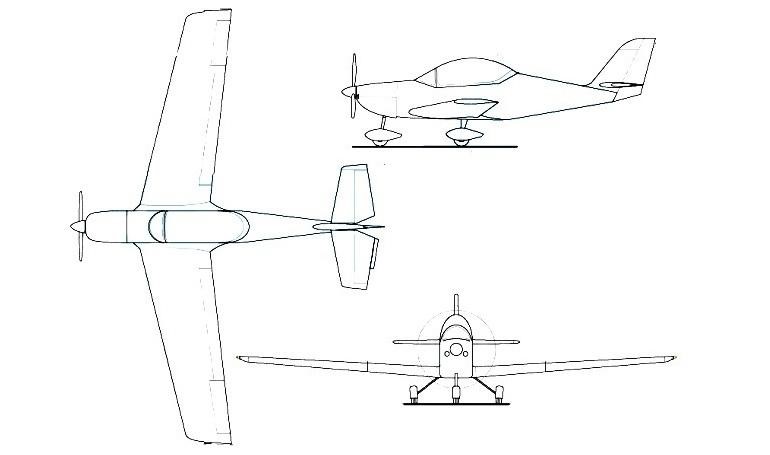
Eurodisplay
Eurodisplay was a Czech ultralight and light-sport aircraft designer and producer, based in Kozomín.
The company seems to have gone out of business in mid-2016 and production ended.
Eurocopter X3
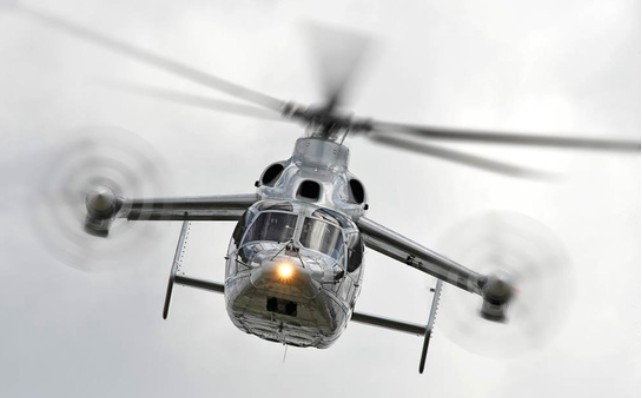
Eurocopter began a X3 flight testing programme in September 2010 that combines the vertical takeoff and landing capabilities of a helicopter with an aircraft’s fast cruise speeds of more than 220 kts. After achieving the initial true airspeed goal of 180 kt (333 km/hr) in November 2010 at a reduced level of engine power, the X3 underwent its planned gearbox upgrade and safety inspection. Since returning to flight, the X3 quickly demonstrated its performance at full engine power, including impressive climb and descent rates as well as manoeuvrability while also confirming the hybrid propulsion system’s capabilities for acceleration and deceleration.
The hybrid aircraft has low vibration levels without the use of passive or active anti-vibration systems, providing flight characteristics comparable to those of the best traditional design helicopters currently in service.
Eurocopter’s X3 hybrid helicopter demonstrator had an original speed target of 220 kts, The X3’s speed milestone was reached on 12 May 2011 during stable level flight; the hybrid demonstrator maintaining a true airspeed of 232 kts (430 km/hr) for several minutes. This occurred during only the third mission after a scheduled upgrade that integrated the X3’s definitive gearboxes, enabling it to operate at full power.
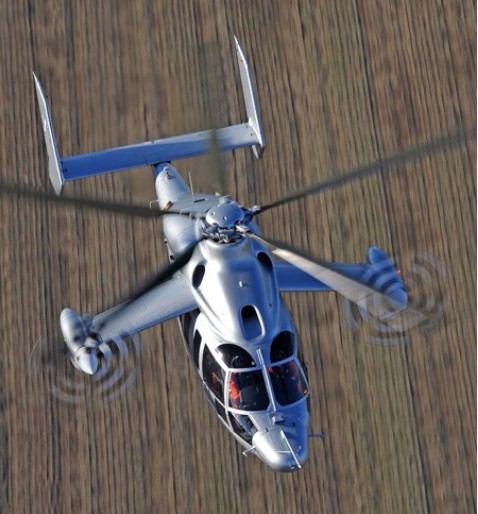
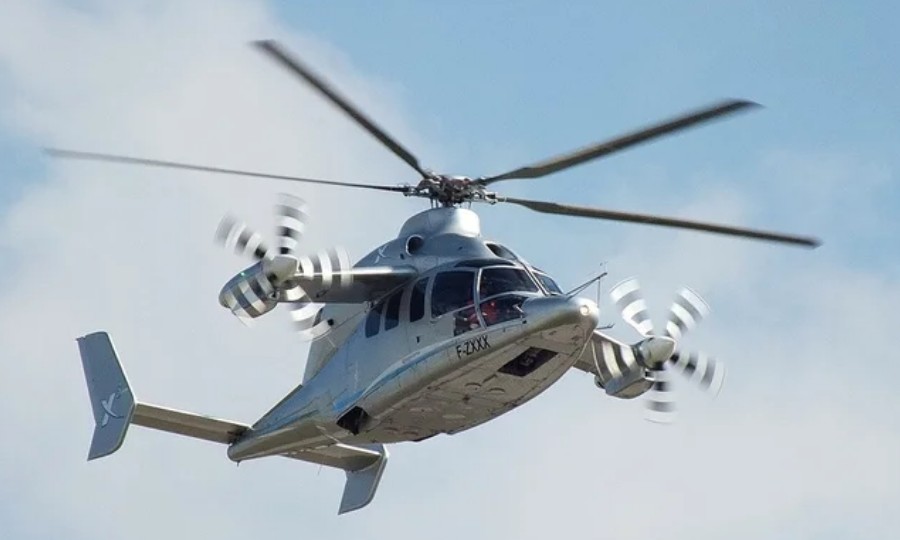
The X3 uses a primary rotor like a helicopter for vertical operation and a pair of outrigger engines for forward motion. A pair of turboprop engines push it up to speed. It could only accommodate two people.
In 2011, the X3 broke records by achieving a cruising speed of 267 mph using only 80% of its power. Three years later, in June 2013, it reached a top speed of 300 mph before the pilot reined it down to a cruise of 293 mph.
After 199 test flights from which engineers gleaned reams of data, the airframe was retired and now lives a as an exhibit at the Bourget National Air and Space Museum outside of Paris.
 All Aero