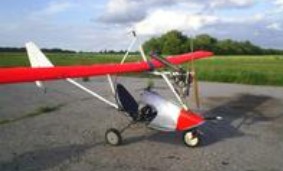
Fearnside Bleriot XI replica

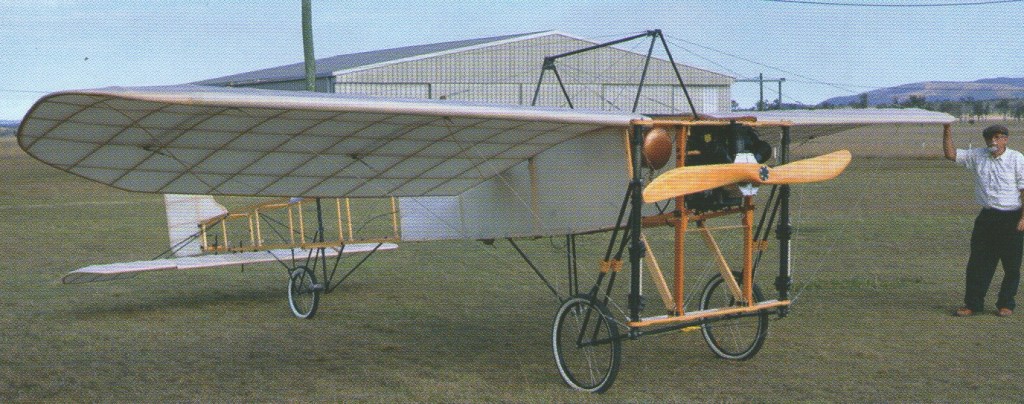
Sighted at Queensand’s Watts Bridge Memorial Aerodrome in 2010 was a Bleriot XI parked on the grass. Built by Keith Fearnside, this aircraft adheres to the original fabric covered, wire-braced timber construction techniques (including wing warping controls).
Keith’s aircraft has been fitted with a modern Rotax power plant but he has concealed it behind a dummy Anzani requiring close inspection before the actual details of the installation are revealed.

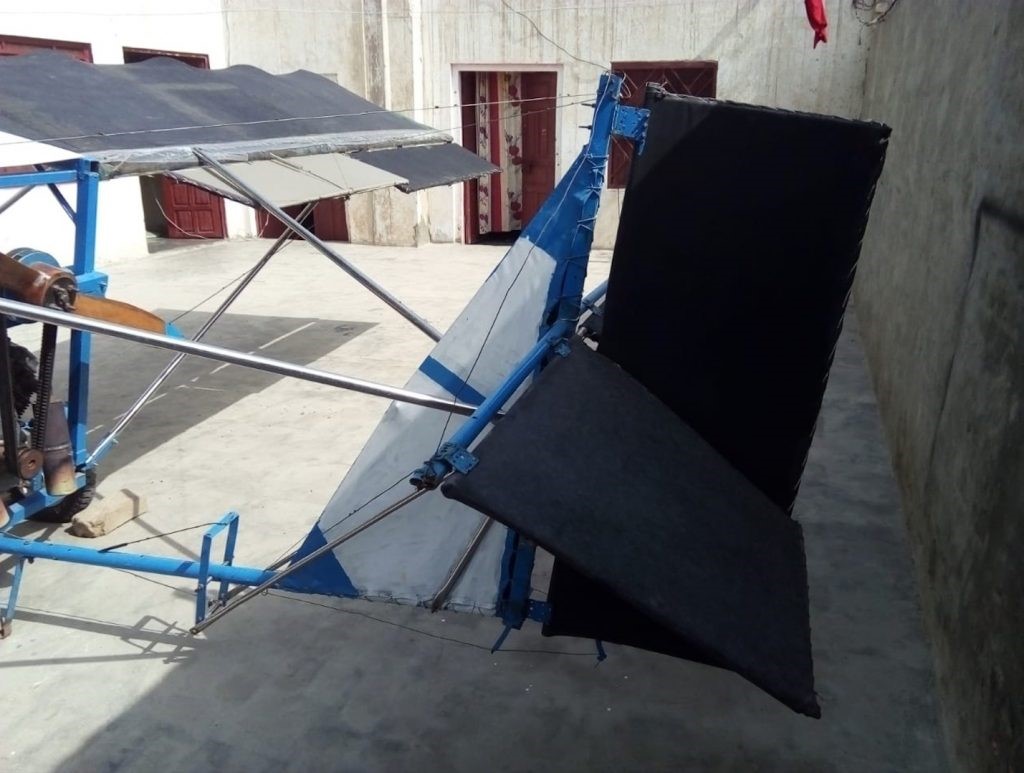
Fayaz 2019 Aeroplane

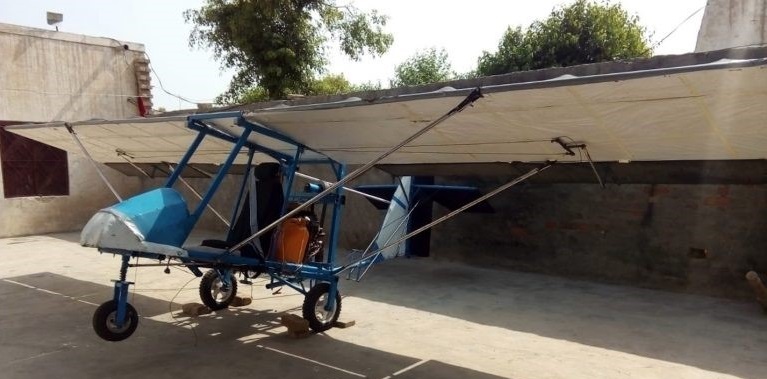
Muhammad Fayaz, a popcorn seller and part-time security guard, was inspired to make an aeroplane after watching the National Geographic series Air Crash Investigation in 2015, and had sold a field, used his savings and taken out a bank loan to pay for it. He had visited Lahore several times in order to “have a glimpse of a Boeing plane and examine how it looks like and what material and parts have been used”.

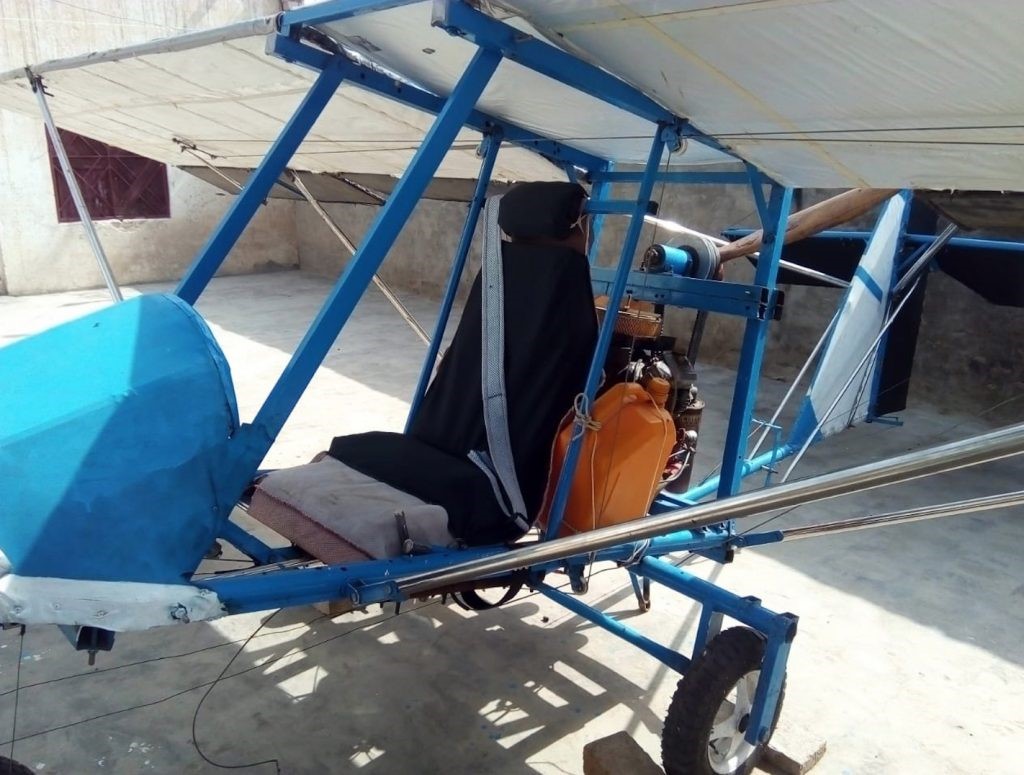
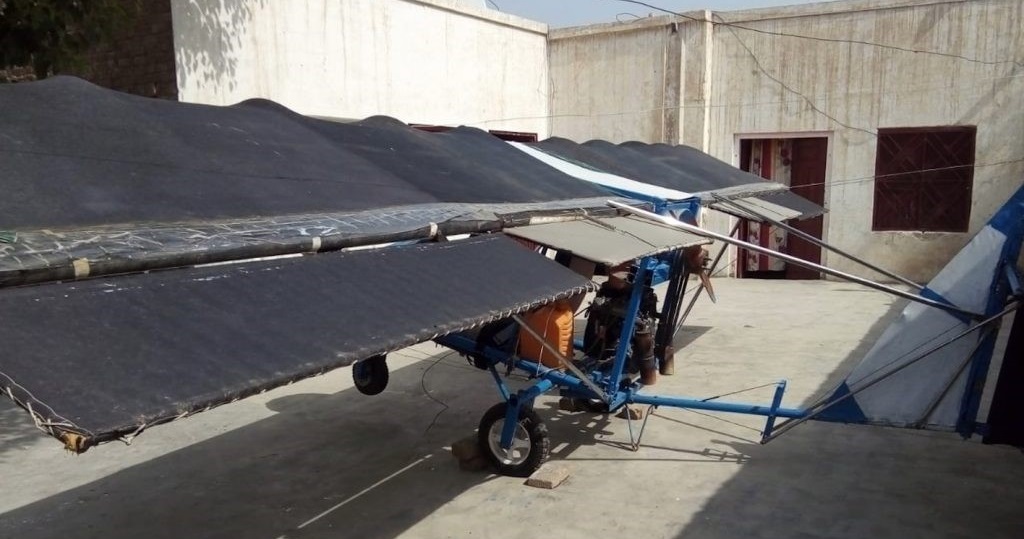
Starting the build in late 2018, the 92kg craft cost him a total of Rs50,000 (£270) to make and he claims it can fly to 1,000 feet. The programme, namely Air Crash Investigation on National Geographic, had helped me a lot and he became familiar with the parts of an airplane and their functioning, then started working on the project.

His friends and family reportedly made fun of him and his mother expressed her concern about the test flight, but this apparently did not deter him.

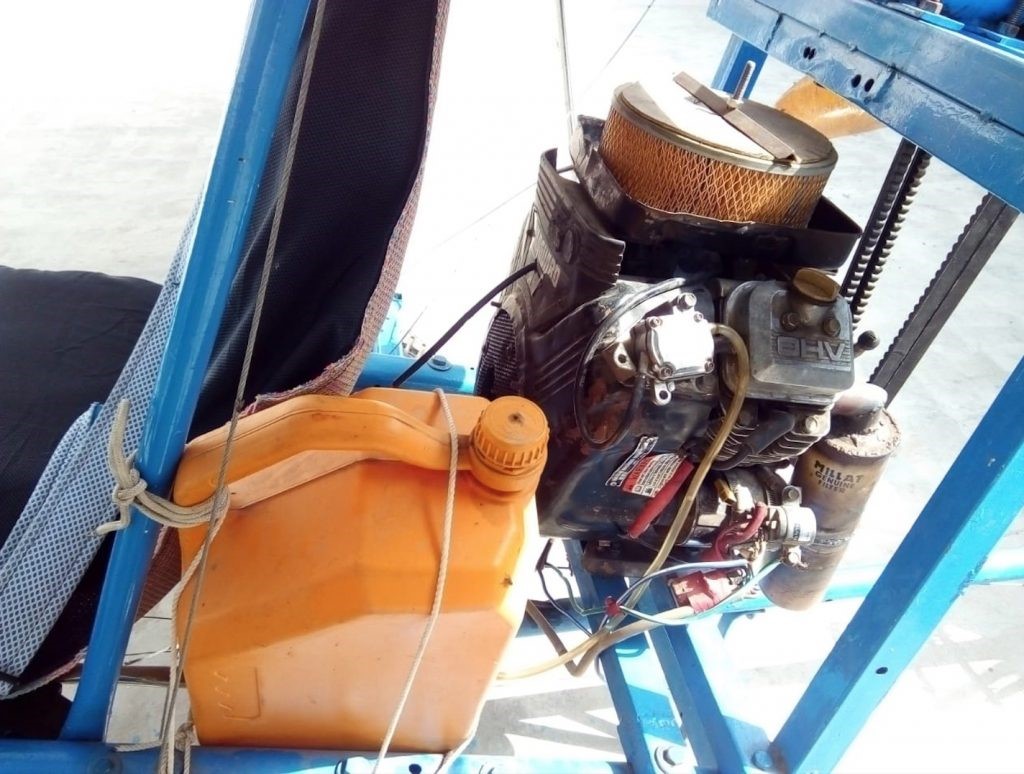
He experimented with second-hand engines until he found one light enough, powerful enough and cheap enough to use for the plane.

Mr Fayaz told reporters he had been told to contact Pakistan’s Civil Aviation Authority (CAA) to gain permission for his test flight, but he did not do so. Owing to limited resources, he was unable to contact the civil aviation officials and finally decided to take test flights without getting permission.

With a crowd of 500 watching, he reportedly used a length of road free from telegraph poles as the runway for his maiden flight and “took several rounds in the air”.

“I made the aircraft with my hard work. My plane can fly till 1,000 feet. Give me one chance so that I can prove that I am a patriotic Pakistani. I informed every department but no one responded me,” Mr Fayyaz said, according to Pakistan Today.

Mr Fayaz was then reportedly arrested for building an aircraft without a permit and “performing aerobatics in the makeshift flying machine”, the “first incidence report” filed by local police said.

The police at the station where Mr Fayaz was held after the incident had taken Mr Fayaz into protective custody and the “unreliable machine impounded to ensure it did not cause any harm to villagers who had gathered to witness the experiment.” The aircraft was confiscated.

Since his release, he asked that the prime minister and army chief give him an opportunity to serve the nation, as “I can make the planes for the country at a low cost.”

He also asked the government to help him get his plane back.

“No one can believe a person who has never been to college has built his own aircraft. This is the result of my passion and constant effort.”

But the impoverished man couldn’t complete his studies after his dad Muhammad Ishaque died and had to quit education after middle school aged 14.

Fayyaz was forced to instead sell popcorn to earn a living – but didn’t stop dreaming of flying a plane.

Married dad-of-four Fayyaz, who has no professional pilot training, said: “It feels great my childhood dream has come true.

Fayyaz learned the basic rules of air pressure and flying techniques with the help of experiments he carried out on his own. He also watched National Geographic’s ‘Air Crash Investigation’ show to learn about why planes crashed and to understand the different parts of an aircraft and their functions.

Fayyaz said: “I saw various models of aircraft and the thought came in my mind that if I cannot afford buying a plane, I must try to build my own.

“I took some pictures of the aircrafts at the museum and then took help from internet and my mechanic friends to design and build this aircraft.

The fruits of Fayyaz’s labour have now been appreciated by the Civil Aviation Authority which has also extended all the help and efforts to promote and support his innovation.

In a statement, the CAA said they ‘appreciated the passion and skills of the mini airplane maker’ and would provide him the required guidance to achieve more expertise in the field.

The body said under the country’s New Aviation Policy 2019, developed in line with the vision of Prime Minister Imran Khan, every effort will be taken to promote the sector and support innovation.

“My family had opposed me due to the risks involved and anticipating the failure of my invention, but I told them that they have to have faith and believe my hard work will pay off.

“But unfortunately, when I tried to make the solo flight, I was arrested by the police.

“They also took my plane into custody for a week, and I had to pay a fine of £17 to release it.

“I am very happy that now I will get technical support from Civil Aviation Authorities and I will be able to fulfil my childhood dream of flying an aeroplane.

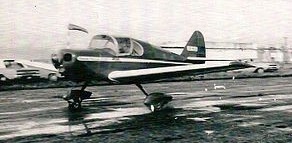
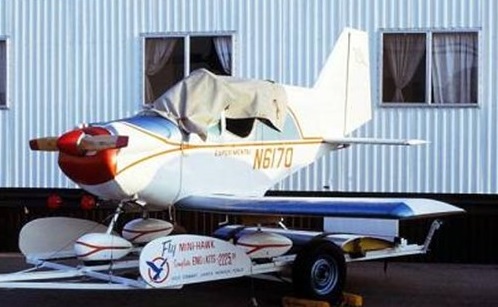
Falconar Minihawk

The Falconar Minihawk is a Canadian amateur-built aircraft, produced by Falconar Avia. The aircraft is supplied as a kit (US$11,600 kit only, less engine, 1998) or plans for amateur construction.
The aircraft features a cantilever low-wing, a two-seats-in-side-by-side configuration enclosed cockpit under a sliding canopy, fixed tricycle landing gear or, optionally, conventional landing gear, and a single engine in tractor configuration.
The Minihawk is made from wood, with its flying surfaces covered in doped aircraft fabric. The aircraft’s recommended engine power range is 65 to 100 hp (48 to 75 kW) and standard engines used include the 100 hp (75 kW) Continental O-200 four-stroke powerplant. Construction time from the supplied kit is estimated as 1500 hours.
Even though a prototype was constructed, by November 2012 no examples were registered in its home country with Transport Canada.

On June 30, 2019, Falconar Avia Inc closed for business and assets dissolved. The Master Sets (Original Drawings, Plans, Info Kits, Documentation) sold included the F-9, F-10, F-11A, E, and E2, F-12A, and Minihawk Series to Manna Aviation

Minihawk
Engine: 1 × Continental O-200, 100 hp (75 kW)
Propellers: 2-bladed metal
Length: 18 ft 0 in (5.49 m)
Wingspan: 25 ft 6 in (7.77 m)
Wing area: 106 sq ft (9.8 m2)
Empty weight: 645 lb (293 kg)
Gross weight: 1,070 lb (485 kg)
Fuel capacity: 15 U.S. gallons (57 L; 12 imp gal)
Maximum speed: 128 mph (206 km/h; 111 kn)
Cruise speed: 115 mph (100 kn; 185 km/h)
Stall speed: 50 mph (43 kn; 80 km/h) flaps down
Range: 570 mi (495 nmi; 917 km)
Rate of climb: 1,350 ft/min (6.9 m/s)
Wing loading: 10.0 lb/sq ft (49 kg/m2)
Crew: one
Capacity: one passenger
Cockpit Width: 40 in (102 cm)

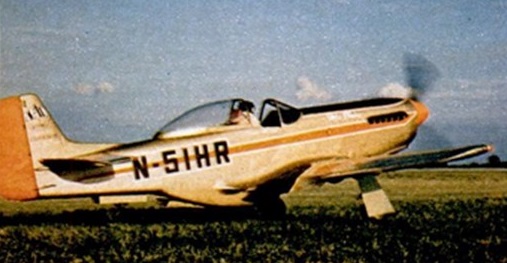
Falconar SAL Mustang P-51D

A 2/3 scale P-51 Mustang with a basic structure of all wood with fiberglass cloth and HIPEC® on the exterior. All ribs, bulkheads and most parts shown full size in professionally drawn plans. Construction manuals included. Features include jettisonable canopy, removable fiberglass belly scoop, electric or manual flaps, and electric or manual tailwheel retract. The basic plan set (450 sq ft of plans – 13 lbs) includes general construction manual on gluing, scarfing, wood protection and finishing, weight & balance forms, material list, bulletins to date, fin & stab fairings drawings.

In 2000 Falconar Avia produced supplemental plans for a P-51B two-seater. The new plans depict the turtle-deck and canopy otherwise it is identical to the basic two-seater.

The turtle-deck structure involves elliptical cross-section skin formers. Then the double-curvature skin section is a fibreglass and resin composite piece. The turtle-deck sides are simple skins of 1.5-2mm birch ply, covered in 2 oz fibreglass cloth.

In 2010 SAL 2/3 Scale P51 (two tandem seating) plans cost US$670, and 2/3 Scale P51 (single seat) US$480.

On June 30, 2019, Falconar Avia Inc closed for business and assets dissolved. The Master Sets (Original Drawings, Plans, Info Kits, Documentation) were available for sale and full transfer of rights included the 2/3 Mustang P51 and P51 T for $20,000 USD.

Gallery

Engine: Ranger 6-440-C5.
HP range: 175-260.
Speed max: 258 mph.
Height: 7 ft.
Length: 22.5 ft.
Wing span: 24.8 ft.
Wing area: 110 sq.ft.
Fuel cap: 36 USG.
Weight empty: 1420 lb
Gross: 1985 lb
Vne: 258 mph
Cruise: 170 mph.
Range: 575 sm.
Stall: 60 mph.
ROC: 1850 fpm.
Landing dist: 700 ft.
TO dist: 700 ft.
Service ceiling: 17,400 ft.
Seats: 1-2.
Cockpit with: 24 in
Landing gear: retractable tail wheel.

Fairchild

As a result of the recognition achieved with the KRA Midget, Kreider-Reisner began manufacturing the Challenger, which became a popular sport plane in the 1920s. In the Spring of 1929, Fairchild acquired 82% of the common stock in Kreider-Reisner, making the Hagerstown company a subsidary of the Fairchild Aviation Corporation, which eventually became Fairchild Aircraft Company.

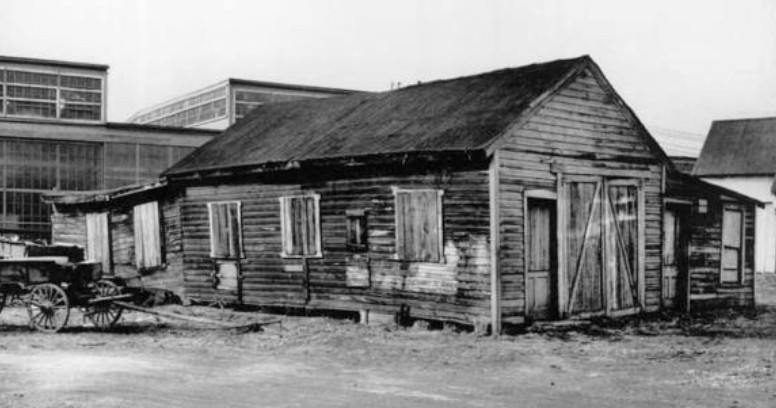
The “Little Green Shed” off Pennsylvania Avenue in Hagerstown was part of the original Kreider-Reisner factory complex.

Sherman Fairchild founded Fairchild Airplane Manufacturing Corporation in 1925. Changed to Fairchild Aviation Corporation in 1929 with premises at Lonqueil, Quebec, and the parent company withdrew manufacturing license from Canadian Vickers. When The Aviation Corporation acquired a controlling interest.

Sherman Mills Fairchild Article

Sherman Fairchild withdrew in 1931, retaining a subsidiary, Kreider-Reisner Corporation, Hagerstown, Maryland, which was renamed Fairchild Aircraft Corporation in 1935. This became Fairchild Aircraft Division, Fairchild Engine and Airplane Corporation, in 1939; Fairchild Stratos Corporation in 1961. Fairchild Hiller Corporation in 1964 on acquisition of Hiller Aircraft Company.

In 1964 Fairchild-Stratos Corp purchased Hiller Aircraft with cash, not stock transactions. Hiller capabilities fitted into one of Fairchild’s primary goals – vertical takeoff and landing aircraft. The Hiller plant was to remain in Palo Alto.

Acquiring Republic Aviation Corporation in September 1965 and this becoming the Republic Aviation Division of Fairchild Hiller Corporation and, later, the Fairchild Republic Company division of Fairchild Industries; Fairchild Industries Inc in 1971 (acquired 90 percent interest in Swearingen Aviation Corporation in November 1971, which became Fairchild Aircraft Corporation in 1982). Metro Aviation, with 97 percent shareholding in Fairchild Aircraft Corporation, sold by Fairchild Industries to GMF Investments, but in 1990 Fairchild Aircraft filed for bankruptcy protection and was sold to Fairchild Acquisition Incorporated that year. The name for producer of Metro, Merlin, and Expediter series of twin-turboprop commuter airliner, executive transport and freighter aircraft (plus MMSA multi-mission surveillance aircraft variant of Metro 23) became Fairchild Aircraft Incorporated. Finally, in June 1996 parent company Fairchild Aerospace bought 80% of the German manufacturer Dornier Luftfahrt from Daimler-Benz Aerospace, resulting in Fairchild Aerospace owning all of the renamed Fairchild Dornier U.S.A. Fairchild Aircraft Incorporated and 80% of Fairchild Dornier Germany Dornier Luftfahrt GmbH.

Fairchild built FC-1, FC-2 and Model 71 lightplanes 1925-1931. Continued production of Kreider-Reisner Model 24C8, later supplied in four-seat version as USAAF UC-61 Forwarder and as RAF Argus. M-62 Cornell trainer introduced 1940 with variety of engines. Wartime production was Bristol Bolingbroke for RCAF, and 300 Curtiss Helldivers for U.S. Navy 1943-1945. AT-21 gunnery trainer entered production in 1942. C-82 Packet twinboom cargo/troop transport flown September 1944; superseded by developed C-119, first flown November 1947. In the early 1950s, the number of Fairchild employees reached approximately 10,000 who built 1112 C-119s between 1948 and 1952. Manufactured 326 C-123 Providers 1954-1958, designed by Chase Aircraft. License-production of Fokker F-27/FH- 227 airliner began 1957; 205 built. Hiller UH-12 and H-1100 helicopters continued in production after acquisition of Hiller company. Production of Pilatus Turbo-Porters begun June 1966; 15 of COIN version delivered to USAF as AU-23A Peacemaker, transferred to Royal Thai Air Force. In 1967 work initiated on 52 USAF AC-119 gunships. Contracts awarded after acquisition of Republic for weapons delivery enhancement of F-105 Thunderchief, subcontract assemblies for McDonnell Douglas F-4, Boeing 747.

In 1964 Fairchild-Stratos Corp purchased Hiller Aircraft with cash, not stock transactions. Hiller capabilities fitted into one of Fairchild’s primary goals – vertical takeoff and landing aircraft. The Hiller plant was to remain in Palo Alto.

Won USAF A-X competition for close-support aircraft, prototype YA-10A flown 10 May 1972; production of A- 10A Thunderbolt II ended 1984 after 713 built, and were in U.S. service in A-10A attack and OA-10A forward air control variants with the USAF, Air National Guard and Air Force. Main feature of A-10A is nose-mounted GAU-8/A Avenger 30 mm seven-barrel cannon with 1,174 rounds of armor-piercing ammunition. Also manufactured wings for Merlin and Metro twin-turboprop aircraft.

Extra Flugzeubau GmbH

Produces the Extra 200 lower-cost, two-seat and 200 hp aerobatic competition and aerobatic training monoplane (first flown 1996); Extra 300 in single-seat 300 hp aerobatic competition (300 S), tandem two-seat aerobatic and training/cross-country (300), and 300 L low-wing (instead of mid-wing) variants; Extra 330 as a derivative of Extra 300 with Textron Lycoming AEIO-580 engine; and Extra 400 pressurized high-wing six-seat touring cabin monoplane (first flown 1996).

E-Volo Volocopter VC200

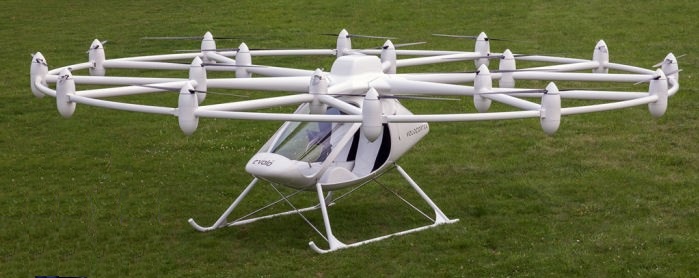
Premiere in April 2017, E-Volo celebrated the first series model of a passenger multicopter. Also known as MultiCopter, the Volocopter is a personal aerial vehicle made of fiber composite material in light-weight design. It runs on an all-electric propulsion system for its 18 rotors powered by 9 independent batteries.

The 2X is the consequent evolution of the VC200 prototype towards everyday use. Its battery replacement system makes it ready for operation again in only a few minutes. The sporty design includes a cockpit that comfortably seats 2 adults. Developed from the VC1, a radio controlled VC200 performed a first flight on November 17, 2013 in the dm-arena in Karlsruhe. The flight with the VC1 in October 2011 lasted precisely 90 seconds. Following several indoor-flights of several minutes’ duration with a number of gentle starts and landings, all the expectations upon the Volocopter are exceeded.

The innovative concept of the electric VTOL aircraft was able to so convince the German Federal Ministry of Transport that it resolves upon a trialing scheme spanning a period of several years for the creation of a new aviation category for the Volocopter. The DULV (The German Ultralight Association) is commissioned with drafting a manufacturing specification, operating regulations and the training scheme for the future pilots in cooperation with e-volo in January 2013.

The Volocopter VC200 received the permit-to-fly as an ultralight aircraft from German aviation authorities in February 2016. The first manned flight took place on March 30, 2016.

Evgenij Kovalenko E-12N

Very simple REAL Ultralight Aircraft for flyweight pilots. Delivered as kit package or ready to fly planes by Evgenij Kovalenko with several engine choices. 2009 Price: 6200 EURO

Stall: 35 kt / 40 mph / 65 kmh
Cruise: 43 kt / 50 mph / 80 kmh
VNE: 67 kt / 78 mph / 125 kmh
Empty Weight: 55 kg / 121 lbs
MTOW Weight: 145 kg / 320 lbs
Glide Ratio: 7
Take-off distance (50ft obstacle): 480 ft / 145 m
Landing distance (50ft obstacle): 390 ft / 120 m