Fisher Youngster

Youngster V

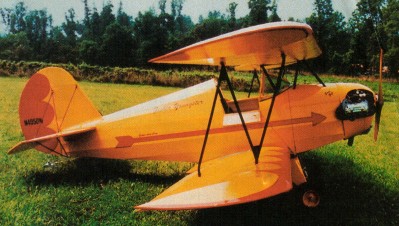
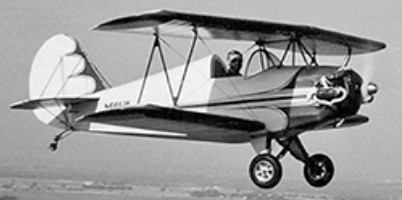
The Youngster “V” was designed, based on the Bücker Bü 133 Jungmeister, with all wood construction and short 350 build time. The cockpit accommodates up to 6’4″ pilots. This airplane offers a four-cycle VW engine and a 2315 airfoil with stainless wires and a bubble canopy. Enjoy an open cockpit on warm summer days and a fully enclosed cockpit for the winter.
First flown in 1994, the V stands for VW and Rotax power is optional.
It was designed to be affordable, but with the high quality you’ve come to know of Fisher Flying Products. The Youngster is gentle on the ground, but allows you to play with it in the air. The Youngster employs all wood construction using a Warner truss frame with 1/8″ birch ply skins in the fuselage. Stringers are placed along the fuselage sides and top turtledeck to form the fabric shaped fuselage.
1997 Youngster V kit price: US$3700. The Rotax powered kit sold for US$3400. Plans were US$200.
By 2004, ten had been sold.
2009 Youngster V kit price: US$8750
Gallery

Youngster
Engine: 50 hp Rotax
Wingspan: 18 ft
Length: 15.6 ft
Gross weight: 650 lb
Empty weight: 400 lb
Fuel capacity: 12 Usgals
Cruise speed: 90 mph
Stall speed: 32 mph
Climb rate: 700 fpm
Takeoff run: 200 ft
Landing roll: 250 ft.
Seats: 1

Youngster V
Engine: Great Plains, 50 hp.
HP range: 50-65.
Height: 6.1 ft.
Length: 15.5 ft.
Wing span: 18 ft.
Wing area: 126 sq.ft.
Fuel cap: 6 USG.
Empty Weight: 181 kg / 400 lbs
MTOW Weight: 295 kg / 650 lbs
VNE: 96 kt / 110 mph / 177 kmh
Cruise: 85 mph.
Stall: 34 mph.
ROC: 800 fpm.
Take-off distance: 200 ft / 61 m
Landing distance: 250 ft / 76 m
Seats: 1.
Landing gear: nose wheel.

Engine: 65 hp VW
Velocity-Never Exceed: 110 mph
Cruise Speed: 80-90 mph
Stall Speed: 32-35 mph
Climb Rate: 700 fpm
Takeoff Run: 200 ft
Landing Roll: 250 ft
Wingspan: 18 ft
Wing Area: 126 sq. ft.
Cord: 42in
Wing Loading: 5 lb/sq.ft
Length: 15 ft 6 in
Height: 6 ft 1 in
Tail Span: 84in
Fuselage Width: 24 in
Headroom: 39 in
Gross Weight: 650 lbs.
Empty Weight: 400 lbs.
Construction Time: 500 hrs.

Youngster V
Engine: 1835cc VW 60HP
Span: 18 ft
Length: 15 ft 6 in
Wing Area: 126 sq.ft
Empty Weight: 400 lb
Useful Load: 50 lb
Take Off Distance: 200 ft
Stall: 42 mph
Landing Speed: 45 mph
Cruise: 85 mph
Rate of Climb: 700 fpm
Seats: 1

Engine: 50 hp Rotax 503
Velocity-Never Exceed: 110 mph
Cruise Speed: 80 mph
Stall Speed: 32 mph
Climb Rate: 800 fpm
Takeoff Run: 200 ft
Landing Roll: 250 ft
Wingspan: 18 ft
Wing Area: 126 sq. ft.
Cord: 42in
Wing Loading: 5 lb/sq.ft
Length: 15 ft 6 in
Height: 6 ft 1 in
Tail Span: 84in
Fuselage Width: 24 in
Headroom: 39 in
Gross Weight: 650 lbs.
Empty Weight: 400 lbs.
Construction Time: 500 hrs.

Engine: Rotax 503, 48 hp
Wing span: 5.48 m
Wing area: 11.7 sq.m
MAUW: 272 kg
Empty weight: 163 kg
Max speed: 175 kph
Cruise speed: 138 kph
Fuel consumption: 15 lt/hr
Seats: 1
Kit price (1998): US$3400
Fisher R-80 Tiger Moth

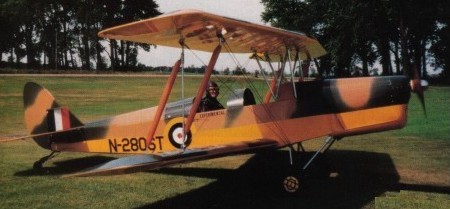
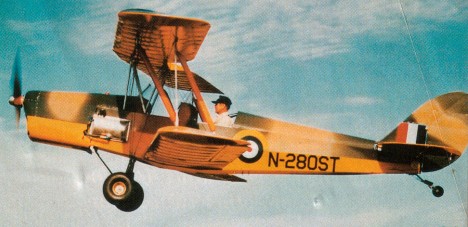
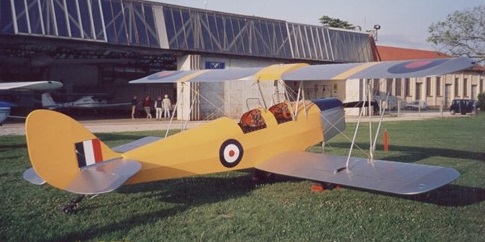
Steve Turner & Steve Lamberg developed the R-80 Tiger Moth as an 80% scale de Havilland Tiger Moth. Introduced and first flown in 1994, the original prototype fuselage was made of wood and powered with a Norton rotary engine.
In 2000 the Tiger Moth was introduced with a 4140 steel tube fuselage. The kit cost approximately US$5000 more than the wood version and included a prewelded fuselage, vertical fin, rudder, stabiliser, and elevator. No welding is required by the builder.
In 1997 the basic kit cost US$9300 with the quick build kit US$10,600. The Rotac 582, 618 or Subaru engines were options.
Issues with the fuel consumption and cooling led to a change in 2000 to a LOM M132, 120 hp engine. LOM provided a wood propeller that matched that engine. At that time the engine cost US$12,000 and the propeller US$1800.
The R-80 Tiger Moth is recommended for both first-time and experienced builders and only basic tools are needed in construction. Realistic estimates put construction time at 700 hours. The wood R-80 is straight-forward and strong. Aircraft grade epoxy adhesives are used throughout.

Initially, the airframe was designed by an aeronautical engineer. A design engineer was then brought in to assist during the actual construction and modification stage. The airframe was then tested, by an independent firm that specializes in structural analysis, to a limit of six positive and three negative g’s. At one point in this test, over 6,000 pounds of sandbags were on the R-80’s airframe-and it didn’t break.
By 2001 the standard airframe kit cost US$16,500, and quick build airframe kit cost US$18,500.
2009 kit price: US$15,500

Gallery

Engine: Norton AE 100R
Horsepower: 75-100 hp
Engine Weight: 180-200 lb
Wingspan: 23′
Wing Area: 170 sq. ft.
Height: 7’4″
Length: 19′
Gross Weight: 522 kg / 1,150 lb
Empty Weight: 254 kg / 560 lb
Service Ceiling: 10,000
Vne: 96 kt / 110 mph / 177 kmh
Cruise Speed: 78 kt / 90 mph / 145 kmh
Stall Speed: 30 kt / 35 mph / 56 kmh
Climb Rate: 800-1000 fpm
Range (12 USgal fuel tank): 200 mi.
Design Loads: +6 -3g
Cockpit width: 26″
Takeoff Run: 300 ft / 91 m
Landing Roll: 400 ft / 122 m
Seats: 2/Tandem
Landing gear: tail wheel

(2001)
Engine: 120 hp
Wingspan: 23 ft
Wing Area: 170 sq. ft.
Height: 7 ft 4 in
Length: 20 ft
Gross Weight: 1350 lb
Empty Weight: 826 lb
Cruise Speed: 80 mph
Stall Speed: 30 kt / 35 mph / 56 kmh
Climb Rate: 800 fpm
Range: 200 mi.
Takeoff Run: 300 ft / 91 m
Landing Roll: 300 ft / 91 m
Seats: 2/Tandem
Landing gear: tail wheel

Engine: Rotax 912, 80 hp
Wing span: 7.0 m
Wing area: 15.80 sq.m
MAUW: 520 kg
Empty weight: 258 kg
Fuel capacity: 45 lt
Cruise speed: 145 kph
Minimum speed: 56 kph
Climb rate: 5 m/s
Fuel consumption: 16 lt/hr
Seats: 2
Plan price (1998): US$250
Kit price (1998): US$8850

Fisher Dakota Hawk

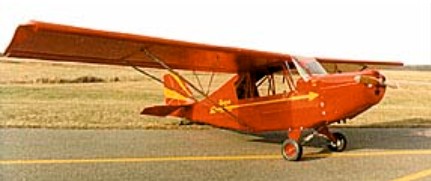
First flown in 1993, the Dakota Hawk was based on a design by Erval Jackson. Equipped with dual controls, a steerable tail wheel, main gear shock absorbers and available are hydraulic brakes.
The I Beam wing spar and construction gives a 550 lb useful load, coupled with space for added instrumentation, avionics and optional wing tanks, make the Hawk agreeable choice for cross-country flight.
The Hawk’s folding wings are engineered with a simple yet secure locking mechanism, making set-up or take-down a 15-minute step.
Wings outstretched, the Dakota Hawk owns larger dimensions than any other Fisher model. A broadened fuselage generates a wider, roomier cabin, with space for two adults and a cargo of overnight baggage.
The Dakota Hawk is designed for a 4-stroke engine, accepting the likes of a 65, 85, 0-200 Continental, 912 & 912S Rotax or 6 cyl. Jabiru. Properly equipped, the Hawk’s cruise speed will register over 95 mph.
Load and performance ratings benefit from an augmented main wing spar, and proven geodetic construction throughout. A contoured vented cowling, high stance landing gear and available wheel pants contribute to the craft’s posture.
The kitprice in 1997 was US$9,300. By 2001, the standard kit cost US$10,500 with a quick build kit available for an additional US$2000.
By 2004, twenty-five had been sold.

Gallery

Engine: Rotax 912 80hp
Wingspan: 28’6″
Length” 19’9″
Height: 6 ft 1 in
Wing Area: 128 sq. ft.
Weight empty: 600 lbs.
Gross: 1150 lb
Fuel cap: 12 USG
Optional fuel total cap: 19.5 USG
Useful Load: 550 lbs.
Wing Load: 9 lbs/sq. ft.
Load Factor: +5.7 -2.28g
Velocity-Never Exceed: 120 mph
Max Speed: 100 mph
Cruise Speed: 90-100 mph
Stall: 35 mph.
ROC: 800 fpm.
Range: 250 sm
Glide Ratio: 8:1
Take-off dist: 350 ft.
Landing dist: 400 ft.
Seats: 2.
Landing gear: tail wheel.

Engine: Rotax 912, 80 hp
Wing span: 8.7 m
Wing area: 12 sq.m
MAUW: 450 kg
Empty weight: 272 kg
Fuel capacity: 37.8 lt
Cruise speed: 145 kph
Minimum speed: 60 kph
Climb rate: 4 m/s
Seats: 2
Kit price (1998): US$10,695

Fisher Horizon 1

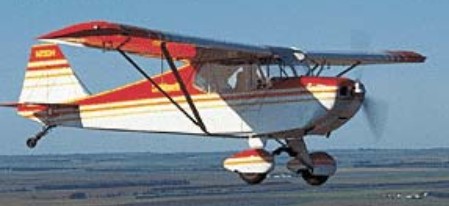
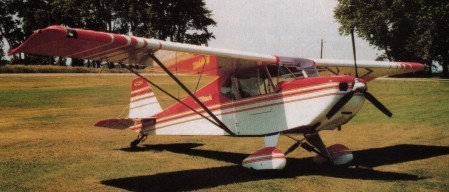
The Horizon 1 first flew in 1990 and by 2004, fifty had been sold. Based loosely on the Bellanca Citabria and amateur construction, it can carry a payload equal to its weight and is an excellent platform for lightweight floats or skis. It has a large, roomy cockpit, tandem seating, optional two-cycle or four-cycle engines and a one man, two-minute wing fold system.
Kits were available and plans cost US$275 in 1997.

Horizon 1
Engine: Limbach, 80 hp.
HP range: 65-125.
Height: 5 ft 8 in
Length: 18’8″
Wing span: 25’3″
Wing area: 113.6 sq.ft.
Wing Cord: 54″
Fuel cap: 13 USG.
Weight empty: 520 lbs.
Gross: 1050 lbs.
Wing Load @ Gross: 9.2 lbs/sq. ft
Velocity-Never Exceed: 120 mph
Speed max: 95 mph.
Cruise: 85 mph.
Range: 250 sm.
Stall: 39 mph.
ROC: 800-900 fpm.
Take-off dist: 250-500 ft.
Landing dist: 250-350 ft
Seats: 2/Tandem dual controls.
Landing gear: tail wheel.
Construction: wood/fabric.
Design Loads: +4 -2.5g

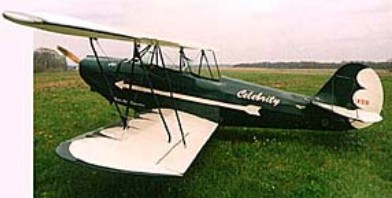
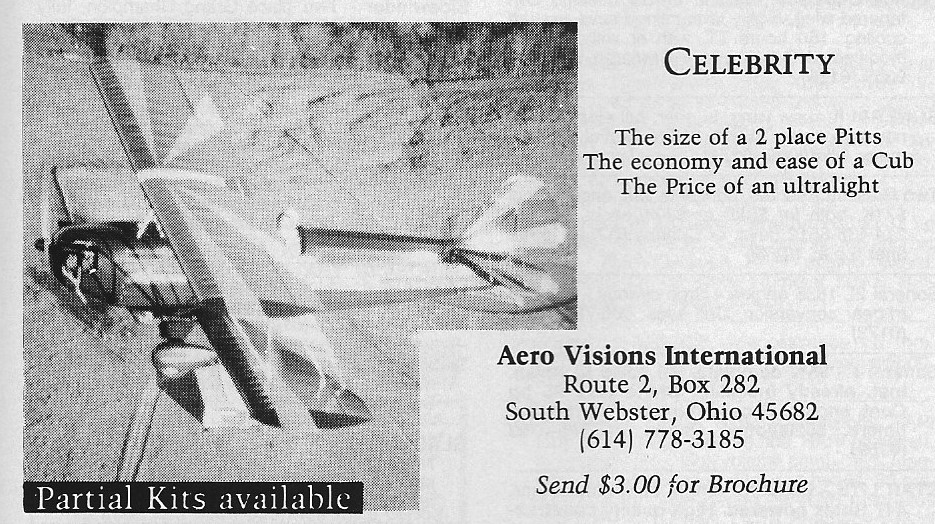
Fisher Celebrity / Aero Visions International Celebrity

First flown in 1989, the normal takeoff will vary with your choice of engine, but the prototype with 65 horsepower gets off the ground in 300 feet. The latest factory demo gets off the ground in about 250 feet using a C-90-100 horsepower.

The Celebrity is a biplane of wood construction with an optional steel fuselage, tandem seating (solo from the rear), fabric covered, light aircraft designed to be built in the experimental category. The Celebrity is designed for the first-time builder.

April 1991

Thirty had been sold by 2004 and the 2009 price was US$12,650.

Engine: Continental O-200, 100 hp.
HP range: 65-125.
Height: 5.95 ft.
Length: 17 ft 6 in
Wing span: 22 ft.
Wing area: 176 sq.ft.
Wing Gap: 38in
Aileron Area: 20 sq. ft.
Tail Span: 7ft
Fuel cap: 13 USG.
Weight empty: 272 kg / 600 lbs.
Gross: 1,230 lbs lbs.
VNE: 104 kt / 120 mph / 193 kmh
Speed max: 95 mph.
Cruise: 74 kt / 85 mph / 137 kmh
Range: 200 sm.
Stall: 35 kt / 40 mph / 64 kmh
ROC: 800-900 fpm
Take-off dist: 300 ft.
Landing dist: 350 ft.
Seats: 2/Tandem dual controls.
Landing gear: tail wheel.
Take-off distance: 300 ft / 91 m
Landing distance: 300 ft / 91 m
Design Loads: +4 -2.5g
Field Assembly Time: 30 min

Fisher Aero Corp / Lite Flite Inc / Aero Visions International / Fisher Flying Products Inc

Founded by Michael E. Fisher and Wayne Ison in the early 1980s as Lite Flite Inc, Aero Visions and later Fisher Aero Corporation.
The first two designs the company built were the Fisher Flyer, which incorporated a new fuselage and tail and the existing wings from the UFM Easy Riser hang glider and the Fisher Barnstormer, a negative stagger biplane. Plans and kits for the latter design were offered in the early 1980s.
1982: Lite-Flite Inc, Rt.2, Box 282, South Webster, OH 45682, USA.
1982: Fisher Flying Products Inc, RL2, Box 282, South Webster, Ohio 45682, USA.
Markets kits and plans to construct Avenger single-seat monoplane (appeared 1994), Celebrity tandem two-seat biplane, tandem two-seat Culex twin-engined monoplane, Horizon 2 tandem two-seat high-wing monoplane, Mariah tandem two-seat low-wing monoplane (first flown 1993), and Youngster single-seat biplane.

1995-7: Fisher Aero Corp, 7118 State Route 335, Portsmouth, OH 45662, USA.
2008: Fisher Flying Products, PO Box 468, Edgley, ND 58433, USA
2011: Factory Address: Fisher Flying Products Inc, Brampton Airport Hanger 100-C, 13691 McLaughlin Road, Caledon, Ontario L7C 3L7
Mailing Address: Fisher Flying Products Inc, PO Box 68, Stn Cheltenham, Caledon, Ontario L7C 3L7
Ownership of Fisher Flying Products passed to Gene and Darlene Jackson-Hanson in 1984.
The company was originally based in South Webster, Ohio and later Edgeley, North Dakota, USA.
1995-8: PO Box 468, Edgeley, ND 58433, USA.
In 2007 the Jackson-Hansons decided to sell the company and retire.
The company was purchased and moved to Woodbridge, Ontario, Canada. By early 2009 the new owners had re-established the manufacturing operation and commenced producing kits, starting with the Dakota Hawk and the FP-202. By late 2009 all kits were once again available.
2009: 71 Marycroft Ave, Unit #24, Woodbridge, Ontario L4L 5Y6, Canada.
The company’s kits all feature wooden construction with aircraft fabric covering. Many of the designs are reproductions of classic aircraft, such as the company’s 80% Fisher R-80 Tiger Moth that is based upon the de Havilland Tiger Moth.

Firewall Forward CAM 125

The Firewall Forward CAM 125 is a 125 hp (93 kW) four-cylinder, four-stroke, liquid-cooled piston aircraft engine built by Firewall Forward Aero Engines. The engine is based on a Honda automotive piston engine. Unit cost was US$11250 in 2005.

Applications:
Europa XS

CAM 125
Type: Four-cylinder, four-stroke piston engine
Bore: 75 mm (2.95 in)
Stroke: 84.6 mm (3.33 in)
Displacement: 1590 cm3 (97 cu in)
Length: 33.25 inches (845 mm)
Width: 21.5 inches (550 mm)
Height: 23 inches (580 mm)
Dry weight: 247 pounds (112 kg)
Valvetrain: Overhead camshaft
Fuel type: 90 Octane petrol or 100LL aviation petrol
Cooling system: Uses a water-glycol mixture with a camshaft belt driven water pump.
Reduction gear: 2.4:1 reduction ratio (6,000 rpm engine, 2,500 rpm propeller).
Starting system Electric gear reduction starter.
Power output: 93.2 kW (125 hp) at propeller flange
Specific power: 130 kW/L (1.28 hp/cu in)
Compression ratio: 9.2:1
Specific fuel consumption: 0.43 lb/bhp/hr at 70% power

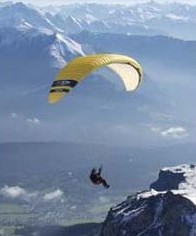
Firebird Grid

Firebird’s 2003 (successor for the Matrix) DHV 1-2 Grid has passed certification. The most interesting design feature of the glider is the circular shape of the air intakes on the wingtips, which has a “significant impact” on handling, glide, speed, performance and safety, according to the design team. This design feature came out after research and tests done with the aid of aircraft development industries. Finally, they concluded that “the most efficient for rammed air and an increase of pressure was with pure round intakes.
The Grid is intended for recreational pilots and those who want “fun without worries”. According to its creators, it has a light, precise handling and reacts to every input given. “It will do the turn the way you want, steep, flat, precise”, they say. It has a maximum speed of about 48k/h according to DHV test reports.

Feast Circle CW.4

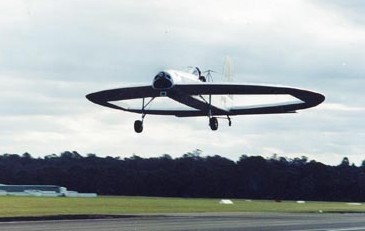
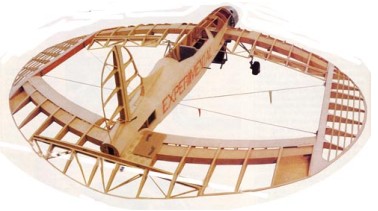
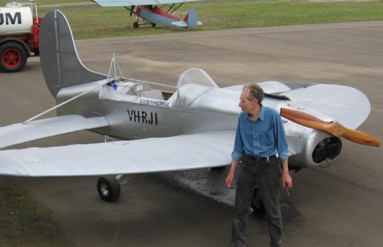
An experimental circular plane designed and built by Ron J Feast of Sydney, Australia. The aircraft was evolved from a series of flying models made over a period of 3 1/2 years. After first building a full size “mock up”, construction began in October, 1997 at Bankstown Airport. Australia hoop pine was used for the fuselage frame and plywood for the covering.
Each of the main front and rear wings were constructed in one length and they have curved box spars. All the wings are covered with Ceconite except for the leading edges of the main wings which are plywood covered.

The engine is ROTAX 912 UL 80 HP. The landing gear was strut type fitted to the wings and a steerable tail wheel.
Flight tests began at Camden Airport in August, 2000, and the first flight was in July, 2001.
The test pilot was Graham White. Flight tests continued until December, 2001 when it was decided in the interests of good lateral control at the very slow landing speeds of this aircraft to make a number of design changes.
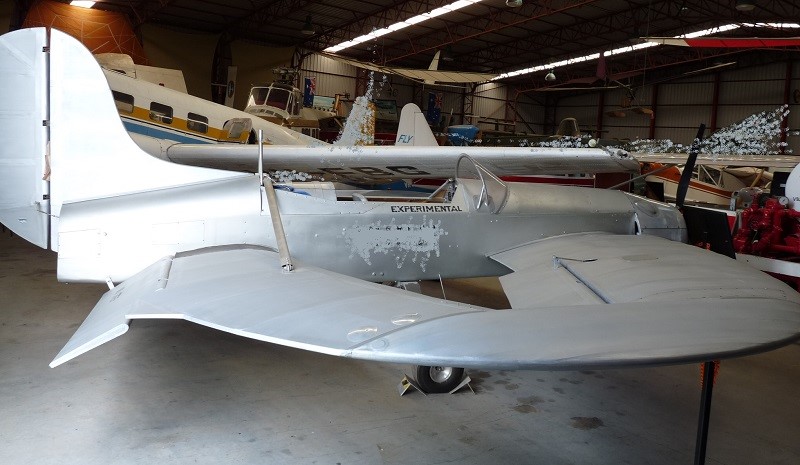
The rear main wing was moved forward to obtain a more compact external shape. Shortened side wings were built. Both main wings were cut at the centre and joined inside the fuselage to obtain a 5° dihedral. A tricycle undercarriage was built consisting of hardened aluminium leaf springs, coil expansion springs and cables. The nose wheel has a castoring action. Ailerons and elevators have streamlined leading edges and increased area.
It was completed in November, 2004. First taxi tests in February, 2005.

2nd version