
Circa 1998, the entire power unit can be jettisoned in an emergency.
Falke 2001
Empty weight: 34 kg
Engine: Simonini, 27 hp
Reduction: 1:2.8
Thrust: 89 kg
Prop diameter: 135 cm
Fuel capacity: 32 / 45 lt
Circa 1998, the entire power unit can be jettisoned in an emergency.
Falke 2001
Empty weight: 34 kg
Engine: Simonini, 27 hp
Reduction: 1:2.8
Thrust: 89 kg
Prop diameter: 135 cm
Fuel capacity: 32 / 45 lt
1998:
Wald Str. 21
A-6020 Innsbruck
Austria
Paramotor builder
Following 1998 restructure, Soko Air Ltd created the Soko 2 two-seat very light monoplane (first flown November 1996).

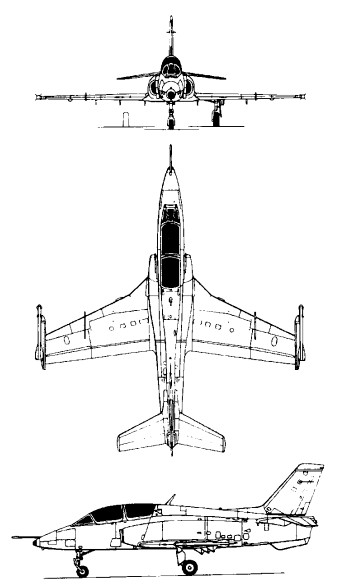
Designed to replace the T-33 and the earlier G.2A Galeb in Jugoslavian Air Force service, this two-seat basic trainer/light strike aircraft has swept wings and all-swept tail surfaces, the tailplane having pronounced anhedral, and stepped tandem seating. Its performance is improved by the introduction of a 17.8kN Rolls-Royce Viper turbojet.
The first of two prototypes was flown on 17 July 1978 and the first of six pre-production aircraft on 17 December 1980. These and the first prototype were designated G-4 PPP, and had fixed tailplanes with inset elevators and no anhedral.
Production examples (and the second prototype) were designated G-4 and featured an all-moving anhedral tailplane and comprehensive avionics improvements. Armament includes a detachable underfuselage 23mm cannon pod, and a variety of stores on four underwing hardpoints. A Ferranti D282 gyro gunsight is standard equipment.
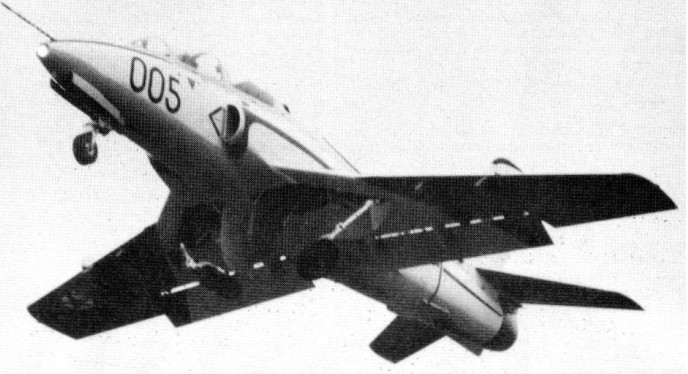
The G-4 was been ordered in large numbers for the Yugoslav air force. They were delivered to the Air Academy at Zemunik (later relocated to Udbina) and to advanced flying schools at Pula and Totograd. The academy fleet includes the ‘Letece Zvezde’ (Flying Stars) formation display team, whose aircraft are painted in a red, white and blue colour scheme.
Twelve G-4s, in two batches of six, were delivered to Myanmar in 1991 and 1992.
A ground-attack trainer, with advanced avionics, an upgraded nav/attack system, and wingtip missile launch rails was developed under the designation G-4M, but no prototype has flown. A similar single-seat derivative designated G-5 was also under development.
The UTVA factory was heavily bombarded in 1999 and certain parts of it were still off limits due to the unexploded ordnance in 2012. All five original lasta 95 prototypes were destroyed in the factory and the only existing Supergaleb G4MD prototype was lightly damaged.
G.4 Super Galeb
Engine: 1 x R-R Viper 632 Mk. 632
Installed thrust: 17.8 kN
Span: 9.88 m / 32 ft 5 in
Length: 11.86 m / 39 ft 11 in
Height: 4.28 m / 14 ft 1 in
Wing area: 19.5 sq.m / 209.90 sq ft
Empty wt: 3250 kg
MTOW: 6330 kg / 13955 lb
Loaded weight: 3250 kg / 7165 lb
Warload: 1350 kg
Max speed: 491 kt / 910 kph / 565 mph
Landing speed: 89 kt / 165 km/h
Cruising speed: 459 kt / 850 km/h
Initial ROC: 1800 m / min
Ceiling: 15,000 m / 49200 ft
T/O run: 600 m
Ldg run: 550 m
Fuel internal: 1720 lt
Combat radius lo-lo-lo: 300 km
Range w/max.payload: 600 km / 373 miles
Armament: 1 x 23 mm GSz-23L cannon
Hardpoints: 5
Crew: 2
Preduzece SOKO
SOKO Vazduhoplovna Industrija, Ro Vazduhoplovstvo
Soko Air Ltd
Bosnia-Herzegovina
Founded as Preduzece SOKO in October 1950, and produced license-built Westland Whirlwind helicopters. Designed the G-2A Galeb two-seat armed jet basic trainer (first flown 1961), produced for the Yugoslav Air Force and for export. Designed the J-1/RJ-1 Jastreb attack and reconnaissance versions of Galeb, and the P-2 Kraguj piston-engined counterinsurgency aircraft (first flown 1966); the G-4 Super Galeb jet trainer (first flown July 1978). Built the Aerospatiale/Westland Gazelle helicopter under license in several versions, including Partizan, GAMA antiarmor model and HERA reconnaissance model; and joined lAv Craiova of Romania in development/ production of J-22 Orao/IAR-93 attack aircraft (first flown 1974 but out of production before all deliveries made, due to regional conflict).
Privatized 1991, at which time extensive subcontract work included components/ assemblies for Airbus, ATR, Dassault, de Havilland, EMBRAER, Eurocopter, McDonnell Douglas and Tupolev commercial aircraft. Did not go out of business during regional conflict that followed, but had short periods of inactivity during the worst of the troubles.
Following 1998 restructure of Soko company and its division into several smaller concerns under Soko Holding Co, Soko Air Ltd. was created at the Mostar-Rodoc factory to undertake its aviation programs. They include the Soko 2 two-seat very light monoplane (first flown November 1996) and LH1 two/three-seat light helicopter, which was at an advanced stage of design at time of writing. Other work includes civil aircraft component production for international customers, and design of four- and six-seat lightplanes.
The Sochen Phoenix was a single engine, three axis control microlight designed by Edwin Sochen and produced in South Africa in the early 1980s.
The original single seat ES-1 Phoenix began as a rebuild by Edwin Sochen of a storm-destroyed Quicksilver MX but emerged a much refined aircraft, with two-surface wings, ailerons rather than spoilers and a fully steerable undercarriage. One of these was built and flown, then Sochen developed it into the CII two-seater.
Seating apart, the two variants were generally similar. The two surface wing, tapered in plan with a straight leading edge and a forward swept trailing edge, was braced from below on each side by a single strut, assisted by jury struts. The ailerons filled the whole span. The fuselage of the Phoenix was a completely open aluminium frame structure which carried the exposed pilot’s seat, placing his head just below the leading edge of the wing and supporting the engine in pusher configuration immediately behind. The fuselage frame extended rearwards to carry a conventional tail with horizontal surfaces at the same height as the wing and an all-moving rudder with a swept leading edge, extending below the tailplane aft of the rudder post. The rudder of the CII was swept on both edges, unlike that of the single seat version, and extended downwards further. The tricycle undercarriage had three similarly sized wheels mounted on short legs interconnected by a triangular frame. The front wheel was steerable from the rudder bar and the rear pair were differentially braked.
After two prototypes the CCII was put into production by Court Helicopters. Only eleven were completed before production was stopped.
CII
Engine: 1 × Rotax 503, 52 hp (39 kW)
Propeller: 2-bladed, 4 ft 10 in (1.47 m) diameter
Wingspan: 32 ft 0 in (9.75 m)
Empty weight: 315 lb (143 kg)
Maximum speed: 65 mph (105 km/h; 56 kn)
Cruise speed: 50 mph (80 km/h; 43 kn)
Stall speed: 28 mph (45 km/h; 24 kn)
Range: 100 mi (87 nmi; 161 km) at average cruising speed
Rate of climb: 350 ft/min (1.8 m/s) from sea level
Take-off distance: 230 ft (70 m)
Landing distance: 100 ft (30 m)
Crew: Two
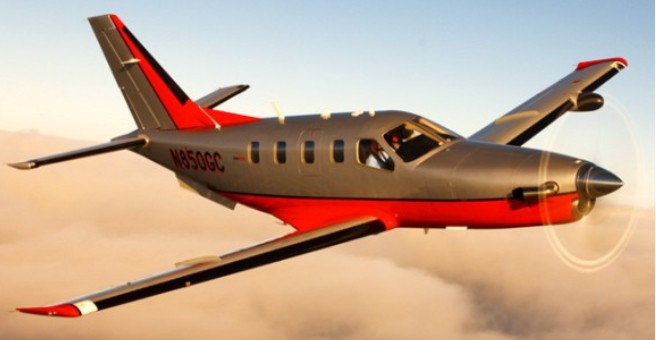
In December 2005, EADS Socata announced the TBM 850, an upgraded version of its single-engine turboprop TBM 700. After some 15 years of production, three different models and more than 300 airplanes, the 700 was replaced on the production line by the TBM 850. Featuring a 1,825-shp Pratt & Whitney PT6A-66D turboprop engine flat rated to 850 shp, at maximum takeoff weight, the 850 can climb to FL 260 in 15 minutes and to its service ceiling of FL 310 in 20 minutes. At FL 260 the 850’s cruise speed at maximum cruise power is 320 ktas. IFR cruising range is 1,365 nm. At FL 310 and ISA +20°C, the 850’s cruise speed is more than 55 knots faster than that of the TBM 700 C2.
Although described by Socata as the “Ultimate Personal Aircraft,” it offers performance numbers that virtually match-and in some cases even exceed-those of the twin-engine very light jets. The TBM 850 will have advantages including a significant reduction in direct operating costs, longer-range capability, a reduction in transition training requirements and potentially lower insurance premiums.
The TBM 850 airframe design employs fail-safe structural design techniques, including the use of multiple load paths and a crack-stopper band to maximize sub-system reliability/durability and structural life. The TBM 850 aircraft is essentially identical to that of the TBM 700 C2 model.
The TBM 850 airframe designers carefully chose a variety of aluminum alloys, high strength steel (including titanium) as well as advanced composite materials to maximize structural strength and durability while minimizing aircraft weight and both acquisition and life-cycle support costs. The majority of the TBM 850 structure is manufactured from conventional aluminum alloys. The wing spars, flap tracks and windshield frames are machined from solid bars of aluminum

The TBM 850 cabin is 14.96 ft long and 4 ft in height and width, and offers 6 leathers seats with adjustable backrests, folding armrest and a large folding executive table in the center.
Easy access to the cabin is possible through a large electric door, stairs and a ramp. Once inside, 7 rectangular windows with pull down sunshades protect privacy and a fully automated dual zone environmental control system adds comfortable.
Cabin lighting consists of dome lights, baggage compartment lights, access stair lighting, and individual reading lights at all seats. 14/24V power outlets and storage cabinets are fitted.
The TBM 850 carries six adults, climbs to the certified ceiling of 31,000 ft in as little as 20 minutes, range over 1,400 nm with NBAA IFR reserves, and can land in a 2,100 ft strip or a mountain runway.
Beyond performance, the TBM 850 introduced avionics upgrades and improved handling characteristics. The aircraft retained the same fuselage as the TBM 700 but featured a more modernized cockpit, including optional glass panel avionics.
Before its official introduction more than two-thirds of 2006’s production had already been sold. First delivery to a U.S. customer was slated to occur on February 23, 2006. Base price in 2006 of the TBM 850 was $2,576,930; with typical options and equipped for RVSM the airplane will list at $2,799,850, roughly $120,000 more than the TBM 700.
TBM 850s have an 1,825-shp PT6A-66D engines, derated to 850 shp. The derating yields better hot-and-high performance. It also lets the -66Ds produce those 850 horsepower right up to FL260-280, where maximum cruise speeds can reach 320 to 325 KTAS under optimal temperature conditions.
The PT6s used in TBMs do not have full authority digital engine controls (FADECs), so start procedures involve a few simple steps that the pilot must manually perform. However, both the -64s and -66s have torque limiters, so the chances of a ham-fisted pilot’s shoving the power lever past torque limits are minimized.
The TBM 850 was introduced with a new torque control. For takeoff and landing—using the TO flap defection—automatic torque limiting keeps torque below 110 percent. But once established in the climb you lift the flap switch up and over a detent, this disengages torque limiting, allowing the 121.4 percent torque redline, which gives the engine’s full, 850 horsepower.
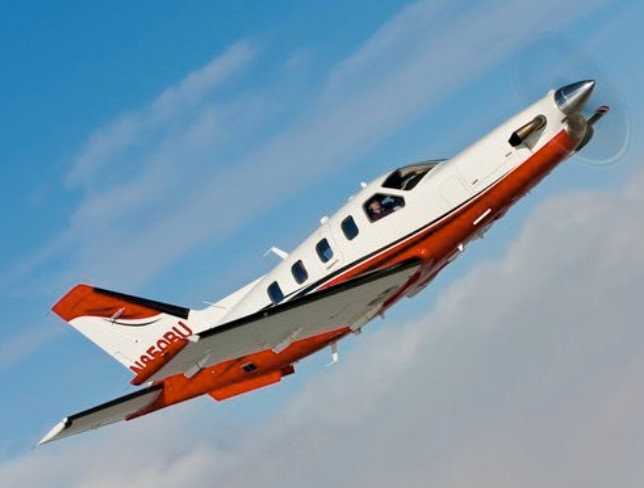
Since 1998, TBMs have come with a large entry door that allows easier access to both the cabin and the aft baggage compartment; there’s another, smaller baggage compartment in the nose. When the door extends, a handrail and a set of stairs do too. To close the door, a fuselage-mounted push button activates an electric motor that starts the process. An optional pilot door ($89,350) is installed forward of the left wing root and next to the front left seat; of the 40 TBM 850s delivered in 2011, 17 ordered the pilot door. The landing gear can be extended at speeds up to 178 KIAS, the same extension speed as the first notch of flaps.
The TBM 850 was further improved with the TBM 850 G1000 featuring a G1000 Integrated Flight Deck, available on models from 2008 onwards, and fuel tank extension modification.
The TBM 850 Elite includes four cabin seats in a forward-facing configuration, which allowed for an increased cargo area aft of the cabin.
The TBM 850’s G1000 features a large 15-inch diagonal multifunction display (MFD) capable of showing a wide range of information. This includes a crew alerting system (CAS) that posts warnings and sounds aural alerts. Data entry for the MFD is via a keypad mounted forward of the center console. Aft of the power controls is the fuel selector, which automatically switches tanks to prevent fuel imbalances. Four leather seats in a club configuration are standard, although an optional ($9,990) toilet can be installed in place of the left center seat.
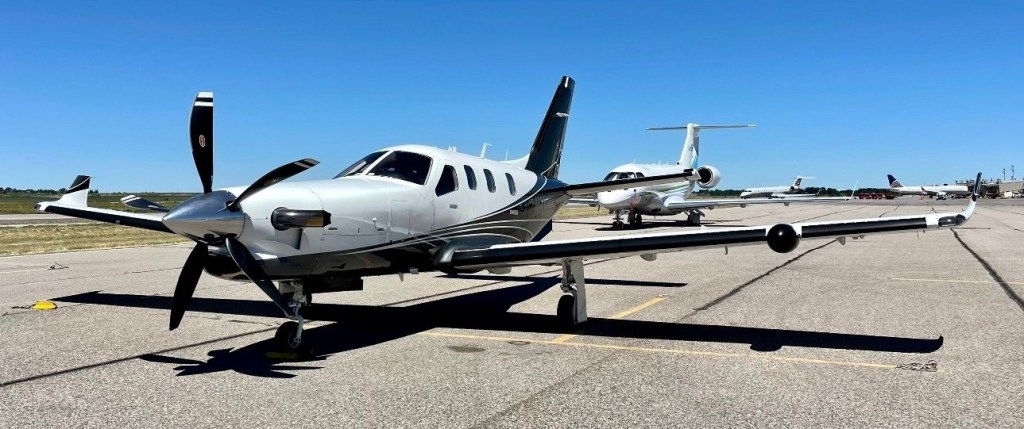
Engine: Pratt & Whitney PT6A-66D, 850 shp
Full rated power alt: 25,000 ft
Length: 35 ft
Height: 14 ft 3 in
Wingspan: 41 ft 6 in
Wing area: 193.75 sq.ft
Wing loading: 38.16 lb/sq.ft
Power loading: 8.7 lb/hp
Seats: 6
Std empty weight: 7430 lb
Max ramp weight: 7430 lb
Max takeoff weight: 7394 lb
Max usefull load: 2632 lb
Payload w/full fuel: 633 lb
Max landing weight: 7024 lb
Std fuel capacity: 301 USG
Std usable fuel capacity: 292 USG
TO ground roll: 2035 ft
TO dist to 50ft: 2840 ft
ROC SL: 2005 fpm
Cruise max pwr 31,000 ft: 315 kt
Range max pwr 31,000 ft: 1150 nm
Fuel burn max pwr 31,000 ft: 415 pph / 62 USGph
Range (ISA-45 mn res, econ cruise): 1,585 nm
Range (ISA-45 mn res, max cruise: 1,410 nm
Max op alt: 31,000 ft
Time to climb to 31,000 ft: 20 min
Sea level cabin to: 14,390 ft
Ldg dist 50 ft: 2430 ft
Landing ground roll: 1840 ft
Vr (Rotation): 90 kt
Vx (best angle of climb): 100 kt
Vy (best rate of climb): 124 kt
Va (design maneuvering): 158 kt
Vfe (max TO flap): 178 kt
Vfe (max landing flap): 122 kt
Vle (max gear extended): 178 kt
Vlo (max gear operating extend): 178 kt
Vlo (max gear operating retract): 128 kt
Vmo (max operating speed): 266 kt
Vs1 (stall clean): 81 kt
Vso (stall landing config): 65 kt

Launched in June 1987, the TBM 700 is a pressurised single-engined business aircraft developed by TBM International, formed by Socata (France) and Mooney (USA): Valmet (Finland) joined the programme in 1988. Production is split between the partners for assembly in France. The long nose cowling houses a 700 shp (522 kW) Pratt & Whitney Canada PT6A-40/1 turboprop driving a four-bladed propeller. Three were built, the first of which made its initial flight on 14 July 1988, and production aircraft were flying by 1990.
With a maximum cruise speed of around 300 knots and a range exceeding 1,500 nautical miles, the TBM 700 quickly became a favourite among business travellers and private owners looking for a high-performance aircraft with good operational flexibility. According to the April 2023 edition of Flying Magazine, the first production batch of 50 TBM 700s sold out almost instantly.
The engine in the TBM 700A is classified as a large PT6A, the “dash 64” which is derived from the 67 gas generator and the 42 propeller gear¬box. The gas generator operates at about half power and the gearbox should never see more than 82 per cent of its rated capacity as the TBM 700 installa¬tion calls for only a 700 h.p. output. The fuel control unit stops the engine producing more than about 800 h.p. and the pilot, by observing the torque and temperature limits, limits the output to 700 h.p. The TBM 700A aerofoil RA16 43 is the same computer designed, wind tunnel tested wing of the ATR 42 and ATR 72 regional airliners. In the TBM 700A’s role as an executive aircraft it is superb with its comfortable cabin, its pressurisation (6.2 psi diff.) that can maintain a sea level cabin to 14,500 ft aircraft altitude and an 8,000 ft cabin at 29,000 ft. It’s fast, it has excellent airfield capability.
Its pressurized cabin allowed it to cruise at altitudes up to 31,000 feet, making it ideal for long-distance flights. Over its production run, several upgrades were introduced, improving avionics and cabin features.
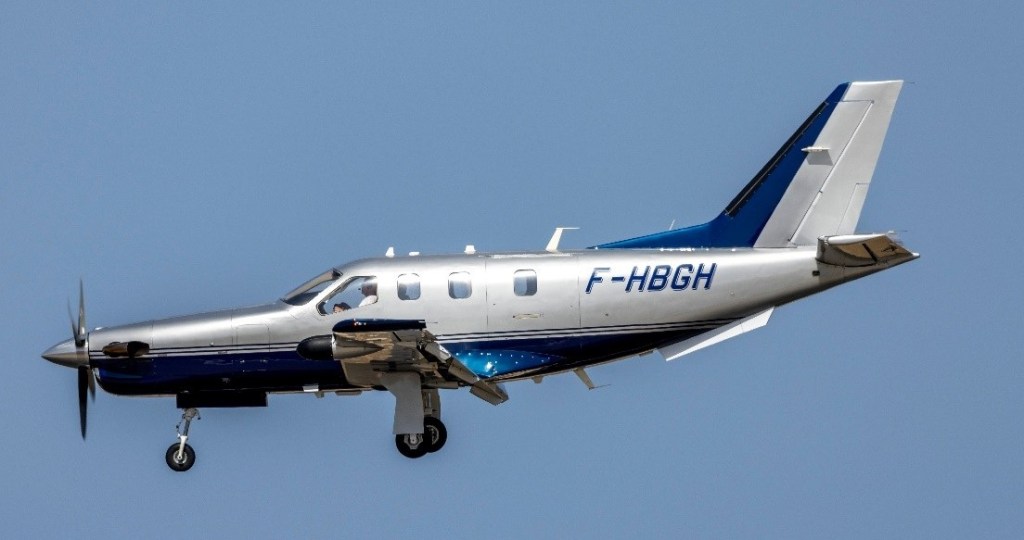
The TBM 700B featured a wide entrance door and increased maximum zero fuel weight.
The TBM 700C1 featured rear unpressurized cargo compartment, reinforced structure, and new air conditioning system.
The TBM 700C2 had an increased maximum takeoff weight.
The TBM 700C2 aircraft can cruise at over 30,000 feet at 225 knots, has a range of 1,565 run (with a 45 minute reserve), and is fitted with dual Garmin GNS 530. The GNS 530 combines IFR GPS receivers with large colour moving maps and has a digital 3,040 channel communication system and ART RDR 2000 weather radar.
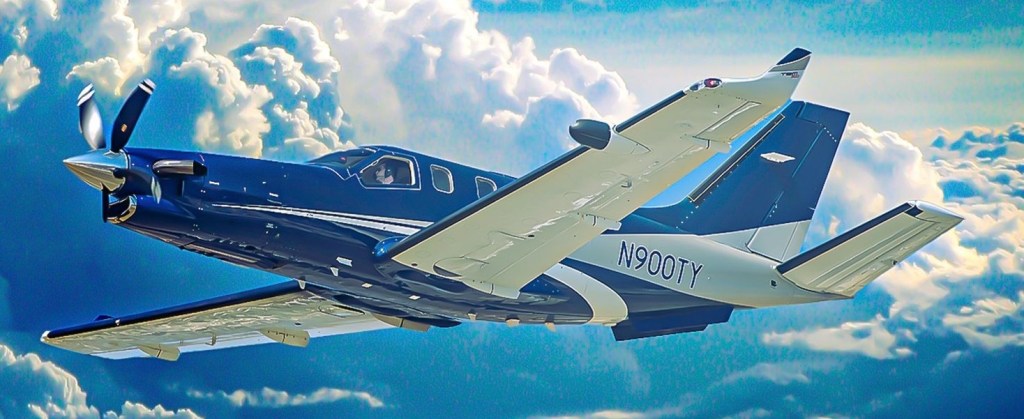
The TBM 700S features a 3 ft 7 in longer fuselage.
TBM700
Engine: PT6A-40/1
Empty weight: 3282 lb
Wing span: 37.07 ft
TBM700A
Engine: PT6A-64, 700 shp
Wing span: 39.87 ft
Length: 34′ 3″
Height: 13′ 9″
Cabin Length: 13′ 3″
Empty Weight: 4,025 lb
Max ramp weight: 6,614 lbs/ 3,000 kg
Max T.O. weight: 6,579 lbs/ 2,985 kg
Max landing weight: 6,520 lbs/ 2,597 kg
Max zero fuel weight: 5,783 lbs/ 2,623 kg
Useful Load: 2,554 lb
Fuel Capacity: 282 USgallons
Baggage Capacity: 330 lb
T/O dist (50ft): 2131 ft (650m)
Ldg dist(50ft): 2000 ft (610m)
Max. Speed: 300 knots
Cruise speed: 295 kts
Fuel Burn (Idle): 29 USGPH
Normal Fuel Burn: 52 GPH
Range (at 300 kts, 26,000 ft with 45 min reserve): 1,330 nm 4 POB
Range (at 300 kts, 26,000 ft with 45 min reserve): 954 nm 6 POB 60 kg baggage
Range (at 240 kts, 30,000 ft with 45 min reserve): 1,650 nm 4 POB
Range (at 240 kts, 30,000 ft with 45 min reserve): 1,170 nm 6 POB 60 kg baggage
Climb Rate (S.L./SA, 5,512 Ibs/2500 kg 2,380 ft/min
Service Ceiling: 30,000′
Stall speed: (ldg flap @ 5,512 lbs) 57 kts, (0 flap@ 6,579 lbs) 76 kt
Crosswind limit: 20 kt
Vd Maximum diving speed: 320 KCAS
Vmo No Mach limit S.L. to 30,000 ft: 270 KCAS
Noise Level (dB): 73.9
TBM700C
TBM 700S
Engine: 852 shp
Pax capacity: 6
A light trainer, circa 1983.
Single seat single engined flex wing aircraft with weight shift control. Rogallo wing. Pilot suspended below wing in trike unit, using bar to control pitch and yaw/roll by altering relative positions of trike unit and wing. Undercarriage has three wheels in tricycle formation. Nosewheel steer¬ing independent from yaw control. Aluminium tube trike unit, without pod. Engine mounted below wing driving pusher propeller.
The main activity for Soarmaster is trike unit manufacture, its product being simply known as the Trike.
The company is proud of the fact that the trike unit has withstood a static load of 1145 lb (519 kg) applied to the seat, though it has to be said that there are other trike units around which could comfortably exceed this figure. What this translates to in terms of load factors does of course depend on the wing used, which can be any suitable Rogallo.
Various engines are available, ranging from Chrysler units to a 15hp Solo single (with or without a tuned exhaust) and a twin cylinder Lloyd producing 23hp. The Lloyd has the unusual feature of being provided with both manual and electric start, and all three use belt reduction drives and Soarmaster’s own propeller, made from 6061T6 aluminium and featuring replaceable blades. Main wheels diameter overall 20 inch, 51 cm.
Price for the Lloyd engined trike unit in October 1982 was $1595.
Engines:
Lloyd LS400, 23 hp
Solo, 15 hp
Chrysler
Belt reduction
Fuel capacity 1.2 US gal, 1.0 Imp gal, 4.5 litre in main tank
Optional res fuel: 1.2 US gal, 1.0 Imp gal, 4.5 litre

