1984: Squadron Aviation, a Columbus, Ohio firm, has produced three historic replica aircraft (the SPAD XIII, the Fokker D-VII and the British SE5a) within the limits set for ultralights.
Squadron Aviation’s three ultralights not only look like full-fledged airplanes, but are also close replicas of exciting historical craft, the company says. Involved in the design and manufacture of these airplanes were Bill MciDermitt, president, and Lew Parsley, vice-president. Mark Savage, a 16,000-hour veteran, is test pilot and marketing manager.
Squadron Aviation, P.O. Box 23276, Columbus, Ohio 43223, is producing kits for these aircraft for less than $7,000 and complete flyaway aircraft for less than $10,000.
1985: 1300 S. Columbus Airport Rd, Columbus, OH 43207, USA.
Squadron Aviation designs and manufacturing rights were purchased by Loehle Aviation.
The Lithuanian Aviation Plant (now JSC “Sportinė Aviacija ir Ko”) Company was founded in 1969 and designed and manufactured highest quality gliders. In the course of its history the Company designed, tested and produced 20 different types and modifications of gliders and motor-gliders.
The first composite high performance glider BK.-7 “Lietuva” took-off in 1972. Since then, many other aviation projects were developed and manufactured best known of which are the 1978 Open class glider LAK-12; 15-18m class glider LAK-17a, Standard class gliders Genesis 2 and LAK-19; self- sustaining gliders LAK-17AT and LAK-19T; primary training glider LAK-16, open class ships LAK-20T and LAK-20M. The most popular member of the glider family is the Open Class glider LAK-12. Within 25 years, 253 units have been built and operated in 20 different countries. The LAK-12 was designed according to technical requirements and standards of the former Soviet Union, so called Norms of Flight Safety. In some cases, these Norms were stricter than the current European standards (CS-22).
Since 1996, Sportline Aviacija have worked on the American design standard class glider Genesis. Being the developer of the engineering part of the design, we completed the strength tests and calculations in accordance with JAR-22 standards. All works on obtaining type certificate in accordance with JAR-22 have been carried out and 26 units have been manufactured.
More than a thousand L-13 “BLANIK” gliders from all over the former Soviet Union and Bulgaria were overhauled in the plant.
Over the past 15 years after the company became private, LAK-17 type glider was developed and modified, and about 200 units of 15m and 18m class gliders were manufactured and delivered to the customers all over the world.
In 1999, the LAK factory was completely privatized, and a joint-stock company, Sportinë Aviacija, AB, was formed.
2002 launched a new open class glider, LAK-20 (two-seater version), and at the same time a turbo moto version of this glider as well. Few prototypes of the open class two-seater gliders LAK-20 and LAK-20M have been assembled, but the further development of the project has been frozen.
New modification of LAK-17 is the LAK-17B, which further evolved into a the most revolutionary and progressive product- the LAK-17B-FES (Front Electric Sustainer). The LAK-17B FES has been certified by EASA.
A Certificate issued by the Lithuanian Civil Aviation Authority, which grants the right to perform production of sailplanes, self-launching sailplanes as well as related products and parts.
LAK gliders are worldwide type certified, not only in Lithuania, but have type certificates for gliders in EASA, CAR, and other countries.
Apart from building gliders, the factory has capacities to develop a large variety of aviation or non-aviation composite structures and constructions. The testing facility can be employed for comprehensive analysis of projects and has its own strength test laboratory.
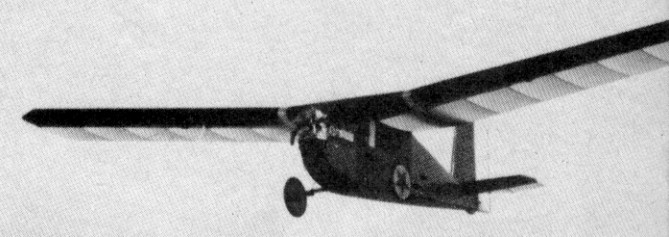
Single seat single engine high wing monoplane with two axis control. Conventional tail. Pitch control by elevator on tail; yaw control by fin mounted rudder; no separate roll control; control inputs through stick for pitch and pedals for yaw. Cantilever wing; wing profile; double surface. Undercarriage has two wheels with tailskid. Wood/foam fuselage, partially enclosed. Engine mounted at wing height driving tractor propeller.
Announced in 1983, the Sky Pup is a development of Steven Wood’s one off ultralight called the Blue Light Special. With the Sky Pup, the accent is on simplicity and low build cost; the aircraft is only sold in the form of plans, the company reckoning that the machine can be built for less than $1000 excluding power pack.
The design principle is to use foam to carry shear loads and wood to carry bending loads. Ribs and fuselage panels are cut from foam and then bonded to wood capstrips and gussets, with plywood covering for the leading edge and dope and fabric covering for the rest of the flying surfaces.
Engine is a Cuyuna 215RR coupled to the company’s own propeller via a reduction drive. Unlike most two axis aircraft, the Sky Pup is not purely stick controlled. The centre-mounted stick moves fore and aft only, to control pitch, while pedals are used for rudder control. The plans cost $50 in the US, $52 in Canada, $56 elsewhere.
Engine: Cuyuna 215RR, 20 hp at 5500 rpm Propeller diameter and pitch 58 x 24 inch, 1.47 x 0.61 m Reduction 2.3/1 Power per unit area 0.15 hp/sq.ft, 1.7hp/sq.m Length overall 15.9 ft, 4.85 m Height overall 4.3ft, 1.32m Wing span 31.0ft, 9.45m Mean chord 4.2ft, 1.28m Dihedral 6.5 deg Total wing area 130 sq.ft, 12.1 sq.m Wing aspect ratio 7.4/1 Empty weight 195 lb, 88kg Max take off weight 400 lb, 181kg Payload 205 lb, 93kg Max wing loading 3.08 lb/sq.ft, 15.0kg/sq.m Max power loading 20.0 lb/hp, 9.1kg/hp Load factors design; +6.0 Never exceed speed 69mph, 111 kph Cruising speed 55mph, 88kph Stalling speed 26mph, 42kph Max climb rate at sea level 450 ft/min, 2.3 m/s Best glide ratio with power off 12/1
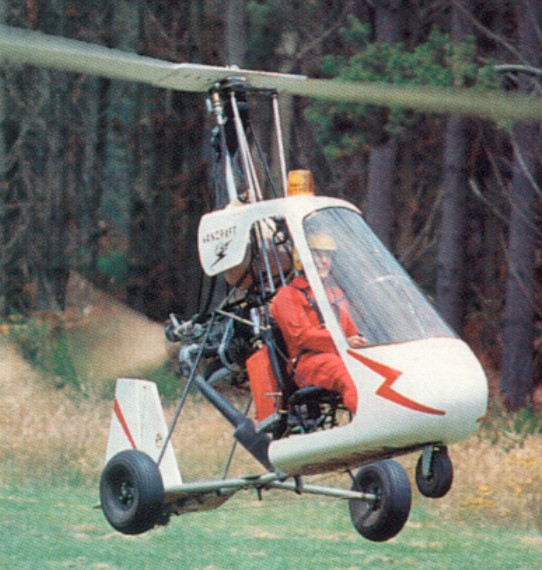
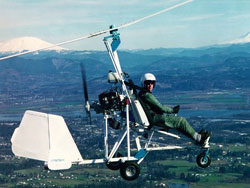
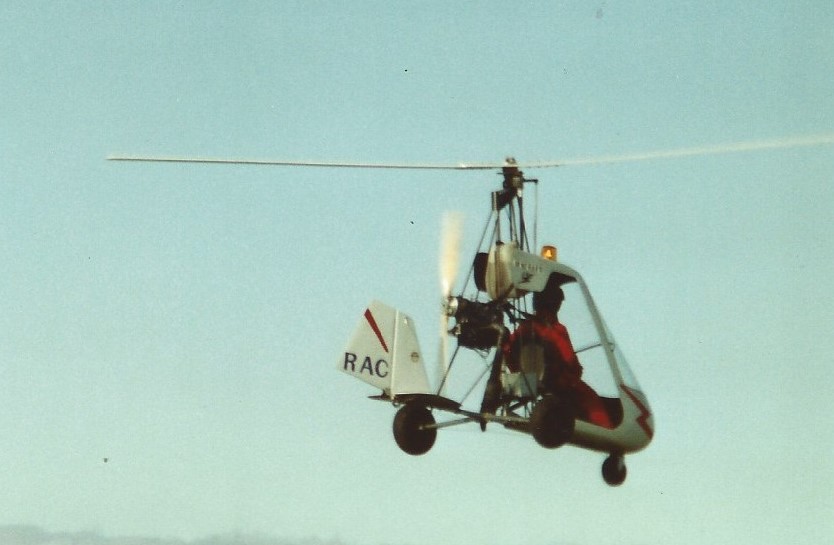
Originally marketed as the Vanvraft Lightning, the Lightning comes with most of the Vortex components. The all triangulated airframe is built of large-diameter aluminum tubing, with a truly remarkable suspension system and the finest control system in the industry (Roto-Control) We have designed a new composite seat to ensure unparalleled pilot comfort and crashworthiness. Up-grading to a partial enclosure is easy. The new shock mounted rotorhead and independent toe-operated hydraulic disc brakes are standard.
A step-by-step video is included with the assembly manual. The instructions and components are so complete it requires only 40 – 60 hours to bolt together using basic hand tools. The Lightning uses a Rotax 503 with oil injection, and a 2.58-to-1 reduction gear box delivering 52 horsepower.
A unique feature on both the Vortex and Lightning is float capability The Lightning must be equipped as an experimental model with a 67-hp engine for this feature, but it typically operates as an ultralight with a 50-hp Rotax 503. Top speed is 63 mph with the ultralight or 80 mph with the experimental. Conforming composite seats, nosewheel suspension and independent disc brakes also come on the Lightning. Kits for the Lightning in 2001: $15,300
Engine: 50 hp Rotax 503 or 76 hp Rotax 582. Prop: 60” x 32” GSC wood fixed pitch or Warp Drive 64” ground adjustable. Rotor blades: 23-25’ x 7” Sport Rotors or 23-25’ x 8” Sky Wheels.
Standard: brakes suspension, new-design rotor head, Cyber Seat, independent nose wheel suspension and main gear suspension. Can be operated as ultralight or experimental. Options: prerotator, semi-enclosure, floats, instrumentation, folding mast. Info package $12, video $13, both $25. Kit: $15,300 in 2009.
Engine: Rotax 503, 46 hp Rotor Blades: 23′ Sport Rotors Disk span: 23 ft Disk area: 415.4 sq.ft Vne: 80 mph Max speed: 63 mph Cruise speed: 55 mph Range: 90 sm ROC: 1000 fpm Sustained Climb: 500 fpm Fuel cap: 5 USG Empty wt: 252 lbs Gross wt: 600 lb Height: 8 ft Length: 11 ft Width: 6 ft 1.75 in Seats: 1
Offers single-seat kit-built ultralight Lightning and kit-built Vortex autogyros, plus two-seat Sport Copter II autogyro. 1996-7: 34012 N. Honeyman Rd, Scappoose, OR 97056, USA. 2009: Sport Copter, Inc, 34012 Skyway Dr, Scappoose, OR 97056, USA.
The LSA Talons are strut-braced three-axis aircraft with conventional gear and a pusher prop configuration, based on an ultralight style of construction.
Sport Flight Aviation uses CAD/CAM technology to refine and verify its designs while also improving manufacturing processes. CNC machining of Talon components is done in-house, producing Talon aircraft kits.
With the powder-coat option, the only painting required on the Talon is the nose cone. The Talon has only a few welded components, such as the elevator interlink, torque tube, and fuel tank. All welding is done at the factory.
XP
The range of the Talon varies depending on the model, engine used, loading, and fuel capacity. The TalonXP equipped with the standard 11.75 gallon welded aluminum fuel tank and Rotax 582 C drive, with 70 inch 3-blade prop can fly for at least 2.5 hours at 68mph. A TalonXP equipped the same, but with the HKS 700E 60hp four-stroke engine, can stay aloft for over three hours with a reasonable reserve. The single seat Magnum and Typhoon can accept an optional 22 gallon welded aluminum fuel tank.
The two-seat TalonXP has an empty weight of 479lbs and a gross weight of 950lbs. With the NorthSlope package installed, the useful payload can be increased to 570lbs. The TalonXP with a Rotax 582 engine can fly at 90mph in level flight. The Talon cruises between 62 and 85mph, depending on the model and engine installation. A typical TalonXP equipped with a Rotax 582 engine cruises at about 70mph. The single seat Magnum and Typhoon comparably equipped will cruise at 76-80mph.
All Talons are equipped with 3-position flaps; 10, 22, and 35 degree positions. Set in the 35 degree position, The TalonXP can comfortably fly at 40-43mph at low power settings. The stall takes place at 33-38mph.
The main boom is 5in. OD x .065in. wall 6061-T6 seamless drawn aluminum tubing. This tube is sleeved at hard points, such as the landing gear carry-through, for added durability. The skins are .050 6061-T6 mated together with stainless steel rivets, creating a light, strong, box-type structure. The Talon’s gear legs are nickel plated 4130 steel alloy tubing with .120in. wall, heat-treated in a special salt bath for strength and integrity.
All Talons come standard with an Aviation Products 5in. break-away full swivel steerable tail wheel.
All Talon models include a built-in curved instrument panel, 3-point shoulder harness, 8-inch spun aluminum welded wheels, streamlined aluminum struts, padded configurable seats, 3-axis control, AN aircraft hardware throughout (included with kit), welded aluminum fuel tank with 11.75 US gallon capacity, tinted polycarbonate windshield, differential ailerons, stainless steel control and structural cables, Mil-spec control pulleys, engine mount with 6 rubber isolators, and preformed wing ribs (XP and Super Magnum: 40 total, Magnum: 36 total)
Talon Magnum Engine: HKS 700E, 61 hp HP range: 40-70 Length: 21.6 ft Wing span: 26 ft 3 in Wing area: 138 sq.ft Cruise: 80 mph Stall: 38 mph Range: 230 sm Rate of climb: 1000 fpm Takeoff dist: 175 ft Empty weight: 437 lb Gross weight: 735 lb Fuel capacity: 11.75 USG Landing dist: 225 ft Seats: 1 Cockpit width: 24 in Landing gear: tailwheel LSA: yes
Talon XP Engine: HKS 700E, 61 hp HP range: 40-80 Length: 21.6 ft Wing span: 28.5 ft Wing area: 148 sq.ft Empty weight: 535 lb Gross weight: 1050 lb Fuel capacity: 11.75 USG Cruise: 72 mph Stall: 41 mph Range: 230 sm Rate of climb: 900 fpm Takeoff dist: 250 ft Landing dist: 250 ft Seats: 2 tandem Cockpit width: 24 in Landing gear: tailwheel LSA: yes
 All Aero