1996: 821 Lone Star Dr., New Braunfels, TX 78130-2932, USA.
Helicopter builder
1996: 821 Lone Star Dr., New Braunfels, TX 78130-2932, USA.
Helicopter builder
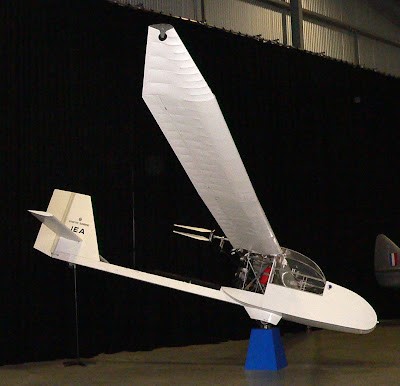
In early 1983, Charlie Stanton commenced a three-year project that would see him design and build the Stanton Sunbird powered glider.
The 28 hp Rotax 277 engine enables a take-off and climb to a height sufficient for the engine to be stopped, the propellor automatically folded and the aircraft to fly as a conventional glider. The engine can be re-started in flight if needed.
The single seat Stanton Sunbird motorglider ZK-JEA utilised various mechanical parts from Charlie’s earlier American Eaglet ZK-GOE.
It has a wingspan of 42 feet (12.8 metres) and was powered by a 27 HP Rotax 277 engine with a feathering propellor that could be restarted in flight if necessary. It was self-launching and flew successfully for over 10 years.
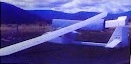
ZK-JEA (c/n 001) was registered as a Class 1 microlight to Charlie Stanton on 1 November 1994, and its first flight was on 26 February 1995 and over the next ten years Charlie made many flights including a maximum height of 13,000 ft and on another occasion a flight of 3 hr 30 min.
The registration was cancelled on 11 April 1997 as withdrawn.
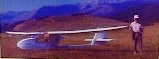
Its final flight was on 16 April 2005.
On Sunday 4 December 2005, during the Ashburton Aviation Museum’s Christmas party, the Stanton Sunbird was donated to the museum by Charlie and his wife, Phyllis, where it is now on display.
Engine: 28 hp Rotax 277
Wingspan: 42 ft / 12.8 m
Wing area: 100 sq.ft / 9.2 sq.m
Wing loading: 5.3 lb/sq.ft / 26 kg/sq.m
Airfoil: Epple 748 High Lift
Empty weight: 313 lb / 142 kg
Payload: 214 lb / 97 kg
Max weight: 527 lb / 239 kg
Vne: 81 mph / 132 kph
Cruise: 45 mph / 90 kph
Stall w/flaps: 32 mph / 52 kph
Load factor: +- 4.4g
Service ceiling: 15,000 ft
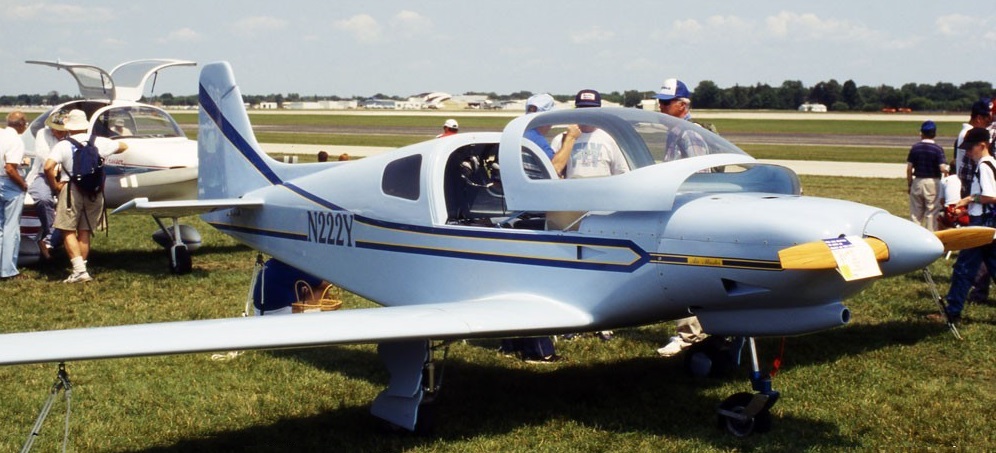
The Air Master was an original homebuilt design of Jerry J. Stallings reportedly influenced by the Lancair 320, but was built of different composite materials and had several major differences.
The type was suitable for engines in the 150 to 200 hp range, and from 1995 was marketed via Airplane Builders Company, founded by the designer. The type was planned to become available (ultimately) in kit form, although initially only plans were made available.
The first and sole example was built by the designer, possibly together with M.D. Kraft and powered by a 150 hp Lycoming O-320 engine it was first flown during 1994.

Development halted when the prototype aircraft was lost in a crash on July 25, 1996, killing the designer and his passenger. An Air Master 2 with registration N10AX was never completed.
Engine: Textron-Lycoming O-320, 150hp
Wing span: 26’6″
Length: 21’0″
Max speed: 238
Cruise: 200 mph
Range: 1000 mi
Seats: 2
Houston TX.
USA
Built the Air Master in 1994.
Biplane, struts and cable bracing, cruciform tail. Taildragger, steerable tailwheel. The Stinger is derived from the Hornet, being of similar configuration and construction, and differs principally by having a smaller wing span and area.
The power pack is a Kawasaki TA440, as on the Hornet, and the price was $6450 ready to fly in 1983.
Engine: Kawasaki TA440, 35 hp at 6000 rpm
Propeller diameter 50 inch, 1.27 m
V belt reduction, ratio 2.0/1
Max static thrust 235 lb, 107 kg
Power per unit area 0.19 hp/sq.ft, 2.0 hp/sq.m
Fuel capacity 5.0 US gal, 4.2 Imp gal, 18.9 litre
Length overall 18.0 ft, 5.49 m
Height overall 6.3 ft, 1.91 m
Wing span 26.3 ft, 8.02 m
Total wing area 185 sq.ft, 17.2 sq.m
Empty weight 245 lb, 111kg
Max take off weight 600 lb, 272kg
Payload 355 lb, 161kg
Max wing loading 3.24 lb/sq.ft, 15.8 kg/sq.m
Max power loading 17.1 lb/hp, 7.8 kg/hp
Load factors; +12.0, 12.0 ultimate
Max level speed 62mph, 100kph
Never exceed speed 100mph, 161kph
Cruising speed 55mph, 88 kph
Stalling speed 24 mph, 39 kph
Max climb rate at sea level 700 ft/min, 3.6 m/s
Best glide ratio with power off 8/1
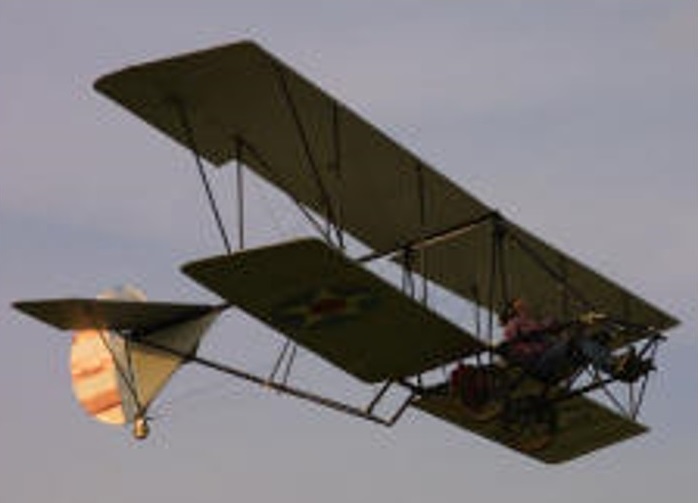
The Hornet was originally powered by a Mac 101 go cart engine, was foot launched, and had three axis controls using elevator and ailerons through a side stick arrangement. With it’s large wing area and light weight it made an excellent glider. Later models had landing gear added to them and engine power increased to the Rotax 503.
SR-1 Enterprises Hornet Article
Single seat single engined biplane with conventional three axis control. Wing has unswept leading and trailing edges, and constant chord; cruciform tail. Pitch control by elevator on tail; yaw control by fully flying rudder; roll control by half span ailerons on upper wing; control inputs through stick for pitch/ roll and pedals for yaw. Wings braced by struts and transverse X cables; wing profile; double surface. Undercarriage has three wheels in tail dragger formation; suspension on tailwheel and bungee suspension on main wheels. No ground steering. No brakes. Aluminium tube/steel tube framework, without pod. Engine mounted between wings driving pusher propeller.
Introduced in 1982, the Hornet is a biplane which is built very much according to the customer’s wishes and it is thus rather difficult to describe a ‘standard’ machine. However, all Hornets use a combination of steel and aluminium tubing for their construction, with a ladder frame for the wings and drag and anti drag diagonal cables inside the double surface wing. Two steel tubes in the shape of an inverted V run between the trailing edges of the upper and lower wings and provide a mounting for the engine, usually a 30 hp Cuyuna 430R.
Engine: Cuyuna 430R, 30 hp at 5500 rpm
Propeller diameter and pitch 45 x 33 inch, 1.14 x 0.84 m
V belt reduction, ratio 2.0/1
Power per unit area 0.13 hp/sq.ft, 1.5hp/sq.m
Fuel capacity 3.0 US gal, 2.5 Imp gal, 11.4 litre
Length overall 18.3 ft, 5.56 m
Height overall 6.7ft, 2.03m
Wing span 34.0ft, 10.36m
Sweepback 0 deg
Total wing area 218 sq.ft, 20.3 sq.m
Main wheels diameter overall 20 inch, 50 cm
Empty weight 200 lb, 91 kg
Max take off weight 575 lb, 261 kg
Payload 375 lb, 170 kg
Max wing loading 2.64 lb/sq.ft, 12.9 kg/sq.m
Max power loading 19.2 lb/hp, 8.6 kg/hp
Load factors; +5.5, 4.5 ultimate
Max level speed 60 mph, 97 kph
Never exceed speed 65 mph, 105kph
Economic cruising speed 48mph, 77kph
Stalling speed 21mph, 34kph
Max climb rate at sea level 800 ft/min, 4.1 m/s
Min sink rate 250ft/min at 33mph, 1.3m/s at 53 kph
Best glide ratio with power off 9.3/1 at 33 mph, 53 kph
Take off distance 75 ft, 23 m
Landing distance 160 ft, 49 m
1983: 2319 Endicott St., St. Paul, MN 55114, USA.
8732 Herron Ave
Cottage Grove
MN 55018
USA
(612) 646-3884
UL builder
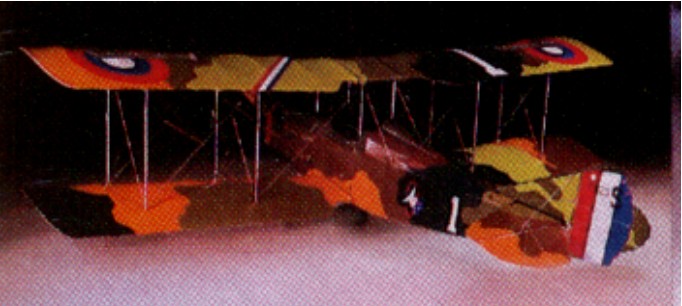
Squadron Aviation produce a variety of replicas and most of the specs are very similar. All three of the aircraft, designed by Lew Parsley, are produced at the company’s Columbus, Ohio plant and are structurally the same. Wing panels are pre-assembled at the factory from stamped aluminium ribs and aluminium tubing, as is the precisely jigged aluminium tubing fuselage and tail feathers. The kit-builder is faced with assembly (all critical holes are drilled), rigging (accomplished with a simple jig concept detailed by the factory) and traditional dope and fabric covering. The external styling to create each replica is obtained with the use of a plastic pre-moulded and coloured cowling for the three individual ultralights. Flight perform¬ances are very good with a take-off roll of 22 metres the standard. A very comprehensive kit was available which includes everything, right down to the dope finish of the squadron of your choice.
Max gross wt: 505 lbs
Max pilot wt: 225 lbs
Empty weight: 250 lbs
Fuel capacity: 3.6 lbs
Climb rate: 1000+ fpm
Power off stall: 22 kts
Wing loading (225 lbs pilot): 3.0 lbs/sq.ft
Power loading (170 lbs pilot): 12.8 lbs/hp
Take-off distance: 75 ft
Landing distance: 100 ft
Glide ratio: 5.5:1
Vne: 60 kts
Cruise speed: 50 kts
G loading: +4 / -2
Engine: Cuyuna UL II-02
Wing spans average: 24.5 ft.
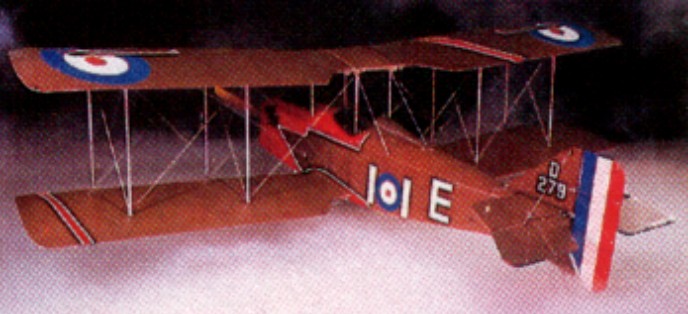
Squadron Aviation produce a variety of replicas and most of the specs are very similar. All three of the aircraft, designed by Lew Parsley, are produced at the company’s Columbus, Ohio plant and are structurally the same. Wing panels are pre-assembled at the factory from stamped aluminium ribs and aluminium tubing, as is the precisely jigged aluminium tubing fuselage and tail feathers. The kit-builder is faced with assembly (all critical holes are drilled), rigging (accomplished with a simple jig concept detailed by the factory) and traditional dope and fabric covering. The external styling to create each replica is obtained with the use of a plastic pre-moulded and coloured cowling for the three individual ultralights. Flight perform¬ances are very good with a take-off roll of 22 metres the standard. A very comprehensive kit was available which includes everything, right down to the dope finish of the squadron of your choice. Centre mounted joy stick, rudder pedals, tailwheel or skid.
Built by Squadron Aviation before manufacture and marketing were acquired by Loehle. Loehle shipped kits pre-built to covering stage. LSA approved.
Empty wt: 253 lbs
Wing span: 24 ft
Wing area: 168 sq.ft
Height: 6’4”
Length: 16 ft
Fuel cap; 5 USG
Construction: Aluminium, Dacron
Engine: Cuyuna ULII-02 (429 cc) 35 hp
Prop: 183cm
Static thrust: 300+ lbs
Max wt: 504 lbs
Max pilot wt: 225 lbs
Stall: 22 mph
Econ cruise speed: 45 kts
Max speed: 63 mph
Vne: 75 mph
Climb rate: 1000 fpm @ 45 mph
Design limit: +4, -2g
Glide ratio: 5.5-1
Wing loading: 3lbs/sq.ft
Power loading: 14.4 lbs/hp
Take-off distance: 75 ft
Landing distance: 100 ft
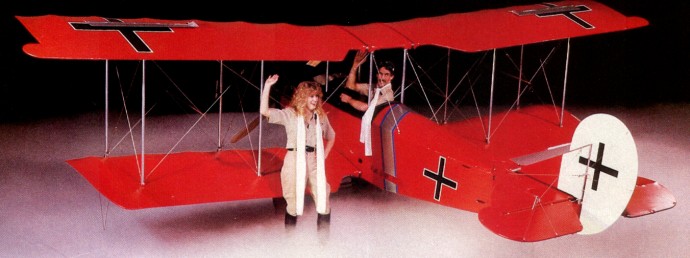
Squadron Aviation produce a variety of replicas and most of the specs are very similar. All three of the aircraft, designed by Lew Parsley, are produced at the company’s Columbus, Ohio plant and are structurally the same. Wing panels are pre-assembled at the factory from stamped aluminium ribs and aluminium tubing, as is the precisely jigged aluminium tubing fuselage and tail feathers. The kit-builder is faced with assembly (all critical holes are drilled), rigging (accomplished with a simple jig concept detailed by the factory) and traditional dope and fabric covering. The external styling to create each replica is obtained with the use of a plastic pre-moulded and coloured cowling for the three individual ultralights. Flight performances are very good with a take-off roll of 22 metres the standard. A very comprehensive kit was available which includes everything, right down to the dope finish of the squadron of your choice.

The Fokker was part of the Squadron Aviation purchase by Loehle Aviation and kits have been marketed by them since.
Max gross wt: 505 lbs
Max pilot wt: 225 lbs
Empty weight: 250 lbs
Fuel capacity: 3.6 lbs
Climb rate: 1000+ fpm
Power off stall: 22 kts
Wing loading (225 lbs pilot): 3.0 lbs/sq.ft
Power loading (170 lbs pilot): 12.8 lbs/hp
Take-off distance: 75 ft
Landing distance: 100 ft
Glide ratio: 5.5:1
Vne: 60 kts
Cruise speed: 50 kts
G loading: +4 / -2
Engine: Cuyuna UL II-02
Wing spans average: 24.5 ft
 All Aero