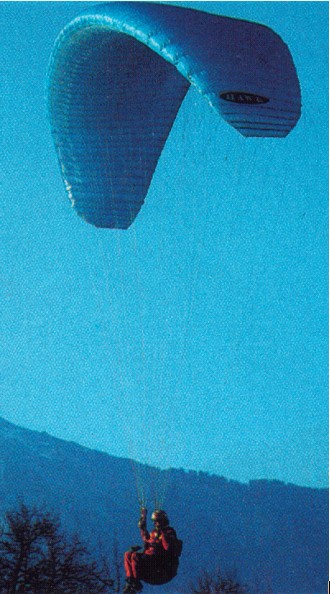
Hawk 26 Wing area: 25.5 sq.m Pilot weight: 62-87 kg No. of cells: 102 Wing span: 11.85 m Aspect ratio: 5.5 Min sink: 1 m/s Max speed: 54 kph Price (1998) 19900 Fr
Hawk 28 Wing area: 27.7 sq.m Pilot weight: 62-82 kg No. of cells: 105 Wing span: 12.35 m Aspect ratio: 5.5 Min sink: 1 m/s Max speed: 54 kph Price (1998) 20500 Fr
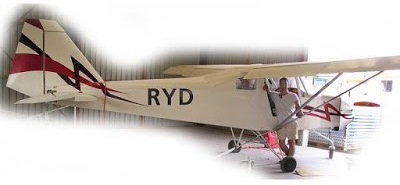
Rino Stoof of Cambridge, New Zealand, built his Stoof Joyrider in the late 1990s/early 2000s and got it to the stage of carrying out engine runs. Unfortunately it never made it into the air, but it was registered with CAA. The tri-gear Stoof Joyrider was of all-wooden construction and had removeable wings and tailplane. It had a wingspan of around 10 metres and a length of around 6 metres. It was powered by a 2 litre EJ 20 Subaru engine with a Hintz gearbox and was fitted with a Ballistic Recovery Parachute.
ZK-RYD (c/n 05/01) was registered to Rino P P Stoof of Cambridge on 14 April 2005. It was withdrawn and cancelled from the register on 8 May 2013.
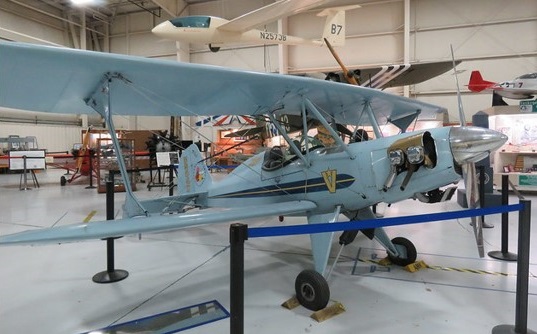
Designed by Lou Stolp as a low-cost, low-horsepower, fun machine, it is inexpensive, easy to build, and very easy to fly. Basically a biplane version of the parasol-winged Starlet. First flown in 1981, the light wing loading insures a slow landing speed and short takeoff. Stability is excellent and ample control surfaces give rapid response to light control pressures.
The structure is stressed to withstand both plus and minus 9 G’s, and horsepower may vary from 60 to 125. With the 65 HP Continental, the rate of climb is about 600 fpm, cruise speed is 75 mph, stall speed is 35 mph. This aircraft also flies well with a Rotax, Subaru, Suzuki, or Lycoming engine.
The fuselage is constructed of welded steel tubing, and the wings have spruce spars and plywood ribs with 1/4″ cap strips. Raw material kits as well as kits with the tubing cut to length and scribed for fitting are available. Wing Kits may be bought with finished spars, spar plates, ribs cut out, and fittings cut to size.
Engine 100-hp Con¬tinental. Gross Wt. 1000 lb Empty Wt. 650 lb Fuel capacity 20 USG Wingspan 23’ Length 17’2” Wing area: 141 sq.ft Top speed 150 mph Cruise 90 mph Stall 35 mph Climb rate 1800 fpm Takeoff run (50’) 300 ft Landing run (50’) 500 ft Range 350 miles Seats: 1
Engine: 65 hp Speed max: 90 mph Cruise: 75 mph Range: 275 sm Stall: 40 mph ROC: 600 fpm Take-off dist: 400 ft Landing dist: 600 ft HP range: 65-150 Fuel cap: 15 USG Weight empty: 700 lbs Gross: 1000 lbs Height: 7.4 ft Length: 17.1 ft Wing span: 23 ft Wing area: 141 sq.ft Seats: 1 Landing gear: tail wheel
The Sportsman 2+2 is a four-place general aviation aircraft that is a tail-dragger, trike, float ready, wing folding, trailerable, high-utility aircraft, with an optional second row “jump seat” for 2 rear-seat passengers (up to 5’ tall).
“The Sportsman is the Glastar’s big brother”, said Ted Setzer, V.P. of Research & Development at Glasair Aviation, and the project manager on the Sportsman. The Sportsman has a nearly 1,000 pound useful load, and, with 2 pilots and full fuel, the Sportsman will not only haul over 300 pounds of gear, cargo, or extra passengers, it will easily handle all of the bulky stuff” said Setzer. Loaded, it can cover 600 miles in 4 hours and still have a ½ hour fuel reserve.
The Sportsman was test flown in the tail-dragger configuration on Goodyear 26” tundra tires. The prototype Sportsman was outfitted with the optional second row “jump seat” and powered by a normally aspirated, 180 hp Lycoming O-360, swinging a Hartzell 80” constant speed propeller. Even though the prototype was being flown with the draggy tundra tires and without any wing-to-strut or strut-to-fuselage fairings, it is seeing cruise speeds of 147 mph/130 kts and yet stalls at 49 mph/43 kts. With the 26” tundra tires, the Sportsman boasts 18” of prop clearance even with the 80” Hartzell propeller. On standard 6.00 x 6.00 wheels and tires and a 74” cruise prop, pilots can expect to have similar clearances for rough field operations.
Based upon Glastar floatplane performance data, the Sportsman is expected to have takeoff runs in the 9 – 12 second range.
Engine: Lycoming O-360,180 hp Propeller: Hartzell constant-speed Top Speed (TAS at sea level): 167 mph / 145 kt Cruise Speed (TAS) 75% power at 8,000 ft: 158 mph / 137 kt Cruise Speed (TAS) 65% power at 8,000 ft: 154 mph / 134 kt Stall Speed (MAUW) No flaps (Vs): 58mph / 51 kt Stall Speed (MAUW) Full flaps (Vso): 48 mph / 42 kt Rate of Climb Solo: 1,850 fpm Rate of Climb Max. gross: 1,000 fpm Range (at 65% power/50 USG): 829 mi / 721 nm Fuel Consumption (at 65% power): 8.5 USgph Fuselage Length: 23 ft Fuselage Length (wings folded): 24 ft. 8 in Wing Span: 35.0 ft Folded width: 8.5 ft Wing Area: 131 sq. ft Aspect ratio: 9.1 Wing loading (at max. gross): 17.5 lbs. per sq. ft Structural limit loads (at max. gross): +3.8 / -1.5 Gs Maximum Height Tricycle (on gear): 9 ft. 4 in Maximum Height Tricycle (wings folded): 7ft. 1 in Maximum Height Taildragger: 6 ft. 11 in Cabin Width (at hips): 44.0 in Cabin Width (at shoulders): 46 in Door width: 37.0 in Door height: 31.5 in Baggage space / Rear passenger area: 37.0 cu. ft Rear door width: 26 in Rear door height: 31 in Maximum gross weight (on wheels): 2,350 lbs Maximum gross weight (on floats): 2,500 lbs Empty weight: 1,350 lbs Useful load: 1000 lbs Full-fuel payload (standard tanks): 700 lbs Maximum baggage capacity: 300 lbs Fuel Capacity (usable): 50 USgals
Engine: Lycoming IO-390,210 hp Propeller: Hartzell constant-speed Top Speed (TAS at sea level): 186 mph / 162 kt Cruise Speed (TAS) 75% power at 8,000 ft: 172 mph / 150 kt Cruise Speed (TAS) 65% power at 8,000 ft: 167 mph / 145 kt Stall Speed (MAUW) No flaps (Vs): 58 mph / 51 kt Stall Speed (MAUW) Full flaps (Vso): 48 mph / 42 kt Rate of Climb Solo: 2,100 fpm Rate of Climb Max. gross: 1,200 fpm Range (at 65% power/50 USG): 733 mi / 638 nm Fuel Consumption (at 65% power): 10.2 USgph Fuselage Length: 23 ft Fuselage Length (wings folded): 24 ft. 8 in Wing Span: 35.0 ft Folded width: 8.5 ft Wing Area: 131 sq. ft Aspect ratio: 9.1 Wing loading (at max. gross): 17.5 lbs. per sq. ft Structural limit loads (at max. gross): +3.8 / -1.5 Gs Maximum Height Tricycle (on gear): 9 ft. 4 in Maximum Height Tricycle (wings folded): 7ft. 1 in Maximum Height Taildragger: 6 ft. 11 in Cabin Width (at hips): 44.0 in Cabin Width (at shoulders): 46 in Door width: 37.0 in Door height: 31.5 in Baggage space / Rear passenger area: 37.0 cu. ft Rear door width: 26 in Rear door height: 31 in Maximum gross weight (on wheels): 2,350 lbs Maximum gross weight (on floats): 2,500 lbs Empty weight: 1,350 lbs Useful load: 1000 lbs Full-fuel payload (standard tanks): 700 lbs Maximum baggage capacity: 300 lbs Fuel Capacity (usable): 50 USgals
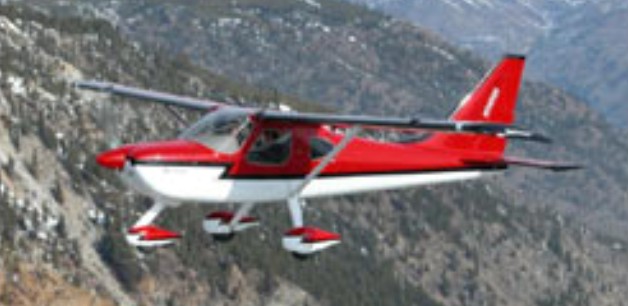
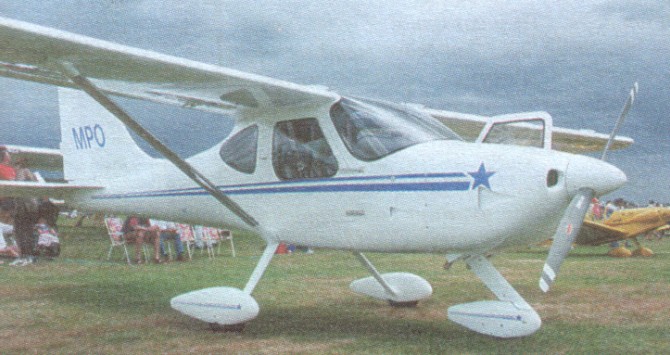
Arlington Air¬craft Development Inc (AADI) had originally devel¬oped the GlaStar and licensed production to Stoddard Hamilton. Designed with aluminium wings, sta¬biliser and rudder, but a fibreglass fuselage and fin, with a pipe cage around the two-seat cockpit – to which the wings and engine are directly mounted. The design allows a conversion from tricycle to taildragger configuration in a couple of hours. The standard design also allows the wings to fold (a five-minute operation) for easy hangarage, and removal of the tail stabaliser for transporting. Options purchased for this aircraft include the auxiliary wingtip tanks, giv¬ing a total of 195 litres useable, and 600 x 6 tyres.
First flying on 29 November 1994, the new GlaStar was announced at the 1994 Sun n’ Fun airshow in Lakeland, Florida, and first displayed as an almost-finished prototype at Oshkosh. Featuring a foldable high wing, convertible landing gear options and a baggage compartment. More than 100 builders placed deposits on the new kit in advance of the prototype’s November first flight.
Behind its original 125 h.p. Continental IO-240 engine, the GlaStar prototype exceeded its design goals on every parameter in 1995. By the fall of 1995, complete GlaStar kits were being shipped, and the first customer-built GlaStar took flight after less than three-months of construction. 1995 saw major enhancements to all models of the Glasair.
In 1996, the GlaStar prototype, having logged some 400 trouble-free hours in its first eighteen months, was equipped with a new 160 h.p. Lycoming O-320 engine installation. With a constant-speed propeller, this powerplant gave better cruise speed, climb performance and short-field wizardry. In 1997 the GlaStar was tested on floats — both Aerocet 2200 straight floats and Wipline 2100 amphibs. Designed from the outset as a floatplane, the GlaStar exceeded all expectations. In addition, the 180 h.p. Lycoming O-360 engine was installed in the GlaStar.
Included in the FAA 51% list, GlaStar builders got a tremendous boost in 1998 with the introduction of new “Jump-Start” accelerated-assembly options. Taken together, the Jump-Start Wing and Fuselage options shaved up to 50% off the typical build-time.
Original manufacturer of the Glasair and Glastar, Stoddard Hamilton closed its doors in 2000 after more than 20 years in business. Both aircraft types were split from the Stoddard Hamilton camp when the clo-sure occurred.
Thomas W. Wathen, former Chairman and CEO of Pinkerton’s, Inc., purchased the assets of Stoddard-Hamilton and AADI and formed Glasair Aviation, LLC in 2001 for the continued manufacturing and sale of both the Glasair and Glastar product lines.
New owner Thomas Walthem was committed to getting all three kits back into production. He initially purchased the Glasair side of the business but after find¬ing the overheads of the line were not self supporting approached Arlington Air¬craft Development Inc (AADI) to purchase the GlaStar line. As a single entity, the Glasair and Glastar kit aircraft under the banner of New Glasair/GlaStar.
Mr. Wathen, who sits on the President’s Counsel of the EAA and owns historic Flabob Airport in Riverside, California, selected Mikael Via to be President and Chief Operating Officer (COO) of the new companies. According to Mr. Wathen, Via is to be responsible for daily operations of Glasair Aviation and will help Wathen determine the long-term direction and growth of the company. Via, is a private pilot and builder/owner of a Glasair Super II RG.
In 2009 still produced kits to construct the GlaStar two-seat high-wing cabin monoplane (first flown 1994 and many hundreds sold).
Engine: Lycoming IO-320-D, 160 hp HP range: 100-180 Height: 7 ft Length: 22 ft Wing span: 35 ft Wing area: 128 sq.ft Fuel cap: 34 USG Weight empty: 1100 lbs Gross: 1900 lbs Speed max: 170 mph Cruise: 167 mph Range: 750 sm Stall: 45 mph ROC: 2000 fpm Take-off dist: 230 ft Landing dist: 300 ft Service ceiling: 20,000 ft Seats: 2 Landing gear: nose or tail wheel
Engine: Lycoming O-320 Wing span: 10.67 m Wing area: 11.78 sq.m MAUW: 889 kg Empty weight: 499 kg Fuel capacity: 129 lt Max speed: 273 kph Cruise speed: 269 kph Minimum speed: 72 kph Climb rate: 10 m/s Seats: 2 Fuel consumption: 30 lt/hr Kit price (1998): £21,950
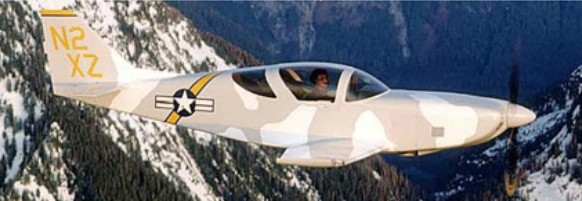
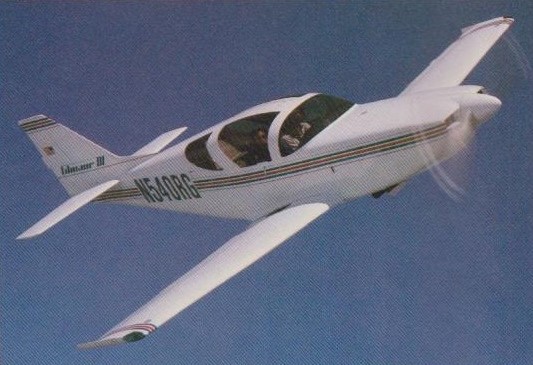
1986 marked the introduction of the Glasair III, two-place sportplane on the planet. Powered by its 300 h.p. Lycoming IO-540 to cruise speeds in excess of 265 m.p.h., the kit featured all the new labor-saving innovations of the Glasair II kits.
The Glasair III Aircraft kit includes virtually everything you need to complete the airframe, including cowling and engine mount. You supply the powerplant, propeller, upholstery, paint, instruments, avionics and electrical system. In 1988 the price, less engine, instruments, prop, and upholstery, was US$32,500.
People who have shopped around and compared the Glasair with other kits have discovered that the precision fit of Glasair parts, the degree of completion of small parts or subsystems and the attention to details in the assembly process make the Glasair kits truly fast to build. The aircraft is assembled from preformed composite shells. This process assures accuracy and virtually eliminates the need for any complex jigging fixtures.
The resin used on the Glasair is a type of vinylester resin that has a maximum heat distortion temperature of 300 degrees F. Vinylester resins offer a number of advantages and benefits over epoxy-based systems. Some of these benefits include: superior secondary bonding characteristics, avoidance of skin sensitivity problems, longevity and reliability.
All welding is factory finished and protective coated. All Glasair fabricated metal components are already machined or formed and are coated per military or aerospace specifications for maximum corrosion resistance. The fuselage comes in two large half-shells and three belly sections. Recessed flanges at the fuselage/cowl split line are designed to be stronger and make installation easier, creating a perfectly flush cowling. Piano hinges and Camloc fasteners are used to allow easy cowling removal for engine inspection. There are molded scribe lines for the wing and horizontal stabilizer cutouts, eliminating the guesswork and time involved in layout and measuring.
Low drag NACA-style cabin air vents are included, which are easily installed by the builder. Fuselage shells feature factory molded longerons sandwiched between the skins that substantially increases the strength and bending stiffness of the fuselage. Precision recesses accommodate windshield, canopies, and rear window installations.
Wing configuration is designed for the widest possible range of high and low speed operations. Dimensionally, the Super II and III wings are identical. Structurally, they vary to accommodate different weight and speed envelopes. Glasairs are not subject to the high speed stalls, hot approaches and long rollouts that characterize most high performance aircraft. Short, grass or gravel field capability were a must in designing the Glasair. The wings were designed to achieve slow speed performance and maintain good penetration in turbulence over 200 mph. They also achieve a good degree of laminar flow, yet have no undesirable characteristics when flying through rain.
The one-piece wing incorporates solid fare and aft I-beam spars spanning wingtip to wingtip, eliminating failure modes associated with three piece wing designs. Both spars have sturdy, machined attach fittings that fasten the wing to the fuselage, enabling removal of the wing to facilitate repair, inspection, or when transporting the aircraft to the airport for the initial flight.
Both Glasair models have time-saving premolded recessed attach flanges for the inspection covers and wing tips. The fuel sump is premolded into the lower wing skin and the seat pan cut-out area is scribed for easy removal. The Glasair III comes with molded gear door flanges to insure an accurate flush door fit. Wing tips for the Super II and III have an upswept Hoerner-type trialing edge to provide improved lateral stability and to reduce induced drag. The tips feature premolded, recessed flanges for the red and green navigation light lenses which easily bond to the flange and fit flush with the external surface.
Wing tip extensions add approximately 24 inches to each side, increasing the wing aspect ratio. In 20 minutes you can change from extended wing tips to standard tips. Economy cruise performance at 17,500 feet increases by 7 mph and stall speed drops by about 6 mph. Climb performance increases by 150 fpm and roll stability is improved.
Time-saving features have been implemented into the Glasair Super II and III empennage sections. The horizontal stabilizer and elevator are formed in separate molds with matching elevator counterweight cutouts molded into the horizontal parts. Horizontals for the Glasair III are a carbon graphite fiber/E glass hybrid for appropriate stiffness.
The elevators are manufactured with factory reinforced molded counterweight arms for necessary strength requirements. They are installed using centerline hinging which provides a symmetrical airfoil when the elevator is deflected either upwards or downwards. An independent manual trim system provides elevator back-up control and works on a simple worm gear mechanism. An optional electric trim is also available for all models. Rudders for the Super II and III have premolded counterweight arms which match perfectly to the vertical fin for a close, low-drag fit. Tail light assemblies are also premolded into the rudder parts.
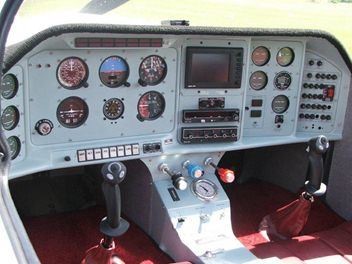
Glasairs use a conventional, three-axis, dual stick control system for pitch and roll, and dual rudder pedals for yaw. Mechanical or optional electric slotted flaps are employed for slow flight and can be set from 0 to 34 degrees. Solid push-pull tube linkages are used between the cockpit controls and the control surfaces themselves. Aircraft grade self-aligning rod and bearings used with the solid linkages give the Glasair smooth, positive control response. Stainless steel cables link the foot pedals to the rudder.
The slotted flap installation reduces stall speed by 6 mph, reduces landing and takeoff roll, significantly improves landing visibility during approach, reduces approach speeds, and increases maximum flap speed from 120 to 140 mph.
Both the ailerons and flaps are designed to allow tight surface gaps thus reducing drag even further. These controls are hinged on the lower surface with extruded aircraft piano type hinge.
There are two fuel tanks in the Glasair: one main tank in the front D-section of the wing and a header tank aft of the firewall. An engine driven mechanical fuel pump and an electric auxiliary pump supply fuel to the carburetor or fuel injector. The Glasair III has additional fuel bays in the wing, allowing greater fuel capacity. Tank baffles and one-way valves are installed to prevent fuel sloshing. Fuel sumps with drains are located at the bottom of each tank. The fuel vent system includes fuel vent float valves that help prevent fuel spills while parked on uneven ground or while flying inverted during aerobatics. Glasairs include the complete fuel system from fuel tanks to the carburetor or fuel injector in the kit.
Nontoxic Rohacell foam is used as the core material in the composite firewall bulkhead. A one-half inch thick sheet of ceramic fiber insulation, which is protected from engine oils by a lightweight alumimum sheet, provides fireproofing and noise insulation on the forward side of the firewall. This firewall withstood the FAR Part 23 2000 degrees F 15-minute burn test.
Both Glasair II and III models feature a dual gullwing canopy system. The canopy frames are supplied premolded and factory assembled to form lightweight, rigid frames.
S-H introduced the Glasair III Turbo in 1990. A complete firewall-forward package, this option pushed the standard Glasair III airframe up into the Flight Levels at speeds of well over 300 m.p.h.
The Glasair III LP was displayed at the NASA exhibit in Oshkosh in 1993. The result of S-H’s participation in a NASA-funded Small Business Innovation Research (SBIR) grant, the LP was the first lightning-protected composite kit aircraft. Under the terms of the SBIR grant, the research results produced in the course of this project became part of the public domain, and future certified composite aircraft such as the Cirrus and the Kestrel utilize technology based on S-H’s findings. S-H continues to participate in several other SBIR grants and NASA advanced research programs on such topics as composite manufacturing techniques and aircraft crashworthiness.
The Glasair III Prop Jet also debuted at Oshkosh ‘94. Built by Composite Turbine Tech, Inc., of Toledo, Washington, this aircraft mated a 450 s.h.p. Allison 250 B-17 turbine engine to a standard Glasair III airframe with a larger rudder. First flying on 24 July 1988, the prototype N253LC, was developed in association with Arocet Inc, Arlington WA (pres: Tom Hamilton), as a low-cost military trainer.
Kits for both the III and the Super II underwent upgrades in 1995, as previously optional equipment was incorporated into the standard kits. Ever-increasing degrees of factory prefabrication, part quality and kit completeness continue to be the hallmark of the Glasair line.
Following a sophisticated computational fluid dynamics analysis of its aerodynamic qualities at speeds in the Mach .6–.7 range, the Glasair III got an enlarged rudder, a new cowling and a mighty turbocharger to become the Glasair Super III in 1998. Designed to produce 350 h.p. at altitudes of up to 37,000 feet, the new powerplant testing on the prototype had been flown to 35,000 feet at airspeeds of greater than 320 knots. At 32,000 feet, the aircraft was still capable of climbing at over 2,000 feet per minute.
Original manufacturer of the Glasair and Glastar, Stoddard Hamilton closed its doors in 2000 after more than 20 years in business. Both aircraft types were split from the Stoddard Hamilton camp when the clo-sure occurred.
Thomas W. Wathen, former Chairman and CEO of Pinkerton’s, Inc., purchased the assets of Stoddard-Hamilton and AADI and formed Glasair Aviation, LLC in 2001 for the continued manufacturing and sale of both the Glasair and Glastar product lines.
New owner Thomas Walthem was committed to getting all three kits back into production. He initially purchased the Glasair side of the business but after fining the overheads of the line were not self supporting approached Arlington Aircraft Development Inc (AADI) to purchase the GlaStar line. As a single entity, the Glasair and Glastar kit aircraft under the banner of New Glasair/GlaStar.
In 2009 still produced kits to construct the Turbine 250/III turboprop two-seater, and T-9 Stalker two-seat turboprop variant of Glasair III as trainer (first flown 1988).


 All Aero