Sukhoi Su-42 / Su-26

Su-26

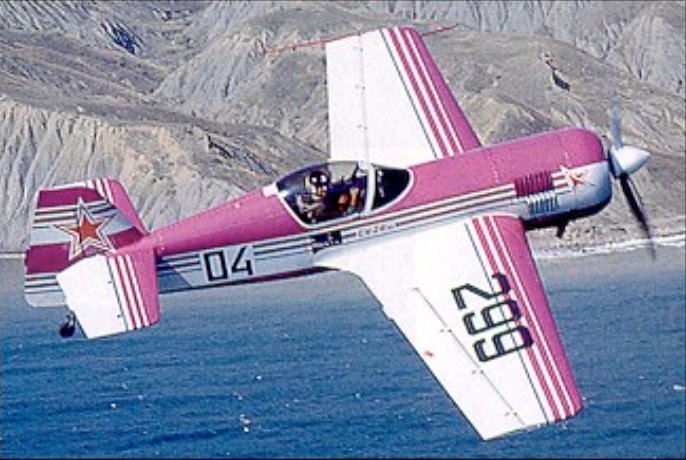
The first prototype flew on June 30, 1984, and at the World Aerobatic Competitions in Hungary 1984 western pilots saw, for the first time, the replacement for the very competitive Yak 50 and Yak 55; the standard competition aircraft of the Soviet pilots. This was the Sukhoi Su26 (originally called the Su42). The two new aircraft were prototypes with wings and tail made of foam covered plywood and apparently not well finished. They weren’t highly placed and did little to impress. It wasn’t until 1986 at the world championships in England that the western world saw for the first time the redeveloped Su26M when three aircraft arrived in tight formation. The Su26M had carbon fibre and keviar technology with extensive use of titanium in the spar and landing gear, as well as a longer wing. It was to become the standard aircraft for the Soviet team and very quickly impressed all who saw it in action. The engine never changed and is the same nine cylinder Vedenyev M 14P 360HP engine as in the Yak 55.

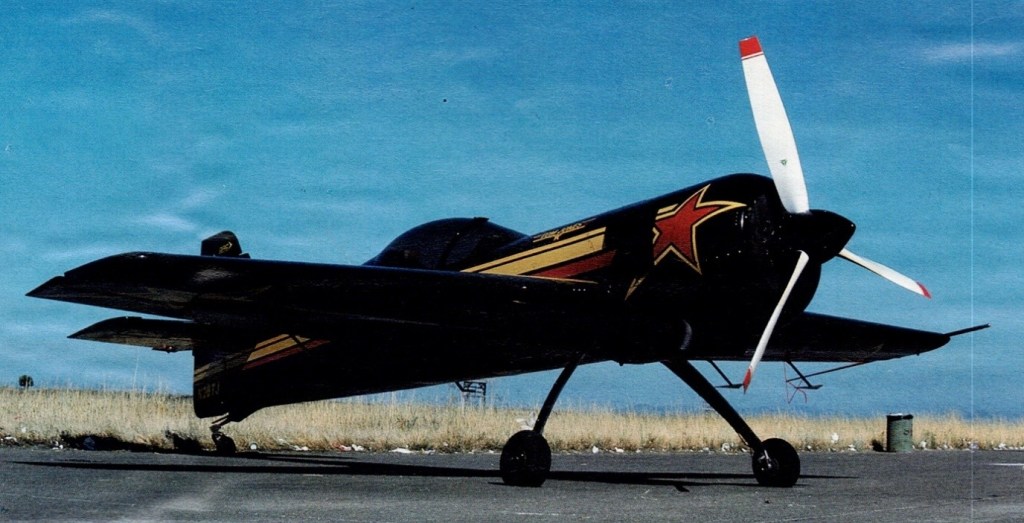
Su-26 N26TJ

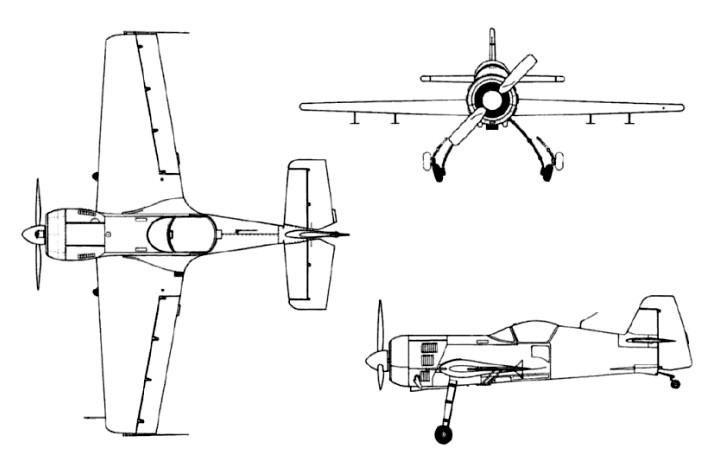
A mid-wing, aerobatic taildragger, the fuselage is made of stainless steel tube and kevlar, the wings are composite and the landing gear is titanium. The main spars are a combination of carbon fibre covered with kevlar (ultimate strength +- 28g).

With the political changes that have occurred, the former Soviets have found an increasing desire to attract, sales abroad. The former Soviet pilots soon came to the conclusion that there was a requirement for a two seat aircraft with the same performance as the single seat, principally for training purposes; a point not lost on the Sukhoi design team. Hence the development of the two seat Su29.

Su-26
Engine: 1 x M-14P piston engine, 270kW
Max take-off weight: 835 kg / 1841 lb
Wingspan: 7.80 m / 26 ft 7 in
Length: 6.83 m / 22 ft 5 in
Wing area: 11.83 sq.m / 127.34 sq ft
Max. speed: 450 km/h / 280 mph
Range w/max.fuel: 800 km / 497 miles
Seats: 1

Su-26MX
Engine: Ivchenko, 360 hp
Cruise: 190 mph
Stall: 60 mph
Roll rate: 400 deg/sec

Sukhoi Su-26

Sukhoi S-37 / Su-47 Berkut

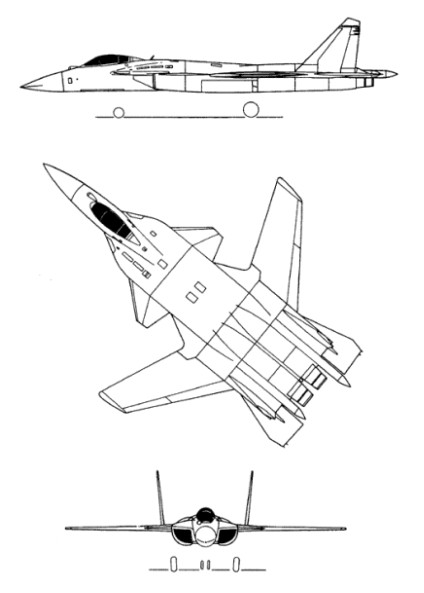
A forward swept wing research aircraft. The S-37 uses some Su-27 parts, including the undercarriage and vertical tails. Sukhoi uses up to 90 percent composite materials in the wing’s structure, and these have proven able to cope with the considerable bending and structural loading on this type of wing during close-in maneuvering across a wide speed range.

The first prototype flew on September 25, 1997 at the Russian experimental base at Zhukovsky near Moscow. The S-37 fighter is intended to be more than just a technology demonstrator, as OKB Sukhoi is pushing this aircraft to become Russia’s fifth generation fighter.

Gallery

S-37
Engines: 2 x Aviadvigatel (Perm) D-30F6 turbofans, 34,177 lbs thrust
Max take-off weight: 26000 kg / 57320 lb
Wingspan: 15.16 m / 50 ft 9 in
Length: 22.20 m / 73 ft 10 in
Height: 6.36 m / 21 ft 10 in
Max. speed: 2500 km/h / 1553 mph
Range w/max.fuel: 3880 km / 2411 miles
Armament: 1 x 30mm cannon
Crew: 1

Sukhoi S-37 Berkut

Sukhoi

In 1924, Pavel O. Sukhoi joined the Central Aero and Hydrodynamic Institute, or TsAGI, eventually becoming a bureau design leader under Andrei N. Tupolev on ANT-25 long-range record-breaker.
During 1939, Sukhoi established his own design bureau, using previous Bureau Osovikh Konstruktsii offices, and began the redesign of the ANT 51 with an M 88B engine, a low wing and an increased offensive load, this emerging as the BB 1, entering series production in 1940, and being redesignated Su 2 in 1941.

In Second World War Sukhoi’s own name was especially associated with Su-2 light bomber and attack aircraft.

After January 1949, the bureau’s next design was the Aircraft R prototype for a planned Su-17 supersonic fighter. But in November 1949 the Sukhoi bureau was closed down by Stalin and the almost complete prototype was cancelled. Sukhoi and most of his team were transferred to the Tupolev bureau and continued work in the development of the aerodynamic and structural features required for supersonic fighters.

In 1953 Stalin died, and Sukhoi’s request for his own design bureau was then granted: this produced a new sequence of numerical designators that leads to considerable confusion in the identification of Sukhoi aircraft. The first result of the bureau’s re-established independence was a series of swept-wing and tailed delta prototypes in the S and T series.

He was responsible for twin jet Su-7 of 1947. The later and unrelated Su-7 of his second jet series became a swept-wing attack aircraft first seen 1956. Su-9, operational from 1959, and Su-11 were single-seat all-weather fighters with delta wings. The operational and large-size Su-15 twin-jet delta-wing allweather interceptor was also tested in prototype Flagon-B STOL form in July 1967. Su-17 first flew August 1966 as very much improved variable-geometry fighter developed from Su-7, and was followed by Su-20 and Su-22 for export. Su-24 is a variable-geometry attack type, seating two crew side-by-side and has been in service since February 1975. A nuclear strike bomber, reconnaissance and electronic warfare aircraft, Su-24 was designed to penetrate enemy defenses for five minutes at 1,400km/h and 200m altitude, as a supersonic replacement for the II-28 and Yak-28. In total, about 1,200 Su-24s were built during 1972-92, finally giving way on the production line to the Su-27IB.

Sukhoi died in September 1975, but subsequent Sukhoi designs continue to honor his name. These include Su-25/Su-28 and Su-39 related subsonic close-air support and tank-busting jets (first Su-25 flew February 1975 and became operational in 1981). The Su-27 Flanker long-range air-supriority fighter (first flown May 1977 and in production since 1982 for home use and export, latter including J-11s assembled in China), the tandem two-seat Su-30 multirole fighter and attack variant of Su-27 that carries further avionics to allow it to command a group of Su-27s (first flown December 1989 and users including India). The side-byside two-seat Su-32FN maritime strike aircraft and Su- 27IB or Su-34 tactical interdictor developed from Su-27, the Su-33, or Su-27K carrierborne fighter Su-27 derivative (first flown August 1987 and first deployed on board Admiral Kuznetsov’m 1995). Su-35 advanced air-superiority fighter (first flown June 1988) and Su-37 variant with thrust-vectoring nozzles, again Su-27 developments.

A fifth-generation tactical fighter, approximately equivalent to the U.S. F-22, is the S-37, first flown in September 1997 and featuring swept-forward wings and eventually to have thrust-vectoring engine nozzles. S-54 and S-55 are newly designed lightweight jets for multirole combat and training uses, T-60S is a projected strike bomber of very stealthy appearance and S-80 is a new transport with patrol and surveillance variants. A program in 1999 was the development of the KR-860, a super-large 860-seat airliner. General-aviation programs include Su-26, Su-29 and Su-31 single- and two-seat aerobatic competition aircraft (first flown 1984, 1991 and 1992 respectively) and Su-49 tandem two-seat primary trainer, while projects are for S-16 twin turboprop transport for 16 passengers or cargo, S-21 10-passenger supersonic business jet (with projected 68-passenger S-51), S-38 single-seat agricultural monoplane, and S- 96 twin-propfan 8-passenger executive transport.

In 2016 Sukhoi, major aircraft holding company, employed more than 26,000 people. 100% of stock of the Sukhoi belonged to the United Aircraft Corporation (JSC). The Company is Russia’s major manufacturer of export aircraft, placed third in the world in terms of the numbers of modern fighters produced.

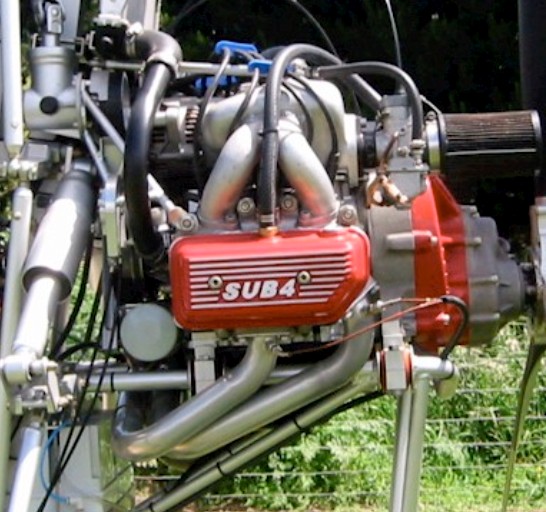
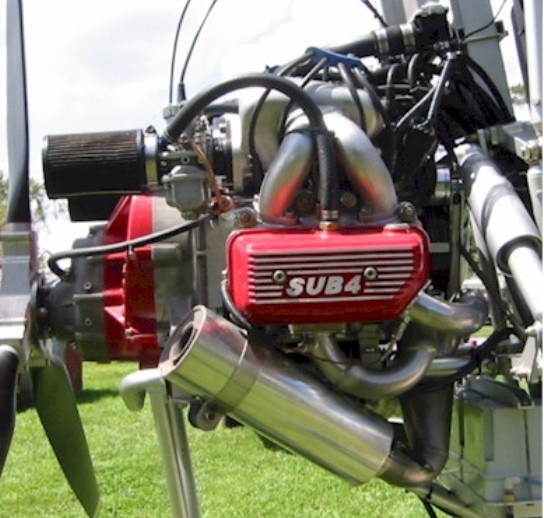
SUB4 115 hp

These engines are designed specifically for the recreational aircraft market and are manufactured in Hamilton, New Zealand. Subaru EA81 engines are a favoured option for many recreational aircraft builders, however although these engines are light, rugged and dependable, they suffer a number of shortcomings which limit their true potential in this environment. For example, Subaru designed the original EA81 engine with siamesed inlet and exhaust ports. This, coupled with a long and poor flowing inlet manifold, significantly restricted the engine’s output (115hp@5500rpm).

The SUB4 company have addressed this issue by designing and manufacturing new dual port cylinder heads which feature two sparkplugs per cylinder. These high flow, high compression heads utilise larger inlet valves which when used with SUB4’s revised camshaft design and tuned inlet manifolds, combine to significantly increase the engine’s BMEP (brake mean effective pressure), delivering a wide, smooth torque band and 60% more (dyno proven) horsepower. SUB4 engines are also supplied with a full electronic dual ignition system and a compact 4 into 1 exhaust manifold. These modifications make the SUB4 engine in the recreational aircraft market with an excellent power to weight to cost ratio.

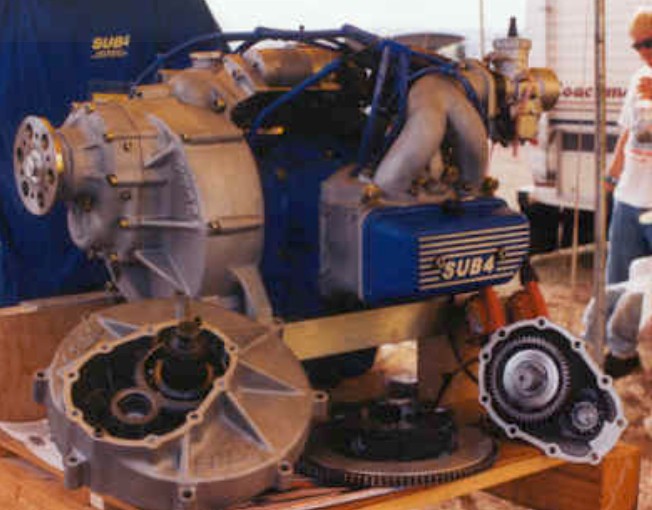
After 2 years R&D, the company was at Sun N Fun 2000 with their SUB 4. While the basic block from the EA81 is used the rest of the engine has undergone extensive changes and or modifications.

The SUB 4 Port heads have been modified to give “one port per valve for both inlet and exhaust to allow for tuned length of induction and exhaust. The heads are cast in ASTM 356 aluminium alloy, which is heat treated and CNC machined. The heads come with bronze valve guides, 42 mm inlet valves x 7 mm valve stems. Performance valve springs, match cam and h.p. option. The water outlet fitting accepts a standard automotive water hose. Each head set is supplied with a camshaft ground to match the h.p. option.

The rocker covers are cast ASTM 356 alloy, with a finned design to aid cooling. A “O” ring is used for sealing. One cover is set up as the oil filter while the other as the breather.

The SUB 4 reduction drive has three cases cast in ASTM 356 heat treated aluminium. The intermediate case can be rotated 180 degress to allow for props in an up or down installation. The reduction gears are manufactured from EN39B case hardened to 60 Rockwell C. They are 11 degree helical, and 40 mm meshing width incorporating a radiused oil relief groove. The PSRU can be geared to 0.455 or 0.556.

The Propeller Speed Reduction Units (PSRU’s) suit the EJ-20, EJ-22, EJ-25, EG-33, and EZ-30 (H6) series of Subaru engines.

An aluminum flywheels incorporating a high tensile steel ring gear is used, with a rubber cush drive on the flywheel. Ratios of either 1.8 to 1 or 2.2 to 1 are available.

All of the components are available complete or as separate units for the do it yourselfer!

This version can be retrofitted to Sub4 125hp specifications.

Sub4 / Castech Ltd

Sub4 Performance Aeromotive Parts
25 Euclid Avenue
PO Box 10004
Te Rapa, Hamilton
New Zealand
Phone: 64 7 849 3814

Castech is a Hamilton, New Zealand, non-ferrous foundry and cnc machineshop, established in 1986. The reduction drives and engines plus components have been sold under the brand name Sub4. The new drive are sold under castech but branded according to the customers requirements.

Areas of expertise include Aluminium casting to max 80kg. CNC machine centre and CNC lathes. Welding and fabrication. Machine assembly.

Composites capabilities are increasing with a materials engineers who has a masters degree in composites.

Struchen Helicopter

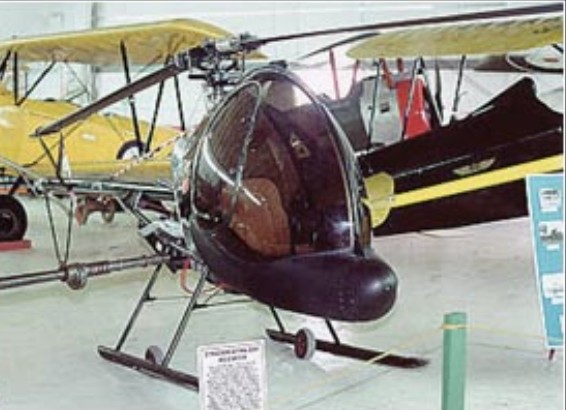
The Struchen (strew-shen) single seat ultralight helicopter was designed and built by Fred Struchen of North Vancouver. He used a combination of helicopter, motorcycle, automobile and hardware store components that were modified as required.

The powerplant is a Honda Civic engine, cooled by a motorcycle radiator. The drive belt came from a Harley Davidson, while the transmission is from a Yamaha and the canopy is created from a residential skylight. Numerous precision parts were machined or modified by the builder.

The Struchen is complete and fully operational, but it is believed that it was never registered or flown by the builder, although it has done low-altitude “hover” tests.

This aircraft was donated to a Canadian museum by its builder in 1996.

Striplin Star Ranger

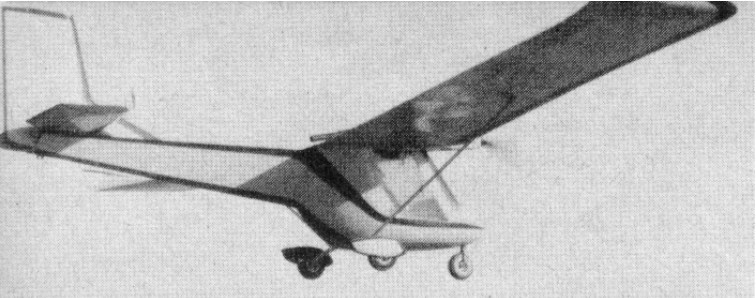
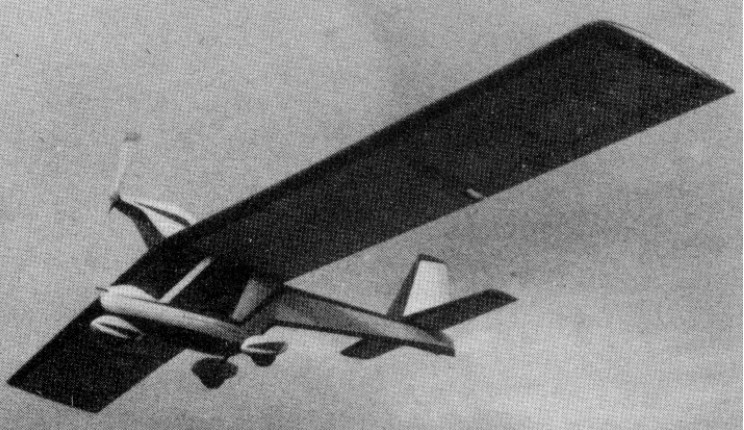
High monowing with enclosed cabin. Control surfaces include tip rudders, which can be split When applied simultaneously they act as air brakes. Construction consists of layered foam and fiberglass from premolded external skins and some spruce. Wings, tail surfaces and fuselage are covered with fiberglass. Powerplant: One Yamaha mounted in a pusher position aft of the wing on the centerline. A reduction gear of 3.6:1 turns a two-blade wooden Ritz propeller. Fuel is carried in a fiberglass tank mounted in the wing. Landing Gear: Shock-mounted tricycle gear with a fiberglass leaf spring and steerable nosewheel. Options include wheel fairings for all three wheels for $100, larger diameter wheels (16 inch, 40 cm) $105, skis $150, floats $750, removable side windows $100, instrument panel, radio, shoulder harness $22, ballistic deployment parachute $850.

Engine displacement 100 or 225cc, 12 or 20 hp
Static thrust, 70 lbs or 110 lbs
Wingspan, 32 ft
Wing area, 151 sq.ft
Aspect ratio, 7:1
Overall length, 14 ft
Empty weight. 185 lb
Usable payload (include fuel), 250 lb
Wing loading, 31 lbs/sq.ft
L/D power-off glide ratio,17:l
Cruise speed (85% power), 59 mph
Stall speed, 18 mph
Ap¬proach speed, 35 mph
Flair speed, 25 mph
Liftoff speed, 25 mph
Takeoff roll distance, 225 ft
Rate of climb, 250 fpm
Fuel capacity, 5 Usgal
Range at cruise, .325 mi

Striplin Sky Ranger

A high monowing with enclosed cabin. Three-axis controls with conventional aileron, rudder and elevator. The elevator and rudder are operated separately, and all are operated by a control stick. Construction makes use of some spruce, but is mostly composed of layered foam and fiberglass from premolded external skins. The wings. tail surfaces and fuselage are covered by some fabric. POWER-PLANT: One Cuyuna mounted in a tractor position forward of the wing on the centerline. A 2:1 reduction gear turns a two-blade wooden Ritz propeller. Fuel is carried in a fiberglass tank mounted in the wings. LANDING GEAR: Shock-mounted tricycle gear with a fiberglass leaf spring, a steerable nosewheel and no brakes. All wheels are 12-inch. Options include wheel fairings for all three wheels for $100, larger diameter wheels (16 inch, 40 cm) $105, skis $150, floats $750, removable side windows $100, instrument panel, radio, shoulder harness $22, ballistic deployment parachute $850.

First year built. 1981. Units delivered by June 1981 4.

Trike undercarriage, brake on steerable nosewheel.

Sky Ranger
Engine: Cuyuna 429cc, 40 hp
Static thrust 300 lb
Wingspan, 36 ft
Wing area, 180 sq.ft
Aspect ratio, 7:1
Overall length, 17 ft
Empty weight, 360 lb
Usable payload (include fuel), 440 lb
Wing loading, 4.5 lbs/sq.ft
L/D power-off glide ratio, 15:1
Cruise speed (85% power), 77mph
Stall speed, 30 mph
Approach speed, 40mph
Flair speed, 35 mph
Liftoff speed, 35 mph
Takeoff roll distance, 250 ft
Rate of climb, 1000 fpm
Fuel capacity, 5 Usgal
Range at cruise, 250 mi
Max pilot wt: 470 lb
First year built: 1981

Sky Ranger Silver Cloud
Engine: Cuyuna 430, 420cc, 30 hp
Wingspan 33’6”
Wing area 127 sq.ft
Aspect ratio 8.6:1
Length 16’
Empty weight 350 lb
Payload 450 lb
Gross weight 800 lb
Wing loading 7 lbs/sq.ft
L/D 13:1
Cruise speed 80 mph
Stall speed 29mph (flaps)
Takeoff and landing roll 250 ft
Climb rate 600 fpm
Fuel capacity 10 USG

Striplin Lone Ranger / Silver Cloud

The prototype Lone Ranger made its first flight on the 23 October 1980. It is a development of the Super Flac with which it shares the integral cockpit, but unlike its predecessors, the Lone Ranger has a triangular section spar carrying a conventional tailplane and its wing is fitted with ailerons. Sold in kit form, one requiring 150 h for assembly (fast flight kit) and the other less elaborate (economy kit), the Lone Ranger was tried with various engines and in 1982 was offered with Yamaha KT100S 15 hp, Zenoah G25B 20 hp, or Cuyuna 215R 20 hp engines.

Striplin Lone Ranger Article

In a dramatic development at Sun’n’Fun in March 1983 at Lakeland, Florida, the company announced that it was renamed Ranger Aviation and released literature on a single seater named the Silver Cloud. Differing from the earlier Lone Ranger, the principal modifications involve the wing, which benefits from a new high lift profile, wind tunnel and flight tested, and which exhibits a coefficient of lift of 1.9. As well, the rectangular planform wing (without leading edge sweepback) of the Lone Ranger has been dropped for a tapered wing having 7 deg of leading edge sweepback.

The Lone Ranger shown at Sun ‘n’ Fun in 1983 had already abandoned the two V struts under each wing in favour of a single strut, which according to the previews will disappear altogether on the Silver Cloud to give a cantilever wing, an arrangement which was purely optional for the earlier models. Another modification is that the ailerons are not tacked on to the trailing edge but are integral within the wing profile and run full span, using the same new profile as the wing.

They are usable not only as ailerons but also together as flaps, coming down to 30 deg, and are quoted as giving a coefficient of lift of more than 2.4, which lowers the stalling speed to 25 mph (40 kph). Finally, the preview plans showed that the monobloc elevator of the new model is now carried midway down the tail cone instead of being level with its top surface.

The Silver Cloud is not only different in terms of design; it also represents a change of marketing policy, as it will be sold complete rather than in kit form one of the first composite construction ultralights to be produced in quantity. Ready to fly it costs around $10,000, exact price depending on specification. Options include wheel fairings for all three wheels for $100, larger diameter wheels (16 inch, 40 cm) $105, skis $150, floats $750, removable side windows $100, instrument panel, radio, shoulder harness $22, ballistic deployment parachute $850. Three engine types are offered: the Zenoah G25B with 22 hp, a Rotax whose type is not quoted giving 20 hp, and the Cuyuna 215R.

Single seat single engined high wing monoplane with conventional three axis control. Wing has swept back leading and trailing edges, and tapering chord; conventional tall. Pitch control by fully flying tail; yaw control by fin mounted rudder; roll control by full span ailerons; control inputs through stick for pitch/roll and pedals for yaw. Cantilever wing; wing profile; double surface. Undercarriage has three wheels in tricycle formation; suspension on all wheels. Push right go right nosewheel steering connected to yaw control.

Composite construction fuselage partially enclosed (totally enclosed optional). Engine mounted above wing driving tractor propeller. Construction uses carbon fibre, Keylar, fibreglass, various foams and epoxy resin; steel and aluminium fittings.

First year built 1980. Units delivered by June 1981 150.

The Sky Ranger Silver Cloud is a two-place version of Lone Ranger SC. The Silver Cloud II was basically the same as the Silver Cloud except being a side by side two seater. glass fibre on main wheels. Fuselage totally enclosed. As with the single seater, the reshuffle at Striplin reflects directly on this product. Previously called Sky Ranger, the company’s two seater is now called Silver Cloud II and is classified in the US as an experimental aircraft, requiring a pilot’s licence.

The prototype Sky Ranger, developed by Keith Striplin from the Lone Ranger, was on static display in August 1981 at Oshkosh and differs principally from its successor by having Fowler flaps and a T tail. The latter was dropped in 1982 for a conventional tail which is retained for the Silver Cloud II.

At Sun ‘n’ Fun in March 1983 Ken had on show the first prototype of the Sky Ranger, but this aircraft is being used as a flying test bed and has changed greatly since its debut in 1981. It sported not only a conventional tail but also a new wing with flaperons (ailerons usable as flaps) and the new profile destined for the Silver Cloud IL The two V struts carrying each wing had been replaced by single struts, although production models will be cantilevered. The landing gear had also been redesigned to give greater ground clearance.

Originally the Sky Ranger prototype used an engine mounted above the cabin and driving two twin blade propellers mounted on the leading edges, but at Sun ‘n’ Fun a similar motor was used to drive a single tractor propeller. An engine mount shaped like a fairing allows this propeller to operate in front of the fuselage nose, the engine intended for the standard Silver Cloud II being the Rotax 503.

The aircraft was sold ready to fly for $15,000 in 1983 in the standard version, which includes wheel fairings, removable side windows, shoulder harness, instrument panel and strobe. Otherwise, the options are as for the single seater.

Lone Ranger
Engine: Yamaha 100cc, 12 or 20 hp
Static thrust, 70 lbs or 110 lbs
Wingspan, 32 ft
Wing area, 144 sq.ft
Aspect ratio, 7:1
Overall length, 15 ft 8 in
Empty weight 196 lbs
Usable payload (include fuel), 240 lbs
Wing loading, 31 lbs/sq.ft
L/D power-off glide ratio, 17:1
Cruise speed (85% power), 61 mph
Stall speed, 21 mph
Approach speed, 40 mph
Flair speed, 29 mph
Liftoff speed, 27 mph
Takeoff roll distance, 225 ft
Rate of climb, 250 fpm
Fuel capacity, 5 Usgal
Range at cruise, 350 mi
Max pilot wt: 230 lbs
First year built: 1980

Lone Ranger Silver Cloud
Engine: Cuyuna 215R, 20 hp at 5500 rpm
Propeller diameter and pitch 54 x 27 inch, 1.37 x 0.68 m
Planetary gear reduction, ratio 2.2/1
Power per unit area 0.17 hp/sq.ft, 1.8hp/sq.m
Fuel capacity 5.0 US gal, 4.2 Imp gal, 18.9 litre
Length overall 16.0 ft, 4.87 m
Height overall 7.0ft, 2.13m
Wing span 32.0ft, 9.75m
Chord at root 4.0ft, 1.22m
Chord at tip 3.0ft, 0.91m
Dihedral 5 deg
Sweepback 7 deg
Total wing area 120 sq.ft, 11.14 sq.m
Wing aspect ratio 8.6/1
Wheel track 4.0 ft, 1.22 m
Wheel¬base 4.0 ft, 1.22 m
Nosewheel diameter over¬all 8 inch, 20 cm
Main wheels diameter overall 8 inch, 20cm
Empty weight 245 lb, 111kg
Max take off weight 500 lb, 227kg
Payload 255 lb, 116kg
Max wing loading 4.18 lb/sq.ft, 20.4kg/sq.m
Max power loading 25.0 lb/hp, 11.3kg/hp
Load factors +6.0, 4.0 design
Max level speed 63 mph, 101 kph
Never exceed speed 80 mph, 129 kph
Stalling speed 25 mph, 40 kph
Max climb rate at sea level 600 ft/min, 3.1 m/s
Best glide ratio with power off 14/1
Take off distance 75ft, 23m
Landing dis¬tance 75ft, 23m
Range at average cruising speed 210 mile, 338 km

Silver Cloud II
Engine: Rotax 503, 46hp at 6500rpm
Propeller diameter and pitch 60 x 36 inch, 1.52 x 0.91 m
Power per unit area 0.36hp/sq.ft, 3.9hp/sq.m
Fuel capacity 10.0 US gal, 8.3 Imp gal, 37.8 litre
Length overall 16. 0 ft, 4.87 m
Height overall 8.0ft, 2.44m
Wing span 33.4ft, 10.18m
Mean chord 3.8ft, 1.16m
Dihedral 5 deg
Sweepback 7 deg
Total wing area 127sq.ft, 11.8sq.m
Wing aspect ratio 8.6/1
Nosewheel diameter overall 8 inch, 20 cm
Main wheels diameter overall 8 inch, 20cm
Empty weight 350 lb, 159kg
Max take off weight 1000 lb, 453 kg
Payload 650 lb, 295 kg
Max wing loading 7.87 lb/sq.ft, 38.4 kg/sq.m
Max power loading 21.7 lb/hp, 38.6 kg/hp
Never exceed speed 100mph, 161kph
Max cruising speed 80mph, 129kph
Stalling speed 29mph, 47 kph
Max climb rate at sea level 600 ft/min, 3.1 m/s
Best glide ratio with power off 13/1
Take off distance 150ft, 23m
Range at average cruising speed 250 mile, 402 km