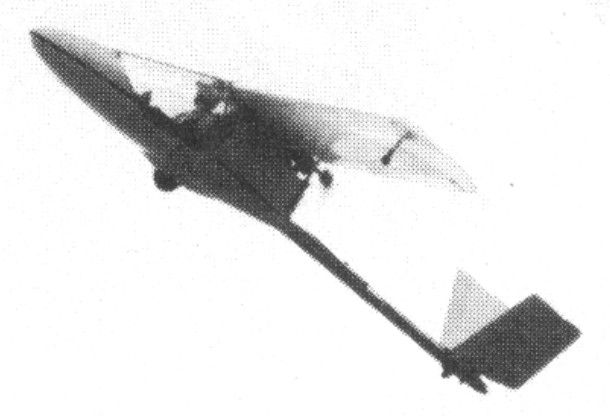
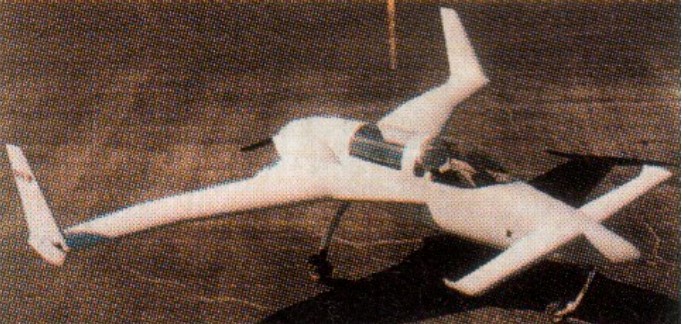
The SV 8 is a cantilever high wing pusher and takes on the lines of a clipped wing sail plane, constructed of foam aluminium and fibreglass, the aircraft has a fully enclosed cockpit, full span flaperons and V tail mounted on the tail boom. The single wheel undercar¬riage comes with brake as standard and the tip wheels aid ground handling. The wing unbolts from either side of the fuselage for trailering.
Engine: Fuji Robin 244 cc Prop: 76 cm x 46 cm pitch Wingspan: 8m Length: 5m Weight: 225 kgs Fuel capacity: 27 Lt Econ cruise speed: 56 kts Stall: 30 kts
Supermarine Aircraft spent five years developing the V6 and then the V8. Both have been test flown by CEO Mike O’Sullivan. The Motec ECU works in Real Time meaning that it is reading sensor on the engine to work out timing and air fuel ratio to give peak performance and maximum engine life. This eliminates the pilots need to lean or enrich the fuel mixture as it is always at its optimal mixture. The ECU also has pre-programmed map as a redundancy system or limp home mode. All engines are run in the factory before shipping and data logged this also means that diagnostics can be done on the engines with a laptop computer.
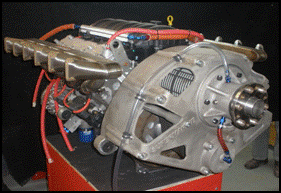
The Supermarine 8 Cylinder Engine is based on the Toyota/Lexus V8 LS2, and has one central camshaft, is water cooled, wet sump, and has dual ignition sensors. It is equipped with fuel injection, electric start, dual fuel pumps, and mill spec wiring.
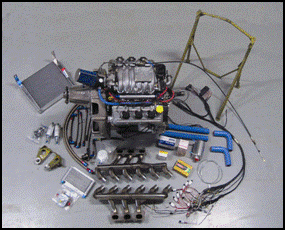
The Supermarine 8 Cylinder Engine Package includes:
Brand new LS2 6L V8 crate Motor modified by Supermarine
Supermarine PSRU assembly and Hub(SAE6)
Complete wiring with all switches and circuit breakers
Pre-programmed Motec ECU
All StSt Fuel lines with fire sleeve
All aircraft grade Fuel lines fittings
All fuel pumps, regulator and filters
All radiator hoses in silicon long life
Water header tank and over flow bottle
Starter motor and alternator
Oil cooler and lines
Custom made StSt 12 Pod Exhausts
Engine mount and hardware
This PSRU is a Supermarine Aircraft design for our engine packages with thousands of hours testing and flying in the field with no failures. Main housing is cast aluminium and all internal components are machined from billet aluminium with extremely close tolerances of 0.005”.
The Supermarine 8 Cylinder PSRU kit to fit the V8 LS2 is included with the engine package. It includes the cast aluminium housing, dual drive belts, billet aluminium, and gears case hardened.
8 Cylinder PSRU Weight: 35KG Dry Horse power Rated: 450 H/P Torque At Prop: 782 FPT Reduction Ratio:1.82to 1 (Other available at extra cost) Hub STD: SAE6 (SAE2 also available at extra cost) Oil: H-36161 Oil Capacity: 500mL
Supermarine Aircraft spent five years developing the V6 and then the V8. Both have been test flown by CEO Mike O’Sullivan. The Motec ECU works in Real Time meaning that it is reading sensor on the engine to work out timing and air fuel ratio to give peak performance and maximum engine life. This eliminates the pilots need to lean or enrich the fuel mixture as it is always at its optimal mixture. The ECU also has pre-programmed map as a redundancy system or limp home mode. All engines are run in the factory before shipping and data logged this also means that diagnostics can be done on the engines with a laptop computer.
Based on the V6 Isuzu Quad Cam, the engine is water cooled, wet sump lubrication, dual ignition and fuel injected . Electric start is fitted, and dual electric fuel pumps, mill spec wirings and plugs.
The Supermarine 6 Cylinder Engine Package includes:
Brand new Isuzu 3.5L V6 crate Motor modified by Supermarine
Supermarine PSRU assembly and Hub(SAE6)
Complete wiring with all switches and circuit breakers
Pre-programmed Motec ECU
All StSt Fuel lines with fire sleeve
All aircraft grade Fuel lines fittings
All fuel pumps, regulator and filters
All radiator hoses in silicon long life
Water header tank and over flow bottle
Starter motor and alternator
Oil cooler and lines
StSt 12 Pod Exhausts
Engine mount and hardware
This PSRU is a Supermarine Aircraft design for our engine packages with thousands of hours testing and flying in the field with no failures. Main housing is cast aluminium and all internal components are machined from billet aluminium with extremely Close tolerances of 0.005”
With the success of the MK25 single seat the demand for a two seat spitfire that looked like a single drove Mike O’Sullivan to build the MK26 80% Spitfire in the early 90s.
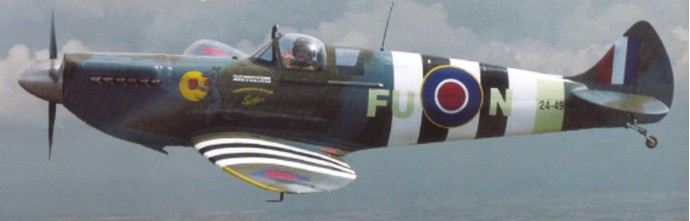
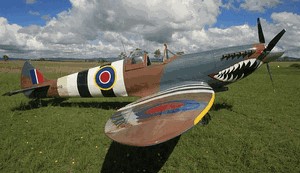
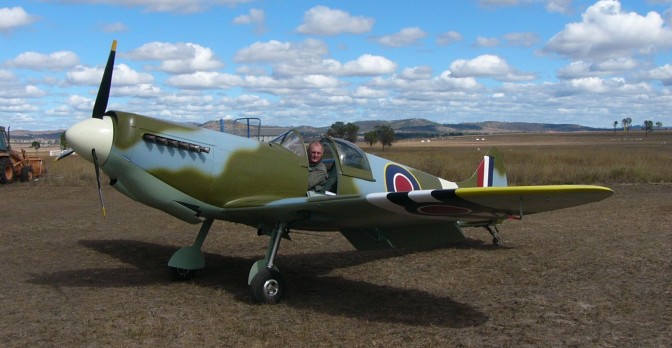
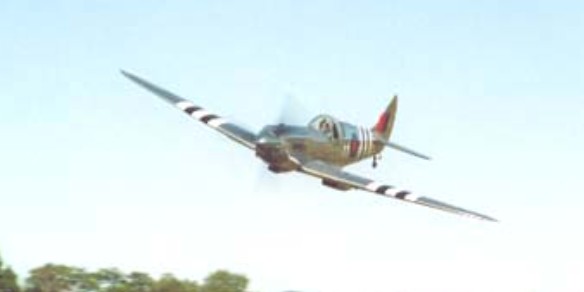
A two-seat Spitfire built as a kit by Australian Mike O’Sullivan, retaining the single seat canopy and the passenger seat is placed where the radio rack would be in the original WW II aircraft. The passenger’s legs will be on either side of the pilot’s seat when inside. In lieu of a passenger, the space can be occupied by up to 90 kg of baggage. The overall scale is 80 per cent. Features such as the sliding bubble canopy, drop down doors and vertically oriented oval control stick are all there. The kit is of all aluminium construction other than a couple of fibreglass fairings. All major structural components have been finished by Supermarine Aircraft. The factory completes about 700 hours of work and the owner is estimated to have about 1200 hours of work remaining to complete the aircraft. Powered by the eight cylinder Jabiru of 200 horsepower
It’s a two-seater, complete with elliptical Spitfire wings, removable and are of aluminium with stressed skin construction.
This aircraft has been superseded by the MK26B 90% Spitfire.
Supermarine Spitfire MK26b
With the success of the MK25 and the MK26, the idea was hatched in mid 2004 to produce 90% spitfire due to the demand from customers.
The design of the MK26B Spitfire is to keep the kits simple and the build time down so that the builders can get the aircraft flying in less that a year. The prototype took just over 8 months to complete with all the tooling, cad drawings and setting up for production.
The MK26B is designed to house our V6 and V8 engine with out any modifications. It also has under wing radiators as an option which gives it that final touch.
The Mk26 and Mk26b are now well proven designs with all aluminium components pre-drilled and precision cut using a computer cotrolled CNC router cutter. This keeps parts standards consistent and accurate, a far cry from the original Spitfires construction methods. The main structural sections of the aircraft are pre-built in factory jigs thus ensuring the highest possible accuracy of these critical components. The method of construction is aimed at the average person who is good with their hands.
Mk.26b
The Mk.26B fuselage is two seat and features a stainless steel firewall, monoque construction of aircraft grade aluminium, aircraft grade rivets, paints dimpled and riveted ready for fix out of internals, and has a rear luggage compartment. The instrument panel and cockpit is layed out much the same as the original Spitfire, with dual electric fuel pumps, switch operated, and dual electric flap motors.
The landing gear is retractable (electro-mechanical) and gas-strut assisted. An emergency release for landing gear can be initiated by the pilot. The wheels can be individually activated and use a similar locking system to the original Spitfire physical “tell tail” pins which rise up on the wings to indicate leg position and are standard in the kit. Undercarriage warning lights can also be added.
The six-inch wheel rims are custom made to match the original Spitfire looks and dual caliper disc brakes are used in combination with fully adjustable pedal controls.
The fuel tank is forward of the pilot and behind the engine as original. Volume is 150 litres. A fuel level sight gauge is mounted on the instrument panel. The Spitfire also has a wing tank option available This increases fuel volume by approx 140Ltrs. A trim is cable operated with adjustable stops.
The pilot seat & pedals fully adjustable to suit the pilot. There are fresh air outlets for both pilot and passenger via outside air scoops.
The 90% scale two seat Mk.26B fast build kit were available and suit a V-6 260-340 hp or V8 420 hp. Load limit is +6 and –4G.
It all started when Mike O’Sullivan in the very early 90s built the first all metal 75% Spitfire reproduction. Mike built the first one and word soon got around about the quality and likeness to the original spitfire that people where asking him to build them a spitfire. This got Supermarine off the ground and running.
A 75 per cent scale single seat Spitfire based on the original MkV. The wing area was increased and pilot seat moved forward to retain a correct centre of gravity position. Powered by a Jabiru 3300 six cylinder.
Michael (Mike) O’Sullivan’s Supermarine Aircraft Factory officially began its life in the kit aircraft manufacturing business in 1995, although the original idea is much older. The Mk26 and Mk26b are now well proven designs with all aluminum components pre-drilled and precision cut using a computer controlled CNC router cutter. This keeps parts standards consistent and accurate, a far cry from the original Spitfires construction methods. The main structural sections of the aircraft are pre-built in factory jigs thus ensuring the highest possible accuracy of these critical components. The method of construction is aimed at the average person who is good with their hands.
 All Aero