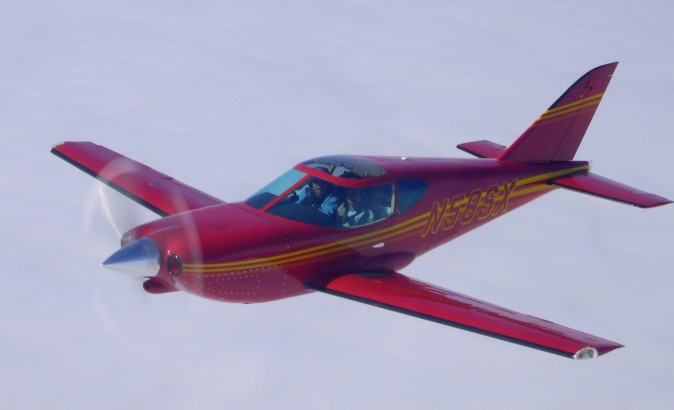
Swearingen SX-200 / SX300 / Airightinc SX-200 / SX300

SX300

The SX300 was originally designed by Ed Swearingen in San Antonio, TX, as a two place, all metal, single engine low wing monoplane with fully enclosed retractable landing gear. First flown on 11 July 1984, the aircraft was marketed as a kit from 1984 to 1989.

By the end of 1989 approximately 80 kits had been sold, although there were only 48 sets of landing gear, which were built by the landing gear vendor, Airight Inc. in Wichita, KS.

The basic concept was to set new standards for Homebuilt or Amateur Built Aircraft as a dependable, fast mode of transportation; using all metal construction and proven techniques to provide an airframe that was equal to advanced jet aircraft. Fundamentally this was accomplished, however, the complexity and the labor intensive kit proved to be too challenging for the Homebuilt Market. The kit was high quality but the aircraft was never kit-proofed by the factory, so there were numerous glitches from the beginning. If the aircraft had been offered as a “fast build kit” it may well have survived.

In 1994, Jim Ryan, the owner of Airight, acquired the SX300 tooling, aircraft kit components and production/manufacturing rights (except military application). Jim planned to continue supporting the existing builders and to supply kits, fast build kits and possibly a fixed gear version which he called the SX200. Unfortunately Jim died in early 1996 before he could implement his new program.

The inventory of SX300 parts were bought by Bill Johns and now reside with Doug Poli at his facility in Ft. Worth, TX.

Engine: Lycoming IO-540-L1C-5, 300 hp
Propeller: Hartzell Constant Speed 3-blade, 74 in. diameter
Overall Length: 21 ft. 1.5 in.
Overall Height: 7 ft. 6.5 in.
Wing Span: 24 ft. 4.5 in.
Wing Area: 70.73 sq. ft.
Aspect Ratio: 8.4
Structural Cabin Width Inside: 41 in.
Load Factor: 6G + 3G –
Cruise Speed @ 75% Power, 8000 ft: 240 Kts.
Stall Speed @ Gross Wt. (2400lbs.) flaps down: 75 Kts.
Rate of Climb @ Gross Wt. Sea Level: 2400 ft./min
Range (66 gal): 900 miles.
Empty Weight: 1600 lbs.
Baggage Capacity: 70 lbs.
Power Loading: 8 lbs./hp
Vne: 280 KIAS
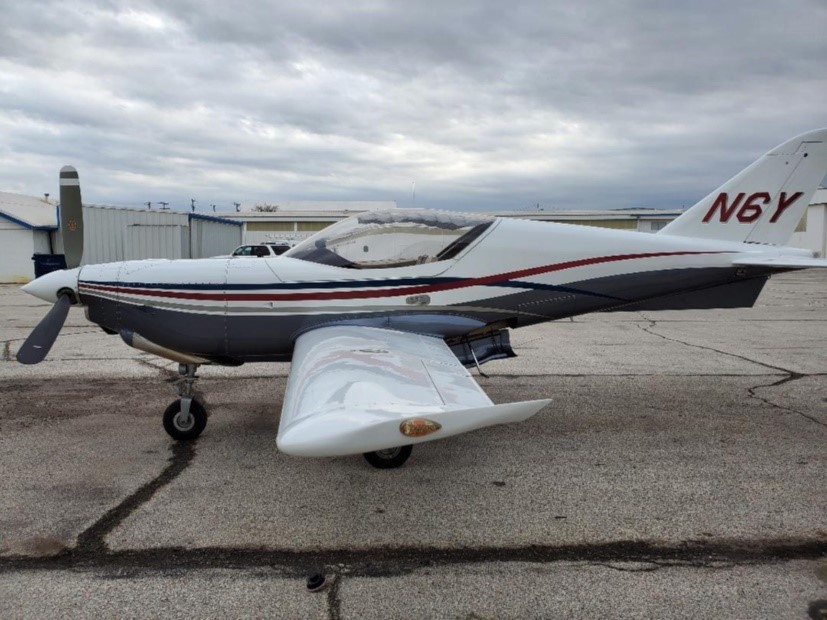
Swearingen SA-32T / Jaffe SA-32T

The prototype (N6Y) of this compact trainer design made its first flight at San Antonio, Texas, on 31 May 1989. Powered by a 420 shp (313 kW) Allison 250-B17D turbo-prop, the SA-32T has been developed by Swearingen in conjunction with Jaffe Aircraft Corp. Despite its relatively small size, the SA-32T incorporates a retractable undercarriage, a limited amount of composite material in the airframe and a NASA-designed laminar-flow wing.
Jaffe Aircraft abandoned the program.

N6Y is still flying. Purchased from Jaffe in 2002. My wingtip design lower the full-flaps stall to 68 kts. Trues out a 280 kts. William B Acheff, April 2020

Swearingen SJ30 / Sino Swearingen SJ30-2 / Emivest Aerospace Corp SJ30

Swearingen announced the official formation of Sino-Swearingen to complete development and construct the eight place SJ30 business jet. The company is a joint venture between Swearingen and Sino Aerospace Investment Corporation, a grouping of Taiwanese investors, including Taiwan Aerospace Corporation. With the formation of the new company construction will start on a new 18, 600sq.m (200,000 sq ft) assembly plant in Martinsburg, West Virginia (major components will be manufactured in Taiwan and shipped to the US), while the original SJ30 prototype has returned to full test and certification flying duties.

Swearingen SJ30 Article

Originally the SA-30, renamed SJ30, first flew on 13 February 1991.

Sino Swearingen Aircraft Corporation has flown their SJ30-2 business jet (first flown 1996) at an altitude of 49,000 ft. This cruise level of the aircraft exceeds that of most of the business twinjets or commercial airliners in production. The SJ30-2 is a seven-place twin jet aircraft with an IFR range of 2,500 nm. The aircraft will cruise at speeds in excess of Mach 0.80 and will maintain a “sea level cabin” to 41,000 ft (owing to its pressurization differ¬ential being 12.0 psi).

SA-30 / SJ30
Engines: 2 x 1900 lb Williams Intl FJ44 turbofan
Wingspan: 36’4″
Length: 42’4″
Useful load: 4150 lb
Max speed: 541 mph
Cruise: 512 mph
Range: 2390 mi
Ceiling: 41,000′
Seats: 8

SJ30-2
Engines: (2) FJ44-2A Williams Rolls
Overall Length: 46.80 ft (14.26 m)
Overall Height: 14.19 ft (4.33 m)
Wing: Span: 42.33 ft (12.90 m)
Sweep (@ 1/4 Chord): 30.1 deg
Dihedral: 2.3 deg
Area: 190.69 sq ft (17.71 sq m)
Aspect Ratio: 9.40
Mean Aerodynamic Chord (MAC): 5.12 ft (1.56 m)
High Speed Cruise: Mach 0.83 / 560 MPH / 486 KTAS / 901 Km/H
Long Range Cruise 2,875 sm (2500 nm): 0.76Mach / 502MPH / 436KTAS / 807Km/H
Stall Speed: 91 KCAS
FAA Take-Off Balanced Field Length GW: 3,939 ft (1200 m)
FAA Landing Distance: 2,941 ft (896 m)
Seats: Seven Place w/Pilot
Take-Off Thrust: 4,600 lbs total (2,300 lbs ea)
Pressurization: 12.0 psi
Max. Certified Altitude: 49,000 ft
Cabin Altitude is Sea Level Up To: 41,000 ft
Mmo Above 29,500 ft: Mach 0.83
Vmo Up To 29,500 ft: 320 KCAS (593 km/h)
Vref: 105 KCAS
Speed Brake Operation: No Speed Limit
Max. Ramp Wt: 14,050 lbs (6373 kgs)
Max. Take-Off Wt: 13,950 lbs (6327 kgs)
Max. Landing Wt: 12,725 lbs (5772 kgs)
Max. Zero Fuel Wt: 10,500 lbs (4763 kgs)
Basic Operating Wt: 8,650 lbs (3923 kgs)
Max. Fuel Quantity: 4,850 lbs (2199 kgs)
Max. Baggage Compartment Wt: 500 lbs (227 kgs)
Horizontal Tail: Span: 14.56 ft (4.44 m)
Sweep (@ 1/4 Chord): 33 deg
Dihedral: 0 deg
Area: 36.72 sq ft (3.41 sq m)
Aspect Ratio: 5.77
Mean Aerodynamic Chord (MAC): 2.72 ft (0.83 m)
Vertical Tail: Span: 7.21 ft (2.20 m)
Sweep (@ 1/4 Chord): 55.5 deg
Dihedral: 46.80 sq ft (4.35 sq m)
Area: 11.56 sq ft (1.07 sq m)
Aspect Ratio: 1.11
Mean Aerodynamic Chord (MAC): 7.10 ft (2.17 m)
Ventral Fin: Total Area: 11.56 sq ft (1.07 sq m)
Ventral Rudder Area: 1.95 sq ft (0.18 sq m)
Landing Gear: Width Between Main Gear: 6.85 ft (2.09 m)
Wheelbase: 18.84 ft (5.74 m)
Tire Size: 16 in x 4.4 in

Swearingen Aircraft Inc

USA
Established 1982 by Ed Swearingen.

Manufactured aircraft components and offered aircraft modifications, plus developed and marketed as SX300 a two-seat kitplane (marketed by Airight Inc). Also produced SA-32T Turbo Trainer prototype for Jaffe Aircraft (first flown 1989), and developed SJ30 entry level business jet (first flown 1991).

This is now Sino-Swearingen, due to an influx of Taiwanese money, thanks to the efforts of Lockheed, which needed offsets for their sale of F-16s to Taiwan.

Swallow AeroPlane Swallow

Swallow B

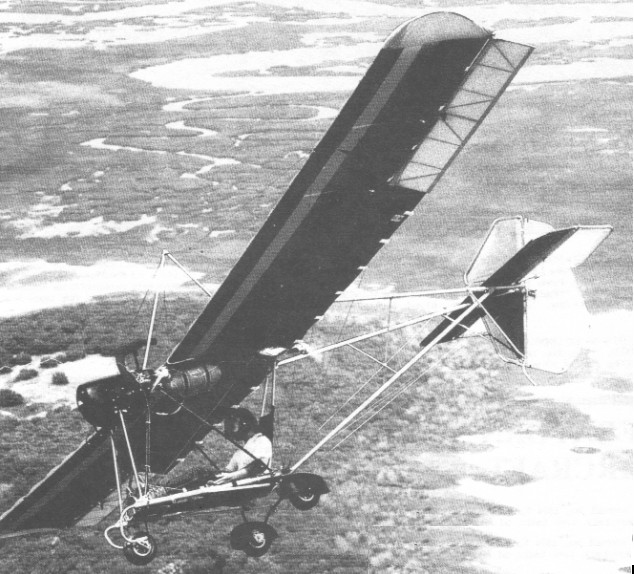
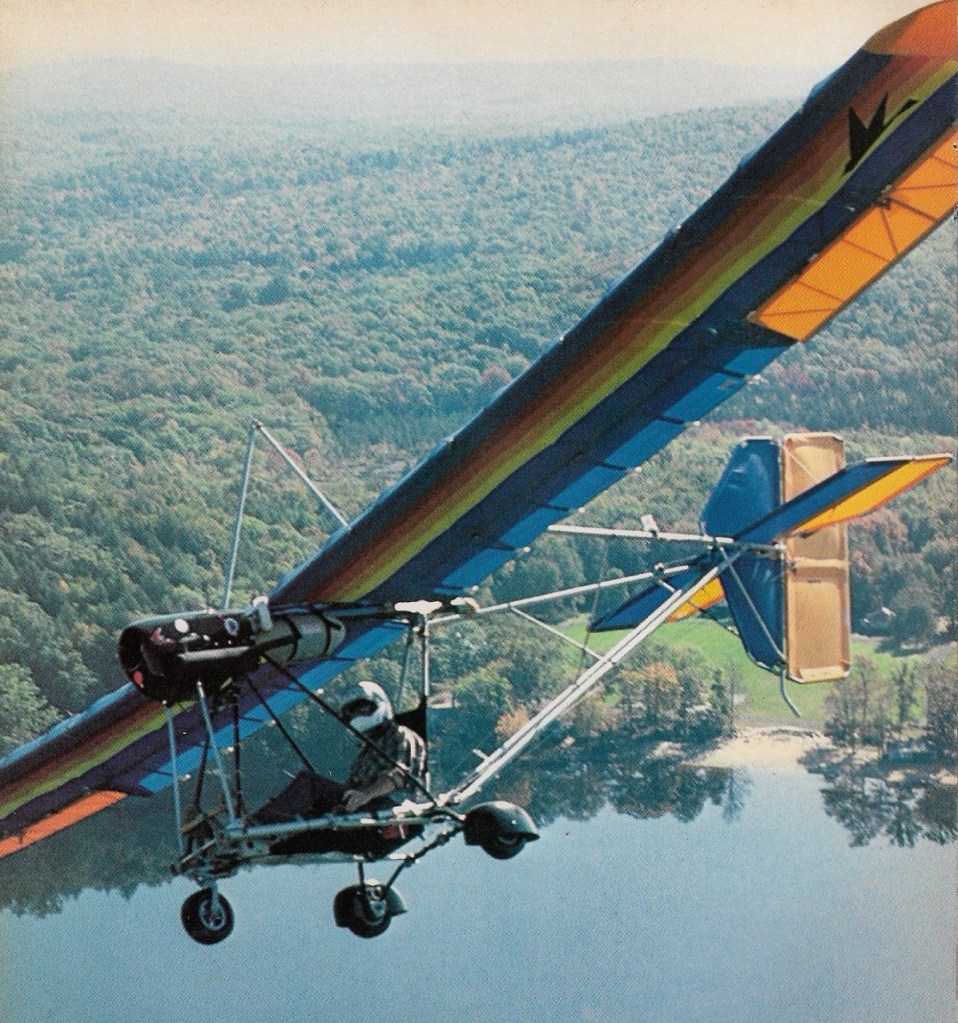
Single seat single engined high wing monoplane with conventional three axis control. Wing has unswept leading and trailing edges, and constant chord; cruciform tail. Pitch control by elevator on tail; yaw control by fin mounted rudder; roll control by one third span ailerons; control inputs through stick for pitch/roll and pedals for yaw. Wing braced from above by kingpost and cables, from below by cables; wing profile; double surface. Undercarriage has three wheels in tricycle formation with additional tailskid; steel spring suspension on nosewheel and glass fibre suspension on main wheels. Push-right go right nosewheel steering connected to yaw control. No brakes. Aluminium tube framework, with optional pod. Engine mounted at wing height driving pusher propeller.

Chet Fudge, the creator of the Swallow, named it in memory of the 1928 American biplane. Swallow AeroPlane Company (earlier called Aeroplane Marketing), originally sold two versions of this single seater, the Swallow bi-motor, which is classified as an ultralight in the United States and the Swallow B with single engine, classed as an experimental homebuilt aircraft. The twin engined ultralight used two single cylinder Yamaha KT100S engines giving 15 hp each and driving through a common reduction drive with separate clutch¬es for single engine operation in case of failure.

The company introduced another ultralight variant, this time with one engine, called the Swallow A. It uses a Rotax 277 engine.

The Yamaha engined machine was avail¬able for $5475 in kit form in 1983. Nosewheel steering, previously optional, has been stan¬dardised for the Swallow A and for the first time in the Swallow range a pod is available as an option. Other options include floats and a strobe.

The Swallow B is the same as Swallow A except: No ground steering (optional: push right go right nose-wheel steering connected to yaw control). Optional brakes on main wheels. No pod option.

In the US the Swallow B is too heavy to be classified as an ultralight, but it could come into the microlight category in some countries. It is basically the same aircraft as the original twin engined Swallow, but with a Cuyuna 430 engine substituted, developing 30 hp.

The engine is shrouded behind a distinctive glass fibre fairing, which also improves its cooling. According to the prices given at Sun ‘n’ Fun in Lakeland in March 1983, the Swallow B sells for $5790 including the engine cowling. Options: wheel fairings for the main wheels $115, steerable nosewheel $360, hydraulic brakes $388, float mountings $456.

Swallow A
Engine: Rotax 277, 28 hp at 6200 rpm
Propeller diameter and pitch 52 x 34 inch, 1.32 x 0.86 m
Toothed belt reduction, ratio 2.0/1
Max static thrust 170 lb, 77 kg
Power per unit area 0.20 hp/sq.ft, 2.2 hp/sq.m
Fuel capacity 3.8 US gal, 3.2 Imp gal, 14.3 litre
Length overall 18.1 ft, 5.51 m
Height overall 8.0ft, 2.44m
Wing span 34.4ft, 10.49m
Constant chord 4.0 ft, 1.22 m
Sweepback 0 deg
Total wing area 138 sq.ft, 12.8 sq.m
Wing aspect ratio 8.6/1
Empty weight 253 lb, 115kg
Load factors +4.0, 3.0 design
Never exceed speed 60 mph, 97 kph
Best glide ratio with power off 8/1

Swallow B
Engine: Cuyuna 430R engine
Max power 30 hp at 5500 rpm
Propeller diameter and pitch 52 x 34 inch, 1.32 x 0.86 m
Toothed belt reduction
Power per unit area 0.21 hp/sq.ft, 2.3 hp/sq.m
Fuel capacity 3.8 US gal, 3.2 Imp gal, 14.3 litre
Length overall 18.1 ft, 5.51 m
Height overall 8.0ft, 2.44m
Wing span 34.4ft, 10.49m
Constant chord 4.0 ft, 1.22 m
Sweepback 0 deg
Total wing area 138 sq.ft, 12.8 sq.m
Wing aspect ratio 8.6/1
Nosewheel diameter overall 10 inch, 25 cm
Main wheels diameter overall 10 inch, 25 cm
Empty weight 290 lb, 131 kg
Max take off weight 585 lb, 265 kg
Payload 295 lb, 134 kg
Max wing loading 4.23 lb/sq.ft, 20.7kg/sq.m
Max power loading 19.5 lb/hp, 8.8kg/hp
Max level speed 70 mph, 113 kph
Max cruising speed 60 mph, 97kph
Stalling speed 28mph, 45kph
Max climb rate at sea level 780 ft/min, 4.0 m/s
Min sink rate 550ft/min at 45mph, 2.8m/s at 72 kph
Take off distance 75 ft, 23 m
Landing distance 125 ft, 38 m
Range at average cruis¬ing speed 137 mile, 220km

SV Aircraft SV X1 Famate-Mantis / Mantis

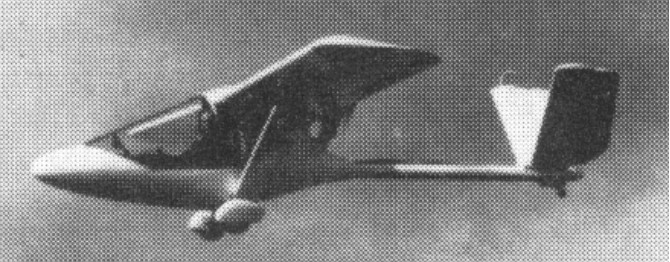
The SV Xl takes on the sleek lines of the SV series of aircraft from the Veenstra factory. The approach this time is to cater for people who admire the glider lines but would prefer conventional performances. The Xl will have sprung main wheels and a V tail. The owner will have the option to purchase the SV Xl without the sleek cockpit and fly in the breezy aluminium frame that is hidden under the fibreglass skin. Aircraft marketed as Mantis in New South Wales, Australia.

Engine: Fuji Robin 244
Prop: 81 cm x 46cm pitch
Wingspan: 8m
Length: 5m
Weight: 265kgs
Fuel capacity: 27 ltr
Cruise speed: 48 kts
Stall: 30kts