Aeolus Aviation Aeolus

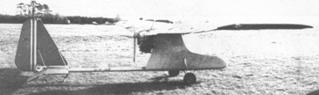
Designer Kevin McGrath wanted to produce an aircraft which could be flown regularly even in British weather conditions, so he deliberately made the wing loading as high as possible within the British microlight definition and gave the aircraft a snug cockpit. The transparent canopy at the front hinges at the top to allow entry and exit and can be removed completely for summer days. Another novel feature is that behind the pilot is a compartment suitable for 13 lb (6 kg) of baggage.
Introduced in prototype form at the beginning of 1983, the Aeolus is most notable for its fully enclosed glass fibre fuselage; this is a structural part of the aircraft rather than just a pod, and supports the engine at the rear.
A single seat, single engined high wing mono¬plane with conventional three axis control. The wing has unswept leading and trailing edges, and constant chord, with a conventional tail. Pitch control is by elevator on the tail; and yaw control by fin mounted rudder; roll control is by full span ailerons; with control inputs through stick for pitch/roll and pedals for yaw. The NACA 63412 profile; 100% double surface wing is braced from above by struts and cables, from below by struts. The undercarriage has three wheels in tail dragger formation; steel spring suspension on the tailwheel and aluminium spring suspension on the main wheels. No ground steering (tailwheel castors) or brakes are fitted. The glassfibre fuselage is totally enclosed, and the engine is mounted below the wing, driving a pusher propeller.
The prototype machine was to be modified for production, using V belts instead of a toothed belt reduction drive. Other changes for production included a 25% increase in tailplane and elevator areas, a reduction in aspect ratio from 7.3 to 5.6/1, a more rigid wing of composite construction with heat shrunk fabric skin and strut bracing, plus replacement of the coil spring suspension on the main wheels by a wire-braced aluminium cantilever arrangement.

Prototype
Engine: Robin EC34PM, 30 hp at 7500 rpm.
Max static thrust: 160 lb, 73 kg.
Propeller: 53 x 36 inch, 1.34 x 0.91 m.
Reduction: Toothed belt ratio.
Length overall: 17.0ft, 5.18 m.
Height overall: 5.5ft, 1.68m.
Power/unit area: 0.21 hp/sq.ft, 2.3 hp/sq.m.
Fuel capacity: 6.0 USG, 5.0 Imp gal, 22.7 lt.
Wing span: 32.0ft, 9.76m.
Constant chord: 4.4ft, 1.34m.
Dihedral: 2 degs
Sweepback: 0 degs
Tailplane span: 7.5ft, 2.29m.
Fin height: 4.0ft, 1.22m.
Total wing area: 140 sq.ft, 13.0 sq.m.
Aileron area: 9.0sq.ft 0.84 sq.m.
Fin area: 3.0 sq.ft, 0.28 sq.m.
Rudder area: 5.0 sq.ft, 0.46 sq.m.
Tailplane area: 15.0sq.ft, 1.39 sq.m.
Elevator area: 10.0 sq.ft, 0.93 sq.m.
Wing aspect ratio: 5.6/1.
Wheel track: 4.0ft, 1.22m.
Wheelbase: 11.0ft, 3.35m.
Tailwheel dia: 4 inch, 102 mm.
Main wheels dia: 12 inch, 305 mm.
Empty weight: 280 lb, 127kg.
MTOW: 550 lb, 249kg.
Payload: 220 lb, 100 kg.
Max wing load: 3.92 lb/sq.ft, 19.1 kg/sq.m.
Max pwr loading: 18.3 lb/hp, 8.2kg/hp.
Load factors: +4.0, 2.0 design; +6.0, 4.0 ultimate.
Max level speed: 65 mph, 105 kph.
Vne: 80 mph, 129 kph.
Max cruise: 58 mph, 93 kph.
Economic cruise: 58 mph, 93 kph.
Stalling speed: 28 mph, 45 kph.
Max climb SL: 550 ft/min, 2.8 m/s.
Best glide ratio: 11/1 at 45mph, 72kph.
Take off dist: 200ft, 60m.
Landing dist: 200ft, 60m.
Service ceiling: 10,000ft, 3050m.
Range ave cruise: 120 mile, 193km.

Adventure Air Adventurer

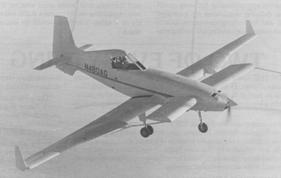
The Adventurer 333 first flew in 1996.

An Adventurer amphibian crashed on the way home from Oshkosh. The wing and tail had separated in flight and the FAA stated they would not permit the aircraft to fly and Avemco Insurance refused to insure the airplane until there had been a structural analysis done. Most of the kit owners put up $500 each, and Martin Hollmann was commissioned to do the finite stress and flutter element analysis. The final result was that Hollmann recommended a number of changes to the basic design and since that time no further accidents occured.

Adventurer 2+2
Engine: Lycoming IO-360, 200 hp.
HP range: 150-235.
Speed max: 150 mph.
Cruise: 127 mph.
Range: 850 sm.
Stall: 57 mph.
ROC: 763 fpm.
Take-off dist: 700 ft (1000 ft water).
Landing dist: 600 ft (600 ft water).
Service ceiling: 15,000 ft.
Fuel cap: 60 USG.
Weight empty: 1750 lb.
Gross: 3000 lb.
Height: 8.5 ft.
Length: 24 ft.
Wing span: 35.85 ft.
Wing area: 179 sq.ft.
Seats: 4.
Landing gear: retractable tail or nose wheel.
Optional Ford V6 3.8 lt engine, 220 hp

Adventurer 4 place
Engine: Lycoming IO-360, 200 hp.
HP range: 200-235.
Speed max: 150 mph.
Cruise: 127 mph.
Range: 850 sm.
Stall: 57 mph.
ROC: 763 fpm.
Take-off dist: 700 ft (1000 ft wter).
Landing dist: 600 ft (600 ft water).
Service ceiling: 15,000 ft.
Fuel cap: 60 USG.
Weight empty: 1750 lb.
Gross: 3000 lb .
Height: 8.5 ft.
Length: 24 ft.
Wing span: 35.85 ft.
Wing area: 179 sq.ft.
Seats: 4.
Landing gear: retractable tail or nose wheel.
Optional Ford V6 3.8 lt engine, 220 hp.

Adventurer 333
Engine: Chev 5.7 lt, 333 hp.
Speed max: 158 mph.
Cruise: 140 mph.
Range: 2700 sm.
Stall: 61 mph.
ROC: 1200 fpm.
Take-off dist: 600 ft (800 ft water).
Landing dist: 700 ft (800 ft water).
Service ceiling: 18,000 ft.
Fuel cap: 60-120 USG.
Weight empty: 2000 lb.
Gross: 3300 lb.
Height: 8.5 ft.
Length: 24.5 ft.
Wing span: 35.83 ft.
Wing area: 179 sq.ft.
Landing gear: retractable tail or nose wheel.
Seats: 4.

Super Adventurer
Engine: Continental IO-360, 210 hp.
HP range: 200-235.
Speed max: 150 mph.
Cruise: 130 mph.
Range: 1200 sm.
Stall: 57 mph.
ROC: 870 fpm.
Take-off dist: 700 ft (1000 ft water).
Landing dist: 600 ft (600 ft water).
Service ceiling: 15,000 ft.
Fuel cap: 60 USG.
Weight empty: 1800 lb.
Gross: 3000 lb.
Height: 8.5 ft.
Length: 24 ft.
Wing span: 35.85 ft.
Wing area: 179 sq.ft.
Seats: 2/4.
Landing gear: retractable nose or tail wheel.

Advanced Technology Aircraft Company / ATTC Predator / Scaled Composites 120 Predator

The ATAC Predator, billed as lifting a gallon of payload for each unit of horsepower, made its first flight from Mojave, California, in mid September 1985. Designed by Burt Rutan, the Predator has a 58.8 ft wingspan, an 80 cubic foot hopper, and an expected payload of 3200 plus pounds. The aircraft, built by the Advanced Technology Aircraft Company, has a composite structure.

Engine: 400hp Avco Lycoming IO-720
Wing span: 58.8 ft.
Hopper cap: 80 cu.ft.
Payload: 3200 lb.
Seats: 1

Advanced Soaring Concepts Falcon

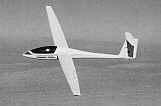
The kit built 15 m. racing class counterpart of the Standard Class ASC Spirit, the Falcon came with optional 18 m. wingtip extensions, full span trailing edge flaps and top surface Schemmpp-Hirth type airbrakes. Built with GFRP sandwich, GFRP spar, and aramid reinforced cockpit, welded tube frame, and designed by Tor Jensen.

Wing span: 15m / 49.2 ft
Empty wt: 263 kg / 580 lb
Max L/D: 44
Seats: 1