Kestral was formed in 1991 by Oklahoma-based former Cessna Sales Manager Donald L. Stroud, to produce the KL-1 GA single.
1980->
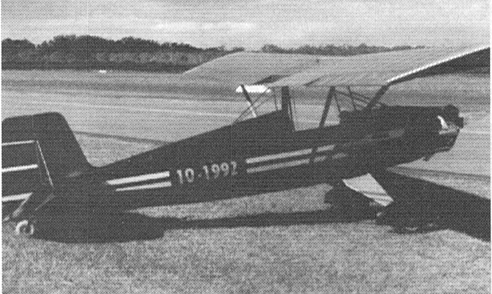
Andiel Sportster
Amour & Campbell Monoplane
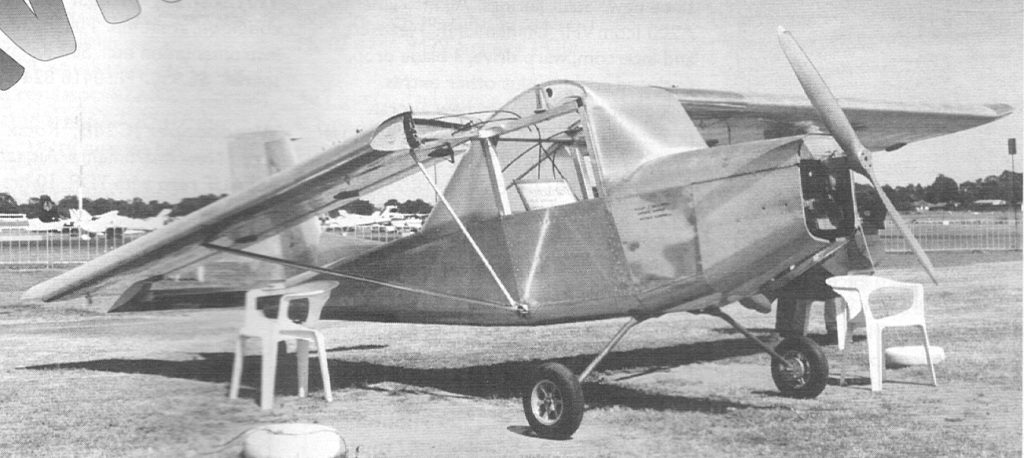
In 1999 Arthur Amour and Mathew Campbell were building this all-metal, 3-axis control, flaps, folding wings and an electric start aircraft.
Arthur designed adjustable seats.
The predicted weight on completion was 180 kg, in March 1999 it was at 180 kg.
Mudry CAP 231
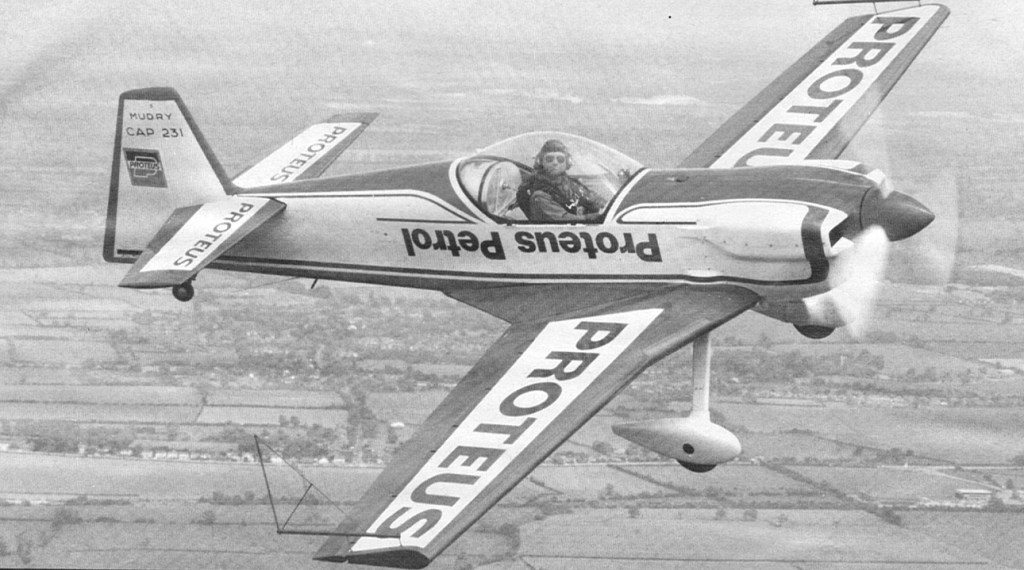
The CAP 231 differs from the CAP21/230 by its new wing leading edge fillets where the wing joins the fuselage.
The CAP 231 is stressed to +/- 10g and has a Vne of 250 mph.
The 231 has taken part in the 1990 WAC at Yverden, Switzerland.
Air Charter Bristol F.2b Tourer
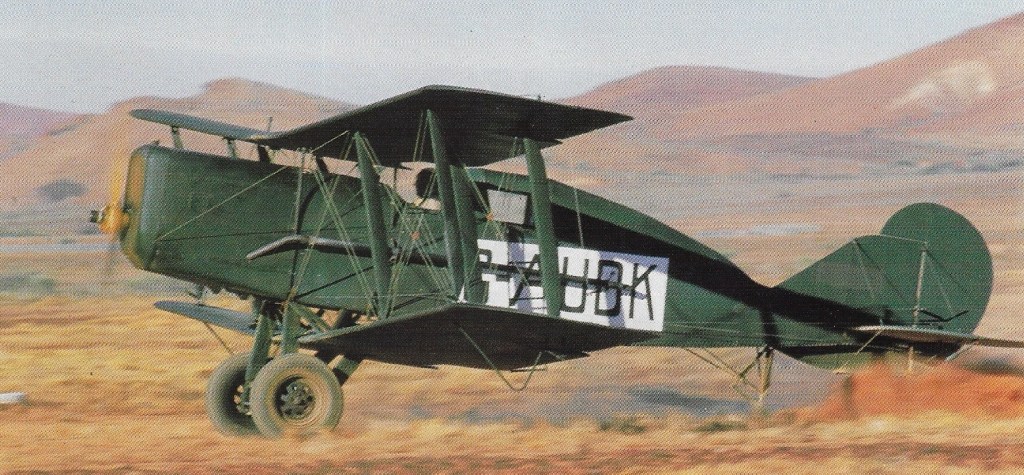
Three Bristol Tourer replicas were built in Australia. A static display replica was built over 18 months during 1980-1981 as a project by the Civil Aviation Historical Society (WA Division) by Ansett WA carpenter Frank Matthews, under supervision of Ansett engineer Billy Tilly, with help of Frank Colquhoun, a former West Australian Airways mechanic/engineer. It was built for display at the Ansett terminal at Perth Airport (now Terminal 3) and was unveiled in the terminal on 5 December 1981, painted to represet G-AUDK. The Ansett terminal was expanded in the mid-1980s, so in 1986 this replica was donated to the RAAF Association Aviation Heritage Museum at Bull Creek, WA, where it is displayed with part of the fuselage and wing unskinned to reveal the structure.
In 1984-1985 an Australian company called A Thousand Skies Ltd had two airworthy Bristol Tourer replicas built in Brisbane, QLD by Air Charter Pty Ltd for a television mini-series “A Thousand Skies”, a story on the life of Sir Charles Kingsford Smith. They were registered as Air Charter Bristol F.2b Tourers, VH-UDC (c/n QA-32-1, painted as G-AUDK) and VH-UDR (c/n QA-32-2, painted as G-AUDJ). These aircraft were powered by 172 kw (230 hp) Continental IO-520 six-cylinder engines, the fuselages being of steel tube construction and the wings of wood, with fabric covering overall. These aircraft were later seen at a number of aviation events but suffered their share of problems.
On 1 June 1992 VH-UDC (painted as G-AUDK) was on a 70-year commemorative flight by owner/pilot Barry Hempel when it suffered engine trouble and was damaged in a forced landing on North West Coastal Highway, 100 km (62 miles) north of Geraldton, WA. The aircraft was restored by Mid West Aero Club and the Shire of Greenough donated it to the Western Australian Museum at Geraldton, where it is now displayed suspended from the ceiling. This is a fitting location, given that the first scheduled air service in Australia by Bristol Tourers of West Australian Airways began at Geraldton Airport on 5 December 1921.
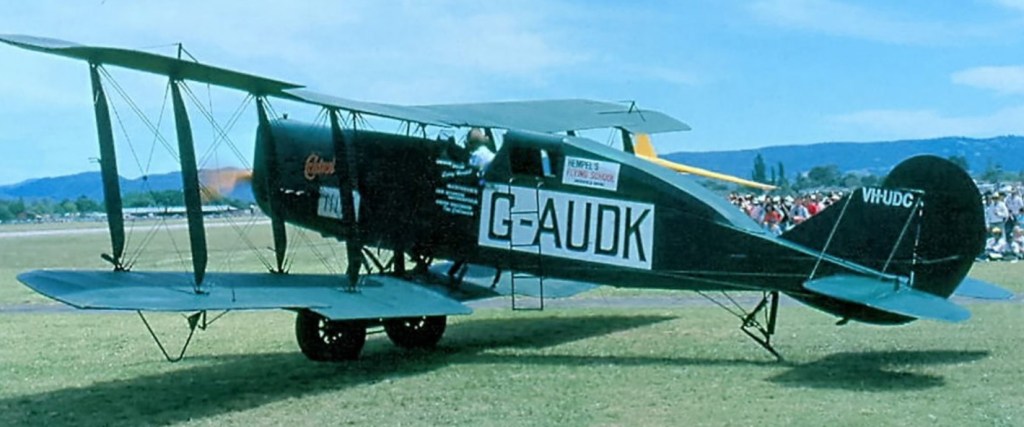
The second aircraft VH-UDR (painted as G-AUDJ) was registered in March 1985 and was withdrawn from service in March 1986. It was converted to a Bristol Fighter F.2b configuration, painted in military markings to represent C-4623, and was placed on display at the Army Aviation Museum at Oakey, QLD.
UFO 19
Flying Hangar Door

The 1983 “Flying Hangar Door” was home-designed and home-made by a very quiet and talented NASA engineer from Dryden Flight Research Center and weighed as much as a Vespa moped. The all-wing airframe was made of corrugated paper and the wheels were from child’s bicycles (plastic rims). It was powered by a lawnmower engine.
Despite its seemingly bulky shape, the “Flying Hangar Door” was an “excellent flyer”. It is possible that the aircraft never received a proper designation or even a registration.
UFO 21
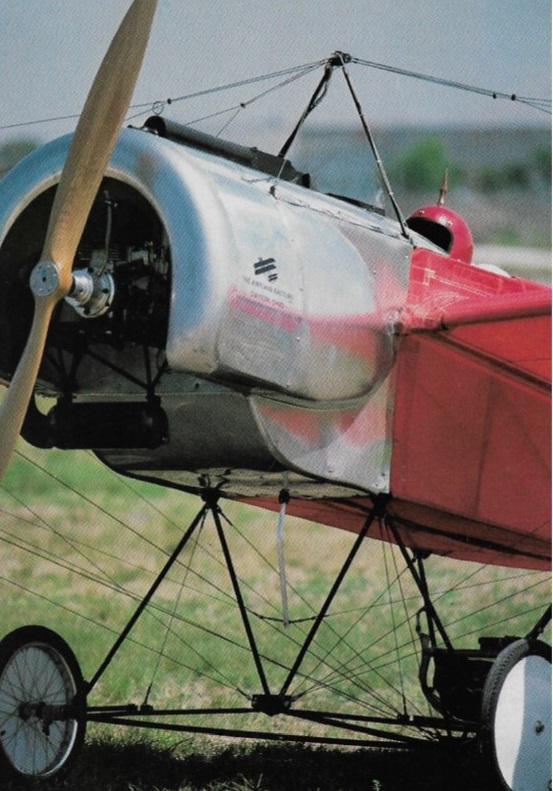
Circa 1982-4 ultralight replica of the Fokker E.III
Zodiac Helicopters Talon Turbine
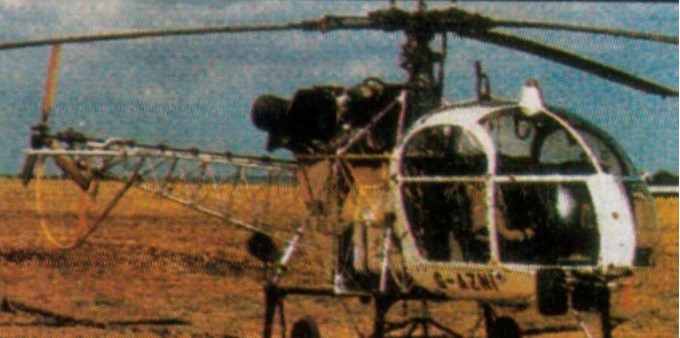
A plans built experimental helicopter.
Engine: Sunstrand, 260 hp
HP range: 160-360
Height: 8.8 ft
Length: 22 ft
Disk span: 26.8 ft
Disk area: 565.5 sq.ft
Empty weight: 1100 lb
Gross weight: 2050 lb
Fuel capacity: 40 USG
Top speed: 105 mph
Cruise: 99 mph
Range: 258 sm
Rate of climb: 1305 fpm
Service ceiling: 10,200 ft
Seats: 2
Landing gear: skid
Zodiac Helicopters
1997: PO Box 4706, Overland Park, KS 66204-0706, USA.
Zlin Z-137
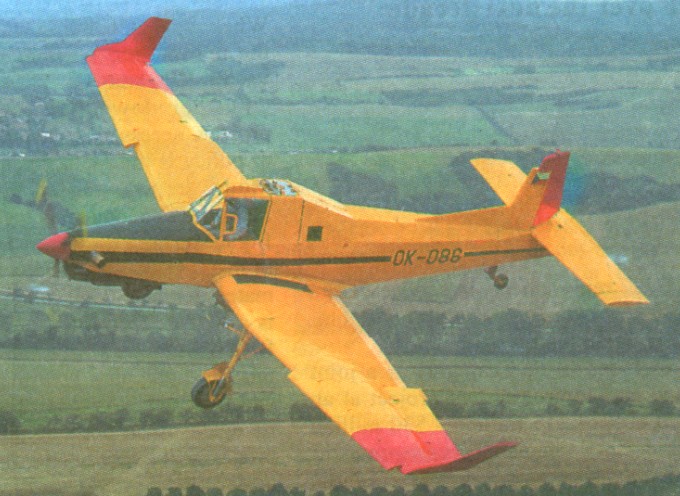
The Zlin Z-137T Agro Turbos are essentially an updated turbine version of the piston engine Z-37 Cmelak, first flown in 1981. Modifications included strengthening the centre section of the wing, alterations to the tail surfaces and the installation of a rudder trim.
The first Z-137T was #029 and registered OK-UJM in July 1989.

The aircraft were built in batches. The first batch totalled six and from 1960 they were built in batches of 20 or 30, with production reaching its height in 1972 when some 65 aircraft were produced. Along with the agricultural aircraft, some two-seat trainers were built, with a second cockpit replacing the hopper. Production ceased in 1977 but in 1981 the production line was reopened at Kunovice, and a further 40 aircraft were built. Production ceased in 1995 with #053, which was sold to Hungary as HA-MFR. The constructor numbers are in batches — 00-01 through 00-06, then 01-01 to 01-20, 02-xx and so on depending on the number in the batch.

A modernized Z-137 Agro Turbo light aircraft equipped with air-to-air missiles was spotted in the Ukrainian sky in August 2025. The Czechoslovakian-made Z-137 civilian turboprop aircraft was converted to perform air defense missions. Its tail section was marked with a typical army aviation insignia of two white transverse stripes.

Two AKU-73 pylons were mounted under the wings of the aircraft, which made it possible to use R-73 short-range air-to-air missiles. The use of R-73 missiles from non-designated aircraft is possible due to its complete autonomy as it does not require complex integration with the radar or central radar of the aircraft. It uses an infrared guidance system to track the target. The missile head itself ‘captures’ a heat-contrasting object. Given the type of weaponry and the aircraft’s ability to reach speeds of 200-250 km/h, the tasks of such a combat unit could include intercepting Russian attack drones and tactical reconnaissance UAVs.

The use of turboprop aircraft for such tasks can significantly increase the capabilities of the Air Force, as well as unload full-fledged fighters for higher priority tasks.
137T Agro Turbo
Engine: Motorlet M601Z turboprop (520 hp)
Wing span: 44 ft 8.5 in
Length: 34 ft 4 in
Height: 11 ft 6 in
Empty wt: 2756 lb
MTOW: 5566 lb
 All Aero